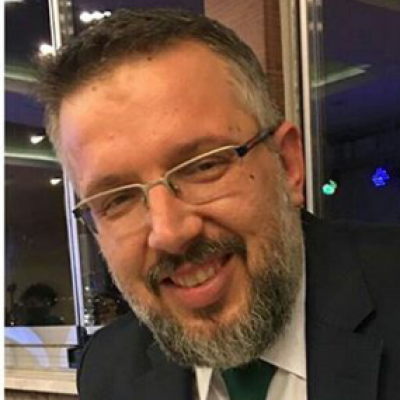
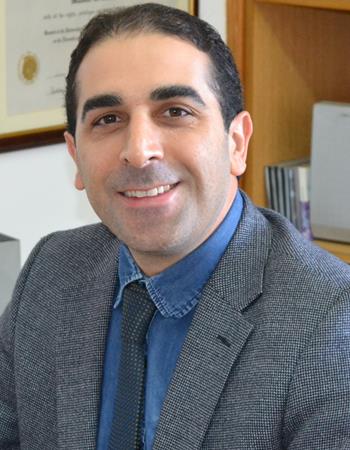
Amandeep Kaur is a researcher with affiliations across multiple institutions including the University of Cambridge , IIT Delhi , and Central University of Punjab . Her work spans interdisciplinary fields such as machine learning , deep learning , cybersecurity , and biomedical signal processing . Her research focuses on solving complex problems in healthcare, network security, and agricultural technology. Key contributions include optimizing SDN environments for DDoS attack detection, advancing 6G IoMT applications, and developing deep learning models for rice disease detection and COVID-19 classification using X-rays. The 15 most recent articles highlight her expertise in multi-objective optimization , hybrid algorithms , and federated learning for privacy protection. Topics range from smart city management and blockchain security to medical image segmentation and sentiment analysis in multilingual contexts.
Dr. Marta Dziechciarz is a faculty member at Wrocław University of Economics, affiliated with the Department of Econometrics and Operations Research. She teaches courses in econometrics, financial data modeling, and programming in R. Current position: Lecturer Department: Econometrics and Operations Research University: Wrocław University of Economics Contact: marta.dziechciarz@ue.wroc.pl Her research focuses on: Subjective well-being and income expectations in households Fuzzy set theory applications in economic measurement Market segmentation techniques for durable goods Non-monetary poverty factors and housing economics Multivariate analysis of consumer behavior Econometric modeling of household welfare Key publication trends include: Panel data analysis of European well-being (2024) Fuzzy logic applications for perception measurement (2020) Comparative studies across Central European countries (2021) Consumer durables and housing market analysis (2017-2018) Human capital and training needs identification (2016) She utilizes both traditional econometric methods and unconventional fuzzy number coding for complex economic analyses. Teaching activities include: Applied econometrics Dynamic and financial econometrics Computer tools for data analysis Financial data modeling and forecasting Programming in R
Marli Gonan Božac is a Full Professor at the Faculty of Economics and Tourism, University of Primorska, located in Pula, Croatia. She holds a PhD from 2002 and has been employed at the institution since 1990. Her academic role includes teaching and research in management disciplines. She leads courses such as Management, Strategic Management, Business Decision-Making, and Organisational Behavior across undergraduate and graduate programs. Her research interests span strategic management, conflict management, corporate governance, business ethics, and tourism economics. Notable works include studies on emotional dimensions of strategic decision-making, innovation strategies in SMEs, and SWOT/TOWS analytical frameworks. She has contributed to academic literature through over 50 peer-reviewed articles and case studies focusing on Croatian industries like hospitality and tourism. Her work emphasizes practical applications, such as corporate social responsibility, green strategies, and the influence of organizational culture on product development. While no awards are explicitly mentioned, her extensive publication record reflects sustained academic contribution. She has advised numerous case studies involving local firms and participated in educational program development. Laboratory or team affiliations are not detailed in the text, but her involvement with EU projects (e.g., CASTER, CERPU) and academic conferences suggests collaborative research networks. Teaching responsibilities include both theoretical and practical modules, bridging academic research with industry challenges.
Prof. Magdalena Ligus is a full Professor at the Department of Corporate Finance and Public Finance within Wrocław University of Economics. Her primary research focuses on sustainable energy development, renewable energy policy evaluation, and multi-criteria analysis of energy technologies. She has contributed significantly to developing methodologies for assessing energy sustainability indices and quantifying externalities in energy systems. Her work integrates environmental economics principles with financial analysis, particularly examining eco-efficiency investments and regulatory impacts on energy markets. Prof. Ligus has published extensively on topics like renewable energy technology rankings, cost-benefit analyses of low-emission systems, and hedonic valuation of environmental amenities. Recent studies include evaluation of EU energy policies and spatial analysis of urban environmental impacts on housing markets. Key research themes: Sustainable Energy Indices, Renewable Energy Financing, Multi-Criteria Decision Analysis Methodological expertise: Contingent Valuation, Fuzzy AHP-TOPSIS, Hedonic Pricing Models Policy focus: EU energy strategy implementation, Polish energy transition challenges Her interdisciplinary approach bridges financial, environmental, and technological dimensions of energy systems, with particular emphasis on policy instruments for achieving climate goals. Current research trends include assessing energy security valuation, spatial distribution of renewable energy potentials, and regulatory risk in dynamic energy markets.
Res. Asst. Bahadır Yörür holds a Researcher position at the Department of Industrial Engineering, Faculty of Engineering, Kocaeli University since 2007. He previously served as a Research Assistant at Dumlupınar University (2001–2007). His academic journey includes a BSc and MSc in Industrial Engineering from Dumlupınar University and ongoing PhD studies at Eskişehir Technical University. His research focuses on Multi-criteria Decision Making , Fuzzy Logic , and Optimization , with contributions to machine learning applications in manufacturing and energy forecasting. Notable projects include prioritizing renewable energy resources in Turkey's TR33 region using fuzzy AHP and VIKOR methods. Yörür has received the INFUS 2023 Best Student Paper Award from Istanbul Technical University. His work bridges theoretical models (e.g., structural equation modeling) with practical applications like supplier evaluation and electricity demand analysis.
Professor Dimitris Drikakis serves as Vice President for Global Partnerships at the University of Nicosia, Cyprus, and holds a joint professorship in the School of Sciences and Engineering. His academic career spans over 24 years, including roles as Executive Dean and Head of Department at UK universities. His research focuses on fluid dynamics, acoustics, computational science, and nanotechnology, emphasizing uncertainty reduction and physics-based modeling. He has co-authored two books, published over 400 papers, and graduated 45 PhD students globally. Research interests include super-resolution fluid flow analysis, machine learning applications in turbulence simulation, and computational methods for aerodynamics and heat transfer. His work on indoor aerosol transmission and epidemiological modeling has addressed pandemic-related challenges. He serves on editorial boards for journals like Computers and Fluids and Physics of Fluids . Recent articles highlight advancements in deep learning for fluid-structure interaction, shock-wave predictions, and AI-driven thermal optimization. His contributions bridge computational science with real-world engineering and public health applications.
Prof. Orhan Korhan is a Vice Dean in the Faculty of Engineering at Eastern Mediterranean University (EMU), specializing in Industrial Engineering. He holds a PhD from EMU (2002-2010) and an MS from the University of Louisville (2000-2002). His research focuses on ergonomics, occupational safety, musculoskeletal disorders, Industry 4.0 technologies, and predictive maintenance. He has supervised numerous PhD and MS theses, including works on postural tracking algorithms, Industry 4.0 readiness, and cognitive ergonomics. His academic contributions include over 30 publications in journals like International Journal of Occupational Safety and Ergonomics and Sustainability . He received the EMU Publication Citation Award (2021) for scholarly impact. Prof. Korhan teaches courses such as Facilities Planning & Design and Industrial Management, and actively participates in research on digital twins, blockchain applications, and ergonomic interventions.
Prof. Dr. Yavuz Demirci is a full professor at Adıyaman University's Department of Environmental Engineering, Faculty of Engineering. He holds a PhD in Environmental Engineering and has served as Vice Dean (2012–2014) and Department Chairman. His research focuses on wastewater treatment technologies, anaerobic reactor systems, electrocoagulation, and environmental biotechnology. He has authored/co-authored over 20 peer-reviewed articles and contributed to projects like 'Modeling of Adsorption Isotherms in Dye Removal Using Sesame Wastes.' His work emphasizes sustainable solutions for environmental challenges, including solid waste management and renewable energy integration. He speaks English and actively participates in academic committees and editorial boards, including Integrated Environmental Assessment and Management. Awards include TÜBİTAK's Publication Encouragement Award. His research team explores machine learning applications in pollution monitoring and process optimization. Education: Bachelor's: Dokuz Eylül University, Environmental Engineering (1998) Master's: Fırat University, Environmental Sciences (2002) PhD: Fırat University, Environmental Engineering (2008) Research Interests: Development of eco-friendly wastewater treatment methods, optimization of anaerobic reactors, application of advanced oxidation processes, and sustainable waste-to-resource conversion. His work bridges chemical engineering principles with ecological sustainability, addressing real-world challenges like textile dye removal and biogas production. Grants & Projects: Led projects on environmental lab infrastructure development, tobacco plant utilization in biotechnology, and landfill site analysis in Adıyaman. Collaborates on fuzzy control systems for electrocoagulation processes and solar energy-air pollution correlations using decision tree algorithms. Professional Activities: Serves as editor for Integrated Environmental Assessment and Management , peer reviewer for journals like CLEAN-Soil Air Water , and member of TEMA's Urbanization & Environment Commission. Active in organizing international conferences and publishing in interdisciplinary environmental science.
Thibbotuwawa Gamage Yasith Perera is a Lecturer in the Department of Materials at the University of Moratuwa. He holds a PhD and a B.Sc. in Textile Process Engineering from the same institution. His research focuses on polymer extrusion processes, composite materials, and the application of machine learning and control systems in industrial processes. Key areas include optimizing extrusion parameters, analyzing material properties, and developing adaptive control mechanisms for melt pressure and viscosity. Education: Bachelor of Science in Engineering (Textile Process Engineering), University of Moratuwa (2014–2018) Research Interests: Extrusion Process Engineering Material Characterization (Polymer Composites, Nanocomposites) Machine Learning for Process Monitoring Control Systems Design (Neuro-Fuzzy, Extremum-Seeking) Publications Highlight Trends in: Optimizing polymer composite performance through filler loading and process parameters Real-time control of melt pressure using AI-driven methods Evaluating the impact of reprocessing on polymer properties Awards and Grants: No specific awards mentioned, but his work contributes to UN Sustainable Development Goals related to sustainable materials and energy efficiency. Labs/Teams: Collaborates on polymer processing and control systems research within the University of Moratuwa’s Department of Materials.
Héctor Quintián Pardo is a Professor in the Department of Systems and Automation Engineering at the School of Engineering of Ferrol, Universidade da Coruña (UDC). His academic work spans teaching and research in industrial automation, intelligent control systems, and Internet of Things (IoT) applications. He teaches numerous courses across undergraduate and master's programs including Intelligent Control and Supervision Systems, Electronics and Instrumentation, Industrial Internet of Things, Mobile Robotics, and Embedded Systems. His research interests focus on the application of artificial intelligence and machine learning techniques to industrial automation problems. Quintián Pardo has directed numerous bachelor's and master's theses on topics ranging from control systems design to IoT implementations for water quality monitoring and photovoltaic power prediction. His work demonstrates a strong emphasis on practical applications of computational intelligence in engineering contexts. His publication record shows consistent output in reputable journals including Neurocomputing, Applied Artificial Intelligence, and the Logic Journal of the IGPL, with recent work focusing on intelligent control systems, machine learning applications, and cyber-physical systems. The research trends indicate a growing emphasis on IoT integration with industrial systems and the application of advanced computational methods to engineering problems. Quintián Pardo serves as Principal Investigator on multiple research projects funded by diverse entities including the European Union, Nuclear Safety Council, Spanish Foundation for Science and Technology, and various industrial partners. His research portfolio demonstrates strong connections between academic research and industrial applications. He maintains regular office hours at the Batallones Building (2A) on Tuesdays and Wednesdays from 12:30 to 14:30 during the second semester, indicating active engagement with students beyond classroom instruction.
Amir Shirdel is a Researcher at the Faculty of Science and Engineering, focusing on advanced control systems and system identification techniques. His work spans various applications including industrial automation, process control, and energy systems. Dr. Shirdel's research interests center around control theory and system identification, with specific expertise in: Handling structural disturbances in control systems Wiener model identification Sparse optimization techniques for system identification Fuzzy control systems for industrial applications Kernel-based methods for forecasting and optimization His publication record shows a consistent research trajectory from 2014-2018, with a focus on addressing practical challenges in system identification and control design. His work often addresses real-world engineering problems such as overhead crane control, waste heat recovery in ships, and process control systems that must function reliably despite disturbances and outliers. His publications demonstrate increasing impact, with his 2015 fuzzy controller paper receiving 21 Scopus citations. Dr. Shirdel has established strong research collaborations, particularly with Böling, J. and Toivonen, H., with multiple co-authored publications appearing in reputable venues including IFAC World Congress and journals like Journal of Process Control and Neural Computing and Applications.
Jozsef Mezei is a Professor at the School of Business and Economics, Faculty of Social Sciences, Economics and Law, at Åbo Akademi University. His research lies at the intersection of artificial intelligence, information systems, and business analytics, with a strong focus on customer satisfaction, sentiment analysis, and e-commerce platforms. His research interests include Artificial Intelligence , Machine Learning , Large Language Models , Customer Review Analysis , Fuzzy Logic , and Configurational Methods in digital business environments. He applies computational intelligence techniques to understand user behavior, trust, and satisfaction in online platforms. The most recent publications highlight a strong trend toward integrating Large Language Models with traditional data analysis frameworks like CRISP-DM and qualitative comparative analysis (QCA), as well as continued innovation in fuzzy systems for sentiment and decision modeling. His work bridges technical AI methods with practical business applications, especially in e-commerce and digital health. He has contributed to research recognized under the UN Sustainable Development Goals, particularly in digital innovation and inclusive economic growth. While no specific scientific awards are listed, his work has been published in high-impact journals and top-tier conferences such as HICSS and Bled eConference. Jozsef Mezei supervises academic work, with at least two supervised projects documented. His research is supported by active collaboration networks across Europe, particularly in Finland and neighboring countries. He has developed frameworks combining sentiment analysis with fuzzy logic, applied to areas like mobile banking, recommendation systems, and customer feedback integration. He is affiliated with research in digital health usage, exploring how information systems facilitate healthcare innovation. His lab or research group appears to focus on intelligent systems for business decision-making, though no explicit lab name is provided. Future work is likely to further explore generative AI, trust modeling, and hybrid AI systems in digital platforms.
DIN MARILENA AURA is an Associate Professor at the Romanian-American University, with expertise spanning Econometrics, Operations Research, Mathematical Statistics, and Fuzzy Cognitive Modelling. Her academic journey includes a Ph.D. in Probability and Mathematical Statistics from the Romanian Academy, advanced studies at George Washington University, and a Master's in Project Management. Licentiate in Mathematics (University of Bucharest) Ph.D. in Mathematics – Probability and Mathematical Statistics (Romanian Academy) Advanced Studies in Graduate School of Education and Human Development (George Washington University) Master in Project Management Licentiate in Economics Her research focuses on quantitative methods in education, economic modeling, and data-driven policy analysis. Key projects include applications of Data Envelopment Analysis (DEA) for cross-university efficiency comparisons and Fuzzy Cognitive Maps for causal modeling in higher education-labor market alignment. Awards and student mentoring details are not explicitly mentioned in the provided text.
Aman Gupta is an Assistant Professor and Program Chair in the Department of Decision Sciences at the College of Business, Embry-Riddle Aeronautical University—Worldwide. His academic work focuses on logistics, supply chain management, and decision sciences, with a strong emphasis on operations research and multi-criteria decision-making methodologies. His research interests include: Logistics and Supply Chain Management Operations Research and Systems Engineering Multi-Attribute Decision Making (e.g., AHP, TOPSIS, ISM) Performance Evaluation in Aviation and Air Cargo Industries Cost and Project Management in Construction Dr. Gupta’s recent publications demonstrate a consistent focus on applying quantitative decision models to real-world problems in transportation, aviation, and construction sectors. His work frequently employs fuzzy logic, AHP, TOPSIS, and interpretive structural modeling to analyze complex systems. These studies span airline ranking, air cargo finance, and public housing project efficiency. His scientific recognition includes: Outstanding Accomplishments in Research award, Embry-Riddle Aeronautical University—Worldwide (2013) Postdoctoral Research Award, Logistics and Distribution Institute, University of Louisville (2012) Dr. Gupta contributes significantly to academic service, including roles on the Worldwide Faculty Senate, Undergraduate Curriculum Committee, and the Curriculum Management Application project. He also mentors emerging scholars through workshops on research vision formulation. While no formal advisees are listed, his leadership as Program Chair indicates supervisory and academic leadership responsibilities. He is actively engaged in curriculum development and research dissemination. He is affiliated with research initiatives such as the Center for Aviation and Aerospace Leadership and continues to publish in peer-reviewed journals. His ORCID profile (0000-0003-4999-1717) and CV are publicly available for further detail.
Lan Luo is a Professor of Marketing at the University of Southern California's Marshall School of Business, where she conducts cutting-edge research at the intersection of artificial intelligence and marketing. She holds a Ph.D. in Business (Marketing) from the University of Maryland and maintains a dual impact in academia and industry through her role as an Amazon Scholar for Global Media Entertainment Business. Ph.D., Business (Marketing), University of Maryland Professor of Marketing, USC Marshall School of Business Amazon Scholar, Global Media Entertainment Business Her research centers on the applications of artificial intelligence in digital platforms and new product design , with additional interests in consumer behavior, blockchain in creative industries, and market demand forecasting. She leverages advanced data analytics and machine learning to study hiring dynamics on freelance platforms, media selection optimization, and even the predictive power of user-generated photos on restaurant survival. The recent publications highlight a strong trend in AI-driven marketing analytics , digital platform optimization , and consumer-centric product innovation . Her work integrates fuzzy logic, support vector machines, and large-scale optimization models to solve real-world marketing challenges, often published in top-tier journals such as Marketing Science and Production and Operations Management . Dr. Luo has received numerous accolades for her research and teaching excellence: John D.C. Little Award Donald R. Lehmann Award (twice) Paul E. Green Award Finalist (twice) Ph.D. Mentoring Award Golden Apple Award (twice) Dr. Jagdish Sheth Award (first woman recipient) She plays a vital role in academic leadership as Vice President of Practice for the INFORMS Marketing Science (ISMS) community, Associate Editor for Marketing Science and International Journal of Research in Marketing , and Senior Editor for Production and Operations Management . At USC, she mentors Ph.D. students and teaches advanced courses in marketing analytics and strategic modeling, including MKT-566 and MKT-615. Her industry experience leading the Amazon Studios Science team further enriches her academic contributions, bridging theory and practice in media and entertainment analytics. Dr. Luo leads research initiatives exploring how consumer-posted images can serve as leading indicators of business success, such as in her Tommy Talk on Yelp photos predicting restaurant survival. Her lab-like research environment integrates interdisciplinary methods from computer science, statistics, and behavioral economics to advance marketing science.