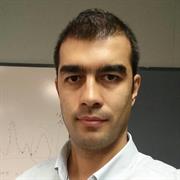
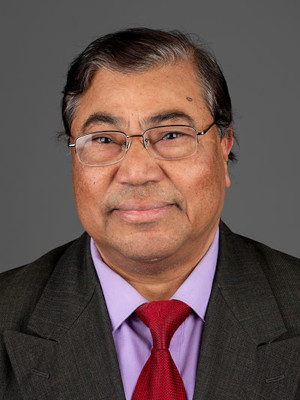
Umit Cali is a Professor and Chair in Digital Engineering for Future Technologies at the University of York, UK, and holds a part-time Professor role in Energy Informatics at NTNU (Norwegian University of Science and Technology). He specializes in energy systems, blockchain, IT law, and data science, with over 20 years of experience in academia and industry. His research focuses on energy informatics, cybersecurity, and renewable energy integration. Education: PhD in Electrical Engineering and Computer Science (University of Kassel, Germany) and LL.M in IT and IP Law (University of Goettingen, Germany). Research Interests: Blockchain applications in energy systems, AI-driven energy management, cybersecurity for critical infrastructure, legal frameworks for digital technologies, and sustainable energy policies. Recent work emphasizes digital twin technology for energy systems optimization, decentralized energy markets, and ethical AI deployment. His publications span energy storage, smart grid cybersecurity, and policy analysis for renewable energy adoption. Professional Experience: Previously worked at IBM, Fraunhofer Institute, EnBW, and as an assistant professor at multiple universities. Serves as Vice Chair of the IEEE Blockchain in Energy Standards Working Group (P2418.5).
Prof. Sevket Cokgor is a Professor at the Civil Engineering Department of Istanbul Technical University. He holds a PhD in Hydraulic and Water Resources Engineering from the same institution. His expertise spans Coastal Sciences and Engineering, Hydromechanics, and Hydraulic Structures, with a focus on sediment dynamics, coastal morphology, and hydraulic infrastructure design. Education: PhD (1992) in Hydraulic and Water Resources Engineering from Istanbul Technical University. Research interests include experimental and numerical analysis of sediment transport, coastal protection systems, wave-structure interaction, and turbulence modeling in hydraulic systems. His work often involves flume experiments and computational methods to study phenomena such as scour around marine structures, hydraulic jump aeration, and river-sea dynamics. Recent publications (2018–2023) emphasize coastal risk assessment using Bayesian models, sediment dynamics in estuaries like the Golden Horn, and turbulence-induced scour mechanisms. His earlier work (2000s) focused on hydrodynamic forces on submerged structures and pipeline systems. Prof. Cokgor has supervised numerous graduate theses, including studies on coastal flow slides, pressure fluctuations in hydraulic systems, and sediment management strategies. He is affiliated with the university's research groups in hydraulic engineering and coastal sciences, contributing to both academic and practical solutions for water resource challenges.
Assoc. Prof. Deniz Artan holds a PhD in Building Sciences from Istanbul Technical University and serves in the Civil Engineering Department. Their research focuses on Project and Construction Management, Construction Contracts Management, and FIDIC Contracts. They have advised numerous graduate theses on topics like digital contract systems, risk assessment in PPP projects, and blockchain applications in construction. Education: PhD in Building Sciences, Istanbul Technical University (2006-2010) MA in Informatics in Construction Management (2000-2002) Bachelor's in Architecture (1997-2001) Research interests include construction dispute resolution mechanisms, BIM implementation challenges, and sustainable construction practices. They received the 2016 Emerald Publishing Outstanding Paper Award for work on construction mediation practices. Recent articles analyze smart contract impacts on claim management, digital twin adoption, and pandemic effects on construction sites. Their work bridges legal frameworks, technological innovation, and occupational safety in complex projects. Prof. Artan has no registered patents but actively contributes to editorial roles, including Court Connected Construction Mediation Practice . Their advising portfolio spans 24+ theses since 2014, emphasizing real-world industry challenges.
Esko Turunen is a Visiting Professor at the Faculty of Information Technology and Communication Sciences, Computing Sciences department at Tampere University. His research focuses on fuzzy logic, mathematical logic, and data mining methodologies such as the GUHA framework. He has collaborated on projects involving epidemiology, transportation infrastructure analysis, and decision-making systems. Research interests include algebraic structures (e.g., MTL-algebras, triangle algebras), fuzzy relational equations, and applications of paraconsistent logic in real-world problems. His work bridges theoretical foundations with practical tools like data mining for health, transportation, and engineering domains. Selected publications highlight contributions to GUHA methodological advancements, fuzzy logic applications in decision analysis, and infrastructure deterioration studies. No scientific awards are explicitly mentioned in the provided texts.
Tahmina Ferdousi Lipi is a part-time Lecturer at both the D'Amore-McKim School of Business and the College of Engineering at Northeastern University. With over a decade of experience in academia and industry, she specializes in Operations Management, Supply Chain Analytics, and Renewable Energy. Her research focuses on data-driven decision science for societal challenges, techno-economic evaluation, sustainability, and public health policy analysis. Education: Master of Science in Engineering Management, University of Alberta Master of Science in Industrial & Production Engineering, Bangladesh University of Engineering and Technology Bachelor of Science in Industrial and Production Engineering, Bangladesh University of Engineering and Technology Research Themes: Lipi’s work integrates operations research and decision-making methodologies to address complex industrial and societal problems. Her publications emphasize mathematical modeling, fuzzy logic, and multi-criteria decision frameworks in contexts like maintenance scheduling, supply chain optimization, and techno-economic analysis. Despite her interdisciplinary contributions, no scientific awards or student advisement details are mentioned in the provided materials.
Honghai Liu is a Professor at the University of Portsmouth, UK. He holds the positions of Lecturer, Reader, and Professor since September 2005. His research focuses on Autistic Intervention , Medical Devices and Systems , Intelligent Robotics , and Stroke Rehabilitation . He has held prior roles including Postdoctoral Research Fellow at the University of Aberdeen (2003-2005) and Research Assistant at King’s College London (2002-2003). His academic contributions are highlighted by his Fellowships: Fellow of IEEE (2020) Fellow of IET (2011) Research Interests span interdisciplinary areas including: Multi-modal sensing for clinical applications Machine learning in medical diagnostics Human motion analytics for rehabilitation Development of intelligent robotic systems His work intersects engineering and healthcare, particularly in neurorehabilitation and autism diagnosis technologies. Notable contributions include pioneering work in closed-loop functional networks for stroke recovery and advanced muscle synergy analysis. His publications emphasize clinical translation of engineering innovations, with recent focus on wearable ultrasound and sEMG-based interfaces.
Dr. Haydar Demirhan is a Senior Lecturer of Analytics in the School of Science (Mathematical Sciences) at RMIT University. He previously held academic positions at Hacettepe University in Turkey, including Assistant Professor and Docent. His research focuses on Bayesian inference, fuzzy regression, artificial intelligence, categorical data analysis, and environmental informatics. Demirhan has led multiple industry projects, including collaborations with DSTG, Essendon Football Club, and Cabrini Health. He serves as an Area Editor for Scientific Reports (Springer Nature) and Information Processing in Agriculture . Notable awards include RMIT's 2023 HDR Supervision Award and 2022 Teaching Award. His teaching includes courses on Bayesian statistics, time series analysis, and biometrics. Research highlights include developing fuzzy regression models, analyzing vaccination effectiveness, and modeling climate change impacts on agriculture. He has supervised over 8 PhD/MSc students and authored 80+ peer-reviewed articles. Demirhan’s work spans statistical methodologies in health, ecology, and energy sectors.
Solmaz Fathololoumi is a researcher at the University of Guelph under the supervision of Dr. Asim Biswas. Her work focuses on advanced remote sensing techniques and digital soil mapping to address environmental challenges in agriculture, watershed management, and urban ecology. She specializes in integrating multi-source spatial data to model soil moisture, organic carbon dynamics, and land use changes. Education: Ph.D. candidate or postgraduate researcher (details not explicitly stated in text) Research interests include digital soil mapping, soil moisture modeling, environmental management, remote sensing applications in land degradation assessment, and sustainable land use planning. Her work frequently addresses case studies in Iran (e.g., Ardabil Province) and Canada (e.g., Southern Ontario). Recent publications emphasize methodologies for improving accuracy in gully erosion mapping, predicting surface urban cool islands, and quantifying prime agricultural land loss. She employs machine learning, Dempster-Schafer theory, and generalized regression neural networks in her research. Her advising role indicates involvement in guiding research projects but no explicitly listed advisees. No grants or awards are mentioned in the provided text. Solmaz collaborates with interdisciplinary teams focusing on ecological indices development and spatial decision-support frameworks for environmental management.
Dr. Dursun Delen is the Spears Endowed Chair in Business Administration and Patterson Family Endowed Chair in Business Analytics at Oklahoma State University (OSU). He serves as the Director of Research for the Center for Health Systems Innovation and holds the rank of Regents Professor in the Department of Management Science and Information Systems at the Spears School of Business. His research focuses on business analytics, healthcare systems, machine learning, and data-driven decision-making. With over 30 years of experience, he has published extensively on topics including employee well-being, e-commerce strategies, disaster risk management, and Industry 4.0 adoption. He has contributed to 272 editorial works and serves as Specialty Chief Editor for AI in Business at Frontiers in Artificial Intelligence. His recent publications highlight interdisciplinary applications of machine learning, from 5G network optimization to nursing home operational efficiency during pandemics. His work bridges academic research with practical business solutions, emphasizing data science's role in strategic decision-making. He leads initiatives in health systems innovation and has pioneered methodologies in ensemble decision-making frameworks.
Dr. Zhiwei Gao is an Associate Professor in the Department of Mathematics, Physics and Electrical Engineering at Northumbria University. He holds prestigious fellowships including IEEE Fellow (2023), Royal Academy of Engineering/Leverhulme Trust Research Fellowship (2024), and Fellowships of AAIA and AIIA. His research focuses on control systems, renewable energy, fault diagnosis, and real-time systems, with applications in wind turbine systems and wave energy conversion. Education: PhD in Engineering (1996). Research Interests: Real-time diagnosis and resilient control for industrial systems Energy management and renewable energy technologies Machine learning applications in anomaly detection and music generation Fault-tolerant control for fuzzy systems and multi-agent coordination Recent articles highlight advancements in distributed observers for LTI systems, deep reinforcement learning for energy management, and hybrid approaches for fault diagnosis. His work contributes to UN Sustainable Development Goals related to sustainable energy and technological innovation. Awards: IEEE Fellow, RAEng/Leverhulme Trust Fellowship, Alexander von Humboldt Awards (2015, 2018, 2022). Editorial Roles: Co-EIC of IEEE Transactions on Industrial Informatics, Senior Editor of IEEE Access, and editorial board member of Renewable Energy (Elsevier). Projects: Leading research on wave energy conversion systems and resilient control strategies. He advises PhD students in health monitoring and resilient control for complex systems, contributing to cutting-edge advancements in industrial informatics.
Tuba Keçeci serves as an Assistant Professor in the Department of Basic Sciences at Istanbul Technical University, where she conducts critical research at the intersection of maritime safety, human factors engineering, and decision-making methodologies. Her work addresses systemic challenges in global shipping operations including accident prevention, crew well-being, and sustainable maritime practices through rigorous quantitative analysis. Dr. Keçeci specializes in developing innovative safety frameworks such as the SHARE technique for root cause analysis of ship accidents and applying fuzzy logic systems (Fuzzy AHP, QFD) to evaluate energy efficiency measures and social sustainability models. Her investigations into human error probability during watchkeeping and crew burnout syndromes provide actionable insights for improving maritime labor conditions and operational safety standards across the industry. Analysis of her 2022-2024 publications reveals concentrated efforts on digital transformation in maritime logistics, social sustainability frameworks, and human error reduction strategies. Her work consistently integrates advanced quantitative approaches to tackle complex operational challenges, demonstrating clear progression toward evidence-based solutions for contemporary maritime industry problems. Dr. Keçeci has secured and led three major research projects: "Bodrum Boğazı Deniz Trafiğinin Seyir Emniyeti Açısından Değerlendirilmesine Yönelik Bir Yaklaşım Önerisi" (2022-2024), "ARKTİK SULARDA GEMİ KAZASI İNCELEMESİNDE KULLANILACAK BİR KÖK SEBEP ANALİZİ YAKLAŞIMI ÖNERİSİ" (2021-2022), and "Development of Standard Accident/Incident Analysis Forms" (2018-2020). She has supervised at least one graduate student as documented in her academic profile. No scientific awards or honors are documented in the available information for Dr. Keçeci.
Dr. Sadeque Hamdan is a Senior Lecturer in Data Analytics at Bangor Business School, Bangor University, UK. His academic work focuses on optimization problems in sustainable transportation and supply chain management, with applications in both theoretical and practical domains. Education Postgraduate Certificate in Higher Education, University of Kent (2023) PhD in Complex Systems Engineering, University of Paris-Saclay (2020) MSc in Engineering Management, University of Sharjah (2015) BSc in Civil Engineering, University of Sharjah (2013) Research Focus Dr. Hamdan's research spans several interconnected domains: sustainable supply chain operations, transportation management, and operational research applications. His work employs advanced data analytics to solve complex optimization problems in logistics, aviation management, and green transportation systems. Publication Trends Recent publications (2023-2025) demonstrate a strong focus on sustainable transportation optimization, particularly electric vehicle charging systems, maritime logistics, and air traffic management. Methodologically, Dr. Hamdan frequently applies heuristic algorithms, multi-objective optimization, and combinatorial approaches to solve complex supply chain and transportation problems. Projects & Advising Dr. Hamdan leads the ongoing research project 'Sustainable Aviation and Emerging Technologies: Maximizing Operational and Resource Efficiency' (2025-2026). He actively supervises postgraduate students, though specific student names are not listed in available materials.
Dr. Bijaya Shrestha is an Associate Teaching Professor in the Department of Electrical and Computer Engineering at the Missouri University of Science and Technology. He specializes in algorithm development for medical imaging applications, particularly in early-stage skin cancer diagnosis through image analysis of skin lesions. His research also encompasses particle transport, statistical physics, and Monte Carlo techniques. He holds a Ph.D. from the University of Missouri-Rolla (1995), an M.Sc. and B.Sc. from Tribhuvan University (Nepal). Notable achievements include a U.S. patent for melanoma detection algorithms and the 2010 Outstanding Professor Award. Education: Ph.D. in Nuclear Engineering, Missouri University of Science and Technology (1995) M.Sc. in Physics, Tribhuvan University (1978) B.Sc. in Physics, Tribhuvan University (1974) Research Interests: Algorithm development for medical diagnostics Signal and image processing Monte Carlo techniques Particle transport and radiation shielding Optimization techniques His work focuses on applying computational methods to medical challenges, such as melanoma detection through dermoscopy image analysis. He has contributed to over 200 citations across peer-reviewed publications and holds senior IEEE membership. His current projects include developing an inference engine for lesion image analysis.
Dr. Fredrick Mwema is a Researcher at Northumbria University, UK, since March 2023, focusing on high entropy thin film materials for extreme condition applications. He is also a Senior Lecturer in the Department of Mechanical Engineering at Dedan Kimathi University of Technology (DeKUT), Kenya, currently on leave. He has held leadership roles as Chair of the Department of Mechanical Engineering and Director of the Centre for Nano Materials and Nanoscience Research Center at DeKUT. Education: Ph.D. in Mechanical Engineering, University of Johannesburg (2019) His research spans thin films, surface engineering, material characterization, finite element modeling, and advanced manufacturing, including 3D printing. At Northumbria, he is advancing high entropy alloy thin films. He has published over 100 articles, authored four books, and filed two IPs with KIPI. The recent publications reflect a strong focus on thin film deposition , additive manufacturing , injection molding optimization , and advanced materials characterization , utilizing computational modeling and experimental techniques. Scientific Affiliations: Member, American Society of Mechanical Engineers (ASME) Member, International Association of Engineers (IAENG) Graduate Engineer, Engineers Board of Kenya (EBK) Dr. Mwema has supervised over 100 undergraduate students, 5 completed Master’s students, and currently mentors 4 Ph.D. and 5 Master’s students. He has secured research experience through visiting positions at the University of Southampton, BIUST (Botswana), and IIT Kharagpur (India). He also serves as an external examiner for postgraduate theses since 2022. Laboratories and Research Centers: Centre for Nano Materials and Nanoscience Research Center, DeKUT (Former Director) Research labs at Northumbria University (current affiliation)
Alexander Gegov is Associate Professor in Computational Intelligence at the School of Computing, Faculty of Technology, University of Portsmouth, and also serves as Visiting Professor in Control Theory at the English Faculty of Engineering, Technical University of Sofia. He is affiliated with the Centre of Excellence in Defence, Risk & Resilience and the Portsmouth AI and Data Science Centre. He has previously held leadership roles as Associate Dean for Research and has been actively involved in numerous international research collaborations. PhD in Cybernetics, Bulgarian Academy of Sciences DSc in Artificial Intelligence, Bulgarian Academy of Sciences Humboldt Guest Researcher, Germany EU Visiting Researcher, Delft University of Technology, Netherlands His research focuses on the development and application of artificial intelligence and machine learning methods—particularly fuzzy systems, neural networks, and evolutionary algorithms—for modeling and simulating complex systems characterized by nonlinearity, uncertainty, and high dimensionality. His work emphasizes explainability, transparency, and real-world feasibility in domains such as public security, financial forecasting, medical diagnosis, and environmental modeling. He actively contributes to the advancement of Explainable Artificial Intelligence (xAI) and its integration with fuzzy logic and causal models. The most recent publications highlight a strong trend toward explainable, interpretable, and ethically grounded AI, with applications in security, healthcare, project management, and intelligent control systems. His work frequently involves hybrid models, ensemble methods, and real-world validation in collaboration with NATO and other international bodies. National award for best young researcher, Bulgarian Union of Scientists Award for Outstanding Innovation in Digital Health and Social Care (2020) Excellence in Creating a Smarter World International Innovation Award (2020) Alexander Gegov has supervised numerous PhD students and served as Principal or Co-Investigator on research projects funded by NATO, EU, EPSRC, and Innovate UK. He is an active PhD supervisor and examiner. His leadership extends to editorial roles in top journals such as IEEE Transactions on Artificial Intelligence and IEEE Transactions on Fuzzy Systems, as well as participation in IEEE and NATO technical committees on explainable AI and computational intelligence. He has also organized international events such as the Alan Turing Institute Fringe Festival. He is a key member of several research groups including the Soft Computing Technical Committee of IEEE SMC, the IEEE Working Group on Explainable Artificial Intelligence, and the NATO Exploratory Team on Explainable AI. His work contributes to UN Sustainable Development Goals related to health, industry innovation, and responsible AI.