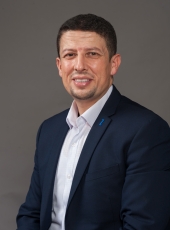
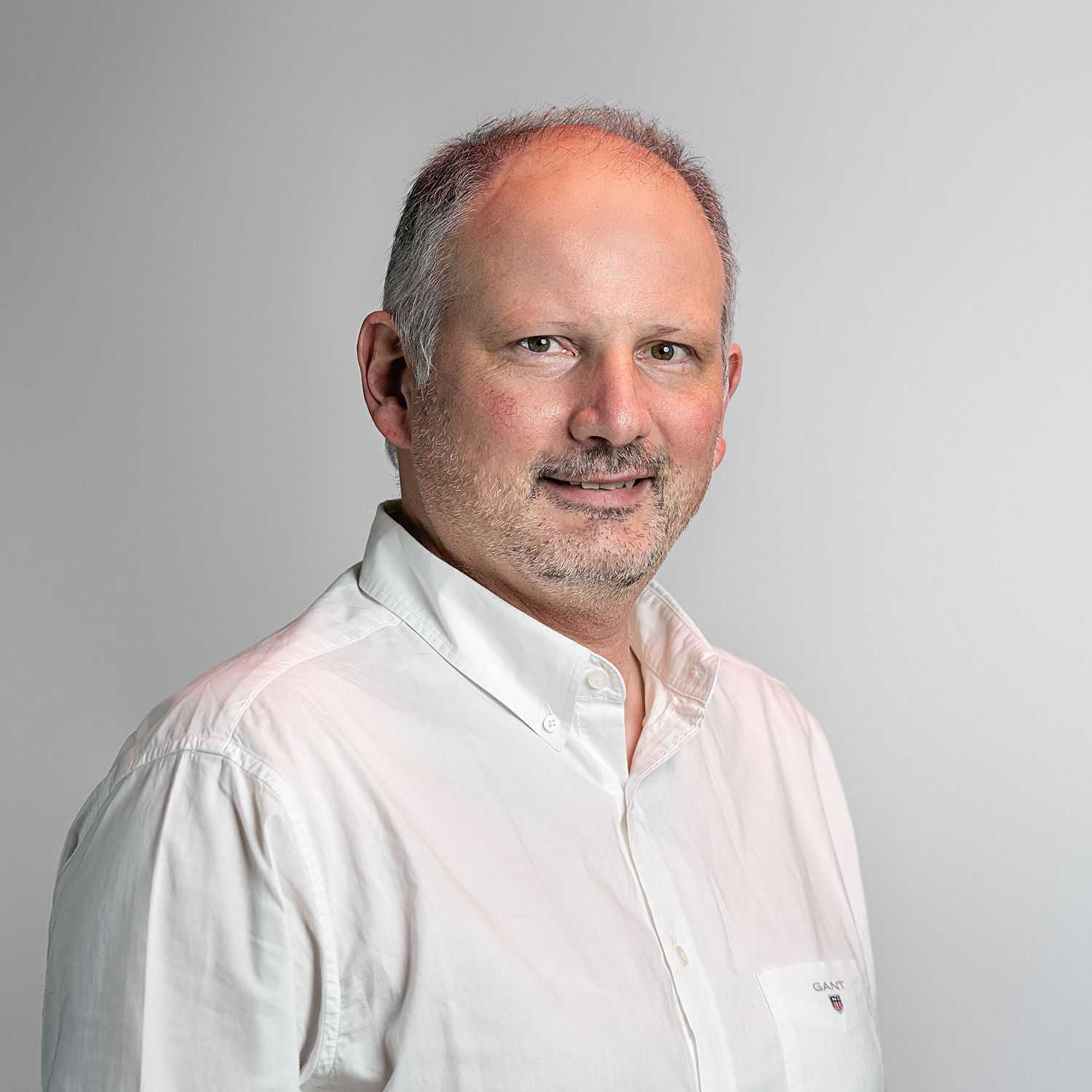
Adnan AKTEPE is a Professor at Kırıkkale University, Faculty of Engineering and Natural Sciences, Department of Industrial Engineering. He holds a PhD in Industrial Engineering from Gazi University and has been affiliated with Kırıkkale University since 2009. His research focuses on data-driven industrial systems, integrating machine learning, fuzzy logic, and structural equation modeling. BSc in Industrial Engineering, Marmara University (2007) MSc in Industrial Engineering, Kırıkkale University (2011) PhD in Industrial Engineering, Gazi University (2015) His work bridges digital technologies (e.g., blockchain, AI) with industrial and service quality optimization. Recent publications emphasize predictive maintenance, customer segmentation, and fuzzy logic applications in manufacturing and healthcare. Articles highlight cross-disciplinary approaches combining operational efficiency, data mining, and smart systems. Scientific contributions include methodological frameworks for service performance indices, lean manufacturing analysis, and reinforcement learning in scheduling. Awards and professional roles are mentioned but unspecified in the source text.
Prof. Sergiy Yakovlev serves as a Research Professor in the Department of Mathematical Modeling at University of Lodz, with room 167 and contact number +48 426313617. His extensive academic contributions span combinatorial optimization, geometric design, and artificial intelligence applications. His research interests focus on Combinatorial Optimization, Geometric Design, Computational Geometry, and AI in Public Health, with significant work in spatial configuration modeling and packing/covering problems. Recent publications demonstrate strong interdisciplinary connections between mathematical theory and practical applications in epidemiology and sensor networks. Analysis of his 15 most recent publications reveals a clear trend toward applying computational geometry and optimization techniques to public health challenges, particularly in modeling epidemic dynamics during the Ukraine conflict and developing AI frameworks for health misinformation detection. His work bridges theoretical mathematics with real-world crisis response systems. While no specific scientific awards are documented in the provided text, his publications appear in high-impact journals including Symmetry (70 points), Environmental and Climate Technologies (100 points), and Cybernetics and Systems Analysis. Prof. Yakovlev actively collaborates on epidemic modeling projects related to the Ukraine conflict, including migration impacts on COVID-19 dynamics and respiratory infection modeling in Kharkiv region. His work involves multiple international research teams across Poland, Ukraine, and Switzerland. He contributes to critical monitoring systems through his research on sensor network reliability for environmental emergencies and forest fire monitoring, with particular attention to failure analysis in hybrid network architectures.
Dr inż. Piotr Szwed is a Lecturer in the Department of Applied Computer Science at AGH University of Science and Technology, Kraków. He is affiliated with the Faculty of Electrical Engineering, Automatics, Computer Science and Biomedical Engineering (EAIiIB), where he teaches courses ranging from imperative and object-oriented programming to data exploration and computational intelligence. Research Interests: Data mining and knowledge discovery Fuzzy cognitive maps and their applications in transportation, risk assessment, and security Software engineering methodologies, including agile and ontology-driven development Intelligent transportation systems (ITS) and real-time traffic management Natural language processing for Polish texts, stylometry, and authorship attribution Ontology engineering, enterprise architecture verification, and model checking His work often bridges theoretical computer science with practical applications in urban mobility, safety systems, and enterprise software. Scientific Contributions: Pioneered the integration of fuzzy cognitive maps with evolutionary algorithms to predict traffic flows. Developed rule-based and machine-learning approaches to determine speed limits from geospatial data. Contributed to the INSIGMA intelligent transportation system aimed at enhancing urban mobility in Polish cities. Created formal verification techniques for ArchiMate business processes using NuSMV model checking. Advanced stylometric analysis for Polish texts, introducing part-of-speech features for authorship attribution. Teaching & Academic Service: Regularly teaches Programming (C, C++, Java), Software Engineering, Data Exploration, and Computational Intelligence. Supervises engineering and master theses in applied computer science. Maintains a public wiki with course materials, lab exercises, and consultation schedules for students. Utilizes Git-based repositories to streamline code submission and continuous assessment in laboratory classes. Laboratory & Facilities: He is located in building C-2, room 403, at AGH’s main campus, al. Mickiewicza 30, 30-059 Kraków. The lab supports courses that emphasize practical software development, version control, and collaborative project work.
Lecturer Gökhan BAHADIR is affiliated with Kastamonu University , where he works at the Tosya Vocational School in the Department of Electricity and Energy . He has held administrative roles including Deputy Director of Tosya Vocational School (2017–2019, 2025–) and Department Head (2023–). Education : PhD in Electrical and Electronics Engineering (2022, Düzce University), MSc in Energy Systems Engineering (2014, Karabük University), MSc in Occupational Health and Safety (2018, Kastamonu University), BSc in Electrical and Electronics Engineering (2009, Karadeniz Technical University; 2013, Cumhuriyet University). Research Interests focus on: Electrical Machines and Energy Conversion – Induction/synchronous motors, transformer systems, power electronics Control Theory and Applications – Direct torque control, field-oriented control, programmable controllers Computational Methods – MATLAB simulations, Runge-Kutta numerical analysis, SCADA systems Industrial Automation – Electromechanical systems, hydraulic-pneumatic controls, industrial drivers His publications analyze motor stability in power grids, control methodologies for electric vehicles, and educational approaches to electrical concepts. Collaborations include work with colleagues at Kastamonu and Karabük Universities.
Assoc. Prof. Dr. Yücel Çetinceviz is a faculty member at Kastamonu University's Faculty of Engineering and Architecture, Department of Electrical-Electronics Engineering, where he serves as a Doctoral Academician since 2018. He also holds administrative positions as Department Chair (since 2022) and Vocational School Director (since 2020). His academic career at Kastamonu University began in 2009 as Teaching Staff at the Vocational School's Electronics and Automation Department before transitioning to his current role. Dr. Çetinceviz received his academic education from Gazi University and Karabük University: PhD : Electrical and Electronics Engineering, Karabük University, Institute of Science (2011-2017) Master's : Electrical Education, Gazi University, Institute of Science (2008-2011) BSc : Electrical Education, Gazi University, Faculty of Technical Education (2002-2006) Dr. Çetinceviz's research focuses on three primary areas: Electrical Machines and Energy Conversion, Power Electronics, and Control Theory and Applications. His work demonstrates a strong emphasis on practical applications of electrical engineering principles, particularly in the domains of electric vehicles, renewable energy systems, and motor control technologies. His research bridges theoretical concepts with real-world implementations, often involving electromagnetic modeling, thermal analysis, and advanced control techniques. Notably, his recent work shows increasing focus on electric vehicle technologies, including in-wheel motor design and battery systems, reflecting industry trends toward sustainable transportation solutions. His publication record reveals consistent scholarly output with increasing impact in recent years, particularly in high-quality international journals (SCI-expanded). The research themes across his publications demonstrate a cohesive progression from fundamental electrical machine design to sophisticated control systems for emerging applications like electric vehicles and renewable energy integration. Dr. Çetinceviz has received prestigious recognition for his scholarly contributions: TÜBİTAK Publication Incentive Award (2017) TÜBİTAK Publication Incentive Award (2012) TÜBİTAK Publication Incentive Award (2011) As an academic advisor, Dr. Çetinceviz has supervised five graduate students to completion, with ongoing supervision of additional students. His research is supported by significant projects including a principal investigator role in a 2020-2022 project on high-torque-density axial flux permanent magnet motors for electric vehicles, and advisory roles in defense industry-related projects. His intellectual property contributions include two patents related to electrical steel production and magnetic composite materials. Dr. Çetinceviz collaborates extensively with colleagues both within and outside Kastamonu University, with notable long-term collaborations with Erdal Şehirli (14 publications since 2014) and Durmuş Uygun (12 publications since 2011). His work appears to involve laboratory research focused on electrical machine testing, power electronics implementation, and control system development, though specific lab names aren't mentioned in the provided information.
Ashraf Saleem is an Assistant Professor in the Department of Applied Computing at Michigan Technological University, where he leads the Robotics & Remote Sensing Lab (RRSL). His research focuses on robotics, remote sensing, and artificial intelligence with applications in underwater image enhancement, object detection, and environmental monitoring.
Dr. Michal Weiszer is a Teaching Fellow at the School of Engineering and Materials Science, Queen Mary University of London, specializing in optimization, metaheuristics, and operational research with applications in airport operations. His research has significantly contributed to the development of the Active Routing concept for airport ground movement, integrating aircraft engine performance and airframe dynamics with routing and scheduling to achieve greener operations. Dr. Weiszer's research interests focus on routing and scheduling, multi-objective optimisation, simulation, and intelligent transportation systems . His work bridges theoretical optimization techniques with practical aviation applications, particularly in airport ground movement. He has pioneered approaches that integrate aircraft performance models with routing algorithms to reduce emissions and improve efficiency in airport operations. His research spans both algorithmic development and practical implementation, with strong industry connections. Analysis of Dr. Weiszer's publication record shows a consistent focus on airport ground movement optimization using evolutionary algorithms and multi-objective approaches. His research has evolved from basic routing algorithms to more sophisticated integrated systems incorporating aircraft dynamics, emissions modeling, and uncertainty handling. Recent work has expanded into multimodal transportation and open-source simulation platforms, demonstrating the broadening impact of his research beyond traditional airport operations. Dr. Weiszer has received several notable awards and funding: QMUL Flexible Innovation Fund as Principal Investigator EPSRC sponsored TRANSIT project (EP/N029496/1) as Research Co-Investigator Impact Acceleration projects with Avisu as Co-Investigator Impact Acceleration projects with NATS (UK air traffic control) as Co-Investigator His grant portfolio demonstrates strong industry-academia collaboration, with projects translating theoretical research into practical applications. The funding from Royal Society, EPSRC, and industry partners highlights the recognition of his work's potential impact on sustainable aviation. Dr. Weiszer has successfully secured both early-stage innovation funding and larger collaborative projects, showing progression in his research career.
Alberto José Bugarín Diz is a Full Professor of Artificial Intelligence at the University of Santiago de Compostela (USC), where he serves as coordinator of the Intelligent Systems Group (GSI), founded in 1990 and recognized as a competitive reference group by the Xunta de Galicia since 2006. He previously served as Deputy Director of the School of Engineering of the University of Santiago de Compostela (ETSE) and currently acts as the USC coordinator of the Degree in Artificial Intelligence taught across the three universities in Galicia. His research focuses on various areas of artificial intelligence and its applications, including natural language generation (Data-To-Text systems), soft computing, automatic learning, and approximate knowledge and reasoning representation. He has co-authored nearly 230 scientific papers and participated in over 63 R&D projects and innovation contracts, serving as principal researcher in 25 of them. His work spans healthcare applications, manufacturing processes, conversational agents, and linguistic descriptions of data, with particular emphasis on making AI systems more transparent and understandable to users. Prof. Bugarín Diz is actively involved in the AI community, currently serving as a Board Member of the Spanish Society for Artificial Intelligence (AEPIA), Secretary of the Spanish Society for Natural Language Processing (SEPLN), and as a member of the Organizing Committee of the 27th European Conference on Artificial Intelligence (ECAI), which took place in Santiago de Compostela in October 2024. He also participates in the TELSEC4TAI network about 'Trustworthy AI: technical, ethical, legal, cultural and socio-economic challenges.' His recent publications reveal a strong focus on explainable AI, trustworthy systems, and the application of fuzzy logic to complex reasoning problems, particularly in medical diagnosis, automotive manufacturing, and conversational systems. His work consistently bridges theoretical AI concepts with practical applications that address real-world challenges in healthcare, industry, and human-computer interaction. Board Member, Spanish Society for Artificial Intelligence (AEPIA) Secretary, Spanish Society for Natural Language Processing (SEPLN) Organizing Committee Member, 27th European Conference on Artificial Intelligence (ECAI 2024) Coordinator, Intelligent Systems Group (GSI) USC Coordinator, Degree in Artificial Intelligence (Galicia)
Shouvik Chaudhuri is a Research Fellow at the Institute of Mechanical and Electrical Engineering, University of Southern Denmark (SDU). Holding a PhD and postdoctoral qualifications in Mechatronics, he conducts research in control systems and electrohydraulic actuation. His educational background includes advanced training in mechanical and electrical engineering systems. Dr. Chaudhuri's research focuses on nonlinear control methodologies with applications spanning: Electrohydraulic actuation systems and motion control Marine vehicle stabilization and control systems Energy-efficient refrigeration and thermal management Robust control applications in biomedical devices Mechatronic systems integration with vision-based sensing His recent publications demonstrate strong cross-disciplinary collaboration, particularly in marine engineering, thermal systems, and biomedical applications. Research frequently incorporates advanced control strategies including sliding mode control, adaptive neural networks, and fuzzy logic implementations. Dr. Chaudhuri actively supervises student projects in mechatronics and control systems, including: Trajectory generation for CNC foam cutting machines Autonomous aerial mapping using drone-based SLAM Electrohydraulic valve systems for pharmaceutical applications Diesel dosing units for exhaust system testing He maintains laboratory activities through SDU Mechatronics (CIM) research group, focusing on experimental validation of electrohydraulic systems and marine control technologies.
Prof. Dr. Vojislav Filipović serves as an Associate Professor at the Faculty of Mechanical Engineering and Civil Engineering in Kraljevo, part of the University of Kragujevac. His academic specialization centers on automatic control systems, fluid technique, and measurement technologies. His research portfolio spans multiple critical domains in control engineering: Hybrid Systems System Identification and Estimation Adaptive Control Mechanisms Fault Detection and Isolation Fuzzy Logic Applications Networked Control Systems Modern Control Theory Implementation With extensive industrial experience from 1976-2008, Prof. Filipović designed over 30 electronic devices including transmitters and PID controllers while working at "Viskoza" in Loznica and RPC Soft. His projects involved AVR RISC microcontrollers, PLC controllers, and industrial communication protocols. Since 1998, he has directed the Center for Talents in Loznica while maintaining his academic position at the Mechanical Engineering Faculty in Kraljevo since 2008. His work bridges theoretical research with practical industrial applications, particularly in implementing modern control theory in manufacturing environments.
Pierpaolo D'Urso is a Full Professor of Statistics at Sapienza University of Rome, where he serves as Dean of the Faculty of Political Science, Sociology, Communication. He is Director of the Master's Program in Data Science for Public Administration and holds the Department of Social and Economic Sciences. His academic career includes serving as Director of the Department of Social and Economic Sciences, Vice Rector for Staff Training, and Member of the Academic Senate at Sapienza University. His primary research interests focus on advanced statistical methodologies, particularly fuzzy clustering , time series clustering , and clustering methods for complex data structures . He has extended these methods to diverse applications including statistics and democracy, electoral systems analysis, sports analytics, and public sector management. His work bridges theoretical statistical development with practical applications in social sciences and policy-making. His recent publications demonstrate a strong focus on spatial regularization techniques, entropy-based approaches, and novel applications of fuzzy clustering to interval-valued data and network structures. The research spans multiple disciplines including statistics, data science, economics, and political science, reflecting his interdisciplinary approach to statistical methodology. D'Urso has been recognized with inclusion in Stanford University's World's Top 2% Scientists ranking. He serves as Associate Editor and reviewer for numerous international journals in Statistics and Data Science, contributing significantly to the scholarly community through peer review and editorial work. At the institutional level, he has held significant administrative roles including Director of the Master in Data Science for Public Administration, demonstrating his commitment to developing statistical education for public sector applications. His work with government entities, particularly as a member of expert committees at the Presidency of the Council of Ministers, highlights the practical impact of his research on policy and governance.
Assistant Professor Amr Abdelbari is affiliated with the Data Analytics Engineering Department at Near East University. His research focuses on wireless communication systems, signal processing, and machine learning applications in telecommunications. Academic Rank: Assistant Professor University: Near East University Department: Data Analytics Engineering Research interests include: Massive MIMO and 5G network optimization Direction-of-Arrival (DOA) estimation techniques Machine learning for wireless communication IoT applications in civil engineering Probabilistic and fuzzy logic-based signal processing Recent publications (2020-2025) demonstrate expertise in wideband signal processing, NOMA systems, and error probability modeling. Key trends in his work include integrating fuzzy logic for network optimization, improving DOA estimation for 5G systems, and applying neural networks to renewable energy modeling. Contact: amr.abdelbari@neu.edu.tr
Clara Maathuis is an Assistant Professor in AI and Cyber Security at Open University, with a PhD in Military Cyber Operations and AI from TU Delft. Her research focuses on designing intelligent systems that respect ethical, social, and legal norms, particularly in military, security, and societal contexts. She develops courses in Machine Learning and Responsible AI while contributing to interdisciplinary research in cyber security, autonomous weapon systems, and digital twins. Primary Affiliation: Open University (Assistant Professor) Research Domains: AI, Cyber Security, Military Technologies, Social Media Manipulation, XR/AR/VR Teaching Focus: Responsible AI, Machine Learning, Cyber Security Key Collaborations: 4TU.Ethics and Technology Her recent publications emphasize hybrid AI models for military operations, safety protocols in autonomous systems, and ethical integration of AI in extended reality environments. She also explores applications in police conflict training, sensor data analysis, and open-source software evolution. Clara's work bridges technical AI advancements with critical societal issues, including disinformation awareness, digital sovereignty frameworks, and inclusive software engineering practices.
Jüri Majak is a Tenured Full Professor at Tallinn University of Technology's School of Engineering, Department of Mechanical and Industrial Engineering since 2019. Previously, he served as a Leading Research Fellow (2017-2019) and in various research positions since 2005. His academic career spans multiple institutions including Tartu University (1992-2002) and Audentes University (2003-2005). He holds a Doctor's Degree in Mathematics from the University of Tartu (1993). Majak earned his Applied Mathematics degree from the University of Tartu in 1984, followed by a Doctor of Science in Mathematics in 1993. His doctoral thesis focused on "Optimization of plastic axisymmetric plates and shells in the case of von Mises material" under the supervision of Jaan Lellep. Professor Majak's research spans mathematical methods, composite materials, and artificial intelligence. He specializes in the Higher Order Haar Wavelet Method for solving differential equations, structural analysis and design optimization, and applying evolutionary optimization and neural networks to engineering problems. His work bridges theoretical mathematics with practical engineering applications, particularly in structural health monitoring, composite materials analysis, and autonomous systems. His recent publications demonstrate a clear trend toward integrating advanced mathematical methods with AI techniques for engineering applications. The research focuses on structural health monitoring using wavelet transforms and neural networks, optimization of production logistics with autonomous mobile robots, and risk analysis for autonomous vehicle systems. There's a strong emphasis on practical applications of mathematical methods to solve complex engineering problems in materials science, robotics, and industrial processes. Professor Majak actively supervises students and leads research initiatives: Supervises Bachelor theses including reinforcement learning for vehicle control and object detection for quality control Supervised postdoc Mustafa Arda on numerical methods for composite and nanostructures analysis (2021-2022) Leads the research group "Advanced structures and products" since 2019 Directs the Doctoral Program in Engineering Sciences since 2024 Participates in the PARROT Project on Structural Damage Detection (2023-2024) Professor Majak is actively involved in research administration and scholarly activities. He serves on the editorial boards of several prestigious journals including Composites Part C (Elsevier, Q1), Mechanics of Composite Materials (Springer, Q2), and the International Journal for Simulation and Multidisciplinary Design Optimization. He also leads the "Advanced structures and products" research group at Tallinn University of Technology and serves on the Department of Mechanical and Industrial Engineering Board.
Thabit Thabit is an academic faculty member specializing in Accounting at Cihan University in Erbil, Iraq. He also holds a position at Ninevah University in the Computer and Information Engineering Department. With an M.Sc. in Accounting and currently pursuing a Ph.D. in Financial Accounting, his academic career spans multiple disciplines including accounting, finance, management, and IT applications. His primary research interests include Financial Accounting, Auditing, IFRS, Oil and Gas Accounting, and the application of fuzzy logic in accounting decision-making. His research portfolio demonstrates expertise in both theoretical accounting frameworks and practical business applications, with numerous publications addressing contemporary challenges in financial reporting, auditing practices, and educational technology. His recent publications (2021-2023) show a strong focus on pandemic-related financial challenges, knowledge sharing in educational institutions, and the intersection of information technology with traditional accounting practices. His work often employs advanced statistical methods including fuzzy logic and structural equation modeling. Thabit has demonstrated interdisciplinary research capabilities, publishing in both accounting/finance journals and engineering/technology publications, reflecting his dual expertise in accounting and information technology.