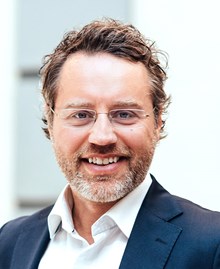
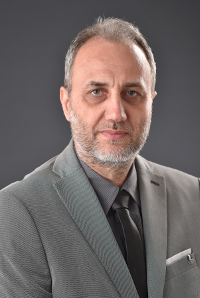
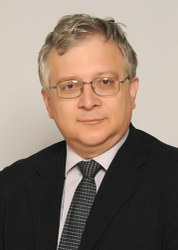
Tracy Becker is an Adjunct Assistant Professor in the Department of Civil Engineering at McMaster University, where she has been since 2014. Her expertise lies in the design, modeling, and experimental testing of high-performance structural systems with a focus on seismic isolation. Education: BS in Structural Engineering, University of California, San Diego MS and PhD in Structural Engineering, Mechanics and Materials, University of California, Berkeley Post-doctoral research at Kyoto University's Disaster Prevention Research Institute Research Interests: Becker specializes in seismic isolation systems, hybrid simulation methods, and structural performance under extreme events. Her work spans bridge engineering, nuclear infrastructure protection, and innovative materials for earthquake resilience. She integrates computational modeling with experimental validation to address challenges in: Nonlinear system behavior in isolated structures Multi-hazard optimization for seismic and wind loads Bridge management using data-driven and fuzzy logic frameworks Advanced gusset plate design for seismic retrofit Adaptive isolation systems for nuclear facilities Probabilistic lifetime demand predictions for infrastructure Teaching: She has instructed courses in Seismic Design (CIVENG 4ED4), Structural Mechanics (CIVENG 2C04), and Earthquake Engineering (CIVENG 730) at McMaster University.
Ebru Turanoglu Bekar is a Senior Lecturer at the Department of Industrial and Materials Science, Chalmers University of Technology, specializing in Smart Maintenance and Production Systems. She contributes to the Production Service Systems & Maintenance research group. Research Interests: Total Productive Maintenance (TPM), Artificial Intelligence applications in manufacturing, Multi-Criteria Decision Making, Performance Measurement systems Recent Focus: Development of data-driven algorithms for predictive maintenance, integration of digital twins in industrial contexts Key Projects: Factory SensAI (2025–2028) - Data integration for AI in manufacturing Trustworthy Predictive Maintenance TPdM (2022–2025)
Martin Carlsson-Wall is a Full Professor at Stockholm School of Economics (SSE) in the Department of Accounting within the House of Governance and Public Policy. He serves as Center Director for both the Center for Municipality Governance and the Center for Security and Resilience. In 2024, he was named "The Linder Chair in Sports and Business," the first Chair at SSE on Sports and Business topics. Since 2017, he has been Program Director for the MSc in Accounting, Valuation and Financial Management, and in 2015, he founded the Center for Sports and Business, which now includes 40 faculty members and has strategic partnerships with major Swedish sports organizations across football, hockey, golf, and skiing. Martin Carlsson-Wall's research focuses on accounting in sports organizations and accounting in inter-organisational relationships across both private and public sectors. His work extensively examines management control systems , particularly in contexts of innovation , growth companies , and risk management . His research often takes a qualitative approach, investigating how accounting practices function in extreme situations (such as the Swedish migrant crisis), high-intensity organizations (like football clubs), and during organizational change processes. Analysis of Professor Carlsson-Wall's recent publications reveals a strong thematic focus on the intersection of accounting practices with sports management and public sector administration. His work demonstrates how management control systems adapt to different organizational contexts, from football clubs to technology firms and public administration during crises. A recurring theme is how accounting practices mediate tensions between different stakeholder interests and how they evolve in response to organizational challenges. His research methodology typically employs in-depth case studies that examine accounting as a social practice rather than merely a technical function. Professor Carlsson-Wall has received significant recognition through his appointment as "The Linder Chair in Sports and Business" in 2024, establishing the first dedicated research position at SSE focusing on the business aspects of sports. As an educator, Professor Carlsson-Wall serves as Program Director for the MSc in Accounting, Valuation and Financial Management and teaches several key courses including BE901 Hybrid Organizations: Value Creation and Strategy at the bachelor's level, and course 3313 Investments and Value Creation in Global Sports (which he directs) and course 3302 Management Control at the master's level. He also supervises master's theses in Accounting and Financial Management. In Executive Education, he teaches on management control, costing, performance management, transfer pricing, investment management, and financial analysis through both open programs and customized corporate offerings. Professor Carlsson-Wall founded and directs the Center for Sports and Business, which has grown to include 40 faculty members and established partnerships with major Swedish sports organizations. He also leads the Center for Municipality Governance and the Center for Security and Resilience, demonstrating his commitment to applying accounting and management control research to practical governance challenges in both public and private sectors.
Soufiene Djahel is a Professor at the Centre for Future Transport and Cities (CFTC) at Coventry University, UK. His research focuses on connected and autonomous vehicles (CAVs), unmanned aerial vehicles (UAVs), cyber security, and smart cities. He holds a PhD in Secure Routing and Medium Access Protocols from Université des Sciences et Technologies de Lille (2010), and has held academic positions including Senior Lecturer at the University of Huddersfield and Manchester Metropolitan University. His research interests include CAV coordination protocols, cyber-physical security solutions, and intelligent transportation systems. Djahel leads projects such as the £1.2M AeroPharma Logistics initiative and has secured funding from the Newton Fund and JSPS. He is a recipient of the 2021 JSPS Invitational Fellowship and has published extensively in IEEE journals and conferences. Current projects explore UAVs-as-a-service, digital twins for CAVs, and B5G/6G for smart infrastructure. He advises PhD students on topics like AI-based threat mitigation and transport electrification. Djahel also serves as an external examiner and editorial board member for journals like IEEE Transactions on Intelligent Transportation Systems.
Ramana Vinjamuri is an Associate Professor in the Department of Computer Science and Electrical Engineering at the University of Maryland, Baltimore County (UMBC). He holds a secondary appointment as Visiting Professor at the Indian Institute of Technology, Hyderabad, India. His academic journey includes a Ph.D. in Electrical Engineering from the University of Pittsburgh (2008), M.S. in Bioinstrumentation from Villanova University (2004), and B.Tech. in Electrical and Electronics Engineering from Kakatiya University (2002). Dr. Vinjamuri's research focuses on Brain-Machine Interfaces (BMIs) for upper-limb prostheses control , neuroprosthetics and exoskeletons , machine learning in motor control , and neurophysiological signal processing . His work extends synergy-based models to control 37-dimensional hand movements, addresses human-robot interaction through emotionally intelligent systems, and develops neurotechnologies for substance use disorder using wearable sensors and AI. NSF CAREER Award (2019) NSF IUCRC BRAIN Center Planning Grant (2020) Harvey N Davis Distinguished Teaching Assistant Professor Award (2018) His publications demonstrate expertise in EEG and EMG signal analysis , deep learning for motor decoding , synergy modeling , and humanoid robot control . The Vinjamuri Lab at UMBC involves graduate, undergraduate, and high school researchers, with international collaborations in India and the US.
Dragan S. Antic is a Professor at the Department of Automation, Faculty of Electronics, University of Niš. He earned his PhD in Automation from the same institution in 1994, following a Master's (1991) and Bachelor's (1987) degree in the same field. His research focuses on control systems, signal processing, and neuro-fuzzy systems, with a strong emphasis on sliding mode control, orthogonal function-based modeling, and adaptive neural networks. He has published 51 papers in journals with impact factors and currently participates in 2 national and 8 international research projects. Key research areas include dynamic system modeling, quasi-orthogonal filters, and finite-time stability analysis of time-delay systems. His work often integrates mathematical techniques with engineering applications, such as anti-lock braking systems and PID control optimization. Contact details include his office at Aleksandra Medvedeva 4, Niš, and the email dragan.antic@elfak.ni.ac.rs. Professional contributions include foundational research in endocrine neural networks and low-pass filter design, with notable publications in journals like Electronics Letters and Journal of the Franklin Institute . His efforts bridge theoretical advancements with practical engineering solutions in automation and control.
Assoc. Prof. Dr. Ayhan Gün is an Associate Professor in the Department of Electrical and Electronics Engineering at Kütahya Dumlupınar University's Faculty of Engineering. With a career spanning over two decades, he has held various academic positions including Research Assistant, Assistant Professor, and currently Associate Professor since 2024. His extensive administrative experience includes serving as Head of the Control and Command Systems Department (2007-2021) and various leadership roles in university-industry collaboration initiatives. Dr. Gün completed his Bachelor's degree at Near East University (1991-1996), Master's at Dumlupınar University (1998-2001), and PhD at Eskişehir Osmangazi University (2001-2007). His research focuses on control systems, mathematical modeling, artificial neural networks, robotics, SCADA, PLC programming, electromechanical systems, nonlinear control, fuzzy logic, optimization techniques, automation, biomechanics, and mechatronics. His recent publications demonstrate a consistent research trajectory in control engineering, with particular emphasis on optimization algorithms applied to quadrotor control, inverted pendulum systems, and electrical motor design. His work bridges theoretical control concepts with practical implementations in robotics and power systems. A significant portion of his research involves applying swarm intelligence and evolutionary algorithms to solve complex control problems. Bilim, Sanayi ve Teknoloji Bakanlığı Kurumsal Kapasitenin Arttırılması (2016) BİLİM SANAYİ VE TEKNOLOJİ BAKANLIĞI Çift Beslemeli İndüksiyon Generatörü Tasarımı ve İmalatı (2016) Dr. Gün has supervised multiple graduate students and managed numerous research projects, including the current 'Robotic Arm Design and Implementation for Patients with Hemiparetic Arms' project. His external roles include serving as an expert witness for judicial institutions, project referee for TÜBİTAK, and publication reviewer for IEEE Transactions. He has also contributed to regional development through his work with Kütahya Governorship's Planning and Development Board.
Tim J. Nye is an Associate Professor in the Department of Mechanical Engineering at McMaster University's Faculty of Engineering. He holds a Ph.D. in Mechanical Engineering (1997) from the University of Waterloo, following an M.Sc. (1989) at Ohio State and B.A.Sc. (1987) at Waterloo. His research focuses on applying operations research techniques to manufacturing systems, with specific expertise in optimization algorithms for sheet metal processes, hydroforming reliability, and adaptive control in forging. Education: Ph.D. Mechanical Engineering, University of Waterloo (1997) M.Sc. Mechanical Engineering, Ohio State (1989) B.A.Sc. Mechanical Engineering, University of Waterloo (1987) Research interests span multiple dimensions of advanced manufacturing: developing decision models for production investment, creating novel lot-sizing algorithms incorporating work-in-process costs, exact solutions for 2D nesting problems, and agent-based systems for reliability prediction using warranty data. His work bridges theoretical operations research with practical metal forming applications. Recent publications demonstrate consistent contributions to manufacturing optimization, with particular focus on stamping processes, sheet metal design, and hydroforming reliability. These align with McMaster's research clusters in Advanced Materials & Manufacturing and Infrastructure. Scientific awards include the 2002 CSME Best Student Paper competition win for machine vision research with S. Dworkin. He maintains active collaborations with industry partners, as evidenced by his research on industry-university R&D ventures. Current projects explore intelligent open die forging as a solid freeform fabrication method, demonstrating his commitment to both traditional manufacturing improvement and emerging rapid prototyping technologies.
Damian Grela is a Lecturer in the Department of Automation and Computer Science at the Faculty of Electrical and Computer Engineering, Cracow University of Technology. His work spans two distinct research domains: software engineering (focusing on BPEL processes, web services, and fault injection testing) and environmental engineering (specializing in diatomite-based biogennic pollutant removal, rain gardens, and surface water quality monitoring).
Gabriella Casalino is an Assistant Professor at the University of Bari Aldo Moro, Department of Computer Science, and a key researcher at CILAB - Computational Intelligence Lab. Her work focuses on Computational Intelligence methods for interpretable data analysis, particularly in eHealth, Data Stream Mining, and eXplainable Artificial Intelligence (XAI) within medical and educational domains. She has contributed to innovative approaches in smartphone-based health monitoring, fuzzy logic applications, and remote vital sign detection via photoplethysmography. Education : Ph.D. in Computer Science, with advanced training at institutions like Universitat de Girona and Université de Mons. Research Trends : Recent publications highlight applications of evolving granular computing, neuro-fuzzy systems, and explainable AI in hypertension prediction, bipolar disorder monitoring, and educational data analysis. Key subfields include remote health monitoring, medical data streams, and hybrid AI models. Grants : Research funded by AIRC (Italian Cancer Research Foundation), focusing on computational methods for healthcare challenges. Labs & Collaborations : Active in CILAB, collaborating on projects involving mHealth solutions, cardiovascular risk assessment, and intelligent educational systems.
Miloš Racković serves as a full Professor in the Department of Mathematics and Informatics at the University of Novi Sad, Serbia. He maintains active academic engagement through the Laboratory for the development of information systems, with his office located in the Information technologies and systems office (DMI&DF) on the second floor, room 49. Contact is available via telephone (485)-2868 or email rackovic@dmi.uns.ac.rs, and his personal website (http://www.is.pmf.uns.ac.rs/rackovicm/) provides additional resources. His research spans foundational and applied computer science, with seminal contributions in fuzzy database systems including PFSQL query language development and prioritized fuzzy logic for relational databases and XML. He has pioneered deep learning methodologies through innovative classification techniques using negative and missing features in convolutional neural networks. Additional expertise includes high-performance computing implementations of Lattice Boltzmann methods using OpenCL, robotics (symbolic modeling and trajectory planning), and blockchain applications for Industry 4.0 production processes. His sports analytics work applies neural networks to basketball player and referee movement analysis. Analysis of his 2012-2025 publications reveals a strategic evolution toward interdisciplinary applications, particularly in industrial transformation (blockchain-enabled traceability) and sports analytics. His work consistently bridges theoretical computer science with practical implementations, demonstrating increasing focus on real-world problem solving while maintaining strong foundations in database theory and computational methods. Professor Racković leads the Laboratory for the development of information systems, which focuses on advancing information system methodologies through formal modeling extensions (including Petri net innovations) and practical implementations for uncertainty management. The laboratory's work spans from foundational research in fuzzy logic systems to applied projects in high-performance computing and blockchain integration, fostering innovation in information technology development.
Anant Narula is a postdoctoral researcher at Chalmers University of Technology, Sweden, affiliated with the Department of Electrical Engineering. His work focuses on power electronics in power systems, stability analysis of grid-forming converters, and renewable energy integration. PhD in Electrical Engineering (2023), Chalmers University of Technology Postdoc since 2023 at Department of Electrical Engineering Research Interests: Narula specializes in power electronics for power systems, analyzing grid-forming converter dynamics, stability, and control strategies. His work addresses challenges in renewable energy integration, microgrid protection, and converter-based grid support. Publication Trends: His recent articles (2024–2025) explore small-signal analysis of converters, reactive behavior impacts, and stability enhancement techniques. Earlier works (2016–2023) cover fault ride-through, parameter tuning, and modular converter design. Scientific Affiliation: He is a member of IEEE, contributing to power electronics and renewable energy research through collaborations and conference proceedings.
Dr. Bharanidharan Shanmugam is an Associate Professor in Information Technology at Charles Darwin University's Faculty of Science and Technology. He specializes in cybersecurity, IoT security, and cyber risk management in microgrids. His research focuses on addressing real-world challenges in IoT, smart grids, and medical devices to enhance community impact. **Research Interests:** - IoT Security - Cyber Risk Assessment in Microgrids - Network and Information Security - Applied Cybersecurity Solutions - Blockchain and Privacy-Preserving Technologies **Key Projects (2019–2025):** - Cyber Territory Skills Hub (2023–2025) - Renewable Energy Microgrid Hub (2021–2024) - Blockchain-Based Digital Identity (2019–2020) **Publications:** Focuses on IoT security frameworks, intrusion detection systems, and AI-driven cybersecurity solutions. Recent works include studies on smart grid load forecasting, medical IoT threat detection, and water leakage detection using machine learning. **Grants & Supervision:** Principal Investigator on multiple ARC-funded projects. Supervises PhD students in DevSecOps and IoT security. Active in organizing workshops on digital awareness for indigenous communities.
Assoc. Prof. Iliev Atanas is affiliated with the Faculty of Electrical Engineering and Information Technologies (FEIT) at the Ss. Cyril and Methodius University of Skopje. He holds the position of Associate Professor at the Institute for Power Plants and Switchgear. His academic journey includes a PhD (2003), MSc (1993), and BSc (1987) in Electrical Engineering from FEIT. His work experience spans over three decades, starting as a Junior Assistant (1987–1994), progressing to Assistant Professor (1994–2008), and attaining his current rank in 2008. His research focuses on optimizing power systems through advanced algorithms, particularly genetic algorithms applied to unit commitment, hydrothermal scheduling, and microgrid management. Key areas include renewable energy integration, grid reliability, and security-constrained optimization. He has contributed to over 50 publications addressing topics like dynamic programming for hybrid power systems, fuzzy logic for hydroelectric project evaluation, and reliability modeling of substations under distributed generation uncertainty. Notable contributions include developing novel self-adaptive genetic algorithms for short-term scheduling and energy management in hybrid systems. His work bridges theoretical optimization with practical grid challenges, emphasizing sustainability and resilience in power infrastructure.
Hamed Badihi is an Assistant Professor in Automation Technology and Dependable Systems at Tampere University , part of the Faculty of Engineering and Natural Sciences. He leads the Dependability and Automation Research in Cyber-Physical Systems (DARES) Group within the Dependable Systems Cyber Laboratories . His research focuses on critical aspects of condition monitoring, fault-tolerant control, and attack-resilient control to advance sustainable, dependable cyber-physical systems. Research Interests include: Cybersecurity for industrial control systems Fault-tolerant control mechanisms Resilient control strategies for renewable energy systems Condition monitoring of wind turbines and microgrids Recent Contributions emphasize hybrid approaches combining machine learning and control theory for cyber-attack detection and system resilience in wind farms and microgrids. His work addresses challenges like real-time fault diagnosis and adaptive control under adversarial or environmental perturbations. Awards & Roles : Senior Member of IEEE, editor for International Transactions on Electrical Energy Systems , Advances in Fuzzy Systems , and Processes journals. Active in EU projects like StreamSTEP . Labs & Teams : Directs the DARES Group, collaborating on initiatives like the Dependable Systems Cyber Laboratories to pioneer innovations in cyber-physical system dependability.