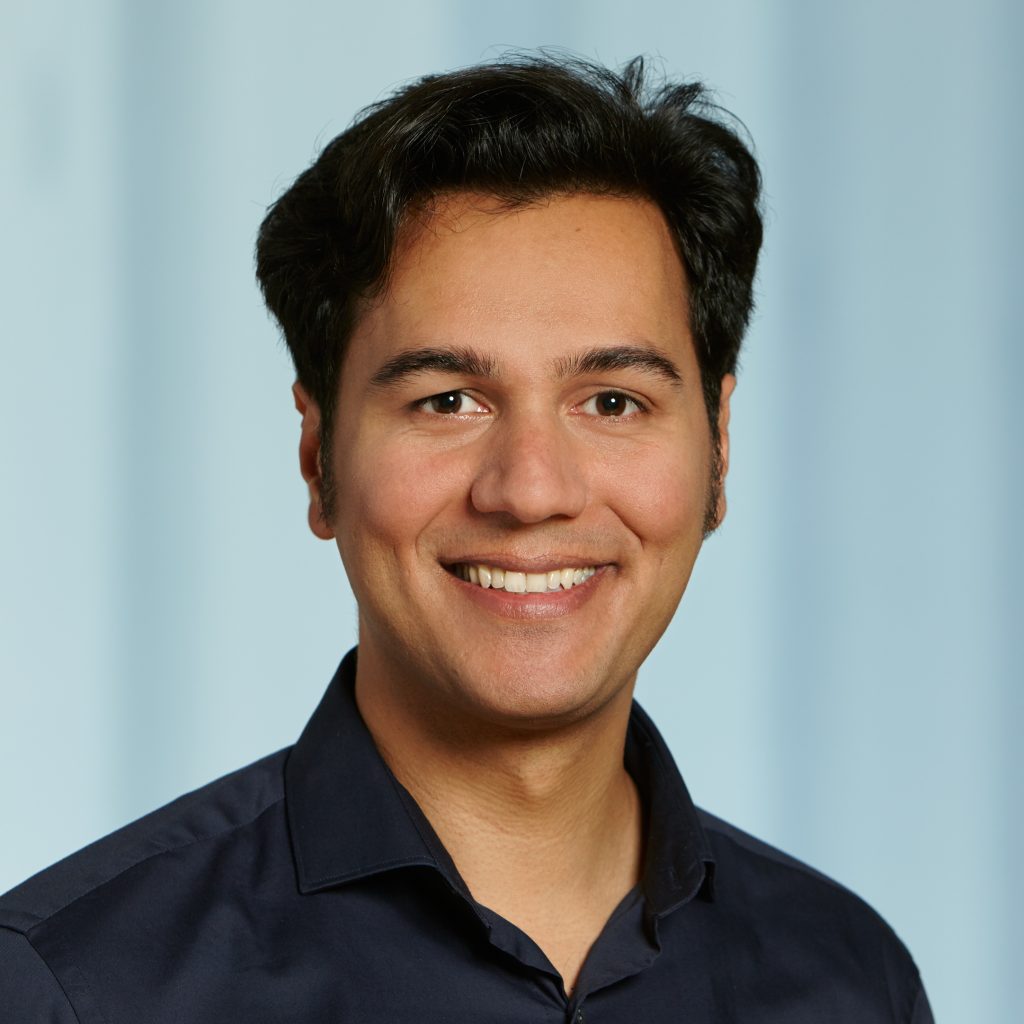
Kaveh Razavi is an Assistant Professor at ETH Zurich in the Department of Information Technology and Electrical Engineering, supervising the Computer Security Group. He is also affiliated with the Department of Computer Science. Research focuses on commodity hardware and operating systems security Teaching: Computer Engineering (BSc 2022–2025), Hardware Security (MSc 2016–2025), Advanced Operating Systems (MSc 2016–2019) Research Interests: Razavi's work bridges computer systems and security, emphasizing microarchitectural vulnerabilities, hardware exploitation, and security verification. His group develops tools for analyzing hardware-software interactions and mitigating memory attacks like Rowhammer. Scientific Awards: Distinguished/Best Paper Awards at IEEE S&P, USENIX Security, MICRO Five Pwnies Awards for innovative research Dutch Veni Grant, ERC Starting Grant Jochen Liedtke Young Researcher Award Golden Owl Teaching Award (2022) ETH Medal, Intel Bounty Reward, BlackHat USA Recognition
Mathias Payer is an Associate Professor at EPFL's School of Computer and Communication Sciences (IC), leading the HexHive Laboratory . His work focuses on software security, particularly addressing memory corruption and type violations through binary analysis and compiler-based techniques. He contributes to research in secure system design, fault isolation, and fuzzing methodologies. Current PhD students : Di Bartolomeo Luca, Feng Zhiyao, Hofhammer Florian, Lyu Tao, Mao Philipp Yuxiang, Zhang Chibin, Zheng Han Past EPFL PhD students: Badoux Nicolas Daniel, Bhattacharyya Atri, Hazimeh Ahmad His research explores software security in areas like: Protecting applications from vulnerabilities Binary exploitation and mitigation Compiler-driven security hardening Strong sanitization and privilege separation Memory corruption detection The HexHive group develops tools and frameworks for: Automated fuzz driver generation Gradual compartmentalization State inference for feedback optimization Secure cell architectures Recent publications highlight advancements in: Fuzzing hybrid approaches (e.g., DUMPLING, MendelFuzz) Memory safety validation (QMSan, Pacmem) Compiler-assisted defenses (Gradient, Type++)
Zhendong Su is a full professor in the Department of Computer Science at ETH Zurich since August 2018. Previously, he held a full professorship at UC Davis from 2003 until June 2019. He earned his Ph.D. in Computer Science from UC Berkeley and dual Bachelor’s degrees in Computer Science and Mathematics from UT Austin in 1995. Affiliations: ETH Zurich: Full Professor (since 2018) UC Davis: Full Professor and Chancellor’s Fellow (2003–2019) IEEE Fellow, ACM Fellow, and Member of Academia Europaea His research focuses on programming languages, compilers, software engineering, computer security, and education technologies . Key contributions include compiler validation (e.g., Project Yin-Yang for SMT solvers and DBMS testing), testing tools like SQLancer, and educational innovations such as the Algot visual programming language. Recent work emphasizes secure AI (e.g., CipherSteal for TEE-shielded models) and compiler reliability (e.g., Artemis/Apollo for JIT validation). He has pioneered techniques like metamorphic testing and equivalence modulo inputs (EMI) for compiler validation, uncovering thousands of bugs in GCC/LLVM and SMT solvers. Awards: ICSE MIP Award (2022), ACM SIGSOFT Impact Paper (2018), NSF CAREER Award, and multiple industrial awards. His students have won IEEE TCSE Rising Star and SIGSOFT Impact Paper awards, securing roles at top universities and companies like Google and NVIDIA. Service: Steering committee member of ISSTA and ESEC/FSE, ACM Distinguished Speaker, and Associate Editor for ACM TOSEM. Program chaired ISSTA 2012 and co-chaired FSE 2016. Labs/Teams: Leads research groups on compiler validation, secure AI, and education technologies. Projects include Yin-Yang (SMT testing), SQLancer (DBMS fuzzing), and Algot (visual programming for education).
Laura Pozzi is a Full Professor at the Faculty of Informatics, Università della Svizzera italiana (USI), Switzerland, since 2015. She previously held positions as Associate Professor (2011–2015) and Assistant Professor (2005–2011) at USI. Prior to joining USI, she was a postdoctoral researcher at EPFL's Processor Architecture Laboratory (2001–2005), a research engineer at STMicroelectronics (2000), and an Industrial Visitor at UC Berkeley (2000). Education: MS and PhD in Computer Engineering from Politecnico di Milano, Italy (1996–2000). Her research focuses on the interaction between compiler and architecture design, particularly in embedded systems , with key areas including approximate computing , coarse-grained reconfigurable arrays (CGRAs) , high-level synthesis (HLS) , and fuzz testing . She has led projects on automated design space exploration, compiler optimizations for reconfigurable architectures, and error estimation in approximate circuits. Recent Publications span topics like SAT-based mapping for CGRAs , grammar-based fuzzing of shell interpreters , and approximate logic synthesis , reflecting her interdisciplinary work bridging hardware/software co-design and software verification. Scientific Awards: Credit Swiss Best Teaching Award IEEE DAC Best Paper Award Leadership Roles: Co-Program Chair, IEEE Symposium on Application Specific Processors (SASP) Editorial Board Member, IEEE Design and Test Students: Current: Rodrigo Otoni (Postdoc), Morteza Rezaalipour (PhD), Riccardo Felici (PhD), Cristian Tirelli (PhD) Alumni: Ilaria Scarabottolo (PhD/Postdoc), Lorenzo Ferretti (PhD/Postdoc), Georgios Zacharopoulos (PhD), Giovanni Ansaloni (PhD/Postdoc), Paolo Bonzini (PhD)
Dr. Stephan Neuhaus is a Senior Lecturer at the Zurich University of Applied Sciences (ZHAW), School of Engineering, where he contributes to the Research Focus Information Security. His work bridges applied research and practical implementation in cybersecurity, with a focus on software security, embedded systems, and human factors. Research Focus: Information Security Institution: ZHAW School of Engineering Location: Winterthur, Switzerland His research interests span information security, software testing, embedded systems security, network transparency, and usable security. He investigates how security mechanisms can be effectively implemented in real-time systems and how users interact with security-critical systems like password entry and phishing detection. His recent publications, from 2016 to 2025, reflect a strong trend in applied cybersecurity research. Key themes include fuzzing for GNSS modules, real-time security policies using BPF on FPGAs, privilege handling frameworks, and network observability. These works appear in top venues such as IEEE and ACM conferences, demonstrating technical depth and relevance to both industry and academia. Dr. Neuhaus has led and contributed to several applied research projects, including Malicious Node (lateral movement detection), OptiPhish (phishing awareness training), ATLAS (data management for pharma), and Identity Management for Wireless Networks. These projects highlight his leadership and collaboration in interdisciplinary, real-world security challenges. He is actively involved in research teams and collaborates with colleagues across institutions, particularly in projects involving secure embedded systems and network security. His work often involves FPGA implementations, software toolchains, and human-centered security evaluation.
Martin Vechev is a Full Professor of Computer Science at ETH Zurich, leading the Secure, Reliable, and Intelligent Systems Lab. He is also the Founder and Architect of INSAIT, a pioneering research center in computer science and AI in Eastern Europe. Previously, he worked at IBM T.J. Watson Research Center and earned his PhD from the University of Cambridge and B.Sc. from Simon Fraser University. His research focuses on AI and programming languages, with contributions to quantum programming (e.g., Silq), AI-driven code analysis (DeepCode), and security for decentralized systems (ChainSecurity). He has co-founded three deep-tech startups and received numerous awards, including the ACM SIGPLAN Robin Milner Award. His work spans theoretical foundations and practical systems, emphasizing formal methods and security guarantees. Education: PhD in Computer Science, University of Cambridge (2003-2008) B.Sc. in Computer Science, Simon Fraser University (1996-2001) Research Interests: His work bridges AI and programming languages, addressing challenges in secure AI, quantum computing, and automated reasoning. Key areas include: AI for code analysis and security Formal verification of decentralized systems Quantum programming languages Data privacy and adversarial machine learning Key Contributions: His group built widely used systems like Silq (first high-level quantum language) and developed AI-driven tools for detecting security vulnerabilities (DeepCode). His research on watermarking and federated learning privacy has been influential in both academia and industry. Awards: ACM SIGPLAN Robin Milner Young Researcher Award ERC Starting and Consolidator Grants Google/Facebook Faculty Awards IBM Research Excellence Awards Advising & Grants: He leads the SRI Lab at ETH, supervises PhD students in AI and programming languages, and manages grants from ERC, industry partners, and Swiss national initiatives. His startups (DeepCode, ChainSecurity, LatticeFlow) address real-world challenges in AI security, blockchain, and robust machine learning. Labs & Teams: The Secure, Reliable, and Intelligent Systems (SRI) Lab at ETH Zurich focuses on safe AI, programming languages, and security. Collaborations include INSAIT, a joint venture with ETH and EPFL.
Prof. Hans Wernher van de Venn is a Professor at the ZHAW School of Engineering's Institute of Mechatronic Systems, Zurich, Switzerland. His work focuses on Industry 4.0, robotics, predictive maintenance, and human-robot collaboration. He leads and collaborates on projects such as SmartAssets, Cybathlon 2024, and Robo-Mate, aiming to enhance industrial automation and safety. Research Interests: His research spans robotics systems, digital twins, and sustainable manufacturing. Notable contributions include predictive maintenance algorithms using autoencoders and domain adaptation techniques, as well as advancements in human-robot interaction safety through deep learning. He has also pioneered wearable robotic exoskeletons for industrial applications. Projects & Awards: Over 20 projects highlight his leadership in Industry 4.0 innovation. Recent work includes testing frameworks for digital twins, generative SDK development, and applying ChatGPT for structured industrial data. His publications emphasize practical applications of AI in manufacturing and healthcare robotics. Grants & Labs: Active in collaborative grants focusing on smart factories, maintenance systems, and embedded systems. His team develops solutions at the intersection of mechatronics and software engineering, with a focus on real-world deployment.
Prof. Ralf Jung is an Assistant Professor at ETH Zürich's Department of Computer Science, leading the Programming Language Foundations Lab under the Institute for Programming Languages and Systems. His work focuses on formal verification of programming languages, particularly Rust and Iris. Previously, he earned his PhD at Saarland University and MPI-SWS, advised by Derek Dreyer, followed by a postdoc at MIT CSAIL's PDOS group. Research Interests: Formal foundations of Rust, including tools like Miri for detecting undefined behavior and MiniRust for precise specification. Iris logical framework for modular verification of programming languages at scale. Concurrent and distributed systems verification using separation logic. Advising & Labs: He leads the Programming Language Foundations Lab and is hiring postdocs. His work integrates theoretical rigor with practical tooling for real-world language verification challenges. Labs/Teams: Programming Language Foundations Lab at ETH Zürich, collaborating with the Rust language team and global research community.
Gabriele Bavota is a Full Professor in the Faculty of Informatics at the Università della Svizzera italiana (USI). He holds a Laurea (cum laude) and PhD in Computer Science from the University of Salerno (2013). Before joining USI in 2016, he was an Assistant Professor at the Free University of Bolzano-Bozen (2014–2016) and a research fellow at the University of Sannio (2013–2014). Research Focus: Software maintenance, mining software repositories, empirical software engineering, and AI-driven code analysis. Awarded the 2018 ACM Sigsoft Early Career Researcher Award and leads the ERC Starting Grant project DEVINTA, exploring deep learning applications in software engineering. Authored over 180 publications in top venues like ICSE, FSE, and TOSEM, with multiple best/distinguished paper awards. His work bridges empirical studies, AI tools, and developer-centric solutions, addressing challenges in code quality, refactoring, and automated testing. He has served as program chair for ICPC 2016, SANER 2017, and ICSME 2023, and holds editorial roles in TSE, EMSE, and JSS. Labs/Teams: Principal Investigator of the DEVINTA project and part of the Software Institute at USI, fostering collaborations in AI, software engineering, and empirical research.