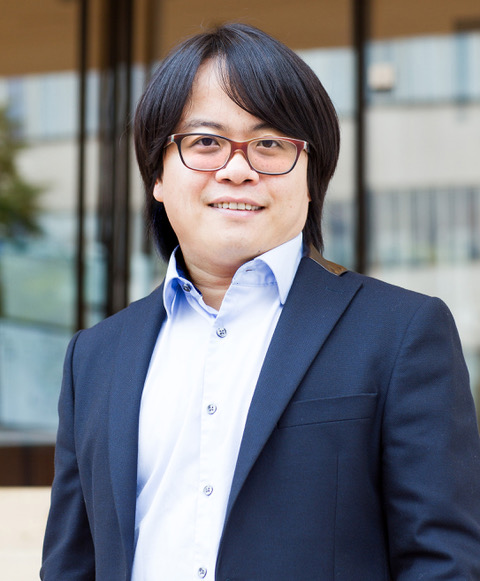
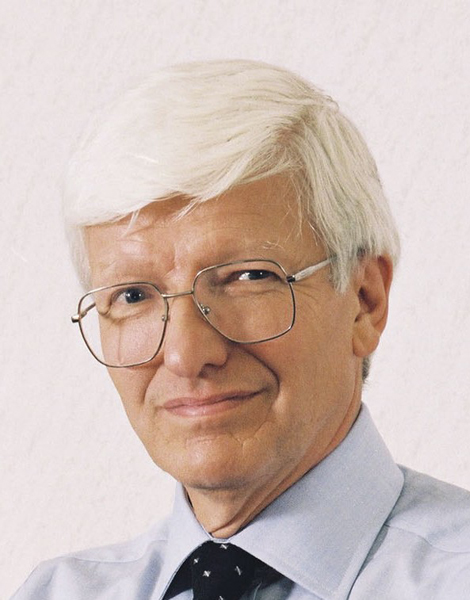
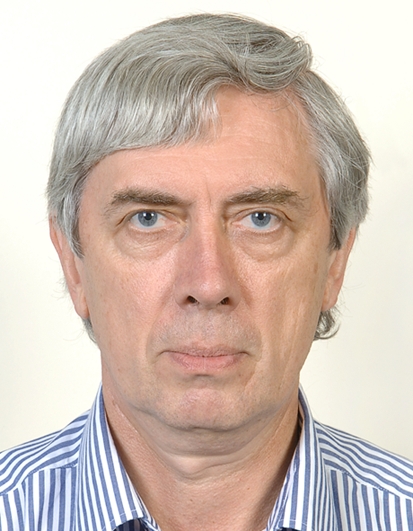
Hui Pan is a distinguished academic holding dual positions as Nokia Chair in Data Science and Professor of Computer Science at the University of Helsinki, and Chair Professor of Computational Media and Arts at the Hong Kong University of Science and Technology (HKUST). His research spans networking, mobile computing, augmented reality, and computational social science. He earned his Ph.D. in Computer Science from the University of Cambridge in 2007. His work bridges social networks with mobile systems, pioneering fields like mobile social networks and opportunistic forwarding algorithms. Research interests include data science, complex networks, and innovative applications of augmented reality. His recent publications focus on low-latency AR frameworks, blockchain for computation offloading, and mobile web visualization. He has received prestigious awards, including IEEE Fellow (2018), ACM Distinguished Scientist (2016), and the Nokia Chair Endowment (2017). He has supervised over 15 PhD and 12 MPhil graduates, with 13 current Ph.D. students and 2 MPhil students. His editorial roles include Associate Editorships at IEEE Transactions journals and guest editorships at top venues like IEEE JSAC and ACM Transactions. He has organized conferences such as WWW Track Chair and ExtremeCom General Chair.
Marco Di Renzo is a CNRS Professor (Directeur de Recherche Titulaire) at University of Paris-Saclay, affiliated with CentraleSupelec and the Signals and Systems Laboratory (L2S). He serves as Coordinator of the Communications Networks Area at the DigiCosme Laboratory of Excellence and Editor-in-Chief of IEEE Communications Letters. His academic leadership includes membership in the Ph.D. School on ICT Admission Committee at Paris-Saclay University. His educational background includes a Laurea (cum laude) and Ph.D. in Electrical Engineering from University of L'Aquila, Italy (2003, 2007), and a Habilitation à Diriger des Recherches from University Paris-Sud (2013). Laurea (cum laude), Electrical Engineering, University of L'Aquila (2003) Ph.D., Electrical Engineering, University of L'Aquila (2007) Habilitation à Diriger des Recherches, University Paris-Sud (2013) Di Renzo's research focuses on next-generation wireless communications, particularly reconfigurable intelligent surfaces (RIS), 6G technologies, and stochastic geometry modeling. His work bridges theoretical communication theory with practical implementations in cellular networks, millimeter-wave communications, and ultra-wide band systems. Recent publications demonstrate leadership in holographic metasurfaces, integrated sensing and communication (ISAC), and AI-empowered network design, establishing him as a pioneer in electromagnetic wave manipulation for future networks. His award-winning publications span RIS-aided communications, channel modeling, and security frameworks. Analysis of his recent work reveals consistent focus on three pillars: (1) fundamental electromagnetic theory for wave manipulation, (2) practical RIS implementations across frequency bands, and (3) integration with AI for network optimization. His articles frequently address industrial applications including factory automation and space-air-ground networks. Di Renzo's scientific recognition includes: IEEE Fellow (2020) and IET Fellow (2020) Highly Cited Researcher (Web of Science, 2019) SEE-IEEE Alain Glavieux Award (2017) Multiple Best Paper Awards (IEEE ICC, EURASIP) Nokia Foundation Visiting Professorship (2020) As Principal Investigator for CNRS, he coordinates multiple Horizon 2020 projects including SURFER, PathFinder, and MetaWireless. His leadership extends to serving as Project Coordinator for H2020 5Gwireless, 5Gaura, MAPNET, and REDESIGN. With over 350 publications, 17,000+ citations, and h-index of 66+, his research group maintains strong industry partnerships with Nokia and other telecommunications leaders. Di Renzo directs the Signals and Systems Laboratory (L2S) at Paris-Saclay and coordinates the DigiCosme Excellence Lab's Communications Networks Area. His team specializes in electromagnetic modeling for wireless networks and has pioneered the European Telecommunications Standards Institute (ETSI) Industry Specification Group on RIS. The group maintains active collaborations with Aalto University (Finland), University of Technology Sydney (Australia), and University of L'Aquila (Italy).
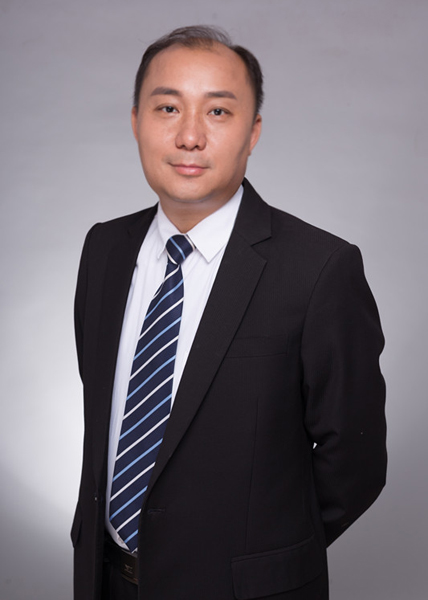
Hongbo Jiang is a Distinguished Professor and Vice Dean of the College of Computer Science and Electronic Engineering at Hunan University, China. He holds concurrent roles as Director of the Trusted Systems and Networking Key Laboratory of Hunan Province and Director of the Hunan International Technical Cooperation Base for High-Performance Computing and Distributed Systems. His academic journey includes tenures as a Professor at Huazhong University of Science and Technology and a Hong Kong Scholar Research Fellow at The Chinese University of Hong Kong. Education: PhD in Computer Science (Case Western Reserve University, 2008), B.S./M.S. in Mathematics (Huazhong University of Science and Technology, 2002). Research Interests: Distributed systems, mobile computing, smart sensing, wireless networks, IoT, and edge computing. Ongoing projects include mobile/wireless applications, data science in IoT, and edge computing platforms. His work emphasizes practical implementations such as DriverSonar for driving safety and SmileAuth for biometric authentication. Key Achievements: Elected Member of Academia Europaea (2022), Fellow of AAIA, IET, and BCS. Notable awards include the Wu Wenjun Science and Technology Award (2020) and multiple best paper recognitions. Over 100+ publications in top venues like ACM MobiCom, IEEE/ACM Transactions. Professional Contributions: Editorial roles across 8+ journals including IEEE Transactions on Mobile Computing and ACM Transactions on Sensor Networks. Conference leadership includes co-founding ACM TURC and EAI ICECI. Active in technical committees for INFOCOM, MOBIHOC, and ICDCS. Labs/Teams: Leads research groups focused on networking, IoT, and edge computing. Current openings for PhD/MSc students and PostDoc researchers with strong mathematical and systems backgrounds.
Hubert Zangl is a Professor at the University of Klagenfurt and Head of the Institute for Intelligent System Technologies . He serves as Chairman of the Information Technology Curricular Commission and participates in the Faculty Conference of the Faculty of Technical Sciences. Key research areas include: Sensor technology Electrical measurement technology Robotics Signal processing Electronics Recent research trends focus on: High-fidelity FMCW radar simulation frameworks Energy-efficient sensor systems Printed electronics for structural health monitoring Uncertainty propagation in measurement science Modular robotics with secure transducer identification Capacitive tactile sensing for robotic grasping Contact: Hubert.Zangl@aau.at
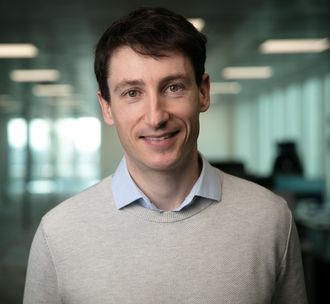
Johannes Brandstetter is an Associate Professor at the Institute for Machine Learning at Johannes Kepler University Linz (JKU) where he leads the "AI for data-driven simulations" research group. He is also Co-founder and Chief Scientist at Emmi AI, bridging academic research with industrial applications in AI-driven physics simulation. Brandstetter earned his PhD after working at CERN's CMS experiment on Higgs boson physics. In 2018, he transitioned to machine learning, joining Sepp Hochreiter's research group in Linz. From 2021-2023, he worked at the Amsterdam Machine Learning Lab under Max Welling and Microsoft Research, developing expertise in Geometric Deep Learning and neural surrogates for partial differential equations. He returned to JKU in October 2023 to establish his own research group. His research spans Machine Learning, Deep Learning, and Physics-Informed Machine Learning with focus areas including Neural PDE solvers, Computational Fluid Dynamics, and Climate Modeling. Brandstetter believes AI is poised to revolutionize industrial-scale simulations, potentially saving thousands of compute hours across engineering domains. His work integrates computer vision, numerical simulation, and engineering components to advance data-driven approaches. Recent publications reveal a strong trend toward foundation models for scientific applications, particularly in atmospheric modeling (Aurora), geometric deep learning, and neural surrogates for complex physical systems. His interdisciplinary work spans computer vision, climate science, computational physics, and engineering, demonstrating the versatility of his research approach. Principal Investigator for "AlKa-DL: Alpine karst spring discharge prediction" (FWF-funded, 2024-2027) Principal Investigator for Cluster of Excellence "Bilateral Artificial Intelligence" (FWF-funded, 2024-2029) Co-PI for "Fast, efficient and flexible CFD simulation through generative AI" (FFG-funded, 2025-2026) As an educator and researcher, Brandstetter actively engages with the scientific community through invited talks at major conferences including presentations on "Closing the Gap Between Scientific Foundation Models and Real-World Applications" (March 2025) and "Scientific Machine Learning for Science and Engineering" (February 2025).
Christopher Llewellyn-Smith is a distinguished physicist currently serving as a Visiting Professor at the Department of Physics, University of Oxford. He has held leadership roles including Director General of CERN (1994–1998), Provost of University College London (1999–2002), and Director of the UKAEA Culham Division (2003–2008). His work spans theoretical particle physics and fusion energy research. BA (Oxford, 1964), DPhil (Oxford, 1967) Fellow of the Royal Society (1984), Knight Bachelor (2001) His research includes foundational contributions to particle physics, such as the Gross/Llewellyn-Smith sum rule, and advocacy for fusion energy. He has advised on international scientific collaboration and policy, chairing the ITER Council and SESAME Council, and served on numerous advisory boards globally. Maxwell Prize and Medal (1979) Gold Medal of the Slovak Academy of Science (1997) US DOE Distinguished Associate Award (1998) He has contributed to over 170 publications and played key roles in advancing science policy, emphasizing basic research and international collaboration. Currently, he remains active in fusion research and scientific diplomacy.
Univ.-Prof. Dr. Alexander Kendl is a Professor and Director of the Institute of Ion Physics and Applied Physics at the University of Innsbruck. His research focuses on computational plasma physics with critical applications to magnetic confinement fusion energy, particularly addressing challenges in plasma edge physics and turbulence modeling for next-generation fusion reactors. Dr. Kendl received his Doctorate from the Technical University of Munich in 2000, following his Abitur from Gymnasium Schrobenhausen in 1990. He was appointed Associate Professor at the University of Innsbruck in 2010 and promoted to University Professor in 2020. His academic journey reflects a deep commitment to advancing plasma physics through rigorous computational approaches. Dr. Kendl's research interests center on plasma turbulence in magnetically confined systems , with particular emphasis on gyrofluid modeling , edge-localized modes (ELMs) , zonal flow dynamics , and impurity transport in fusion plasmas. His work bridges fundamental plasma physics with practical applications for ITER and DEMO, addressing critical challenges in plasma confinement and stability. He has developed sophisticated computational tools including GREENY, GHW, and TIFF to simulate complex plasma phenomena with high fidelity. His recent publications reveal a strong focus on advancing full-f gyrofluid approaches that capture kinetic effects while maintaining computational efficiency. Dr. Kendl's research spans from fundamental investigations of plasma dynamics to direct applications for current fusion devices like ASDEX Upgrade, with particular attention to hysteresis phenomena, electron-positron plasmas as fundamental testbeds, and the development of novel numerical methods for plasma simulation. As Director of the Institute of Ion Physics and Applied Physics, Dr. Kendl leads a vibrant research group that contributes significantly to the international fusion community. His team develops cutting-edge simulation codes and collaborates extensively with major fusion facilities worldwide, advancing our understanding of plasma edge physics and turbulence.
Bernhard Rinner is a Professor at the Institute of Networked and Embedded Systems within the Faculty of Technical Sciences at Alpen-Adria-Universität Klagenfurt. He is a member of the university Senate and serves as Prodekan (Deputy Dean). His research spans robotics, embedded systems, sensor networks, and privacy-aware computing , with a focus on resource-efficient designs for drones, autonomous systems, and IoT applications. Email: Bernhard.Rinner@aau.at Phone: +43 463 2700 3671 Office: B02.1.62, Lakesidepark Haus B02, Klagenfurt, Austria Research Interests include: Self-aware autonomous systems for adaptive mission planning and anomaly detection Resource-efficient embedded AI for drones and camera networks Secure IoT applications with privacy-preserving visual data processing Multi-agent coordination in confined environments and 3D navigation Dynamic sensor calibration for low-cost wireless networks Publications reflect trends in drone networks, self-aware computing, and privacy-aware sensing , emphasizing lightweight architectures, distributed coordination, and energy-efficient designs. Many recent works focus on binary neural networks, decentralized re-identification, and adaptive sensor reconfiguration .
Michael Bleyer is a Researcher in the Department of Computer Vision at the Technische Universität Wien (TU Wien), affiliated with the Faculty of Informatics. His work focuses on advanced imaging technologies, particularly in stereo matching, sensor design, and applications in augmented/mixed reality. He has contributed to projects funded by the Vienna Science and Technology Fund (WWTF), Austrian Science Fund (FWF), and the Federal Ministry of Transport, Innovation, and Technology (bm:vit). Education: Diplom-Ingenieur (Dipl.-Ing.) from TU Wien (2002), followed by a Dr.techn. (PhD) thesis on 'Segmentation-based stereo and motion with occlusions' (2006). He has supervised four students, including Armin Haßlacher (2012), Gregor Braun (2011), Roman Gross (2009), and Christian Rhemann (2005). Research Interests: Bleyer’s work bridges theoretical computer vision and practical sensor engineering. Recent trends emphasize SPAD-based imaging systems for low-light environments and head-mounted displays, addressing challenges like dark current compensation and temporal filtering. Earlier contributions include global stereo matching algorithms, optical flow estimation, and 3D scene reconstruction. Grants and Advising: Projects include Temporal-Consistent Stereo Matting (2009–2015, WWTF) Energy Functions for Global Stereo Matching (2007–2012, FWF) Video Engine Design Methodology (2006–2015, bm:vit) His advising spans topics like color in stereo matching and image filtering optimization.
Chao Zhang is an Associate Professor at the Department of Chemistry-Ångström Laboratory, Uppsala University, specializing in computational electrochemistry and multi-scale modeling of electrolyte materials. His research bridges atomistic simulations with machine learning approaches to address challenges in energy storage and conversion systems. Education: Dr. rer. nat. from RWTH Aachen University (2013); Docent from Uppsala University (2020) Appointments: Postdoctoral researcher at the University of Cambridge (prior to joining Uppsala in 2017) His group develops finite-field methods for computational electrochemistry and investigates electrified solid-liquid interfaces. Recent research trends include neural rendering for underwater SLAM systems (2025), robust path-following control in marine robotics, and event-based localization in LiDAR-integrated environments. Scientific Awards: ERC Starting Grant (2020) Junior Research Fellowship, Wolfson College (2015) Jülich Excellence Prize for Young Scientists (2013)
Patrick Lainer is a researcher at the Institute of Theoretical Physics at Technische Universität Graz (TU Graz), specializing in Computational Physics . His work focuses on plasma physics and nuclear fusion, particularly tokamak modeling, magnetic perturbations, and magnetohydrodynamics (MHD). Research Interests: Plasma Physics Computational Physics Nuclear Fusion Magnetohydrodynamics (MHD) Finite Element Method Applied Mathematics Lainer has contributed to studies on Reactive Magnetic Perturbations (RMP) , neoclassical toroidal viscosity , and impurity transport in tokamaks , with applications to projects like ITER and EU-DEMO . His research often involves hybrid kinetic-MHD models and iterative numerical approaches. Contact: Email: patrick.lainer@tugraz.at
Assoc. Prof. Filipa L. Sousa leads the Genome Evolution and Ecology Group at the University of Vienna’s Faculty of Life Sciences, Department of Functional and Evolutionary Ecology. Her research bridges microbial evolution, bioenergetics, and geobiological processes. Key projects include: Pan-Metabolic Profiling of Archaea (WWTF, 2016–2025), developing genomic tools for metabolic classification. Evolution of Physiology: The Link between Earth and Life (ERC Starting Grant, 2019–2025), exploring energy metabolism evolution in archaea. Her work focuses on archaeal physiology , sulfur metabolism , and metagenomic data analysis , with recent publications in Philosophical Transactions of the Royal Society B and Nature Microbiology . Notable awards include the Vienna Research Groups for Young Investigators (VRG) – Gender Mainstreaming (2017) . She supervises PhD students like Jessica Gomes da Silva and collaborates with institutions such as the Institute of Molecular Evolution at HHU Düsseldorf . Media outlets like BBC Earth and Nature have highlighted her contributions to understanding extremophilic archaea and early life evolution.
Prof. Matthias Harders is a Professor at the Department of Computer Science, University of Innsbruck. His work focuses on medical imaging, haptic systems, virtual reality, and data-driven simulation. He leads research in interactive visualization tools, medical device development, and machine learning applications in healthcare and environmental engineering. Research areas include haptic augmented reality for surgical training, deformable medical image registration, and synthetic data generation for retinal imaging. Notable projects include SPBView for eye movement analysis and the PoRi device for post-stroke rehabilitation. His work bridges computer science with biomedical applications, emphasizing real-world impact in healthcare technology. Publications span medical simulation, machine learning for biogas prediction, and perceptual interfaces. He collaborates on EU-funded projects involving VR/AR systems and has contributed to open-source tools for point cloud analysis and surgical planning.
Emmerich Kneringer is an Associate Professor at the Institute for Astro- and Particle Physics, Faculty of Mathematics, Computer Science and Physics, University of Innsbruck. He is a key member of the Experimental Particle Physics research group and actively contributes to the ATLAS collaboration at CERN. His research focuses on experimental high-energy physics, particularly Higgs boson physics, top quark physics, electroweak interactions, and searches for physics beyond the Standard Model, including supersymmetry, dark matter, and exotic particles. He also works on advanced data analysis methods such as neural simulation-based inference and machine learning applications in particle physics. Dr. Kneringer's recent publications (2023–2025) show a strong trend in precision measurements (e.g., Higgs and top properties), combination of search results, and innovative analysis techniques. His work spans detector performance, cross-section measurements, and searches for new phenomena in proton-proton and heavy-ion collisions. He is actively involved in public outreach, delivering lectures on astronomy, cosmic radiation, and particle physics to schools and the public, including events like Masterclasses and the Long Night of Research. Experimental Particle Physics Higgs and Top Quark Physics Machine Learning in Physics Beyond Standard Model Searches Heavy-Ion Physics Dr. Kneringer has no listed scientific awards in the provided text. He advises no named students in the material. His research is conducted within the ATLAS collaboration, a large international team at CERN, and he contributes to both physics analysis and detector performance studies. He also participates in educational initiatives, including public lectures and training programs.
Boris Sharkov is a Full Professor at State University - MEPhI since 2005 and has held multiple leadership roles in international nuclear and plasma physics research organizations. He currently serves as Special Representative of JINR DG in international research organizations (2021–today), and previously held positions including Vice-Director at Joint Institute for Nuclear Research (JINR-Dubna, 2017–2021), Scientific Director at FAIR Europe (2010–2016), and Director at ITEP-Moscow (2005–2008). He co-founded the FAIR Russia Research Centre in Moscow (2007–today). Research interests focus on beam-plasma interactions, ion beam generation, inertial confinement fusion, and particle accelerator applications. He has received prestigious awards including the Veksler Prize, Kurchatov Medal, and State Prize of the Russian Government. Sharkov has chaired numerous international conferences and advisory committees, including the European Physical Society's Plasma Physics Board, the NICA project's Machine Advisory Committee, and the European Physical Letters Journal co-editor role.