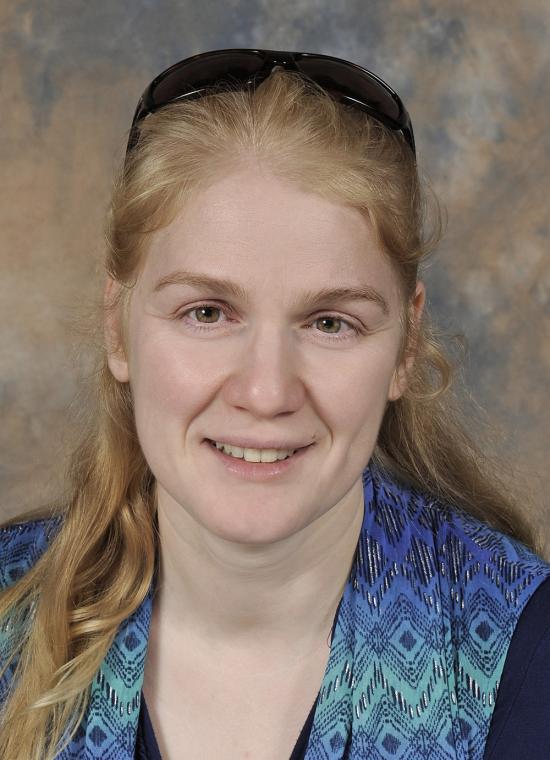
Maxim Kontsevich is a permanent professor at the Institut des Hautes Études Scientifiques (IHÉS), holding the AXA Chair for Mathematics since 1995 and a visiting chair at Rutgers University (one month annually since 1997). Born in 1964 in Khimki, USSR, he earned his PhD from Bonn University in 1992. His career includes visiting positions at Harvard, the Institute for Advanced Study, and Berkeley, where he was a professor from 1993 to 1995. His research spans mathematical physics, algebraic geometry, and non-commutative geometry. Notable contributions include deformation quantization, mirror symmetry, and motivic integration. His work bridges algebraic structures with geometric and physical concepts, influencing areas like topological field theories, string theory, and integrable systems. Awardees of Fields Medal (1998), Crafoord Prize (2008), and Breakthrough Prize (2014), he also holds editorial roles at Compositio Mathematica and Publications Mathématiques IHÉS. His over 50 publications explore advanced topics such as quantum cohomology, Hodge theory, and categorical structures in geometry.
Kaka Ma is an Associate Professor in the Department of Materials Science & Engineering at Texas A&M University, specializing in advanced materials processing for energy systems and extreme environments through powder-based synthesis, additive manufacturing, and sintering technologies. Educational Background: Ph.D. in Materials Science and Engineering, University of California, Davis (2010) B.S. in Materials Science and Engineering, University of Science and Technology of China (2006) His research focuses on powder-based synthesis of metals/ceramics, laser directed energy deposition, field-assisted sintering technology (FAST), thermionic/thermoelectric energy conversion materials, and ultrahigh-temperature/hypersonic environment applications, with strong emphasis on sustainability in materials engineering. Recent publications demonstrate expertise in creating functionally graded materials via controlled thermal gradients and powder morphology optimization. Analysis of 2021-2025 publications reveals dominant trends in spark plasma sintering parameter optimization, additive manufacturing of titanium alloys, high-entropy carbide development, and nanoparticle synthesis for energy applications, consistently linking processing parameters to microstructure-property relationships in extreme-condition materials. Scientific Awards: TMS Light Metals/Extraction & Processing Subject Award – Recycling (2020) Professional memberships include The Minerals, Metals and Materials Society (TMS) and America Makes. While specific advising details and grant information are not documented in the provided materials, his extensive collaborative publication record indicates active mentorship of graduate researchers and successful acquisition of research funding. No dedicated laboratory facilities or research team structures are specified in the source documentation.
Kai A. James is an Associate Professor in the Department of Aerospace Engineering at the University of Illinois at Urbana-Champaign (UIUC), with affiliations in Computational Science and Engineering. He holds a Ph.D. (2012) and M.A.Sc. (2006) from University of Toronto, and B.A.Sc. (2004) in Engineering Science. His research focuses on multidisciplinary design optimization, topology optimization, aeroelasticity, and nonlinear mechanics, with applications to aerospace structures, additive manufacturing, and smart materials. He teaches courses such as Structural Design Optimization (AE 498), Nonlinear Solid Mechanics (AE 598), and Finite Element Analysis (ME 471). His honors include the NSF CAREER Award (2018), Scott White Aerospace Engineering Fellow (2020), and UIUC Teacher of the Year (2017). His work spans academic publications (over 50 journal/conference articles listed) and innovations in topology optimization frameworks for complex systems. Recent research emphasizes bi-stable structures (e.g., cardiovascular stents, morphing airfoils), thermomechanical design of shape-memory alloys, and spatial packing optimization for engineering systems. His lab, located in Talbot Laboratory, develops computational tools for multiphysics and multiscale design optimization.
Professor August Evrard is a distinguished academic at the University of Michigan, holding the Arthur F. Thurnau Professorship in Physics and Astronomy. He is affiliated with the Department of Physics within the College of Literature, Science, and the Arts. Known for his contributions to cosmology and astrophysics, he pioneered the Problem Roulette tool, recognized with the Provost's Teaching Innovation Prize. His research focuses on galaxy clusters, dark matter, and cosmological surveys like the Dark Energy Survey (DES) and XXL Survey. He has been honored as an AAS Fellow (2025) and has contributed to advancements in physics education through innovative teaching methods and technologies. In research, Prof. Evrard explores topics such as dark matter halo dynamics, galaxy cluster properties, and weak lensing analyses. His work spans observational cosmology, computational modeling, and multi-wavelength astronomy. Notable projects include studies on galaxy cluster mass distributions, the relationship between X-ray emissions and velocity dispersions, and the application of machine learning to astrophysical data analysis. His contributions to education highlight the integration of AI-driven tools to enhance learning, as seen in initiatives like the Problem Roulette and course recommendation systems. Prof. Evrard's awards include the Provost's Teaching Innovation Prize for Problem Roulette and his AAS Fellowship. His academic leadership and innovative approaches to both research and education solidify his role as a pivotal figure in astrophysics and STEM pedagogy.
Dr. James W. Navalta is an Associate Professor in the Department of Kinesiology and Nutrition Sciences at the University of Nevada, Las Vegas. His research focuses on physiological responses to outdoor exercise (hiking, trail running) and the validity/reliability of wearable technology. He earned his B.S. in Physical Education and Biology from Brigham Young University–Hawaii, M.S. in Kinesiology from UNLV, and Ph.D. in Exercise Physiology from Purdue University. Education: B.S. - Physical Education & Biology, Brigham Young University–Hawaii M.S. - Kinesiology, University of Nevada, Las Vegas Ph.D. - Exercise Physiology, Purdue University His research portfolio includes: Wearable technology validation for physiological measurements Comparative studies of indoor vs outdoor exercise environments Impact of gender-inclusive approaches on sports science Metabolic and cardiovascular responses to unconventional workouts Psychological benefits of nature immersion Recent publications demonstrate expertise in: Wearable device accuracy testing VO2max and lactate threshold validation Environmental influence on exercise physiology Methodological improvements in data collection Gender-inclusive research design Outdoor activity impact assessment As co-founder and executive editor of the International Journal of Exercise Science, he contributes significantly to academic discourse. He also serves on editorial boards for journals related to digital health and exercise technology.
Michele Ciavarella is a Full Professor at the Polytechnic University of Bari (Politecnico di Bari) in the Department of Mechanics, Mathematics & Management (DMMM). His research focuses on contact mechanics, adhesion, friction, and viscoelastic materials, with applications in mechanical design, wear analysis, and surface topography. His work includes theoretical modeling, experimental testing, and computational approaches to understanding interactions between materials under mechanical stress. He can be contacted at michele.ciavarella@poliba.it.
Sylvia Richardson is an MRC Investigator at the MRC Biostatistics Unit and holds a Research Professorship at the University of Cambridge, where she served as Director of the Biostatistics Unit from 2012 to 2021. She is affiliated with the Cambridge Mathematics of Information in Healthcare Hub (CMIH) at the Centre for Mathematical Sciences. Her work bridges advanced statistical methodology with critical healthcare applications, particularly in the analysis of complex biomedical data. Richardson's research spans multiple domains of biostatistics with a strong emphasis on Bayesian approaches. Her work has significantly advanced spatial modeling and disease mapping techniques, developed sophisticated methods for handling measurement error in epidemiological studies, and pioneered mixture and clustering models for integrative analysis of heterogeneous data sources. Her research addresses fundamental challenges in analyzing longitudinal health data, multimorbidity patterns, and complex disease trajectories. Her publication record demonstrates consistent methodological innovation applied to pressing healthcare challenges. Recent work focuses on traumatic brain injury outcomes, multimorbidity progression, genomic analysis, and statistical approaches to pandemic data. The articles reveal a strong pattern of methodological development driven by real-world healthcare challenges, with particular attention to longitudinal analysis, Bayesian computation, and integrative modeling approaches that can handle diverse and complex data structures. While specific awards are not detailed in the available information, Richardson's leadership as Director of the MRC Biostatistics Unit for nearly a decade and her continued Research Professorship reflect significant recognition of her contributions to the field. Her work with major international consortia like CENTER-TBI demonstrates her role in large-scale collaborative research efforts addressing critical health challenges. Richardson's research has substantial implications for healthcare policy and practice, particularly in understanding disease progression, developing predictive models for patient outcomes, and creating methodological frameworks that can integrate diverse data sources to generate meaningful clinical insights. Her work continues to influence both statistical methodology and healthcare applications through ongoing research and leadership in the field.
Doç. Dr. Muhammed Aras is an Associate Professor in the Department of Mechanical Engineering at Baskent University (Başkent Üniversitesi), with a research focus on sustainable machining processes, tool wear monitoring, and surface roughness optimization. His work spans advanced manufacturing technologies, energy storage systems, and biomedical device design. PhD in Manufacturing Engineering (2018), Gazi Üniversitesi MSc in Mechanical Education (2013), Gazi Üniversitesi BSc in Mechanical Engineering (2010), Tabriz Islamic Azad University Research interests include sustainable machining (dry/hard turning, cooling-lubrication strategies), tool wear analysis (CBN, ceramic and coated inserts), and surface integrity optimization using AI-based methods (firefly algorithm, TOPSIS, Grey Relational Analysis). His 15 most recent articles (2017-2024) examine topics like: Surface roughness prediction in dry hard turning Energy storage technology viability assessments Cutting parameter optimization for various steels Acoustic/vibration monitoring in machining He has received scientific awards including the Teşvik Ödülü (Encouragement Award, 2015). His patent on an automatic orthognathic surgery articulator and book chapters on tool monitoring systems demonstrate his multidisciplinary impact.
Danel Ahman is an Associate Professor at the Institute of Computer Science , University of Tartu , Estonia, specializing in programming language theory . His research focuses on dependent/refinement types , computational effects , and verified software . Education PhD in Theoretical Computer Science (University of Edinburgh, 2017) MPhil in Advanced Computer Science (University of Cambridge, 2012) BSc in Informatics (Tallinn University of Technology, 2010) Research Interests : Danel investigates programming languages with algebraic effects and effect handlers for verified software, exploring denotational/operational semantics and fibrational approaches to effects. His work bridges theoretical computer science with practical formal verification. Scientific Awards : Estonian Research Council grant (2025) Marie Skłodowska-Curie Fellowship (2019) PhD dissertation prize (2018) Google/Citrix dissertation awards (2012) Teaching & Supervision : He teaches courses like Logic in Computer Science and Functional Programming at the University of Tartu, and supervised BSc/MSc theses on topics including asynchronous effects and formal verification. Danel also organizes research seminars and guest lectures on F*.
Muhammad Muddasar is a Researcher at the University of Limerick's School of Engineering, affiliated with the Bernal Institute. His primary research focuses on developing sustainable materials derived from lignin for energy harvesting and storage applications. Under the supervision of Professor Maurice Collins, he investigates advanced materials such as hydrogels, ionic conducting membranes, and carbon nanomaterials to enhance renewable energy systems. His work emphasizes reducing environmental impact through innovative synthesis techniques and lifecycle analysis. Key research areas include thermoelectric materials, bioenergy production, microbial electrolysis cells, and lignin valorization. Collaborations span topics like low-grade thermal energy recovery, supercapacitor optimization, and carbon fiber production improvements. Despite no explicit awards listed, his contributions include over 17 peer-reviewed publications between 2021-2025, showcasing impactful work in Materials Today Sustainability, Advanced Functional Materials, and ACS Applied Polymer Materials. His articles highlight trends in lignin-derived materials for energy applications, sustainable manufacturing, and nanomaterial-driven bioenergy systems. Active in international networks, his research bridges material science and renewable energy engineering, addressing global sustainability challenges.
Roy Johnsen is a Professor in the Department of Mechanical and Industrial Engineering at the Norwegian University of Science and Technology (NTNU), specializing in corrosion and surface technology. With a Dr.ing. degree from NTH (1984), he has extensive industry experience from Statoil Research Centre (1985-1991) and CorrOcean (1991-2004), where he expanded the company globally. His current research focuses on hydrogen embrittlement, corrosion protection, and integrity management in offshore systems, with collaborations across Europe, Asia, and the Americas.
Gavin Craig is Senior Lecturer in the Department of Pure and Applied Chemistry at the University of Strathclyde, where he leads an independent research programme on porous molecules, mechanochemistry and materials fabrication. He joined Strathclyde in 2019 as Chancellor’s Fellow, was promoted to Senior Lecturer in 2023, and currently supervises two post-docs and a PhD student while accepting new doctoral researchers. Education & Career: PhD Inorganic Chemistry, University of Barcelona, 2013 – spin-crossover materials Post-doc University of Glasgow 2013-2016 – high-pressure crystallography & molecular magnetism JSPS Fellow & Assistant Professor, Kyoto University 2016-2019 – porous molecules for gas storage Research Interests: His group combines coordination chemistry and supramolecular design to create metal–organic cages and polyhedra that act as selective gas sponges or stimuli-responsive gels. Using mechanochemistry, 3-D electron diffraction and high-pressure crystallography he interrogates how self-assembly and external stimuli modulate porosity, with direct relevance to CO₂ capture, carbon-monoxide delivery and membrane technologies. Funding & Impact: Craig is Principal Investigator on two active Leverhulme Trust grants (£500k+) investigating cooperative gas uptake in adaptable cages and sustainable porous membranes. Work contributes to UN SDGs on Affordable & Clean Energy and Climate Action. Awards & Recognition: Strathclyde Medal – Team Award 2022 Advising & Collaboration: He has successfully graduated one PhD student (Dr Beatriz Doñagueda) and one PDRA (Dr Valentyna Slyusarchuk) and currently mentors Dr Emma Regincos Marti (PDRA), Dr Matthew Snelgrove (PDRA) and Megan Wilkinson (PhD). He maintains active international collaborations across UK, Spain, Japan and Italy evidenced by 58 publications and 20 invited seminars/examinations.
Kyle W. Klarich is Professor of Medicine and consultant in both the Division of Structural Heart Disease and Division of Echocardiography at Mayo Clinic. His clinical practice and research focus on structural heart disease, cardiac tumors, hypertrophic cardiomyopathies, and valvular heart disease. Dr. Klarich investigates complications prevention and quality-of-life improvement for patients with rare cardiac conditions. As Cardiovascular Disease Fellowship program director since 2010, he is extensively involved in medical education and has received multiple teaching awards including the ACGME's Parker J. Palmer Courage to Teach Award finalist recognition.
Gizem Karaali is a Professor of Mathematics and Statistics and Chair of the Mathematics Department at Pomona College, part of The Claremont Colleges. She holds a Ph.D. in Mathematics from UC Berkeley (2004) and a B.S. in Electrical Engineering and Mathematics from Boğaziçi University. Her research spans algebraic structures like Lie algebras, representation theory, and humanistic mathematics, with a focus on integrating social justice into mathematics education. She co-founded the Journal of Humanistic Mathematics and created innovative courses such as the first-year seminar Can Zombies Do Math? to explore mathematics’ humanistic dimensions. Research Interests: Representation Theory, Algebraic Combinatorics, Quantitative Literacy, Mathematics Education, and the intersection of math with social justice. She has published widely in journals like Advances in Mathematics , Ramanujan Journal , and Journal of Humanistic Mathematics . Awards: NSA Young Investigator Award (2011-2013), NEH Enduring Questions Grant (2014-2016), AMS Project NExT Fellow. Active in editorial roles for Journal of Humanistic Mathematics and Numeracy . Teaching: Courses include Calculus, Linear Algebra, Abstract Algebra, and interdisciplinary topics like Mathematics, Philosophy, and the Real World. Advised senior theses in diverse areas including ethnomathematics and quantitative literacy.
Dr. Galatia Cleanthous is a Lecturer in the Department of Mathematics and Statistics at Maynooth University, Ireland, affiliated with the Faculty of Science & Engineering and the Hamilton Institute. She joined Maynooth in 2020 after postdoctoral positions at Trinity College Dublin, Newcastle University, and University of Cyprus, and holds a PhD in Pure Mathematics from Aristotle University of Thessaloniki (2014). Education PhD in Mathematics, Aristotle University of Thessaloniki, Greece (2014) MSc in Mathematics, Aristotle University of Thessaloniki, Greece Diploma in Mathematics, Aristotle University of Thessaloniki, Greece Research Interests Her research bridges pure and applied mathematics, focusing on Mathematical Analysis , Probability , and Statistics . Specifically, she explores Geometric Analysis , Geometric Function Theory , and Harmonic Analysis on manifolds and metric spaces. In statistics, she works on Nonparametric , Spatial , and Environmental Statistics , developing adaptive estimation techniques and studying Gaussian random fields on spheres and other domains. Publication Trends From 2025 back to 2013, her work has consistently appeared in top journals such as Annals of Statistics , Bernoulli , Journal of Nonparametric Statistics , and Transactions of the American Mathematical Society . A clear trend emerges: early publications concentrate on pure analytic topics like Fourier multipliers and function spaces, while recent outputs integrate these theoretical tools into modern nonparametric statistics, density estimation on manifolds, and stochastic modeling of environmental and seismological data. Scientific Awards Master’s degree ranked first with grade 9.8/10, Aristotle University of Thessaloniki (2011) Diploma ranked first among ~200 students, grade 9.7/10, Aristotle University of Thessaloniki (2009) Undergraduate merit awards for three consecutive academic years (2005-2008), State Scholarship Foundation of Greece National first place in Cypriot high-school mathematics entrance exams (2005), Ministry of Education, Cyprus Advising & Outreach Dr. Cleanthous has supervised BSc and MSc students, including Ultán Doherty (BSc, 1st Class Honors, 2021) and Anush Harish (MSc, 2022). She serves as Chair of the Department PR Committee, Member of the University STEM Promotions Committee, and Member of the departmental Equality, Diversity & Inclusion committee. Beyond campus, she trains young mathematicians at the North Kildare Maths Problem Solving Club and organizes public engagement events for Science Week. Labs & Teams She is associated with the Hamilton Institute at Maynooth University, a multidisciplinary research institute fostering collaboration between mathematics, computer science, and engineering.

.jpg)