
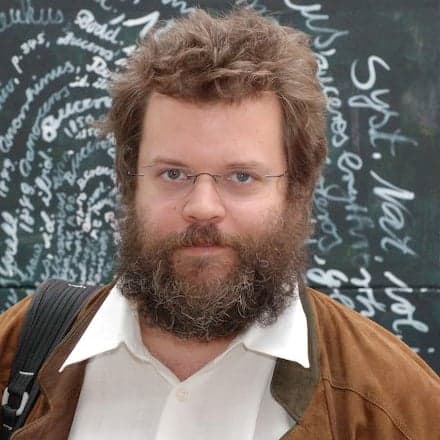
Manfred LaubichlerView profile
Professor
Manfred Laubichler is President’s Professor of Theoretical Biology and History of Biology at Arizona State University (ASU), where he serves as Director of the School of Complex Adaptive Systems and the Global Biosocial Complexity Initiative. He is also an External Professor at the Santa Fe Institute (SFI) and co-director of the ASU-SFI Center for Biosocial Complex Systems. His academic affiliations include the Center for Social Dynamics and Complexity, the Center for Biology and Society, the Center for Evolution and Medicine, and the Water Institute at ASU. His educational background spans zoology, philosophy, and mathematics from the University of Vienna; biology from Yale University; and history/history of science from Princeton University. Laubichler's research centers on evolutionary novelties across scales—from genomes to knowledge systems—alongside the structure of evolutionary theory and the evolution of scientific knowledge. His work bridges theoretical biology, philosophy of science, and complex systems, with a strong emphasis on biosocial complexity and sustainability. He has contributed extensively to understanding the conceptual foundations of evolutionary developmental biology (Evo-Devo) and the historical and philosophical dimensions of biological theory. His recent publications reflect an interdisciplinary trend, integrating epidemiology, public health, and social behavior during crises such as the COVID-19 pandemic, while maintaining a core focus on theoretical biology, history of science, and complex systems. Themes include trust, scientific responsibility, epistemology of science, and modeling biosocial dynamics. Elected Fellow of the American Association for the Advancement of Science Fellow at the Wissenschaftskolleg zu Berlin Vice Chair of the Global Climate Forum Laubichler has led multiple NSF-funded research initiatives in digital humanities, history and philosophy of science, and complex adaptive systems. He has advised numerous doctoral projects and co-led training programs such as the Embryo Project. He is actively involved in interdisciplinary labs and centers, including the Information and Competition Lab, Complexity Economics Lab, and the Social Insect Research Group. His leadership extends to editorial roles in journals like Biological Theory , Journal of Experimental Zoology Part B , and the Archimedes series.


