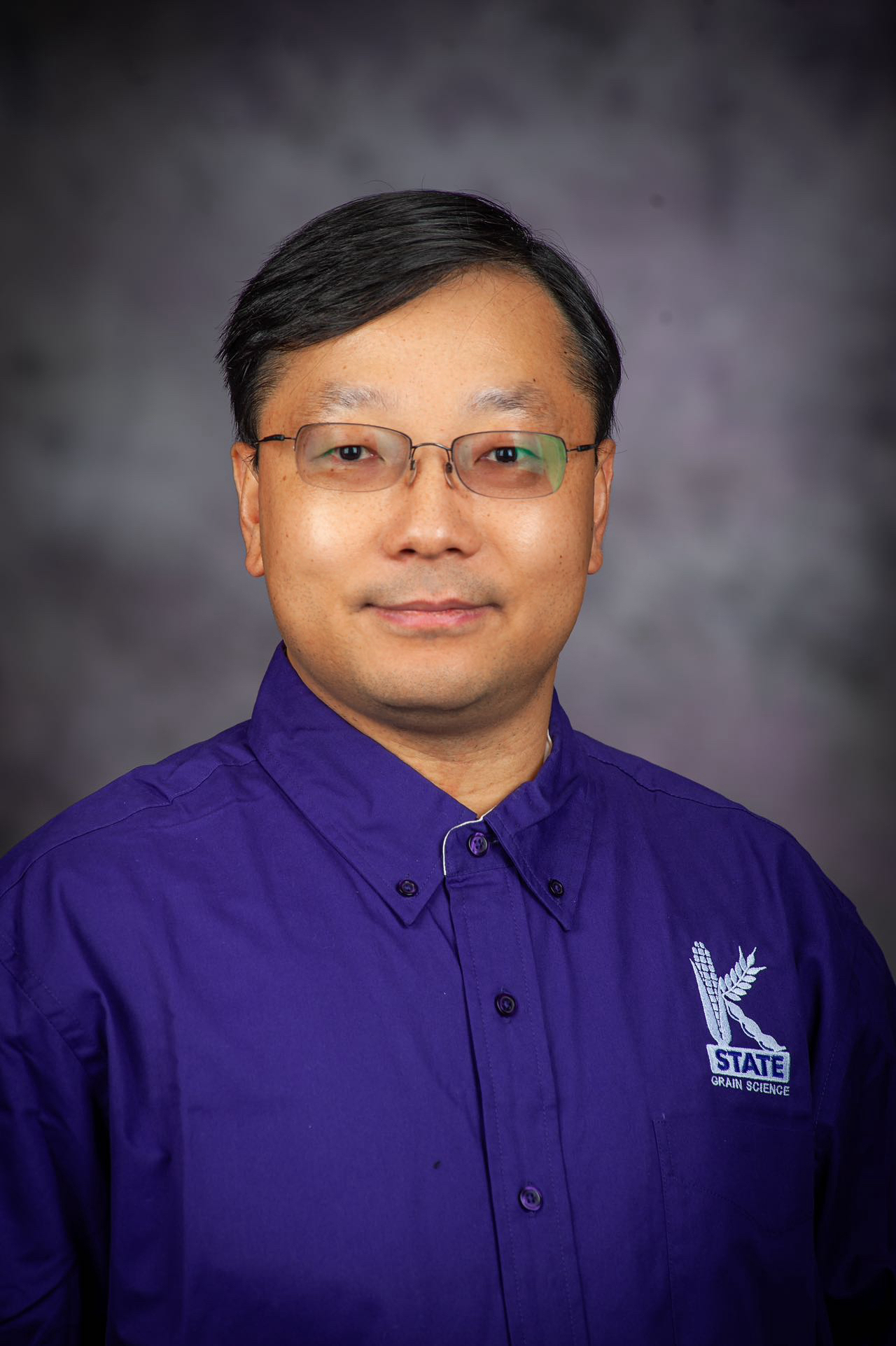
Dr. Yonghui Li is an Associate Professor and Graduate Program Director in the Department of Grain Science and Industry at Kansas State University. He directs the Wheat Quality Lab and teaches courses including Grain Analysis Techniques (GRSC 405), Grain Protein Chemistry & Technology (GRSC 850), and Graduate Seminar (GRSC 920). He holds a bachelor's degree in Chemical Engineering and a master's in Biosystem Engineering from Zhejiang University, China, followed by a Ph.D. in Grain Science from Kansas State University. Li's research integrates chemistry, machine learning, and engineering to advance grain protein functionality, bioactive peptides, and sustainable food systems. Key themes include: Protein structure-modification relationships AI-driven quality prediction in cereals Non-thermal processing technologies Functional ingredient design for health benefits His 2024–2025 publications demonstrate a strong focus on computational methods (e.g., deep learning for peptide bioactivity) and applied food science (e.g., extrusion texturization, allergen reduction). Li has secured $4.5M as lead PI and $1.9M as co-PI from USDA, NSF, and industry partners. He co-developed seven wheat varieties and manages the Wheat Quality Lab, supporting grain innovation.
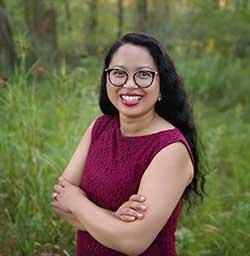
Associate Professor Catriona Macdonald at the Hawkesbury Institute for the Environment (Western Sydney University) investigates how environmental change affects nutrient cycling and ecosystem functioning. Her work spans natural, agricultural, and managed ecosystems, focusing on microbial-mediated nutrient transformations under climate change stressors like elevated CO 2 , temperature shifts, and drought. She employs field studies, lab assays, and molecular techniques to explore carbon, nitrogen, and phosphorus dynamics in soils. Key research areas include Nutrient cycling Plant-soil interactions Climate change impacts Heavy metal contamination Forensic microbial ecology Notable awards: Best oral presentation, New Zealand Soil Science Society (2006) $8,000 NZ travel grant for technique training (2006) $2,000 NZ symposium attendance grant (2006) Current grants involve projects like: An integrated disease management program for the Australian Potato Industry (2024-2029, Hort Innovation) Mechanistic responses of phosphorus-limited forests to CO 2 enrichment (2022-2025, ARC Discovery) Rhizosphere mediation of soil greenhouse gas fluxes with climate change (2022-2024, ARC Discovery)
Richard Strasser is an Associate Professor at the University of Natural Resources and Life Sciences Vienna, affiliated with the Faculty of Life Sciences and the Institute of Applied Genetics and Cell Biology (IAGZ). His work focuses on plant biotechnology and cell biology, particularly in glycobiology and protein engineering. Research Interests: Glycobiology of plant cell systems Engineering plant glycoproteins for therapeutic use ERAD machinery and protein quality control Transient expression systems in Nicotiana benthamiana Glycan-dependent vaccine development Article Trends: His recent publications highlight advancements in plant-produced therapeutic antibodies (e.g., ACE2-Fc decoys, SARS-CoV-2 IgA), glycan engineering for viral antigen stability, and molecular insights into ERAD pathways. Key themes include N- and O-glycosylation optimization, glycoprotein structural analysis, and applications in mucosal immunity. Teaching: Authorized to teach cell biology at the university level. Labs: Leads the iIPBT Plant Biotechnology and Cell Biology group, driving innovation in plant glycoengineering.
Malte Rolf-Pissarczyk is a Postdoctoral Researcher at the Institute of Biomechanics, Graz University of Technology, Austria. His research focuses on computational modeling of cardiovascular biomechanics, particularly aortic dissection mechanisms and fluid-structure interaction. He holds a PhD in Biomedical Engineering from TU Graz (2024), M.Sc. in Mechanical Engineering from Leibniz University Hannover (2018), and double bachelor's degrees in Plant Operation Engineering and Building Energy Engineering from Bremerhaven University of Applied Sciences (2015). Key appointments include a visiting scholar at Stanford University (2022) and UC Berkeley (2016-2017). Awards include the Best PhD Thesis in Biomedical Engineering (ÖGBMT, 2024) and scholarships from the Austrian Marshall Plan Foundation and Dr. Jürgen und Irmgard Ulderup Stiftung. His work spans biomechanical modeling, material science, and medical simulation, with contributions to understanding aortic pathology via computational and experimental methods. His research integrates Bayesian uncertainty quantification, finite element analysis, and patient-specific modeling. Current efforts emphasize mechanisms of aortic dissection progression and thrombosis dynamics. He collaborates with institutions like Stanford University and maintains an affiliate membership.
Remco Tuinier is a Full Professor of Physical Chemistry at Eindhoven University of Technology (TU/e), affiliated with the Department of Chemical Engineering and Chemistry. His research focuses on polymeric and colloidal liquids, advanced solid surfaces, and liquid-liquid interfaces. He leads the Physical Chemistry group, emphasizing theoretical and experimental approaches to soft matter science and sustainable materials. Affiliations: TU/e (since 2015), Debye Institute (Utrecht University), Van 't Hoff Laboratory (Utrecht University). Education: PhD in Food Science (1999, Wageningen University), postdoc at Utrecht University, staff member at Forschungszentrum Jülich (2001–2008), DSM ChemTech Center (2008–2015), part-time Chair at Utrecht University (2010–2020). Research Interests: Colloid-polymer mixtures, self-assembly, phase behavior, sustainable materials for energy and health. His work bridges experimental and computational methods to design functional materials. Projects: Includes studies on biopolymer mixtures in plant-based products and drying of colloid-polymer systems. Collaborations span academia and industry (e.g., DSM). Teaching: Courses on polymer and colloid science, advanced thermodynamics, and coatings technology.
Onja Razafindratsima is an Assistant Professor in the Department of Integrative Biology at the University of California, Berkeley. Her research focuses on tropical ecology, conservation biology, and ecological networks, with an emphasis on plant-frugivore interactions and seed dispersal in Madagascar's tropical forests. Research Interests Tropical forest conservation Ecological community structure Seed dispersal dynamics Species interactions under defaunation Functional and phylogenetic diversity Publication Trends Her recent work examines ecological network fragility in forest edges, the conservation implications of nonrandom seed dispersal, and the cascading effects of anthropogenic threats on tropical biodiversity. She integrates field surveys, simulation modeling, and phylogenetic tools across spatial-temporal scales. Honors Featured cover article in Ecology (2016) Contact Email: onja@berkeley.edu | Office: Valley Life Sciences Building, 5075
Dr. Irosha Nawarathne is an Associate Professor of Chemistry at Lyon College, located in Batesville, Arkansas. She earned her Bachelor's degree (First Class Honors) in Chemistry from the University of Colombo, Sri Lanka, and her PhD in Bioorganic Chemistry from Michigan State University. Her research focuses on drug discovery, particularly targeting multi-drug resistant Mycobacterium tuberculosis and lung cancer therapies. She leads an undergraduate research team developing novel rifamycins and exploring naphthoquinone derivatives for cancer treatment. Education: BSc (University of Colombo), PhD (Michigan State University) Grants: Funded by NIH/NIGMS (P20 GM103429), Arkansas INBRE, and FutureFuel Chemical Company Key Projects: Rifamycin modifications, lung cancer therapeutics, food chemistry analysis Publications: Over 15 peer-reviewed manuscripts and multiple conference presentations Research interests include biocatalytic methods for natural product modification, antibiotic development, and applying organic chemistry to biomedical challenges. Her lab emphasizes undergraduate involvement in drug discovery, with students contributing to publications and winning awards at regional and national conferences. She is a coordinator for Lyon's Science Outreach Program and advises the Order of the Tartans Mortar Board Chapter. Her work is supported by grants totaling over $700,000, enabling state-of-the-art instrumentation and student participation in conferences.
David Bruno is a Professor at the University of Burgundy, affiliated with the SAMBA research team. His work focuses on natural products discovery, metabolomics, and biodiversity conservation, with significant contributions to structural novelty identification in plant extracts and chemotaxonomic digitization. He leads initiatives like the INVENTA workflow and plantMASST community-driven projects. His research integrates computational frameworks with experimental data to address global challenges such as deep-sea mining policy, antimicrobial resistance, and pandemic emergence. Bruno has authored over 50 publications, emphasizing open science and collaborative research. He serves as a key figure in the SAMBA group, driving advancements in biogeosciences and marine biology. Research interests include chemical ecology of marine organisms, metabolomic profiling of plant biodiversity, and policy frameworks for genetic resource access (ABS). His work spans drug discovery (e.g., antiparasitics, anti-mycobacterial agents) and environmental policy, with a focus on Antarctic marine biodiversity and climate change impacts. Bruno’s interdisciplinary approach bridges chemistry, ecology, and computational biology to advance sustainable solutions. Notable contributions include the development of analytical tools for metabolite annotation, species distribution modeling in sub-Antarctic ecosystems, and leadership in international collaborations like the vERSO project. His lab’s infrastructure supports large-scale metabolomic studies and open-access data repositories.
Michael Beyrer is a Professor at the University of Applied Sciences Western Switzerland Valais-Wallis, School of Engineering, leading the Sustainable Food Systems research group. His work focuses on non-thermal food preservation technologies, plant-based protein engineering, and food extrusion systems. Research areas: Food process engineering, alternative proteins, non-thermal processing, and equipment design Affiliation: Department of Life Sciences Engineering, School of Chemistry and Life Sciences His research investigates non-thermal preservation methods like pulsed electric field (PEF) and cold plasma treatments for protein-rich food matrices. Key studies include: Microbial stability enhancement in plant protein extracts Sublethal bacterial damage mechanisms Texture optimization in meat analogues through pectin-protein interactions Flavor retention models for high-protein foods Sustainable microalgae integration in plant-based foods Recent publications analyze anisotropic structure formation in plant-based meat alternatives via high-moisture extrusion, biofilm mitigation using cold plasma, and functional property preservation during multiple extrusion cycles. His team develops innovative extrusion nozzles (patent WO2022018084A1) to enable shear-controlled fibrous structures.
Daniel J. Cosgrove is a Professor and the Eberly Family Chair of Biology at Pennsylvania State University, affiliated with the Department of Biology and the Huck Institutes of the Life Sciences. He holds a Ph.D. from Stanford University (1980) and a B.S. from the University of Massachusetts (1974). His research focuses on plant cell growth mechanisms, specifically the molecular and cellular processes governing cell wall expansion and plant morphogenesis. Key projects include studying expansins—proteins that catalyze wall loosening—and their roles in plant growth regulation, pollen tube invasion, and wall architecture. Recent work explores the biomechanical properties of cell walls using advanced techniques like atomic force microscopy and computational modeling. Dr. Cosgrove’s research spans interdisciplinary areas such as plant cell wall mechanics, protein biochemistry, and developmental biology. His studies have revealed novel insights into expansin structure-function relationships, allergen biochemistry, and the interplay between cell wall composition and growth dynamics. He leads the Cosgrove Lab, which employs biophysical, biochemical, and genetic approaches to investigate plant cell wall biology. Notable contributions include defining expansin-mediated wall loosening mechanisms and linking cell wall mechanics to plant form development. His publications emphasize the molecular basis of cell wall extensibility, the role of polysaccharide interactions in wall structure, and the application of advanced imaging techniques to study plant cell walls. Collaborative efforts with computational biologists and material scientists further bridge basic research with potential agricultural and biotechnological applications.
Silja Wessler is a Professor of Microbiology at the University of Salzburg, Faculty of Natural and Life Sciences, since 2010. Her research focuses on Helicobacter pylori pathogenesis, protease function (e.g., HtrA), host-pathogen interactions, and signaling mechanisms in gastric cancer development. She leads research on bacterial virulence factors and their roles in epithelial barrier disruption. Education: PhD in Biology (2001, Max-Planck-Institute), Diploma in Biology (1997, Max-Planck-Institute), studies at University of Bielefeld and Free University of Berlin. Research Interests: Helicobacter pylori virulence mechanisms, protease-mediated host cell disruption, signal transduction in inflammation and cancer, host-pathogen communication, and antimicrobial drug targets. Awards: Postdoctoral fellowship of the Schering Research Foundation (2001–2003) Max-Planck Foundation postdoctoral scholarship (2001) Fonds der Chemischen Industrie scholarship (1998–2000)
Alessandra Rustighi is a Fixed Term Researcher in the Department of Life Sciences at the University of Trieste, specializing in Cellular and Experimental Biology. She actively participates in departmental governance as a member of the Department's Board and Boards of Studies. Primary Research Focus: Biomedical applications of molecular nutrition and protein engineering Key Collaborations: Interconnected Nord-Est Innovation (iNEST) project, Trans2Care, Innov-H2O Scientific Expertise spans: Molecular Oncology Nutritional Biochemistry Biomaterial Development Signal Transduction Analysis Research Trends (from 2015-2023 publications): 2015-2017: Foundational work in cancer cell signaling and antibody engineering 2017-2020: Expansion into protein engineering with HELP/HUG bioreceptors 2020-2023: Development of targeted delivery systems and stress biomarkers for aquaculture Scientific Contributions include: Development of HUG bioreceptor for bilirubin analysis Creation of HELP polypeptide platform for biomaterials Identification of dietary phytochemical interactions with heme metabolism Establishment of fish blood biomarkers for welfare assessment
Vincent Le Roux is a Lecturer and Researcher in Ecology and Entomology at the University of Picardy Jules Verne, where he is affiliated with the EDYSAN research unit (UMR 7058, CNRS). He teaches across multiple Master's programs including CAPES SVT competitive exam preparation, Childhood Education, and Ecosystems/Agrosystems/Sustainable Development, delivering specialized instruction in Life Sciences, Ecology, and Evolutionary Biology while supervising thesis research. His research program integrates three complementary axes: (1) Global change impacts on carabid beetle functional diversity across biogeographic, landscape, and local scales, evolving toward ecosystem service quantification; (2) Biological invasion mechanisms using Drosophila suzukii as a model system; and (3) Multitrophic interactions in agrosystems involving plants, insects, viruses, and beneficial organisms. Methodologically, he combines field ecology with advanced techniques including olfactometry, electropenetration graph (EPG) analysis, and remote sensing technologies. Analysis of his 15 most recent publications (2025-2017) reveals a pronounced methodological evolution toward integrating satellite remote sensing (Sentinel-1/2) and LiDAR with ecological field studies to map forest microclimate dynamics and assess biodiversity proxies for biological control services. His work demonstrates how small woodland fragments enhance pest control functionality through carabid beetle assemblages, while his invasion biology research has established D. suzukii 's unusually broad trophic niche as key to its European invasion success. Current trends emphasize cross-scale analysis from molecular interactions to landscape patterns. Le Roux has supervised PhD research including Ludmilla Martin's 2012-2015 thesis on arthropod communities in agricultural landscapes. His competitive grant portfolio includes ANR VIRAPHIPLANT (2014-2018) on aphid-virus-plant interactions, CREUSE (2014) on wooded ravines, ANOI (2013-2016) on industrial oilseeds, DIVA3 FORHAIE (2012-2015) on forest biodiversity conservation, and ERA-Net BiodivERsA smallFOREST (2012-2015) on small woodland ecosystem services. As Scientific Culture Correspondent for EDYSAN, he leads outreach initiatives connecting university research with public understanding of ecological issues. His work within the EDYSAN laboratory focuses on functional biodiversity assessment across European agricultural landscapes, with particular emphasis on how landscape configuration mediates climate change impacts on ecosystem service delivery.
Jocelyn Behm is an Associate Professor in the Department of Biology at Temple University's College of Science and Technology, where she investigates community assembly in human-dominated landscapes to inform sustainable landscape design. Her research examines how habitat development and invasive species affect species dispersal, habitat selection, and ecological interactions, with fieldwork focused on southeastern Pennsylvania and Caribbean ecosystems using integrated methodologies including field surveys, genetic techniques, and modeling. Her research program spans multiple critical ecological domains: Urban and Landscape Ecology : Quantifying impacts of urbanization on biodiversity and ecosystem services through studies of forest patch quality, urban birds, and green infrastructure. Invasive Species Dynamics : Leading research on spotted lanternfly dispersal, monitoring, and management, alongside investigations of exotic reptiles in Caribbean islands. Anthropocene Biogeography : Revising island biogeography theory through analysis of human-driven species introductions and extinctions, particularly in insular reptile communities. Functional Ecology : Linking species traits to ecosystem processes in decomposition, pest control, and service provision across urban and natural landscapes. Analysis of her 15 most recent publications (2023-2025) reveals a cohesive research trajectory centered on anthropogenic impacts, with three dominant threads: (1) Invasive species management (particularly spotted lanternfly studies spanning dispersal modeling, oviposition ecology, and computer-aided monitoring); (2) Urban ecosystem services (examining context-dependent benefits from wildlife across spatial scales); and (3) Anthropocene island biogeography (documenting human-accelerated species turnover and its conservation implications). Her work consistently integrates field data with computational approaches across taxonomic groups. No scientific awards were documented in the provided materials. Dr. Behm directs the iEcoLab (https://www.iecolab.org), where she mentors students in ecological research while securing external funding for projects spanning urban ecology, invasion biology, and island conservation. Her lab's translational focus bridges fundamental ecological questions with practical applications for sustainable landscape planning, particularly through trait-based approaches to green infrastructure design and invasive species management. The iEcoLab operates as an interdisciplinary hub conducting field research across southeastern Pennsylvania forests and Caribbean islands (notably Aruba), with current projects examining spotted lanternfly population dynamics, urban bird communities, and non-native herpetofauna. The lab combines traditional ecological methods with innovative technologies including computer vision for individual identification, landscape genetic analyses, and functional trait assessments to address pressing conservation challenges in human-altered environments.
Justin North is an Assistant Professor in the Department of Microbiology at The Ohio State University, affiliated with the College of Arts and Sciences. His research focuses on bacterial organic sulfur metabolism, microbial pathways for biofuel production, and metabolic interactions in photosynthetic bacteria and pathogens like E. coli. He holds a B.S. in Biology and Physics from Butler University (2006) and a Ph.D. in Microbiology from Ohio State (2012). His work is supported by awards such as the Ruth L. Kirschstein Postdoctoral Fellowship and the DOE EMSL grant. North leads collaborations in renewable energy projects, including engineering algae for biofuel production through the Presidential Research Excellence Catalyst Award. His lab actively mentors graduate and undergraduate students, with recent highlights including Elizabeth Morgan’s DADD RISE fellowship and Dr. Kamal Deep’s postdoctoral work on ethylene synthesis. Research Interests: Bacterial sulfur, carbon, and nitrogen metabolism; photosynthetic bacteria; metabolic pathway discovery; protein structure-function relationships. Key affiliations include the OSU Biochemistry Program, Center for Applied Plant Sciences, and Sustainability Institute. His team’s recent advancements include novel metabolic engineering approaches and insights into microbial enzyme systems critical for industrial applications and human health.