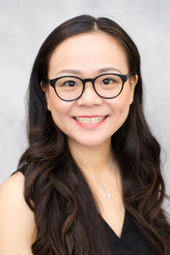
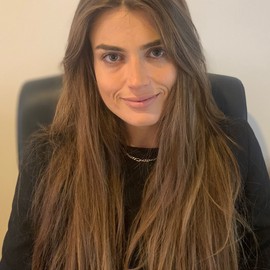
Miao Qian is an Assistant Professor of Psychology at the University of Detroit Mercy. She earned her Ph.D. in Developmental Psychology and Education from the University of Toronto and completed postdoctoral training in Harvard University's Inequality in America Initiative program. Her research investigates child social cognition, focusing on how children acquire social category knowledge and apply it to social evaluations. Research examines the development and reduction of implicit biases related to race and gender. Current projects include studying social-cognitive drivers of bias and developing interventions like individuation training and cooperative games. Recognized as a 2023 Emerging Scholar by Diverse: Issues In Higher Education.
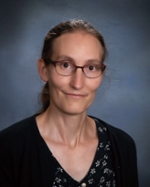
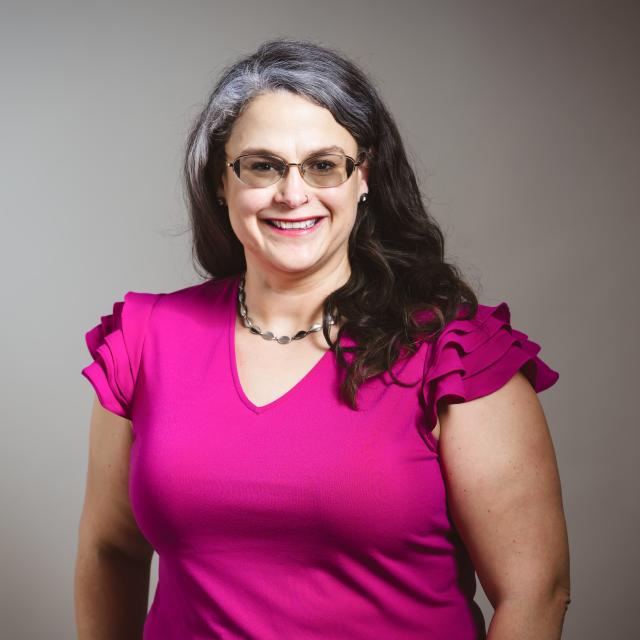
Dr. Helga Huntley is an Assistant Professor in the Department of Mathematics at Rowan University's College of Science & Mathematics. Her research applies mathematical principles to solve complex problems in oceanography and atmospheric science, with expertise in Geophysical Fluid Dynamics, Transport and Dispersion Analysis, and Applied Dynamical Systems. She teaches mathematics courses ranging from remedial to graduate level and mentors students in research projects related to her expertise. Her educational background includes: Ph.D. in Mathematics from the Courant Institute, New York University M.S. in Mathematics from the Courant Institute, New York University B.S. in Mathematics from the University of Notre Dame Dr. Huntley's research examines transport patterns in ocean flows, their predictability, and integration of models across different scales. She investigates data assimilation to improve models based on observations and sea ice dynamics. As a data manager in a multi-institutional research consortium, she has developed expertise in preparing, archiving, and sharing diverse research data from lab experiments to field observations and model outputs. Analysis of Dr. Huntley's publication record reveals a strong focus on oceanographic processes using Lagrangian methods to study surface flows and transport phenomena. Her work spans theoretical mathematical modeling, field data analysis, and practical applications related to marine pollution, predator distribution, and climate impacts. A recurring theme is the investigation of submesoscale ocean dynamics and their implications for understanding larger-scale oceanographic processes, with consistent publication output in high-impact journals. Dr. Huntley actively encourages students interested in her research areas to contact her for research opportunities. While specific grant information isn't detailed in the provided materials, her extensive publication record across multiple high-impact journals suggests successful research funding. Her work often involves collaboration with interdisciplinary teams across various institutions. As a data manager in a multi-institutional research consortium, Dr. Huntley has developed expertise in research data management best practices. Her research methodology often involves oceanographic instrumentation and drifter technologies to collect data on surface ocean dynamics, contributing to our understanding of complex fluid dynamics in natural systems.
Prof. Robert Schlögl is a leading researcher in heterogeneous catalysis and electrochemistry, serving as Director of the Fritz Haber Institute of the Max Planck Society since 1994 and Founding Director of the Max Planck Institute for Chemical Energy Conversion (MPI CEC) since 2011. He holds honorary professorships at TU Berlin, Humboldt-Universität Berlin, and the University of Duisburg-Essen. His work focuses on catalytic materials for energy storage (e.g., CO₂ conversion, hydrogen production), with contributions to methane oxidation, water splitting, and electrochemical systems. Schlögl has led national initiatives like the Carbon2Chem project and serves on key advisory boards, including the German National Academy of Sciences Leopoldina. His accolades include the 2017 ENI Award for Energy Transition and the 2019 Ipatieff Lectureship. Research teams under his leadership utilize advanced tools like operando X-ray spectroscopy and microreactors to study catalyst dynamics. Ongoing projects address sustainable hydrogen technologies and CO₂ utilization. Education: Diplom (1979), Dr. rer. nat. (1982) from Ludwig-Maximilians-Universität München, followed by postdoctoral research at Cambridge and Switzerland. Key roles include leadership in the Helmholtz Association and the German Catalysis Society. His labs at the Fritz Haber Institute and MPI CEC host interdisciplinary collaborations in catalytic innovation.
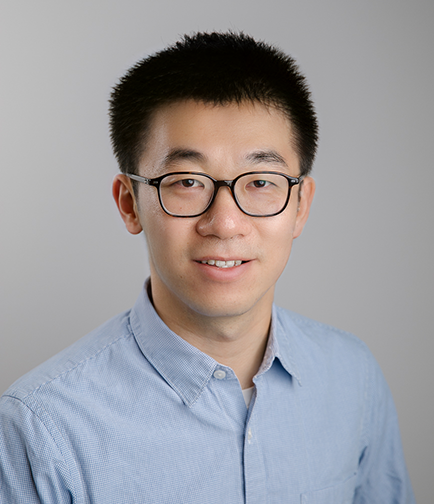
Dr. Zihang Lu is an Assistant Professor in the Department of Public Health Sciences at Queen’s University, affiliated with the School of Medicine and Faculty of Health Sciences. He holds a PhD and MSc in Biostatistics from the University of Toronto (2020 and 2013) and a BSc in Biostatistics from Southern Medical University (2012). His research focuses on developing novel statistical and machine learning methods for complex data analysis, with applications in clinical and epidemiological studies, particularly in asthma, obesity, sleep, pain, and cancer research. He collaborates with clinicians to address statistical challenges in longitudinal and functional data analysis, Bayesian modeling, and integrative clustering. Education : PhD in Biostatistics, University of Toronto (2020) MSc in Biostatistics, University of Toronto (2013) BSc in Biostatistics, Southern Medical University (2012) Research Interests : Bayesian data analysis and variable selection Longitudinal and functional data clustering High-dimensional data integration Statistical methods for disease subtyping Design and analysis of observational studies Advising & Grants : Current advisees: Caroline Lee (MSc 2022), Veronique Rowley (2021), Zhiwen Tan (PhD 2022), Mojtaba Ahmadiankalati (MSc 2021) Recruiting CANSSI Distinguished Post-Doctoral Fellow for Bayesian methods in longitudinal health data analysis Accepting MSc/PhD students for 2023 Labs & Teams : His team focuses on statistical methodology development and clinical collaborations, with active projects in pediatric lung function (e.g., the CHILD Cohort Study) and chronic disease management.
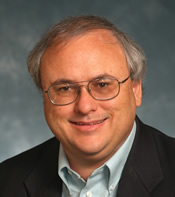
Professor Daniel Singleton is a distinguished academic in the Department of Chemistry at Texas A&M University, holding the Davidson Chair in Science. He specializes in reaction mechanisms, kinetic isotope effects, and dynamic effects in organic and organometallic chemistry. His research employs NMR-based methodologies to study reaction pathways and combines experimental and computational approaches. Singleton has contributed significantly to understanding reaction dynamics, including hydroboration selectivity, cycloadditions, and transition-state geometry measurements. Education: B.S. in Chemistry (Case Western Reserve University, 1980); Ph.D. in Chemistry (University of Minnesota, 1986). Postdoctoral training at the University of Wisconsin-Madison and General Electric. Research Interests: Focuses on reaction mechanisms, kinetic isotope effects, and dynamic effects. Key areas include the study of organic reaction dynamics using NMR, computational predictions of isotope effects, and resolving mechanistic controversies. His lab investigates energy redistribution in reactions and the role of transition-state geometry in selectivity. Awards: Arthur C. Cope Scholar Award (2008), Davidson Professor of Science (2005), and multiple teaching awards from Texas A&M. Recognized for contributions to organic chemistry and education. Grants & Advising: Advises graduate students like Jonathan Bailey and Andrew Jeffreys. Active in mentoring, including the Wells Fargo Faculty Mentor Award (2017). Research supported by grants from NIH, NSF, and industry collaborations (e.g., Process Origins Company). Labs & Teams: Singleton Research Group, focused on mechanistic organic chemistry. Collaborations with experts like Prof. K.N. Houk (UCLA) and Dr. Jack Waas. Active in journal editorial roles, including The Journal of Organic Chemistry (2005–2011).
Andrea Meilán-Vila is an Assistant Professor in the Department of Statistics at Universidad Carlos III de Madrid since 2021, holding a Juan de la Cierva Fellowship since 2023. She earned her PhD in Statistics from Universidade da Coruña (2021) and previously served as a Postdoctoral Fellow at Universidade de Santiago de Compostela's Department of Statistics, Mathematical Analysis and Optimisation. Her research focuses on nonparametric methods for analyzing complex data types, including directional, spatial, and functional data. Key areas include kernel smoothing techniques, goodness-of-fit testing for regression models, and spatial trend estimation. She serves as an Associate Editor for the Journal of Nonparametric Statistics . Recent work emphasizes applications in climate science (temperature curve modeling), fluid dynamics (wake flow control), and biomedical imaging (hippocampus shape analysis). Her methodologies address challenges like sparse data estimation and spatial correlation in regression frameworks. Key Projects: STENED (Stein-based goodness-of-fit tests for non-Euclidean data) Awards: Juan de la Cierva Fellowship (2023) Publications span journals like Journal of Fluid Mechanics , Statistical Papers , and TEST , with a focus on methodological advancements in statistical modeling and computational validation.
Professor Dino Sejdinovic is a faculty member in the School of Computer and Mathematical Sciences at the University of Adelaide, part of the Faculty of Sciences, Engineering and Technology. Previously, he held positions as Lecturer and Associate Professor at the University of Oxford's Department of Statistics (2014–2022). His academic qualifications include a PhD in Electrical and Electronic Engineering from the University of Bristol (2009) and a Diplom in Mathematics and Theoretical Computer Science from the University of Sarajevo (2006). His research focuses on the intersection of statistical methodology and machine learning, encompassing large-scale nonparametric methods, robust machine learning, multiresolution data fusion, and measures of dependence. He has contributed to kernel methods, Bayesian inference, causal discovery, and applications in climate science, quantum computing, and social science data analysis. Education: PhD in Electrical and Electronic Engineering, University of Bristol (2009) Diplom in Mathematics and Theoretical Computer Science, University of Sarajevo (2006) Sejdinovic's work emphasizes bridging theoretical foundations with practical applications, such as cloud type classification using vision transformers and machine learning-driven quantum device optimization. His recent publications explore topics like kernel-based causal inference, Bayesian neural networks, and uncertainty quantification in statistical models. Advising and grants: Eligible to supervise Masters and PhD students in machine learning and statistics, though specific grants or student advisees are not explicitly listed in the provided texts.
Andrei Vedernikov is a Professor of Chemistry & Biochemistry at the University of Maryland, affiliated with the Institute for Physical Science and Technology (IPST). His research focuses on organotransition metal chemistry, catalysis, and reaction mechanisms with an emphasis on green synthetic methodologies using oxygen-based oxidants (O₂ and H₂O₂) for C-H and C-C bond functionalization. Key areas include platinum and palladium complex design, oxidative functionalization, and mechanistic studies using computational DFT methods. Recent work highlights catalytic systems for aerobic C-H bond activation, photoredox-mediated transformations, and the development of ligands to enhance reactivity. His studies often explore high-valent metal intermediates and their role in bond cleavage/formation. Applications span green chemistry, sustainable synthesis, and materials science. Notably, he investigates methane functionalization pathways and oxygen-driven catalytic cycles. Publications emphasize platinum/palladium complexes' reactivity under oxidative conditions, ligand effects on selectivity, and substrate scope in C(sp²)- and C(sp³)-H activations. Research also extends to mesoporous materials for toxic chemical filtration and mechanistic insights into NO binding in transition metal systems. Awards: None explicitly mentioned in current data. Advising and grants: No student names or grant details provided. Laboratory affiliations include IPST and the Chemistry & Biochemistry Department at UMD.
Gordana Wozniak-Knopp is a researcher at the University of Natural Resources and Life Sciences, Vienna (BOKU), affiliated with the Institute of Molecular Biotechnology under the Department of Biotechnology and Food Science. Her work focuses on antibody engineering, molecular biotechnology, and protein stability optimization. Key research areas include Development of multispecific antibodies using controlled Fab-arm exchange and SEED technology Engineering antigen-binding sites in Fc regions Stabilization of antibody fragments via disulfide bonds and domain exchange Extracellular vesicle functionalization for targeted drug delivery Design of diagnostic antibody microarrays and SARS-CoV-2 antigen platforms Between 2020–2024, she led an FWF-funded project on therapeutic antibodies for birch pollinosis and a 2016–2023 CD Laboratory for Innovative Immunotherapeutics. Her recent publications (2022–2023) emphasize trispecific antibody design, SARS-CoV-2 diagnostics, and CD81-based delivery systems. Scientific contributions include peer-review activities for journals like Protein Science , Nature Communications , and Scientific Reports , along with organizing events such as the Lange Nacht Der Forschung 2024 . She actively participates in international conferences and project evaluations for organizations like Poland’s National Science Centre.
Giovanni Giuseppe Vendramin is a Research Director at the Institute of Biosciences and BioResources (IBBR) within Italy's National Research Council (CNR), based in Florence. He holds a magna cum laude degree in Forest Sciences from the University of Florence (1981) and has held research fellowships at institutions including the USDA Forest Service (USA) and University of Göttingen (Germany). His career includes leadership roles as Director of IBBR and recognition as an Honorary Research Fellow at Bioversity International. Vendramin's research focuses on forest genetics, conservation genomics, and phylogeography. He investigates adaptive responses of trees to environmental change, genetic diversity patterns in glacial refugia, and conservation strategies for endangered species. His work employs genomic tools to study local adaptation, gene flow, and demographic history across Mediterranean and European tree species. Recent publications emphasize climate adaptation mechanisms, genomic signatures of selection, and conservation genetics. Articles from 2021-2023 predominantly explore genetic resilience to glacial cycles, microgeographical adaptation in conifers, and biodiversity conservation frameworks. Research integrates molecular ecology, paleoecology, and landscape genetics. Scientific Awards: Medal for distinguished Italian scientists (Accademia Nazionale delle Scienze, 2022) Honorary Doctorate (University of Zvolen, Slovakia, 2012) Vendramin has led over 35 national/international projects and advises graduate students and postdoctoral researchers. He coordinates an IUFRO unit and contributes to EU scientific commissions. His laboratory employs genomic techniques for biodiversity conservation, with collaborations across European research networks.
Dr. Dong Gong is a Senior Lecturer and ARC DECRA Fellow (2023-2026) at the School of Computer Science and Engineering (CSE), UNSW. He holds an adjunct position at the Australian Institute for Machine Learning (AIML), University of Adelaide. His research focuses on machine learning challenges in dynamic environments, including continual learning, foundation models, generative models, and applications in interdisciplinary areas like mining and agriculture. Research interests include learning with non-ideal supervision, foundation model adaptation, generative models, and interdisciplinary problems combining CV/ML with domain-specific applications. His work often addresses real-world scenarios such as mineral exploration and soil trait analysis using CV/ML technologies. Outstanding Reviewer: NeurIPS 2018 Outstanding Area Chair: ACM MM 2024 ARC DECRA Fellowship (2023-2026) Advising and grants: Actively supervises PhD/MPhil students in computer vision and ML. Collaborates with industry and government on research projects. Utilizes advanced infrastructure like UNSW's Katana supercomputing cluster and Gadi (NCI). Labs/Teams: Involved in interdisciplinary research groups at UNSW CSE and AIML, focusing on dynamic learning paradigms and real-world applications of AI.
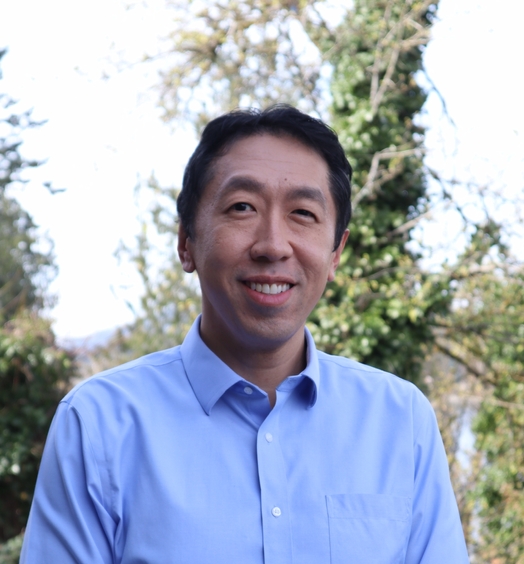
Andrew Ng is an Adjunct Professor at Stanford University's Computer Science Department and a globally recognized leader in AI. He is the Founder of DeepLearning.AI, Executive Chairman of LandingAI, General Partner at AI Fund, and Co-Founder of Coursera. His work has revolutionized machine learning and online education, with over 200 research papers in AI, robotics, and related fields. He was named to the 2023 Time100 AI list of most influential figures in AI. Ng's research focuses on machine learning, deep learning, reinforcement learning, and their applications in robotics and education. He pioneered the development of massive open online courses (MOOCs), notably through Stanford's early experiments in 2011 that attracted hundreds of thousands of learners. His contributions include foundational work in algorithms like Latent Dirichlet Allocation (LDA) for text analysis and advancements in spectral clustering and inverse reinforcement learning. His publications span topics from robotic hand design to scalable deep learning systems, emphasizing practical and scalable solutions. Ng's educational initiatives, such as the Machine Learning and Deep Learning Specializations, have educated millions worldwide. He advocates for accessible AI education and ethical AI development, emphasizing collaboration between academia and industry.
Dr. Gulsum Kubra Kaya is a Lecturer in Human Factors at the Centre for Safety & Accident Investigation at Cranfield University. She is a Chartered member of the Chartered Institute of Ergonomics and Human Factors Society (C.Erg.HF) and a Fellow of the Higher Education Academy (FHEA). Dr. Kaya holds a BEng in Industrial Engineering from Sakarya University, an MSc in Systems Engineering Management from University College London, and a PhD in Engineering from the University of Cambridge. Her academic journey includes prior roles as a Lecturer and she earned the title of 'Associate Professor' in Industrial Engineering in 2022. Her research focuses on system safety, human factors, risk assessment, machine learning applications, and decision-making in complex systems. Her work spans various domains including healthcare, transportation, and industrial settings. She is particularly interested in: Air Transport Safety & Investigation Industrial Ergonomics and Human Factors Safety, Resilience, Risk & Reliability Systems Engineering approaches to safety Her recent publications demonstrate a strong focus on applying systems thinking and advanced analytical methods to safety challenges. She has published extensively on topics such as Safety-I and Safety-II approaches, machine learning applications in healthcare safety, risk assessment practices in hospitals, and system-based risk analysis in transportation systems. Dr. Kaya serves on the editorial board of the Ergonomics journal and is an associate editor at the Risk Management and Healthcare Policy Journal. She also serves on the editorial board at the BMJ Health & Care Informatics Journal. She is actively involved in research on safety in liquid-hydrogen-powered aircraft operations and bacteria-type detection. Dr. Kaya is open to supervising PhD students interested in system safety research.
Elana Schlenker is a Lecturer in the Image Text Ithaca low-residency MFA program at Cornell University's College of Architecture, Art, and Planning since 2016. As principal of Studio Elana Schlenker (founded 2011), she leads a medium-agnostic design practice while co-running the cooperative studio Out of Office with Mark Pernice. Her work bridges academia and professional design through initiatives like Gratuitous Type magazine and the gender wage parity project Less Than 100. Schlenker's research centers on graphic design as a vehicle for social commentary, particularly gender equity in creative industries. She explores typographic innovation, visual identity systems for cultural institutions, and the intersection of image/text in digital and print media. Her practice demonstrates how design methodologies can address political and wellness themes through Visual identity , Branding , and Art direction projects. Recent publications (2021-2024) reveal a focus on modular design systems for art institutions and publishers, with heavy emphasis on interactive web experiences and context-specific typography . She frequently collaborates with photographers and galleries, translating complex narratives into visual communication frameworks that challenge traditional publishing formats. Awards received: Young Gun by The One Club for Creativity (2015) Print Magazine New Visual Artist (2013) In her academic role, Schlenker mentors MFA students in visual communication and design research. Her studio practice operates as a de facto research lab funded through high-profile client contracts with cultural institutions including Walker Art Center, Carnegie Museum of Art, and The New York Times. These projects serve as live case studies for her pedagogy. Schlenker directs Studio Elana Schlenker as her primary creative laboratory, with Out of Office functioning as a collaborative platform. She maintains long-term partnerships with specialists like Maria Adelaide (interactive design) and Élise Rigollet (editorial design), forming interdisciplinary teams for projects spanning academia, art, and technology sectors.
Lisa Fredin is an Associate Professor in the Department of Chemistry at Lehigh University , with research spanning theoretical and computational chemistry , electronic structure , disorder in materials , photoredox catalysis , and nanochemistry . Her work bridges experiment and theory , focusing on density functional theory (DFT) and quantum chemistry to model catalytic materials , charge transport , and excited-state dynamics in systems ranging from transition-metal complexes to oxide nanoparticles . Education: Ph.D. in Chemistry (Northwestern University, 2012), B.S. in Chemistry, Biochemistry, Applied Mathematics (UT Austin, 2007) Previous Appointments: Postdoctoral Researcher at Lund University (2012–2014), Research Associate at NIST (2015–2018) Her research explores: Disorder in Inorganic and Organic Materials: Modeling defects , doping , and dynamic molecular vibrations to understand their impact on electronic properties and device performance . Photophysics of Light-Harvesting Complexes: Studying Fe(II) , Ru(II) , and Pd(II) complexes to optimize charge separation , excited-state lifetimes , and photocatalytic efficiency . Surface and Nanoscale Reactivity: Predicting reactivity of oxide nanoparticles and metal surfaces for CO disproportionation , water oxidation , and photoredox reactions . Her recent publications highlight TD-DFT applications, Boltzmann transport in organic materials, and defect engineering in TiO2 and SrTiO3 . She has received the Sloan Research Fellowship (2024) and ACS-PHYS Postdoctoral Award (2016) . Prof. Fredin mentors 6 graduate students and 15 undergraduates , teaches Physical Chemistry and Quantum Chemistry , and leads the Fredin Group , which develops computational tools for materials discovery.