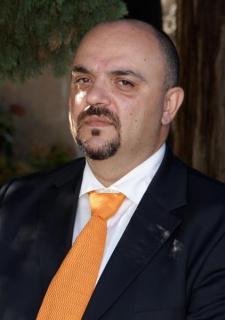
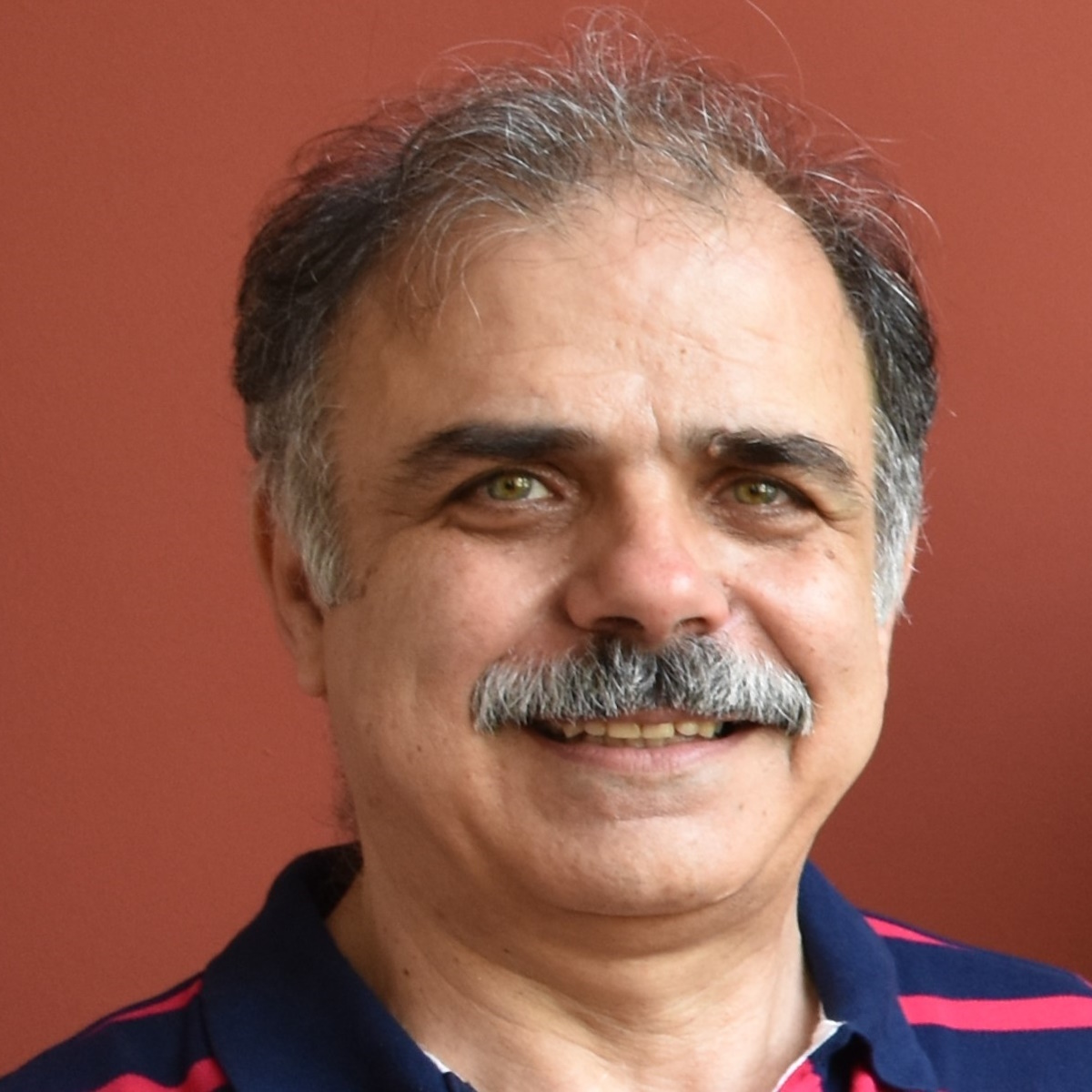
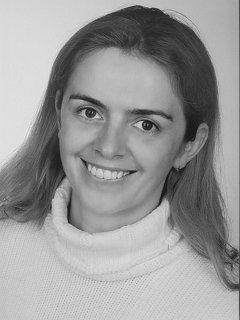
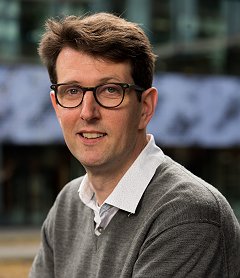
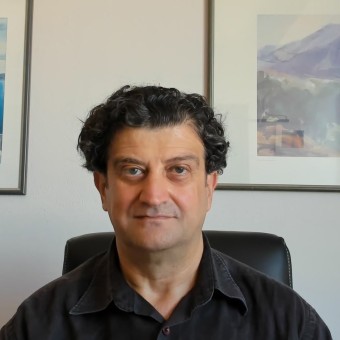
Nikolaos Papaspyrou is a Professor at the School of Electrical and Computer Engineering of the National Technical University of Athens (NTUA) and a member of the Software Engineering Laboratory . His research focuses on the theory and implementation of programming languages, including semantics, type systems, compilers, static analysis, and formal verification. Since October 2021, he has been on leave from NTUA, working as a Software Engineer for Google in the memory management team for the V8 JavaScript and WebAssembly engine. He previously served as Director of the Division of Computer Science (2017-2019) and was on sabbatical with Google's compiler group in Munich (2015-2016). His work includes the RELEASE project (EU FP7 STREP) for reliable large-scale server software and uncertainty handling in distributed databases (European Social Fund). Ph.D. and Diploma in Electrical and Computer Engineering from NTUA M.Sc. in Computer Science from Cornell University His research interests span programming languages , software engineering , and formal verification , with recent publications on coinductive proofs in Liquid Haskell, concurrency semantics, and quantum compilation. He has supervised over 50 diploma projects and mentored numerous students now at institutions like MIT, Princeton, and UC Berkeley. Awards include conference organizing and program committee roles, though no formal scientific prizes are listed.
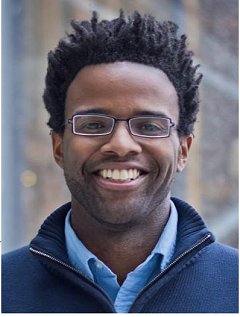
Stefan K. Muller is the Gladwin Development Chair Assistant Professor in the Computer Science Department at Illinois Institute of Technology. He previously served as a Postdoctoral Researcher at Carnegie Mellon University from 2018-2020 following completion of his PhD there under advisor Umut A. Acar. His academic journey began with an AB from Harvard University in 2012 under Stephen Chong. Dr. Muller's research centers on programming language techniques to improve correctness and efficiency of software, particularly in parallel computing domains. His work spans language and type system design, static resource analysis, and parallel computing methodologies. He leads the Responsive Parallelism research project which extends implicit parallelism models to handle features of consumer software like user interaction and responsiveness requirements. His publication record shows consistent output in top-tier venues including PLDI, POPL, ICFP, and SPAA, with recent work focusing on graph types, responsive parallelism, and resource-aware GPU programming. His research has been supported by NSF grant CCF-2107289. Current advisees include Marelle León (BS), Godha Pallavi Bhogadi (MS), and Alex Friedman (PhD) Former students have gone on to positions at Apple, Amazon, Bloomberg, American Express, and PhD programs at UPenn Teaching responsibilities at Illinois Tech include graduate courses CS534 (Types and Programming Languages), CS536 (Science of Programming), CS440 (Programming Languages and Translators), and CS443 (Compiler Construction). Previously at CMU, he taught Principles of Functional Programming.
Michael L. Scott is the Arthur Gould Yates Professor of Engineering in the Department of Computer Science at the University of Rochester's Hajim School of Engineering and Applied Sciences. He received his Ph.D. from the University of Wisconsin-Madison in 1985 and has been a faculty member at Rochester since 1985, serving as Department Chair multiple times (1996-99, 2007, 2017, 2020-2024). He is a Fellow of the ACM, IEEE, and AAAS, and recipient of numerous awards including the Edsger W. Dijkstra Prize in Distributed Computing. Dr. Scott's research focuses on parallel and distributed systems, with particular expertise in synchronization mechanisms, transactional memory, and persistent memory systems. His work spans theoretical foundations to practical implementations, with numerous influential publications and open-source systems like RSTM and Ralloc. His research has addressed critical challenges in concurrent programming, memory management, and system reliability. His publications show a consistent focus on improving the reliability and performance of concurrent systems, with recent work centered on persistent memory technologies. The trajectory of his research demonstrates a progression from fundamental synchronization algorithms to sophisticated systems addressing modern hardware challenges. His publications span top venues in systems, architecture, and programming languages. His scientific honors include: ACM Fellow (2006) IEEE Fellow (2010) AAAS Fellow Edsger W. Dijkstra Prize in Distributed Computing (2006) University of Rochester's Goergen Award for Teaching (2001) Hajim School Lifetime Achievement Award (2018) IEEE TCCA/HPCA Test of Time Award (2022) Dr. Scott has advised over 25 Ph.D. students who have gone on to successful careers in academia and industry at institutions including Lehigh University, Google, Intel, Facebook, and NVIDIA. His textbook 'Programming Language Pragmatics' is a standard reference in the field, now in its 5th edition. He also co-authored 'Shared-Memory Synchronization,' a comprehensive treatment of the field. He spent the 2014-2015 academic year as a Visiting Scientist at Google. His research group, the Rochester Concurrent Systems Group, has developed numerous influential systems including RSTM (a software transactional memory system), Ralloc (a persistent memory allocator), and Montage (a system for persistent data structures). His work often bridges theoretical correctness with practical performance considerations.
Athanasios G. Kanatas is a Professor at the Department of Digital Systems, University of Piraeus, Greece, and Director of the Telecommunication Systems Laboratory. He holds a Ph.D. in Mobile Satellite Communications from NTUA (1997), and has held roles such as Dean of the School of Information & Communication Technologies (2013–2017) and IEEE Communications Society Chairperson (1999). Education: Diploma in Electrical Engineering (NTUA, 1991), M.Sc. in Satellite Communication Engineering (University of Surrey, 1992), Ph.D. in Mobile Satellite Communications (NTUA, 1997). Research focuses on V2X communications, UAV-assisted networks, antenna design, stochastic geometry, and cybersecurity. He has published over 200 papers and authored 6 books, and leads projects in 5G/6G systems and integrated sensing-communication networks. His work includes pioneering contributions to aerial relay placement, fluid antenna systems, and hybrid beamforming techniques. He serves as Editor of IEEE Transactions on Wireless Communications, Associate Editor of IEEE Transactions on Antennas and Propagation, and is a Senior IEEE Member since 2002. Recent activities include extending the deadline for M.Sc. program applications and promoting internships for students. Labs/Teams: Directs the Telecommunication Systems Laboratory, collaborating on projects like ARGOS RFI monitoring and UAV corridor-assisted IoT networks. His research emphasizes practical implementation through prototyping and experimentation, with applications in aerospace, IoT, and intelligent transport systems.
Professor Maria Papadopoulou is a faculty member in the Department of Language and History at the School of Early Childhood Education, Aristotle University of Thessaloniki. Her expertise spans literacies, multilingual education, refugee integration, and multimodal communication. She has held roles in curriculum development, teacher training, and policy analysis, focusing on inclusive practices for marginalized groups. Education & Professional Background: Established career in early childhood and language education with a focus on refugee and multilingual contexts. Administrative Roles: Contributed to academic governance and international conferences, including the Hellenic Semiotics Society. Her research emphasizes critical literacy, digital tools in education, and refugee education policy. Key projects include interventions for noise awareness in preschools and studies on Roma literacy practices. She has collaborated with NGOs and policymakers to bridge theory and practice in multicultural education settings. Publications span over 30 years, addressing topics like semiotics in advertising, multimodal texts, and task-based language teaching. Her work highlights the interplay between cultural context, technology, and pedagogy to foster inclusive learning environments.
Evaggelia Pitoura is a Professor in the Department of Computer Engineering and Informatics at the University of Ioannina, Greece, and a Lead Researcher at the Archimedes Research Unit, ATHENA Research Center. Her work spans data management, distributed systems, and mobile computing, with a strong focus on database personalization and diversity. Her research interests include data diversity, contextual preferences, XML data management, peer-to-peer systems, and mobile computing . She has pioneered work in result diversification, preference-aware querying, and distributed data indexing, publishing extensively in top venues such as PVLDB, ICDE, SIGMOD, and IEEE TPDS. The recent publications highlight a consistent trend in personalized, context-aware database systems , with emphasis on improving user experience through intelligent query processing, recommendation, and efficient data organization in distributed environments. Best Paper Award, SIGMOD 1999 Best Paper Award, PVLDB 2013 She has advised several PhD students, including Georgia Koloniari, Kostas Stefanidis, Marina Drosou, and Konstantinos Semertzidis, who now hold positions in academia and industry. She teaches courses in Databases and Information Retrieval and actively contributes to the academic community through program committee roles in major conferences like ICDE, VLDB, SIGMOD, and WWW. She leads the Distributed Management of Data Group , fostering innovation in scalable and intelligent data systems.
Sotiris Plainis is a Research Fellow at the Institute of Optics and Vision, University of Crete, and a Visiting Researcher at Aston University (UK). He holds an MSc and PhD in Optometry and has held roles such as Honorary Lecturer at the University of Manchester (2006–2013). His expertise spans Optics, Psychophysics, and Electrophysiology of Vision. He leads clinical and research activities, including specialized electrophysiological exams for retinal and optic nerve disorders. Plainis co-developed the European-wide visual acuity charts (modified ETDRS) to enhance cross-cultural applicability in clinical trials. He is a Fellow of the International Society for Contact Lens Research (ISCLR) and contributes to interdisciplinary postgraduate programs in Optics & Vision and Investigative Ophthalmology. His work also involves evaluating visual performance in athletes with visual impairments and advancing optometry education in Greece and Europe. Education: Graduate Optician (TEI Athens) and Optometrist (UMIST, UK). Active in editorial boards and peer review, with over 55 peer-reviewed publications, books, and chapters. Awards include the Prof. I. Pallikaris Award and the SOI Honorary Award in Ophthalmology (2018). Research focuses on contact lens optics, visual acuity assessment, and electrophysiological diagnostics. He collaborates internationally, presenting at conferences like ARVO and ISCLR, and chairs educational committees in optometry. His lab develops innovative tools for vision testing and contributes to clinical standards in ophthalmology.
Charalampos Spilianakis is an Associate Professor at the University of Crete with a research affiliation at the Institute of Molecular Biology and Biotechnology (IMBB) of the Foundation for Research and Technology - Hellas (FORTH). His work focuses on the three-dimensional organization of the genome and its critical role in gene regulation within immune cells, particularly T cells. Dr. Spilianakis earned his PhD in 2003 from the University of Crete in Biochemistry, Molecular Biology, Cellular and Developmental Biology. His academic career has been dedicated to understanding how nuclear architecture influences cellular function and gene expression patterns. His research program investigates both cis and trans regulatory mechanisms of gene expression, with particular emphasis on how protein complexes generate and maintain long-range chromosomal interactions in immune cell populations. His laboratory employs an integrated approach combining biocomputing, molecular techniques, biochemical assays, advanced imaging, and genetic analyses to explore the field of 3D epigenetics. This work has significant implications for understanding immune cell differentiation and function. Analysis of Dr. Spilianakis' publication record reveals a consistent research trajectory focused on chromatin architecture and transcriptional regulation in immune cells. His contributions include developing protocols for chromosome conformation capture in primary T cells, elucidating SATB1's role in shaping the 3D enhancer network during T cell development, and investigating the nuclear periphery's role in microRNA gene localization. His work bridges molecular biology, immunology, and genomics to advance spatial genomics understanding. Based at IMBB-FORTH (Office A251, Lab A204), Dr. Spilianakis leads a research group that serves as an important hub for investigating the relationship between nuclear architecture and gene expression in the immune system. His laboratory combines cutting-edge molecular and imaging technologies to address fundamental questions about genome organization and its functional consequences in health and disease.
Dimosthenis Kyriazis is a Professor at the University of Piraeus, affiliated with the Research Center. He currently teaches courses such as C Programming, e-Business, and Information Systems. His research focuses on service-oriented architectures, cloud/edge computing, data management, and healthcare informatics. Kyriazis holds a PhD from the National Technical University of Athens (NTUA) and has contributed to EU-funded projects like BigDataStack and CrowdHEALTH, addressing quality of service, workflow management, and IoT applications. He leads research on data management in cloud/edge environments, socially-enhanced IoT management, and big data applications in sectors like finance and e-health. His expertise spans distributed systems, software engineering, and interdisciplinary collaborations with industries and academia. He has participated in EU working groups on Future Internet Architecture and Cloud QoS&SLAs. Kyriazis actively seeks interns and collaborates on initiatives like AI-driven healthcare platforms (iHELP) and sustainable computing practices. His work emphasizes human-centric AI, data interoperability, and ethical AI frameworks such as AI4Gov for transparent governance. Education: Diploma in Electrical and Computer Engineering (NTUA, 2001), MSc in Techno-economics (NTUA/University of Athens/University of Piraeus, 2004), PhD in Service-Oriented Architectures (NTUA, 2007). Key research areas include federated data marketplaces (FAME), healthcare data integration (holistic health records), and AI applications in finance (DeepVaR). His publications address topics like explainable AI (XAI), defect detection in manufacturing, and environmental risk correlation with health. Grants and collaborations involve coordinating EU projects targeting data governance frameworks, energy-efficient mobility data spaces (Mobispaces), and AI for policy-making (e.g., OECD AI policy analysis). His contributions bridge technical innovation with societal impact through sustainable computing and ethical AI practices.
Andreas Kastellakis serves as Associate Professor of Psychophysiology at the University of Crete's Department of Psychology since 1992, with prior affiliation as Associate of the Pharmacology Laboratory at the School of Medicine (1993-2021). His academic foundation includes a Biology degree from the University of Patras (1976-1980) followed by a PhD in Physiology (1981-1986) investigating thyroid hormone uptake mechanisms in rat brain. His research program centers on dopaminergic system interactions with thyroid hormones, somatostatin, opioids, and psychostimulants. Employing in vivo microdialysis , immunohistochemistry, HPLC, and behavioral assays, he examines neurochemical, anatomical, and pharmacological parameters in rodent models. Key focus areas include receptor pharmacology in basal ganglia pathways and neurobiological mechanisms of reward processing. Analysis of his 15 most recent publications (2000-2020) reveals persistent investigation into somatostatin receptor subtypes (sst1-sst4), cannabinoid systems, and dopaminergic modulation of motor activity and addiction. His work consistently bridges molecular neuropharmacology with behavioral outcomes, particularly in Parkinson's disease models, substance reinforcement, and stress-neuroendocrine interactions. Dr. Kastellakis has secured significant research funding including the THALES project on Parkinson's pathogenesis (2012-2015), Special Account for Research Grants projects on thyroid hormones (2000-01) and somatostatin (1994-95), and Region of Crete equipment grants (1996, 1999). He teaches undergraduate courses in Neurobiology-Genetics, Behavioral Physiology II, Comparative Psychology, and Stress-Neuroendocrine-Immune Relations, while co-teaching graduate coursework in Neurobiology and Psychopharmacology of Addiction. His laboratory (A1.104, Building A1) operates within the Department's Behavioral Neuroscience facility.
Ruzica Piskac is a Professor of Computer Science at Yale University, where she leads the Rigorous Software Engineering (ROSE) group. She has made significant contributions to the fields of software verification, security, automated reasoning, and code synthesis, focusing on improving software reliability and trustworthiness through formal techniques. Dr. Piskac received her PhD from the Swiss Federal Institute of Technology (EPFL) in 2011, where her dissertation won the Patrick Denantes Prize. Prior to joining Yale, she led an independent research group at the Max Planck Institute for Software Systems in Germany (2012-2013). Her research spans several key areas: symbolic execution for Haskell (G2), privacy-preserving formal methods (PPFM), functional reactive synthesis, verification of configuration files, and analysis of software updates. Her work consistently bridges theoretical formal methods with practical applications in real-world systems. Dr. Piskac's recent publications demonstrate a strong trend toward applying formal verification techniques to emerging challenges including large language models, quantum computing security, legal accountability of automated systems, and cyber-physical systems. Her research increasingly intersects with AI, cryptography, and legal domains while maintaining strong foundations in formal methods. Her scientific achievements have been recognized with numerous prestigious awards: Multiple Amazon Research Awards Yale University's Ackerman Award for Teaching and Mentoring Facebook Communications and Networking Award Microsoft Research Award for the Software Engineering Innovation Foundation (SEIF) Patrick Denantes Prize for her PhD dissertation Dr. Piskac has graduated five PhD students, four of whom have gone on to become assistant professors of computer science. She has served as Program Chair of the 37th International Conference on Computer Aided Verification and is on the Steering Committee of the Formal Methods in Computer-Aided Design conference. She leads the Rigorous Software Engineering (ROSE) group at Yale, which focuses on several key projects including: Symbolic Execution Engine for Haskell (G2) Privacy Preserving Formal Methods (PPFM) Functional Reactive Synthesis Verifications for Configuration Files Analysis of Software Updates and Configuration Files
Zhenjiang Hu is a Chair Professor and Dean of the School of Computer Science at Peking University. He serves as Director of the Programming Languages Laboratory and has held significant academic positions including Professor at the National Institute of Informatics and University of Tokyo. BS and MS from Shanghai Jiaotong University (1988, 1991) PhD from University of Tokyo (1996) Lecturer/Assistant Professor at University of Tokyo (1997) Associate Professor at University of Tokyo (2000) Full Professor at National Institute of Informatics (2008) Full Professor at University of Tokyo (2018-2019) Professor Hu's research primarily focuses on programming languages and software engineering, with special emphasis on functional programming, bidirectional transformation, and software adaptation. His work explores transformational programming approaches for automatic program optimization, systematic parallelization of sequential programs, efficient manipulation of structured documents, and bidirectional model transformation for software development. His research has significantly advanced the field of bidirectional programming, developing foundational theories and practical applications that enable more reliable and maintainable software systems. His recent publications demonstrate a strong trajectory in bidirectional programming, program synthesis, and graph processing. The research shows increasing sophistication in handling program transformations, with growing emphasis on practical applications in software engineering contexts. His work increasingly integrates formal methods with practical programming language design, creating systems that maintain theoretical soundness while addressing real-world software development challenges. The research spans multiple venues including top conferences like PLDI, POPL, ICFP, and OOPSLA, reflecting its broad impact across programming language research. Fellow of JFES (Japan Federation of Engineering Society, 2016) ACM Distinguished Scientist (2016) Member of Academia Europaea (2019) IEEE Fellow (2020) Member of Engineering Academy of Japan (2020) Professor Hu actively mentors students and has welcomed excellent candidates to join his group through Peking University's International Elite PhD Program and Boya Postdoctoral Fellowship Program. He serves on numerous program committees for major conferences including PLDI, POPL, ICFP, and OOPSLA, and holds editorial positions for prestigious journals such as Journal of Functional Programming and Science of Computer Programming. His leadership extends to conference organization, having served as PC Chair for CNCC 2024 and General Co-Chair for SoICT 2019. As Director of the Programming Languages Laboratory at Peking University, Professor Hu leads a research team focused on advancing programming language theory and practice. His lab has developed influential frameworks like BiGUL for bidirectional programming and Fregel for graph processing. The laboratory maintains strong international collaborations and contributes to both theoretical foundations and practical implementations in programming languages and software engineering.
Andy D. Pimentel is a Full Professor at the University of Amsterdam, where he chairs the Parallel Computing Systems (PCS) group within the Systems and Networking Lab at the Informatics Institute. His work focuses on the design, programming, and run-time management of multi-core and multi-processor computer systems, with particular attention to performance, power/energy consumption, system dependability, and design productivity. His academic background includes: PhD in Computer Science, 1998, University of Amsterdam MSc in Computer Science, 1993, University of Amsterdam Professor Pimentel's research spans multiple critical areas in modern computing systems. His primary interests include multi-core embedded systems, system-level design and simulation, design space exploration, performance and power analysis, system dependability, hardware/software co-design, run-time resource management, and Edge AI. His work addresses the growing challenges of making computer systems faster, more sustainable, energy efficient, reliable, and secure in an era of increasing computational demands and climate concerns. The PCS group he leads performs research on the modeling, analysis and optimization of extra-functional aspects of computing systems, which play a pivotal role in their work. An analysis of Professor Pimentel's recent publications reveals a strong focus on edge computing, distributed AI, and energy-efficient system design. His work bridges theoretical computer architecture with practical implementation challenges, particularly in the context of resource-constrained environments. Key trends include the adaptation of AI models for edge devices, thermal management in advanced architectures, and optimization of multi-core systems for both performance and energy efficiency. His research increasingly addresses sustainability concerns in computing, reflecting broader industry and academic priorities. His notable scientific achievements include: IEEE CEDA Outstanding Service Recognition Award DATE Fellow Award Professor Pimentel has served in numerous leadership roles in the academic community, including as General Chair of Design Automation and Test in Europe (DATE) 2024, Vice General Chair of IEEE/ACM Embedded Systems Week 2025, and General Chair of IEEE/ACM Embedded Systems Week 2026. He has secured significant research funding for projects related to sustainable computing, edge AI, and multi-core system design. His professional service includes board membership with the ICT Research Platform Nederland (IPN) since 2020 and leadership roles in major conferences such as DATE, Embedded Systems Week, and SAMOS. The Parallel Computing Systems group he chairs is a vibrant research team within the Systems and Networking Lab at the Informatics Institute. The PCS group focuses on the challenges of modern computing systems, particularly addressing the extra-functional aspects like performance, power consumption, and system dependability. Their work is highly relevant to current technological challenges in edge computing, sustainable systems design, and the integration of AI into resource-constrained environments.
Nikolaos Samaras is a Full Professor at the Department of Applied Informatics, School of Information Sciences, University of Macedonia in Thessaloniki, Greece. He has been serving as director of the Computational Methodologies & Operations Research (CMOR) Laboratory since April 2016. His academic career includes positions as Assistant Professor (2007-2012) and Lecturer (2003-2007) at the same institution, and earlier as an adjacent Lecturer at the Technological Institute of Western Macedonia (1998-2000). Dr. Samaras earned his Diploma in Applied Informatics from the University of Macedonia in 1996 and his Ph.D. in Applied Informatics from the same university in 2001. His educational background forms the foundation for his extensive research in computational optimization and operations research. Professor Samaras's research focuses on the interface between computer science and operations research, with particular expertise in linear and nonlinear optimization, network optimization, integer optimization, and scientific computing including HPC and GPU programming. His work has resulted in the development of new algorithmic families for optimization problems, efficient GPU implementations of the revised simplex algorithm, and novel algorithms and software for operations research. His research spans theoretical algorithm development, practical implementation, and real-world applications across various engineering and scientific domains. His extensive publication record includes over 35 journal papers in prestigious venues such as Computers and Operations Research, European Journal of Operational Research, and Journal of Artificial Intelligence Research, more than 85 conference papers, and four textbooks (two in English and two in Greek). His work has been recognized through citations and the Thomson ISI/ASIS&T Citation Analysis Research Grant in 2005. ACM Senior Member (2016) Thomson ISI/ASIS&T Citation Analysis Research Grant (2005) Editorial board member of Operations Research: An International Journal Reviewer for numerous top journals including Mathematical Programming Computation and European Journal of Operational Research Professor Samaras has supervised four current Ph.D. students working on hybrid simplex algorithms, large-scale optimization using Apache Hadoop, algorithmic procedures in matrix theory, and smoothed complexity analysis. He has successfully guided five Ph.D. students to completion, including Nikolaos Ploskas who won the 2014 HELORS Doctoral Dissertation Award. Additionally, he has supervised 45 master's theses and 84 bachelor's theses. His research group has secured funding from diverse sources including the European Union, Greek Secretariat of Research and Technology, and industry partners like Veltio Greece LTD. The Computational Methodologies & Operations Research (CMOR) Laboratory, which he directs, focuses on developing and implementing optimization algorithms with applications in transportation, energy systems, and business process design. The lab has produced notable software tools including Euclides and Visual LinProg, which have educational applications in linear programming.
Michael Carbin is an Associate Professor at MIT in the Department of Electrical Engineering and Computer Science (EECS), where he leads the Programming Systems Group at the Computer Science and Artificial Intelligence Laboratory (CSAIL). His research centers on developing programming systems that handle uncertainty through probabilistic programming, quantum computing, and neural networks. Carbin's work spans programming languages, systems, and machine learning, with themes including uncertainty management, efficiency optimization, and formal verification. His publications demonstrate a strong focus on probabilistic inference methods, neural network optimization, and quantum programming frameworks. Awards and Honors: Sloan Research Fellowship (2020) Multiple Best Paper Awards (OOPSLA 2013, 2014; ICLR 2019) NSF CAREER Award (2018) Google Faculty Research Award (2018) As the head of the Programming Systems Group, he advises 10+ graduate students and postdocs, focusing on cutting-edge systems research. He has secured grants including Facebook Research Awards and NSF funding.


.jpg)