Raffaella Carloni is a Professor at the Faculty of Medical Sciences and Faculty of Science and Engineering of the University of Groningen, holding the chair in Artificial Intelligence and leading the Robotics and image-guided minimally-invasive surgery group. Her work bridges robotics , biomedical engineering , and artificial intelligence , focusing on prosthetics , soft actuators , and human-robot interaction . Research Interests : Robotics, Soft Actuators, Prosthetic Design, Biomechanics, Artificial Intelligence, Mechatronics Her recent research explores variable stiffness actuators for prosthetic limbs, piezoelectric nanofibers in self-sensing materials, and deep reinforcement learning for musculoskeletal simulations. Publications emphasize energy-efficient designs , rehabilitation technologies , and adaptive control systems for amputees and robotic platforms.
Silvina Matysiak is an Associate Professor in the Fischell Department of Bioengineering at the University of Maryland's A. James Clark School of Engineering. Her research integrates computational modeling with biophysical principles to investigate fundamental biomolecular processes relevant to neurodegenerative diseases and biomaterial design. Education: Ph.D. in Bioengineering, Rice University (2007) B.S. in Bioengineering, Instituto Tecnologico de Buenos Aires Research Focus: Professor Matysiak's work centers on protein folding landscapes, misfolding mechanisms in neurodegenerative disorders , and multiscale simulation techniques . Her group employs advanced molecular modeling to study how water mediates protein stability, how membranes influence amyloid aggregation, and the molecular basis of Huntington's and Alzheimer's diseases. Key innovations include coarse-grained models that bridge computational gaps across time and length scales. Publication Trends: Analysis of her recent work (2022-2024) reveals three dominant themes: (1) Environmental modulation of amyloid aggregation by lipids, ionic liquids, and sugars; (2) Allosteric mechanisms in protein signaling networks; (3) Development of computational frameworks like ProMPT for multiscale biomolecular simulation. These studies consistently link molecular dynamics to disease pathology and therapeutic design. Awards: National Science Foundation CAREER Award ($650,000, 5-year grant for neurodegenerative disease research) Advising and Funding: Professor Matysiak currently mentors 4 Ph.D. students and has guided 6 doctoral graduates to successful careers in academia and industry (Google, Schrödinger, Flatiron Institute). Her lab receives primary support through her NSF CAREER award, with additional funding from collaborative grants focused on computational biomaterials and neurodegenerative mechanisms. She actively participates in interdisciplinary initiatives within Maryland's Biophysics and Chemical Physics Programs. Research Group: The Biomolecular Modeling Group operates within the Fischell Department, maintaining strong ties to the university's Biophysics and Chemical Physics Programs. The lab develops open-source simulation tools (including ProMPT) and maintains active collaborations with experimental groups studying protein aggregation, membrane biophysics, and biomaterials. Current projects focus on curvature-sensing peptides, metalloprotein allostery, and chitosan-based hydrogels for biomedical applications.
Dr. Aoife Morrin is an Associate Professor at the School of Chemical Sciences, Dublin City University (DCU), and Director of the National Centre for Sensor Research (NCSR) at DCU. She leads the 'Sample & Sense' research strand within the Insight Centre for Data Analytics, focusing on biochemical sensor platform development. Her work integrates electrochemical and optical transduction mechanisms with soft responsive materials to create wearable sensors for skin surface applications. She has published over 60 peer-reviewed papers (H-index 29, 4000+ citations), edited a book, and contributed to three book chapters. Dr. Morrin’s research spans wearable sensor formats, skin volatile emission profiling for disease biomarker discovery, and educational technology innovations in chemical education. Her recent publications highlight advancements in mobile phone-based sensors, volatilomic analysis of infections, and green chemistry approaches to sensor fabrication. She actively explores the intersection of analytical chemistry, biomedical diagnostics, and environmental monitoring through printed electronics and flexible sensor platforms. Her work also addresses the integration of digital tools like virtual laboratories and micro-skill badging for chemical sciences education. Dr. Morrin collaborates across disciplines to develop non-invasive diagnostic technologies, including for diabetic foot ulcer infections and skin pH monitoring. She contributes to environmental sensor development for pollutants like PFAS and cooking oil VOCs, as well as emerging applications in honey characterization and aging research via skin volatiles.
Dr. Stevin Gehrke is a Professor in the Department of Chemical and Petroleum Engineering at the University of Kansas , where he leads the KU Hydrogel Lab . His research focuses on hydrogels , biomimetic materials , and biomedical applications , with expertise in drug delivery , tissue engineering , and protein-based biomaterials . Education: B.S. in Chemical Engineering, Kansas State University M.S. and Ph.D. in Chemical Engineering, University of Minnesota Research Themes: Environmentally responsive hydrogels for pharmaceutical and biotechnology applications Biosynthesis of artificial proteins for tissue engineering via genetic engineering Advanced polymer characterization techniques (NMR, QCM-D, rheology) Biomechanical studies of insect cuticle for bioinspired material design Development of novel hydrogel coatings for medical devices Publication Trends: Recent work emphasizes biomimetic hydrogel design for cartilage regeneration Key innovations in nanoparticle-reinforced hydrogels and 3D bioprinting Long-standing contributions to responsive hydrogel kinetics and protein separation techniques Labs & Collaborations: Directs the KU Hydrogel Lab for advanced biomaterials research Collaborates with agricultural, medical, and international institutions (Sweden, Japan, Brazil)
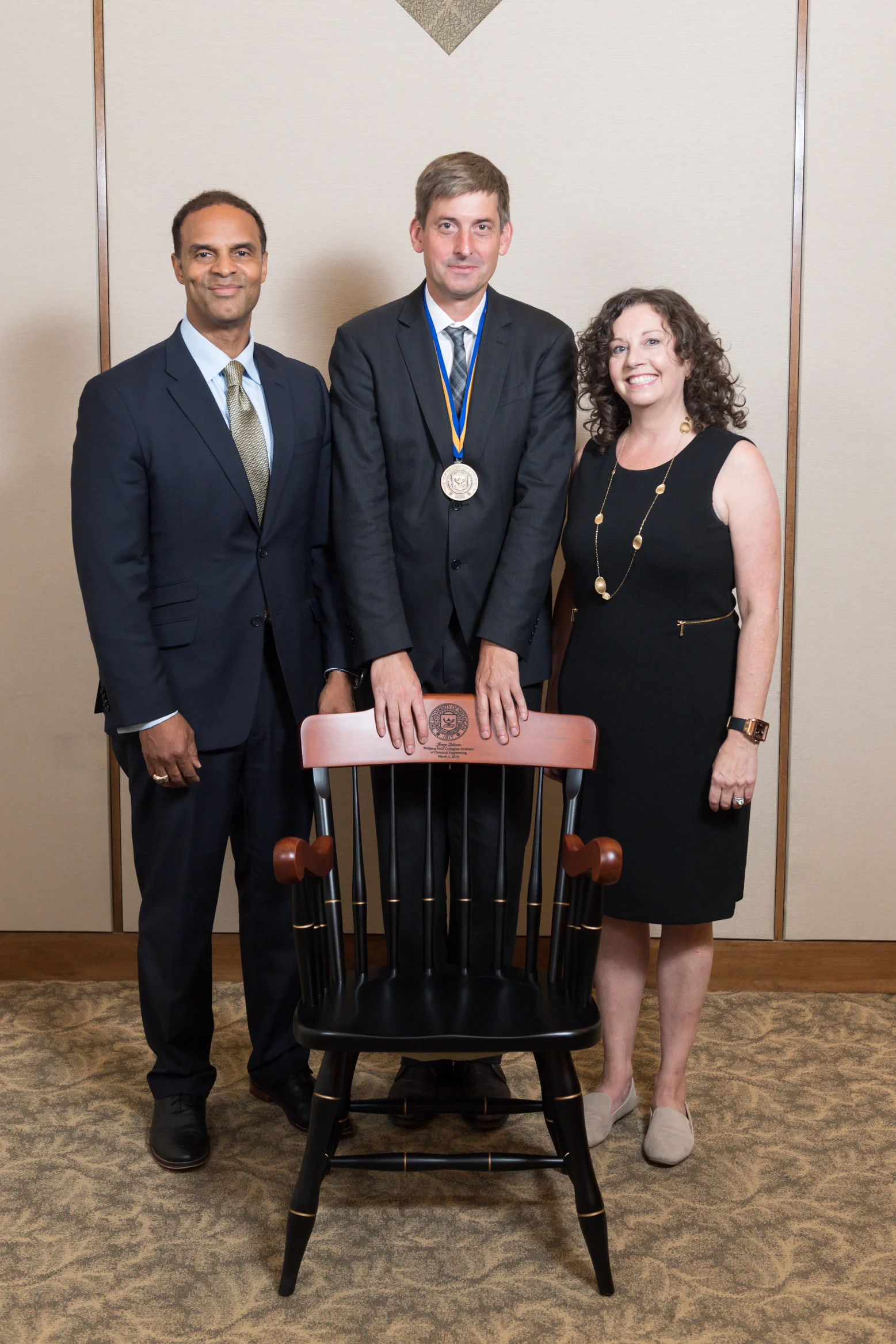
Joerg Lahann is a Professor at the University of Michigan with appointments in Chemical Engineering , Materials Science and Engineering , Macromolecular Science and Engineering , and Biomedical Engineering . He serves as Director of the Academic Program Biointerfaces Center and is affiliated with multiple research institutes including the Weil Institute for Critical Care Research , Rogel Cancer Center , and Biosciences Initiative . PhD in Macromolecular Chemistry from Rheinisch-Westfälische Technische Hochschule Aachen (1998) Dr. Lahann's research spans biotechnology , nanoparticle engineering , and surface chemistry , focusing on drug/gene delivery systems , advanced biomaterials , and chemical vapor deposition for engineered surfaces. His work addresses challenges in oral cancer chemoprevention , neuro-oncology , and synthetic biology applications . Recent publications highlight innovations in protein nanoparticle design for targeted therapies , deep learning-based surface analysis , and liquid crystal-templated polymerization . His team has made significant advances in non-viral gene delivery , biofilm disruption , and smart biomaterials for dental applications . University of Michigan Biointerfaces Institute Innovation Fellowship (2023) Dr. Lahann supervises research in nanoparticle engineering , biomaterials , and chemical manufacturing processes . His lab has received substantial funding from NSF , NIH , and industry partners for projects including 3D scaffold development , biocontainment strategies , and advanced manufacturing techniques . The Lahann Lab at the Biointerfaces Institute (Ann Arbor, MI) develops therapeutic nanoparticles , engineered extracellular matrices , and multifunctional coatings with applications in cancer therapy , regenerative medicine , and oral disease prevention .
Professor Svetlana Sukhishvili is a faculty member in the Department of Materials Science and Engineering at Texas A&M University’s College of Engineering. She serves as Director of the Soft Matter Facility, overseeing advanced research infrastructure and collaborations. Ph.D., Polymer Chemistry, Moscow State University, Russia – 1989 B.S., Polymer Science, Moscow State University, Russia – 1984 Her research explores stimuli-responsive polymer assemblies , covalent adaptive networks , and polymer salogels for thermal energy storage , with expertise in polyelectrolyte multilayer dynamics and surface functionalization for controlled wettability and adhesion. Recent publications highlight advancements in dynamic covalent networks , self-healing materials , and polymer-stabilized phase change systems , often addressing energy storage, mechanical resilience, and biomedical applications. Senior Faculty Fellow Award, Texas A&M Engineering Experiment Station – 2023 Dean of Engineering Excellence Award, Texas A&M College of Engineering – 2022 Distinguished Research Achievement Award, Texas A&M Association of Former Students – 2021 Fellow, American Physical Society – 2007 Distinguished Visiting Scientist, Institute of Materials Research and Engineering, Singapore – 2017-2020 Provost’s Entrepreneurship Award, Stevens Institute – 2013 National Science Foundation Special Creativity Award – 2012 Davis Award for Research Excellence, Stevens Institute – 2011 American Coatings Association Scientific Achievement Award – 2009 She mentors students including Yilei Zhao (Ph.D. candidate), Kiyaan Aly (undergraduate researcher), and recent graduates Ardak Makhatova (Ph.D., 2025) and Kartik Rajagopalan (Best Ph.D. Thesis, 2025). Her lab acquired state-of-the-art SAXS/WAXS/GISAXS/GIWAXS equipment in 2023, enabling advanced materials characterization.
Maurizio Marrale serves as Associate Professor in the Department of Physics and Chemistry at the University of Palermo (Unipa), holding position PHYS-06/A. His office is located at the Department of Physics and Chemistry "Emilio Segre" (DIFC), Viale delle Scienze, Building 18, with regular office hours on Thursdays from 3:00 PM to 5:00 PM. His research spans radiation dosimetry, medical physics, and advanced imaging techniques. Key focus areas include FLASH radiotherapy verification using alanine/EPR dosimetry and silicon carbide detectors, transcranial magnetic resonance-guided focused ultrasound for neurological disorders (particularly essential tremor), and MRI-based dosimetry with Fricke gels. His work bridges physics principles with clinical applications in radiation oncology and diagnostic imaging. Analysis of his 15 most recent publications reveals strong emphasis on Ultra-high dose rate (UHDR) beam characterization for FLASH radiotherapy Development of novel dosimetry systems (SiC detectors, ionoacoustic sensors) Advanced neuroimaging techniques for thalamic targeting Diffusion correction methodologies in 3D dosimeters Clinical MRI applications for neurological disorders His research demonstrates consistent integration of computational modeling (Geant4, deep learning) with experimental validation. As principal supervisor, he has guided over 35 master's theses at Unipa between 2009-2024, primarily in Physics and Medical Radiology Techniques programs. His supervisory work focuses on radiation dosimetry applications, MRI physics, and radiotherapy technology validation.
Dr. Jan Ozimek is an Assistant Professor at the Department of Chemistry and Technology of Polymers , Faculty of Chemical Engineering and Technology , Cracow University of Technology . He holds a PhD in Engineering (2022) and completed his MSc (2013) and BSc (2011) in Polymer Technology at the same institution. His research focuses on non-isocyanate polyurethanes (NIPUs) , POSS-based hybrid materials , and polymer crystallization dynamics . Education: PhD in Chemical Engineering (2022), MSc in Polymer Technology (2013), BSc in Polymer Technology (2011) Teaching: Leads courses on Innovative Methods in Polymer Chemistry and Material Characterization (NMR, FTIR, MS) His recent work explores microwave-assisted synthesis of cyclic carbonates , thermomechanical response of POSS-polyurethane hybrids , and crystalization behavior of polyether segments . Publications emphasize sustainable polymer design and advanced material characterization techniques. He gained research experience through a 2010-2011 Erasmus+ exchange at Fachhochschule Muenster (Germany) and internships at Zakłady Azotowe Tarnów S.A. (2011-2012). Technical collaborations include laboratory work on denture resins and industrial polymer analysis .
Efstratios Mylonas is an Assistant Professor in the Department of Chemistry at the University of Ioannina , Greece. He leads research in the Laboratory of Biochemistry , focusing on structural biology, protein folding, and rational protein design. His work integrates biochemical, biophysical, and computational approaches to understand and engineer biological macromolecules. Education: No explicit educational background listed in the provided text. Research Interests: Dr. Mylonas's research centers on the structural and functional characterization of biological macromolecules . His lab investigates: The regulation of the Type III Secretion System (T3SS) in bacterial pathogens like Pseudomonas syringae and Erwinia amylovora , aiming to uncover the molecular interactions that activate this virulence machinery. The rational design of artificial proteins using AI-driven structural prediction and experimental validation, targeting applications in biotechnology and biomedicine. The mechanisms of protein folding and how sequence dictates three-dimensional structure, leveraging tools like small-angle X-ray scattering (SAXS). Scientific Contributions: His recent publications span RNA structure, bacterial virulence, protein engineering, nanomaterials, and neurodegeneration . A consistent theme is the use of solution scattering techniques to probe dynamic macromolecular assemblies in near-physiological conditions. Laboratory & Affiliations: Dr. Mylonas directs the Laboratory of Biochemistry at the University of Ioannina. He collaborates internationally with teams across Europe and Asia, contributing to structural biology consortia and training programs.
Katarina Dimic-Misic is a Visitor (Faculty) at Aalto University, affiliated with the Department of Chemical and Metallurgical Engineering within the School of Chemical Engineering. Her research is centered on advanced materials processing, particularly in the areas of nanocellulose, rheology, and composite materials. Doctoral Degree in Engineering and Technology, Aalto University (2014) Her research interests span Materials Science , Chemical Engineering , and Sustainable Technologies , with a focus on experimental investigation of material behavior under processing conditions. Key areas include Large Amplitude Oscillatory Shear (LAOS) rheology , immobilization and consolidation , nanocellulose applications , and dewatering processes . She also explores interdisciplinary topics such as the use of natural dyes in printing and blockchain integration for sustainable electric vehicle ecosystems. The most recent publications (2025) reflect a strong trend toward sustainable and functional materials, including high-performance nanocellulose-based supercapacitor separators, enhancement of cellulose foams with ceramic nanofibers, and novel applications in green chemistry and circular economy. These works demonstrate a consistent focus on material performance optimization, interfacial interactions, and sustainability-driven innovation. Katarina Dimic-Misic has not been listed with any scientific awards in the provided text. There is no explicit information on student advising or research grants in the provided content. However, her extensive publication record and collaborations with senior researchers suggest active participation in funded research projects and mentorship activities. She is associated with research in Materials Processing and Powder Metallurgy at Aalto University, contributing to a broader network focused on sustainable materials, rheology, and industrial applications of nanocellulose and composites.
Greg Tew, Ph.D., is a Professor at the University of Massachusetts Amherst in the College of Natural Sciences, based at the Conte Polymer Research Center in Amherst, Massachusetts. With an extensive publication record spanning over two decades, his research bridges polymer science, biomaterials, and immunology applications, positioning him at the forefront of interdisciplinary materials research. Dr. Tew's research focuses on the design and application of novel polymeric materials with particular emphasis on biomimetic polymers, protein transduction domain mimics, and advanced polymer architectures. His work spans fundamental polymer chemistry to biomedical applications, with significant contributions to bottlebrush polymers, antimicrobial materials, and polymer-based immunomodulation strategies. The research demonstrates a consistent trajectory from basic polymer design to sophisticated applications in drug delivery and immune system regulation. Analysis of Dr. Tew's recent publications reveals a strong focus on bottlebrush polymer architectures and their mechanical properties, with increasing integration of immunological applications. His work demonstrates sophisticated control over polymer network topologies to achieve precise mechanical properties, while simultaneously developing polymer-based tools for immunological research and potential therapeutic applications. The research shows a clear evolution from fundamental polymer chemistry to increasingly complex biomedical applications. Dr. Tew's laboratory at the Conte Polymer Research Center collaborates extensively with immunologists, particularly with Lisa Minter's group, demonstrating the interdisciplinary nature of his work. His research has generated significant interest in the scientific community, with numerous publications receiving high citation counts, particularly in the areas of antimicrobial polymers and protein transduction domain mimics.
Denisse Bender is a Senior Scientist at the Institute of Food Sciences, University of Natural Resources and Life Sciences, Vienna (BOKU), where she has been actively contributing since 2020. She previously served as a Senior Lecturer and research assistant at BOKU’s Institute of Food Technology and was affiliated with the FFoQSI Competence Centre. Her work is centered in the Department of Biotechnology and Food Sciences, with a strong focus on cereal science and food technology. PhD in Food Sciences, BOKU M.Sc. in Food Sciences, 2012–2014, BOKU Her research interests lie at the intersection of food science and technology, particularly in gluten-free systems, sourdough fermentation, cereal rheology, and the functional properties of plant-based ingredients . She investigates how biopolymers like arabinoxylans and proteins can be leveraged to improve bread quality, especially in gluten-free products. Her work also explores innovative processing techniques such as ohmic baking and extrusion to enhance food functionality. The trend in her recent publications and presentations shows a consistent focus on improving the quality and processing of gluten-free and ancient grain-based products . She frequently examines the role of enzymes, fermentation, and novel ingredients in modifying dough behavior and final product texture. Her research integrates food chemistry, microbiology, and engineering principles to develop sustainable and nutritious food solutions. Her scientific awards include: Postdoctoral Fellowship of Prince of Songkla University (2022) Journal of Cereal Science Best Poster Award (2019) Der Alimentarius (2019) Megazyme /Carbohydrate Division Award (2018) National Association of Faculties and Engineering Schools ANFEI Award (2012) Dr. Bender has advised and collaborated on multiple research projects, particularly in the areas of cereal processing and food safety. She has delivered lectures and guest seminars internationally, including in Thailand and Peru, and has been involved in industry-relevant initiatives such as the Food Factory 4 Us webinar series. While formal student advising is not explicitly listed, her roles as lecturer and senior scientist suggest active mentorship. She is involved in interdisciplinary research teams focusing on cereal science, food safety, and sustainable processing. Her collaborations span institutions in Austria and internationally, particularly within the Cereals & Grains Association and ICC (International Association for Cereal Science and Technology). Her work often involves cross-institutional projects addressing current challenges in food technology and nutrition.
Professor Ivan Mijakovic leads the Mijakovic Lab at both Chalmers University of Technology (Sweden) and DTU Biosustain (Denmark) , focusing on Bacterial Systems Biology . His research bridges Microbiology , Synthetic Biology , and Nanotechnology to address challenges in Biomedicine , Biotechnology , and Environmental Applications . Current research areas include: Bacterial Pathogenesis and biofilm dynamics Metabolic Engineering of microbial cell factories Nanomaterial Applications in antimicrobial surfaces and drug delivery Experimental Evolution studies Interdisciplinary Approaches combining microbiology with material science His 2023-2025 publications demonstrate expertise in Nano-biomedical Interfaces , Antibacterial Nanomaterials , Cancer Nanotherapy , and Sustainable Bioprocesses . The lab also develops CRISPR-based Sensing and Graphene-Enhanced Biosensors for clinical applications. As group leader , he mentors 12 PhD/MSc students and collaborates across institutions in EU MSCA ITN projects like BUG-ID . The lab emphasizes scientific freedom , collaborative research , and ethical responsibility in their work.
Andrew Kentaro Inge is a Researcher and Docent at the Department of Chemistry , Stockholm University . His research focuses on synthesis and structural characterization of crystalline materials , particularly Metal-Organic Frameworks (MOFs) with applications in gas separation, drug delivery, and sustainable catalysis . He combines X-ray diffraction, electron diffraction, and computational modeling to solve complex atomic structures. Research interests include: Green synthesis of MOFs using plant-based linkers Biocompatible metallodrugs and coordination polymers Structure-property relationships in porous materials Development of electron diffraction techniques for nano-crystallography Key contributions: Lead work on CAU-17 and SU-101 for CO2 reduction and metal recovery Developed 3D electron diffraction methods for beam-sensitive materials Explored flexible inorganic building units in breathing MOFs Teaching: Lecturer for advanced courses in Porous Materials , Structure Analysis with Diffraction , and Green Chemistry at Stockholm University. Organizer of X-ray diffraction workshops in Kiel, Germany.
Maria Bernarda Serrano Prieto is an Associate Professor and Deputy Director of the Department of Materials Science and Engineering and Chemical Engineering at the University Carlos III of Madrid. She specializes in polymer-based nanocomposites, material synthesis, and interfacial characterization. Her research focuses on advanced materials for biomedical, energy, and structural applications, leveraging techniques like Monte Carlo simulation, fluorescence microscopy, and jet milling. She leads research groups in Material Synthesis and Processing and Polymers and Composites , and is affiliated with the Álvaro Alonso Barba Institute of Chemistry and Materials Technology. Key projects include developing hierarchical porous carbon materials for supercapacitors, MXene/epoxy composites, and biocompatible polysulfone-alumina nanocomposites. Her work spans over 20 years, with grants from the European Commission, Spanish Ministry of Economy, and industry partners like Airbus and EADS. She holds a patent for Polímeros nanorreforzados and has supervised multiple theses on nanocomposite design and characterization.