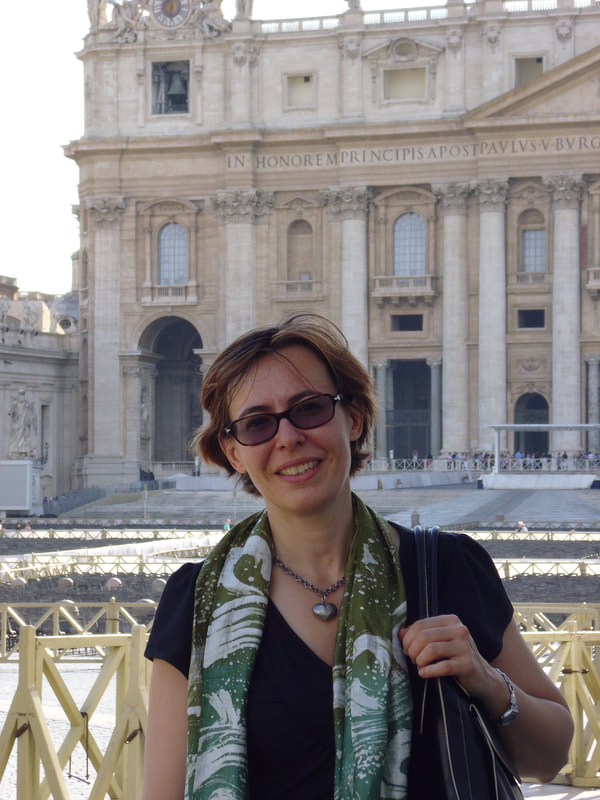
Gertraude Zand is an Assistant Professor at the Department of Slavonic Studies, University of Vienna, where she has been employed since 2003. Previously, she served as an assistant at the same institute (1994–2002) and held academic roles at the Technical University of Prague and University of Economics in Prague. Her educational background includes a PhD in Czech (1997), a Diploma in Czech (1993), and an M.Phil in History, Philosophy, Psychology, and Education (1987), all from the University of Vienna. Her research specializes in Czech and Slovak literature, with emphases on underground literature during Stalinism (1948–1953), baroque literary traditions, and Czech-German cultural intersections. She explores themes of exile, identity, and linguistic hybridity, often through the works of authors like Egon Bondy, Jáchym Topol, and Božena Němcová. Her scholarship bridges literary analysis with historical and cultural contexts, revealing how literature reflects socio-political transformations. Zand's publications demonstrate a consistent focus on dissident movements, symbolic representations of space, and transnational literary dialogues. Her recent work increasingly examines the role of German language in Czech poetry and the mythological reconstruction of cultural figures. She received the Premia Bohemica award from the Czech Ministry of Culture in 2024 for her contributions to Bohemian studies.
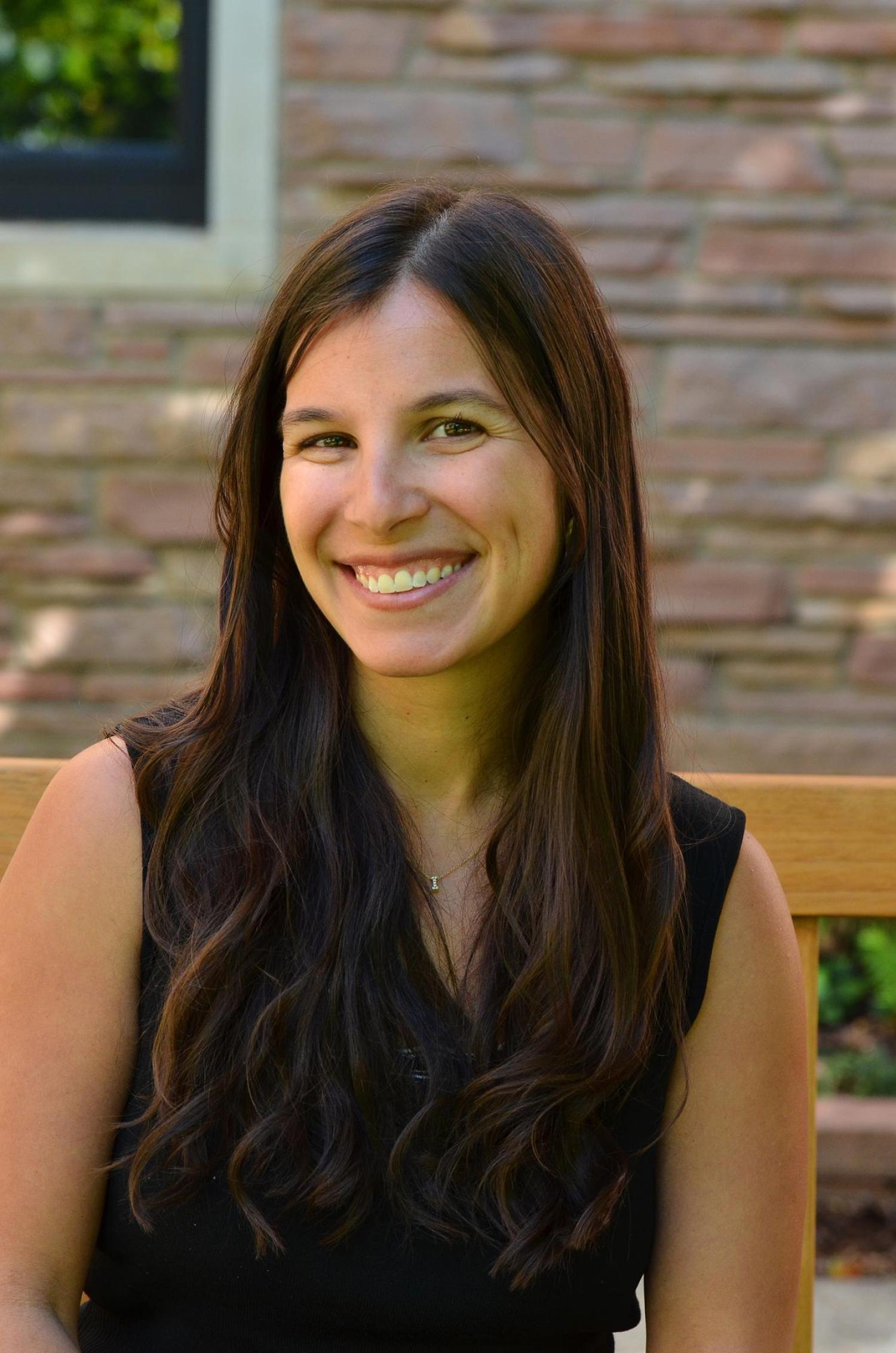
Joan K Monin is Professor of Public Health in the Social and Behavioral Sciences department at Yale School of Public Health. Her academic appointments include affiliations with the Center for Neuroepidemiology and Clinical Neurological Research, Patient Priorities Care, Yale Stress Center, and Yale Ventures. She leads the Social Gerontology and Health Lab which focuses on understanding how emotional processes affect health in older adult relationships, particularly in the context of dementia care. PhD from Carnegie Mellon University (2007) MS from Carnegie Mellon University (2005) Professor Monin's research integrates survey methods and laboratory experiments to examine mechanisms (such as emotional contagion and cardiovascular reactivity) and moderators (including gender and individual differences in attachment) in caregiver-recipient relationships. Her current work emphasizes understanding how caregivers and care recipients support one another in early-stage dementia, with particular attention to minimizing the negative health consequences of caregiving. Her lab implements cutting-edge mixed-methods approaches including psychophysiological, behavioral, genetic, and linguistic analyses. Her publication record reveals consistent focus on dementia care dynamics, emotional regulation in aging relationships, and health disparities among older populations. Recent work explores culturally-tailored interventions for African American dementia dyads, HIV stigma among older women, and dyadic physical activity interventions for rural-dwelling individuals with cognitive impairment. Her research bridges gerontology, psychology, and public health to address critical issues in an aging population. Elected to the Academy of Behavioral Medicine Research (2024) American Psychosomatic Society Fellow (2023) Society for Experimental Social Psychology Fellow (2020) American Psychological Association's Florence L. Denmark Award (2020) Gerontological Society of America Fellow (2017) Professor Monin collaborates extensively with colleagues across disciplines, particularly with Dr. Thi Vu (14 publications), Dr. Terri Fried (12 publications), and Dr. Becca Levy (8 publications). Her work includes clinical trials such as an intervention to reduce readmission rates in young women with acute myocardial infarction where she served as Sub Investigator. She has been featured in media discussing dementia as a public health issue, equitable marriages, and the LiveWell program that connects students with people living with dementia. The Social Gerontology and Health Lab implements innovative approaches to minimize the negative health effects of caregiving, addressing the mental and physical health needs of older adult caregivers and their care-recipients. With the 65+ age group expected to double to 70 million by 2030, her research addresses increasingly critical public health challenges in our aging society.
Åshild Næss is a Professor of Linguistics at the University of Oslo, specializing in Oceanic languages and linguistic typology. Her research centers on transitivity, argument structure, and language documentation in the southwest Pacific, particularly focusing on the Reef Islands of Solomon Islands. Her educational background includes a PhD (cum laude) in linguistics from Radboud University Nijmegen and an MA in linguistics from the University of Oslo. Previous academic appointments encompass postdoctoral positions at the University of Oslo (Identity Matters project) and Radboud University (Breaking the Time Barrier project), editorial work on the Norwegian Dictionary Project, Visiting Professorship at the University of Zürich, and Senior Lecturer position at the University of Newcastle, Australia. Professor Næss's core research integrates fieldwork-based documentation of endangered Pacific languages with theoretical typological analysis . She investigates how grammatical relations like transitivity and voice manifest across Oceanic languages, examining both synchronic structures and diachronic changes. Her work bridges cognitive linguistics , historical linguistics , and language contact phenomena to reconstruct Pacific settlement histories through linguistic evidence, with particular focus on Äiwoo and related Temotu Province languages. Analysis of her publication record reveals a consistent trajectory from descriptive grammar (e.g., Vaeakau-Taumako grammar, Äiwoo dictionary) toward typological and cognitive investigations of grammatical relations. Recent work increasingly incorporates experimental methods, as seen in her 2023 Cognitive Science paper on sentence processing, while maintaining strong fieldwork foundations. Her research demonstrates how Austronesian languages serve as critical test cases for universal theories of transitivity and grammaticalization. She serves as Principal Investigator for a Research Council of Norway-funded project conducted with the Australian National University, investigating functional underpinnings of transitivity in Austronesian languages. This major grant supports her ongoing fieldwork and typological comparisons across the Pacific. Professor Næss actively collaborates within international research networks as a member of the Evolution of Semantic Systems Research consortium and through the University of Zürich project on ergativity processing. She teaches advanced courses including Language Typology (LING2113), Structure of Lesser-Known Languages (LING2114), and Language Endangerment (LING4170), training next-generation linguists in documentation methodologies and typological analysis.
Sally Rice is a Professor in the Department of Linguistics at the University of Alberta, Faculty of Arts. Her research integrates empirical methodologies with cognitive and functional linguistics, focusing on the inseparability of meaning and form in language. Education: PhD in Linguistics (University of California, San Diego, 1987) Landrex Distinguished Professor (2007-2011) McCalla Research Professor (2008-2009) Key research areas include: Language documentation and revitalization for Dene Sųłiné and Tsuut’ina Grammaticalization and lexicalization patterns Corpus linguistics and psycholinguistic experimentation Form-meaning interface across typologically diverse languages Notable projects: Community Linguist Certificate program with CILLDI Interactive speech atlas of Dene languages with Joyce McDonough Dene migration studies via interdisciplinary collaboration Scientific awards: Landrex Distinguished Professorship McCalla Research Professorship SSHRC-CURA grants for Daghida Project Her work bridges theoretical and applied linguistics, with over 20 years of fieldwork on Athapaskan languages and extensive supervision of graduate students in corpus-based and cognitive approaches to language structure.
Kristel Zilmer is Professor of Runology and Iconography at the Department of Archaeology, Museum of Cultural History, University of Oslo since May 2020. Previously serving as Associate Professor at the same institution (2019-2020), she has held academic positions at Western Norway University of Applied Sciences (2013-2019) and University of Tartu, Estonia (1997-2008). Her career spans over 25 years of research in Scandinavian textual cultures with focus on runic inscriptions across historical periods. Her research interests encompass Runology , Epigraphy , and Textual Cultures from the Iron Age through Middle Ages, with specialized focus on writing practices, visuality, materiality, and identity construction in Norse societies. She investigates script-bearing artifacts as cultural interfaces, examining how runes functioned within social contexts and how Old Norse literature is received in modern times. Her methodological approach integrates archaeological, philological, and media-theoretical perspectives. Analysis of her recent publications reveals consistent focus on runic artifacts from Norwegian contexts (Bergen, Svingerud, Hole), demonstrating expertise in multimodal analysis of inscribed objects. Her work bridges archaeological findings with linguistic interpretation, particularly examining how runes operated within medieval urban environments and sacred spaces. The 2025 Antiquity paper represents cutting-edge integration of radiocarbon dating with epigraphic analysis. Series Editor for Bibliotheca Nordica (Novus Forlag) Norway representative on International Advisory Board of International Saga Conference Establishing member and former leader of 'Språk og Samfunn' research group Zilmer actively supervises graduate students and leads major research initiatives including the Ui3D project (Understanding and Immersion in 3D) and participation in the Research Network of Urban Literacy. Her grant portfolio includes projects on medieval Bergen literacy practices and Christian identity formation in Northern Europe. She directs the Centre for Viking-Age Studies (ViS) research group and serves on multiple editorial and advisory boards including Kjeldeskriftkommisjonen (National Archives). Her laboratory work centers on the Centre for Viking-Age Studies where she applies 3D modeling techniques to runic artifacts, developing new methodologies for analyzing inscribed objects through digital humanities approaches. Current collaborations with international teams focus on cross-cultural comparisons of medieval writing practices across Nordic regions.
Karl G. Johansson is a Professor at the Department of Linguistics and Nordic Studies, University of Oslo, specializing in Old Norse and Celtic philology. His research focuses on medieval manuscript culture, textual transmission, and the interplay between orality and literacy in Scandinavian contexts from 1200–1500. Ongoing projects: Retracing the Reformation (Bible dissemination in medieval Scandinavia) Past projects: Vadstenaklostret's Manuscripts , Translation, Transmission and Transformation , Skaldic Mentalities Research Interests: Medieval manuscript culture, Norse literature, translation dynamics, skaldic poetry, literacy studies, textual standardization, and cultural memory. His work bridges philology, history, and digital humanities, emphasizing interdisciplinary approaches. Publication Trends: Recent outputs explore manuscript layering, textual mobility, and standardization processes in the North. Collaborative volumes with scholars like Line Cecilie Engh and Stefka Georgieva Eriksen highlight his role in Nordic medieval studies. Academic Contributions: Johansson has edited key handbooks and led initiatives for digitizing medieval Nordic sources. His collaborations span institutions in Denmark, Germany, and Norway, focusing on manuscript materiality and cultural transfer.
Professor Marjorie Lorch is a distinguished academic at Birkbeck, University of London, holding the position of Professor of Neurolinguistics within the School of Creative Arts, Culture and Communication. She has been affiliated with Birkbeck since 1986, initially as a part-time Lecturer and Research Officer before becoming a full-time staff member in 1991. Her academic journey includes a BA in Linguistics, Anthropology, and Biology from Washington University, St. Louis (Phi Beta Kappa), a Grass Foundation Non-Clinical Fellowship in Neurology at Barnes Hospital, postgraduate studies in Linguistics at University College London, and a Ph.D. in Language Behavior (Neurolinguistics) from Boston University. BA, Washington University in St Louis PhD, Boston University Professor Lorch's research spans multiple dimensions of language processing and its neurological underpinnings. Her work integrates neurolinguistics, psycholinguistics, and historical perspectives to explore how language is organized in the brain, particularly through the investigation of neurogenic language and communication disorders. She has made significant contributions to understanding cross-linguistic comparisons and bilingual speakers' language processing, as well as conducting extensive archival research on 19th-century approaches to language function and disorder. Her interdisciplinary approach bridges linguistics, neurology, psychology, education, and history. Analysis of Professor Lorch's recent publications reveals a consistent focus on historical perspectives in neurolinguistics, particularly examining 19th-century understandings of language organization in the brain. Her work demonstrates a unique integration of historical scholarship with contemporary neurolinguistic research, with recurring themes including aphasia research history, language localization debates, and the evolution of speech and language pathology. The publications also highlight her expertise in cross-linguistic studies and her interest in the relationship between language, thought, and other cognitive domains like music. Silver Gilt Award, Member of the Embroidered Minds Collective, Epilepsy Garden, Chelsea Flower Show, Royal Horticultural Society (April 2018) President, International Society for the History of the Neurosciences (February 2010) Professor Lorch has supervised numerous doctoral and master's students across a wide range of topics related to language disorders, multilingualism, and historical linguistics. Her supervision portfolio includes both principal and second supervisory roles, demonstrating her collaborative approach to academic mentoring. She has served on the editorial boards of prestigious journals including Cortex (2003-2025), Historiographia Linguistica, and Journal of the History of the Neurosciences, and has held significant roles such as Associate Editor of Cortex and membership on the executive boards of the Henry Sweet Society and the International Society for the History of the Neurosciences. Her extensive international collaborations reflect her standing in the academic community. Professor Lorch maintains active international research collaborations and has held numerous visiting positions at institutions including Emory University, Brown University, Duke University, and Loyola University Chicago. Her research program involves interdisciplinary work with medical practitioners, psychologists, speech and language therapists, educators, and historians, reflecting her commitment to bridging theoretical and applied perspectives in language sciences.
Gil Greengross is a Lecturer in Psychology at Aberystwyth University, holding a PhD in Evolutionary Anthropology from the University of New Mexico. Originally from Israel, he completed his undergraduate studies in psychology, anthropology and sociology at Ben-Gurion University of the Negev, followed by dual master's degrees in Statistics and Evolutionary Anthropology from the University of New Mexico. His primary research interests focus on evolutionary psychology and the psychology of humor and laughter, taking an interdisciplinary approach that draws from psychology, anthropology, biology and consumer behavior. His work examines the evolutionary origins of humor, gender differences in humor production and appreciation, the role of humor in mate selection, and the psychology of individuals with extreme creative abilities such as stand-up comedians and magicians. Analysis of his recent publications (2020-2025) reveals a strong focus on the psychology of magic performers, gender differences in humor production, and the relationship between creativity and mental health. His research demonstrates a consistent application of evolutionary theory to understand humor as a social and cognitive phenomenon, with increasing attention to methodological rigor through meta-analyses and twin studies. Dr. Greengross has been actively involved in academic dissemination through conference presentations at venues including the International Society for Humor Studies and the Science of Magic Conference. His research has received significant media attention, with 27 press/media mentions covering topics such as magicians' mental health and the impact of humor on elderly relationships. He has supervised doctoral students including Chloe Enid Lloyd and Heather Heap in the Department of Psychology at Aberystwyth University. His research has been supported by external funding, including a project on humor production among bilingual speakers completed in 2017.
Guillaume Gentil is a Professor in the School of Linguistics and Language Studies at Carleton University. His research focuses on second language writing, bi/pluriliteracy development, and the intersection of multilingualism with academic and professional contexts. He has held editorial roles for the Journal of Second Language Writing and conducted SSHRC-funded research on academic biliteracy development in Canada's official languages (2017–2022). Education: DEUG (Paris VI), DEA & Diplôme d'ingénieur (Institut National Agronomique Paris Grignon), Ph.D. (McGill University) Key research areas include: translingual practices in bilingual universities, AI/translation tools in writing instruction, genre-based approaches to writing, and the geopolitics of academic publishing. His work bridges second language writing, bilingual education, and translation studies. Recent publications analyze ChatGPT's role in multilingual writing, machine translation's impact on academic publishing, and translanguaging pedagogies. Research employs longitudinal case studies and institutional ethnographies. Scientific contributions include: Honourable mention for Best Article of the Year, Journal of Second Language Writing (2011) Inclusion in 'The Best of the Independent Rhetoric and Composition Journals: 2011' He supervises students at all levels and has taught courses on bilingualism, second language writing, and doctoral seminars in applied linguistics. His work also addresses crosslingual literacy practices and the use of AI tools in writing development.
Eun-Kyung Lee is a Professor in the Department of English Language and Literature at Yonsei University's College of Humanities. Her research focuses on psycholinguistic aspects of second language acquisition and processing. Her primary research interests include: Second Language Acquisition mechanisms Discourse processing in L2 comprehension Verb argument structure and bias effects Cross-linguistic differences in sentence processing Online reference resolution strategies Look-ahead planning in language production Analysis of her recent publications (2019-2022) reveals consistent focus on experimental investigations of L2 processing, particularly examining how native and non-native speakers utilize linguistic cues during real-time comprehension. Her work frequently employs eye-tracking and other online methodologies to study discourse processing, verb-based structural predictions, and cross-linguistic transfer effects. Her scientific contributions have been published in leading journals including Studies in Second Language Acquisition, Discourse Processes, Lingua, Bilingualism, and Applied Psycholinguistics. Lee maintains active research collaborations as evidenced by her co-authored publications with international scholars including Fraundorf, Garnsey, Watson, and Qian. Her work has accumulated significant citations in Scopus with an h-index of 8.
Don Daniels is an Associate Professor of Linguistics at the University of Oregon's Department of Linguistics within the College of Arts and Sciences. His research focuses on endangered languages of Papua New Guinea, including documentation, comparative reconstruction, and morphosyntactic analysis. He has conducted fieldwork since 2006 on languages such as Sgi Bara, Sirva, and Wiru, emphasizing theories that integrate synchronic and diachronic perspectives. Education: Ph.D., 2015, University of California, Santa Barbara M.A., 2011, University of California, Santa Barbara B.A., 2006, Dartmouth College Research interests span language change mechanisms, comparative methods, and fieldwork methodologies. His work bridges synchronic description and diachronic theory, particularly within the Sogeram language family. Recent publications explore clause structures, tone systems, and data management strategies in linguistic research. His fieldwork projects include long-term documentation of Sgi Bara and collaboration with linguistic communities in Papua New Guinea.
Laura Colantoni is a Professor of Hispanic Linguistics at the Department of Spanish and Portuguese, University of Toronto. Her research focuses on phonetics, phonology, and second language acquisition, particularly in the context of sound change and variable phonetic parameters. She holds a BA from the University of Buenos Aires and a PhD from the University of Minnesota. She has held administrative roles including Chair of the Department of Spanish & Portuguese (2014-2019) and Associate Chair of Undergraduate Studies (2022-present). Her research involves collaborative projects funded by SSHRC and U of T, exploring topics like phonetic variability in bilingual language acquisition and electropalatographic studies of consonant assimilation patterns. Key collaborations include projects on Spanish-English bilingual children's grammatical development and cross-linguistic studies of nasal and lateral consonants in French, Spanish, and other languages. Publications highlight her work on Argentine Spanish, second language speech production, and the interplay between prosody and morphology. She has edited volumes on Argentine Spanish (2013) and co-authored Second Language Speech: An Introduction (2015). Her recent work examines articulatory timing differences in French/Spanish clusters and intonation patterns across languages such as Jordanian Arabic and Lombard Italian. Her teaching and research emphasize evidence-based approaches to pronunciation pedagogy and the application of laboratory methods to phonological analysis. She actively collaborates with scholars in linguistics, speech pathology, and related fields to advance understanding of language variation and acquisition processes.
Vanessa Santiago Schwarz serves as an Assistant Teaching Professor in the Department of Equity, Bilingualism and Biliteracy (EBB) within the School of Education at the University of Colorado Boulder, affiliated with the BUENO Center. She teaches core courses for Elementary Teacher Education candidates including Dis/ability in Classrooms and Culturally Sustaining Pedagogies. Her educational qualifications include a Ph.D. in Educational Equity and Cultural Diversity from CU Boulder (2018), a Master of Science in Bilingual and Special Childhood Education, and eight years of elementary classroom teaching experience prior to her academic appointment. Dr. Schwarz's research centers on equity-driven bilingual education frameworks, with expertise in special education processes within dual-language settings and systemic functional linguistics applications for writing instruction. Her current collaboration with Professor Millie Gort and Dr. Laura Hamman examines writing pedagogy in bilingual classrooms, directly informing her teaching of culturally sustaining practices and disability-inclusive methodologies for future educators.
Prof. Xiangbin Teng is an Assistant Professor in the Department of Psychology at the Chinese University of Hong Kong. Previously, he was a postdoctoral researcher at the Neurocognitive and Experimental Psychology lab in Frankfurt/Berlin (2021–2022), following his PhD in Cognition and Perception from New York University and M.Sc./B.Sc. degrees from Peking University and Shanghai Jiao Tong University. His research focuses on neurocognitive mechanisms underlying auditory perception, particularly speech and music processing. Key areas include neural oscillations, temporal dynamics, and multiscale auditory encoding. He investigates how rhythmic patterns in language (e.g., ancient Chinese poetry) and music influence perceptual and neural processes. Publications highlight contributions to understanding theta/gamma band neural coding, EEG modulation spectra, and phase precession mechanisms. His work bridges computational models (e.g., recurrent neural networks) with empirical neuroscience findings. ERC Consolidator Grant (2025): Leading the "TRANSFORM" project exploring visual system development from infancy to adulthood. Grants & Collaborations: Extensive research on auditory cortex fMRI methods and cochlear implant simulations. Labs/Teams: Active in CUHK's cognitive neuroscience group and previously at the Max Planck Institutes. His current lab investigates sensory-motor interactions and predictive coding in perceptual systems.
Katherine E. Travis, Ph.D. is an Assistant Professor of Neuroscience in Pediatrics at Weill Cornell Medicine and Director of the Laboratory for Language Development and Recovery at the Burke Neurological Institute. She holds a B.A. in Neuroscience from Colorado College (2003) and a Ph.D. in Neuroscience from the University of California, San Diego (2011). Her postdoctoral training at Stanford University focused on translational and clinical pediatric neuroscience. Dr. Travis's research investigates therapies to promote brain, language, and cognitive development in children at-risk for learning disabilities. She employs advanced MRI techniques (e.g., diffusion and quantitative T1-mapping) to study brain development in neonates, infants, and children. Her current work explores how sensory experiences and parenting behaviors in neonatal intensive care units and home environments shape neurocognitive outcomes in preterm infants. Key achievements include a K99/R00 Pathway to Independence Award from NIH (2016) and recruitment to the Burke Neurological Institute and Weill Cornell Medicine in 2023. Her lab focuses on translational research bridging neuroimaging and clinical interventions to improve developmental outcomes. Recent publications highlight studies on pediatric melanoma risks, neuroinflammatory modulation via brain stimulation, and glucocorticoid effects in preterm brain development. Her work intersects multiple disciplines including neuroimaging, pediatric oncology, and neonatal care.