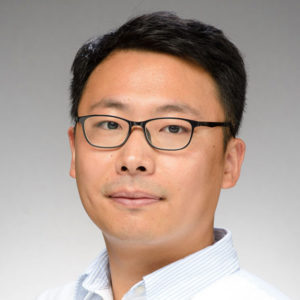
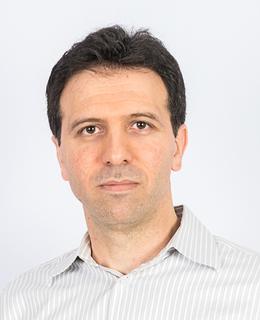
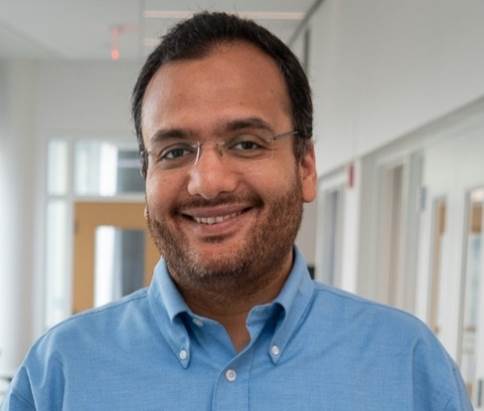
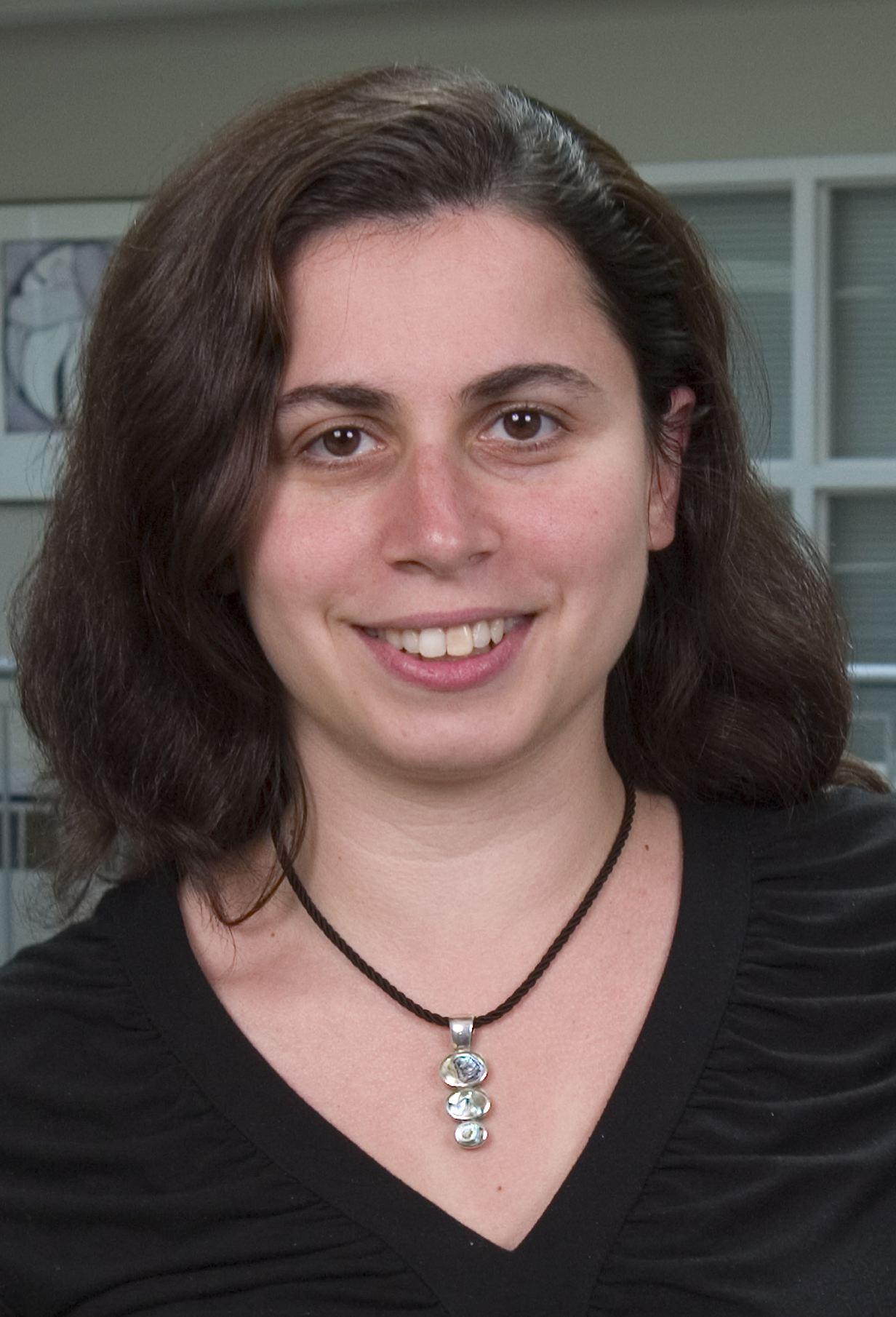
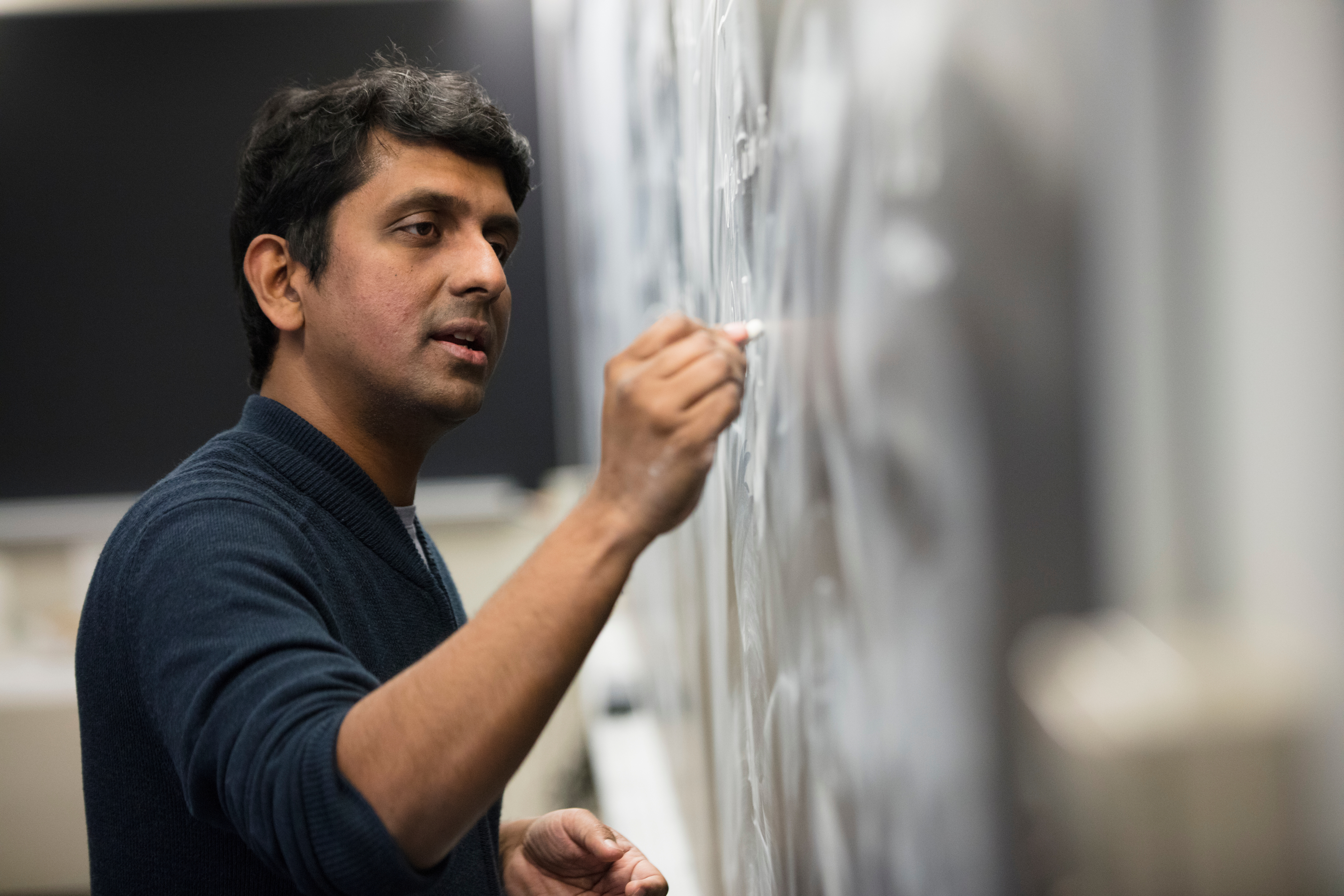
Ningyuan Cao is an Assistant Professor in the Department of Electrical Engineering at the University of Notre Dame, College of Engineering. He leads the Circuit and System Intelligence Research Lab , focusing on the intersection of advanced hardware design and real-time/low-power machine learning applications. Education : Ph.D., Electrical and Electronics Engineering, Georgia Institute of Technology (2020) M.S., Electrical Engineering, Columbia University (2015) B.S., Electrical and Electronics Engineering, Shanghai Jiao Tong University (2013) His research investigates custom analog/mixed-signal circuits , digital architecture , and micro-system design for machine learning acceleration, distributed intelligence, and data-driven IC design automation. Key application domains include Internet-of-Everything, tactile internet, and mixed reality systems. Recent publications highlight work on Bayesian neural networks , privacy-preserving bio-signal encoders , transformer-based surrogate models , and compute-in-memory architectures . Technical themes span neuromorphic computing, uncertainty quantification, and hardware security.
Russell Tessier is a Professor and Department Head of Electrical and Computer Engineering at the University of Massachusetts Amherst, affiliated with the Manning College of Information and Computer Sciences. His research focuses on reconfigurable computing, FPGA architectures, and hardware security, with notable contributions in CAD algorithms for FPGAs, embedded systems, and multi-tenant FPGA vulnerability analysis. Education: B.S.C.S.E., Rensselaer Polytechnic Institute (1989) M.S. and Ph.D., Massachusetts Institute of Technology (1992 and 1999) Research Interests: Dr. Tessier's work spans FPGA security (e.g., side-channel attacks, power distribution vulnerabilities), reconfigurable cloud computing, and hardware acceleration for applications like SAR imaging and machine learning. His lab, the Reconfigurable Computing Group, develops open-source FPGA cores (e.g., FlexGrip GPGPU, DE4 NetFPGA) and explores cutting-edge security countermeasures. Awards and Honors: Chancellor's Leadership Fellow (2015-2016) NSF Information Technology Research Grant Lilly Teaching Fellow (2002-2003) Multiple College of Engineering Excellence Awards Grants and Projects: Active funding includes NSF SaTC grants on reconfigurable cloud security and NASA support for snowpack measurement systems. His research also addresses FPGA-based solutions for cybersecurity, such as intrusion detection and power-side channel mitigation. Labs and Teams: Leads the UMass Reconfigurable Computing Group, which collaborates on open-source FPGA tools, security frameworks, and embedded system designs. The group maintains platforms like the DE4 NetFPGA and FlexGrip architecture.
Majid Ghaderi is a Professor in the Department of Computer Science at the University of Calgary, Faculty of Science. His expertise spans network algorithms, secure communication, and machine learning applications in network control. He holds a Ph.D. in Computer Science from the University of Waterloo (2006), and M.Sc. and B.Sc. degrees in Software Engineering from Sharif University of Technology (2001 and 1999). Education: Ph.D. Computer Science, University of Waterloo, 2006 M.Sc. Software Engineering, Sharif University of Technology, 2001 B.Sc. Software Engineering, Sharif University of Technology, 1999 Research Interests: Dr. Ghaderi focuses on optimizing network algorithms, securing communication in distributed systems, and leveraging machine learning for network control. His work addresses challenges such as secure wireless protocols, SDN-based network management, and efficient resource allocation in data centers. He explores proactive traffic scheduling and anomaly detection in critical infrastructures like industrial control systems and vehicular networks. Publications Trends: His recent work emphasizes covert communication in heterogeneous networks, adaptive federated learning in edge environments, and low-overhead diagnostic systems for cloud networks. He also investigates cybersecurity defenses against hardware vulnerabilities and dynamic threat landscapes. Awards: Best in-session Presentation Award, IEEE INFOCOM 2018 Municipal Excellence Award, Government of Alberta 2018 Faculty of Science Excellence in Teaching Award 2012 Advising & Grants: While no specific advisees are listed, his research has been supported by grants focusing on network security, edge computing, and IoT applications. He teaches CPSC 441 (Computer Networks) and maintains an active lab focused on network systems and cybersecurity. Labs & Teams: His research group collaborates on projects involving software-defined networks, vehicular communication, and industrial IoT security. The team develops open-source tools for network monitoring and anomaly detection.
Vipul Goyal is an Associate Professor at the Computer Science Department of Carnegie Mellon University and a Senior Scientist at NTT Research in California. He is on leave from CMU since joining NTT Research in June 2020 after a 7-year tenure at Microsoft Research. His research focuses on Cryptography , Quantum Cryptography , Security & Privacy , and Theoretical Computer Science , supported by grants from NSF, DARPA, Department of Energy NETL, JP Morgan, Cisco, PNC, Ripple, and CyLab initiatives.
Julia Len is an Assistant Professor in the Department of Computer Science at the University of North Carolina at Chapel Hill, where she conducts research in applied cryptography and computer security. She co-leads the Cryptography Group with Saba Eskandarian and is currently recruiting Ph.D. students for Fall 2026. She earned her Ph.D. in Computer Science from Cornell University in 2024 under the supervision of Tom Ristenpart, following a B.S. in Computer Science from UC San Diego in 2018, where she worked with Mihir Bellare. Before joining UNC, she was a METEOR postdoctoral fellow at MIT. Her research focuses on improving the security and privacy of deployed cryptographic protocols, particularly in end-to-end encrypted messaging. Key areas include interoperability, abuse prevention, key transparency, and authenticated encryption. She applies principled approaches ranging from identifying flaws in existing protocols to designing new cryptographic schemes and definitions. Her recent publications span top venues such as USENIX Security, CCS, Eurocrypt, and Crypto, demonstrating a strong and consistent research output in applied cryptography. Trends in her work show increasing focus on real-world protocol design, security analysis of widely used schemes, and privacy-preserving moderation mechanisms for secure communication platforms. METEOR Postdoctoral Fellow at MIT Julia Len has advised and collaborated with numerous researchers; current advisees are being recruited for Fall 2026. She has received research support through collaborations with industry partners including Zoom, Microsoft Research, and Meta. Her work on Partitioning Oracle Attacks has led to updates in Shadowsocks, age, OPAQUE, and HPKE, demonstrating significant real-world impact. She co-leads the Cryptography Group at UNC Chapel Hill, fostering research and education in cryptography. She also serves on the program committees of IEEE S&P 2026, USENIX Security 2025, and CATS 2023, contributing to the broader academic community.
Anna Lysyanskaya is the James A. and Julie N. Brown Professor of Computer Science at Brown University. She joined Brown in 2002 after earning her Ph.D. from MIT. Her research focuses on cryptography, particularly privacy-preserving protocols and anonymous credentials. She has received prestigious awards including the NSF Career Award, Sloan Foundation Fellowship, and Google/IBM Faculty Fellowships. Her work emphasizes secure communication systems and cryptographic foundations for privacy. Education: Ph.D. in Computer Science from MIT. Research interests include cryptographic protocols, anonymity, and secure authentication. She has authored over 140 publications and contributed to projects like PACIFIC for privacy-preserving contact tracing and Bruisable Onions for anonymous communication. Her grants support advancements in cryptographic security and privacy-enhancing technologies. Awards include the NSF Career Award, Sloan Fellowship, and multiple industry recognitions. She collaborates widely and advises on cryptographic standards for digital identity and secure computation.
Kimia Zamiri Azar serves as an Assistant Professor in the Department of Electrical and Computer Engineering at the University of Central Florida, focusing on hardware security and verification methodologies. Her research bridges theoretical formal methods with practical security implementations in semiconductor design and testing. Her educational background includes: Ph.D. in Electrical and Computer Engineering, George Mason University (2021) Postdoctoral Research, University of Florida Dr. Azar's research spans hardware security with emphasis on system-level verification, VLSI design-for-trust, and advanced IC testing. She pioneers techniques in logic locking, secure heterogeneous integration, and IC supply chain security, developing frameworks for authenticated encryption in Systems-in-Package and runtime security monitoring. Her work integrates formal verification with innovative testing methodologies to address hardware trust challenges across the semiconductor lifecycle. Analysis of her recent publications reveals two dominant trends: (1) Application of large language models (LLMs) to hardware design tasks including high-level synthesis code generation and RTL optimization, and (2) Advancement of secure heterogeneous integration techniques for System-in-Package architectures with focus on counterfeit prevention and split-test security protocols. These directions address critical gaps in hardware trustworthiness amid increasingly complex semiconductor supply chains. Her scientific contributions have earned significant recognition: Best Paper Award at ICCAD 2019 Best Paper Award at ISVLSI 2020 Best Paper Award at ICCAD 2020 Best Paper Award at IEEE DCAS 2020 Best Paper Award at HOST 2022 Best Paper Award at DATE 2023 Dr. Azar secures substantial research funding from premier agencies including NSF, SRC, DARPA, AFRL, DoD (NG), and Microsemi. Her grants support projects spanning hardware security validation frameworks, secure heterogeneous integration, and AI-augmented verification methodologies. She actively mentors students in her research group, guiding publications in top venues like IEEE D&T, IEEE TC, and DAC while fostering industry-academic collaborations. Her work directly impacts semiconductor security standards through patented innovations and open-source verification tools. As an active IEEE and ACM member, she contributes to community advancement through conference organization (HOST, DATE), journal editorial roles, and workshop leadership on hardware security standards. Her research group collaborates with semiconductor industry leaders to translate theoretical security frameworks into practical design-for-trust methodologies for next-generation integrated circuits.
Ron Steinfeld is an Associate Professor at the Cybersecurity Lab of the Faculty of Information Technology , Monash University . His research focuses on lattice-based cryptography , post-quantum cryptographic protocols , and privacy-preserving technologies . He has contributed to advancements in secure multiparty computation , digital signatures , and blockchain confidentiality . Key areas: Lattice-Based Cryptography, Zero-Knowledge Proofs, Blockchain Security Recent work trends: Quantum-safe protocols, Efficient sampling algorithms, Scalable blockchain solutions Scientific Awards : BEST PAPER AWARD (ASIACRYPT 2015) He has served on program committees for major conferences including CRYPTO , EUROCRYPT , and ASIACRYPT . Ron is a member of the Discrete Mathematics Research Group and has collaborated with institutions like Macquarie University in the past.
Rasheed Hussain is an Associate Professor of Intelligent Network Security at the Smart Internet Lab and Bristol Digital Futures Institute (BDFI), School of Electrical, Electronic and Mechanical Engineering at the University of Bristol, UK. Previously, he served as a Senior Lecturer at the same institution from December 2021 to July 2025. He has held academic positions at Innopolis University, Russia, where he served as Associate Professor and Director of the Institute of Information Security and Cyber-Physical Systems, and as a guest researcher at the University of Amsterdam, Netherlands. His educational background includes a PhD in Computer Engineering from Hanyang University, South Korea (2011-2015), an MS in Computer Engineering from the same institution (2008-2010), and a B.Sc in Computer Software Engineering from the University of Engineering and Technology, Peshawar, Pakistan (2003-2007). Hussain's research focuses on network and cybersecurity, particularly future network security including 6G, the role of Digital Twins in future networks and systems security, and Responsible AI including fairness, trustworthiness, and explainability. His work spans information security, privacy, applied cryptography, vehicular networks, Internet of Things, Content-Centric Networking, cloud computing, API security, and blockchain applications. Senior member of IEEE Member of ACM ACM Distinguished Speaker Editorial board member for IEEE Communications Surveys & Tutorials, IEEE Access, and other journals His recent publications demonstrate a strong focus on the intersection of AI, networking, and security, with particular emphasis on Digital Twins, blockchain applications, federated learning, and 6G security. His research shows a clear trajectory toward addressing security challenges in emerging network architectures while incorporating responsible AI principles. Scientific Recognition: ACM Distinguished Speaker Netherlands University Teaching Qualification (Basis Kwalificatie Onderwijs, BKO) Hussain serves as a reviewer for major IEEE transactions, Springer and Elsevier journals, and participates in technical program committees for conferences including IEEE VTC, IEEE VNC, IEEE Globecom, and IEEE ICC. He is also certified as a trainer for the Instructional Skills Workshop (ISW) and contributes to the ESRC Centre for Sociodigital Futures (CenSoF) at the University of Bristol. His laboratory work centers around the Networks and Blockchain Lab, which focuses on security solutions for next-generation networks, with particular emphasis on Digital Twins security, blockchain applications, and AI-driven network security solutions. His current projects involve developing secure frameworks for future networks, trustworthy AI models, and privacy-preserving federated learning approaches.
Angshuman Karmakar is an Assistant Professor in the Department of Computer Science and Engineering at the Indian Institute of Technology Kanpur, India. His research focuses primarily on Post-Quantum Cryptography (PQC) and Computation On Encrypted Data (COED), which are critical areas in modern cryptography and computer security. Dr. Karmakar received his Ph.D. from Katholieke Universiteit Leuven (KU Leuven), Belgium, where he worked under Prof. Ingrid Verbauwhede in the COSIC research group. He was awarded the prestigious Erasmus Mundus fellowship for his doctoral studies and the FWO (Fonds voor Wetenschappelijk Onderzoek – Vlaanderen) fellowship for his post-doctoral research at KU Leuven. His research spans theoretical development of cryptographic schemes, implementation algorithms, side-channel and fault attack analysis, and countermeasure development. Dr. Karmakar has established extensive international collaborations with researchers and engineers worldwide to address complex challenges in cryptography and security. Recent publications demonstrate a strong focus on practical post-quantum cryptographic implementations with particular attention to hardware and software efficiency, side-channel resistance, and novel attack methodologies. His work bridges theoretical cryptography with real-world implementation challenges across diverse platforms from IoT devices to high-performance computing systems. Erasmus Mundus fellowship for doctoral studies at KU Leuven FWO fellowship for post-doctoral study at KU Leuven Google India Research Award for work on practical transition to post-quantum cryptography Dr. Karmakar is actively seeking graduate students and postdoctoral researchers to collaborate on cutting-edge research in cryptography and computer security. His work has significant implications for securing future communication systems against quantum computing threats, with applications spanning blockchain technologies, IoT security, and general-purpose computing systems.
Aayush Jain is an Assistant Professor in the Computer Science Department at Carnegie Mellon University. Previously, he was a Postdoctoral Fellow at NTT Research and a PhD student at UCLA, advised by Professor Amit Sahai. His work bridges theoretical and applied cryptography with core computer science principles. Education PhD in Computer Science, University of California, Los Angeles (UCLA) Postdoctoral Fellowship, NTT Research Research Focus His research explores: foundational cryptography, indistinguishability obfuscation, functional encryption, lattice-based cryptography, secure multi-party computation, and post-quantum security. Work emphasizes rigorous theoretical frameworks with practical implications. Publication Trends Recent articles (2021-2024) demonstrate consistent focus on cryptographic primitives, obfuscation techniques, and security reductions. Dominant venues include CRYPTO, EUROCRYPT, FOCS, and STOC with emerging work in machine learning interfaces. Awards Best Paper Award at STOC 2021 for foundational contributions to indistinguishability obfuscation Advising and Collaboration Current PhD advisees: Alper Cakan, Quang Dao (co-advised), Sagnik Saha, Noah Singer (co-advised). Mentored postdocs: Mitali Bafna (2022-2023) and Rex Fernando (2022-2023). Teaches graduate courses in cryptography and theoretical tools. Leadership Leads the CMU Cryptography research group; organized the CMU Cryptography Workshop. Program committee member for FOCS, TCC, ITCS, and ICALP.
Weichao Wang is a Professor and Chair of the Department of Software and Information Systems at the University of North Carolina at Charlotte (UNC Charlotte). He holds a Ph.D. in Computer Science from Purdue University (2005), with earlier degrees from Tsinghua University. His research focuses on securing pervasive systems, wireless networks, cloud computing, and critical infrastructures, integrating multi-disciplinary approaches like information theory and visualization. He leads efforts in cybersecurity education for K-12 and higher education. Key roles include organizing IEEE conferences (e.g., IPCCC) and editorial roles in journals like ITU Intelligent and Converged Networks. His awards include the 2024 AECT Crystal Award and multiple Distinguished TPC recognitions. Students under his advisement have contributed to areas like mobile cloud computing and network security. Professional contributions include service on over 50 conference committees and journal reviewing. Current research emphasizes cybersecurity in education, IoT defense, and AI-driven security systems. His lab explores immersive visualization for cybersecurity training and augmented reality applications.
Vinod Vaikuntanathan is the Ford Foundation Professor of Engineering in the MIT EECS department and a principal investigator at MIT CSAIL. He holds a BTech from IIT Madras (2003), and SM/PhD degrees from MIT (2005/2009). His research focuses on cryptography, particularly fully homomorphic encryption (FHE), lattice-based cryptography, and quantum-resistant systems. He co-founded Duality Technologies as Chief Cryptographer. **Education:** BTech in Computer Science (2003), Indian Institute of Technology Madras SM in Electrical Engineering & Computer Science (2005), MIT PhD in Computer Science (2009), MIT **Research Interests:** His work spans FHE (enabling computations on encrypted data), lattice-based cryptography (post-quantum security), and intersections with quantum computing, machine learning, and privacy. He explores applications in secure computation, algorithm design, and cryptographic protocols. **Awards:** Recipient of the Gödel Prize (2022), Simons Investigator (2023), and MacVicar Faculty Fellow (2024). His work on FHE and lattice algorithms has earned widespread acclaim in cryptography and theoretical computer science. **Teaching & Mentorship:** Advanced cryptography courses at MIT (e.g., 6.5630, 6.876J) Advised PhD students (e.g., Sergey Gorbunov, Tianren Liu) and postdocs (e.g., Nir Bitansky, Mark Zhandry) now leading positions in academia and industry **Collaborations:** Organizer of the Charles River Crypto Day and MIT Cryptography Seminar Principal investigator on grants from NSF, DARPA, and Microsoft
Farinaz Koushanfar is a Professor in the Department of Electrical and Computer Engineering at the Jacobs School of Engineering, University of California San Diego (UCSD) . She holds the Siavouche Nemat-Nasser Endowed Chair and serves as Founding Co-Director of the Center for Machine-Intelligence, Computing and Security . Her affiliations include NSF Trust-Hub (Co-PI) and NSF TILOS AI Institute . She also serves on the Editorial Board of The Proceedings of the IEEE . Research Focus: Prof. Koushanfar leads research in secure and efficient computing , including robust/safe AI , hardware/system security , AI-based optimization , and cryptographically secure privacy-preserving computing . Her work pioneered logic obfuscation/locking for chip security, automated co-design of AI systems , watermarking/tracing of deep learning models , and physical proofs of provenance . She explores co-design with cryptographic constructs for privacy preservation and manages nonlinearities in ciphertext domains. Article Trends: Recent publications show expertise in neural watermarking (deepfakes, media authentication), zero-knowledge proof frameworks , Trojan attack defenses in ML models, secure federated learning , and hardware acceleration of cryptographic protocols . Her work combines machine learning , cryptography , and physical design security across 2022-2025 publications. Scientific Awards: Fellow of ACM Fellow of IEEE Fellow of National Academy of Inventors (NAI) Fellow of Kavli Foundation of NAS Inducted to NAI 2024 Fellows Advising & Leadership: She has advised multiple PhD students who became faculty at top universities (e.g., Stanford, Purdue). She chairs conferences like ACM WiSec 2024 and co-led the NSF SaTC decadal review. Her lab ( ACES Lab ) produces award-winning graduates like Bita Rouhani (DAC Under-40 Innovators) and Shehzeen Hussain (UCSD Best Dissertation Award).
Prabhanjan Ananth is an Assistant Professor in the Department of Computer Science at the University of California, Santa Barbara (UCSB), holding the Glen and Susanne Culler Endowed Chair in Computer Science. He earned his Ph.D. from UCLA in 2017, followed by a postdoctoral fellowship at MIT's CSAIL. His research focuses on cryptography, particularly in classical and post-quantum cryptography, with emphasis on unclonable primitives, pseudorandomness, and cryptographic protocols. Education: Ph.D. in Computer Science from UCLA (2013–2017), postdoctoral research at MIT (2017–2019). Research Interests: His work spans theoretical computer science and cryptography, including post-quantum security, quantum-resistant systems, and unclonable cryptographic primitives. He explores topics like pseudorandomness in quantum models, revocable encryption, and cryptographic protocols for multi-user environments. Recent Publications: His 2025 work advances revocable encryption and pseudorandom unitaries in quantum models. He also contributes to unclonable secret sharing and modular cryptographic design. His research often bridges theoretical foundations with practical applications in quantum-safe systems. Awards: Glen and Susanne Culler Endowed Chair in Computer Science (UCSB). Advising: Current Ph.D. advisees include Aditya Gulati, Yao-Ting Lin, and Divyanshu Bhardwaj. Past students have secured roles at institutions like JPMorgan Chase and EPFL. Teaching: Teaches courses on automata theory (CS 138) and cryptography (CS 178), emphasizing rigorous mathematical proofs and foundational concepts.