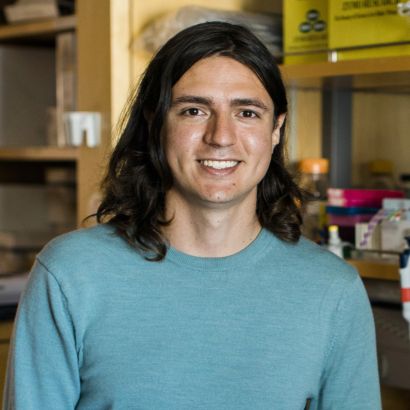
Lukas MillesView profile
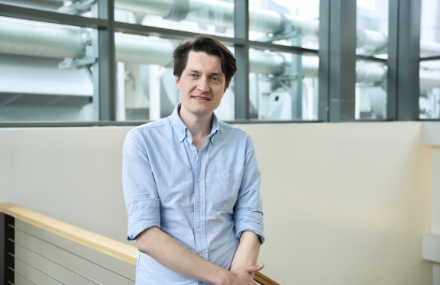
Professor
Prof. Dr. Lukas Milles is a faculty member at the Gene Center, Ludwig-Maximilians-Universität München , where he has held the position of Professor (W2) since October 2024. He is also the Emmy Noether Group Leader at the Max Planck Institute of Biochemistry in Martinsried, leading the Biomolecular Design research group. His work bridges de novo protein design, deep learning, and single-molecule biophysics to engineer novel proteins and understand biological mechanisms. Education: PhD in Physics/Biophysics (2014–2018), Ludwig-Maximilians-Universität München, with Hermann Gaub Postdoctoral Researcher (2019–2023), Institute for Protein Design, University of Washington, Seattle, with David Baker Acting Instructor (Jan–Jun 2024), Institute for Protein Design, University of Washington, Seattle Research Interests: Prof. Milles' research lies at the intersection of computational protein design and experimental biophysics. His lab uses deep learning to design proteins de novo , focusing on creating synthetic enzymes and self-strengthening protein bonds inspired by bacterial pathogens. The group employs high-throughput single-molecule techniques to validate designs and explore protein mechanics, folding, and function. Scientific Awards: Human Frontier Science Program Cross Disciplinary Fellowship (2020–2023) EMBO Long Term Fellowship (2019–2020) Honourable Mention, Birnstiel Award (2019) PhD Prize, LMU Munich University Society (2019) Students & Team: Prof. Milles currently advises four PhD students: Nele Dierlamm, Lars Dornfeld, Iryna Poplevicheva, and Andreas Riedlberger. His lab is interdisciplinary and welcomes applications from candidates in biology, physics, chemistry, engineering, and computer science. Lab & Collaborations: The Milles lab operates jointly at the LMU Gene Center and the MPI of Biochemistry, supported by the DFG Emmy Noether programme. The team maintains a high-throughput pipeline for protein design and characterization, integrating computational modeling with experimental validation using atomic force microscopy and single-molecule force spectroscopy.