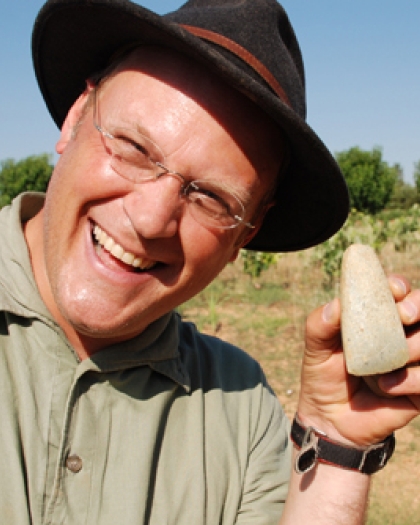
Evrim Acar Ataman is a Research Professor and Chief Research Scientist at Simula Metropolitan, where she serves as Head of the Department of Data Science and Knowledge Discovery. Her research focuses on advanced data mining techniques for complex, multi-modal datasets across biomedical and network domains. Her primary research interests include Data Mining , Matrix and Tensor Factorizations , and Data Fusion for multi-modal data analysis. She develops constrained and coupled factorization methods to extract interpretable patterns in applications spanning neuroimaging, metabolomics, and mobile network analysis, with emphasis on dynamic and longitudinal data structures. Her work integrates mechanistic models with data-driven approaches to enhance biological and system understanding. Analysis of her recent publications (2024-2025) reveals a dominant trend applying tensor and coupled matrix-tensor factorizations to biomedical data for biomarker discovery, particularly in metabolomics and neuroimaging. Key innovations include tracking evolving patterns in temporal data (tPARAFAC2), constrained fusion methods (dCMF), and integration of mechanistic models with tensor decompositions for longitudinal analysis. As Head of the Department of Data Science and Knowledge Discovery, she leads research in developing novel data mining methodologies and their real-world applications at Simula Metropolitan, with significant contributions to interpretable AI for complex systems.
Maj Schian Nielsen is a Senior Research Librarian at the University Library of the University of Agder. Her work focuses on multilingualism, crosslinguistic awareness, and German language pedagogy. She is affiliated with the research groups 'Media and Communication Studies' and 'Multilingualism in Society and Education (MUSE).' University of Agder Research Groups: Media and Communication Studies, MUSE Her research explores how multilingual awareness can enhance grammar instruction in German third-language (L3) teacher education programs across Denmark and Norway. Recent publications analyze curriculum structures, educational materials, and the integration of generative AI tools like ChatGPT in multilingual education contexts. Scientific output trends reveal a focus on: Cross-linguistic pedagogy L3 German acquisition Grammar teaching methodologies AI applications in language learning Teacher training for multilingual classrooms Systemic Functional Linguistics (SFL) frameworks She has not been publicly recognized with scientific awards listed in the available data.
Habib Ullah is an Associate Professor in Data Science at the Norwegian University of Life Sciences (NMBU), Norway, where he conducts research at the intersection of computer vision and machine learning. He is affiliated with the Institute of Data Science under the Faculty of Science and Technology. He has previously held academic positions at COMSATS University Islamabad, Pakistan, and the University of Ha'il, Saudi Arabia, and served as a postdoctoral researcher at The Arctic University of Norway. Educational Background: PhD in Information and Communication Technology (Computer Vision), University of Trento, Italy (2011–2015) MSc in Electronics and Computer Engineering, Hanyang University, South Korea (2007–2009) BSc in Computer Systems Engineering, NWFP University of Engineering and Technology, Pakistan (2002–2006) Habib Ullah's research is primarily focused on computer vision and machine learning, with applications in aquaculture, agriculture, and human behavior analysis. He investigates underwater fish feeding sounds using audio classification, develops zero-shot learning models for recognizing unseen classes, and applies deep learning to detect stress in salmon via skin dot patterns. He also explores AI-driven controlled environment agriculture, leveraging sensors and automation for optimal crop growth. His work emphasizes practical AI solutions for real-world challenges in environmental and biological domains. The recent publications highlight a strong trend in leveraging deep learning for zero-shot and semi-supervised learning, particularly in computer vision tasks such as sea ice classification, crowd anomaly detection, and agricultural monitoring. His research spans remote sensing, biomedical signal processing, and human activity recognition, demonstrating interdisciplinary versatility. The keywords reflect a focus on robust feature representation, knowledge transfer, and model generalization. Scientific Awards and Funding: Industrial PhD grant 'Advancing Controlled Environment Agriculture AI' from The Research Council of Norway (Project number 354125, 2 million NOK, 2024) Team member (Coordinator-Participant) in the Battery Cell Assembly Twin (BatCAT) project funded by Horizon Europe (7 mEuro, 2023–2027) Development of an AI-Based Image Analysis System for Monitoring Plant Status (Funding: 1.8 mNOK, starting 2025) Habib Ullah actively supervises PhD projects and contributes to academic service through editorial and organizational roles. He has served as an Associate Editor for IEEE Access, Guest Editor for MDPI Remote Sensing, and Editor of the Springer book Machine Learning Techniques and Sensor Applications for Human Emotion, Activity Recognition, and Support (ML-SHEARS) . He has also been a Track Chair and Program Committee Member for several international conferences, reflecting his leadership in the academic community. His research is supported by significant grants and collaborative projects, indicating strong institutional and international engagement. He is involved in multiple research teams and projects, including the BatCAT project on battery manufacturing and AI applications in controlled environment agriculture with RIFT LABS AS. His lab work integrates deep learning, sensor fusion, and data analytics for environmental and biological monitoring systems.
Michael Riegler is a Researcher at the AI Department, Simula Research Laboratory , focusing on interdisciplinary applications of Artificial Intelligence in healthcare, sports analytics, and multimedia systems. His work bridges Machine Learning , AI Alignment , and Applied AI across clinical and real-world domains. Key Affiliations: Simula Research Laboratory (AI Department Head) Research Themes: Explainable AI in medicine, multimodal data analysis, and AI-driven health monitoring Research Interests include: Developing AI/ML algorithms for medical imaging (e.g., polyp detection, embryo analysis) Addressing missing data challenges in healthcare through novel imputation techniques Creating multimodal virtual avatars for investigative interview training Designing edge AI systems for sports analytics and sustainable fishing Recent Publications highlight collaborations with institutions in Norway and globally, with a focus on: Medical Applications: Polyp segmentation, ECG analysis, and explainable models for disease detection Sports Analytics: Athlete performance prediction and soccer video processing Data Infrastructure: Lifelogging datasets (ScopeSense), semantic representation frameworks Labs & Teams include leadership in Simula’s AI Department and participation in projects like Medico Multimedia Task , ImageCLEF , and MediaEval workshops. His work emphasizes responsible AI innovation in public sectors and privacy-preserving systems for edge environments.
Inga Berre is a Professor at the Department of Mathematics, University of Bergen, and serves as Director of the Center for Modeling of Coupled Subsurface Dynamics (CSD). She leads the Porous Media Research Group and was appointed Argyris Visiting Professor at the University of Stuttgart's SimTech Cluster of Excellence in 2023. Research Interests: Mathematical modeling, partial differential equations, numerical methods for coupled thermo-hydro-mechanical-chemical processes in subsurface systems, and fault reactivation induced by injection/production. Scientific Leadership: Member of SIAM Council (2022-2027), Chair of SIAM GS activity group (2021-2022), Co-Chair of SET-Plan Deep Geothermal Implementation Working Group (2019-2021), and Chair of the Joint Program Geothermal, European Energy Research Alliance (2018-2021). Awards: 2011 Meltzer Award for Young Researchers. Advisory Roles: Member of Scientific Advisory Boards for GFZ (2024-2027) and SFB1313 (2018-), among others. Teaching: Developed courses on calculus, functional analysis, mathematical modeling, and numerical methods at the Bergen Summer Research School.
Anne H Schistad Solberg is a Professor in the Department of Informatics at the University of Oslo's Faculty of Mathematics and Natural Sciences. She leads research in digital signal processing and image analysis, with a focus on machine learning applications across multiple domains. As co-director of SFI Visual Intelligence, she oversees research on interpretable deep learning models, uncertainty quantification, contextual learning, and self-supervised learning approaches. Her research spans medical imaging (particularly cardiovascular ultrasound), environmental monitoring using satellite imagery, and seabed mapping with sonar technology. Professor Solberg's work demonstrates a consistent trajectory from foundational signal processing techniques to cutting-edge deep learning applications. Her recent publications show increasing specialization in medical image analysis, particularly in echocardiography enhancement and cardiac structure segmentation, while maintaining strong contributions to remote sensing and geophysical applications. She teaches several popular courses including IN2070, IN3310, and IN5400 (Machine Learning for Image Analysis), which is noted as the most popular master's/PhD course on deep learning at the University of Oslo. Professor Solberg serves as principal investigator for the Intelligent Cardiovascular Ultrasound Scanner (INCUS) project, collaborating with GE Vingmed Ultrasound to develop AI-enhanced cardiac imaging systems that improve diagnostic accuracy and productivity in echocardiography. Co-director of SFI Visual Intelligence research center Principal Investigator for the INCUS project (Intelligent Cardiovascular Ultrasound Scanner) Member of the Digital Signal Processing and Image Analysis (DSB) research group Member of the Strategic Research Initiative: Multimodal Medical Imaging and Image Analysis (MEDIMA) Her research group develops algorithms that address real-world challenges in medical diagnostics and environmental monitoring, with a particular emphasis on making deep learning models more interpretable and reliable for critical applications. The INCUS project, funded through User-driven Research-based Innovation (BIA), aims to reduce the time wasted during cardiac ultrasound examinations by implementing intelligent algorithms that learn from expert users and historical data.
Katrine Eldegard is a Professor at the Norwegian University of Life Sciences (NMBU), Faculty of Environmental Sciences and Natural Resource Management (MINA), Department of Ecology and Natural Resource Management (INA). She leads BatLab Norway and contributes extensively to national and international conservation science policy. Institution: Norwegian University of Life Sciences School: Faculty of Environmental Sciences and Natural Resource Management Department: Department of Ecology and Natural Resource Management Position: Professor Her research centers on understanding how human activities and land use affect natural ecosystems and species across taxa and spatial scales. She specializes in the behavioral, population, and community-level responses of mammals, birds, and insects to anthropogenic pressures such as energy infrastructure, transport networks, and forestry. A major focus is on bat ecology and conservation, pollination dynamics, and biodiversity monitoring in boreal and agricultural landscapes. Her recent publications reveal strong trends in climate change impacts on bat morphology and distribution, pollinator-plant interactions under environmental change, and the ecological consequences of infrastructure development. These works integrate field ecology with advanced modeling and policy-relevant assessments. She has played leading roles in key scientific committees: Chair, Mammal Committee, Norwegian Red List for Species (2021) Chair, Mammal Committee, Norwegian Alien Species List (2023) Member, Norwegian Scientific Committee for Food and Environment (VKM), CITES Expert Panel Norway’s representative, UNEP/Eurobats Advisory Committee Eldegard has supervised numerous research projects and collaborated with government agencies and private partners on applied ecology. She teaches courses including NATF200 Vern og forvaltning av norsk natur and the upcoming NATF300 Conservation Science. Her work is supported by extensive fieldwork, interdisciplinary collaboration, and integration of ecological theory with practical conservation. She leads BatLab Norway, a research group dedicated to advancing knowledge on bat ecology, behavior, and conservation through innovative methods including telemetry, acoustic monitoring, and landscape analysis.
Jan Martin Nordbotten is a full-time Professor at the Department of Mathematics, University of Bergen (UiB), with adjunct positions at Princeton University and NORCE. His research focuses on applied mathematics, particularly in porous media, CO2 storage, fluid dynamics, and interdisciplinary applications in hydrology, biomedicine, and ecology. He completed his PhD at UiB in 2004 and became Norway's third youngest professor in 2007. His work emphasizes numerical methods, multiscale modeling, and experimental validation. Affiliations: UiB (full-time), Princeton (adjunct), NORCE (adjunct) Research Group: Center for Sustainable Subsurface Resources Research interests span mathematical modeling of subsurface processes, including flow in fractured media, geomechanics, and phase-field fracture. Notable contributions include analytical and numerical solutions for CO2 leakage, multiphase flow, and development of tools like DarSIA for image processing in porous media. Publications highlight advancements in mixed-dimensional models, finite element methods, and experimental validation of CO2 storage forecasts. His work bridges theoretical mathematics with practical applications in energy and environmental systems.
Norwegian University of Science And TechnologyNorway
Roy Johnsen is a Professor in the Department of Mechanical and Industrial Engineering at the Norwegian University of Science and Technology (NTNU), specializing in corrosion and surface technology. With a Dr.ing. degree from NTH (1984), he has extensive industry experience from Statoil Research Centre (1985-1991) and CorrOcean (1991-2004), where he expanded the company globally. His current research focuses on hydrogen embrittlement, corrosion protection, and integrity management in offshore systems, with collaborations across Europe, Asia, and the Americas.
Dieu Tien Bui is a Full Professor in the Department of Business and IT at the University of South-Eastern Norway (USN) School of Business. His research focuses on Geospatial Artificial Intelligence Machine Learning GIS and Remote Sensing Natural Hazard Modeling Environmental Problems (landslides, floods, soil salinity, biomass) . He has contributed to over 15 recent publications in journals like Science of the Total Environment , Remote Sensing , and Geomorphology , emphasizing hybrid AI models for landslide and flood susceptibility. His work spans Vietnam, India, China, and Iran with applications in climate change adaptation and disaster management. Scientific Awards: Global Highly Cited Researcher PhD Supervision: He has supervised 8 PhD students at institutions including USN, NTNU, and Vietnamese universities.
Professor Kenneth Ruud is a leading expert in theoretical and computational chemistry at UiT The Arctic University of Norway. He serves as Director General of the Norwegian Defence Research Establishment and leads the Hylleraas Centre for Quantum Molecular Sciences. His research focuses on relativistic quantum chemistry, developing advanced ab initio methods for molecular property calculations, and integrating QM/MM and continuum solvent models. Education: PhD from University of Oslo (1998, supervised by Trygve Helgaker) Postdoc: University of San Diego with Peter Taylor (1998-2000) His work spans relativistic effects in molecular properties, vibronic coupling, and X-ray spectroscopy. He contributes to software development through programs like Dalton, Dirac, ReSpect, and OpenRSP. Recent publications highlight applications in spin-vibronic dynamics, heavy metal L/M-edge XAS, and topological materials. Key scientific contributions include relativistic DFT for nuclear spin-rotation constants, polarizable embedding models for vibrational spectra, and quantum dynamics frameworks. Awards recognize his impact through the Dirac Medal (2008) and multiple academy memberships. Elected to Norwegian Academy of Science and Letters Fellow of American Association for the Advancement of Science (AAAS) Foreign member of Finnish Academy of Science and Letters He actively participates in open science initiatives and serves on boards including Norges Forskningsråd and CAROS center for subsea robotics. Current projects involve quantum molecular science in extreme environments and computational protocol development.
Elise Kleivane is an Associate Professor in Written Culture at the Department of Norse and Celtic Philology, Faculty of Humanities, University of Oslo. She has served as Head of Teaching at ILN (Institute of Language and Literature) from 2021 to 2024 and maintains an active research and teaching profile in Norse philology and related fields. Dr. Kleivane earned her PhD in Norse Philology from the University of Oslo in autumn 2011, following a Master of Arts in Norse Philology completed in spring 2003. Her academic journey has positioned her as a leading scholar in medieval Scandinavian writing culture. Her research focuses on epigraphy, runology, and medieval literacy, with particular emphasis on the intersection of written and material culture in medieval Norway. Kleivane examines how writing functioned in both public and private spheres, analyzing inscriptions in runes and Roman script as evidence of medieval communication practices. Her work bridges philology, archaeology, and cultural history to reconstruct literacy patterns in pre-modern Scandinavia. Recent projects have explored religious texts, biblical translations, and the role of writing in ecclesiastical contexts. Analysis of her publication record reveals a consistent trajectory through medieval epigraphy and literacy studies. Her work demonstrates increasing sophistication in connecting material evidence with textual analysis, moving from specific inscription studies to broader questions about writing culture. The pattern shows strong engagement with interdisciplinary approaches, combining philological expertise with archaeological and historical methodologies. Her research increasingly addresses questions of religious practice, vernacular literacy, and the transmission of knowledge in medieval Scandinavia. Among her significant appointments, she has been appointed to the Language Council's expert council for standardization and language observation (2023-2026) and to the Sources Commission (2023-2026), serving on the editorial board for the National Archives' scientific publication channels. Dr. Kleivane has secured substantial research funding, most notably leading the Norwegian Research Council-funded project 'Letters between runes and manuscripts' (2017-2021) and participating in the NORDCORP-funded 'Retracing the Reformation' project (2013-2017). She currently contributes to the Riksbanken Jubileumsfond-funded research program 'Modes of Modification' (2018-2025) as a member of its steering committee, where her research focuses on 'Texts in the Open and Out of Sight: Public and Private Communication in Epigraphy.' She teaches across multiple institutions including the University of Oslo and Stockholm University, covering subjects ranging from Norse literature and mythology to runology and medieval manuscript culture. Her teaching reflects her research interests in written culture across the medieval Scandinavian world.
Jørgen Bakke is an Associate Professor in History of Art at the Department of Linguistic, Literary and Aesthetic Studies, University of Bergen. His academic work spans classical archaeology, Byzantine studies, and visual culture with a particular focus on ancient Greek art, landscape archaeology, and the cultural history of the Mediterranean region. Bakke has been actively involved in archaeological research in Greece, particularly in the Tegea region of Arcadia. His research interests encompass a broad range of topics in art history and classical studies. Bakke specializes in visual culture of ancient Greece, Byzantine garden traditions, landscape archaeology, and the intersection of art with memory and knowledge representation. His work often bridges disciplines, connecting classical literature with visual analysis and exploring how ancient visual culture functioned within historical and religious contexts. Bakke's research demonstrates particular expertise in the interpretation of ancient texts related to art (ekphrasis), the visual poetics of ancient Greek culture, and the reception of classical themes in later periods. Bakke's scholarly output reveals a consistent focus on Mediterranean cultural landscapes, particularly examining the Tegea region through multiple historical periods from classical antiquity through the Byzantine era and into the Ottoman period. His work shows a progression from early studies on ancient Greek visual culture toward more specialized research on Byzantine visual traditions and garden culture. A notable thread throughout his publications is the examination of how visual culture functions within religious and devotional contexts across different historical periods. His recent work increasingly engages with digital humanities approaches to art historical analysis. Bakke is actively involved in multiple research groups at the University of Bergen, including the Images of Knowledge Research Group, the Antiquity and the Classical Tradition Research Group, and the Literature & Religion Research Group. These affiliations reflect the interdisciplinary nature of his work, which bridges art history, classical studies, religious studies, and literary analysis. His research demonstrates how visual culture serves as a critical lens for understanding historical, religious, and philosophical developments across different eras.
Norwegian University of Science And TechnologyNorway
Børge Rokseth is an Associate Professor at the Department of Engineering Cybernetics, Norwegian University of Science and Technology (NTNU). His work focuses on maritime systems, autonomous vessel control, and safety verification. He actively supervises Master's students and contributes to research on risk-informed control systems, hybrid power systems, and systems-theoretic process analysis (STPA). Research Interests: Rokseth's research spans autonomous ship systems, dynamic risk assessment, and safety verification. He explores risk-based decision-making for maritime autonomy, hazard identification in hybrid propulsion systems, and control function allocation in dynamic positioning. His work integrates systems theory, machine learning, and regulatory compliance (e.g., COLREGS) to enhance safety and environmental performance in marine operations. Publications: His recent work includes probabilistic trajectory prediction frameworks for autonomous ships, STPA-based safety analyses, and studies on decarbonization barriers in the maritime industry. These publications emphasize risk modeling, systems-theoretic approaches, and simulation-based verification. Teaching: Rokseth teaches courses such as TTK4130 - Modelling and Simulation, contributing to the education of future engineers and researchers in cybernetics and maritime systems.
Anne Berit C. Samuelsen serves as Associate Professor at the Department of Pharmacy, University of Oslo, where she also holds the position of Head of Education. Her academic foundation includes a Cand.pharm. degree and Dr.scient. doctorate, establishing her expertise in pharmaceutical sciences. Her research centers on polysaccharides from natural sources—particularly higher plants, cereals, and fungi (Basidiomycota)—with specialized focus on β-glucans. Key interests include carbohydrate chemistry, pharmacognosy, and the development of biopolymer-based pharmaceutical applications. Her work bridges fundamental structural characterization with practical drug delivery solutions, notably through liposome coating technologies and immunomodulatory compound development. Recent publications reveal a strong trajectory in fungal polysaccharide research, particularly with Pleurotus eryngii and Albatrellus ovinus species. Her team employs advanced techniques like diffusion-ordered NMR spectroscopy to analyze polysaccharide structures while investigating biological activities related to immune receptor binding (Dectin-1, Toll-like receptors) and therapeutic applications. This work demonstrates consistent output in high-impact journals including Carbohydrate Polymers and ACS Applied Bio Materials . She actively contributes to academic instruction through courses such as FARM1150 (Pharmaceutically Oriented Biochemistry), FARM3100 (Pharmacognosy), and FARM5200 (Use of Biopolymers in Pharmaceuticals). Her leadership extends to the Bioactive Natural Substances and Health Effects (BioNatH) research group and the Glyconor Consortium, where she investigates natural product applications for health improvement.