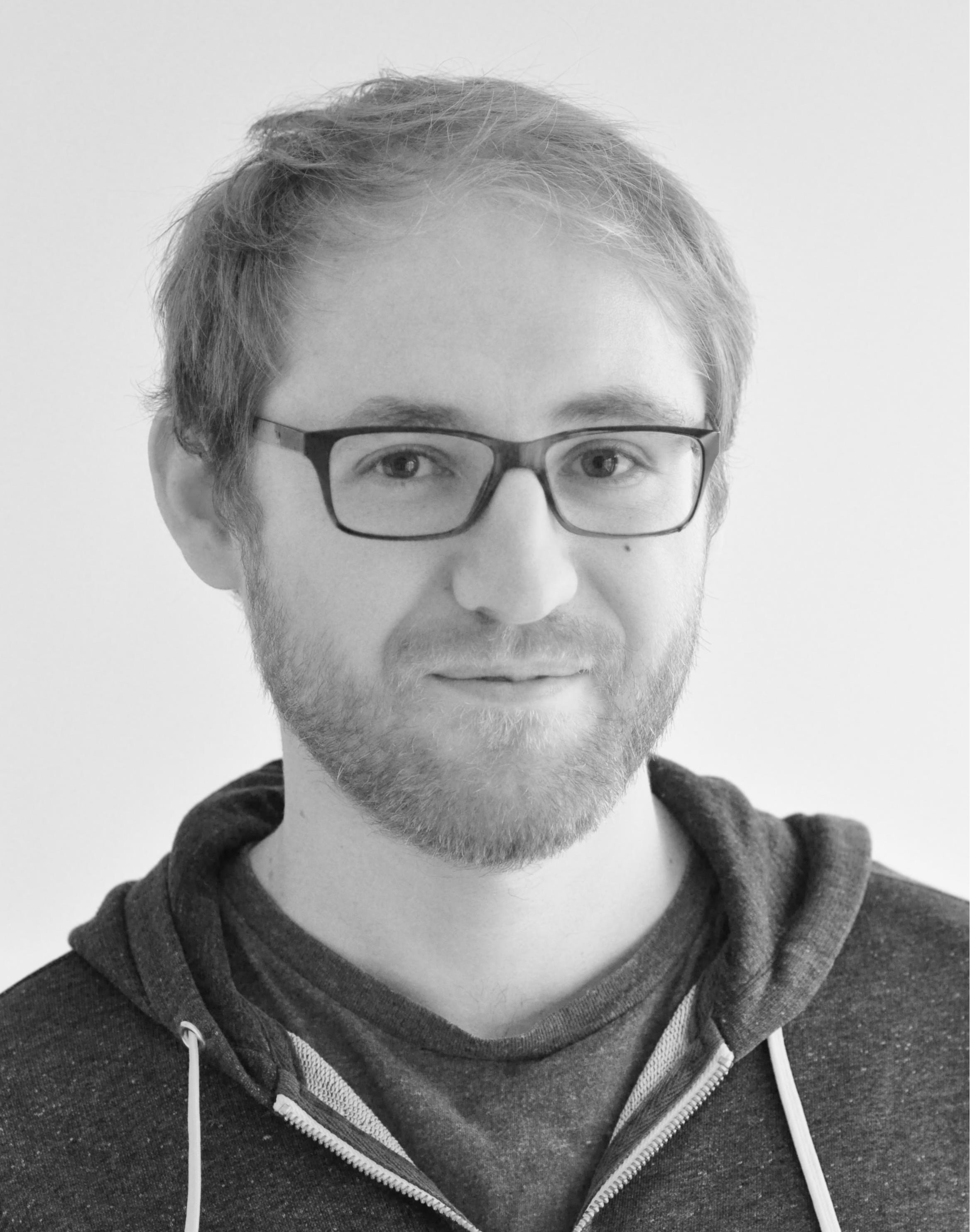
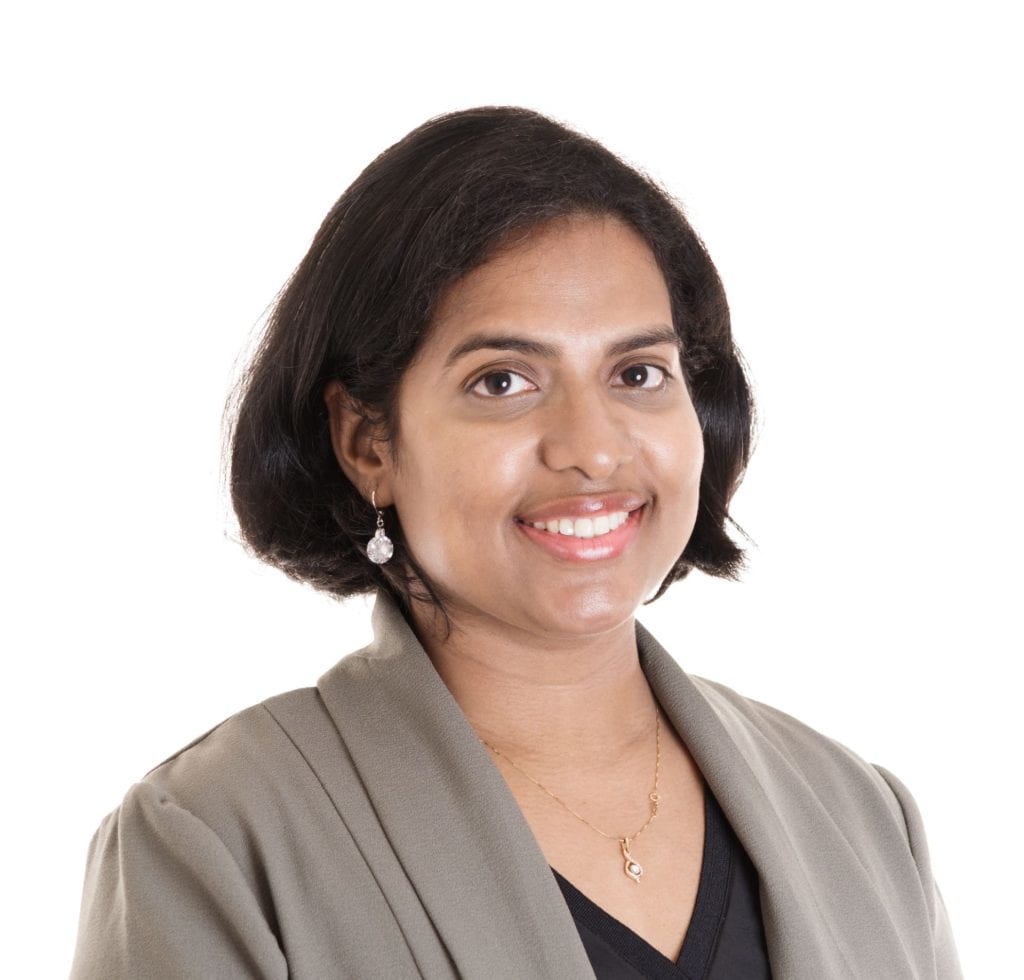
Alain Passelègue is a junior researcher (chargé de recherches) at Inria within the AriC team at École Normale Supérieure de Lyon, currently focusing on fully homomorphic encryption (FHE) and its applications. His research spans diverse areas of cryptography including obfuscation techniques and multilinear maps. He completed his PhD in cryptography at École Normale Supérieure under Michel Abdalla (2013-2017), followed by postdoctoral research at UCLA under Amit Sahai (2017-2018). He currently supervises PhD students Calvin Abou Haidar and Mahshid Riahinia and serves on program committees for leading cryptography conferences including Crypto, PKC, and Asiacrypt.
Michael Brand is an Adjunct Professor at RMIT University's School of Computing Technologies. His research focuses on cryptography, privacy-preserving technologies, machine learning, and algorithm design. Key areas include zero-knowledge proofs, secure financial systems like FinTracer, and computational theory. His work bridges theoretical foundations with practical applications in data security and real-time processing systems. Research interests span advanced cryptographic protocols, privacy-enhancing machine learning techniques, and distributed computing paradigms. Notable contributions include innovations in blockchain tracing mechanisms and foundational work in statistical estimation theory. He actively publishes in top-tier venues, addressing challenges in secure computation, network analysis, and database systems. Collaborations emphasize interdisciplinary solutions to modern computational and security challenges.
Vladimir Shpilrain is a Professor in the Department of Mathematics at The City College of New York (CUNY). His primary research focuses on post-quantum cryptography, computational complexity, and algorithmic problems in group theory. He is a leading figure in applying algebraic methods to cryptographic protocols and has contributed to foundational work in non-commutative cryptography. His academic affiliations include the Algebraic Cryptography Center and collaborative projects at the intersection of mathematics and computer science. Shpilrain has authored over 100 publications, including two influential books on combinatorial and computational group theory. His work bridges pure mathematics (e.g., combinatorial group theory, affine algebraic geometry) with applied areas like secure communication and blockchain technology. He holds patents for cryptographic systems and has advised numerous students in interdisciplinary research areas. Shpilrain teaches advanced courses in linear algebra, probability theory, and cryptography. His research is supported by grants exploring post-quantum security, Cayley hash functions, and delegation protocols. Collaborations span global institutions, emphasizing both theoretical rigor and practical applications in information security.
Prof. Dr. Mehmet Ozen is a faculty member at the Faculty of Science, Department of Mathematics, Sakarya University. His research focuses on Information and Coding Theory , Algebra , and Number Theory , with particular emphasis on Quantum Codes , Cyclic Codes , and Finite Rings . Education : Licence from Aegean University (1994), Master's (1998) and Doctorate (2002) from Sakarya University, all in Mathematics. Research Trends : Analysis of modules with S-Noetherian/Artinian properties, construction of perfect codes over finite rings with RT/Mannheim metrics, and quantum code development using Gaussian/Lipschitz integers. Scientific Awards : TÜBİTAK Scientific Publication Incentive Award (2004) TÜBİTAK Award (2006) TÜBİTAK Awards (2011, 2012) Thesis Supervision : Advised doctoral students on topics including quantum codes over Gaussian integers (2011), spotty weight identities (2010), and DNA code algebra (2009).
Nikolaos Foutris is a Researcher at The University of Manchester, specializing in dependable and energy-efficient computer architectures. His work emphasizes hardware/software co-design, focusing on systems and processors that balance performance with reliability. Key research areas include memory optimization, GPU acceleration for cryptographic computations, and radiation effects on MPSoC systems. His research intersects with UN Sustainable Development Goals, particularly through energy-efficient technologies and resilient computing infrastructure. Collaborations span academia and industry, addressing challenges in NUMA systems, blockchain, and cloud applications. Recent publications highlight trends in memory analysis for managed applications, SPIR-V code generation frameworks, and mitigating radiation-induced errors in advanced embedded systems. No scientific awards or grants are explicitly mentioned in the provided text.
Jean-Sébastien Coron is a Full Professor in Informatics and Head of the Department of Computer Science (DCS) at the University of Luxembourg's Faculty of Science, Technology and Medicine. His research focuses on cryptography, including fully-homomorphic encryption, multilinear maps, and side-channel attack countermeasures. He leads the Applied Crypto Group (ACG). Education: Ph.D. in Computer Science from École Polytechnique (2001) Habilitation from Université Paris Diderot - Paris 7 (2006) Former student of École Normale Supérieure (Paris) Research Interests: Coron's work spans theoretical and applied cryptography, with an emphasis on secure cryptographic protocol design and vulnerability analysis. His contributions include foundational advancements in homomorphic encryption and practical defenses against physical attacks. Affiliations & Labs: Leads the Applied Crypto Group (ACG) at the University of Luxembourg's Maison du Nombre research center. Active in collaborative projects across academia and industry.
Tim SEURÉ is a PhD candidate at the University of Luxembourg, affiliated with the Faculty of Science, Technology and Medicine (FSTM). He is part of Prof. Gabor Wiese’s research group at the Department of Mathematics (DMATH) and Prof. Jean-Sébastien Coron’s group at SnT (Interdisciplinary Centre for Security, Reliability and Trust). His research focuses on Fully Homomorphic Encryption, supported by an AFR Individual grant from the Fonds National de la Recherche. He also serves as a teaching assistant for Linear Algebra 1 (Bachelor’s level) and Advanced Graph Theory (Master’s level). Affiliations: DMATH, SnT, Maison du Nombre Languages: French, English, Luxembourgish, German Tim holds both a Bachelor’s and Master’s in Mathematics from the University of Luxembourg. He has received academic awards from the Luxembourg Mathematical Society (2021, 2023) and the Portabella Academic Excellence Award (2021).
José Cano Reyes is a Senior Lecturer (Associate Professor) at the University of Glasgow's School of Computing Science, leading the Glasgow Intelligent Computing Lab (gicLAB) and serving as deputy Head of the GLAsgow Systems Section (GLASS). His academic career includes postdoctoral roles at the University of Edinburgh (2014-2018) and Universitat Politècnica de Catalunya (2012-2013), with a PhD and engineering degree from Universitat Politècnica de Valencia (2004-2012). He has held visiting and guest lecturer positions at Edinburgh and Glasgow across computer architecture, compilers, and embedded systems topics. Research focuses on hardware-software co-design for edge AI, including DNN acceleration (FPGA/GPU), encrypted AI systems, and secure mission-critical SoCs. Key projects include EU's dAIEDGE, EPSRC IDEAL, and UKRI AppControl. He leads over 15 research staff and students in areas like quantization, sparsity exploitation, and robust AI deployment. Notable contributions span 100+ peer-reviewed publications across top venues (ISCA, IJCNN, IEEE TPDS) and 3 authored books on ad hoc networks and embedded systems. Academic service includes organizing 20+ conferences (ISPASS, Euro-Par, ASPLOS) and serving on editorial boards for ACM TACO and IEEE TPDS. His educational efforts include teaching Computer Architecture (Year 4), Computer Systems (Year 1), and supervising over 20 PhD/MSc students since 2017.
Daniele Micciancio is a Professor in the Computer Science & Engineering Department at the University of California, San Diego, where he has been faculty since 1999. He is a member of both the Cryptography and Security group and the Theory of Computation group within the Jacobs School of Engineering. His academic journey began with a PhD in computer science from the Massachusetts Institute of Technology in 1998. PhD in Computer Science, Massachusetts Institute of Technology (1998) Micciancio's research focuses on the intersection of theoretical computer science and cryptography, with particular emphasis on lattice-based cryptographic systems. His work spans lattice algorithms, complexity of lattice problems, symbolic analysis of cryptographic protocols, and various cryptographic primitives including zero-knowledge proofs. His research has significantly advanced the field of post-quantum cryptography, particularly in developing cryptographic systems based on the hardness of lattice problems that could withstand attacks from quantum computers. His recent publications demonstrate a continued focus on homomorphic encryption, lattice-based cryptography, and secure computation protocols. The trend shows increasing practical applications of his theoretical work, with publications addressing real-world implementation challenges in privacy-preserving computation, medical data analysis, and genomic research. Matchey Award (FOCS 1998) Sprowls Award (MIT EECS, 1999) CAREER Award (NSF, 2001) Hellman Fellowship (2001) Sloan Fellowship (2003) 20-years Test of Time Awards (FOCS 2022, FOCS 2024) Fellow of the IACR (1999) Professor Micciancio has advised numerous graduate students who have gone on to successful careers in academia and industry, including prominent researchers in lattice-based cryptography. His professional activities include serving on editorial boards for prestigious journals including SIAM Journal on Computing, Journal of Cryptology, and Information and Computation. He has also been heavily involved in conference organization, serving as program chair for TCC 2010, CRYPTO 2019, and CRYPTO 2020, and as general chair for TCC 2014. As a member of both the Cryptography and Security group and the Theory of Computation group at UCSD, Micciancio contributes to a vibrant research environment focused on foundational aspects of computer security and theoretical computer science. His work continues to influence both theoretical developments and practical implementations of cryptographic systems, particularly as the field prepares for the post-quantum era.
Abdullah SEVİN serves as an Assistant Professor in the Department of Computer Engineering at Sakarya University's Faculty of Computer and Information Sciences, a position held since 2017. Previously, he worked as a Research Assistant at Sakarya University (2009-2011) and American University of Sharjah (2014). His academic credentials include: Doctorate in Computer Engineering, Sakarya University (2011-2016), Thesis: A NEW MEDIA ACCESS CONTROL PROTOCOL WITH QUALITY OF SERVICE SUPPORT FOR WIRELESS BODY AREA NETWORKS Master's in Electronics and Computer Education, Sakarya University (2008-2011) Bachelor's in Computer Systems Teaching, Sakarya University (2004-2008) Dr. SEVİN's research integrates advanced cryptographic methods with emerging technologies. His primary expertise spans Cryptography—including hash functions, lightweight cryptography, and Torus fully homomorphic encryption (TFHE)—alongside Blockchain systems, Internet of Things (IoT) communication protocols, and Parallel Computing architectures. His performance analysis focuses on security testing of IoT application layers and cryptographic implementations, emphasizing real-world system optimization. No scientific awards were documented in the source material. Details regarding student supervision, research grants, laboratory facilities, or collaborative teams were not provided in the available text.
Mohamed Abomhara is a Senior Researcher and Head of Department at the Department of Information Security and Communication Technology, Norwegian University of Science and Technology (NTNU) , Faculty of Information Technology and Electrical Engineering. He serves as Discipline Leader for the MRI PET (Multidisciplinary Research group on Privacy and data protEcTion) research group. Research Interests His expertise includes: GDPR compliance and privacy-by-design Risk assessment and secure system design AI ethics and social-cyber risk mitigation Healthcare digital transformation security Border control technology ethics Recent Publications His 2024-2025 research focuses on multilingual hate speech detection , border control technology acceptance , and privacy protections in national identification systems , bridging AI ethics, cybersecurity, and regulatory compliance. Earlier work (2016-2022) addresses: Cybersecurity in digital substation infrastructure Secure collaborative healthcare information sharing Blockchain-based GDPR compliance AI-driven social media analysis
Corey Clark, Ph.D., serves as Deputy Director of Research and Assistant Professor in the Department of Computer Science and Engineering at Southern Methodist University's Lyle School of Engineering. He leads the Human and Machine Intelligence (HuMIn) Game Lab, pioneering research at the intersection of gaming, artificial intelligence, and human computation to solve large-scale problems in healthcare, education, and national security. Dr. Clark holds a Ph.D., M.S., and B.S. in Electrical Engineering from The University of Texas at Arlington, where he graduated Magna Cum Laude for his undergraduate degree. His doctoral research focused on nanoscale modeling and simulation techniques for Molecular Beam Epitaxy and Chemical Vapor Deposition of exotic materials. His research spans Artificial Intelligence, Game Development, Human Computation, Distributed Computing, Machine Learning, Computational Biology, and Educational Technology. Clark is renowned for transforming commercial video games into distributed computing platforms through human computation, enabling breakthroughs in medical diagnostics and educational technology. His technical innovations in HTML5/JavaScript multithreading have been featured at major international game conferences. Analysis of Clark's 15 most recent publications (2022-2024) reveals a dominant focus on generative AI applications integrated with gaming mechanics, particularly for knowledge graph enhancement, medical diagnostics, and computational thinking education. Key trends include explainable AI systems, human-AI collaboration through gameplay, blockchain applications, and privacy-preserving machine learning, demonstrating consistent innovation in applying game-based approaches to real-world problems. Dr. Clark has secured over $1.7 million in competitive research funding, including: Human Computation for Ocular Tomography Analysis ($62,924) with Retina Foundation Cryptocurrency Transactional Analysis via Gaming ($60,000) with Raytheon Game-Based Adult Literacy (XPrize) ($480,000) Flexible Electronics for Airborne Laser ($820,000) with Missile Defense Agency Networked C4ISR Chip ($850,000) with US Army As CTO for Dallas-based game technology companies, Clark has helped raise over $12 million in startup funding. His HuMIn Game Lab currently develops immersive gameplay systems for cancer treatment research using crowdsourced computation and machine learning, with recent projects including therapeutic discovery platforms and blockchain-based task completion systems.
Håvard Raddum serves as Chief Research Scientist in the Department of Cryptography at Simula UiB, a joint research entity of Simula Research Laboratory and the University of Bergen. His primary focus involves advancing cryptographic security through algorithm analysis, Fully Homomorphic Encryption applications, and hardware-level attack mitigation. Raddum's research spans cryptography with specialization in security analysis of cryptographic algorithms, practical deployment of Fully Homomorphic Encryption, and physical attacks on hardware implementations. His work addresses vulnerabilities in symmetric ciphers, multivariate schemes, and lattice-based systems through algebraic cryptanalysis, side-channel techniques, and theoretical security proofs. Analysis of his 2019-2025 publications reveals concentrated expertise in cryptanalysis across diverse primitives. Key trends include algebraic attacks on arithmetization-oriented cryptography, side-channel analysis of lightweight ciphers, error detection in lattice computations, and security evaluations of Fully Homomorphic Encryption. His research consistently bridges theoretical frameworks with practical implementation vulnerabilities.
Anitha Gollamudi is an Assistant Professor in the Department of Computer Science at the Miner School of Computer and Information Sciences, University of Massachusetts Lowell. She teaches core courses including Systems Security (COMP 5300), Compiler Construction (COMP 4060/5340), and Organization of Programming Languages (COMP 3010). Her research focuses on language-based security through hardware-assisted mechanisms, cryptography, and formal methods. Current projects include: Automatic compartmentalization of Trusted Execution Environment (TEE) programs Formal foundations of Fully Homomorphic Encryption (FHE) compilers Privacy-preserving machine learning with encrypted learning Analysis of her 8 recent publications (2016-2025) reveals dominant themes in TEE security and secure compilation. Key contributions address memory safety in WebAssembly, authorization logic for computation principals, and formal verification of cryptographic systems. Her work consistently bridges theoretical foundations with practical implementations for real-world security challenges. No scientific awards were mentioned in the available information. Professor Gollamudi actively mentors students across levels, currently advising PhD candidates Wesley B. Nuzzo and Samuel Dodson alongside undergraduate Benjamin Houle. Her former students include Nam Bui, James Chen, Yuka Akiyama (honors thesis), and Andrew Eggleston. She emphasizes collaborative research and encourages prospective students to contact her with research interests and academic background. She leads a research group focused on applying programming language techniques to security problems, with ongoing projects targeting enclave placement optimization, FHE correctness verification, and encrypted machine learning frameworks.