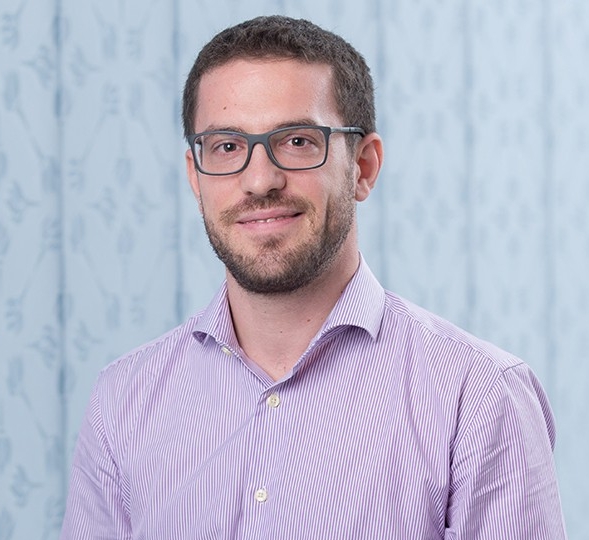
David Pointcheval is a CNRS Researcher at the Computer Science Department of École Normale Supérieure (ENS) in Paris, France. Since 2005, he has led the Cryptography Team, which has been associated with Inria since 2008. He became the Chair of the Computer Science Department at ENS in 2017. Education: PhD in Computer Science (1996) from University of Caen. His research focuses on the provable security of cryptographic primitives and protocols. He has contributed to privacy-preserving aggregation techniques for data from multiple sources, including work on homomorphic encryption and functional encryption. He has served as program chair for major cryptography conferences (PKC 2010, Eurocrypt 2012) and held leadership roles in the International Association for Cryptologic Research (IACR) as one of nine elected directors for nine years. He holds over 150 international publications and a dozen patents. Scientific Awards: ERC Advanced Grant (Privacy for the Cloud)
Jingling Xue is a Scientia Professor at the School of Computer Science and Engineering at the University of New South Wales (UNSW) in Sydney, Australia. As an IEEE Fellow of the Computer Society, he leads the Programming Languages and Compilers research group, focusing on practical applications of compiler optimization and program analysis techniques. His work bridges theoretical foundations with real-world software systems, particularly in developing open-source tools for large-scale program analysis. Professor Xue received his B.Eng and M.Eng degrees from Tsinghua University in 1984 and 1987, respectively, followed by a PhD from the University of Edinburgh in 1992. His academic journey has established him as a leading figure in programming languages and compiler technology. Xue's research spans programming languages, compiler technology, and program analysis with emphasis on practical relevance. His current projects include compiler techniques for improving parallelism and locality, pointer/alias analysis for million-line-scale programs, and static/dynamic analysis for detecting bugs and security vulnerabilities in real-world applications like web browsers and Android apps. His group actively develops open-source tools to support scientific replicability and reproducibility in these areas. His recent publications demonstrate a strong focus on applying program analysis techniques to modern challenges including AI compilers, homomorphic encryption, security vulnerability detection, and graph processing systems. The work shows evolution from traditional compiler optimization to addressing emerging domains like privacy-preserving computation and deep learning systems while maintaining rigorous theoretical foundations. Scientific Awards: Best Paper Award at CGO'13 Best Paper Award at CGO'16 Distinguished Paper Award at ECOOP'16 Distinguished Paper Award at ICSE'18 Distinguished Paper Award at ISSTA'19 Distinguished Paper Award at ASE'19 Distinguished Artifact Award at ISSTA'23 Best Artifact Award at FSE'23 Distinguished Paper Award at ASE'23 Test-of-Time Award at CGO'21 Professor Xue has successfully supervised 30 PhD students to completion, many of whom now work as professors or researchers in academia and industry. He has served as Program Chair for major conferences including LCTES'13, CC'18, CGO'20, and General Chair for LCTES'20. His group currently focuses on memory safety in Rust, smart contract analysis, AI compilers, compilation for privacy-preserving computation, and adversarial attacks in deep learning. The Programming Languages and Compilers group maintains strong connections with industry partners, translating theoretical advances into practical tools for real-world software development challenges. Their work on pointer analysis, memory safety, and compiler optimizations continues to influence both academic research and industrial practice.
Kristian Gjøsteen is a Professor at the Department of Mathematical Sciences within the Norwegian University of Science and Technology (NTNU) . He actively contributes to the Algebra Group and specializes in cryptographic systems with a focus on electronic voting , security proofs , and privacy-enhancing technologies . Educational Background: MSc and PhD from NTNU Research Interests: His work spans cryptography , key exchange protocols , cloud security , and formal verification of security mechanisms. Particular emphasis is placed on coercion-resistant voting systems , lattice-based encryption , and blockchain privacy models . Article Trends: Recent publications demonstrate expertise in post-quantum cryptography , machine-checked security , and privacy-preserving voting architectures . Collaborative efforts explore hybrid cryptographic schemes , verifiable decryption , and mix-net implementations for secure elections.
Wenguang Chen is a researcher affiliated with Tsinghua University and Pengcheng Laboratory , specializing in computer science and high-performance computing . His work bridges theoretical advancements with practical applications in domain-specific languages , parallel programming , and machine learning . Research Interests include: Development of modular DSLs for numerical methods (e.g., Mat2Stencil) Performance optimization in distributed and parallel systems Compiler frameworks for privacy-preserving AI (e.g., FHE-based neural network inference) Graph algorithms scaling to trillion-edge datasets Applications of Rust in memory-safe pointer analysis Recent Publications span 2014–2025, focusing on: Parallelization strategies for supercomputing Compiler automation tools Extreme-scale data processing Performance variance diagnosis in production environments
Wei-Kai Lin is an Assistant Professor in the Department of Computer Science at the University of Virginia. He holds a Ph.D. from Cornell University and previously worked as a postdoctoral researcher at Northeastern University and CMU, advised by Professors Daniel Wichs and Elaine Shi. His research focuses on cryptography and theoretical computer science, particularly private accesses on big data, oblivious RAM (ORAM), and private information retrieval (PIR). Lin's work has been recognized with the Best Paper Award at STOC 2023 for his breakthrough in doubly efficient PIR and FHE for RAM programs. Lin's education includes a B.S. and M.S. from National Taiwan University, followed by roles as a software engineer and a research assistant at Academia Sinica. He teaches courses such as Introduction to Cryptography (CS 6222) and Cryptography (CS 4501) at UVA. He actively organizes the UVA Theory Seminar, fostering discussions on topics like expander codes, multiplicative weights algorithms, and privacy-preserving techniques. His research interests include cryptographic protocols that minimize computational overhead while ensuring privacy, such as OptORAMa (the first optimal ORAM scheme) and NanoGRAM (garbled RAM with logarithmic overhead). Lin collaborates with industry and academia, addressing challenges in secure computation and privacy in distributed systems.
Dr. Baraq Ghaleb is an Associate Professor within the Centre for Distributed Computing, Networks and Security at Edinburgh Napier University's School of Computing Engineering and the Built Environment. He actively delivers and leads modules for both Undergraduate and Postgraduate programs in the Cyber Security and Systems Engineering subject group. Dr. Ghaleb earned his PhD from Edinburgh Napier University in June 2019, following completion of his MSc and BSc degrees. His academic journey has positioned him as an expert in cybersecurity and IoT technologies. His research focuses on investigating security vulnerabilities of Internet of Things standards and utilizing cutting-edge advancements to address these vulnerabilities. With expertise spanning Cyber Security, Internet of Things, Blockchain, and Machine Learning, Dr. Ghaleb bridges theoretical research with practical applications, particularly in securing IoT ecosystems. His recent work shows a clear progression from foundational networking research to contemporary security challenges involving blockchain, cryptography, and AI-enhanced security solutions. Dr. Ghaleb has secured significant research funding as Principal Investigator and Co-Investigator across multiple projects with a total budget of approximately £435,000. His externally funded projects include SafeNet (Carnegie Trust), Trusted Threat Sharing (Innovate UK), TruElect (Innovate UK), and LastingAsset (Innovate UK). He currently supervises numerous PhD students working on diverse security challenges: Blockchain-based Privacy-preserving Cybersecurity Intelligence Sharing (Elfatih Ahmed) Enhancing Security and Privacy of Blockchain-based Healthcare Systems (Faneela) Design of complex encryption schemes for IoT security (Shahbaz Khan) Intelligent and Privacy-Preserving Security Solutions for IoT Networks (Iain Baird) Dr. Ghaleb is affiliated with the Centre for Distributed Computing, Networking and Security and the Centre for Cybersecurity, IoT and Cyberphysical Systems, where he contributes to cutting-edge research in secure network architectures, cryptographic techniques, and privacy-preserving frameworks across multiple domains including automotive supply chains, healthcare systems, and environmental monitoring.
Michail Maniatakos is a Global Network Associate Professor of Electrical and Computer Engineering at NYU Tandon and a Research Associate Professor at NYU Abu Dhabi, serving as Program Head of Computer Engineering. He holds a PhD in Electrical Engineering from Yale University. His primary affiliations include the NYU Center for Cybersecurity (CCS) and directs the Modern Microprocessor Architectures (MoMA) Lab. Education: B.Sc. in Computer Science (University of Piraeus, 2006), M.Sc. in Embedded Systems (University of Piraeus, 2007), M.Sc. in Computer Engineering (Yale, 2008), M.Phil. in Electrical Engineering (Yale, 2009), and Ph.D. in Electrical Engineering (Yale, 2012). Research focuses on encrypted computation, industrial control systems security, and 3D printing security. His work is funded by the U.S. Office of Naval Research, DARPA, and Abu Dhabi's Department of Education and Knowledge. He has authored numerous IEEE/ACM publications, holds patents on privacy-preserving data processing, and serves on conference technical committees. Recent articles explore hardware security, adversarial machine learning, and privacy-preserving computation. His teams have developed secure microprocessor architectures and frameworks for ICS vulnerability analysis. Awards include Senior Member of IEEE. Teaching includes courses like Computer Organization and Architecture and Hardware Security , emphasizing design, security, and ethical implications of emerging technologies. Active in research initiatives such as the NYUAD secure microprocessor project and ICSFuzz framework development. Labs/Groups: MoMA Lab (specializing in microprocessor architectures and security), affiliated with NYU CCS. Collaborates on projects like TREBUCHEt (FHE accelerators) and ICSML (industrial control ML frameworks).
Daniel Demmler is an Assistant Professor at Darmstadt University of Technology's Department of Computer Science, specializing in privacy-preserving protocols and cryptographic systems. His research focuses on practical implementations of secure multi-party computation, homomorphic encryption, and privacy-preserving machine learning frameworks. Dr. Demmler's primary research interests lie in making cryptographic protocols practical for real-world applications. His work spans secure multi-party computation, threshold homomorphic encryption, federated learning security, and defenses against property inference attacks. He has made significant contributions to frameworks like MOTION for mixed-protocol computation and Noah's Ark for threshold-FHE systems. His research bridges theoretical cryptography with practical implementation challenges, focusing on efficiency and real-world applicability. Analysis of his recent publications reveals a strong focus on threshold cryptography and privacy-preserving machine learning. His work shows increasing sophistication in balancing security guarantees with computational efficiency, particularly in distributed settings. The trend indicates growing interest in quantum-resistant cryptographic approaches and defenses against emerging machine learning privacy threats. Best Paper Award at SECRYPT 2021 Distinguished Paper Award at CCS 2018 Dr. Demmler leads the Cryptology and Privacy Research Group at TU Darmstadt, collaborating extensively with international researchers in the field. His team focuses on developing practical implementations of advanced cryptographic protocols that can be deployed in real-world systems while maintaining strong security guarantees. Current projects include threshold homomorphic encryption systems and privacy-preserving machine learning frameworks.
Jawad Ahmad is a Lecturer in the School of Computing, Engineering and the Built Environment at Edinburgh Napier University . His work is closely associated with the Centre for Cybersecurity, IoT and Cyberphysical Systems and the Centre for Distributed Computing, Networking and Security , where he contributes to cutting-edge research in secure and intelligent systems. His research interests are centered on cybersecurity , artificial intelligence , and Internet of Things (IoT) technologies. He focuses on developing advanced intrusion detection systems, privacy-preserving frameworks using federated learning and homomorphic encryption, and secure data transmission mechanisms leveraging chaos-based and quantum-inspired encryption. His interdisciplinary work extends to healthcare, smart agriculture, and environmental monitoring, demonstrating the broad applicability of his research. The analysis of his recent publications reveals a strong trend toward AI-driven security solutions, particularly using deep learning models like transformers and attention mechanisms for network intrusion detection. He also explores the integration of machine learning with blockchain and distributed ledgers for trusted threat intelligence sharing. His work consistently emphasizes real-world deployment, performance optimization, and resilience against cyber threats in industrial and healthcare settings. Funded Research Projects: Data Sharing in Highly Secure Environments (Innovate UK, £273,181) PhD Studentship on Homomorphic Encryption (6G Health Institute GmbH, £35,082) TrustShare: Privacy-Preserving Threat Intelligence Sharing (Innovate UK, £31,386) Cyber Hunt: Automated Cyberthreat Hunting (Norway Research Council, £37,500) AI Dashboard for COVID-19 Sentiment Analysis (Chief Scientists Office, £135,104) Dr Ahmad actively supervises postgraduate research, currently serving as Director of Studies for Hisham Ali and as second supervisor for other PhD candidates. He is involved in multiple collaborative research teams focusing on cybersecurity, AI, and IoT, often working with Prof Bill Buchanan and other leading researchers in the field. His research is published in high-impact journals such as IEEE Access , Frontiers in Computational Neuroscience , and Sensors , and presented at international conferences.
Prof. Dr. Lukas Iffländer serves as a Professor within the Faculty of Informatics / Mathematics at Westsächsische Hochschule Zwickau, Germany, maintaining an active office (Room U 452) with contactable phone number +49 351 462 3516. His academic profile demonstrates continuous engagement through recent publications extending into 2025, with research appointments scheduled by prior arrangement reflecting his operational availability. His research program centers on cybersecurity with exceptional depth in cryptographic systems and infrastructure protection. Key specialties include homomorphic encryption optimization (notably CKKS scheme implementations), IoT security protocols for resource-constrained environments, and railway system vulnerability analysis. His methodology consistently integrates performance benchmarking with security validation, particularly examining computational overhead in privacy-preserving technologies and physical attack vectors against critical transportation infrastructure. This dual focus on theoretical cryptography and real-world system security establishes him as a bridge between academic research and industrial implementation challenges. Analysis of his 15 most recent publications (2023-2025) reveals three dominant research trajectories: (1) Cryptographic performance evaluation, where he pioneers benchmarking frameworks for homomorphic and attribute-based encryption in practical scenarios like linear regression; (2) Railway security innovation, addressing digital interlocking systems and physical attack mitigation through technology forecasting; (3) IoT security optimization, developing multi-objective recommendation systems for group communication protocols. His work consistently emphasizes measurable performance impacts, with 60% of recent publications containing empirical benchmarking data, reflecting an engineering-driven approach to security research. No scientific awards were documented in the source materials. Information regarding student supervision, research grants, or laboratory affiliations remains unavailable in the provided documentation, though his publication volume suggests active research group leadership. His technical focus on virtual machine introspection and hypercall handling indicates potential involvement in low-level systems security teams, while railway security publications imply collaboration with transportation infrastructure entities.
Professor Gang Qu is a faculty member in the Department of Electrical and Computer Engineering at the University of Maryland, with a joint appointment in the Institute for Systems Research (ISR). He leads the Maryland Embedded System and Hardware Security (MeshSec) Lab and the Wireless Sensors Laboratory. His research focuses on hardware security, VLSI design automation, low-power systems, and IoT security. Dr. Qu has over 300 publications and holds leadership roles in conferences like AsianHOST and GLSVLSI. He has received IEEE Fellow (2021), Best Paper Awards, and the George Corcoran Teaching Award (2002). His work spans secure scan design, PUF-based authentication, and fault-resistant systems. Education: Ph.D./M.S. in Computer Science (UCLA), Mathematics studies at USTC and University of Oklahoma. Research Interests: Exploiting hardware vulnerabilities (e.g., transient execution attacks), secure design techniques (polymorphic gates, scan-based DfT), and energy-efficient computing. Recent work includes ARM Memory Disambiguation Unit (ARMeD) attacks and FPGA-based cryptographic accelerators. Awards include IEEE Fellow (2021), ACM Recognition of Service Awards (2019, 2006), and Outstanding Systems Engineering Faculty Award (2020). He advises numerous graduate students in hardware security and VLSI. Labs: MeshSec Lab and Wireless Sensors Lab. Active in NSF as a program director in Secure and Trustworthy Cyberspace.
Robin KÖSTLER is a Doctoral Researcher at the University of Luxembourg's Interdisciplinary Centre for Security, Reliability and Trust (SnT). His research focuses on areas such as fully homomorphic encryption (FHE) and related cryptographic technologies. He is part of the team led by Prof. Jean-Sébastien Coron. Education: Master’s degree from the University of Freiburg (Germany, 2022). Research Interests: His work emphasizes advancements in secure computation, privacy-preserving data processing, and cryptographic protocols. He is actively contributing to the field of applied cryptography within the SnT's research environment. Labs/Teams: Collaborates within Prof. Coron's research group, likely involved in projects related to secure encryption methodologies.
Yuncong Hu is an Assistant Professor at Shanghai Jiao Tong University specializing in applied cryptography, decentralized systems, and zero-knowledge proofs. Previously, he completed his Ph.D. at UC Berkeley's RISE Lab under Prof. Raluca Ada Popa and Prof. Alessandro Chiesa, and earned his Bachelor's degree from Shanghai Jiao Tong University in 2017 as a member of the ACM Honored Class. His educational background includes: Ph.D. in Computer Science, UC Berkeley (RISE Lab), advised by Prof. Raluca Ada Popa and Prof. Alessandro Chiesa Bachelor's degree in Computer Science, Shanghai Jiao Tong University, 2017 (ACM Honored Class) Dr. Hu's research focuses on practical cryptographic systems, particularly zero-knowledge proofs (zkSNARKs), with emphasis on efficiency, versatility, and real-world deployment. His work bridges theoretical cryptography with system implementation, addressing challenges in decentralized trust, secure computation, and privacy-preserving protocols. Key contributions include foundational work on preprocessing zkSNARKs, transparency log systems, and cryptographic primitives for emerging applications. Analysis of his 15 most recent publications (2020-2025) reveals a dominant focus on zkSNARKs optimization and novel applications, with significant contributions to vector commitments, range proofs, and federated learning security. His research trajectory shows increasing diversification into AI security (LLM fingerprinting) and hardware-aware cryptographic implementations while maintaining core expertise in proof systems. Publications consistently appear in top venues including Eurocrypt, S&P, and NeurIPS, demonstrating both theoretical rigor and practical impact. No scientific awards are mentioned in the provided information. Dr. Hu has not listed current advisees or major grants in the provided materials, but his active open-source contributions (arkworks, Merkle^2, Gemini) and program committee service for Asiacrypt 2023 and USENIX Security 2024 indicate ongoing research leadership. His work shows strong industry relevance through implementations targeting real-world constraints in IoT and decentralized systems. During his doctoral work at UC Berkeley's RISE Lab, he contributed to security-focused systems research. At Shanghai Jiao Tong University, he leads research advancing cryptographic protocols for next-generation applications, with particular emphasis on making zero-knowledge proofs accessible across diverse computing environments through projects like the arkworks ecosystem.
Prof. Georg Neugebauer is a Professor at RWTH Aachen University, specializing in cybersecurity, privacy-preserving protocols, and secure multi-party computation. His research focuses on developing frameworks for secure data reconciliation, enhancing information security management systems, and addressing cybersecurity challenges in AI, industrial systems, and smart environments. Research Interests: Secure Multi-Party Computation (MPC) Privacy-Preserving Systems Cybersecurity Education & Training Artificial Intelligence in Security Management Industrial IoT and Operational Technology (OT) Security Digital Forensics and Incident Response Recent work highlights a shift towards cybersecurity education initiatives (e.g., CampusQuest ), AI-driven security solutions, and addressing vulnerabilities in public AI tools. His frameworks like SMC-MuSe have advanced MPC applications for multi-set operations. His publications span conferences such as ARES, ICISSP, and AHFE, addressing topics from smart building protocol security to forensic triage tools. Collaboration with researchers like Schuba, Höner, and Meyer marks his interdisciplinary approach to solving real-world security challenges.
Jose Luis Abellan Miguel is a Ramón y Cajal Fellow and Tenure-Track Associate Professor at the University of Murcia's Department of Computer Engineering and Technology. He leads the EcoArTech team and is a European R3 researcher. Previously, he held roles at the University of Ferrara, Boston University, and Universidad Católica de Murcia. His research focuses on GPU architectures, accelerators for machine learning, and privacy-preserving computing, particularly Fully Homomorphic Encryption (FHE). He has authored over 70 peer-reviewed publications and contributed to conferences like ISCA, HPCA, and MICRO. Education: Bachelor's, Master's, and PhD in Computer Science and Engineering (University of Murcia, 2007–2012) Research Interests: Abellan's work emphasizes architectural enhancements for GPU systems, customized accelerators for ML and FHE, and efficient synchronization/communication in many-core architectures. His contributions include tools like MGPU-Sim and STONNE for simulation, and frameworks like FIDESlib for FHE on GPUs. Recognition: HiPEAC Paper Awards (2011, 2019–2024) Top Picks in Hardware and Embedded Security 2024 European R3 Certificate (2024) Editorial roles at ACM TACO and Frontiers in Electronics Grants & Leadership: Recipient of a Ramón y Cajal fellowship and a Consolidación Investigadora grant. He chairs sessions at conferences like ISPASS and serves on TPCs for venues including DATE, HPCA, and MICRO. His lab collaborates with institutions like Georgia Tech, Northeastern University, and Intel. Labs/Teams: He leads the EcoArTech team, focusing on next-gen computing systems via architectural simulators. Collaborators include researchers from MIT, Boston University, and industry partners like NVIDIA and Intel.