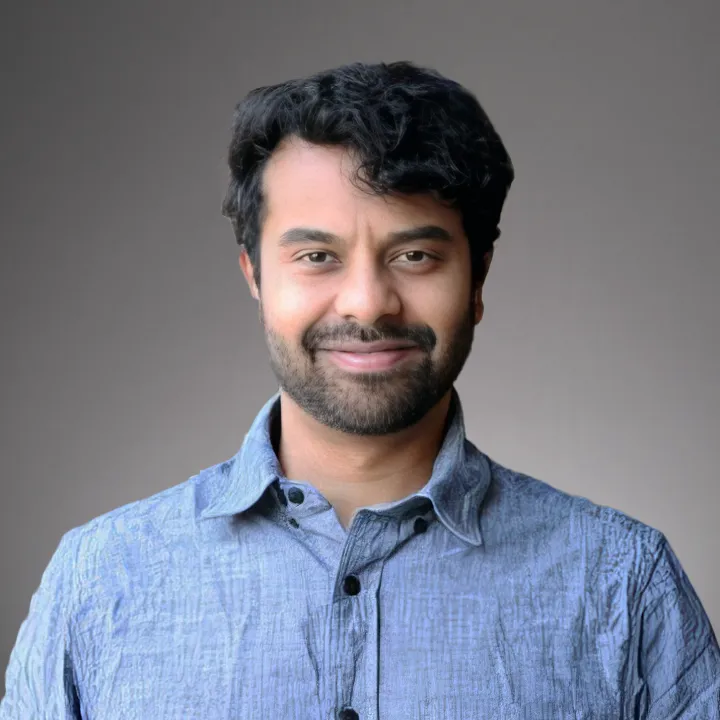
Abhishek Bhattacharjee is the A. Bartlett Giamatti Professor of Computer Science at Yale University. His work spans computer architecture, operating systems, and brain-computer interfaces (BCIs), with groundbreaking contributions to memory address translation and neurotechnology. He leads a research group developing full-stack systems like HALO and SCALO for brain-machine integration. Education : Ph.D., Princeton University; B.Eng., McGill University His research focuses on: Memory address translation optimizations Brain-computer interface architectures Virtual memory systems Heterogeneous memory management Low-power accelerators for neural interfaces Recent publications emphasize scalable memory systems for BCIs, TLB behavior analysis, and fiduciary AI integration with neurotechnology. His work has been adopted by AMD, NVIDIA, RISC-V, and Linux kernel. Scientific Awards & Honors : ACM SIGARCH Maurice Wilkes Award, 2023 Best Paper Award, ISCA '23 Distinguished Paper Award, ASPLOS '23 NSF CAREER Award, 2013 Yale Dylan Hixon Prize for Teaching, 2025 He has advised students now at NVIDIA, AMD, and Huawei, and teaches courses like Computer Architecture and Systems Programming . His group collaborates with Princeton Neuroscience Institute and industry leaders in AI/memory systems.
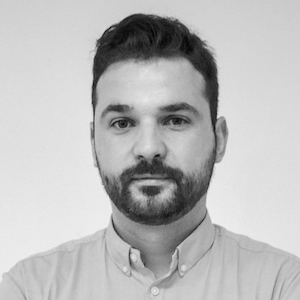
Yves Weinand serves as Full Professor of Timber Construction at École Polytechnique Fédérale de Lausanne (EPFL), where he directs the transdisciplinary Wood Construction Laboratory (IBOIS) within the School of Architecture, Civil and Environmental Engineering. His appointment spans the Institute of Civil and Environmental Engineering (IIC) and teaching units in Architecture (SAR) and Civil Engineering (SGC), reflecting his interdisciplinary focus at the intersection of structural engineering and architectural design. His research expertise spans computational geometry processing, robotic timber construction, and experimental joinery techniques, with particular emphasis on digital fabrication workflows for complex wood structures. Weinand's work integrates augmented reality systems with traditional craftsmanship and develops novel computational methods for timber plate structures and through-tenon connections. Analysis of his recent publications reveals a strong trend toward hybrid digital-physical construction workflows, with increasing focus on AI-assisted fabrication, real-time quality control, and sustainable material utilization. His research bridges fundamental structural mechanics with practical building applications through technology transfer projects. Lignum Prize - Western Region Mention (2018) French Academy of Architecture silver medal (2017) Grand Prix d'architecture de Wallonie for Vidy theater (2019) Wood Distinction 2019 for Vaud Parliament building (2019) Medal for Research and Technique from French Academy of Architecture (2017) Weinand supervises numerous doctoral candidates while teaching ten courses across bachelor to postgraduate levels, including computational architecture and digital timber construction. His laboratory collaborates with industry partners through technology transfer contracts for projects like the Annen Vault, Rossinière Centre, and Brussels Sportstower, implementing EPFL-developed computational methods in real-world construction. The IBOIS laboratory operates as a transdisciplinary research hub connecting architectural design exploration with structural engineering innovation, maintaining active partnerships with timber industry stakeholders and architectural practices across Europe.
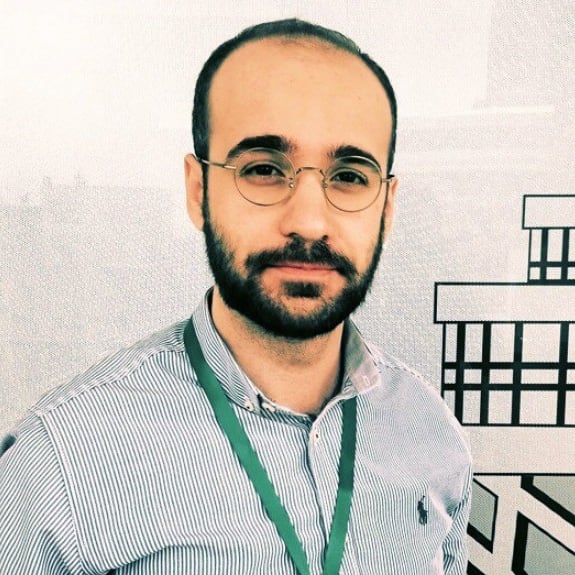
Timo Poranen is a Lecturer at Tampere University's Faculty of Information Technology and Communication Sciences in the Department of Computing Sciences. He focuses on software engineering practices, artificial intelligence applications, and educational technology development. His research spans: AI integration in software development workflows Accessibility and usability in digital platforms Requirements engineering methodologies Collaborative software project management Algorithmic graph theory DevOps and cloud-native systems Recent work examines AI-driven assessment tools, accessibility testing frameworks, and networked educational practices in Finland. He contributes to capstone project guidance and teaches software development fundamentals. Key trends in his 2023-2025 publications: AI-assisted coding patterns Accessibility evaluation metrics Service desk optimization Open-source project dynamics Cloud system monitoring
George Papadimitriou is an Assistant Professor in the Computer Engineering & Informatics Department at the University of Patras , Greece, hosted within the School of Engineering . His primary affiliation lies with the Computer Hardware and Architecture division, where he leads research and teaching activities focused on dependable, energy-efficient computer architectures. Education: PhD in Computer Science, Department of Informatics & Telecommunications, National and Kapodistrian University of Athens (2019) Post-doctoral researcher, Computer Architecture Lab, National and Kapodistrian University of Athens Research Interests: Dr Papadimitriou’s research lies at the intersection of computer architecture , energy efficiency , and microprocessor reliability . His work specifically targets: Robust and energy-efficient CPU/GPU/accelerator architectures Post-silicon validation techniques for catching elusive hardware bugs Silent data corruption detection and mitigation across the compute stack Characterization of voltage margins and power consumption in modern microprocessors Modeling and simulation of domain-specific accelerators for low-power, dependable operation More recently, his team has been extending these methodologies to RISC-V and neuromorphic photonic accelerators within large European consortia. Scientific Awards & Recognition: Eight HiPEAC Paper Awards for top-tier conference publications (MICRO, HPCA, ISCA) between 2017–2024 IEEE Transactions on Computers 2022 Best Paper Award for the article “Anatomy of On-Chip Memory Hardware Fault Effects Across the Layers” TTTC/ITC Gerald W. Gordon Student Award 2023 Research Funding & Projects: Dr Papadimitriou is principal investigator or key technical contributor in multiple Horizon Europe and industry-backed projects that collectively exceed €50 M in funding. Current leadership roles include: DARE (Digital Autonomy for RISC-V in Europe) NEUROPULS (Neuromorphic Energy-Efficient Secure Accelerators) REBECCA (Reconfigurable Heterogeneous Highly Parallel Processing Platform) Vitamin-V (Virtual Environment & Tool-boxing for Trustworthy RISC-V Cloud Services) Intel, IBM, and Thales bilateral research contracts on energy-efficient and resilient microarchitectures Laboratory & Team: He leads the Energy-Efficient and Dependable Architectures (EEDA) research group at University of Patras, operating laboratory facilities for silicon measurement, FPGA emulation, and full-system simulation (gem5, MARSS, custom tools). The team currently comprises 3 PhD candidates, 2 post-docs, and several MSc thesis students collaborating with European and US partners.
Luis Miguel Hernández Acosta serves as an Associate Professor in the Department of Telematics Engineering at the University of Las Palmas de Gran Canaria (ULPGC), affiliated with both the GIR IUMA: Information and Communications Systems research group and the IU of Applied Microelectronics. His academic work spans software engineering and telematics systems within the School of Engineering. His research interests focus on Software Engineering , Mobile Computing , and Computer Vision , with significant contributions to practical applications including web/mobile platforms for service management, computer vision for medical diagnostics, and communication systems. Current projects demonstrate strong industry alignment in restaurant management, transportation optimization, and telemedicine solutions. Analysis of recent publications reveals consistent expertise in full-stack development, real-time systems, and cross-platform frameworks, with increasing integration of machine learning techniques since 2022. Key thematic trends include Practical implementation of publish/subscribe architectures for real-time notifications Computer vision applications in medical diagnostics Optimization algorithms for transportation and service platforms Advising Activities: Supervised 28 bachelor/master theses (2021-2025) Specializes in guiding telecommunications and computer engineering students Projects span mobile development (65%), web platforms (25%), and AI applications (10%) Research Infrastructure: Works within the Department of Telematics Engineering's ecosystem, leveraging resources from both GIR IUMA and the Applied Microelectronics Institute for hardware-software integration projects.
Arif Ali Khan is an Associate Professor (Tenure Track) and Docent (Adjunct Professor) in the M3S Unit of Empirical Software Engineering at the University of Oulu, Finland. He holds a PhD in Software Engineering from City University of Hong Kong and has previously served at the University of Jyväskylä, Finland, and Nanjing University of Aeronautics and Astronautics, China. His expertise spans Quantum Software Engineering , DevOps , Microservices Architecture , and AI Ethics . Education: Bachelor of Science in Software Engineering, University of Science and Technology, Bannu, Pakistan MSc in Information Technology, Universiti Teknologi PETRONAS, Malaysia PhD in Software Engineering, City University of Hong Kong Research Interests: Khan focuses on advancing empirical software engineering practices in quantum computing, global software development, and ethical AI integration. Key areas include quantum software architecture, agile methodologies for quantum projects, and decision-making frameworks for DevOps and microservices systems. Projects: CLASSİ|Q⟩: Bridging Classical and Quantum Programming – Developing translation frameworks for hybrid systems SeQuSoS M3S – Securing quantum software stacks Labs/Teams: Member of the M3S Empirical Software Engineering Research Unit, focusing on evidence-based methodologies and industry collaboration.
Marko Bertogna is a Full Professor in the Department of Physical, Computer and Mathematical Sciences at the University of Modena and Reggio Emilia. His primary research focuses on real-time systems, embedded systems, autonomous driving, machine learning, and robotics. He leads the HiPeRT Lab and teaches courses such as Autonomous Driving Systems, Real-Time Embedded Systems, and Computer Architecture. His work spans interdisciplinary areas including: Autonomous vehicle control and perception Real-time scheduling algorithms for heterogeneous platforms IoT applications in agriculture and environmental monitoring Efficient deep learning models for embedded systems GPU and multi-core predictability Notable projects include the SPHERE architecture for cyber-physical systems, the F1/10 autonomous vehicle platform, and the BETTY dataset for full-stack autonomy. Recent articles highlight contributions to 6-DoF pose estimation for robotics, livestock waste management via IoT, and model-based control for autonomous racecars. He collaborates with industries on automotive-grade embedded systems and safety-critical applications.
Dr. Milosh Jovanovikj holds the role of Associate Professor at the Faculty of Computer Science and Engineering in Skopje, North Macedonia, and concurrently serves as a PostDoc Researcher at TU Wien in Vienna, Austria. He is also a Senior R&D Knowledge Graphs Engineer at OpenLink Software in London. His primary research focuses on Knowledge Graphs (KGs), including their lifecycle processes such as modeling, enrichment, and analytics-driven AI applications. He has contributed to over 10 international and 25 national research projects, authored 60+ publications, and co-authored 3 books. His expertise spans Data Engineering, Semantic Web technologies, Linked Data, and Applied AI. Significant contributions include developing frameworks like RDFGraphGen for RDF graph generation and PharmKE for pharmaceutical text analysis. He has led initiatives in geospatial semantic web standards (GeoSPARQL) and healthcare informatics, including predictive analytics for nephrology data. Education: PhD in Computer Science and Engineering His work bridges academia and industry, with projects like the 3DFed federation engine and Semantic Sky (a Gmail plugin). He has extensive experience in ontology development (e.g., SEOntology, VEO for CO2 emissions) and open data initiatives, including LinkedDrugs for global drug data consolidation. Active in dissemination, his articles span knowledge graph applications in music recommendation, finance sentiment analysis, and drug-disease relation discovery. He has collaborated on benchmarks like the GeoSPARQL Compliance Benchmark and Mighty Storage Challenge (MOCHA). Grants/Projects: HOBBIT, SAGE, 3DFed, LinkedDrugs He leads teams in advancing semantic web integration, cloud service platforms (Semantic Sky), and educational materials like Web Programming Basics . His labs and teams focus on AI-driven solutions for healthcare, geospatial analytics, and enterprise systems.
Aamir Akbar serves as an Assistant Professor in the Department of Computer Science & Information Systems at Abdul Wali Khan University Mardan (AWKUM), where he also co-directs both the AWKUM AI Lab and AWKUM Robotics initiatives while coordinating final year projects. His academic journey culminated in a PhD from Aston University, Birmingham, UK, with research focused on energy-efficient methods for hybrid mobile cloud computing. His educational background includes a PhD in Computer Science from Aston University (2015-2019, awarded February 2020), where his dissertation explored energy-efficient approaches for hybrid mobile cloud computing systems. Dr. Akbar's research spans multiple cutting-edge domains in computer science, with particular emphasis on Artificial Intelligence , Cloud and Fog Computing , Internet of Things , and Software Defined Networks . His multidisciplinary approach combines evolutionary computation, multi-objective optimization, and machine learning to develop resource-efficient intelligent systems. His work frequently addresses challenges in Cyber-Physical Systems, Mobile-Cloud Computing, and IoT/IoV applications, demonstrating strong practical relevance to real-world problems. Analysis of his recent publications (2021-2024) reveals a clear research trajectory toward increasingly sophisticated AI applications in networking and distributed systems. His work shows strong focus on reliability, energy efficiency, and security across multiple domains including medical IoT, smart cities, and industrial automation. The growing citation impact (612 total citations, h-index: 14) demonstrates increasing recognition of his contributions to these fields. Dr. Akbar maintains active presence in the research community with 19 total publications showing accelerating output in recent years (6 in 2021, 2 in 2022, 5 in 2023, and 2 in 2024). His Google Scholar profile reflects substantial impact with an h-index of 14 and i10-index of 16. As an educator and researcher, Dr. Akbar brings both academic rigor and industry experience to his role. His technical expertise spans the full stack of modern computing systems, from frontend development (HTML, CSS, Angular, React) through backend frameworks (Flask, Django, Node.js) to database systems (MySQL, PostgreSQL, MongoDB) and cloud infrastructure (AWS, Kubernetes, Docker). This comprehensive skill set enables him to bridge theoretical research with practical implementation. He leads research initiatives through the AWKUM AI Lab and AWKUM Robotics, providing students with opportunities to engage in cutting-edge projects that combine theoretical foundations with real-world applications. His GitHub activity shows ongoing engagement with AI and systems development projects, including repositories focused on neural networks, Python programming, and network simulation.
Stefan Amstutz serves as a Senior Researcher at the iHomeLab within the Institute of Electrical Engineering at Lucerne University of Applied Sciences and Arts (HSLU), School of Engineering and Architecture. His work integrates artificial intelligence with building automation, rehabilitation systems, and home care technologies through innovative digital twin platforms and explainable AI frameworks. His academic credentials include: Doctorat d'Automatique from Université de Haute-Alsace Master of Science in Engineering (MSE) specializing in Mechatronics and Automation from University of Applied Sciences Northwestern Switzerland Bachelor of Science in System Engineering specializing in Industrial Automation from University of Applied Sciences Northwestern Switzerland CAS in DevOps Leadership and Agile Methods from HSLU CAS in Cloud and Platform Manager from HSLU Dr. Amstutz's research centers on two interconnected pillars: Digital Twin Architectures for intelligent building systems, utilizing hybrid modeling and time series forecasting to enable real-time optimization of energy and operational performance; and Trustworthy AI Systems incorporating human-in-the-loop mechanisms for explainable decision-making in critical applications like VR telerehabilitation and home care monitoring. His methodology emphasizes user-centered design and safety-critical validation. Analysis of his publication trajectory reveals a strategic evolution from foundational control engineering in photovoltaic manufacturing (2014-2018) toward cutting-edge AI applications in building automation and healthcare (2019-2025). Recent work demonstrates increasing focus on explainability, anomaly detection, and human-AI collaboration, particularly in the RecoveryFun and CleverGuard projects. As lead researcher for HSLU's strategic initiatives including AI in Buildings (open-source digital twin platform), RecoveryFun (VR telerehabilitation decision support), and CleverGuard (long-term home care anomaly detection), he secures project funding through applied research grants targeting real-world implementation. His professional skills integrate Agile methodology, DevOps transformation, and cloud-native architecture with core competencies in reinforcement learning and statistical modeling. Dr. Amstutz operates within the iHomeLab research ecosystem, which specializes in intelligent home technologies through interdisciplinary collaboration between electrical engineering, computer science, and healthcare domains. The lab's infrastructure supports full-stack development of AI-powered services for real-time simulation, prediction, and optimization in building environments.
Jie Lin is a Lecturer in the Department of Computer Science at the University of Central Florida. He holds a Ph.D. in Computer Science from UCF, with research emphasizing security, privacy, vulnerability analysis, and applications of large language models and deep learning. His scholarly work focuses on empirical evaluations to enhance AI-driven security systems. Lin's educational journey includes: Ph.D. in Computer Science, University of Central Florida M.S. in Computer Science, Emory University B.S. in Computer Science and Mathematics, Ursinus College His research interests span computer security, privacy, vulnerability analysis, and the application of artificial intelligence, particularly large language models and deep learning, to security challenges. Lin investigates the robustness of LLMs, vulnerability detection in source code, context window optimization, and hallucination mitigation. His work aims to develop practical strategies for more secure AI systems through rigorous empirical evaluation. Lin's recent publications (2023-2025) reveal a strong focus on leveraging large language models for vulnerability detection. His studies examine how context window variations affect detection performance and compare different LLMs in security tasks. This research trajectory underscores the potential of AI to transform cybersecurity practices. Prior to his current role, Lin worked as a full-stack software developer and manager in business operations, including merchandise trading and real estate. As a graduate teaching assistant at UCF, he employed hands-on teaching methods to create engaging learning environments that foster critical thinking and problem-solving skills in computer science and cybersecurity.
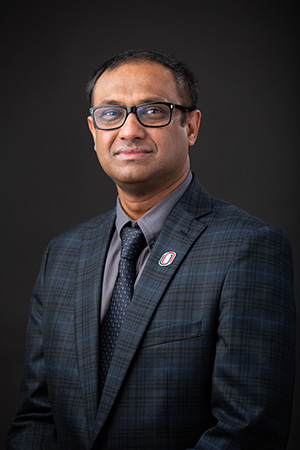
Dr. Sachin Pawaskar is Senior Research Technology Fellow in Information Systems and Quantitative Analysis at UNO's College of Information Science & Technology. With 25+ years of industry experience, his work spans big data analytics, IoT, and enterprise systems, with applications in community-focused projects. Education includes: PhD in Information Technology, University of Nebraska Omaha (2013) MBA, University of Nebraska Omaha (2004) MS in Computer Science, University of Nebraska Omaha (2001) Research explores sustainable computing, energy awareness in IT systems, and forensic anthropology data applications. Teaching interests include data storytelling, full-stack development, and emerging technologies. Recipient of UNO's Faculty Service Learning Award (2020) for community-engaged projects including Memorial Matrix, Commingled Remains Analytics, and public safety data systems. Leads technology initiatives with community partners including Sarpy County Sheriff's Office and Visiting Nurses Association.
Dan Flood is a Lecturer in Cloud Computing at CU Coventry (Full-Time) and a part-time PhD Student at the Centre for Data Science. He is a Fellow of the Higher Education Academy (FHEA) and holds an MA in Digital Media and Culture from the University of Warwick (2019), a BSc in Information Technology from Coventry University (2015), and is pursuing a Doctorate in Data Science and Higher Education (2021–2026). His research focuses on leveraging machine learning to enhance student engagement in programming education through analysis of learning analytics platforms like Codio. He also leads AWS-integrated curriculum development. Education Background: MA Digital Media and Culture (University of Warwick, 2019) BSc Information Technology (Coventry University, 2015) PhD in progress: Measuring Student Engagement in Programming Teaching (Coventry University) Postgraduate Certificate in Academic Practice (Coventry University) Research Interests: Machine learning applications in education Synthetic data generation for imbalanced datasets Cloud computing infrastructure (AWS, serverless architectures) Curriculum design for student engagement Publications: 2025: Focuses on predictive models for programming student performance 2022: Explores AWS integration in university teaching Awards: FHEA (Fellow of the Higher Education Academy) Advising & Grants: Supervised by Dr. Matthew England (Director), Dr. David Croft, and Dr. Beate Grawemeyer. Active in educational technology conferences including AWS Summit 2022 and BETT 2022.
Dr Martin O'Connor is a Lecturer in the School of Computer Science at Technological University Dublin, specializing in data structures and algorithms for semi-structured systems. He holds a PhD (2013), MSc, and BSc in Computer Science from Dublin City University. His research focuses on: Smart Cities infrastructure Advanced Data Analytics methodologies Cross-domain Data Integration frameworks with foundational work in encoding schemes and algorithmic optimization for distributed data environments. Dr O'Connor teaches core computing disciplines including Cloud Services architecture, Distributed Systems implementation, DevSecOps pipelines, Operating Systems theory, and full-stack Software Development practices. His pedagogical approach emphasizes practical application of theoretical concepts in modern computing ecosystems.
Masoud Karimi Fatemi is a Lecturer at the Department of Mathematics & Computing, Mount Royal University. He holds two Master's degrees: M.Sc. in Software Engineering (2021, University of Calgary) and M.Sc. in Computer Architecture (2017, Sharif University of Technology, Tehran, Iran). His teaching focuses on Full Stack Web Development, Data Structures and Algorithms, and Cloud Computing. He concurrently serves as a Senior Technical Architect at XGen Ai, overseeing AI, Big Data, and Site Reliability Engineering departments. Education: M.Sc. Software Engineering, University of Calgary, 2021 M.Sc. Computer Architecture, Sharif University of Technology, 2017 Professional Experience: As a Senior Technical Architect at XGen Ai, he leads technical teams in AI, Big Data, and SRE. His academic contributions include course design and instruction in software engineering and cloud technologies at Mount Royal University and Bow Valley College.