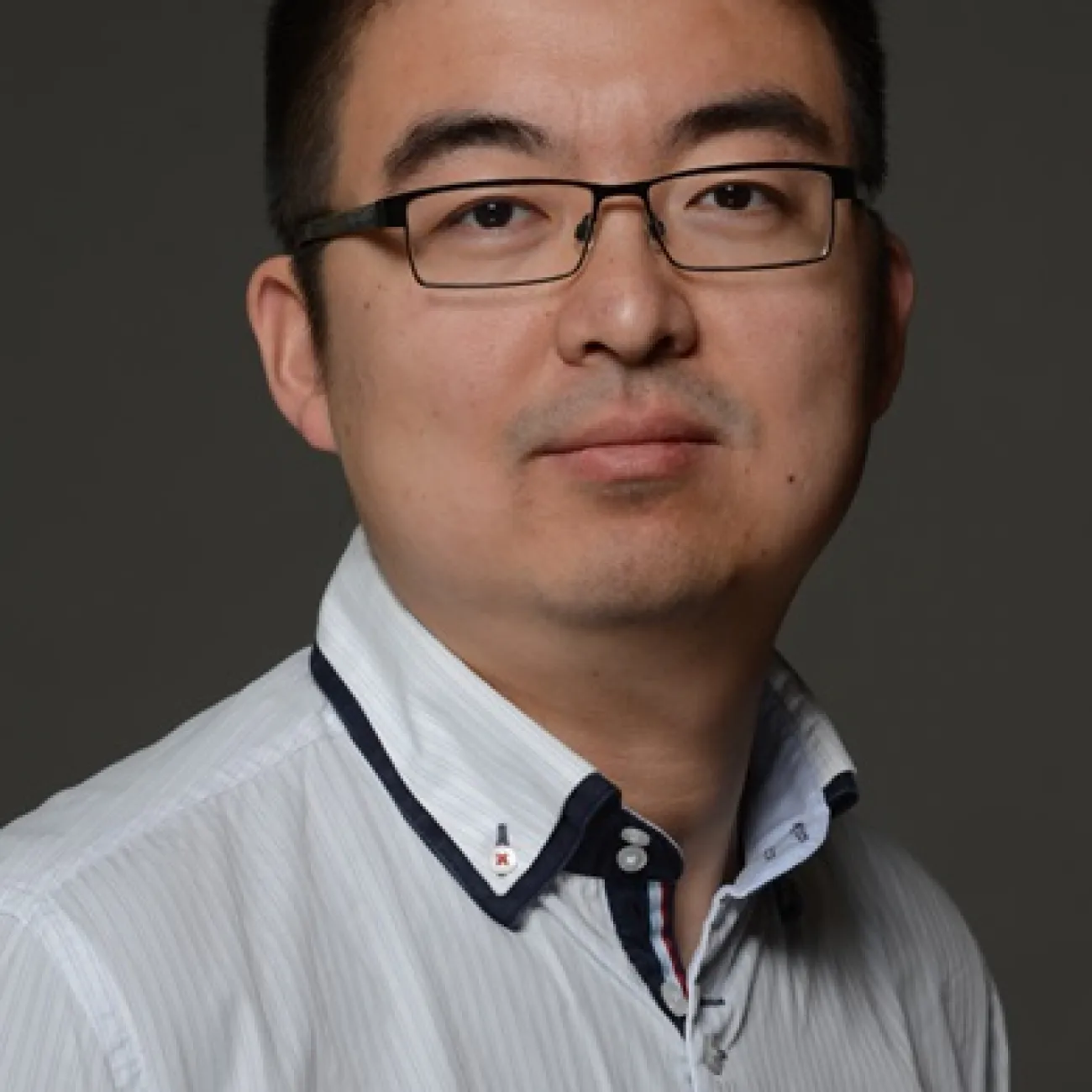
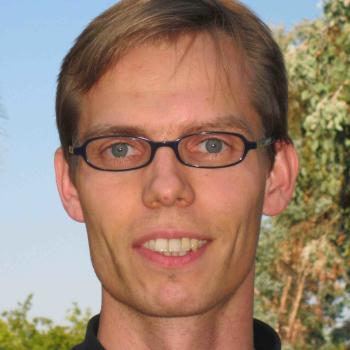
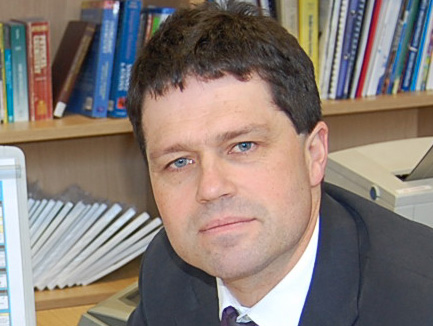
Dr. John G. Hayes is a Senior Lecturer at University College Cork (UCC) in the Department of Electrical & Electronic Engineering . He holds a Ph.D. from UCC (1998), an M.S.E.E. from the University of Minnesota (1989), an M.B.A. from California Lutheran University (1993), and a B.E. from UCC (1986). His academic career began at UCC in 2000, and he directs the Power Electronics Research Laboratory (PERL) , focusing on industrial collaborations with companies like Analog Devices and General Motors. Research Interests : Power electronics, magnetic components, electric vehicles, renewable energy systems, smart grids, and energy storage. Notable Work : Joint author of Electric Powertrain: Energy Systems, Power Electronics and Drives for Electric, Hybrid and Fuel Cell Vehicles (Wiley, 2018) and its Chinese edition (2021). Scientific Awards : 2011 IEEE William M. Portnoy Award for Best Paper/Presentation at IEEE ECCE. Advising : Supervised 10+ Ph.D. students across powertrain modeling, magnetic materials, and converter control. Current advisee: Conor Healy (Doctoral Degree). Labs : Leads PERL, which develops high-power converters for automotive and renewable energy applications, partnering with industry leaders like SMA Magnetics and United Technologies.
Professor Jun Huang is a faculty member in the School of Chemical and Biomolecular Engineering at the University of Sydney, where he holds the rank of Professor and is Director of the Laboratory for Catalysis Engineering. He is also a Domain Leader for Materials at the nanoscale at Sydney Nano Institute and a member of several interdisciplinary institutes, including the China Studies Centre and Sydney Institute of Agriculture. His research focuses on catalysis engineering, with an emphasis on developing sustainable processes for renewable fuels, pollutant treatment, and greenhouse gas mitigation. Huang has held prestigious awards such as the Australia Research Council Future Fellowship (2022) and the Sydney Accelerator Fellowship (2018). Education: Huang earned his PhD from the University of Stuttgart (2008) and completed postdoctoral research at Georgia Institute of Technology and ETH Zurich. He joined the University of Sydney in 2010 as a Lecturer, advancing to Senior Lecturer, Associate Professor, and Professor. Research Interests: Huang's work centers on catalyst design for green chemical processes, including biomass conversion to biofuels, wastewater treatment, and CO2 utilization. He emphasizes sustainable manufacturing and environmental impact reduction through innovative catalytic systems. Current Projects: These include catalytic transformation of hydrocarbons/CO2/biomass, nano-catalysts for renewable energy, and advanced NMR spectroscopy for catalysis analysis. Collaborative projects involve anti-cancer therapies and drug pharmacology studies. Awards: Over 15 awards, including the 2021 ACS Sustainable Chemistry & Engineering Lectureship and 2017 Vice-Chancellor’s Research Excellence Award. Teaching: Huang instructs courses such as CHNG2801 (Conservation Processes), CHNG3802 (Industrial Systems), and advanced chemical engineering topics. He supervises PhD/Master students in catalysis and sustainable engineering. Labs/Teams: Leads the Catalysis Engineering Lab and collaborates with Sydney Nano Institute on nanomaterials research.
Dr. Xi Yu is a Lecturer in Chemical Engineering at the University of Southampton, affiliated with the Faculty of Engineering and the Environment. He holds a Bachelor's from Tianjin University and a Ph.D. from the University of Sheffield. His research focuses on low carbon fuels, granulation techniques, and computational fluid dynamics. He has supervised PhD students such as Jerin Jacob and is currently accepting new PhD applicants in these areas. Dr. Yu's educational background includes degrees in Chemical Engineering and prior academic roles at Aston University and the Energy and Bioproducts Research Institute (EBRI). His work spans bioenergy systems, particle technology, and multi-physics modeling. Key research projects include advancements in biomass gasification, biofuel production, and sustainable energy systems. His publications emphasize computational modeling, fluid dynamics, and biomass utilization. Recent articles explore topics like absorption chiller systems, fluidization validation, and bio-oil aging strategies. He contributes to teaching modules such as CHEG3000 and CHEG3004, reflecting his commitment to both research and education.
Professor Ian Metcalfe is a distinguished academic at Newcastle University, specializing in advanced materials for energy applications, particularly in the areas of membrane technology, chemical looping processes, and catalysis. His research spans multiple interdisciplinary fields with significant implications for carbon capture, hydrogen production, and sustainable energy systems. Professor Metcalfe's research primarily focuses on membrane technology for gas separation, particularly CO 2 capture and hydrogen production . His work extensively investigates chemical looping processes using various oxygen carrier materials, particularly perovskite-based materials . A significant portion of his recent research explores nanoparticle exsolution for creating highly stable and active catalysts. His research group has made notable contributions to understanding the thermodynamics of non-stoichiometric materials and developing novel membrane configurations for enhanced gas separation. Analysis of Professor Metcalfe's recent publications (2023-2025) reveals a strong focus on CO 2 separation technologies , particularly using molten-carbonate membranes with innovative support structures. His work on exsolution has expanded to include room-temperature processes using plasma techniques and applications in methane reforming. The research shows increasing emphasis on direct air capture technologies and ammonia synthesis via chemical looping, indicating strategic expansion into emerging energy storage and carbon utilization areas. Professor Metcalfe maintains extensive collaborations with researchers including Dr. Wenting Hu, Dr. Evangelos Papaioannou, Dr. Dragos Neagu, and Dr. Greg Mutch. His research has significant implications for decarbonization technologies and sustainable energy systems, particularly in hard-to-abate sectors where efficient CO 2 separation and clean hydrogen production are critical.
Navid Bayati is an Associate Professor at the University of Southern Denmark, affiliated with the Institute of Mechanical and Electrical Engineering and the Centre for Industrial Electronics. He leads the Control and Protection of Smart Grids (CAP-SG) group and focuses on renewable/hybrid power systems, microgrid protection, and grid code compliance. Education: Ph.D. in Power Systems & Microgrid Protection (2020, Aalborg University); M.Sc. in Power Systems (2017, Amirkabir University of Technology) His research spans renewable energy integration , transient analysis , grid interconnection , and digital twin applications . Recent work includes machine learning for carbon emission prediction, fault localization in DC microgrids, and supercapacitor resilience in hybrid systems. Collaborations include projects like IEA Wind Task 50 and RePoSys , addressing grid renovation, life cycle assessment, and digital twin resilience. His teaching portfolio covers power electronics , energy management , and microgrid control .
Dr. Ahmad Baroutaji is a prominent researcher at Aston University's School of Engineering and Technology, specializing in Additive Manufacturing, Metamaterials, and Energy Systems. His work focuses on advancing materials science for biomedical, acoustic, and energy applications. He holds a strong academic affiliation within the College of Engineering and Physical Sciences. Research Interests: Optimizing 3D-printed metamaterials for energy absorption and crashworthiness Development of advanced materials for fuel cells and hydrogen technologies Acoustic metamaterials for noise reduction in buildings Biomaterials for orthopedic and tissue engineering applications Notable contributions include pioneering studies on cobalt-chromium-molybdenum meta-scaffolds for bone reconstruction and acoustic panels using titanium perforated structures. His 2024 review on PEM hydrogen technologies has been widely cited. Collaborations span global institutions, emphasizing practical material innovations. Grants and Advising: While specific grants are not detailed, his extensive publication record indicates sustained research funding. No formal advisee list is provided, but co-authorships suggest collaborative mentorship. Labs/Teams: Engaged in multidisciplinary teams focusing on additive manufacturing applications, though specific lab names are not mentioned in the text.
Adjunct Professor Robert Speight holds a position at Queensland University of Technology (QUT) within the Faculty of Science, School of Biology & Environmental Science. His primary role is Director of CSIRO's Advanced Engineering Biology Future Science Platform. He focuses on microbial biotechnology, enzyme engineering, and industrial biotechnology applications. His research spans protein engineering, microbial production systems, and biocatalyst development for industrial processes. Education: BSc (Chemistry) from Imperial College London (1996) PhD in Biochemistry from the University of Cambridge (2000) Research Interests: Enzyme optimization for industrial applications Microbial protein production systems Biocatalytic processes for chemical manufacturing Biorefinery development and techno-economic assessments Synthetic biology for future foods and sustainable bioproduction Grants & Projects: Lead investigator for the $6.5M Queensland Sustainable Aviation Fuel Initiative ARC Centre of Excellence in Synthetic Biology (2020–present) Biorefineries for Profit Phase 2 (RnD4Profit 2019) Collaborations: Works with industry partners and academic groups, including the ARC Centre of Excellence in Synthetic Biology and the Centre for Agriculture and Bioeconomy at QUT. Affiliations: President of Synthetic Biology Australasia CSIRO Director of Advanced Engineering Biology Future Science Platform Labs/Teams: Maintains collaborations in enzyme engineering and microbial systems through QUT’s adjunct role and CSIRO leadership.
Dr. Hung Yew Mun is an Associate Professor and Interim Head of the Mechanical Engineering program at Monash University Malaysia’s Malaysia School of Engineering. His expertise spans heat transfer, thermodynamics, and fluid dynamics, with a focus on micro-scale phenomena, phase-change heat transfer, and graphene-based materials. He teaches courses including MEC3454/MEC4408 (Thermodynamics and Heat Transfer) and MEC4416 (Momentum, Energy & Mass Transport). Dr. Hung’s research addresses advanced cooling solutions for electronics, energy storage, and sustainable materials. Education: PhD in Mechanical Engineering from University of Multimedia, Malaysia (2010). Research Interests: Micro-scale heat transfer, phase-change mechanisms, graphene nanostructures, and applications in thermal management. His work contributes to UN SDG goals related to affordable and clean energy (SDG7) and industry innovation (SDG9). Recent Projects: Includes studies on MXene-biochar composites for energy storage, graphene-enhanced devices for electronics cooling, and multiscale modeling of postharvest fruit water transport. He has led/co-investigated 12 projects since 2013, emphasizing interdisciplinary collaboration. Publications: Over 100 peer-reviewed articles, with recent focus on graphene-mediated heat transfer enhancement, plasma-activated cooling, and nanofluid applications. His work addresses both fundamental mechanisms and industrial applications. Labs/Teams: Active in thermal engineering and nanomaterials research groups, collaborating with institutions globally on sustainable energy and advanced materials.
Miguel Ángel Sotelo Vázquez is a full Professor at the University of Alcalá, leading the INVETT Research Group (Intelligent Vehicles and Traffic Technologies). He holds the Department of Automatic Control and specializes in autonomous systems, particularly in path planning, sensor fusion, and human-vehicle interaction. His research integrates machine learning, robotics, and control theory to address challenges in intelligent transportation systems. He earned his Ph.D. in 2001 with a thesis on autonomous vehicle navigation in partially known environments. His work emphasizes real-world deployment, explainable AI, and safety-critical systems. Recent projects focus on lane change prediction, pedestrian behavior modeling, and cybersecurity for autonomous systems. Key contributions include neuro-symbolic frameworks for decision-making, real-time multi-physics field reconstruction, and cross-cultural studies of pedestrian interactions. He collaborates internationally on urban mobility resilience and hydrogen refueling infrastructure. Research Highlights : Development of knowledge graph-based prediction architectures Experimental validation of human-vehicle interaction in VR environments Creation of the SCOUT trajectory prediction framework
Anker Degn Jensen is a Professor in the Department of Chemical and Biochemical Engineering at the Technical University of Denmark (DTU), where he is affiliated with the CHEC Research Centre. His research spans chemical reaction engineering, catalysis, and particle technology with applications in energy and sustainability. His research interests include chemical reaction engineering , catalysis , combustion , gasification of solid fuels , flue gas cleaning (especially NOx and Hg removal), production of liquid fuels , and fluidized bed processes for coating and agglomeration in white biotechnology. His work significantly contributes to UN Sustainable Development Goals related to clean energy and climate action. The recent publications highlight a strong trend in bio-oil upgrading , ammonia synthesis , plasma-assisted methane conversion , and adsorption modeling . These works reflect a deep engagement with sustainable fuel production, catalytic process optimization, and fundamental surface reaction mechanisms. Conversion of Furfural as a Bio-Oil Model Compound An Adsorption Isotherm That Includes Interactions Plasma-Assisted Non-Oxidative Coupling of Methane Optimisation of a Haber-Bosch Synthesis Loop Production of Phenolic Compounds from Argan Shell Waste Anker Degn Jensen is actively supervising multiple PhD students and leading research projects in hydrogen production, CO2 and H2O electrochemical reduction, bio-oil hydrotreating, and catalytic upgrading of biomass. He is involved in over 100 projects, including active grants on Conversion of hydrocarbons to hydrogen , Modeling electrochemical CO2 reduction , and Catalytic upgrading of pyrolysis oil . He is associated with the CHEC Research Centre at DTU, a hub for chemical engineering and catalysis research. His team collaborates on advanced reactor designs and catalytic processes for renewable fuels and chemicals.
Matthias Ihme is a Professor in the Department of Mechanical Engineering and Photon Science Directorate at Stanford University. His research focuses on large-eddy simulation (LES) of turbulent reacting flows, aeroacoustics, combustion-generated noise, numerical methods, and high-order schemes. He holds a Ph.D. from Stanford University (2008), an M.Sc. in Computational Engineering from the University of Erlangen (Germany, 2002), and a Dipl.-Ing. in Mechanical Engineering from Munich University of Applied Sciences (Germany, 2000). His work bridges computational fluid dynamics, combustion science, and photon science, with notable contributions to supercritical fluid dynamics, machine learning integration in fluid simulations, and high-fidelity atmospheric transport modeling. Recent research emphasizes ultrafast cluster dynamics, shock-induced interface behavior, and stochastic ignition mechanisms in advanced fuel systems. Publications highlight interdisciplinary advancements, including physics-informed ML frameworks for reacting flows and experimental studies using X-ray photon correlation spectroscopy. His projects often involve high-performance computing and collaboration with national labs like SLAC.
Professor Matthew Jonathan Rosseinsky holds the Chair of Inorganic Chemistry at the University of Liverpool, a position he has occupied since October 1999. His career includes significant appointments at the University of Oxford (1992-1999) and Bell Laboratories in New Jersey (1990-1992), following his DPhil at Merton College, Oxford. As a Fellow of the Royal Society and recipient of numerous prestigious awards, Professor Rosseinsky maintains an active research program and leadership roles in the international chemistry community. Professor Rosseinsky's educational background includes a First Class Honours degree in Chemistry with Quantum Chemistry from the University of Oxford (1987) and a DPhil in "Physical Properties of Superconducting Oxides and Radical Cation Salts" completed in 1990 under Professor P. Day FRS. His research focuses on the synthesis of new materials with applications in energy storage and generation, communications, separation, and catalysis. The Rosseinsky Group employs a broad range of synthesis and characterization techniques, including neutron and synchrotron X-ray diffraction, combined with computational methods in collaboration with Dr. George Darling. Current research areas include Dynapore, CO2 fuels, SOLBAT, and CATMAT projects that target specific material challenges. Professor Rosseinsky's publication record is exceptional, with 304 papers including 11 in Nature, 6 in Science, and 3 in Nature Materials, accumulating over 15,000 citations and an h-index of 56 as of 2012. His work demonstrates consistent excellence across materials chemistry, with particular emphasis on porous frameworks, electronic materials, and solid-state chemistry. Among his numerous accolades are the Harrison Memorial Prize (1991), Corday-Morgan Medal (2000), Royal Society Wolfson Research Merit Award (2002), De Gennes Prize (2009), and the prestigious Hughes Medal from the Royal Society (2011). He also holds an ERC Advanced Investigator Grant and has delivered distinguished lectures worldwide. Professor Rosseinsky has served in numerous editorial and advisory capacities, including as Associate Editor for Chemical Sciences, membership on the Royal Society Conference and Travel Grant Committee since 2007, and as a member of the International Advisory Board for the Max Planck Institut for Solid State Research since 2011. His professional activities extend to international review committees for research institutions in France, South Korea, and Saudi Arabia. The Rosseinsky Group operates within the Department of Chemistry at the University of Liverpool, collaborating extensively with researchers including Dr. John Claridge, Professor Andrew Cooper, and Professor Paul Chalker. The group maintains strong international partnerships and utilizes advanced facilities for materials synthesis and characterization to drive innovation in functional materials development.
Professor Brian Surgenor is a faculty member at Queen's University's Department of Mechanical and Materials Engineering, part of the Smith Engineering faculty. He holds a B.Sc. (1977), M.Eng. (AECL/Whiteshell), and Ph.D. (1983) in Mechanical Engineering from Queen's University. His research focuses on machine vision systems for automation, autonomous vehicle navigation, and mechatronic system design education. He has held key administrative roles including Department Head (1993-2002), Associate Dean (2008-2013), and Vice-Dean (2013-2016). His work emphasizes interdisciplinary innovation, such as the Mitchell Hall design project and contributions to Ingenuity Labs. Education: B.Sc. Mechanical Engineering, Queen's University (1977) M.Eng. Engineering Physics, McMaster University (AECL/Whiteshell) Ph.D. Mechanical Engineering, Queen's University (1983) Research interests include: - Pneumatic servosystems - Intelligent algorithms for machine vision - Off-road autonomous vehicle systems - Mechatronics education methodologies - Hybrid powertrain systems for vehicles His recent publications (2017–2024) explore autonomous systems, machine vision applications, and fuel cell hybrid technologies. Notable trends include advancements in UAV-based infrastructure inspection, terrain-adaptive autonomous driving, and low-cost machine vision solutions for small part sorting. His work bridges theoretical control systems with practical industrial automation challenges. He has contributed to laboratory design for CDIO curricula and pioneered mechatronics education through problem-based learning. His administrative leadership has shaped Queen's engineering graduate programs and research infrastructure. Currently involved in Ingenuity Labs, fostering cross-disciplinary innovation.
Professor Mohan Lal Kolhe is a distinguished academic at the University of Agder , serving as a Full Professor in Smart Grid and Renewable Energy within the Faculty of Engineering and Science and the Department of Engineering Sciences . With over three decades of international academic experience, he has held positions at prestigious institutions including University College London, University of Dundee, and Hydrogen Research Institute in Canada. His career spans technical innovation, policy development (e.g., as a member of South Australia’s Renewable Energy Board), and extensive research leadership in sustainable energy systems. Research Leadership : Focus on Smart Grid integration, Electric Vehicles, Hydrogen Energy, Solar/Wind Systems, and Techno-Economic Energy Analysis. Global Recognition : Listed in the top 2% of scientists worldwide (2020-2023) by Stanford University, with 10 publications averaging 200+ citations. Recent publications emphasize advanced optimization techniques for renewable integration, EV charging infrastructure, hydrogen production, and power system stability. His work has secured competitive funding from entities like the Norwegian Research Council and EU programs. Awards and Expert Roles : Top 2% Global Scientist (Stanford, 2020-2023) Highly Cited Researcher (Top 10 publications, 200+ avg. citations) Expert evaluator for European Commission, Royal Society London, EPSRC, and Cyprus Research Foundation He actively contributes to international conferences as keynote speaker and editorial board member, with leadership roles in research groups like Autonomous and Cyber-Physical Systems and Energy Systems .
Maurizio Collu is a Professor in Offshore Renewable Energy Engineering at the Department of Naval Architecture, Ocean and Marine Engineering, Faculty of Engineering, University of Strathclyde, where he has been a faculty member since August 2018. He is actively leading high-impact research in offshore renewable energy systems and holds leadership roles in international committees and editorial boards. His research focuses on the applied mechanics and multidisciplinary modeling of dynamics for offshore renewable energy systems. Key areas include the analysis and design of floating offshore wind turbines and multi-purpose offshore platforms. His work integrates hydrodynamics, structural mechanics, and control systems to develop advanced aero-hydro-servo-elastic coupled models. He is particularly known for pioneering research in floating wind-hydrogen integration and AI-driven offshore maintenance. The recent publications highlight a strong trend toward integrated offshore energy systems, with increasing focus on hydrogen production, fatigue resilience under multiple sea states, and optimization of spar and semisubmersible floating platforms. His work leverages high-performance computing and data-driven methods to improve design and operational feasibility. Calder Prize (2011) Maurizio Collu has directly managed approximately £4.5 million in public research funding across projects totaling £28.5 million, funded by EPSRC, NERC, Innovate UK, ORE Catapult, EU H2020, and others. He is the Principal Investigator or Co-Investigator in major projects such as Ocean RE-Fuel (floating wind-to-hydrogen), The Blue Growth Farm (multi-functional offshore platforms), INNO-MPP (UK-China collaboration), and HOME-Offshore (AI for wind farm maintenance). He actively supervises PhD and postgraduate researchers and collaborates with industry partners ranging from startups to multinational energy firms. He is involved in key research teams and labs focused on offshore renewable energy, including the research group at the University of Strathclyde's Department of Naval Architecture, Ocean and Marine Engineering. He also contributes to international consortia such as the ITTC Ocean Renewable Energy Committee and serves as an advisor to SINTEF Ocean. His work is part of a broader network advancing sustainable offshore energy solutions aligned with UN Sustainable Development Goals.