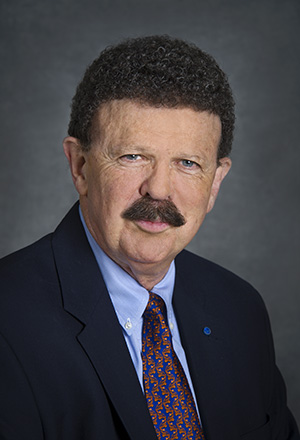
Timothy Abram is a Professor of Nuclear Fuel Technology at the University of Manchester, holding the Westinghouse Chair since 2008. He leads the U-Battery HTGR project and serves as Visiting Senior Research Fellow at NNL. His expertise spans nuclear fuels (MOX, ATF, TRISO) and reactor systems (gas-cooled, VHTR), with roles in IAEA, UK Government advisory boards, and the UK Nuclear Regulator’s committee. He directs the Rolls-Royce University Technology Centre for Nuclear Science and Engineering. Education: BSc and PhD (details unspecified). Research focuses on advanced nuclear fuels, thermal conductivity, and sustainable energy solutions, contributing to UN SDGs. Projects include molten salt reactor research (Radiochemical Facilities, DAWNMANTLE) and waste minimization strategies. Over 15 EU projects and 72 research outputs demonstrate his global impact. Awards: Not explicitly listed. Collaborations include international networks in nuclear innovation and material science. Advising roles include external examiner for Royal Navy and Cambridge MPhil programs.
Robert O. Ritchie is the H. T. & Jessie Chua Distinguished Professor of Engineering at the University of California, Berkeley, where he holds dual appointments as Professor of Materials Science & Engineering and Professor of Mechanical Engineering. He is also a Faculty Senior Scientist at Lawrence Berkeley National Laboratory. His distinguished career spans over four decades with significant contributions to the field of materials science and engineering. Professor Ritchie received his B.A. in Physics & Metallurgy (1969), M.A. in Materials Science (1973), Ph.D. in Materials Science (1973), and Sc.D. in Materials Science (1990), all from Cambridge University, UK. His research focuses on the mechanical behavior of advanced materials, with particular emphasis on fracture mechanics, fatigue properties, and damage tolerance. Professor Ritchie's work spans multiple domains including metallic glasses, high-entropy alloys, biomaterials, and nature-inspired structural materials. His laboratory employs cutting-edge techniques such as in situ high-temperature computed tomography to study failure mechanisms in ceramic-matrix composites and nuclear graphite. His research has significant implications for aerospace, biomedical, and energy applications. Analysis of Professor Ritchie's recent publications reveals a strong focus on advanced structural materials, particularly metallic glasses and high-entropy alloys. His work combines experimental approaches with computational modeling to understand deformation mechanisms at multiple length scales. There is a clear trend toward bioinspired materials design, with several papers examining natural structures like fish scales, horn sheaths, and bone to develop new engineering materials with exceptional mechanical properties. Member, National Academy of Sciences (2025) Foreign Fellow, Academy of Athens, Greece (2024) Robert Henry Thurston Award (ASME) (2022) ASM Gold Medal (ASM Intl.) (2021) William D. Nix Medal, inaugural winner (TMS) (2020) Fellow (Foreign Member) of the Royal Society (FRS), London, UK (2017) Morris Cohen Award (TMS) (2017) Acta Materialia Gold Medal (2014) David Turnbull Award (MRS) (2013) A. Cemel Eringen Medal (Society of Engineering Science) (2010) Professor Ritchie has advised numerous graduate students and postdoctoral researchers throughout his career. His research has been supported by various funding agencies including the Department of Energy, National Science Foundation, and industry partners such as Rolls-Royce. He has served on numerous advisory boards including the Rolls-Royce Materials & Structures Advisory Board (2011-2019) and the Scientific Advisory Board of the Advanced Light Source at LBNL (2013 to date). Professor Ritchie leads the Ritchie Group at UC Berkeley, which maintains strong collaborations with Lawrence Berkeley National Laboratory. The laboratory employs state-of-the-art techniques including electron microscopy, x-ray tomography, and mechanical testing across multiple length and time scales. His team has developed innovative in situ characterization methods that have significantly advanced the understanding of material failure mechanisms under extreme conditions.
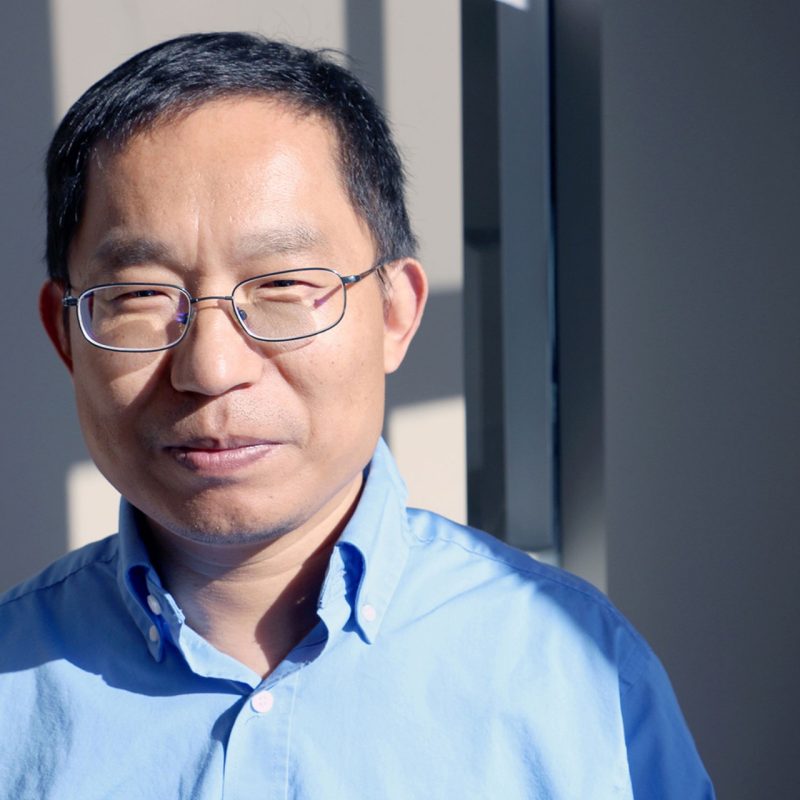
Jinsuo Zhang is a Professor in the Department of Mechanical Engineering at Virginia Tech, leading the Nuclear Materials and Fuel Cycle Center (NMFC). His research focuses on nuclear materials compatibility, fuel cycle technologies, and advanced reactor coolants. He joined Virginia Tech in 2017 to establish the NMFC, bringing expertise from Los Alamos National Laboratory in material degradation studies and pyroprocessing. His work addresses corrosion in molten salts, fuel-cladding interactions, and safeguards for nuclear systems. Education includes a Ph.D. in Engineering Mechanics from Zhejiang University (2001) and a B.S. in Engineering Mechanics (1997). He directs the NMFC, exploring nuclear fuel materials, coolant advancements, and fuel cycle innovations. Research highlights include molten salt reactor technologies, electrochemical separation methods, and corrosion mitigation strategies for extreme reactor environments.
Dr. Eleodor Nichita is an Associate Professor in the Department of Energy and Nuclear Engineering at the University of Ontario Institute of Technology (UOIT), part of the Faculty of Engineering and Applied Science. He holds a PhD in Nuclear Engineering from Georgia Institute of Technology (USA) and additional degrees from McMaster University and the University of Bucharest. His research focuses on neutron transport, reactor kinetics, advanced nuclear reactor design, and radionuclide production. He teaches a wide range of courses including reactor physics, neutron detectors, and medical imaging applications of radiation. Education: PhD in Nuclear Engineering, Georgia Institute of Technology, United States MS in Health Physics, Georgia Institute of Technology MS in Medical Physics, McMaster University BS in Engineering Physics, University of Bucharest, Romania Research interests emphasize mathematical modeling for nuclear systems, neutronic design of advanced reactors, and production of medical isotopes like Mo-99. His work addresses reactor safety, lattice homogenization techniques, and SCWR (supercritical water-cooled reactor) dynamics. Over 50 peer-reviewed papers and book chapters reflect his contributions to CANDU reactor analysis, PHWR fuel bundle design, and educational innovations in nuclear engineering. Advising and grants: While specific student names are not listed, his extensive teaching portfolio (including graduate-level reactor physics courses) indicates active mentoring. Research grants likely support his work on reactor kinetics and SCWR technology. Lab affiliations: His research is conducted through the Energy Systems and Nuclear Science Research Centre (ERC) at UOIT, focusing on numerical methods and experimental validation for reactor analysis.
Professor Dan Balint is the Head of the Mechanics of Materials Division in the Department of Mechanical Engineering at Imperial College London. He holds a Ph.D. in Engineering Sciences from Harvard University (2003), an S.M. in Applied Mathematics from Harvard (2001), and a B.S. in Engineering Mechanics from Michigan State University (1998). Prior to joining Imperial in 2006, he was a Research Associate at the Cambridge Centre for Micromechanics. His research spans theoretical and computational solid mechanics, with focus areas including: Micromechanics of crystalline materials (metals/ceramics) Dislocation-defect interactions and failure mechanisms Discrete dislocation plasticity methods Nuclear cladding materials and zirconium hydrides Thin film failure and metal forming processes Fracture mechanics and material size effects Recent publications (2022-2025) predominantly explore dislocation dynamics, zirconium alloy behavior under nuclear conditions, computational modeling of microstructural stresses, and machine learning applications in materials science. Common themes include thermomechanical degradation, crack initiation mechanisms, and multi-scale modeling approaches. Professor Balint serves as Associate Editor of the European Journal of Mechanics - A/Solids and consults for industrial partners including Rolls Royce, BP, and the US Air Force.
Koroush Shirvan is the Atlantic Richfield Career Development Professor in Energy Studies and a tenured faculty member in MIT's Department of Nuclear Science and Engineering within the School of Engineering. Joined in July 2017, he directs the Reactor Technology Course for Utility Executives and leads the Fission Materials in Extreme Environments Lab. His work bridges nuclear engineering with practical industrial applications for decarbonization. His research focuses on reactor design economics, materials testing under irradiation, nuclear safety, and boiling heat transfer. He accelerates innovations in nuclear fuels, small modular reactors, and space propulsion through multi-scale physics integration. Current projects include accident-tolerant fuels, high-temperature materials for microreactors, and AI-driven optimization of reactor systems. His approach combines experimental irradiation testing at MITR with advanced computational modeling. Recent publications reveal strong trends toward economic nuclear deployment via advanced fuel technologies and small modular reactors. AI/ML applications dominate optimization research, particularly for core reload and uncertainty quantification. Materials science under extreme conditions remains central, with growing emphasis on space nuclear applications and horizontal reactor configurations for cost reduction. His scientific recognition includes: Nuclear News 40 under 40 (2024) American Nuclear Society Landis Young Member Engineering Achievement Award (2023) American Nuclear Society Reactor Technology Award (2022) Teaching responsibilities span Sustainable Energy (22.811/081), Graduate Reactor Physics, and Nuclear Design courses. Research grants support experimental programs at MIT Reactor Lab and computational frameworks for reactor-to-repository analysis. He mentors students through senior design projects and graduate research in nuclear fuel cycles. He directs the Fission Materials in Extreme Environments Lab and co-leads MIT's Space Nuclear initiative with AeroAstro. The team conducts irradiation experiments using MITR's high-temperature hydrogen flow capabilities and advanced diagnostics for post-irradiation examination. Current thrusts include nuclear thermal rocket materials testing and fission surface power development for lunar/Mars missions.
Dr. Markus Piro is an Associate Professor in the Department of Engineering Physics at McMaster University, specializing in Nuclear Engineering and Energy Systems. He teaches ENG PHYS 3D04, focusing on fission/fusion energy systems, reactor design, and radiation interactions. His research emphasizes thermodynamic modeling of nuclear fuels, computational fluid dynamics (CFD), and severe accident analysis in reactors like CANDU and molten salt systems. Key projects include phase equilibrium studies of advanced fuels, corrosion mechanisms, and coupling CFD with thermodynamic simulations for reactor safety. He leads the Nuclear Fuels And Materials Group, developing tools like Thermochimica and collaborating on fuel design, cladding interactions, and accident mitigation strategies. Recent work includes investigations into Nd-C/Ce-C TRISO coatings, molten salt reactor chemistry, and FeCrAl cladding behavior under accident conditions. Dr. Piro’s computational expertise spans reactor hydraulics, thermal-hydraulic modeling, and material compatibility studies. He actively contributes to international initiatives like the TAF-ID database and engages in experimental validation of corium behavior. Current activities include accepting graduate students and advancing multiphysics simulation frameworks for next-gen reactors.
Sanjiv Sinha is a Professor in the Department of Mechanical Science and Engineering at the University of Illinois, serving as the Associate Head for Undergraduate Programs. He is also affiliated with the Micro and Nanotechnology Lab. His research focuses on thermal conductivity, nanomaterials, thermoelectrics, energy storage, and advanced manufacturing. Key contributions include innovations in thermochemical energy storage systems, nanowire thermal properties, and hybrid material fabrication techniques. Sinha has been recognized with prestigious awards including the DARPA Young Faculty Award (2011) and NSF CAREER Award (2010). His recent work spans hydrogel thermal characterization, nanoporous crystalline materials, and intracellular thermometry. Articles highlight interdisciplinary approaches to energy systems, environmental engineering, and biomedical applications. Ongoing projects include developing smart water management systems and advanced thermal interfaces for electronics cooling. Collaborations emphasize sustainable technologies and nuclear materials science. Research Highlights: Thermoelectric materials, nanostructured phase change systems, and ultrasonic welding of metal-polymer composites. Grants & Funding: Supported by DARPA, NSF, and industry partnerships focused on thermal energy storage and nanofabrication. Labs & Teams: Leads the Micro and Nanotechnology Lab, collaborating with interdisciplinary teams in materials science and energy engineering.
Prof. Uner Colak is a Professor at Istanbul Technical University's Energy Institute, specializing in nuclear reactor engineering, computational fluid dynamics, and thermal hydraulics. His research focuses on high-temperature reactors, neutron flux analysis, and reactor safety. He has led numerous projects on nuclear fuel management, hydrogen production, and energy systems optimization. Colak has received the TÜBA Scientific Copyright and Translated Works Awards Program (TEÇEP) in 2015. His work spans reactor core design, neutron transport analysis, and droplet dynamics, with over 49 publications and 12 projects since 2001. Research interests include nuclear reactor core physics, computational modeling for reactor safety, and advanced energy systems. His recent work involves validating reactor analysis codes, optimizing load dispatch algorithms, and investigating droplet-surface interactions for heat transfer applications. Projects include developing pebble flow dynamics for high-temperature reactors and assessing nuclear power localization strategies. His articles highlight contributions to reactor physics, fluid dynamics, and energy policy. Current activities include active projects on hydrogen technologies and sustainable energy solutions until 2027. Colak collaborates internationally, contributing to global nuclear energy advancements and training future researchers through ongoing theses supervision.
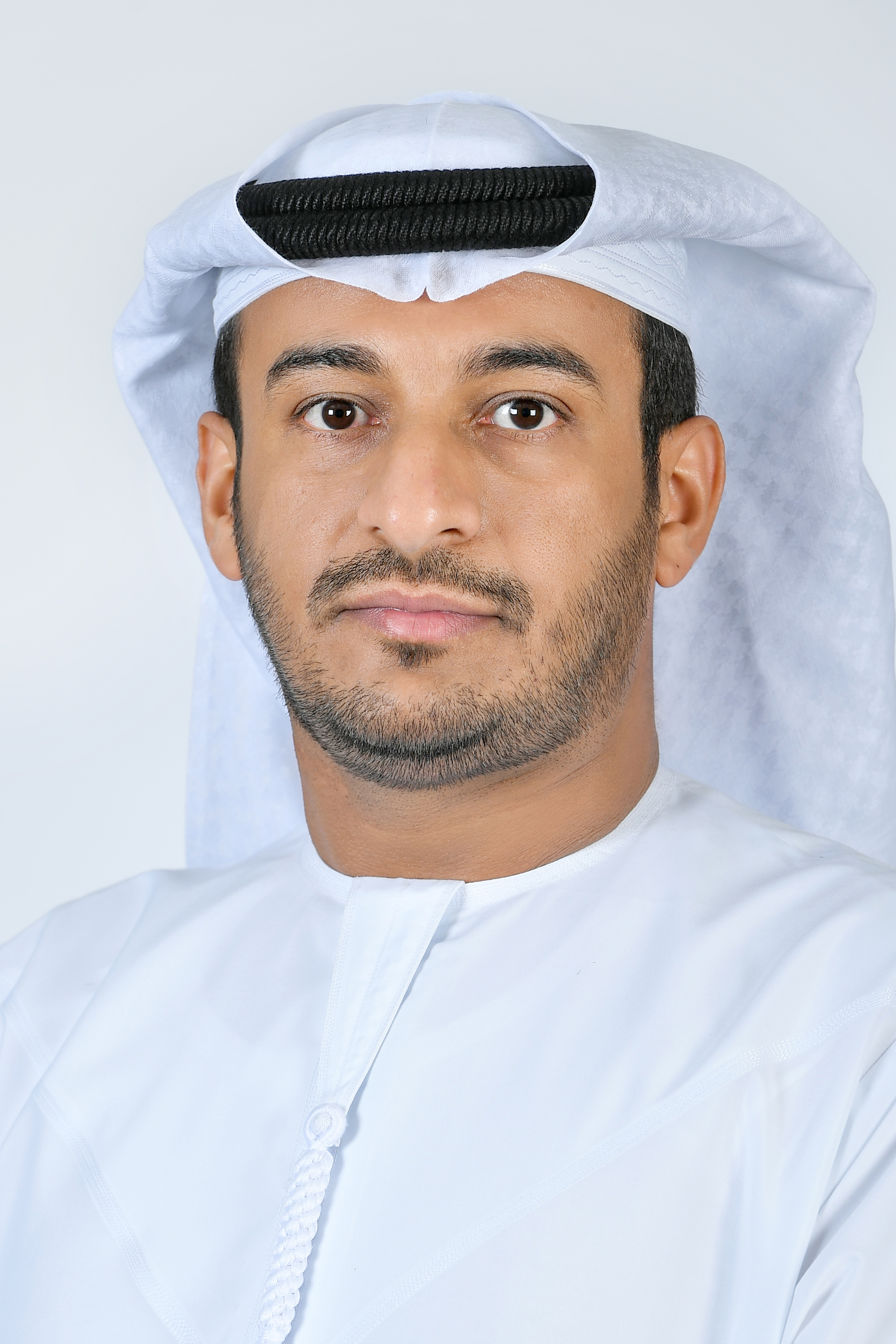
Dr. Saeed Alameri serves as Assistant Professor in Mechanical & Nuclear Engineering at Khalifa University while holding pivotal national roles: Director of the Emirates Nuclear Technology Center (ENTC), Manager of the Gulf Nuclear Energy Infrastructure Institute (GNEII), member of the National Committee for Radiation Protection (RPC), and Theme 4 Lead for ENTC. His work directly supports the UAE's Barakah nuclear power program. Educational background: PhD in Nuclear Engineering, Colorado School of Mines (2015) MEng in Nuclear Engineering, Colorado School of Mines (2012) BSc in Electrical Engineering, UAE University (2008) His research centers on nuclear reactor physics and advanced fuel systems , with critical focus areas including Accident Tolerant Fuels (ATFs), Cr-coating techniques for zirconium alloy cladding, and tensor-network algorithms for neutron transport. Current projects target enhanced safety for APR1400 reactors through oxidation-resistant cladding and computational optimization of fuel-assembly shuffling, adhering to the 'do no harm' principle for operational reliability. No scientific awards were documented in the source material. Dr. Alameri actively mentors six graduate students (two PhD and four MSc candidates) while leading specialized ENTC research teams. His supervisory scope spans neutronics analysis, thermal-hydraulic evaluations, and severe-accident material testing. Current projects involve international collaboration through GNEII to advance nuclear infrastructure, with direct applications to UAE's operational reactors. He directs research at the Emirates Nuclear Technology Center and Gulf Nuclear Energy Infrastructure Institute, focusing on APR1400 reactor optimization and next-generation fuel technologies through multidisciplinary teams combining computational modeling and experimental validation.
Juliana Pacheco Duarte serves as an Associate Professor in the Department of Nuclear Engineering & Engineering Physics at the University of Wisconsin-Madison, where she leads research in nuclear safety analysis, thermal-hydraulics, and risk assessment of advanced nuclear systems. Her expertise spans experimental design for high-pressure two-phase heat transfer phenomena and computational thermal-hydraulic analysis using industry-standard codes including COBRA, CTF, TRACE, and MELCOR. Her educational background includes a PhD in Nuclear Engineering from the University of Wisconsin-Madison (2018), an MS from the University of São Paulo (2014), a BS from State University of Campinas (2016), and a BS from the Federal University of Rio de Janeiro (2013). Prior to her doctoral studies, she contributed to critical heat flux experiments for nuclear propulsion reactors at the Brazilian Navy’s thermal-hydraulics division. Dr. Duarte's research program integrates traditional nuclear engineering methodologies with cutting-edge machine learning techniques, focusing on accident-tolerant fuels, severe accident progression in small modular reactors, and fire safety analysis in electrical enclosures. Her work addresses critical challenges in post-critical heat flux phenomena, density wave instabilities, quenching behavior, and uncertainty quantification for nuclear safety applications. Analysis of her 15 most recent publications (2023-2025) reveals a pronounced trend toward machine learning integration in nuclear safety analysis, with 60% of articles applying AI/ML methods to thermal-hydraulic challenges, accident progression modeling, and fire risk assessment. Her research bridges experimental validation with computational modeling, particularly in chromium-coated cladding performance, electrical fire dynamics, and natural circulation stability. Her scientific contributions have been recognized through prestigious awards including: 2023 DOE Nuclear Energy University Program Distinguished Early Career Program Award 2022 American Nuclear Society ATH’22 Best Paper Award 2019 US NRC Nuclear Education Program Faculty Development award 2014 CREA/RJ IV Oscar Niemeyer Award for Scientific Projects CAPES Science without Borders Fellowship (2014) Dr. Duarte actively mentors graduate students through thesis research courses (NE 790/890/990) and teaches advanced courses including Methods for Probabilistic Risk Analysis of Nuclear Power Plants. Her research is supported by grants from the Department of Energy (NEUP program), Nuclear Regulatory Commission, and Brazilian funding agencies including CAPES and CNPq. Her experimental work leverages high-pressure thermal-hydraulic facilities at UW-Madison, with collaborations extending to national laboratories and industry partners in nuclear safety validation studies. Current projects focus on fusion machine design applications and next-generation accident-tolerant fuel performance under extreme conditions.
Professor Michael Preuss is a leading academic in the Department of Materials Science & Engineering at Monash University, Faculty of Engineering, where he joined in August 2020. He also holds a 20% continuing position at the University of Manchester, UK, where he previously served in multiple leadership roles. His research focuses on the relationship between manufacturing, processing, and performance of structural materials, particularly titanium and zirconium alloys, nickel-base superalloys, and steels for high-temperature and nuclear applications. First Degree: Technical University Berlin, Germany PhD: Technical University Hamburg-Harburg, Germany Michael Preuss’s research interests lie at the intersection of materials processing and performance prediction. He investigates how microstructural evolution during manufacturing affects mechanical behavior, with a focus on reducing safety margins in safety-critical components such as aeroengine parts and nuclear fuel claddings. His work emphasizes in-situ characterisation using advanced tools like synchrotron X-ray , neutron diffraction , digital image correlation , and 3D X-ray tomography . The research is highly interdisciplinary, combining experimental data with modelling to understand degradation mechanisms under stress, temperature, and irradiation. The recent publications highlight a strong focus on irradiation damage in zirconium alloys , plasticity in Ni-base superalloys , and advanced alloy development . These works employ cutting-edge diffraction and imaging techniques to probe dislocation structures, phase evolution, and mechanical onset at micro scales, reflecting a trend toward physically based lifetime prediction models. His work is closely tied to large-scale facilities and national initiatives like the European Spallation Source and the Sir Henry Royce Institute. Scientific awards include: Grunfeld Memorial Medal (IOM3, 2013) ASTM Kroll Medal (lifetime achievement in zirconium research) EPSRC Leadership Fellowship (2011) Fellow of Materials, Minerals and Mining (2016) MWA Research Activation Fund (2024) Michael Preuss actively supervises PhD students and leads major research projects, including those funded by EPSRC and focused on fuel cladding (MIDAS) and advanced manufacturing. He collaborates extensively with researchers across institutions and industries. He chairs the Scientific Advisory Committee of the European Spallation Source and serves on panels for neutron facilities like ILL and ISIS. His labs and research teams are equipped for solid-state additive manufacturing, in-operando micromechanical testing, and advanced microstructural analysis, forming a robust ecosystem for materials innovation.
Prof. Kumar Sridharan is the Grainger Professor and Vilas Distinguished Achievement Professor at the University of Wisconsin-Madison , with appointments in the Departments of Nuclear Engineering & Engineering Physics and Materials Science & Engineering. His research spans materials science, metallurgy, and nuclear engineering, focusing on nuclear reactor materials, irradiation effects, corrosion, surface modification, and advanced manufacturing technologies. Research interests include: Nuclear reactor materials development Irradiation effects and corrosion of materials Surface engineering and coatings Machine learning applications for materials analysis High-temperature materials behavior Key awards: Bollinger Award for Vision and Leadership Chancellor’s Award for Excellence in Research Mentoring Undergraduates Award Fellowships in American Nuclear Society and other institutions
Pasi Peura is a Professor of Metals Technology at Tampere University’s Hervanta Campus, specializing in metallurgy and materials science. His research spans alloy development, additive manufacturing, welding, and heat treatment, with a focus on high-entropy alloys and advanced steels for automotive applications. Education: Doctor of Science (Technology), UMIST and The Victoria University of Manchester (1998); Licentiate of Science (Technology), Mechanical Engineering (1994) Peura’s work emphasizes understanding microstructure-property relationships through novel manufacturing techniques like wire arc additive manufacturing (WAAM) and high-speed laser cladding. His group collaborates extensively with industry, leveraging over 20 years of industrial experience. Recent publications highlight advancements in: Wear-resistant composite coatings Quench and partitioning (Q&P) steel treatments Dynamic softening mechanisms in high-entropy alloys Residual stress analysis in flame-cut steel Scientific Awards: DQ Cold Roll Award for research group (2014) He serves on international committees including the International Deep Drawing Research Group (IDDRG) and contributes to standardization efforts in steel testing.
Luis Ibarra is an Associate Professor in the Department of Civil & Environmental Engineering at the University of Utah, where he has been employed since 2010. He was promoted to Associate Professor in July 2016 after serving as an Assistant Professor from 2010 to 2016. He earned his PhD in Civil and Environmental Engineering from Stanford University in 2004. Research Interests Dr. Ibarra's research spans multiple domains of civil engineering with particular emphasis on seismic performance of structures, nuclear safety, and material behavior. His work integrates computational mechanics, experimental testing, and probabilistic risk assessment to address challenges in structural resilience under extreme loading conditions. Primary research themes include: Seismic modeling of nuclear containment structures and fuel rod behavior Development of advanced hysteretic models for structural components Earthquake engineering applications for bridges and buildings Probabilistic risk assessment of structural systems Publications Overview Recent publications (2018-2025) demonstrate Dr. Ibarra's focus on computational mechanics applied to nuclear and structural safety, featuring advanced finite element modeling, probabilistic methods, and experimental validation. Recurring themes include seismic vulnerability of nuclear facilities, deterioration modeling of structural components, and innovative retrofitting techniques for earthquake resilience. The research consistently integrates material science fundamentals with structural engineering applications. Awards and Recognition Ben Jacobsen Kingfisher Bend Ranch Award for exceptional teaching effectiveness (2015) Teacher of the Year Award, CvEEN Department (2014) Teacher of the Year Award in the CvEEN Department (2013) Milek Fellowship Award, American Institute of Steel Construction (2013) Academic Activities Dr. Ibarra maintains an active research program supported by multiple grants including seismic modeling of nuclear structures, machine learning applications for collapse prediction, and performance of retrofitted bridges. He regularly advises graduate students in thesis research and teaches courses in structural dynamics, steel design, and structural analysis. His professional service includes editorial board membership for the Tall and Special Buildings Journal and community outreach through earthquake education programs for high school students.