Univ.-Prof. Dr. Hannes Bernien is a Research Director at the Institut für Quantenoptik und Quanteninformation, University of Innsbruck. His work focuses on quantum information science, leveraging neutral atom arrays for quantum computing, simulation, and networking. Key research areas include scalable quantum systems, entanglement engineering, and hybrid quantum technologies. His lab develops platforms like Rydberg atom arrays and nanophotonic interfaces for quantum networks. Notable achievements include loophole-free Bell inequality violations and Schrödinger cat state generation. He has been honored as the CLEO 2024 Gordon Memorial Speaker. PhD students advised: Ka Hui Goh, Shankar G. Menon, Dahlia Ghoshal, and others. Postdocs: Justus Brüggenjürgen, Peng Yin. Recent publications emphasize error-correctable quantum RAM, deterministic entanglement distillation, and hybrid quantum repeaters. His team explores nonergodic chiral dynamics and dual-species Rydberg arrays, advancing both theoretical and experimental quantum frontiers.
Ebru Soytemel is a Lecturer in Sociology at Aston University's Department of Sociology and Policy , Birmingham, UK, since 2015. She holds a PhD in Sociology (2011) from the University of Manchester and has prior research experience at the University of Oxford’s Oxford Programme for the Future of Cities (2011–2013). Her work focuses on gentrification, urban policies, social inequality, cultural participation, and migration. She co-leads projects like the EU-funded CHIEF initiative and researches Turkish, Kurdish, and Cypriot cultural consumption in the UK. Education : PhD in Sociology, University of Manchester (2011) MA in History, Boğaziçi University (2006) MA in Sociology, Mimar Sinan Fine Arts University (2002) BA in Sociology, Mimar Sinan Fine Arts University (1999) Research Interests : Dr. Soytemel explores gentrification’s socio-spatial impacts, cultural sociology, youth education, gender inequality, and migration. She employs mixed methods, emphasizing ethnography and qualitative analysis. Recent projects include analyzing LGBTQ+ employees in the UK and mixed-ethnic identity negotiation in China. Advising & Grants : She co-supervises PhD students on LGBTQ+ issues and mixed-ethnic identities. Her grants include BA/Leverhulme funding for cultural consumption studies. She also reviews for journals like Urban Geography and serves on editorial boards for Frontiers in Sociology and others.
Christian Gugl is a Professor and Deputy Head of the Department of Historical Archaeology at the Austrian Academy of Sciences' Institute for Cultural History of Antiquity. He holds a PD Dr. (habilitation) from the University of Innsbruck and has been a key figure in archaeological research since 2002. His work focuses on Roman provincial archaeology, digital archaeology, and the archaeology of the Roman provinces in the Latin West. Gugl has led major projects like the Carnuntum archaeological surveys and the Troesmis excavations in Romania, emphasizing non-invasive methods and interdisciplinary approaches. Education: Studium der Klassischen Archäologie, University of Graz Provinzialrömische Archäologie, Ludwig Maximilian University of Munich Habilitation in Roman Archaeology, University of Innsbruck (2012) His research spans Roman military installations, urban development, and late antique transformations. Notable projects include the discovery of Carnuntum's gladiator school and the analysis of the Roman town's suburban structures using geophysical methods. Gugl coordinates the 'Digital Archaeology and Classics' initiative, integrating GIS and remote sensing. Publications focus on Carnuntum's urban landscape, Troesmis' military history, and Roman frontiers. He has contributed to over 50 peer-reviewed articles and authored/co-authored monographs on Carnuntum's canabae and Virunum's amphitheater. His work bridges traditional excavation with cutting-edge digital technologies, shaping modern archaeological practice in Austria and beyond.
Christoph Baier is a Research Fellow at the Austrian Archaeological Institute in Athens (ÖAI), part of the Austrian Academy of Sciences (OeAW). Since 2017, he has held a postdoctoral position under the OeAW's Post-DocTrack program. His research focuses on Hellenistic and Roman residential architecture, ancient urban planning, and architectural ornamentation. He has conducted excavations and architectural studies across Austria, Italy, Syria, Turkey, and Greece, with notable projects in Ephesos, Carnuntum, and Lousoi. Education: Magister degrees in Classical Archaeology, Ancient History, and Pre/Early History from the University of Vienna; M.Sc. in Monument Preservation from TU Berlin; doctoral degree from BTU Cottbus-Senftenberg. Professional roles include scientific staff positions at excavations and academic institutions, including the Department of Architectural History at BTU Cottbus-Senftenberg (2014-2015) and the ÖAI Athens branch (2016). Research interests emphasize the interplay between monumental architecture and urban development, particularly in Hellenistic/Roman contexts. His work combines field excavations with advanced analytical methods (e.g., multivariate analysis of ornamentation). Recent projects investigate Ephesos's palatial structures and Lousoi's Hellenistic urban layout. Publications span 20+ articles in journals like Jahreshefte des Österreichischen Archäologischen Institutes and conference proceedings. He co-edited the 2023 volume Ein anderes Griechenland , celebrating the ÖAI's 125 years of research in Greece. Active in international collaborations, he contributes to the Historical Archaeology in the Mediterranean series. Baier's research bridges archaeological practice with theoretical analysis, addressing questions of urban hierarchy, architectural memory, and cultural heritage preservation. His work often integrates multidisciplinary approaches to reconstruct ancient building techniques and urban dynamics.
Alex Thompson is a Lecturer in the Department of Surgery and Cancer at Imperial College London, affiliated with the Hamlyn Centre. He specializes in Medical Robotics and Image-Guided Intervention, focusing on developing clinical diagnostic tools and wearable sensors for gastrointestinal and oncological applications. His teaching role includes leading the MRes in Medical Robotics and Image-Guided Intervention program, emphasizing hands-on laboratory research and interdisciplinary collaboration among students from diverse backgrounds. Research Interests: Dr. Thompson’s work spans medical robotics, spectroscopic techniques (e.g., Raman, fluorescence), and non-invasive diagnostic systems. Key areas include: Design of microgrippers and optothermal actuators for minimally invasive procedures Development of wearable sensors for gut function assessment in low-resource settings Application of AI-driven systems for gastrointestinal disease screening Quantification of hypoxia in tumors and its impact on cancer prognosis Publications: His recent work highlights trends in integrating AI with robotic systems, advancing fiber-optic spectroscopic tools for real-time diagnostics, and addressing global health challenges via portable sensors. Notable areas include label-free cell identification, breast cancer surgery guidance, and environmental enteropathy protocols in Zambia/Zimbabwe. Teaching & Mentorship: He supervises student projects, fostering independent research skills. His courses attract students from computer science, engineering, and medicine, creating a collaborative environment for innovation. Labs & Affiliations: Based in the Hamlyn Centre, he collaborates on projects blending robotics, photonics, and biomedical engineering to push frontiers in surgical and diagnostic technologies.
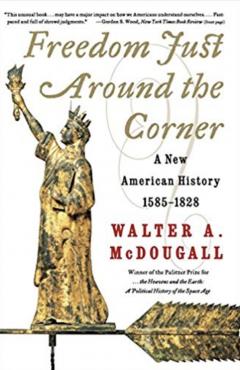
Walter A. McDougall is a Professor of History and Alloy-Ansin Professor of International Relations at the University of Pennsylvania’s School of Arts & Sciences. He holds a PhD from the University of Chicago (1974), an MA from the same institution, and a BA from Amherst College. His research focuses on U.S., European, and Pacific Rim diplomatic history, with particular emphasis on the interplay between technology, politics, and foreign policy. McDougall’s major works include a Pulitzer Prize-winning analysis of the Space Age ( ...the Heavens and the Earth , 1985), studies of American civil religion and foreign policy ( The Tragedy of U.S. Foreign Policy , 2016), and a trilogy on American history from colonial times to the Cold War. His writing blends rigorous scholarship with accessible narrative, often challenging conventional historical perspectives. He is Director of Research and Co-Director of the Center for the Study of America and the West at the Foreign Policy Research Institute. Though no longer accepting new PhD advisees, McDougall teaches courses on diplomatic history, international relations, and Western civilization. His office hours are held at College Hall 317D and Williams Hall 637. Awards include the Pulitzer Prize for History and recognition for his contributions to interdisciplinary historical analysis. His work frequently intersects with contemporary policy debates, emphasizing historical context in understanding modern geopolitical challenges.
Dr. Edward Shore serves as a Lecturer in the School of Banking & Finance within the UNSW Business School at the University of New South Wales. His academic career focuses on the intersection of finance and climate policy, with particular expertise in corporate finance applications to environmental challenges. Education: PhD in Economics, Columbia University (2024) MSc in Economics, University College London MA in Economics and Management, University of Oxford Dr. Shore's research program centers on climate finance, specifically examining the financial costs of climate transition and carbon regulation impacts on capital markets. His work bridges theoretical finance with practical climate policy applications, investigating how renewable energy integration affects asset pricing, corporate behavior, and investment decisions. Through rigorous empirical analysis, he explores market responses to regulatory frameworks like Renewable Portfolio Standards and evaluates transition risk in energy-intensive sectors. His publication record demonstrates significant contributions to understanding how carbon regulation influences utilities' cost of capital and corporate short-termism in meeting analyst expectations. Dr. Shore's research combines quantitative finance methodologies with climate economics to address critical questions about market adaptation to environmental policy changes. Research Leadership: Leading investigations into renewable asset price volatility Developing frameworks for climate transition risk assessment Examining peer group effects in financial forecasting Dr. Shore actively contributes to academic discourse through his publications in finance and climate economics, addressing both theoretical and policy-relevant questions at the frontier of sustainable finance research.
Dr. Chris Montgomery is a Senior Lecturer in Dialectology at the School of English, University of Sheffield, where he has held roles since 2012. Prior to this, he was a Lecturer at Sheffield Hallam University and completed an ESRC Postdoctoral Fellowship at the University of Edinburgh. His research focuses on non-linguists' perceptions of language variation, particularly in northern England and southern Scotland, integrating GIS technologies and sociolinguistic methods. He explores how real-time reactions to regional speech are influenced by salience and stereotypes, emphasizing methodologies like starburst charts and geospatial analysis. His research interests span perceptual dialectology, folk linguistics, computational sociolinguistics, and the role of borders in linguistic perception. He contributes to interdisciplinary collaborations, applying geographical science techniques to linguistic studies. Dr. Montgomery teaches modules on language variation, regional identity, and language attitudes at both undergraduate and postgraduate levels. His work has been published in journals such as Journal of Sociolinguistics and Frontiers in Artificial Intelligence , and he co-edited volumes like Language and a Sense of Place (2017) and Cityscapes and Perceptual Dialectology (2016). Dr. Montgomery’s methodologies include innovative approaches to mapping perceptual dialect landscapes, with a focus on urban and border regions. His recent projects examine insular dialects (e.g., Isles of Scilly) and utilize Twitter data for lexical variation studies. He actively supervises students in perceptual dialectology, computational methods, and sociolinguistic theory.
Alvaro Torralba is an Associate Professor in the Department of Computer Science at Aalborg University, Denmark, affiliated with the Technical Faculty of IT and Design. His research focuses on symbolic search, heuristic functions, and planning algorithms within artificial intelligence and machine learning. Notable projects include the ConAn initiative exploring contrastive analysis for state-space exploration. He has contributed extensively to classical planning, probabilistic planning, and automated planning competitions, earning awards such as the First Prize in the Agile Track of the 10th International Planning Competition (IPC’23). His work often bridges theoretical advancements with practical applications, including game-based network update synthesis and believable non-player character development. Research outputs include over 60 publications since 2011, with a focus on optimizing search algorithms and enhancing planning efficiency through techniques like operator-potential heuristics and bidirectional search strategies. His scientific contributions span algorithmic innovation, verification methodologies, and large-scale abstraction evaluation. Collaborations and datasets include foundational work on PDDL generators and pattern databases, with open-access resources available via Zenodo. As a program committee member and award-winning researcher, Torralba actively contributes to advancing the frontiers of AI planning and decision-making systems.
Dr. Usman Naseem is a Lecturer in Computing at Macquarie University’s School of Computing, Australia. Previously, he held academic roles at James Cook University and research fellowships at the University of Sydney and the University of South Australia. He earned his PhD in Computer Science from the University of Sydney and has over 10 years of industry experience in technical and leadership roles. Research Interests: NLP, multimodal analysis, and social computing, with focuses on socially aware methods for applications like cyber informatics, online sarcasm/opinion mining, low-resource language processing, and health informatics. He actively contributes to top-tier venues like ACL, EMNLP, and SIGIR. Grants & Awards: Recipient of the IEEE Transactions Best Paper Award (2022), DAAD AINet Fellowship (2023), and the Rising Star in AI Fellowship. His research has been funded by grants including Macquarie University’s MQRAS and Data Horizons initiatives. Recent Activities: Leads projects on combating AI-generated misinformation (VaxGuard grant), and has published extensively on topics like health misinformation detection, multimodal learning, and bias mitigation in AI systems. He is currently recruiting PhD and Master’s students in NLP, multimodality, and AI for social good. Labs & Collaborations: Affiliated with Macquarie’s Data Horizons Research Centre, Future Communications Research Centre, and Frontier AI Research Centre. Collaborates internationally on health informatics, social media analysis, and AI ethics.
Ted Ralphs is a Professor of Industrial and Systems Engineering at Lehigh University’s Rossin College of Engineering. He serves as co-founder and director of the Computational Optimization Research at Lehigh (COR@L) Laboratory, and chairs the INFORMS Computing Society. His research focuses on large-scale computation and optimization, bridging theoretical and practical applications through high-performance computing and mathematical techniques. Ralphs holds a Ph.D. in Operations Research from Cornell University and advanced degrees in Mathematics and Applied Mathematics from Carnegie Mellon University. His expertise spans Supply Chain Management, Grid Computing, Mathematical Optimization, Financial Engineering, and Algorithm Development. He teaches courses in computational methods, discrete optimization, financial optimization, and algorithms in systems engineering. Ralphs has received notable honors including the 2021 Rossin College Outstanding Doctoral Student Advising Award and election as an INFORMS Fellow in 2023. His research contributions include advances in bilevel optimization, decomposition methods, and open-source optimization software (e.g., COIN-OR’s Cbc solver). He has led collaborative projects such as a Naval grant-funded initiative with the University of Pittsburgh on bilevel optimization. Ralphs’ work emphasizes scalable algorithms and their real-world applicability in energy markets, logistics, and combinatorial problems.
Xi He is an Assistant Professor in the Department of Agricultural and Applied Economics at Virginia Polytechnic Institute and State University (Virginia Tech), affiliated with the College of Agriculture and Life Sciences. She holds a Ph.D. in Agricultural and Resource Economics from the University of Connecticut (2019), and prior degrees from Beihang University (M.A., 2014; B.A., 2011). Before joining Virginia Tech, she served as a Postdoctoral Research Associate at Iowa State University’s Center for Agricultural and Rural Development (CARD) from 2020 to 2022. Research Interests: Dr. He specializes in agricultural trade policy analysis, food security, and health economics. Her work explores how policies shape global trade systems, particularly focusing on non-tariff barriers, climate change impacts on food systems, and China’s agricultural import dynamics. She also investigates the effects of public health policies like Medicaid expansion on low-income households’ dietary choices. Key Awards: 2021 AAEA Food Safety and Nutrition Best Economics Paper 2021 AAEA Health Economics Section Best Paper Award Teaching: Current courses include AAEC 3024 – Global & Monetary Issues in Applied Economics (Spring 2023). Previously, she has served as a Teaching Assistant and guest lecturer in courses on agricultural trade, business strategies, and international commodity markets. Research Highlights: Her studies combine quantitative methods like general-equilibrium modeling with policy analysis. Recent projects include projecting China’s agricultural imports under climate scenarios and assessing the economic impacts of export restrictions and regional trade agreements.
Dr. Karl M. Rich serves as Director of the Master of International Agriculture Program (MIAP) in the Ferguson College of Agriculture and Professor of Agricultural Economics at Oklahoma State University, holding the Humphreys Chair in Global Studies. Previously, he worked for 16 years overseas, most recently at the International Livestock Research Institute's West Africa Regional Office in Dakar, Senegal, where he led multidisciplinary teams conducting applied research to inform livestock sector strategy in developing countries. Ph.D. and M.S. in Agricultural Economics, University of Illinois at Urbana-Champaign B.A. in Economics, University of California, Berkeley Dr. Rich's research cuts across disciplinary boundaries, integrating agricultural and livestock policy analysis, global agribusiness issues, animal and aquatic health, and methods development. He has pioneered specialized participatory tools to develop systems models and impact assessments with stakeholders to co-conceptualize problems and co-create solutions. His work spans urban agriculture planning in New Zealand, socio-economic drivers of animal disease in multiple developing countries, nutritionally-sensitive marketing channels in South Asia, livestock value chain development in Nicaragua, Myanmar, and Ghana, and climate-smart agriculture in Senegal. His recent publications demonstrate a consistent focus on agricultural economics, livestock disease modeling, food safety practices, and value chain analysis in developing countries, with particular emphasis on participatory approaches and system dynamics modeling. These works often examine the intersection of economic, social, and environmental dimensions in agricultural development contexts. Dr. Rich has successfully advised 14 M.S. and Ph.D. students during his career and has raised over $20 million in external grants in the past ten years through collaboration with multidisciplinary research teams. His current grant portfolio includes projects like the West Africa Aquaculture Program Fund and initiatives focused on climate change and local sovereignty. He has traveled to 87 countries with applied research and teaching experience in over 30 countries and long-term residence in nine. His work consistently involves collaboration with veterinarians, epidemiologists, animal scientists, and crop experts on applied research topics around the world, providing contextual guidance on socio-economic drivers of behavior and empirical evidence of benefits and tradeoffs across economic, social, and environmental dimensions.
Nicky Rogge serves as an Associate Professor at KU Leuven's Faculty of Economics and Business (FEB), holding dual appointments at both the Brussels and Leuven campuses within the Economics Research Group. Rogge also leads Subdivision 30 at the Brussels Campus and participates in the Council of the Faculty of Economics and Business and the Campus Council for FEB's Brussels operations. Rogge's research spans behavioral economics with a focus on autism spectrum disorder decision-making, efficiency analysis using Data Envelopment Analysis (DEA), and composite indicators for policy evaluation. Key interests include the Benefit-of-the-Doubt methodology for measuring social inclusion, well-being, poverty in high-income settings, and multidimensional deprivation. Recent work examines choice architecture interventions for autistic individuals, sunk-cost bias comparisons, and EU progress toward social targets. Analysis of Rogge's publication trends reveals a strong interdisciplinary approach combining economic methodology with social policy applications. The research consistently applies non-parametric efficiency techniques to behavioral experiments (particularly autism-related decision studies) and composite indicator construction for complex policy domains like poverty measurement and EU development targets. This dual focus creates valuable bridges between theoretical economic methods and practical social policy evaluation. Rogge actively supervises doctoral research, notably serving as co-promotor for T. Soare's project Invisible in Plain Sight: The Economics of Extreme Poverty in High-Income Settings . Current research funding includes the 2021-2025 project Essays on nonparametric business performance measurement as promotor, alongside co-promotor roles in studies examining begging/homelessness in Brussels and extreme poverty economics. Teaching responsibilities encompass Sustainable Development, Introduction to Economics, Microeconomics for Business, and Managerial Economics courses at both undergraduate and graduate levels, demonstrating commitment to foundational economic education alongside specialized research topics.
Hande Sözer is an Associate Professor in the Department of Sociology at TED University, affiliated with the Faculty of Arts and Sciences. She teaches courses on migration, urban sociology, and social anthropology, reflecting her research interests in refugee policy, cultural identity, and social vulnerability. Her work spans critical analyses of humanitarian interventions, ethnonational frontiers, and minority identity maintenance, particularly among Turkish and Balkan populations. Sözer's recent research focuses on the geopolitical implications of Syrian refugee integration in Turkey, post-disaster vulnerability, and neo-liberal humanitarian frameworks. Education details are not explicitly provided, but her academic trajectory is evident through her publications and teaching portfolio. Research interests include migration studies, refugee rights, urban sociology, and political anthropology. She critiques categories of vulnerability and liberal exclusion in global humanitarianism while analyzing how cultural practices shape identity politics in contested regions. Her publications since 2011 reveal a focus on minority identity strategies (e.g., Alevi Bulgarians’ dissimulation), post-2011 Syrian refugee dynamics in Turkey, and the intersection of disaster management and social policy. She critiques neoliberal humanitarianism’s redistribution of vulnerability and explores how cultural heritage sites mediate conflict. Advising and grants are not detailed in available materials, but her involvement in interdisciplinary research networks is implied through her work on shared sacred sites and transnational migration.