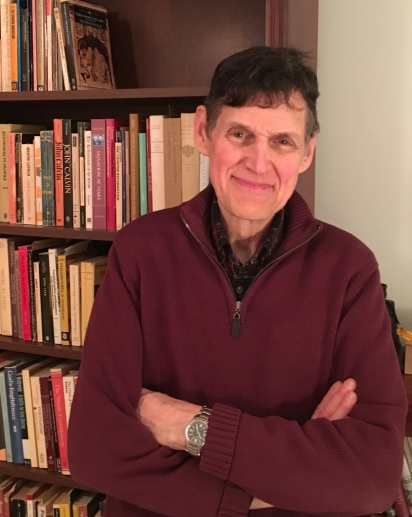
IGNACIO RAMOS GAYView profile
Professor
Ignacio Ramos Gay is a Professor in the Department of French and Italian at the Faculty of Philology, Translation and Communication, Universitat de València, where he specializes in French Philology and European dramatic literature. His academic work bridges literary analysis, cultural reception, and transnational influences in theatre. His research interests focus on French literary traditions and their impact beyond national borders, particularly in 19th- and 20th-century Europe. He explores themes such as dramatic adaptation, cross-cultural reception, and the representation of animals in literary and visual narratives. His work is deeply rooted in philological methods while engaging with broader cultural and aesthetic discourses. He is an active member of two research groups: CULIVIAN – Animals in Literary and Visual Cultures and TCE – Contemporary European Drama (18th–21st centuries): Criticism, reception and transnationality , reflecting his interdisciplinary engagement with literature, drama, and cultural studies. These affiliations highlight his commitment to collaborative and transnational scholarly inquiry. His doctoral research, completed in 2005 at the Universitat de València, examined Oscar Wilde’s dramaturgy as a paradigm of French theatrical influence in Britain between 1880 and 1895, supervised by Dr. Juli Leal. This foundational work continues to inform his contributions to the study of intercultural theatre dynamics. Although no scientific awards are listed in the provided information, his sustained involvement in specialized research groups underscores his scholarly impact. He advises students and participates in academic projects related to European drama and cultural representation, though specific advisees are not named. Ignacio Ramos Gay conducts his research within collaborative frameworks such as the CULIVIAN and TCE groups, which provide structured environments for exploring literary and visual cultures across time and geography. These teams foster interdisciplinary dialogue and support long-term research initiatives in philology and performance studies.