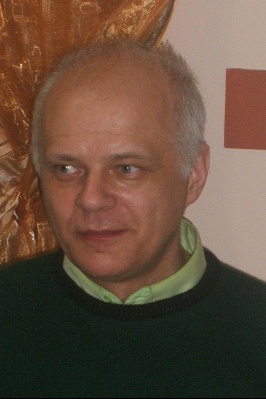
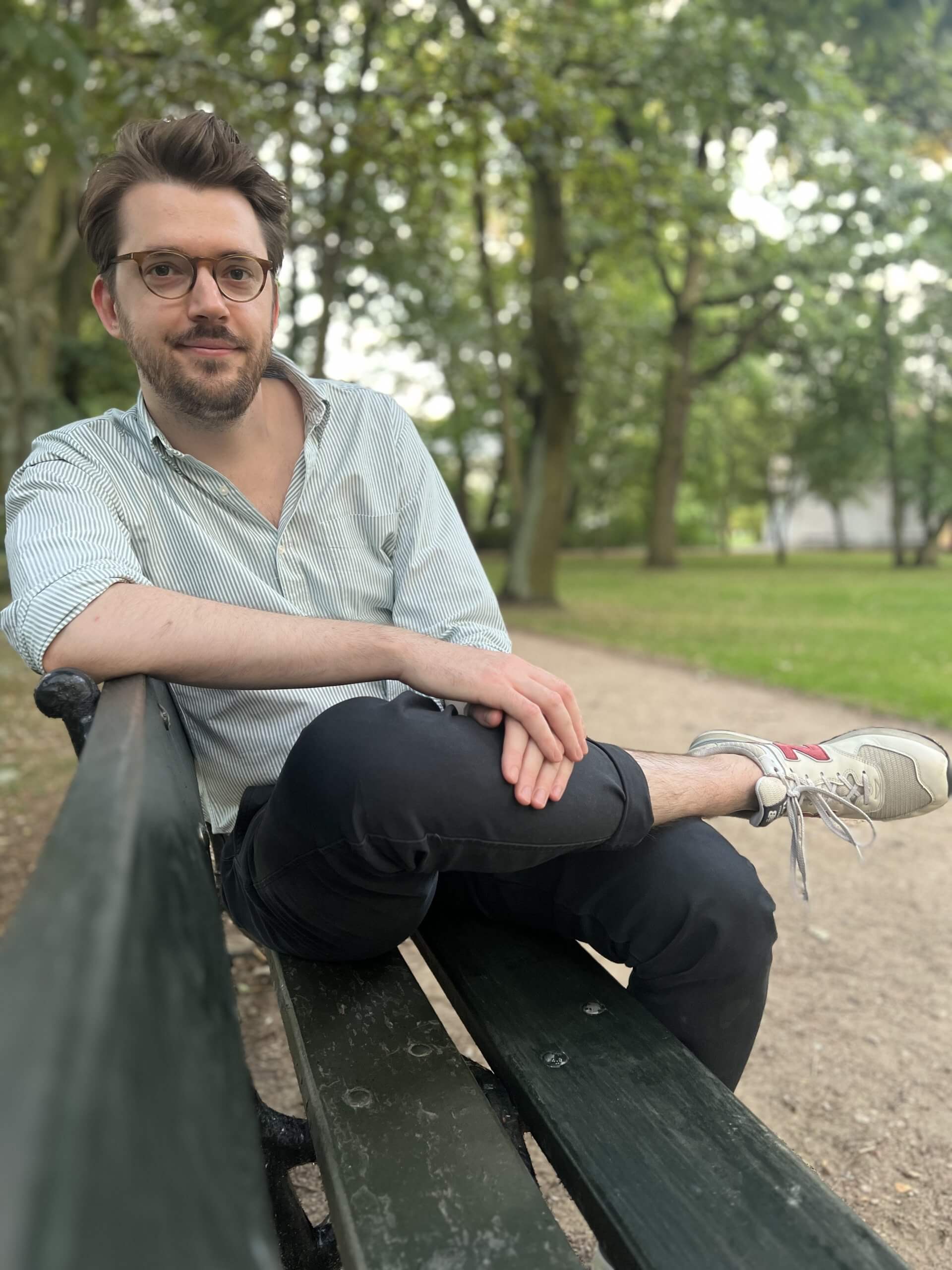
Dr. Paweł Pluta is a researcher at the Department of Polish Literature of the 20th and 21st Centuries , affiliated with the Institute of Polish Philology at the University of Wrocław . He has been recognized with the Rector of the University of Wrocław Award for scientific achievements in 2010 and 2015. Research Focus: Polish and world poetry (20th-21st centuries), history of literary criticism (20th-21st centuries), Gothic and Romantic literature, Enlightenment studies, textual analysis, and cultural reception. Publication Trends include: 20th-21st century Polish poetry and criticism Reception of foreign authors (Edward Young, Volney) in Poland Analysis of Enlightenment-era occasional poetry and its political/national themes Gothic metaphors in architecture and literature Textual studies (manuscripts, annotations) and historical cultural contexts Scientific Awards Rector of the University of Wrocław Award (2010) Rector of the University of Wrocław Award (2015)
Prof. Marian Surdacki serves as Head of the Department of the History of Education and Social Welfare at the Catholic University of Lublin 's Faculty of Social Sciences. A historian specializing in early modern social history, his work bridges Polish and Italian archival studies, with 200+ publications including 7 monographs. PhD: History (KUL, 1987) Habilitation: Modern Social History (1998) Full Professor: 2008 His research spans child welfare systems , charitable institutions , and urban development , exemplified by works on Rome's Hospital of the Holy Spirit and Urzędów's 400-year history. He has directed 18 Ministry of Science publishing grants and mentored 8 PhD graduates. Key article themes include: Foundling homes in Enlightenment Europe Polish-Lithuanian hospital networks Religious charity in Catholic/Protestant contexts Regional governance in pre-partition Poland Scientific Recognition : Recipient of Silver Cross of Merit (2006) Multiple Rectoral Awards for monographs International publications in Italian/French journals Active in regional revitalization, he co-founded cross-border collaborations with Hungarian/Ukrainian towns and led Urzędów's 600th anniversary celebrations that restored its city status (2015).
Dr. hab. Agata Seweryn, holding the title of Professor at the John Paul II Catholic University of Lublin (KUL), serves in the Department of Enlightenment Literature, Romanticism and Art Criticism within the Institute of Literary Studies at the Faculty of Humanities. Her academic career spans decades of dedicated scholarship focused on Polish literary traditions from the Enlightenment through Romanticism, with particular emphasis on the intersections between literature and music. Professor Seweryn's research interests form a cohesive interdisciplinary framework examining Polish Enlightenment literature, Romanticism, literary criticism, and the complex relationship between music and literature. Her work demonstrates particular expertise in Norwid studies and Chopin's cultural reception, revealing how musical elements permeate literary works and vice versa. She has made significant contributions to understanding how Polish Romantic poets engaged with musical forms and how composers interpreted literary works. Her scholarly output reveals consistent thematic threads connecting musicology with literary analysis, particularly in examining how Polish Romantic writers incorporated musical structures into their poetry and prose. This interdisciplinary approach has yielded important insights into figures like Norwid and Chopin, while also exploring broader questions about artistic synthesis in 19th-century Polish culture. Medal of the National Education Commission Rector's Award, 1st degree Individual Award, 3rd degree Professor Seweryn actively supervises doctoral and master's theses while participating in numerous research projects funded by the Ministry of Education and Science, including the National Program for the Development of Humanities. She serves on juries for national literature and language olympiads and contributes to academic discourse through conference organization, including co-hosting the nationwide conference '(Po)między: borderlands, crossroads, undefined places.' Her service extends to editorial roles for scholarly publications and review work for academic journals. Her academic activities include regular lectures for secondary schools across Poland and specialized courses on voice production and spoken language culture at the Seminary of Friars Minor Capuchin in Lublin, demonstrating her commitment to both scholarly research and practical language education.
Marcin Bogusławski is an Assistant Professor at the Department of Modern Philosophy, Faculty of Philosophy and History, University of Łódź. He teaches, conducts research, and promotes philosophy through editorial and leadership roles. His work bridges cultural ontology, posthumanism, and interdisciplinary humanities. PhD in Philosophy (University of Łódź, 2008) Postdoctoral training in mediation, multicultural management, and disciplinary methodologies Research Interests : His scholarly focus spans posthumanism, posthumanities, and cultural ontology, with interdisciplinary applications in art history, environmental philosophy, political theory, and queer studies. He employs Actor-Network Theory (ANT) and contemporary French philosophy frameworks. Academic Leadership : • Editor-in-Chief of HYBRIS Internet Philosophy Magazine • Head of the Lodz Branch of the Polish Philosophical Society • Vice President for Ethical Affairs at ZNP w UŁ, advocating academic mediation and anti-violence initiatives First Degree Rector's Award for Variations of the (post)humanities Second Degree Rector's Award for Humanities from the perspective of cultural ontology Second prize, 'Lutosławski XXI. Music for Words' (2013) Medal 'For commendable studies' Projects & Grants : • National Program for Humanities grant (2016) for bilingual HYBRIS monographs • IDUB project leader on cognitive/non-cognitive humanities and axiological understanding Committee Roles : • Member of Anti-Mobbing Committee • Head of Doctoral Students' Disciplinary Appeals Committee
Prof. dr hab. Marcin Cieński is a distinguished academic at the University of Wrocław's Institute of Polish Philology, part of the Faculty of Philology. He served as Dean from 2012 to 2020. His research focuses on 18th-century Polish literature, the Enlightenment, and comparative literary studies, with particular attention to cultural transfer between Poland and Germany. He has authored and edited numerous books, including Formacja oświeceniowa w literaturze Polski i Niemiec and Pejzaże oświeconych . Cieński is a member of the Scientific Council of the Institute of Literature of the Polish Academy of Sciences, the Committee on Literary Sciences, and the editorial board of Wiek Oświecenia . His work bridges historical analysis with contemporary cultural studies, emphasizing Poland’s role within European literary contexts. Education and academic background are not explicitly detailed in the text, but his extensive publications and editorial roles indicate deep expertise in literary history and comparative studies. His research spans from Polish Enlightenment landscapes to modern literary forms, with a focus on cross-cultural exchanges and historical canon formation. Publications include monographs, edited volumes, and articles in leading journals, reflecting his engagement with both historical and contemporary literary themes. His edited works, such as Literature of Europe: History of European Literature , highlight his commitment to interdisciplinary and cross-cultural scholarship. Cieński’s contributions to academic administration, as Dean, underscore his leadership in advancing humanities education and research. His advising spans a wide range of doctoral students (listed above), many of whom focus on Polish literary history, language, and culture. His affiliations with research workshops and institutes at the University of Wrocław further his exploration of topics like cultural transfer, literary theory, and historical methodology.
Anna Barańska is a Professor at the Department of 19th Century History within the Faculty of Humanities at the John Paul II Catholic University of Lublin (KUL). She has served as Head of Department continuously since 2020 and previously held the position from 2009 to 2014. Her institutional address is Al. Racławickie 14, 20-950 Lublin. Her research focuses on 19th-century Polish history under partitions, particularly Church-State relations between the Holy See and Russian Empire, the November Uprising of 1830-1831, Polish women's roles in national movements, and Catholic Church diplomacy. She examines how Polish territories navigated religious autonomy within imperial frameworks, analyzes gender dimensions of resistance, and studies Vatican-Russia negotiations through archival sources from Rome, St. Petersburg, and Warsaw. Recent publications reveal consistent engagement with multilingual sources (Polish, French, Italian) analyzing ecclesiastical structures, concordat negotiations, and women's participation in uprisings. Her work demonstrates methodological rigor in cross-referencing diplomatic archives with personal memoirs and periodical press from partitioned Poland. Scientific awards include: Medal of the President of Lublin City (2017) Rector's Individual Award for Outstanding Habilitation Thesis (2009) Przegląd Wschodni Award for National Works (2008) She has supervised numerous diploma theses on 19th-century Polish social history, including topics on cholera combat methods, Warsaw carnival culture, and Polish emigration to America. As principal investigator, she led the NCN OPUS grant 'Congregation for Extraordinary Ecclesiastical Affairs and the Evolution of Religious Policy in Europe 1814-1870' (2016-2020) and participated in the PAN Institute grant 'Polish Independence Movement in the First Half of the 19th Century' (2010-2013). Her institutional affiliations include the Scientific Council of the Polish Biographical Dictionary (since 2016), Polish CIHEC Group at PAU, and secretary of the Historical Commission of the Lublin Branch of the Polish Academy of Sciences (since 2009).
Kamila Gęsikowska, PhD, is an Assistant Professor at the Institute of Culture Studies, Faculty of Humanities, University of Silesia in Katowice. Her academic work centers on the theory and history of culture, with a focus on 19th and 20th-century cultural institutions and anthropological interpretations of Hebrew biblical texts. Her research interests include the history of theoretical and cultural thought, esoteric movements such as Theosophy and Spiritism, yoga in cultural contexts, and gift theory in biblical Hebrew. She explores how cultural concepts like 'culture' and 'civilization' have evolved, particularly in Polish and European intellectual traditions. Her recent publications reflect a strong interdisciplinary trend, combining cultural history, anthropology, and religious studies. She frequently examines overlooked or marginalized cultural phenomena, such as early Polish writings on yoga, theosophical societies, and extrasensory perception. Her work often bridges historical analysis with anthropological theory. Member of the Polish Cultural Studies Society Secretary of the international journal Loci Communes. International Journal of Studies on Spaces in Arts and Humanities, Anthropology and Architecture (since 2020) Researcher in the 'Academization of the City' project (2018–2020), funded by the University of Silesia Co-author of the book Kocynder: 50 Years , financed by the Chorzów city funds Dr. Gęsikowska has also delivered public lectures, such as 'Kinship and Affinity, Family, Marriage' within the 'University of Humanities at the University of Silesia' project. She actively contributes to academic dissemination through co-editing volumes and publishing in peer-reviewed journals. She has no listed scientific awards in the provided texts, but her scholarly output and engagement indicate a robust academic presence in cultural studies and interdisciplinary humanities.
Rafał Waszczuk is a faculty member at the Department of Modern History, Faculty of History, University of Warsaw. He has been serving as an assistant since 2023, following the completion of his doctoral studies at the same institution. His academic work is deeply rooted in 18th-century political and diplomatic history of the Polish-Lithuanian Commonwealth. His research interests include: Diplomacy in the 18th century Church-state relations Enlightenment-era court politics Political history of the Polish-Lithuanian Commonwealth The First Partition of Poland His recent publications focus on papal diplomacy, Franco-Polish relations, and secret intelligence networks such as the Secret du Roi . These works reflect a strong trend in diplomatic and political history, particularly examining how external powers influenced internal Polish affairs during the Enlightenment. His scholarship is published in edited volumes based on cutting-edge research in Polish historiography. Scientific recognition includes: ETIUDA 7 Scholarship from the National Science Centre Distinguished PhD dissertation awarded by the Scientific Council of the Discipline of History, University of Warsaw Rafał Waszczuk advises on academic matters during his consultation hours and is actively contributing to ongoing historical research. While no formal grant projects or student supervision are detailed, his involvement in major scholarly publications indicates active participation in research networks and academic collaboration. He continues to publish on key themes in 18th-century European and Polish history.
Professor Paweł Matyaszewski is a distinguished academic at the John Paul II Catholic University of Lublin, where he serves in the Department of Romance Cultures and Literatures within the Faculty of Humanities. His scholarly work focuses on French Enlightenment literature with particular expertise in Montesquieu studies, French Revolutionary period, and Polish-French cultural relations across historical periods. He maintains active international scholarly engagement through regular participation in conferences in France and holds membership in the prestigious Cercle des Amis de Montesquieu based in La Brède. Professor Matyaszewski's research interests span French Enlightenment thought, particularly the works and reception of Montesquieu in Poland, French Revolutionary cultural transformations, the Republican calendar system, and utopian literature of the 18th century. His scholarship bridges literary analysis with historical context, examining how philosophical ideas traveled between France and Poland across different historical periods. He has made significant contributions to understanding the translation and reception history of Montesquieu's works in Polish contexts from the 18th century to the present day. His extensive publication record reveals a clear trajectory of scholarly focus on Montesquieu's works, particularly the Persian Letters , their Polish translations, and their cultural reception. Over the past decade, his research has expanded to include the French Revolutionary calendar system and its cultural significance, demonstrating his ability to connect literary analysis with broader historical and political contexts. His work often examines the intersection of literature, philosophy, and political thought during the Enlightenment era. Among his notable recognitions are: Medal of the City of La Brède (2012) Individual award of the 1st degree from the Rector of KUL (2019) Individual award of the 2nd degree from the Rector of KUL (2013, 2011) Professor Matyaszewski has served as a doctoral dissertation advisor and reviewer for numerous academic promotion cases, demonstrating his standing within the scholarly community. He has also organized academic events, including lecture series featuring international scholars from Belgium, and has participated in editorial boards for academic publications focused on 18th century studies. His scholarly activities extend beyond pure research to include significant contributions to academic service and the organization of intellectual discourse in his field.
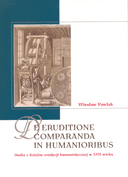
Professor Wiesław Pawlak is a full professor of humanities (literary studies) at the John Paul II Catholic University of Lublin (KUL), serving in the Institute of Literary Studies, Faculty of Humanities, where he chairs the Department of the History of Old Polish Literature. His affiliation encompasses teaching, research, doctoral supervision, editorial work, and organisational service within Poland’s oldest Catholic university. Education 1998 – Master’s degree in Polish Philology, KUL 2003 – PhD in Literary Studies, KUL (dissertation: The Concept in Polish Baroque Sermons ) 2013 – Habilitation in Literary Studies, KUL (dissertation: De eruditione comparanda in humanioribus ) 2021 – Master’s degree in Classical Philology, KUL 2024 – National professorial title in humanities (literary studies), conferred by the President of the Republic of Poland Research Interests Professor Pawlak’s work lies at the intersection of Polish literary history, classical rhetoric, and early-modern intellectual culture. He investigates: Baroque homiletics and the theory of preaching in the Polish-Lithuanian Commonwealth Humanist erudition and the practices of reading, excerpting, and knowledge management in the 17th century Neo-Latin writing and the transnational respublica litteraria of Central Europe Religious poetry, emblematics, and the cult of the Virgin Mary in early-modern Poland Regional history of the Chełm Land and its literary representations Across more than two decades he has produced monographs, critical editions, translations, and over a hundred scholarly articles and chapters, situating Polish literature within broader European humanist networks. Scientific Awards & Distinctions 2024 – National professorial title in humanities (literary studies) 2022 – “Feniks” distinction of the Association of Catholic Publishers (translator category) 2022 – Inner Reward 1st Degree Individual Award Doctoral & Thesis Supervision Professor Pawlak has supervised numerous bachelor’s, master’s, and doctoral theses. Notably: Jakub Susza – A Monographic Outline. A Study of the History of Uniate Literature in the 17th-Century Polish-Lithuanian Commonwealth (PhD, 2023) Ongoing supervision of master’s projects on Renaissance pedagogy, Baroque poetry, and sanctuary literature. Editorial & Organisational Roles Member of the editorial committee, Barok. History–Literature–Art Member of the editorial team, Library of Old Polish Writers series Organiser of national conferences: Hospitality in Literature – Hospitality of Literature (2024), Wiązanie sobótkowe (2015), and others Principal investigator in bilateral research cooperation with the Catholic University of Eichstätt-Ingolstadt (2022 internship exchange)
Dr. Stanisław Świtlik is an Assistant Professor at the Department of Romance Cultures and Literatures, Institute of Literary Studies, Faculty of Humanities, John Paul II Catholic University of Lublin. His academic affiliation includes the address: Al. Racławickie 14, 20-950 Lublin, with contact email stanislaw.switlik@kul.pl. His research centers on 18th-century French literature , with specialized focus areas including: Utopian and dystopian narratives in Enlightenment literature Imaginary voyages and geographical symbolism in works by Casanova and Mercier Social structures in speculative fiction Literary representations of war, demographics, and language ambiguities Analysis of Dr. Świtlik's publications reveals consistent exploration of utopian frameworks across 17th-18th century French literature, with particular emphasis on deconstructing socio-political ideals through authors like Casanova. His works frequently examine spatial imagination, crisis narratives, and philosophical contradictions in speculative fiction. Dr. Świtlik maintains active scholarly engagement through memberships in organizations like the Polish Society for Eighteenth-Century Studies and regular participation in international conferences (e.g., Paris, Warsaw). He contributes to academic outreach via public lectures on French literature and language promotion events.
Marcin Leszczyński is an Assistant Professor in the Department of History of Philosophy at the Faculty of Philosophy and History, University of Lodz. His academic profile reflects a deep engagement with philosophical traditions, historical thought, and the intersection of law, politics, and intellectual history. His research interests span across multiple domains including Philosophy of Law, Historiography, Political Philosophy, Mythology, Marxist Theory, and Intellectual History. Leszczyński demonstrates particular expertise in Polish intellectual traditions, with significant focus on Krzysztof Pomian's work on historiography and the revisionist movement in Polish history. His scholarly approach integrates continental philosophy with historical analysis, creating a distinctive perspective on the development of philosophical thought. Leszczyński's publication record reveals a consistent engagement with major philosophical questions across time periods, from medieval legal history to contemporary political theory. His work frequently examines the relationship between legal systems and intellectual development, as seen in his analysis of Harold J. Berman's hypothesis about medieval law and the emergence of modern science. He also critically engages with mythological thinking through the lens of Pierre Legendre's work, demonstrating his ability to bridge historical and theoretical concerns. His academic activities include participation in research projects related to Polish philosophical revisionism in Marxism, as well as scholarly engagement with major philosophical figures including Michel Foucault, Jean-Paul Sartre, Georges Canguilhem, and Paul Tillich. Leszczyński has translated significant philosophical works, such as Paul Tillich's 'My Search for Absolutes,' demonstrating his commitment to making important philosophical texts accessible to Polish readers. As an active scholar, Leszczyński maintains regular office hours for students and participates in the academic community through publications, research projects, and scholarly activities. His work contributes significantly to the understanding of Polish intellectual history within broader European philosophical contexts, particularly through his examinations of revisionism and its impact on historical thought.