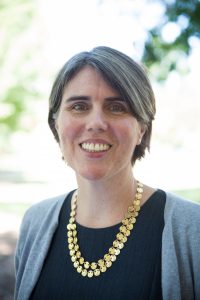
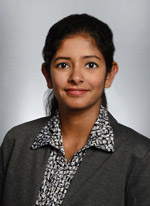
Noreen McDonald is a Professor and Senior Associate Dean for Social Science and Global Programs in the College of Arts and Sciences at the University of North Carolina at Chapel Hill. She holds a joint appointment in the Department of City and Regional Planning. Her research focuses on transportation planning, particularly the intersection of infrastructure, technology, and public health. She leads projects addressing urban freight systems, road safety, and healthcare mobility challenges. Key affiliations include the Carolina Transportation Program and the Center for Urban and Regional Studies. Current research initiatives involve optimizing non-emergency medical transport, analyzing parcel delivery impacts, and rethinking traffic impact assessments. She has published extensively on youth travel patterns, school siting policies, and the effects of emerging mobility services on vulnerable populations. Her work bridges academic research and policy application, with a focus on equity and sustainability. She is actively involved in shaping interdisciplinary programs and global partnerships within the university's social sciences division.
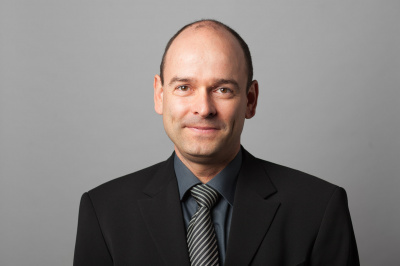
Professor Patrick Jonathan is a Full Professor at the Telfer School of Management, University of Ottawa. His research focuses on applying operations research methods to healthcare management challenges, particularly in patient scheduling, capacity planning, and disaster response logistics. He holds a B.A.Sc. from McMaster University, M.Sc. and Ph.D. from the University of British Columbia (UBC). Key research areas include healthcare system efficiency, stochastic optimization, approximate dynamic programming, and resource allocation in emergency and long-term care settings. He has contributed to projects like optimizing inpatient unit staffing during pandemics and developing robust logistics models for disaster relief operations. Education: B.A.Sc. (McMaster), M.Sc. (UBC), Ph.D. (UBC) Affiliations: INFORMS, CORS, Centre for Health Care Management (UBC) Recent work emphasizes pandemic-related healthcare operations, including staff scheduling under crisis conditions and elective patient admission strategies during the COVID-19 pandemic. His research also addresses dynamic home care routing and multi-priority patient scheduling policies. He has secured over $2.3 million in research funding through grants from NSERC, MITACS, and the National Research Council. Notable projects include the 'Resilience and Adaptation to Climatic Extreme (RACE) Wildfires' initiative and 'Stochasticity in Approximate Dynamic Programming.' Labs/Teams: Collaborates with interdisciplinary teams on healthcare logistics and emergency department optimization projects.
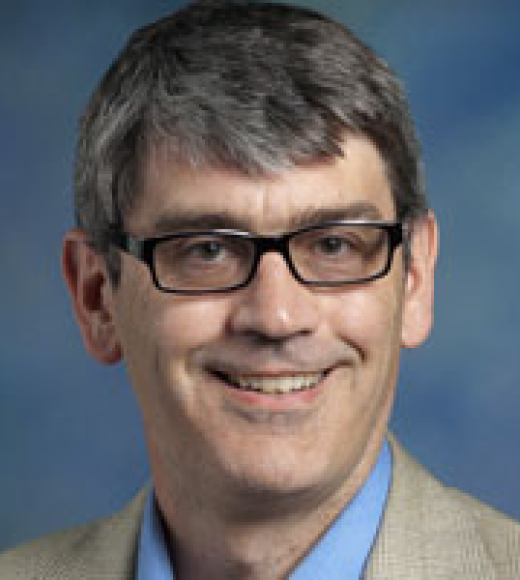
Nicolas Zufferey is a Full Professor of Operations Management at the University of Geneva, Switzerland, where he has served since 2008. He leads research in optimization methods for complex systems, focusing on applications in supply chain management, production planning, inventory control, and transportation logistics. His affiliations include the Research Institute of Management and collaborations with CIRRELT (Transportation & Logistics) and GERAD (Decision Analysis). Education: PhD in Operations Research (EPFL, 2002), MSc/BSc in Mathematics (EPFL) Prior Experience: Postdoc at University of Calgary (2003–2004), Assistant Professor at Université Laval (2004–2007) Research Interests: His work emphasizes developing advanced metaheuristics (e.g., VNS, Tabu Search, PSO) for challenging optimization problems. Key domains include: Multi-objective scheduling with resource constraints Inventory deployment under uncertainty Network design for supply chains and transportation systems Publications: Over 150 peer-reviewed articles across journals like European Journal of Operational Research , Transportation Research , and INFORMS Journal on Computing . Recent work addresses electric vehicle routing, drone integration in delivery systems, and robust decision-making under uncertainty. Collaborations: Engaged with 35+ universities and 27 private companies globally. Active in applying operations research to industrial problems (e.g., Swiss railways, luxury watch production, pharmaceutical networks).
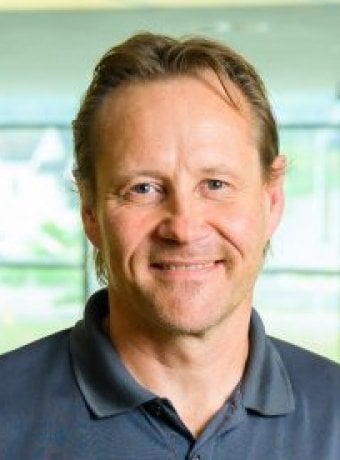
Dr. Wolfram Groschopf is a researcher at the Institute of Transport Economics and Logistics at Vienna University of Economics and Business (WU Vienna). His work focuses on sustainability and digitalization in transport, logistics, and supply chain management, with expertise in quantifying greenhouse gas emissions and traffic congestion impacts.
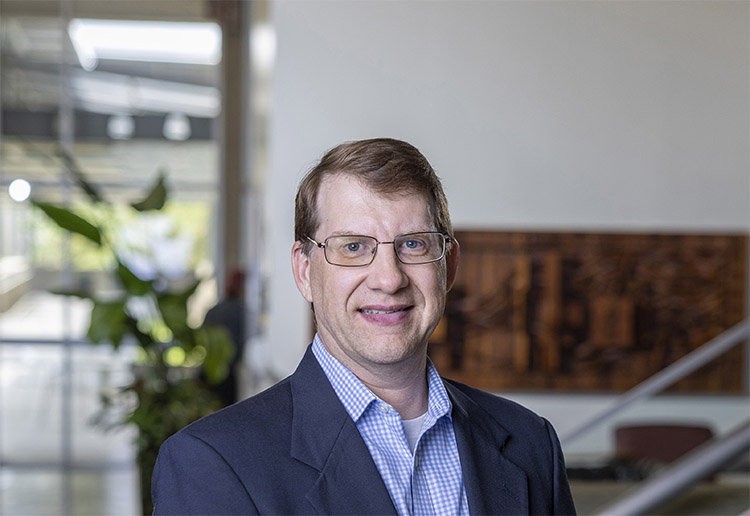
James Bushnell is a Professor in the Department of Economics at the University of California, Davis, and a Research Associate of the National Bureau of Economic Research. Prior to UC Davis, he served as Research Director of the University of California Energy Institute and Cargill Chair in Energy Economics at Iowa State University. He has been a member of the California Independent System Operator's Market Surveillance Committee since 2002 and advised the California Air Resources Board on emissions trading. Ph.D., Industrial Engineering and Operations Research, UC Berkeley (1993) M.S., Operations Research, UC Berkeley (1990) B.S., Industrial Engineering, University of Wisconsin, Madison (1989) His research focuses on energy economics , environmental economics , industrial organization , regulation , and energy policy . Recent work analyzes electric vehicle adoption, climate policy uncertainty, and the economic implications of full electrification. Recent publications (2021–2025) examine EV energy demand, climate policy modeling, freight transportation rebound effects, and electricity market reforms. Key themes include energy transition economics , market efficiency , and regulatory frameworks . Teaches intermediate microeconomics, energy economics, and graduate industrial organization
Māris Jurušs is an Associate Professor and Director of Study Programs at the Faculty of Engineering Economics and Management (FEEM) of Riga Technical University . He oversees the study programs in "Customs and Tax Administration" and "Internal Security and Civil Protection." Additionally, he serves as a member of both the RTU FEEM Council and the FEEM Scientific Council. His research focuses on tax policy , customs administration , sustainability , and public administration . He has extensive experience in national and international projects, particularly in fiscal strategies for sustainable mobility and environmental taxation. Jurušs has worked in the Tax Policy Department of the Ministry of Finance and an international audit company . He is an expert of the Latvian Science Council and actively participates in academic conferences and Erasmus+ teaching exchanges. Selected projects include: "D2_DIGITAL2": State budget funding for RTU's digital governance development (2024). "LZP-2022/1-0306": Model development for sustainable last-mile delivery in Latvia (2023–present). ESF 01000-3.1.2.-e/118": Efficient university governance development (2018–2023). "CA21133 - GLITSS": COST Action on globalization, illicit trade, sustainability, and security (2023–). His publications address topics such as excise duty harmonization for tobacco products, environmental taxation in transport, digital transformation of tax systems, and sustainable fiscal strategies . These works often intersect with European Union policy , climate change mitigation , and economic regulation .
Prof. Dr. Johannes Wolf is a Professor of Business Administration (Dual Study Program) at the Hamburg Distance Learning University (since 2012) and previously served as Chancellor of the university (2013–2020). He also held roles as Professor of Logistics Management and (Founding) Dean of the Logistics Management Department at the European University of Applied Sciences (EUFH) in Brühl. His career includes over 30 years of academic and professional experience in logistics, supply chain management, and business systems. Education: Johannes Wolf holds a doctorate in Business Administration from Fernuniversität Hagen (1986) with a thesis on industrial energy use and production planning, following a degree in Business Administration from the University of Cologne. Research interests focus on logistics management, supply chain optimization, ERP system implementation, dual study programs, and educational frameworks for business and logistics disciplines. He has contributed to over 50 publications, including handbooks and peer-reviewed articles on topics like IT systems in logistics, risk management, and competency development. He is a member of the Federal Association of Logistics (BVL) and the German Informatics Society (GI), and has served as an external expert for institutional accreditation reviews by the German Science Council. Key professional roles include management consultancy work (1993–2003) and early career roles in organizational controlling and energy procurement in industry.
Pasi Lautala is a Professor in the Department of Civil, Environmental, and Geospatial Engineering at Michigan Technological University (Michigan Tech) and currently serves as the Associate Dean for Research. He holds a BS from Tampere University of Technology (Finland) and MS/PhD from Michigan Tech. His research focuses on rail and highway transportation engineering, with emphasis on grade crossing safety, multimodal logistics, sustainability, railway capacity analysis, and engineering education development. Since 2007, Lautala has directed the Rail Transportation Program (RTP) within the Michigan Tech Transportation Institute (MTTI), expanding rail research collaborations across disciplines. He leads over $10M in external research funding, including projects on trespasser safety, freight logistics, and lifecycle analysis. Lautala is a key figure in rail education revitalization, serving as Rail Group Chair at the Transportation Research Board (TRB) and advising the Michigan Commission for Supply Chain Logistics. His teaching spans courses like Transportation Engineering, Railroad Design, and Logistics Management. Lautala has advised numerous undergraduate and graduate projects, emphasizing industry partnerships. Recent contributions include developing in-vehicle auditory alerts for rail crossings and AI-driven safety systems like RAIILS. Key collaborations include the Federal Railroad Administration (FRA) on grade crossing safety ($641K+ projects), U.S. DOT on rail modal analysis, and Battelle on connected vehicle systems. He mentors the Tracks to the Future youth program and co-leads international rail education initiatives.
Laharish Guntuka is an Assistant Professor in the Department of Management at the Saunders College of Business, Rochester Institute of Technology (RIT). His research focuses on supply chain resilience, climate risk management, and the application of generative AI in supply network design. He holds a leadership role in advancing climate-neutral supply chain strategies and has contributed to high-impact studies on supply chain plasticity and disruption recovery. Dr. Guntuka teaches courses including Operations Management (DECS-310), Supply Chain Analysis (DECS-750), and Seminar in Decision Sciences (DECS-758). His work integrates competitive dynamics perspectives with environmental, social, and governance (ESG) challenges, addressing topics like ESG rivalry and climate exposure assessment. He has been recognized in RIT's 2023-24 academic year for contributions to supply chain research. In public discourse, he co-authored an essay with RIT's Saunders College Dean Jacqueline Mozrall on nearshoring strategies for North American supply chains, published in the Rochester Business Journal. His research insights frequently address real-world challenges such as vulnerability to climate change and the strategic timing of recall campaigns. Dr. Guntuka's recent scholarship emphasizes actionable solutions for resilient supply chain design, leveraging AI tools and interdisciplinary approaches to sustainability. His work bridges academic research with industry relevance, offering frameworks for measuring and mitigating climate risks across global supply networks.
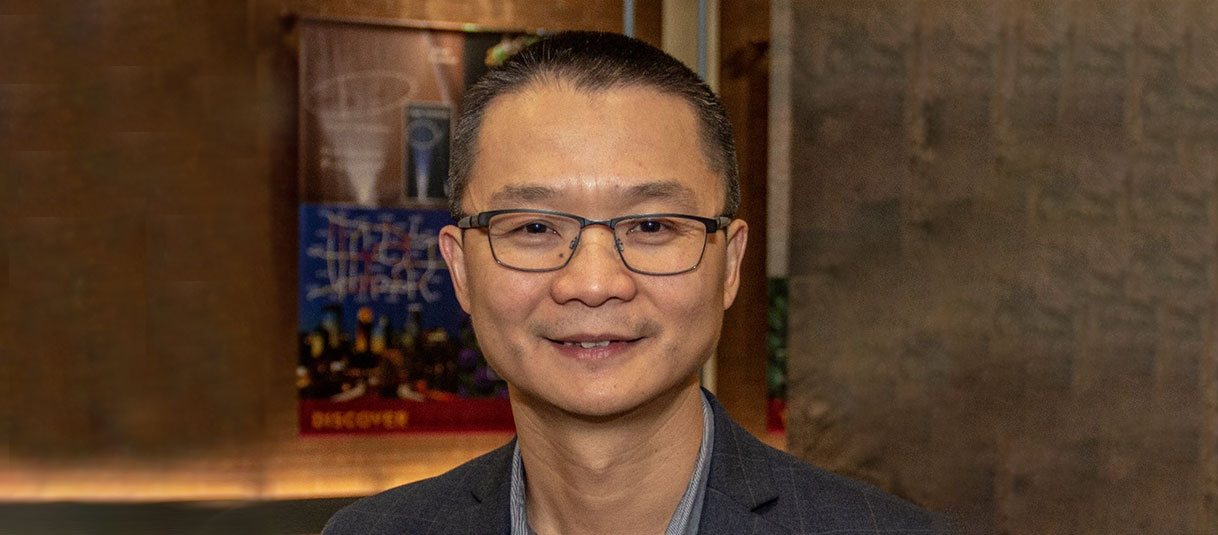
Marco Nie is a Professor and Chair of the Department of Civil and Environmental Engineering at Northwestern University, where he has been a faculty member since 2006. His research focuses on Transportation Systems Analysis, emphasizing interdisciplinary approaches that integrate optimization, network science, traffic flow theory, economics, and statistics to address complex interactions between human activities, infrastructure, and urban networks. He teaches three courses: an undergraduate/graduate introduction to transportation engineering, and two graduate courses on analytical and computational tools for surface transportation systems design. Education: Marco Nie earned a BS in Structural Engineering from Tsinghua University (Beijing), followed by graduate studies in Transportation at the National University of Singapore (NUS), and a PhD in Transportation from the University of California, Davis. Research interests include improving transportation efficiency, sustainability, and equity through policy and technology. Recent work explores autonomous vehicles, modular transit systems, congestion pricing, and data-driven solutions for EV charging and ride-hail platforms. He has expressed challenges in securing research funding, noting its critical role despite inherent flaws in evaluating research impact through monetary metrics. Scientific Awards: He received the 2021 Transportation Science Meritorious Service Awards . Marco also serves on editorial boards, including Service Science (2023), and actively publishes on topics like urban mobility, freight logistics, and policy analysis. Advising & Grants: While no specific students or grants are listed, he highlights the importance of funding mechanisms for research. His work often involves collaborations with sponsors and stakeholders to address real-world transportation challenges. Labs/Teams: Affiliated with the Center for Science and Protection of Engineered Environments and engages in interdisciplinary research groups focusing on sustainable and equitable urban systems.
Professor Maria Björklund at Linköping University specializes in sustainable logistics, focusing on environmental and social responsibility in supply chains. She leads research projects on circular logistics systems, sustainable city logistics, and climate-smart transport systems. Her academic roles include Director of Studies for Research Education at the Department of Management and Engineering and Head of the Transport and Mobility Research Area at LiU. Educational background: Doctoral degree in logistics (2005), Master’s in mechanical engineering (1999). Her research emphasizes collaboration across supply chain actors, sustainable business models, and innovation-driven logistics solutions. She has published over 20 journal articles and authored three textbooks. Awards include a 2013 scholarship from Familjen Knut & Ragnvi Jacobssons Stiftelse and recognition for teaching excellence. She actively supervises doctoral students and serves as an expert examiner for research grants (e.g., Formas, EU Horizon 2020). Her teaching spans courses like TETS36 (Sustainable Logistics Systems) and TETS38 (Logistics Project). Key research projects include 'Collaboration for Fossil-Free Transport Systems' and 'Performance Management for Fossil-Free Freight'. She collaborates with industry and academia to advance sustainable logistics practices.
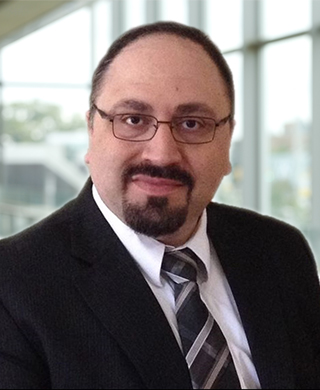
Dr. Hanna Maoh is a Professor in the Department of Civil and Environmental Engineering at the University of Windsor. She holds a BSc from Bethlehem University (1996), MSc from McMaster University (1999), and PhD from McMaster (2005). Her research focuses on integrating transportation and land use models, freight transportation analysis, sustainable transportation strategies, and big data applications in GIS. She leads the Traffic Lab, exploring innovative solutions for cross-border logistics, electrification of fleets, and environmental impact mitigation. Key professional affiliations include the Transportation Association of Canada, Professional Engineers Ontario, and the Transportation Research Board. Her work emphasizes policy-relevant research, such as modeling Canada-US border crossing efficiency, optimizing electric vehicle charging networks, and assessing freight infrastructure resilience. Recent publications highlight advancements in truck stop location optimization using GPS data, fleet electrification demand analysis, and border crossing behavior studies. Her research consistently bridges academic insights with practical applications, informing sustainable urban planning and environmental policy.
William (Bill) Eisele serves as a Senior Research Engineer and Program Manager at Texas A&M University's Department of Landscape Architecture & Urban Planning. His work focuses on transportation systems, freight mobility, and urban development impacts. Eisele holds a Ph.D. (Civil Engineering, Texas A&M, 2001), M.S. (Civil Engineering, Michigan State, 1994), and B.S. (Civil Engineering, Michigan State, 1993). Research Interests: Dr. Eisele’s expertise spans Transportation planning and access management, Freight mobility optimization, Congestion monitoring, Transportation system performance measurement, Urban land development impacts, Sustainable infrastructure design. Recent Work Trends: His publications emphasize data-driven solutions for freight challenges, including truck parking behavior, cargo consolidation, and port fluidity. Recent studies apply machine learning to predict driver route choices and evaluate real-time mobility tools. He also explores historical trends in urban freight logistics to guide future innovations. Grants & Advising: While no specific grants or advisees are listed, his extensive publications reflect collaborative work with institutions like the Texas A&M Transportation Institute. He has contributed to statewide programs like Oregon’s operations performance measures and Maryland’s freight fluidity initiatives. Labs/Teams: His affiliations suggest involvement with interdisciplinary teams focusing on transportation systems, though specific lab names are not mentioned in the source text.
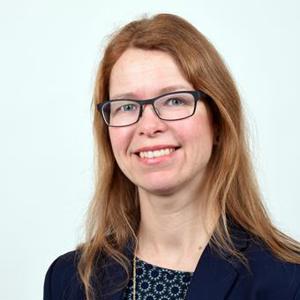
Dr. Aghdas Badiee serves as a Post-Doctoral Research Associate at Heriot-Watt University's Edinburgh Business School, affiliated with both the Centre for Logistics and Sustainability and the Centre of Sustainable Road Freight. Her academic foundation spans Industrial Engineering with specialized expertise in data-driven decision systems and logistics optimization. Educational Background: B.Sc. in Industrial Engineering - System Planning and Analysis (Grade: 18.07/20), Iran University of Science and Technology M.Sc. in Socio-economic System Engineering - Location-Allocation Optimization (Grade: 19.30/20), Iran University of Science and Technology Ph.D. in Socio-economic System Engineering - Supply Chain Modeling and Sustainable Logistics (Grade: 19.35/20), Iran University of Science and Technology Her research integrates Sustainable Supply Chain Management , Resilient Cold Chain Logistics , and Operations Research methodologies to address complex transportation challenges. Current projects include the Africa Centre of Excellence for Sustainable Cooling and Cold Chain Systems (ACES) and Zero-Emission Cold-Chain initiatives, focusing on food security through sustainable logistics solutions. Her methodological approach combines descriptive, predictive, and prescriptive analytics using simulation, optimization, and data science techniques. Publication trends reveal consistent contributions to high-impact journals like Annals of Operations Research and IEEE Transactions on Fuzzy Systems , with growing emphasis on sustainable cold chain systems (2023-2025). Her work bridges theoretical operations research with practical applications in agri-food distribution, humanitarian logistics, and transportation procurement. Scientific Recognition: Ranked 1st in all academic degrees (B.Sc. 2010, M.Sc. 2012, Ph.D. 2019) Global Talent designation by UKRI (2022) Distinguished PhD Dissertation Award (2019) Reviewer for Annals of Operations Research Journal (2021-present) Member of WORMS (Women in OR/MS) since 2022 Her professional trajectory demonstrates continuous engagement across academia and industry, having served as Lecturer at University of Tehran and Senior Business Analyst at National Iranian Oil Products Distribution Company. Current activities include developing the MILES simulation platform for cold chain optimization and contributing to UN Sustainable Development Goals through sustainable logistics research. She actively participates in professional networks including Production and Operations Management Society while mentoring students in operations research methodologies.
Suchi Rajendran is an Assistant Professor with a joint appointment in the Department of Industrial and Systems Engineering and the Department of Marketing at the University of Missouri, Trulaske College of Business. She is also the Director of Undergraduate Studies in ISE and actively leads research in prescriptive analytics, operations research, and data-driven decision-making across healthcare, transportation, and business systems. Education: PhD in Industrial Engineering, Pennsylvania State University Her research focuses on applying advanced analytics to solve complex real-world problems. Key areas include optimizing healthcare delivery systems, supply chain and logistics (notably blood supply chains and port operations), marketing data analytics, and emerging transportation systems such as air taxis and electric vehicle infrastructure. She leverages predictive and prescriptive artificial intelligence to forecast demand and recommend optimal operational strategies. Her recent work, highlighted in university news up to 2025, demonstrates a strong trend toward interdisciplinary, AI-powered solutions in logistics, sustainability, and public service. She frequently collaborates with industry partners like Case New Holland and Schneider Electric, and has secured funding from agencies such as the Alaska Department of Transportation and the National Science Foundation. Scientific Awards and Recognitions: Richard Wallace Faculty Incentive Grant Bob Bloss Faculty Enhancement Grant Winemiller Excellence Award in Data Analytics NSF CHOT Scholar (Penn State) Service Enterprise Engineering Fellow DAAD-WISE Fellowship (Germany) Lean Six Sigma Black Belt Dr. Rajendran is actively involved in mentoring students, having advised honors-winning graduate and undergraduate researchers. She leads an NSF-funded Research Experiences for Undergraduates (REU) program that brings 10 students annually to Mizzou to work on AI-enabled operations engineering. Her grants support hands-on, interdisciplinary research that prepares the next generation of engineers and data scientists. She is affiliated with cutting-edge research initiatives involving simulation modeling, digital communication platforms, and AI integration in industrial systems. Her lab and team focus on developing practical, scalable solutions for logistics, healthcare, and sustainable transportation, often through collaborative, real-world projects with public and private stakeholders.