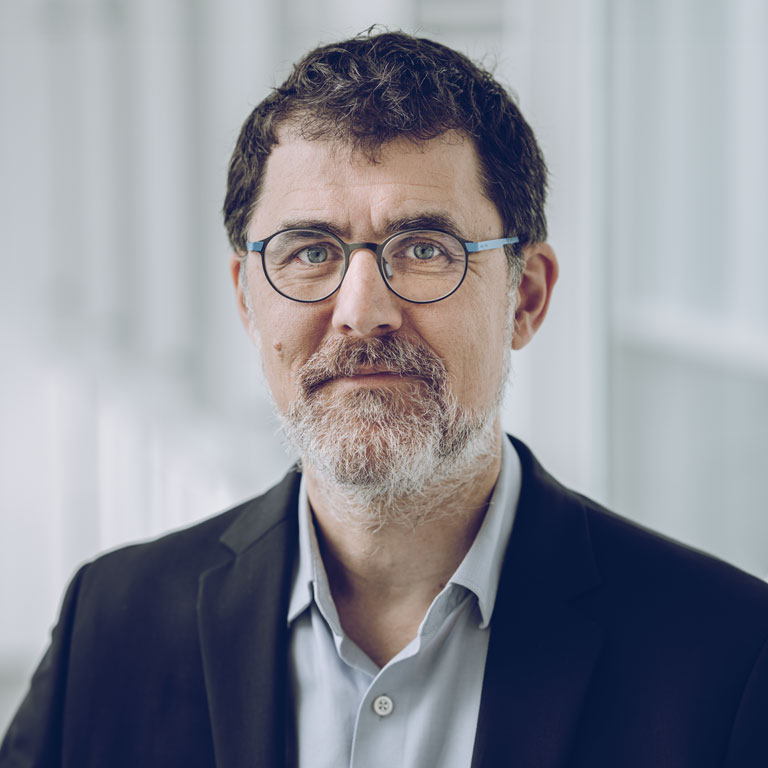
Alan C. McKinnon is a Professor of Logistics at Kühne Logistics University (KLU) in Hamburg, Germany. He holds an MA in Geography from the University of Aberdeen, an MSc in Transportation Studies from the University of British Columbia, and a PhD from University College London. His career includes roles as Emeritus Professor at Heriot-Watt University (2014), Head of Logistics at KLU (2012–2016), and Dean of Programs at KLU (2012–2014). His research focuses on logistics sustainability, decarbonization, and the environmental impact of freight transport. Notable contributions include seminal works on low-carbon logistics and the role of freight deceleration in reducing emissions. He chairs global initiatives like the World Economic Forum’s Logistics Council and advises the EU on transport policy. McKinnon’s awards include the European Logistics Association Fellowship (2015) and the Sir Robert Lawrence Award (2003). His teaching emphasizes sustainable logistics and has been recognized with the KLU Best Teacher Award (2015).
Dr. Wolfram Groschopf is a researcher at the Institute of Transport Economics and Logistics at Vienna University of Economics and Business (WU Vienna). His work focuses on sustainability and digitalization in transport, logistics, and supply chain management, with expertise in quantifying greenhouse gas emissions and traffic congestion impacts.
Laharish Guntuka is an Assistant Professor in the Department of Management at the Saunders College of Business, Rochester Institute of Technology (RIT). His research focuses on supply chain resilience, climate risk management, and the application of generative AI in supply network design. He holds a leadership role in advancing climate-neutral supply chain strategies and has contributed to high-impact studies on supply chain plasticity and disruption recovery. Dr. Guntuka teaches courses including Operations Management (DECS-310), Supply Chain Analysis (DECS-750), and Seminar in Decision Sciences (DECS-758). His work integrates competitive dynamics perspectives with environmental, social, and governance (ESG) challenges, addressing topics like ESG rivalry and climate exposure assessment. He has been recognized in RIT's 2023-24 academic year for contributions to supply chain research. In public discourse, he co-authored an essay with RIT's Saunders College Dean Jacqueline Mozrall on nearshoring strategies for North American supply chains, published in the Rochester Business Journal. His research insights frequently address real-world challenges such as vulnerability to climate change and the strategic timing of recall campaigns. Dr. Guntuka's recent scholarship emphasizes actionable solutions for resilient supply chain design, leveraging AI tools and interdisciplinary approaches to sustainability. His work bridges academic research with industry relevance, offering frameworks for measuring and mitigating climate risks across global supply networks.
Dr. Hanna Maoh is a Professor in the Department of Civil and Environmental Engineering at the University of Windsor. She holds a BSc from Bethlehem University (1996), MSc from McMaster University (1999), and PhD from McMaster (2005). Her research focuses on integrating transportation and land use models, freight transportation analysis, sustainable transportation strategies, and big data applications in GIS. She leads the Traffic Lab, exploring innovative solutions for cross-border logistics, electrification of fleets, and environmental impact mitigation. Key professional affiliations include the Transportation Association of Canada, Professional Engineers Ontario, and the Transportation Research Board. Her work emphasizes policy-relevant research, such as modeling Canada-US border crossing efficiency, optimizing electric vehicle charging networks, and assessing freight infrastructure resilience. Recent publications highlight advancements in truck stop location optimization using GPS data, fleet electrification demand analysis, and border crossing behavior studies. Her research consistently bridges academic insights with practical applications, informing sustainable urban planning and environmental policy.
Malithi Fernando is a Researcher at the Institute for Transport Studies (IVT) within ETH Zurich's Department of Civil, Environmental and Geomatic Engineering. She specializes in Transport and Mobility Planning, focusing on urban environments, sustainable travel behavior, and climate change policies. Previously, she held roles at OECD/ITF in Paris (2019-2024), Steer in Boston (2017-2018), and Nitsch Engineering (2015-2017). She earned an MSc in Transport Planning from the University of Leeds (2018-2019) and a BSc in Civil Engineering from the University of Calgary (2010-2015). Her research explores health and wellbeing in urban contexts, transport-land-use interactions, and equitable climate transition policies. Notable projects include the FRESH initiative examining freight-shopping nexus in urban areas. She contributes to interdisciplinary studies on gentrification induced by public transport investments and climate action measures. Malithi has published on urban sustainability and co-authored the Transport Climate Action Directory, a resource for decarbonization strategies. Her work bridges academic research with practical policy solutions for equitable mobility systems.
Christa Searle is an Assistant Professor in Business Analytics at Heriot-Watt University's School of Social Sciences and Edinburgh Business School. She joined in 2021 and serves as Programme Director for the MSc Business Analytics and Consultancy. Her research focuses on sustainability, logistics, and human behavior, employing operational research, agent-based simulation, and data analytics. She holds an extraordinary senior lecturer position at Stellenbosch University, where she earned her PhD in Industrial Engineering (2019). Her work addresses challenges like hydrogen refuelling infrastructure design, supply chain optimization, and modeling complex systems such as tuberculosis spread in informal settlements. Key projects include the ATHENA framework for hydrogen infrastructure analysis and Agent-Based Modeling of forced migration and consumer behavior. Christa has been recognized with awards including the Tom Rozwadowski Medal (2022) and Fellow of the Higher Education Academy (FHEA, 2023). She actively participates in conferences and workshops, such as the 53rd Annual Conference of the Operations Research Society of South Africa (2024) and the Sustainable Road Freight Workshop (2023). She contributes to research groups like the Centre for Logistics & Sustainability and the FeMe Network. Her teaching emphasizes authentic, industry-engaged assessments and spans business and data analytics. Current research collaborations explore decarbonizing freight transport and SDG-aligned solutions, reflecting her commitment to practical sustainability outcomes.
Professor Mark Hickman is the TAP Chair and Professor of Transport Engineering at the University of Queensland's School of Civil Engineering. He holds roles as Deputy Head of the School and Affiliate of the Dow Centre for Sustainable Engineering Innovation. His research focuses on public transit planning, sustainable transport innovations, urban transportation modelling, and traffic engineering. He has a PhD from MIT and has authored over 140 publications. Current research includes MaaS trials, electric vehicle infrastructure, and traffic incident prediction using AI. Education: BSc, MSc, and PhD from MIT. Grants include projects on MaaS impact trials, low/zero emission transport strategies, and real-time traffic analytics. Supervised 20+ PhD/Master’s students in areas like autonomous vehicles, transit operations, and sustainable transport policies. Leads grants from Queensland Transport, iMove CRC, and Brisbane City Council. Active in transport policy advising and media commentary on public transport, traffic engineering, and urban planning. Recent work emphasizes decarbonizing road freight, EV charging networks, and integrating MaaS systems. Lab affiliations include the Transport Academic Partnership (TAP) and the Australian Transport Research Cloud (ATRC). Collaborates on projects like the Odin Pass MaaS trial at UQ and Brisbane’s EV readiness assessments.
Steve Pye is a Professor of Energy Systems at the Bartlett School of Environment, Energy & Resources (University College London). He leads energy system decarbonisation research through whole-system modeling, focusing on national/global low-carbon pathways, uncertainty assessment, and equity/health dimensions of energy transitions. His work spans UKRI, Horizon Europe, and FCDO-funded projects, including EDRC, DIAMOND, and Climate Compatible Growth. Current roles: Professor (2024-present), Deputy Director of UCL Energy Institute Prior roles: Associate Professor (2020-2023), Principal Research Associate (2017-2020), Senior Research Associate (2013-2017) Research Interests include energy-economic modeling, fossil fuel transitions, net-zero pathways, and social equity in climate policy. Recent work examines geospatial energy models for Kenya, freight transport decarbonization, and geopolitical implications of global energy scenarios. His publications address scope 3 emissions, gas security, and policy implementation challenges. Teaching : Leads the MSc module ' Introduction to Energy Modelling and Scenarios ' (BENV0012) at UCL.
Sandra Stein is a Lecturer at the Technische Universität Wien within the College of Mechanical Engineering and Operations Sciences , affiliated with the Department of Logistics and Quality Management . She also serves as an external Postdoctoral Researcher and holds leadership roles at the Center for Sustainable Production and Logistics (Fraunhofer Austria Research GmbH) since 2013. Academic Director, eMBA Mobility Transformation (2021-2025) Board Member, Logistics Research Austria (since 2020) Expert Evaluator, Horizon Europe and Horizon2020 Research Interests include Physical Internet , Collaborative Logistics Networks , Sustainable Transport Systems , and Inland Waterway Transport . Her work focuses on: Green and Resilient Freight Networks Modal Shift Optimization Dynamic Transport Capacity Planning Intermodal Integration Shared Logistics and Data Utilization Scientific Awards include summa cum laude and cum laude distinctions for her academic achievements. She has contributed to major transport conferences like TRA2018 and IPIC 2019, and her work spans practical projects with organizations like Horizon Europe and the Austrian Ministry for Transport, Innovation, and Technology.
Alastair Fraser is a Senior Lecturer in the School of Economics at The University of Sydney. He specializes in environmental economics and climate finance, with a focus on electricity system decarbonization and investor climate mitigation strategies. He is affiliated with the Sydney Environment Institute and the Net Zero Institute. His research explores transition risks, portfolio emissions metrics, and household energy behavior under conservation policies. Fraser has advised one current research student investigating energy storage technologies in Australia. Research Interests: Environmental Economics, Energy Economics, Climate Finance, International Trade Affiliations: Sydney Environment Institute, Net Zero Institute His publications span environmental policy analysis, energy economics, and nanotechnology. Advising activities include supervision of projects on battery storage systems. Grants and funding details are not explicitly documented in provided texts. Labs/Teams: Active member of interdisciplinary climate research groups at The University of Sydney.
David Steven Jacoby is a Lecturer in the Master of Environmental Studies program at the University of Pennsylvania and also teaches at New York University. A Senior Fellow at Boston University’s Institute for Global Sustainability and president of Boston Strategies International, he is a globally recognized authority on operations, supply-chain, and decarbonization strategy. Education MBA, The Wharton School, University of Pennsylvania MA, Lauder Institute, University of Pennsylvania BS, Finance & Economics, University of Pennsylvania Research & Teaching Focus Jacoby’s scholarship centers on resilient, low-carbon, AI-driven global supply chains. He integrates operations research, sustainability science, and trade policy to help organizations cut cost, grow revenue, and reduce environmental impact simultaneously. Courses he currently teaches include Operations Management, Supply Chain Management, and Global Supply Chain Decarbonization. Publications & Thought Leadership Across 250+ articles, webcasts and eight books—ranging from the Economist’s Guide to Supply Chain Management to the recent Retooling America for AI-Driven Supply Chains —his work explores digital transformation, energy transition logistics, risk governance, and the geopolitics of trade. His writings map practical roadmaps for firms navigating deglobalization, carbon neutrality mandates, and disruptive technologies. Professional Recognition & Service Certified in Supply Chain Management (CSCP), Certified Fellow in Production & Inventory Management (CFPIM), Certified Energy Procurement Professional (CEP), and more. Serves on the thesis review committee for MIT’s Center for Transportation & Logistics. Former advisory board roles at ViziApps, New York Energy Week, and the International Supply Chain Educational Alliance. Consulting & Industry Impact Through Boston Strategies International, Jacoby has advised Fortune-500 firms and governments in over 50 countries on supply-chain resilience, strategic sourcing, and capital investment programs. Clients span energy, automotive, transport, retail and public infrastructure sectors, translating academic insights into measurable bottom-line and sustainability outcomes.
Yafeng Yin is Professor of Civil and Environmental Engineering and Professor of Industrial and Operations Engineering at the University of Michigan, College of Engineering, where he serves as Donald Malloure Department Chair of Civil and Environmental Engineering and holds the Donald Cleveland Collegiate Professorship in Engineering. His educational background includes: PhD in Civil Engineering from University of Tokyo (2002) ME in Civil Engineering from Tsinghua University (1996) BE in Environmental Engineering from Tsinghua University (1994) BE in Structural Engineering from Tsinghua University (1994) Dr. Yin's research centers on developing sustainable and economically efficient transportation systems through analysis, modeling, design, and optimization. He investigates how emerging technologies—including connected/automated vehicles, electric vehicles, drones, and mobile sensing—impact transportation demand and supply. His work extends to interdependencies between transportation, power, and communications networks in urban infrastructure systems. Key focus areas include mobility services, ride-sourcing markets, traffic management, and integration of artificial intelligence in transportation. His recent publications (2023-2025) demonstrate a pronounced shift toward leveraging large language models and agent-based frameworks for transportation analysis, with significant emphasis on on-demand mobility services (ride-sourcing, food delivery), traffic control with connected vehicles, and economic implications of emerging technologies. The research spans theoretical foundations in game theory and optimization to practical applications in urban settings. As director of the Lab for Innovative Mobility Systems, Dr. Yin leads interdisciplinary research developing solutions that enhance transportation efficiency, reliability, safety, and service diversity through technological integration. His work bridges theoretical modeling with real-world implementation challenges in evolving transportation ecosystems.
John Rose is a Professor and Neil Smith Research Chair in Sustainable Transport Futures at the University of Sydney's Institute of Transport and Logistics Studies. He holds a BEc(Hons) from the University of Sydney and a PhD in Transport Economics under Prof. David Hensher. Previously, he directed the Institute for Choice (UniSA) and co-founded BIDA (UTS), leading to $3.4M in grants and $9M in industry contracts. His research focuses on discrete choice models, sustainable transport policy, and behavioral economics applications in transport, health, and environmental domains. Education: BEc(Hons) in Economics/Econometrics (University of Sydney), PhD in Transport Economics (University of Sydney). Research interests include experimental design optimization, transport crowding valuation, and circular economy transitions for ports. He co-developed the Ngene software for experimental design and advises companies like CaPPRe. Recent grants include ARC-funded projects on utility theory and external validity in choice experiments. Research highlights include over 300 peer-reviewed publications and roles as editor for Transportation and Journal of Choice Modelling . Current projects explore sustainable transport pathways, carbon footprint reduction, and freight logistics resilience. His work bridges academia and industry, emphasizing evidence-based policy for transport decarbonization.
Pierre-Olivier Pineau is a Professor at HEC Montréal, holding the Chair in Energy Sector Management within the Department of Decision Sciences. His research focuses on energy policy, electricity markets, and sustainable development. He has a Ph.D. in Administration from HEC Montréal and a Master's in Philosophy from Université de Montréal. His expertise spans energy policy, electricity market dynamics, decision analysis, and decarbonization strategies. Current research includes environmental impacts of energy trade, electricity market modeling, and voluntary price mechanisms for energy conservation. Pineau has supervised over 30 master's and doctoral students, contributing to impactful studies in energy transition and policy. Recent publications emphasize reinforcement learning in energy demand response, price forecasting in Ontario, and decarbonization challenges in North America. He co-authored the book Games in Management Science: Essays in Honor of Georges Zaccour and received the 2024 Hubert-Reeves Prize for his work on energy balance. Pineau teaches courses on energy value chains and sustainable supply chains, reflecting his commitment to bridging academia and industry. His work addresses global energy challenges, advocating for integrated regional energy systems and equitable climate policies.
Dennis Moeke is a Lecturer in Logistics and Alliances at HAN University of Applied Sciences, leading the Logistics and Alliances Lectorate. He holds a broad professional network spanning logistics, government, and academia, with a focus on healthcare logistics and sustainable urban development. His research addresses societal challenges such as affordable healthcare systems, smart logistics solutions, and livable cities through interdisciplinary collaboration. His expertise includes patient logistics, data-driven capacity planning, and optimization of healthcare processes. Key projects include the Healthy City Lab , exploring sustainable last-mile logistics in cities via two Living Labs (Campus Heijendaal and Buur & Zo), and the Living Labs Sustainable Supply Chain Management in Healthcare . He has secured significant funding, including a NWO grant (Project 439.18.457), to advance interdisciplinary research. Notable contributions include developing the Buur & Zo concept (home care concierge services) and optimizing hospital patient flows using process mining. He collaborates with organizations like Logistics Valley, Health Valley, CWZ Carinova, and Siza. His work emphasizes practical applications, translating academic insights into real-world tools for healthcare and logistics sectors. Publications span topics like home care scheduling optimization, sustainable urban logistics, and pandemic response logistics. He actively promotes the role of logistics in societal well-being through teaching and industry partnerships.