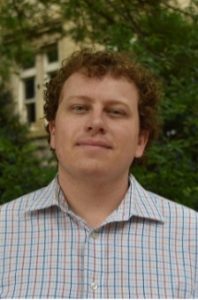
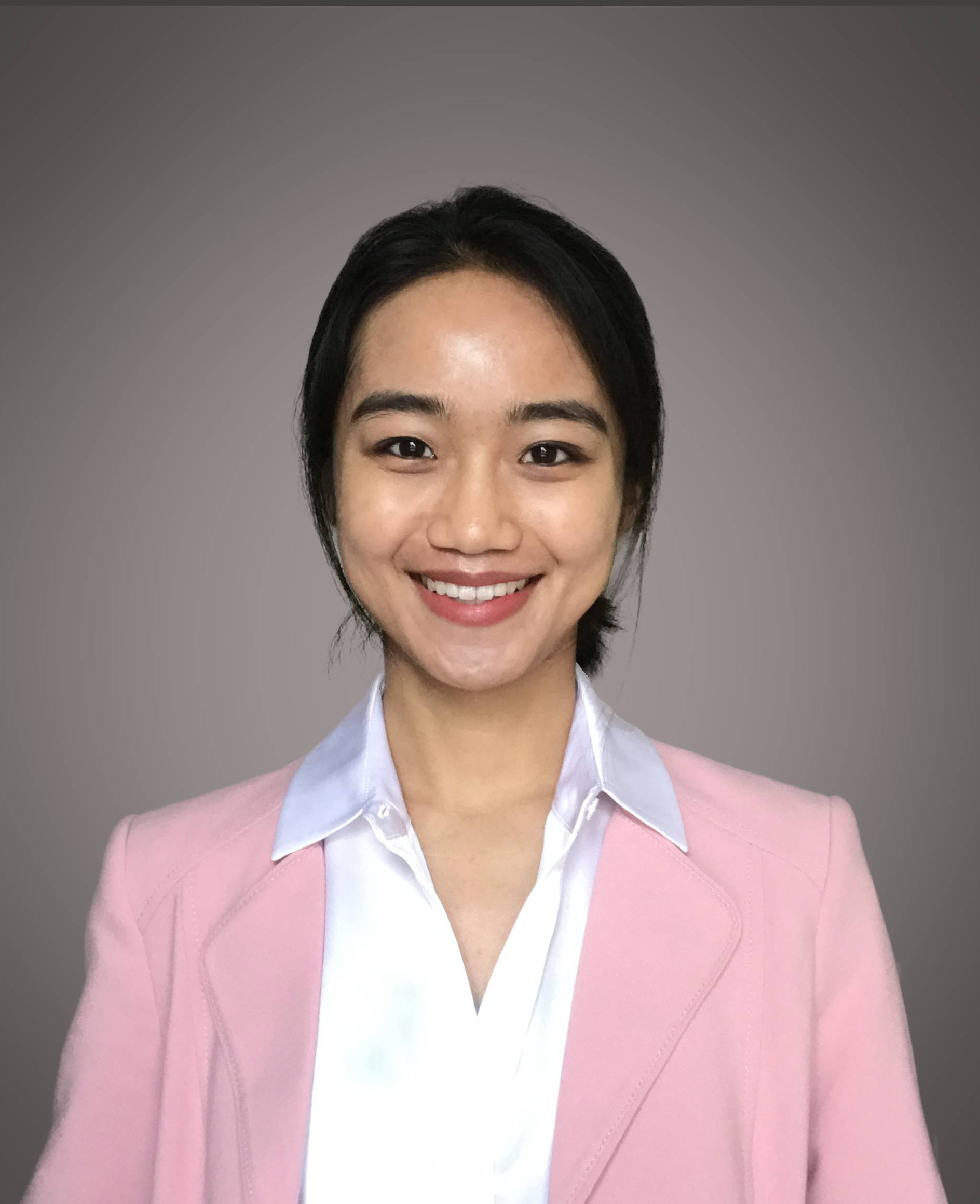
Lazar Spasovic is a Professor in the Department of Civil and Environmental Engineering at the New Jersey Institute of Technology (NJIT), serving as Director of the Intelligent Transportation System Resource Center. His research focuses on transportation engineering, traffic management, and intelligent systems, with expertise in work zones, urban transit optimization, and traffic simulation modeling. He has led federally funded projects, including a 2018 study on automated truck platooning's impact on traffic flow. Key research interests include crash severity analysis using machine learning, cost-reliability tradeoffs in public transit, and deployment of in-vehicle advisory systems. He has published extensively in peer-reviewed journals and contributed to interdisciplinary projects combining traffic engineering with data science. Media engagements include commentary on NJ Transit operational challenges and freight industry trends. Notable grants include a USDOT-funded project (2018–2019) assessing environmental and performance impacts of automated vehicles. His work integrates computational methods (e.g., genetic algorithms) with real-world transportation infrastructure challenges.
Ioannis Papamichail is a Professor at the Technical University of Crete (TUC), leading the Dynamic Systems and Simulation Laboratory. He holds academic positions since 2004 and has been a Visiting Scholar at UC Berkeley (2010). His expertise spans Mathematical Programming, Optimal Control, and Traffic Systems Optimization . Education : - PhD in Chemical Engineering (2002), Imperial College London - MSc in Process Systems Engineering (1999), Imperial College London - Diploma in Chemical Engineering (1998), National Technical University of Athens Research Interests : Focuses on Nonlinear Programming, Global Optimization, and Optimal Control , applied to traffic and transportation systems. His work addresses challenges in automated vehicle coordination, lane-free traffic systems, ramp metering, and intelligent transportation systems (ITS). Recent trends in his publications emphasize deep reinforcement learning for autonomous driving , microscopic/macroscopic traffic modeling , and multi-agent decision-making algorithms . Key Contributions : Developed lane-free automated traffic control frameworks using LQR and model-free controllers Pioneered vehicle nudging strategies for path planning in complex networks Validated control algorithms via SUMO-based microscopic simulations Awards : 2010 IEEE Transition to Practice Award (Ramp Metering Algorithms) 2014 TRB Best Paper Award (Freeway Operations) 2020 IEEE-ITS Best Paper Award Labs & Teams : Directs the Dynamic Systems and Simulation Laboratory , collaborating on projects like: Autonomous vehicle trajectory optimization Urban traffic signal control with connected vehicle data Macroscopic traffic model calibration
Larry Head is a Professor in the Department of Systems and Industrial Engineering at the University of Arizona, College of Engineering. He serves as Director of the Craig M. Berge Engineering Design Program and is a Member of the Graduate Faculty. His extensive leadership roles include former Interim Dean of Engineering and Director of the Transportation Research Institute. He is actively engaged in transportation policy as a member of the Arizona Governor’s Task Force for Self-Driving Vehicles. Education: PhD in Systems and Industrial Engineering, University of Arizona MS in Systems Engineering, University of Arizona BS in Systems Engineering, University of Arizona Larry Head's research centers on intelligent and connected transportation systems, with a strong focus on cyber-physical systems, adaptive traffic signal control, and urban traffic operations. His work integrates real-time data from connected and automated vehicles to optimize traffic flow, improve intersection safety, and support multi-modal transportation. He also contributes significantly to engineering education, teaching courses in systems engineering, simulation, and financial modeling. His recent publications (2014–2022) demonstrate a consistent trajectory in leveraging connected vehicle technology for adaptive signal control, pedestrian safety, and traffic efficiency. Key themes include priority control for emergency and freight vehicles, smooth progression modeling, and data-driven safety assessment. The research spans disciplines such as transportation engineering, machine learning, and cyber-physical systems. Scientific Awards: Trevor O. Jones Outstanding Paper Award (2021) Exceptional Paper Award, TRB Traffic Signal Systems Committee (2017) 2016 Best ITS Implementation Project 2016 Member of the Year, ITS Arizona da Vinci Fellow, College of Engineering D. Grant Mickle Award for Outstanding Paper Best Dissertation Advisor Award, COTA Larry Head has advised numerous graduate students, many of whom are co-authors on his publications. He has secured significant research funding in intelligent transportation systems, though specific grants are not listed. His professional service includes editorial work for Transportation Research – Part C and leadership in TRB, SAE, IEEE, and other societies. He leads research initiatives at the ATLAS Research Center and collaborates on interdisciplinary transportation projects. He is an active member of several research teams focused on connected vehicle systems, traffic safety, and urban mobility. His lab work emphasizes real-world implementation of intelligent signal control and data analytics for transportation infrastructure.
Vikash Gayah is a Professor in the Department of Civil and Environmental Engineering at Pennsylvania State University’s College of Engineering. He is based in the Sackett Building at University Park, PA, and is actively involved in transportation research and leadership, currently serving as the interim director of the Larson Transportation Institute. His research is affiliated with themes of equitable communities and the built environment. Dr. Gayah's research focuses on urban mobility, traffic flow theory, transportation operations, network modeling, and safety. His work addresses real-world challenges such as intersection efficiency, pedestrian safety, and the integration of connected vehicles. He has extensively studied traffic signal control strategies, crash modification factors, and the impacts of infrastructure treatments like rumble strips and high-friction surfaces. The recent publications highlight a consistent focus on traffic safety analytics, optimization of signal control, and the use of advanced modeling techniques such as Max-Pressure algorithms and empirical Bayes methods. His research spans urban and rural contexts, with applications in Pennsylvania and broader transportation networks. Key trends include multimodal integration, data-driven safety improvements, and sustainable transportation solutions. Interim Director, Larson Transportation Institute (2023–present) Research focus on equitable and sustainable transportation systems Active involvement in interdisciplinary seed grant projects through the Institute for Energy and the Environment (IEE) Dr. Gayah mentors several graduate students who co-author his publications, indicating an active research group. He has not received explicitly listed scientific awards in the provided text, but his frequent media appearances and leadership roles reflect recognition in the field. His research is supported by institutional and interdisciplinary grants, particularly those addressing climate and sustainability challenges in transportation.
Chaoru Lu is an Associate Professor of smart mobility at the Department of Civil Engineering and Energy Technology, Oslo Metropolitan University. His expertise spans intelligent transport systems, transport electrification, autonomous vehicles, and traffic flow theory. He holds a Ph.D. from Iowa State University (2017), an M.S. from Texas A&M University-Kingsville (2014), and a B.S. from Hunan University of Science and Technology (2011). Research focuses on optimizing transport systems through interdisciplinary approaches, including electric vehicle safety analysis, autonomous vehicle coordination, and sustainable infrastructure planning. He leads projects like the Net-Zero Future initiative to reduce the built environment’s carbon footprint. His work integrates AI, machine learning, and data-driven modeling to address modern transport challenges. Publications span over 39 peer-reviewed articles, covering topics like electric bus fleet management, autonomous vehicle tracking algorithms, and pandemic impacts on mobility. He collaborates with institutions globally, contributing to both academic and applied transport solutions. Research Groups: Transport, Infrastructure, and Urban development (TransFrUrban) Grants/Projects: Ongoing leadership in the Net-Zero Future project.
Dr. Janice Daniel is a Professor in the Department of Civil and Environmental Engineering at NJIT, serving as Associate Dean for Research and Graduate Studies in the Newark College of Engineering. Her expertise spans Traffic Operations, Transportation Safety, and Urban Planning. She previously held roles as Associate Chair for Graduate Studies and worked at the Port Authority of NY/NJ and a transportation consulting firm. Education includes a Ph.D. from Texas A&M University (Civil and Environmental Engineering), M.S. from Polytechnic Institute of NYU (Transportation Planning), and B.S. from Princeton University (Civil Engineering). Her research focuses on pedestrian safety at midblock crosswalks, traffic control systems, and infrastructure governance. Notable contributions include frameworks for highway construction training programs and analyses of HCM models under pedestrian-truck interactions. She also studies diversity in construction workforces and seat belt usage impacts on injury severity. Publications highlight urban traffic dynamics, public-private partnerships, and safety in work zones. Her work integrates policy, engineering, and data-driven approaches to enhance transportation systems.
Jun-Seok Oh is a Professor in the Department of Civil and Construction Engineering at Western Michigan University. He holds a Ph.D. in Civil Engineering from the University of California, Irvine, and degrees in Urban and Transportation Engineering from Hanyang University in Seoul, South Korea. He is a licensed Professional Engineer and Professional Traffic Operations Engineer®. His research focuses on transportation safety, smart mobility systems, and the integration of advanced technologies like machine learning and AI into transportation infrastructure. Dr. Oh's work emphasizes pedestrian and bicycle safety, smart city initiatives, and data-driven solutions for traffic management. He has conducted extensive studies on crash analysis using NLP and deep learning, safety performance functions for non-motorized users, and the impact of autonomous vehicles on urban infrastructure. His research also addresses equity in transportation access, particularly for older adults and vulnerable populations, and explores the effectiveness of traffic control systems like countdown signals and roundabouts. Key projects include developing decision support tools for livable communities, assessing the safety of mini-roundabouts, and evaluating the influence of smart devices on traffic signage utility. His studies frequently involve collaborations with local governments and agencies, producing actionable insights for policy and infrastructure design. Dr. Oh has led research projects funded by state and federal agencies, including studies on bicycle passing laws, adaptive traffic control systems, and the safety implications of raised freeway speed limits. His contributions span over 50 peer-reviewed articles and technical reports, reflecting a strong commitment to advancing transportation engineering through interdisciplinary innovation.
Darcy M. Bullock is the Lyles Family Professor of Civil Engineering at Purdue University's College of Engineering, serving as Director of the Joint Transportation Research Program (JTRP) and Co-Chair of the Purdue Engineering Interdisciplinary (PEI) initiative in Autonomous and Connected Systems. He is affiliated with Civil and Construction Engineering, Electrical and Computer Engineering, and Mechanical Engineering departments. His research focuses on connected and autonomous systems, crowd-sourced transportation data analytics, traffic signal performance measures, unmanned aircraft systems, and crash scene forensics. He leads projects integrating LiDAR, PTZ cameras, and connected vehicle data to enhance traffic management, safety, and infrastructure monitoring. Recent work includes developing methodologies for camera calibration, traffic signal optimization, and evaluating electric vehicle trends using connected vehicle datasets. His research also addresses winter operations, stockpile inventory via LiDAR, and crash scene reconstruction. Notable contributions include frameworks for traffic signal performance measures, salt stockpile management systems, and dashboards for transportation agencies. His interdisciplinary roles emphasize bridging civil, mechanical, and electrical engineering domains to advance smart transportation solutions.
Amir Mehrara Molan is an Assistant Professor of Civil Engineering at the University of Mississippi (University of Mississippi). He holds a Ph.D. from Wayne State University and degrees from Azad University (B.S., 2011; M.Sc., 2013). His research focuses on innovative infrastructure designs, traffic operations analysis, highway safety, intelligent transportation systems, and transportation modeling. He pioneered the Super Diverging Diamond Interchange (Super DDI) to enhance interchange efficiency and safety, particularly in underserved regions like the Wind River Indian Reservation in Wyoming. Education: B.S. Civil Engineering, Azad University (2011) M.Sc. Civil Engineering, Azad University (2013) Ph.D. Civil Engineering, Wayne State University (2017) Research Interests: Dr. Molan emphasizes multimodal transportation solutions, including pedestrian and bicycle safety, and innovative designs to address urban and rural challenges. His work integrates safety equity, traffic simulation, and data-driven decision-making to optimize infrastructure performance. Notable contributions include the Super DDI and novel approaches to coordinated ramp metering and public acceptance scoring systems for alternative intersections. Articles Trends: Recent publications focus on alternative intersection designs (e.g., Super DDI, Double Contraflow), bicycle/road safety, and the application of microsimulation and surrogate safety measures. His work bridges theoretical models with real-world case studies in Denver, Atlanta, and Wyoming. Scientific Awards: 2018 Best Paper in the ASCE Journal of Transportation Engineering Advising & Grants: Principal Investigator (PI) or Co-PI on eight projects totaling over $1.5M, funded by state DOTs and UTCs. Advises the Ole Miss ITE Chapter and contributes to TRB committees. Prior roles include Lecturer/Researcher at Cal Poly-SLO and Postdoctoral Researcher at the University of Wyoming. Labs/Teams: Collaborates with University Transportation Centers and federal/state agencies to advance applied transportation research. Engages in projects addressing rural-urban disparities and Indigenous community transportation needs.
Milan Zlatkovic is an Associate Professor in the Department of Civil & Architectural Engineering and Construction Management at the University of Wyoming, College of Engineering and Physical Sciences. He holds a Ph.D. from the University of Utah (2012) and has extensive experience in transportation engineering, including roles as Adjunct Assistant Professor (2016–2021) and Research Assistant Professor (2013–2016). His research focuses on traffic operations, intelligent transportation systems, and transportation safety, with expertise in traffic signal systems, connected vehicles, and crash analysis. He is a licensed Professional Engineer (P.E.) in Utah and a Certified Professional Traffic Operations Engineer (PTOE). Education: Ph.D., Civil and Environmental Engineering, University of Utah (2012) M.S., Civil and Environmental Engineering, University of Utah (2009) B.S., Traffic and Transportation Engineering, University of Belgrade (2005) Research Interests: His work emphasizes traffic signal optimization, connected and autonomous vehicle systems, freeway safety, and transportation planning. Key areas include transit signal priority, microsimulation modeling, and crash severity analysis. He has led studies on innovative interchange designs, truck climbing lanes, and motorcycle safety in mountainous regions. Teaching: Courses include Transportation Engineering (CE 3500), Traffic Simulation (CE 4565/5565), and Sustainable Transportation (CE 5700). He integrates advanced simulation tools and real-world data into his curriculum. Labs/Teams: Collaborates on projects involving traffic simulation, connected vehicle technologies, and safety policy development. His work is supported by agencies like the Transportation Research Board and the University of Wyoming.
Adrian Cottam is an Assistant Professor in the Department of Civil and Environmental Engineering at Auburn University , affiliated with the Auburn University Transportation Research Institute (AUTRI) . His work bridges transportation engineering and data science, focusing on intelligent systems and urban mobility solutions. Ph.D., M.E., and B.S. in Civil Engineering from the University of Arizona Certificate of College Teaching (2021) Associate of Science from Pima Community College (2016) His research interests include Intelligent Transportation Systems , Traffic Estimation , and Machine Learning , with applications in freeway operations, micro-mobility, and traffic data imputation. Recent publications highlight the use of crowdsourced data for crash-induced delay modeling, transfer learning for ramp metering, and micro-mobility integration into urban transit. Adrian leverages hybrid data and machine learning frameworks to address challenges in transportation safety and efficiency. His work spans topics like traffic flow estimation, sensor data imputation, and transit arrival prediction using interaction networks. He employs tools such as AutoCAD , VISSIM , and programming languages like Python and R to advance transportation systems. His skills also include web development and database management. Adrian’s research has been presented at the Transportation Research Board Annual Meeting, including contributions to freeway operations and safety projects. He collaborates with institutions like the Midwest Roadside Safety Facility and the U.S. Army Corps of Engineers on transportation safety initiatives.
Daniel Work is a Chancellor Faculty Fellow and Professor of Civil and Environmental Engineering, Computer Science, and the Institute for Software Integrated Systems at Vanderbilt University. He directs the Work Research Group, focusing on transportation cyber-physical systems (CPS), traffic flow modeling, and autonomous vehicle technologies. His work includes pioneering methods to eliminate phantom traffic jams using automated vehicles and leading the I-24 MOTION project, a large-scale testbed for connected and autonomous vehicles. Education: Ph.D. in Systems Engineering, UC Berkeley (2010) MS in Civil and Environmental Engineering, UC Berkeley (2007) B.S. in Civil and Environmental Engineering, Ohio State University (2006) Research Interests: Autonomous vehicle control and traffic wave smoothing Data analytics for transportation systems Freight rail and urban mobility optimization Human-in-the-loop CPS applications Awards: 2018 NAE Gilbreth Lectureship 2014 NSF CAREER Award IEEE ITS Society Best Dissertation (2011) Featured in Scientific American and ABC's Good Morning America Labs & Projects: I-24 MOTION Testbed: 17-mile freeway instrumented with 300+ cameras CIRCLES Consortium: Mixed-autonomy traffic control AI Decision Support System for Integrated Corridor Management
Matthew Bhagat-Conway is an Assistant Professor in the Department of City and Regional Planning at the University of North Carolina. He holds a joint appointment at the Odum Institute for Research in the Social Sciences, where he supports statistical and data analysis efforts. His research focuses on travel behavior, urban transportation systems, and advanced statistical methods applied to transportation data. Dr. Bhagat-Conway earned a PhD and MA in Geography from Arizona State University, and a BA in Geography from the University of California, Santa Barbara. Prior to academia, he worked as a software developer at Conveyal, a transit planning firm, and participated in the University of Chicago’s Data Science for Social Good fellowship. His research explores pandemic impacts on transportation patterns, including studies showing post-COVID traffic distribution changes in California and telecommuting persistence. He also investigates transit accessibility metrics, fare structures, and the integration of new technologies in transportation planning. Key contributions include developing pedagogical tools like the 'My First Four-Step Model' for teaching travel demand modeling, and creating the Standardized Transport Attitude Measurement Protocol (STAMP) to enhance behavioral model accuracy. His work bridges data science with urban planning, emphasizing practical applications for policy makers. Currently accepting PhD advisees, Bhagat-Conway collaborates with agencies to improve transit accessibility and advocates for evidence-based urban revitalization strategies through data-driven approaches.
Professor Md. Mazharul Haque is a distinguished academic and researcher in transportation engineering at Queensland University of Technology (QUT), Australia. He serves as Head of the School of Civil & Environmental Engineering and holds a Professorial rank. His expertise spans econometrics, artificial intelligence, and traffic safety. He has secured over $3 million in research funding, published over 110 peer-reviewed articles, and achieved an h-index of 27 (Scopus) and 33 (Google Scholar). His work is recognized through prestigious roles like Associate Editor of Accident Analysis & Prevention and ASCE Journal of Transportation Engineering . Research focuses include Traffic Conflict Analysis, Connected and Automated Vehicles (CAVs), Human Factors in Driving, and Black Spot Identification. He co-founded the startup Advanced Mobility Analytics Group (AMAG), developing AI-driven road safety tools. Awards include the TRB Outstanding Paper Award (2020, 2016) and the John Kirby Award (2014). He has advised multiple PhD students on topics like CAV integration, safety modeling, and traffic flow optimization. His grants address real-time risk assessment, safety evaluation of traffic signals, and CAV behavioral impacts. Education includes a PhD from the National University of Singapore (2005–2009) and degrees from Bangladesh University of Engineering and Technology (BUET). Professional memberships include TRB Committees, ASCE, and editorial roles in leading journals. Key contributions include pioneering AI-based video analytics for crash risk forecasting and advancing econometric models for transportation systems.
Dr. Yanbing Wang is a tenure-track Assistant Professor at Arizona State University's School of Sustainable Engineering and the Built Environment (SSEBE), where she leads applied research initiatives with government and industry partners on intelligent transportation systems and mobility analytics. Before joining ASU in 2025, she conducted postdoctoral research at Argonne National Laboratory's Transportation and Power Systems division and earned her PhD in Civil and Environmental Engineering from Vanderbilt University in 2023. PhD, Civil and Environmental Engineering, Vanderbilt University (2023) BS, Civil and Environmental Engineering, University of Illinois at Urbana-Champaign (2018) Dr. Wang specializes in advancing transportation cyber-physical systems (CPS) through computationally-efficient tools for large-scale empirical data generation and analysis. Her work bridges theory and practice via real-world experimentation with Tennessee's I-24 MOTION testbed and collaboration with public agencies. Key research themes include connected vehicle dynamics, adaptive cruise control personalization, and real-time traffic monitoring frameworks. Her 15 most recent publications (2024-2022) demonstrate interdisciplinary trends spanning transportation engineering, computer vision, control theory, and environmental data science. Articles focus on trajectory reconstruction, multi-object tracking algorithms, digital twin infrastructure, and machine learning applications for traffic stability, with notable emphasis on heterogeneous traffic estimation, parameter calibration, and 3D vehicle tracking benchmarks. Cyber-Physical Systems Rising Star (University of Virginia, 2023) Dwight D. Eisenhower Transportation Fellowship (FHWA, 2018-2023) Sidney P. Colowick Graduate Scholarship (Vanderbilt, 2021) Best Student Paper Award at SMC 2020 Dr. Wang advises MS students like Raswanth Prasath, whose work on multi-object tracking was spotlighted at ASU's Graduate Poster Symposium. Her research has been supported by Department of Energy funding at Argonne and a USDOT grant through the Eisenhower Fellowship. She collaborates with institutions including Toyota InfoTech Labs, Mitsubishi Electric Research Laboratories, and UCLA's IPAM, while leading projects like the I-24 MOTION data infrastructure and CIRCLES congestion reduction initiative.