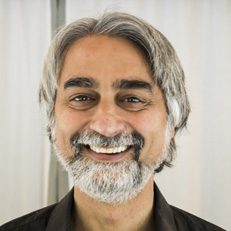
Gilbert Fridgen is Full Professor in Digital Financial Services and holder of the PayPal-FNR PEARL Chair at the University of Luxembourg's Interdisciplinary Centre for Security, Reliability and Trust (SnT). He leads the FINATRAX research group focusing on blockchain, digital identity, and sustainable digital solutions. His research explores decentralized technologies in finance, energy systems, and public administration. Current projects investigate blockchain applications in industrial demand response, NFT markets, EU digital identity wallets, and DeFi institutional adoption. Prof. Fridgen examines the intersection of technology with regulatory frameworks and user behavior in energy and financial systems. He collaborates extensively with industry partners including PayPal and Spuerkeess. Prof. Fridgen actively contributes to EU digital policy discussions, particularly regarding the European Digital Identity Wallet framework and decentralized finance governance.
Johnnie Bejarano serves as a Senior Lecturer in the Department of Accounting and Finance within the Anderson College of Business and Computing at Regis University. His teaching portfolio includes forensic and fraud audit, non-profit and governmental accounting, accounting ethics, and financial communication. Dr. Bejarano's research focuses on mitigating fraud, behavioral ethics, and regulatory ethics, exemplified by his doctoral dissertation "Mitigating Corporate Financial Fraud: A Qualitative Study". He holds multiple professional certifications including CPA (Colorado), Certified Fraud Examiner (CFE), Chartered Global Management Accountant (CGMA), and Certified Government Financial Manager (CGFM). His career spans decades of leadership roles: Chair of the Association of Certified Fraud Examiners (ACFE) Chair of the ACFE Board of Review Vice-Chair of the Colorado State Board of Accountancy He retired as a Lieutenant Colonel from the U.S. Air Force, Air National Guard, where he served as Deputy Commander for Support in a combat zone. Current professional engagements include: Editorial advisory committee for Fraud Magazine (ACFE) Board of Directors for the Colorado Chapter of ACFE Accounting Careers Committee member, Colorado Society of CPAs Dr. Bejarano is an avid photographer and enjoys spending time with his two granddaughters.
Dr. Ruiqiao Zhang serves as a Senior Lecturer in Corporate Finance, Corporate and Commercial Law at the University of Edinburgh's School of Law, where she is affiliated with the Edinburgh Centre for Commercial Law. Her office hours are held Thursdays from 13:00-14:00, and she can be contacted via telephone (+44 (0)131 650 6957) or email (Ruiqiao.Zhang@ed.ac.uk). Her academic credentials include: Bachelor of Law and Bachelor of Science from Chinese institutions Master of Civil and Commercial Law (China), Master of International Commercial and Trade Law (Netherlands), and Master of Comparative Law (Canada) Doctor of Civil Law (DCL) from McGill University under Professor Lionel Smith Dr. Zhang's research centers on trust law evolution in financial markets, with emphasis on comparative analyses between Common Law and Civil Law systems—particularly China's adoption of trust principles. Her work examines trustee roles in commercial contexts, beneficiary interests in commercial trusts, and regulatory frameworks for trust applications in asset management. She bridges theoretical legal concepts with practical financial market demands, highlighting tensions between traditional trust structures and modern entrepreneurial functions. Analysis of her publication trends reveals consistent focus on trust law's adaptation to financial innovation, with increasing attention to Chinese regulatory frameworks and cross-border implications. Her research spans corporate finance, international trade law, and property rights, demonstrating how commercial trusts evolve from guardian entities to active financial instruments while navigating jurisdictional complexities. No scientific awards were documented in the provided materials. Dr. Zhang accepts PhD students and maintains active advisory roles with the Scottish Ethnic Minorities Lawyers Association, China Law Society, and Cross Party Group on China of the Scottish Parliament. Her consultancy work connects academic research with policy development in UK-China legal cooperation, including participation in the Third UK-China Rule of Law Roundtable. She contributes to the Edinburgh Centre for Commercial Law's research initiatives, focusing on commercial trusts' regulatory challenges and their integration into civil law jurisdictions through comparative legal studies.
Professor Duc Duy (Louis) Nguyen is Professor in Finance at Durham University Business School. Previously, he was Associate Professor at King's College London and Assistant Professor at University of St Andrews. His research has been featured in Forbes, Harvard Business Review, and BBC. He holds a BSc in Computing from National University of Singapore, MSc in Accounting, Finance, and Management from University of Bristol, and PhD in Finance from University of Edinburgh. Research foci include: Climate risk integration in mortgage markets and corporate finance Impact of social policies (e.g., marriage equality) on credit access Corporate governance and misconduct prevention in banking Local information environments and fraud detection Cross-cultural dimensions of executive decision-making His publication portfolio demonstrates consistent examination of how institutional frameworks (regulation, culture, governance) shape financial behaviors and market outcomes, with recent emphasis on climate finance and social equity impacts. Awards include: David Hume Publication Prize (2015) Semi-finalist, FMA Europe Best Paper Award (2018) Finalist, FMA Asia/Pacific Best Paper Award (2019) Best Registered Report on "Politics and Corporate Power" Vietnam Symposium in Climate Transition Best Paper Award (2024) He currently supervises PhD candidates Bingzhi Zhang and Jing Wei. His externally funded research includes grants from British Academy/Leverhulme Trust and Carnegie UK Trust. He serves as Associate Editor for European Journal of Finance and British Accounting Review. As frequent speaker at central banks and policy forums (Federal Reserve Banks of New York & St. Louis), he translates research insights into regulatory practice and policy development.
Prof. Dr. Peter Gomber is Chair of e-Finance at the Faculty of Economics and Business, Goethe University of Frankfurt, Germany. He serves as Co-Chairman and member of the Board of the 'efl – the Data Science Institute', an industry-academic partnership between Frankfurt and Darmstadt Universities and leading industry partners. Additionally, he is a member of the Exchange Council of the Frankfurt Stock Exchange, Supervisory Board of Clearstream Banking AG, and Research Fellow at the Leibniz Institute for Financial Research SAFE in Frankfurt. Prof. Gomber received his Ph.D. at the Institute of Information Systems at the University of Giessen in 1999 after graduating in Business Administration. Before joining Goethe University in 2004, he worked for five years as Director, Head of Market Development Cash Markets and Xetra Research at Deutsche Börse AG, where he developed new market models and products for cash market trading on Xetra. His research focuses on market microstructure theory, digital finance and fintech, regulatory impact on financial markets, and electronic trading systems. With over 150 publications in leading international journals, his work has significantly influenced the field, particularly his highly cited papers on the Fintech Revolution. His recent research examines market fragmentation, circuit breakers, research unbundling under MiFID II, and the application of AI in financial markets. Prof. Gomber's extensive publication record shows a clear evolution from traditional market microstructure and electronic trading systems toward digital finance, fintech innovations, and regulatory impact analysis. His work bridges technical aspects of financial markets with regulatory considerations, demonstrating how technological innovations interact with market structure and regulation. His scientific recognition includes: IBM Shared University Research Grant (2007) Reuters Innovation Award (2000) Best Paper Award of the Journal of the Association for Information Systems (2020) Best Information Systems Publications Award (2020) Top 1 and Top 3 most cited articles in Fintech research (2025 bibliometric analysis) Prof. Gomber has successfully supervised numerous PhD students, including Tino Cestonaro who won the Best PhD Paper Award 2025. He has acquired significant research funds from both public institutions and the private sector. Notably, a market model invention by Prof. Gomber was granted a patent by the United States Patent and Trademark Office, with two additional market model inventions filed for patent in Europe and the US. He leads an active research team at the Chair of e-Finance, including researchers like Benjamin Clapham, Micha Bender, and Tino Cestonaro. The team collaborates closely with the efl – the Data Science Institute and the Leibniz Institute for Financial Research SAFE, bridging academic research with practical applications in financial markets.
Mark J. Loewenstein is the Monfort Professor of Commercial Law at the University of Colorado Law School, where he has been a faculty member since 1979. He teaches courses in Business Associations, Securities Law, and Contracts, and has established himself as a leading scholar in business law. Professor Loewenstein previously practiced business law at a Chicago law firm before joining academia and has maintained strong connections with the legal profession throughout his career. Professor Loewenstein's educational background includes: JD from the University of Illinois, Champaign-Urbana BA from the University of Illinois, Champaign-Urbana Professor Loewenstein's research focuses on business associations, agency law, and securities law, with particular expertise in corporate governance. His scholarly work examines the legal structures of business organizations, fiduciary duties in unincorporated entities, and the evolving landscape of corporate law. He has made significant contributions to understanding LLC governance, veil piercing doctrines, and the application of good faith principles in business contexts. His comparative work on stakeholder protection in Germany and Japan demonstrates his international perspective on corporate governance issues. Analysis of Professor Loewenstein's publications reveals a consistent focus on the intersection of business organization law and corporate governance. His work spans theoretical examinations of agency principles, practical analyses of LLC structures, and historical perspectives on corporate law developments. A notable trend in his scholarship is the examination of how traditional corporate law concepts apply to newer business forms, particularly limited liability companies. His publications also demonstrate a strong interest in the balance between state and federal regulation of business entities. Professor Loewenstein has received significant professional recognition: Monfort Professor of Commercial Law (endowed chair) Fulbright Scholar at Hokkaido University, Japan (1990-91) Visiting Professor at University of Michigan Law School (1999) Throughout his career, Professor Loewenstein has demonstrated exceptional service to both the University of Colorado Law School and the broader legal community. He served as associate dean for academic affairs for nine years and associate dean for research for four years. He was a member of Colorado's Securities Board from 1995 to 2000 and contributed to the drafting of the 1994 Colorado Business Corporation Act. As a delegate to the ABA House of Delegates (1999-2005) and active member of the ABA's business law committee, he has influenced business law development at the national level. His service extends to editorial roles for legal publications and frequent presentations at professional conferences. Professor Loewenstein maintains strong connections with the legal practice community through his ongoing service on the Colorado Bar Association's Corporate Law Revision Committee and his contributions to continuing legal education programs. His work bridges academic scholarship and practical legal application, making him a valued resource for both students and practitioners.
Shaker A. Zahra is the Robert E. Buuck Chair of Entrepreneurship and Professor of Strategy and Entrepreneurship at the Carlson School of Management, University of Minnesota. He has served as department chair for 9 years, Director of the Holmes Center for Entrepreneurship for 10 years, and Academic Co-Director of Carlson Ventures Enterprises. Previously, he held positions as Paul T. Babson Distinguished Professor of Entrepreneurship at Babson College and Professor of Strategy & Entrepreneurship at Georgia State University. His educational background includes: PhD in Business Administration, Business Policy & Managerial Economics from University of Mississippi MBA (with Distinction) in Management/MIS from National University B. Commerce (with Honors) in Management from Al-Azhar University Dr. Zahra's research focuses on international entrepreneurship, corporate entrepreneurship, technological innovation in global industries, and dynamic capabilities. His work examines how firms navigate global markets, develop innovative capabilities, and create value through strategic entrepreneurship. He studies industry emergence, strategic choices in entrepreneurial firms, and the evolution of novelty in company strategies, contributing significantly to knowledge-based and dynamic capabilities perspectives. His extensive publication record spans leading journals including Academy of Management publications, Strategic Management Journal, Journal of International Business Studies, and Journal of Business Venturing. His research covers diverse industries such as robotics, software applications, mobile applications, video games, pharmaceuticals, and nanotechnology across multiple countries including China, Brazil, India, and several European nations. Scientific recognition includes: 2014 Global Award for Entrepreneurship Research Multiple Best Paper Awards from leading journals Five honorary PhD degrees from prestigious institutions worldwide Research.com Business and Management in United States Leader Award (2022-2025) Fellowships in Academy of Management and other professional associations Dr. Zahra has advised or served on committees for over 75 PhD students and has received multiple teaching awards including the Mentor Award from the Entrepreneurship Division of the Academy of Management. His leadership extends to editorial roles on over 25 journal editorial boards and service as Chair of the Entrepreneurship Division of the Academy of Management. He has been a keynote speaker at more than 40 international conferences and has consulted for major global technology companies. His research projects span multiple countries and industries, examining how firms develop capabilities to compete in global markets. He has established several research centers including the Center for Integrative Leadership at the University of Minnesota and has directed major entrepreneurship research conferences including the Babson Kauffman Entrepreneurship Research Conference.
Jordan Siegel is a Professor of Strategy at the Ross School of Business, University of Michigan, and a Michael R. and Mary Kay Hallman Faculty Fellow. He also serves as a Visiting Faculty member at The American College of Greece (ACG). His academic background includes a Ph.D. from MIT, and B.A. and M.A. degrees from Yale University. Professor Siegel’s research focuses on global strategy, particularly how companies leverage institutional differences across borders to gain competitive advantages through governance and human resource management strategies. His work examines institutional arbitrage—how firms exploit formal and informal rules (e.g., laws, cultural norms) to enhance performance, even in single-country operations. Notably, he investigates how foreign multinationals in Japan and South Korea exploit social biases by promoting female managers, leading to long-term performance improvements. His findings highlight the strategic use of labor market discrimination as a competitive tool. Professor Siegel’s research has been published in top-tier journals such as Management Science , Administrative Science Quarterly , and Strategic Management Journal . He is affiliated with the William Davidson Institute and Harvard Korea Institute, contributing to interdisciplinary studies on global business strategy and institutional dynamics.
Adam B. Badawi is a Professor of Law at the University of California, Berkeley - School of Law, where he maintains an active research agenda at the intersection of law, finance, and corporate governance. His scholarly work has established him as a leading expert in contract law, M&A transactions, securities litigation, and ESG compliance. Professor Badawi's research interests span multiple dimensions of corporate law and legal theory. His work on contractual complexity, particularly in debt agreements and M&A transactions, has provided significant insights into how legal drafting affects economic outcomes. He has extensively examined the business judgment rule, board authority, and the role of courts in corporate governance. More recently, his research has expanded into ESG-related topics, analyzing how environmental, social, and governance considerations intersect with traditional corporate law frameworks. His methodological approach often combines legal analysis with empirical techniques, including text analysis of legal documents and event studies of litigation outcomes. Professor Badawi's scholarly output demonstrates consistent high-impact research across multiple domains of corporate law. His early work focused on foundational aspects of contract theory and interpretation, while his more recent publications reflect growing interest in ESG metrics, executive compensation structures tied to sustainability goals, and the evolving regulatory landscape. The trajectory of his research shows a progression from theoretical legal analysis toward increasingly empirical and interdisciplinary approaches that bridge law with finance and data science. Professor Badawi has collaborated with numerous scholars across different institutions, including Duke University, Stanford Law School, and the University of Chicago Law School, reflecting the interdisciplinary nature of his work and its relevance to multiple academic communities.
The Chinese University of Hong Kong (CUHK)Hong Kong SAR
Dr. Dicky Tsang is an Associate Professor at the Faculty of Law , The Chinese University of Hong Kong. He holds degrees from Georgetown University (S.J.D.), Columbia University (LL.M., J.D.), University College London (LL.M.), and the University of Hong Kong (LL.B., PCLL). His practice experience includes corporate finance law at Linklaters and Shearman & Sterling across New York, London, Hong Kong, Beijing, and Shanghai. Admitted to practice in New York, England & Wales, and Hong Kong Research Interests : Dr. Tsang specializes in Private International Law and Company Law , focusing on cross-border corporate liability, veil-piercing, arbitration agreements, and FRAND litigation. His work bridges empirical legal analysis with comparative law frameworks. Publication Trends : His recent scholarship examines jurisdictional conflicts, enforcement of foreign judgments, and regulatory challenges in global corporate law. Publications span journals like Virginia Journal of International Law and Journal of Private International Law . Scientific Awards : Outstanding Research Impact Award 2022-23 CUHK Research Excellence Award 2019-2020 CUHK Teaching Excellence Award 2016-2017 Grants : He has led multiple RGC-funded projects, including empirical studies on China’s choice-of-law regime and foreign judgment enforcement. Collaborative grants explore corporate governance and legal education in Asia.
Emie Yiannaka is a Professor in the Department of Agricultural Economics at the University of Nebraska-Lincoln, affiliated with the College of Agricultural Sciences and Natural Resources. Her research focuses on the economic impacts of new technologies and policies in the agri-food sector, including genetically modified products, food fraud, and consumer behavior. Ph.D. in Agricultural Economics, University of Saskatchewan (2002) M.Sc. in Agricultural and Resource Economics, Mediterranean Agronomic Institute at Chania, Greece (1996) M.A. in Agricultural Policy, Mediterranean Agronomic Institute at Chania, Greece (1995) B.Sc. in Agricultural Economics, Aristotle University of Thessaloniki, Greece (1994) Her research spans topics such as innovation economics, intellectual property strategies, consumer acceptance of food technologies, and the economic effects of corporate social responsibility. Recent work examines food fraud deterrence, information avoidance behavior, and ecosystem services valuation. She has published extensively in journals like Journal of Agricultural and Resource Economics , PLOS ONE , and American Journal of Agricultural Economics . Yiannaka has taught courses including Agricultural Marketing in Multinational Environments, Applied Welfare Economics, and Innovation Strategies. She has mentored numerous advisees, including Mavroutsikos C., Deka A., Britwum K., and Meerza S.I.A., who co-authored key publications on food fraud and consumer behavior.
Ran Spiegler is a Professor of Economics at both Tel Aviv University and University College London (UCL). He holds a PhD in Economics from Tel Aviv University (1999). His research focuses on economic theory, behavioral economics, and bounded rationality, with notable contributions to understanding decision-making under flawed causal reasoning, narrative-driven political and economic dynamics, and market behaviors influenced by limited consumer rationality. Spiegler has held roles including Member at the Institute for Advanced Study (Princeton, 2000-2001) and Prize Research Fellow at Nuffield College, Oxford (1999-2000). Education: PhD in Economics, Tel Aviv University (1999) Affiliations: Professorships at Tel Aviv University (2009–present) and UCL (2006–present) Research Interests: Spiegler’s work explores how bounded rationality shapes economic outcomes, including consumer decision-making, market competition, and the role of narratives in political mobilization. He has authored influential books like Bounded Rationality and Industrial Organization (2011) and The Curious Culture of Economic Theory (2024), which critique and expand economic theory’s methodologies. Recent Articles: His recent work examines topics such as false narratives in politics, monopolistic data practices, and competitive markets with imperfectly discerning consumers. These studies highlight interdisciplinary applications of economic theory to modern challenges like algorithmic transparency and platform economics. Awards: Prize Research Fellow, Nuffield College, Oxford (1999–2000) Grants & Labs: While specific grants are not detailed, his research is funded through institutional affiliations. He collaborates widely, with notable co-authors like Kfir Eliaz and Yair Antler.
Jared Eutsler is an Associate Professor of Accounting in the Department of Accounting at the G. Brint Ryan College of Business, University of North Texas, where he has been a faculty member since 2016. He holds multiple professional certifications including CPA, CMA, CFM, and CFE, and brings industry experience from Ernst & Young and the PCAOB to his academic role. His educational qualifications are: Ph.D. in Business Administration-Accounting from the University of Central Florida Masters in Accountancy and Information Systems from Arizona State University Bachelors in Accountancy from Grand Canyon University Dr. Eutsler specializes in auditing research with core interests in audit regulation, fraud detection mechanisms, and professional skepticism dynamics. His scholarly work examines behavioral aspects of auditor judgment, regulatory impacts on audit quality, and fraud vulnerabilities across contexts including education systems and public health reporting. He has published in premier outlets such as Accounting Organizations and Society and Auditing: A Journal of Practice and Theory, demonstrating methodological diversity through experimental, archival, and case-based approaches. Analysis of his 15 most recent publications reveals consistent focus on auditor-client interactions and regulatory compliance, with growing emphasis on real-world applications. Recent work extends into emerging domains like equity crowdfunding decision-making and politicization of financial reporting data, while maintaining strong connections to foundational auditing principles. His research increasingly employs behavioral experiments to model professional skepticism threats and mitigation strategies in complex audit scenarios. Dr. Eutsler has been recognized with the G. Brint Ryan College of Business Teaching Innovation Award for his excellence in classroom instruction. His professional service includes significant public-sector engagement through the Audit & Finance committee for the City of Corinth and the Board of Directors for Denton County Transportation Authority, where he applies academic expertise to governmental financial oversight. No information on student advising or research grants was provided in the source material. No research labs or specialized teams are mentioned in the available documentation.
Vasant Dhar is the Robert A Miller Professor of Business and Professor of Data Science at the Leonard N. Stern School of Business at New York University. He serves as Director of Industry Relations and specializes in Technology, Operations, and Statistics. Joining Stern in 1983, Professor Dhar has established himself as a leading expert in artificial intelligence, data science, and financial technology. Professor Dhar's educational background includes: Ph.D. in Artificial Intelligence from the University of Pittsburgh (1984) M.Phil. from the University of Pittsburgh (1982) B.Tech. in Chemical Engineering from the Indian Institute of Technology, Delhi (1978) His research focuses on how risk influences our trust in AI systems, demonstrating the existence of an "automation frontier" that expresses a tradeoff between how often machines will be wrong and the consequences of their errors. Professor Dhar examines how innovations such as Artificial Intelligence impact our lives, and how we can create technology and policy for a better future in a world of increasingly intelligent machines. His work spans financial applications of AI, where he was among the first to bring machine learning to Wall Street in the 1990s, founding the machine-learning-based hedge fund SCT Capital Management. Professor Dhar's recent publications reveal a strong focus on the practical applications and societal implications of AI. His work addresses critical issues including AI reliability in financial document analysis, the governance of AI companies, ethical considerations in biometric payments, and the evolving relationship between humans and increasingly intelligent machines. His research demonstrates how AI is transforming various sectors while raising important questions about trust, accountability, and the future of work. Among his notable recognitions is the Robert A Miller Professorship, an endowed chair position at NYU Stern. His research has been funded by grants from industry and government agencies such as the National Science Foundation. Professor Dhar teaches courses on Systematic Investing, Data Science, Prediction, and Tech Innovation. He has written over 100 research articles and is the host of the "Brave New World" podcast, which explores how technology and virtualization in the post-COVID era is transforming humanity. He publishes fortnightly at vasantdhar.substack.com and is a frequent speaker in academic and industrial forums.
Shrirang Mare is an Assistant Professor in the Computer Science Department at Western Washington University (WWU), focusing on computer security and privacy with emphasis on usable security solutions for diverse user groups including low-literate individuals, the elderly, and cross-cultural populations. His research bridges human-computer interaction and cyber-physical systems to create accessible security mechanisms for emerging technologies. His educational background includes a PhD in Computer Science from Dartmouth College (2016), where his dissertation on seamless authentication for ubiquitous devices established his research trajectory. Dr. Mare's research interests encompass security and privacy, human-computer interaction, and cyber-physical systems, with specialized focus on security for low-literate users and developing regions. His work consistently addresses real-world applicability through field studies in countries like India and Pakistan, examining mobile payment systems, SMS fraud, and smart home privacy challenges. Analysis of his 15 most recent publications (2018-2024) reveals a dominant trend in wearable-based authentication systems (wristbands for desktops/smartphones) and privacy solutions for consumer IoT, particularly smart homes. His research uniquely combines technical security mechanisms with deep user-centered design principles, often targeting underserved populations in developing regions. No scientific awards or fellowships were mentioned in the provided documentation. Teaching responsibilities include Privacy Enhancing Technologies, Object Oriented Design, and Data Structures at WWU, with prior guest lectures at UC Berkeley and the University of Washington; no current advisees or grant funding details were specified. Dr. Mare operates within the Computer Science Department at WWU but no dedicated research lab or team structure was referenced in the source materials.