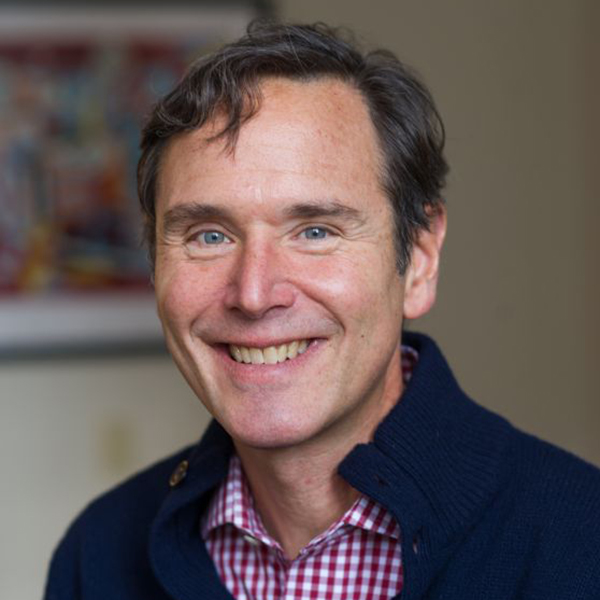
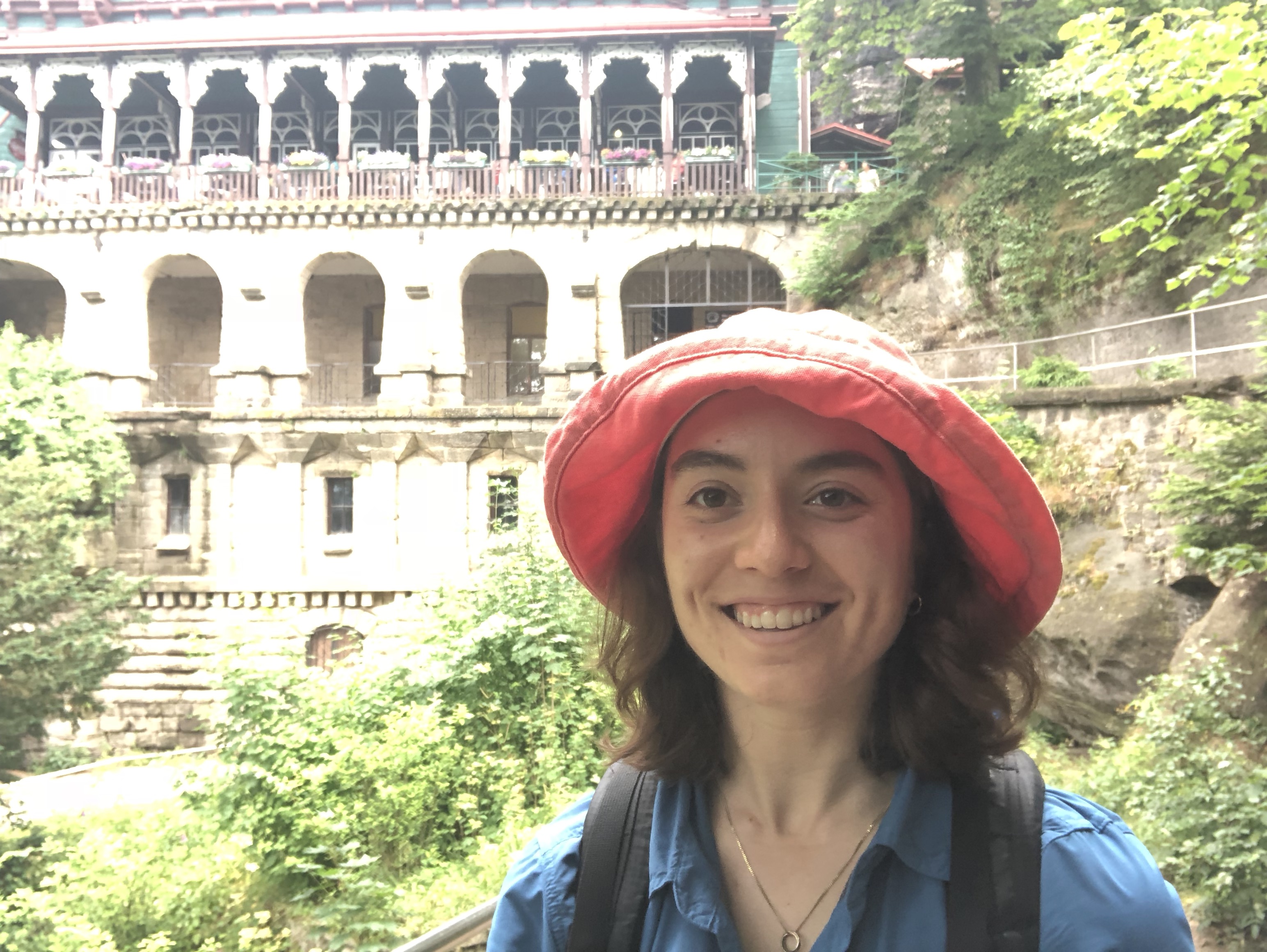
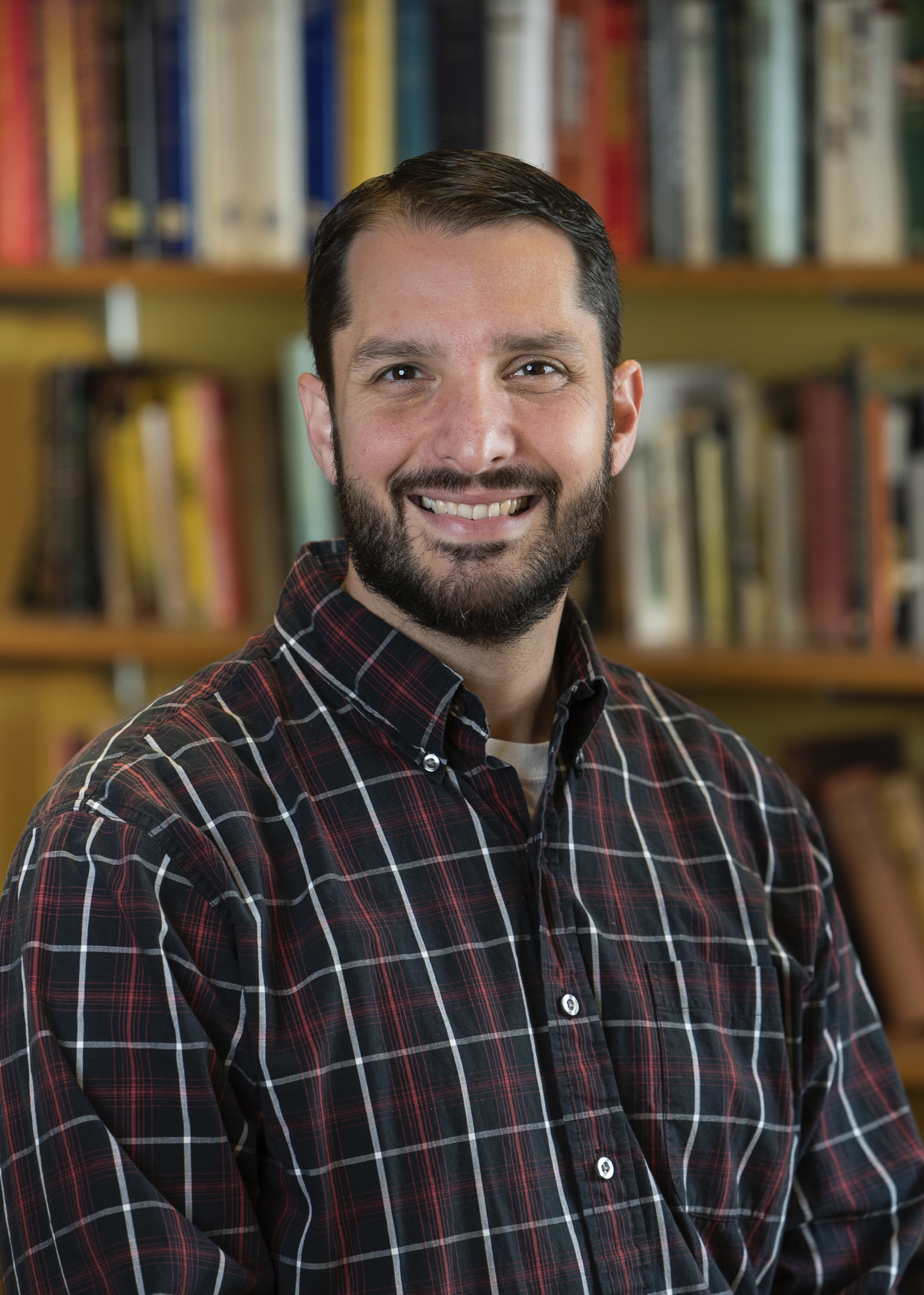
Roberto Franzosi is a Professor of Sociology and Linguistics at Emory University's Department of Sociology within the Emory College of Arts and Sciences. He specializes in narrative analysis, content analysis, and historical sociology. His research focuses on social protest, political violence, and language measurement, with notable projects on Italian fascism and racial violence in Georgia. Franzosi has authored influential books such as From Words to Numbers and Quantitative Narrative Analysis , advancing methodologies for analyzing textual and narrative data. Education: PhD in Sociology, Johns Hopkins University, 1981 BA in Literature, University of Genoa, 1975 Research Interests: Franzosi's work bridges sociology and linguistics, emphasizing the application of quantitative methods to narrative data. His projects include analyzing labor strikes in Italy, the rise of fascism, and racial lynchings using newspaper archives. He advocates for integrating narrative analysis with computational tools to study historical and social phenomena. Publications: Franzosi's recent articles explore semantic grammars, frame analysis, and network analysis of narrative content. His work addresses methodological debates in mixed-methods research, emphasizing the synergy between qualitative and quantitative approaches. Teaching & Engagement: He teaches courses on data science, sociolinguistics, and historical sociology. His office is located at Tarbutton Hall 212, and he can be reached via email at rfranzo@emory.edu .
Jennifer Grandits is a Principal Lecturer in the Department of Psychology at Clemson University, affiliated with the College of Behavioral, Social and Health Sciences. She holds a PhD in Developmental Psychology from the University of Connecticut (2013), along with a Quantitative Research Methods Certificate, MA in Developmental Psychology (2010), and dual BA degrees in Psychology and Sociology from the University of Virginia (2007). Her research focuses on autism spectrum disorder interventions, implicit biases in healthcare, and aging workforce adaptation. She teaches courses in experimental psychology and lifespan development. Key research themes include sensory-based interventions for autism, cross-cultural stigma analysis, and leveraging machine learning for predictive modeling in health contexts. Her work bridges developmental psychology with practical applications in education and clinical settings. Expertise areas: Neurodiversity, child development, applied statistics Recent projects involve collaborations with autistic communities in curriculum design Teaching responsibilities include foundational psychology courses and advanced lifespan development studies. Her CV highlights contributions to inclusive education programs and technology adoption initiatives for older adults.
Dr. Deborah Talmi is a University Associate Professor in the Department of Psychology and a Fellow of Lucy Cavendish College at the University of Cambridge. Her research focuses on the cognitive, computational, and neurobiological mechanisms underlying emotional processes, particularly their intersection with memory, perception, and attention. She leads the Emotional Cognition Lab, which employs behavioral experiments, EEG, fMRI, and computational modeling to explore how emotions influence memory formation and retrieval. Roles: Associate Professor (Department of Psychology), Fellow (Lucy Cavendish College), Principal Investigator (Emotional Cognition Lab) Affiliations: School of Biological Sciences, Cambridge Neuroscience Her research investigates questions such as why emotional experiences feel a certain way, how emotion shapes memory, and the neural basis of similarity perception. A recent study demonstrated that emotionally charged stimuli evoke more similar neural representations than neutral ones, even when controlling for thematic content. This work was published in the Journal of Neuroscience and is part of broader efforts to model emotional memory using frameworks like the Bayesian Brain hypothesis. Dr. Talmi collaborates with institutions like the Swiss Centre for Affective Sciences and employs interdisciplinary methods, including animal models of emotional memory with Prof. Amy Milton. She actively mentors PhD students and welcomes volunteers through the SONA platform. Her lab’s findings have implications for understanding chronic pain, decision-making, and mental health. Her work has been featured in The Conversation and TEDx, emphasizing public engagement. She is also committed to advancing education, as seen in her reflections on remote teaching during the pandemic.
Prof. Rineke Verbrugge is a Professor in Artificial Intelligence at the University of Groningen's Faculty of Science and Engineering, affiliated with the Bernoulli Institute. Her research focuses on computational theory of mind, multi-agent systems, hybrid intelligence, and logical frameworks applied to social networks and legal reasoning. She holds additional roles on the Institute Advisory Board of CWI (Dutch National Research Institute for Mathematics and Computer Science) and several ERC/NWO selection committees. Her work bridges cognitive science and AI, emphasizing human-agent collaboration, belief formation in groups, and ethical AI design. Recent projects include developing computational models for theory of mind in negotiations and scenario-based Bayesian networks for legal evidence analysis. She has authored over 220 publications and supervised multiple PhD candidates in AI and logic. Key research themes include higher-order theory of mind applications, zero-one laws in provability logic, and agent-based policy evaluation for sustainable technologies. Her contributions span conferences like AAMAS, ICAIL, and HHAI, addressing topics from lie detection mechanisms to privacy conflicts in multi-user systems.
Stan Sclaroff is a Professor of Computer Science and Dean of the College of Arts & Sciences at Boston University. He holds affiliated faculty status in the Department of Electrical and Computer Engineering. His research focuses on computer vision, pattern recognition, and machine learning, with expertise in tracking, human motion analysis, and multimedia retrieval systems. He co-leads the Image and Video Computing research group and has contributed pioneering work like the ImageRover content-based image retrieval system. Education: PhD in Media Arts & Sciences from MIT (1995), SM from MIT (1991), and BS in Computer Science and English from Tufts University (1984). Research Interests: Human motion tracking, sign language analysis, deformable shape matching, and multimedia indexing. Notable contributions include early work on content-based image retrieval and foundational techniques in video analysis. Honors: IEEE & IAPR Fellowships, NSF CAREER Award (1996), ONR Young Investigator Award (1996), and BU's Mentor of the Year (2018). Over 40+ students advised, many now in academia and industry leadership roles. Key roles: Chair of BU Computer Science (2007–2013), Associate Dean for Mathematical & Computational Sciences (2015–2018), Interim Dean (2018–2019), and current Dean since 2019.
Dr. Farah Aboubakr is a Lecturer in Arabic at the Department of Islamic and Middle Eastern Studies within the School of Literatures, Languages and Cultures at the University of Edinburgh. She also holds an IASH Affiliate status (2023-25) and has been nominated as a Fellow (2025) for the Institute for Advanced Studies in the Humanities. Additionally, she serves as a member of the Academic Committee of Edinburgh University Press. Dr. Aboubakr joined the University of Edinburgh in 2013 as a Teaching Fellow in Arabic and has since been actively involved in teaching, curriculum development, and research. Her educational background includes: Ph.D. (2014): 'The Palestinian Folktale as a site of Framing Palestinian Collective Memory and National Identity' - The Department of Translation & Intercultural Studies - The University of Manchester M.A. (Distinction) 2004: Translation and Interpreting (Arabic-English-Arabic) - The University of Salford B.A.(Hons) 2002: English Language and Literature - Mohammed V University, Morocco Dr. Aboubakr's research spans interdisciplinary subject areas combining theoretical frameworks from Arabic language and literature, memory studies, translation studies, postcolonial studies, and popular culture. Her work focuses on Palestinian cultural production, particularly examining how folktales, literature, and performative arts serve as sites of memory, identity formation, and resistance. She has made significant contributions to understanding the role of women storytellers and the political dimensions of cultural memory in conflict zones. Her publications demonstrate consistent engagement with Palestinian cultural identity, memory politics, and oral traditions. The progression of her work shows increasing sophistication in connecting folk narratives with broader political and social contexts, particularly regarding the Nakba, diaspora experiences, and contemporary Palestinian artistic expressions. Her research has evolved from analyzing folktales to examining contemporary performative arts as vehicles for memory transmission. Her notable awards and recognitions include: IASH Affiliate and fellow status (2023-2025) Susan Manning Workshop Fund by IASH (2024) Multiple research fellowships including those from ZMO, PARC, and CBRL Regular nominations for the EUSA Teaching Award Her monograph was nominated for the Palestine Book Award (2019) Dr. Aboubakr has supervised numerous academic programs including the MSc Advanced Arabic, MSc in Arab World Studies, and MSc in International Relations of the Middle East with Arabic. She has served in multiple administrative roles such as Student Exchange Officer, Career Adviser, and Year Abroad Coordinator. Her current CBRL-funded project 'Palestinian Transgressive Voices: Cultural Memory and Performative Arts in the Diaspora and Palestine' represents her ongoing commitment to interdisciplinary research at the intersection of memory studies, performance, and Palestinian cultural production. She is affiliated with several research centers including the Institute for Advanced Studies in the Humanities (IASH), Palestinian American Research Center (PARC), Council for British Research in the Levant (CBRL), and Leibniz-Zentrum Moderner Orient (ZMO).
Steven O. Kimbrough is a Professor of Operations, Information and Decisions at the Wharton School, University of Pennsylvania. His research spans artificial intelligence, computational rationality, and strategic optimization with applications to political science, economics, and service innovation. He teaches courses like Agents, Games, and Evolution and Thinking With Models , focusing on experimental approaches to bounded rationality and uncertainty in decision-making. Primary Email: kimbrough@wharton.upenn.edu Office: 3730 Walnut Street, 565 Jon M. Huntsman Hall, Philadelphia, PA 19104 His research interests include: Artificial intelligence and metaheuristics for constrained optimization Evolutionary computation in electoral redistricting Agent-based modeling of market dynamics Logic modeling for normative reasoning Text mining applications in event analysis Publications demonstrate expertise in computational economics, political modeling, and service analytics. Recent work focuses on: Empirical validation of electoral compactness Strategic learning in oligopolies Multi-objective matching algorithms Feasible-infeasible solution spaces Service network optimization Teaching emphasizes: Game-theoretic approaches to strategic behavior Modeling life-cycle for energy sustainability Computational experiments in social science
Milica Popović Stijačić is an Assistant Professor at the Faculty of Media and Communications (Singidunum University), specializing in cognitive psychology, psycholinguistics, and experimental methodology. She earned her degrees in psychology (University of Novi Sad) and applied statistics (University of Novi Sad), with a doctoral thesis titled The influence of perceptual information in word processing - the perspective of embodied cognition . Graduate and Master's in Psychology, University of Novi Sad Master's in Applied Statistics, University of Novi Sad PhD in Cognitive Psychology, University of Novi Sad Her research focuses on perceptual richness in semantic processing, embodied cognition, and statistical modeling of cognitive tasks. She leads a student research group at the FMK Lab, collaborating on projects related to cognitive psychology presented at domestic and international conferences. Key publications include studies on attribute framing effects (2024), emotional word processing during the pandemic (2023), and perceptual influences on memory recall (2022). Recent collaborative work explores AI applications in sustainable fashion (2022) and socioeconomic impacts on preschool intelligence (2020). She contributes to methodological advancements through comparative statistical approaches (2018) and investigates multisensory learning mechanisms (2015). Current collaborations include projects on sensorimotor deficits in psychosis/dementia (University of Zagreb, since 2021) and research on fundamental psychic processes (Ministry of Serbia-funded, 2018-2020). Teaching responsibilities include courses on lower/higher cognitive processes, contemporary psychological research, and scientific methodology.
Dr. Anna Hartman is a Lecturer in Marketing at The Australian National University's Research School of Management. She holds a PhD in Marketing from the University of Melbourne, along with advanced degrees in Marketing Communications and a background in Clinical Nutrition. Her research focuses on consumer culture theory, institutional dynamics, and market legitimacy, particularly in contested markets like reproductive care and aesthetic services. PhD: Marketing, University of Melbourne (2022) MCom: Marketing, University of Melbourne (2017) MSc: Integrated Marketing Communications, Golden Gate University (2011) B.A.: Culture, Ecology & Sustainable Community (2005) DipHlthSci: Clinical Nutrition (2003) Research Interests: Dr. Hartman examines how social evaluations (legitimacy, stigma, authenticity) shape markets, with a focus on cultural consumption and institutional microfoundations. Her work bridges consumer research, organizational studies, and strategic communications, addressing ethical dilemmas in markets such as donor-assisted conception and aesthetic services. Her recent projects explore passionate publics in online reviews, gender equity in academia, and the dynamics of cross-border reproductive care marketing. She currently leads a project on social evaluations in sustainable food systems. Registered to supervise postgraduate students Research grants: Capturing Social Evaluations on Sustainable Food Systems (2024–2025) Labs/Teams: Active in interdisciplinary research teams focusing on market legitimacy and healthcare marketing ethics.
Elise Newman is an Assistant Professor in the Department of Linguistics and Philosophy at MIT. Her research focuses on syntax, with additional interests in semantics/pragmatics and first language acquisition. She completed her PhD at MIT in 2021 and held a postdoctoral position at the University of Edinburgh, collaborating on projects about syntactic locality effects. Her work bridges formal syntax with experimental approaches, exploring topics like argument structure, syntactic locality, and cross-linguistic variation. Education: PhD in Linguistics (MIT, 2021); Postdoctoral Research at University of Edinburgh (2021-2022). Research themes include syntactic derivation processes, feature-driven movement, and the interface between syntax and semantics. Recent publications analyze DP movement, A/A-bar interactions, and the role of features in syntactic pathways. Her work often employs theoretical frameworks from the minimalist program while engaging with empirical data from diverse languages like Wolof and Shanghainese. Publications showcase contributions to core syntax questions, including subcategorization restrictions, pied-piping phenomena, and adjunct island effects. Though no specific awards are noted, her work demonstrates significant engagement with foundational linguistic theory. Advising and grants details are not explicitly stated in the provided information. Active in academic networks, she collaborates with institutions globally and participates in MIT's Linguistics Program, contributing to the vibrant theoretical linguistics community there.
John Oddo is an Associate Professor of English at Carnegie Mellon University, affiliated with the Department of English within the Dietrich College of Humanities and Social Sciences. His research critically examines how language and symbols are used to legitimize war, focusing on intertextual rhetoric and media's role in framing political discourse. He holds a Ph.D. and M.A. from Kent State University and a B.A. from Canisius College. Oddo's work analyzes how U.S. political leaders and media institutions reuse rhetorical techniques to manipulate public opinion during conflicts. His acclaimed books include *Intertextuality and the 24-Hour News Cycle* (2014), analyzing Colin Powell’s U.N. address, and *The Discourse of Propaganda* (2018), exploring propaganda mechanisms in the Persian Gulf War and War on Terror. Recent research extends to drone strike rhetoric and modern propaganda theory. Key research areas include rhetoric of futurity, precontextualization in media, and discourse-based analytical methodologies. His work has been published in *Journal of Language and Politics*, *Written Communication*, and *Discourse & Communication*. Oddo’s contributions bridge rhetoric, political communication, and media studies, offering critical insights into power dynamics in modern discourse.
Hongxin Hu is a Professor and Associate Chair in the Department of Computer Science and Engineering at the University at Buffalo, State University of New York (SUNY). His research spans security, networking, and machine learning, with publications across top conferences including security (S&P, CCS, USENIX Security, and NDSS), networking (SIGCOMM and NSDI), machine learning (NeurIPS, ICML, and EMNLP), and human-computer interaction (CHI and CSCW). His work has been funded by NSF (SaTC, CNS, IIS, OAC, SOC), USDOT, VMware, Amazon, Google, and Dell. Dr. Hu earned his PhD in Computer Science and Engineering from Arizona State University in 2012. His academic journey has led him to become a prominent researcher in cybersecurity with a strong publication record and significant research impact. Dr. Hu's research interests encompass a wide range of topics at the intersection of security, networking, and artificial intelligence. His work focuses on Emerging Network Technologies and Security (5G/Future-G, NFV, SDN, Edge computing), Machine Learning for Security and Privacy , Security and Privacy in IoT and Cyber-Physical Systems , and AI for Social Good (addressing online abuse, unsafe children's games, and cyberbullying). His interdisciplinary approach has enabled him to tackle complex security challenges through innovative solutions that combine networking expertise with machine learning techniques. His recent publications demonstrate a strong trend toward applying large language models and advanced machine learning techniques to security challenges, particularly in content moderation, vulnerability detection, and privacy protection. The research spans multiple domains including voice assistant security, IoT security, network security, and social media safety, showing a consistent pattern of addressing real-world security problems with cutting-edge technical approaches. IEEE Big Data Security Senior Research Award (2025) ACM SACMAT Test-of-Time Award (2024) NSF CAREER Award (2019) Multiple Best Paper Awards from ACM ASIACCS (2022), ACSAC (2020), IEEE ICC (2020), and ACM SIGCSE (2018) Amazon Faculty Research Award (2022) First Place Award in ACM SIGCOMM 2018 Student Research Competition Dr. Hu has successfully advised multiple PhD students, including Nishant Vishwamitra who joined UT San Antonio as a tenure-track Assistant Professor. His research has been generously funded by major agencies and industry partners. As an active member of the academic community, he serves as Associate Editor for IEEE Transactions on Dependable and Secure Computing and Computers & Security, and has held numerous leadership roles in major security conferences including TPC Co-Chair for ASONAM 2025 and IWSPA 2024/2025. Dr. Hu leads a vibrant research group that has produced significant contributions in network security function virtualization, intrusion detection systems, and privacy-preserving technologies. Current projects include developing LLM-assisted vulnerability detection systems, defenses against jailbreak attacks on large language models, and security mechanisms for emerging networking technologies. His team's work on IoT security, voice assistant applications, and online content moderation has received wide recognition and press coverage.
Thomas Kunz is a Professor at the College of Social Work and Health, Frankfurt University of Applied Sciences, specializing in Social Work and Education in the Context of Social Inequality. His research focuses on migration, interculturality, critical analysis of integration concepts, societal exclusion, racism, right-wing populism, and qualitative social research methods. Education: PhD (Doctorate) from Goethe-Universität Frankfurt a. M. Professional Experience: Professor since 2011; held prior roles at Bundesamt für Migration und Flüchtlinge (2007-2008), Institute for Social Work (2004-2006), and Frankfurt’s Office for Multicultural Affairs (2000-2003). His research explores how media constructs migrant identities, challenges integration narratives, and analyzes national belonging. He contributes to academic discourse on migration policy, intercultural competence, and social exclusion. Recent articles address digitalization in post-pandemic education, language sensitivity in academia, and media portrayals of migrants. He supervises BA thesis projects and collaborates with institutions like the International Family Center and Duisburger Institut für Sprach- und Sozialforschung. His work includes editing journals, serving on integration award juries, and developing indicators for migrant integration programs.
Kazushige Terui is an Associate Professor at the Research Institute for Mathematical Sciences (RIMS), Kyoto University. His research focuses on mathematical logic and its applications to computer science, particularly proof theory, computational complexity, and nonclassical logics. He investigates proof normalization complexity, algebraic reformulations of proof-theoretic techniques, and logical foundations of computation. Terui maintains an active research group at RIMS and teaches courses including Mathematical Logic and Computer Science Fundamentals. Research Interests: Terui's work spans: Proof-theoretic aspects of nonclassical logics (linear logic, substructural logics) Computational complexity of proof normalization in lambda calculus Algebraic reformulation of logical techniques (cut-elimination, interpolation) Denotational semantics approaches to complexity characterization Effective proof discovery methods based on programming language theory Publications: His recent articles primarily explore proof theory, computational complexity, and logical foundations, with frequent focus on lambda calculus, linear logic, and type systems. Works frequently bridge theoretical computer science and mathematical logic. Education & Outreach: Authored the book Can Computers Become Mathematicians? (2015) for general audiences and maintains extensive lecture materials on mathematical logic and computer science foundations.
Chia-Jung Tsay is an Associate Professor in the Management and Human Resources Department at the Wisconsin School of Business, University of Wisconsin-Madison, and a Faculty Affiliate at the Institute for Diversity Science. Her research bridges psychological science and business, examining nonconscious biases in professional decision-making processes across music, entrepreneurship, and organizational contexts. Her distinguished educational background includes: Ph.D. in Organizational Behavior and Psychology (secondary field in Music) from Harvard University A.B. in Psychology and A.M. in History of Science from Harvard University (Phi Beta Kappa) Advanced music training at The Juilliard School and Peabody Conservatory of Johns Hopkins University Professor Tsay's research centers on decision-making biases , particularly the naturalness bias where 'naturals' are favored over 'strivers', and the dominance of visual information in evaluations. Her work demonstrates how sight overrides sound in music competitions, how visuals dominate investor decisions in pitches, and how semantic ambiguities around 'talent' affect workplace judgments. This research critically informs diversity, equity, and inclusion initiatives by exposing hidden cognitive mechanisms that undermine meritocratic systems. Her publication trajectory reveals consistent focus on bias mechanisms, evolving from foundational music perception studies (2013) to entrepreneurial funding decisions (2021) and contemporary investigations of gratitude, goal orientation, and talent semantics. The work consistently identifies systematic deviations from rational evaluation across domains, with practical implications for reducing bias in hiring, promotion, and investment decisions. Her major recognitions include: Association for Psychological Science (APS) Rising Star World’s Best 40 Under 40 Business School Professors by Poets&Quants (2021) Best Paper Award from Diversity in Management and Organizations (2023) Professor Tsay mentors graduate students in organizational behavior while leading cutting-edge research. She recently secured competitive seed funding from UW-Madison's Institute for Diversity Science (2024) for projects at the business-diversity science intersection. Her work generates significant real-world impact through frequent media engagement and advisory roles. She actively collaborates within the Management and Human Resources department and Institute for Diversity Science, contributing to interdisciplinary initiatives that translate bias research into organizational practices. Her unique background in both music performance and psychology enables distinctive approaches to understanding human judgment in professional settings.