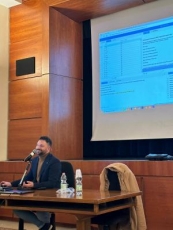
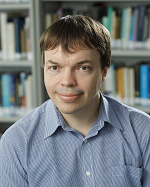
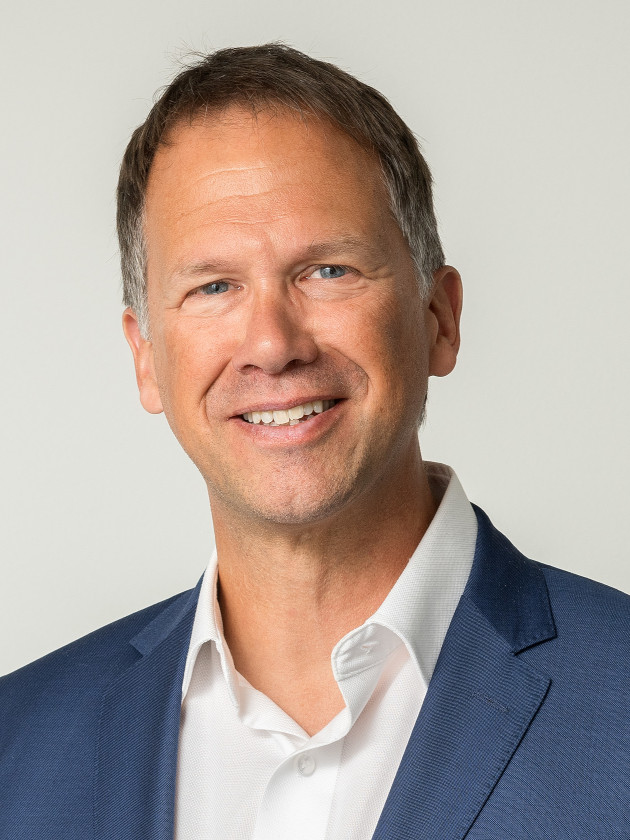
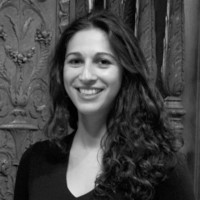
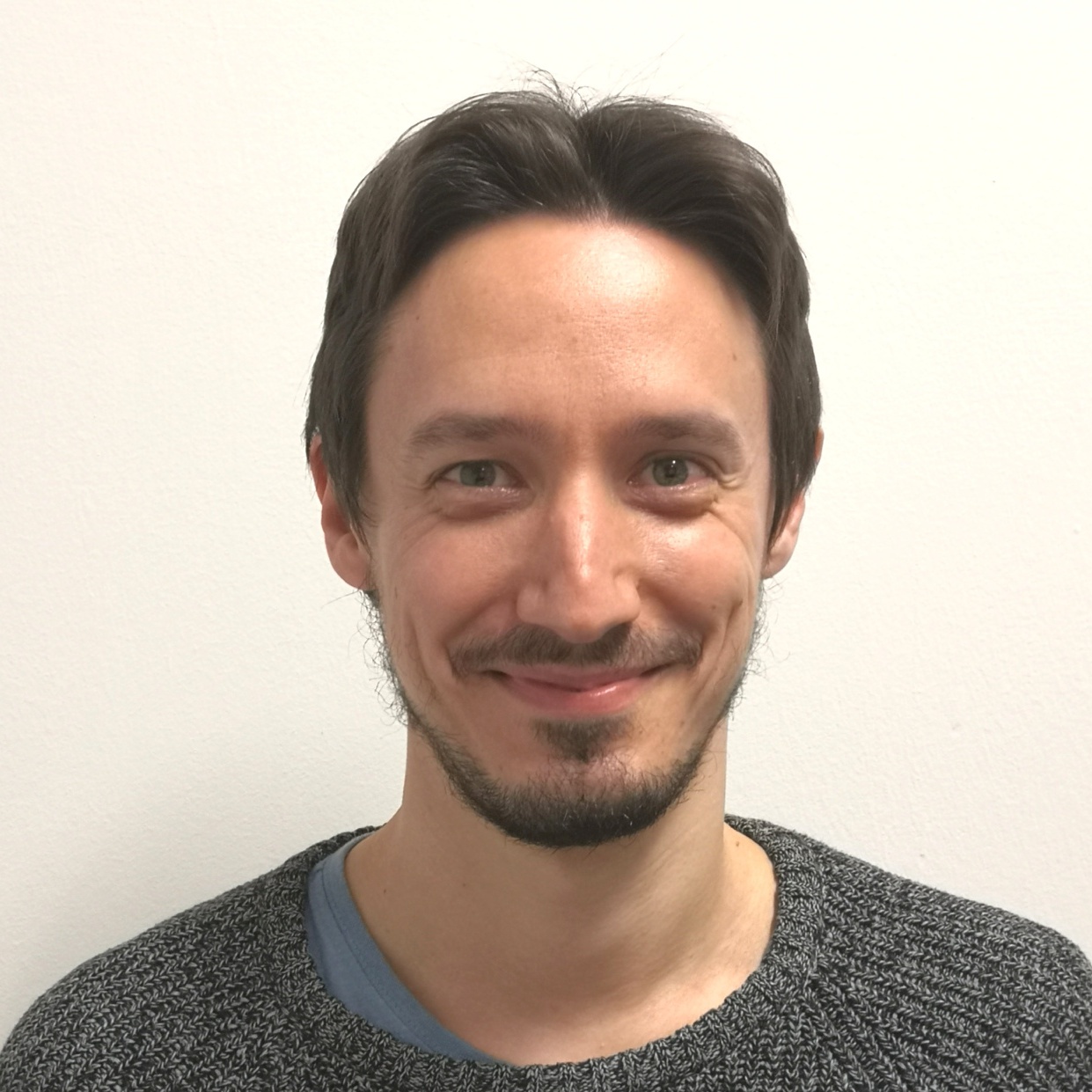
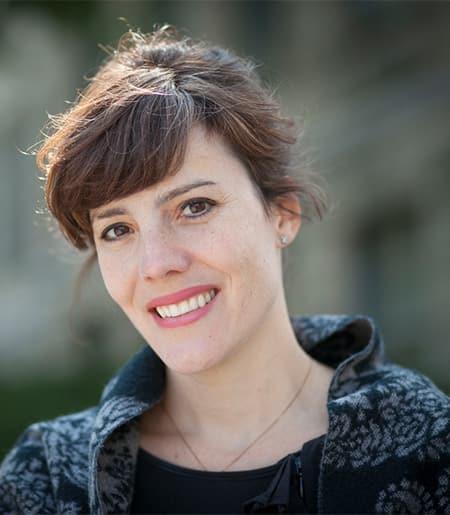
Fabio Ciambella is a Researcher at the Department of European, American, and Intercultural Studies of Sapienza University of Rome . His academic work focuses on Corpus Linguistics , Shakespeare Studies , Translation Studies , and Early Modern English pragmatics. Teaches Second Language Acquisition (first semester) and English Language 3 (second semester) Specializes in dance lexicon analysis, historical translation reception, and CLIL methodology His publications demonstrate interdisciplinary connections between: Shakespearean language and modern media (ads, news, memes) Italian Renaissance dance manuals and English theatrical practices AI-assisted translation of historical varieties Eco-discourse pragmatics in food columns Office hours available via individual scheduling through fabio.ciambella@uniroma1.it
Chris Cummins is Professor of Experimental Pragmatics in the Department of Linguistics and English Language at the University of Edinburgh's School of Philosophy, Psychology and Language Sciences (PPLS). His academic career spans multiple institutions with significant contributions to experimental semantics and pragmatics research. His research interests focus on experimental semantics and pragmatics , particularly how speakers choose to use specific linguistic forms to communicate about quantity, and how hearers interpret these forms to make decisions in high-stakes contexts such as financial and medical interactions. He investigates how listeners infer additional features of situations, including speaker knowledge states and potential argumentative agendas, from linguistic utterances, and how this information influences decision-making processes. His work also explores speech act recognition and the production/comprehension of non-asserted content. Analysis of his recent publications reveals a strong trend toward interdisciplinary research combining linguistic theory with practical applications in medical communication, particularly in emergency contexts like cardiac arrest resuscitation. His work increasingly examines how numerical expressions function argumentatively in social media and medical contexts, with growing attention to cross-linguistic and developmental perspectives on pragmatic reasoning. Professor Cummins has collaborated extensively with researchers including Gareth Clegg, Hannah Rohde, Holly Branigan, and Ernisa Marzuki on medical communication projects, and with Michael Franke, Alex Lorson, and others on experimental pragmatics research. He has received support for his work through research studentships and collaborative projects. Beyond his formal academic role, Cummins actively engages with the public through the Cabaret of Dangerous Ideas at the Edinburgh Fringe (discussing topics like misleading language and slurs in 2023-2024) and Bright Club Edinburgh. He previously co-presented the New Books in Language podcast series as part of the New Books Network.
Argyris Archakis is a Professor in the Department of Linguistics at the University of Patras' Department of Philology, focusing on Discourse Analysis and Sociolinguistics. He has held administrative roles including Vice-Chair (2018-2018, 2020-2022) and Director of the MA program 'Contemporary Approaches to Language and Text' (2022-2024, 2024-2024). His academic career spans international collaborations at universities like Lancaster, King's College London, and Hacettepe. His research interrogates intersections of micro-level textual organization with macro-level discourses on racism, migration, and identity construction. Key topics include educational inequities, orthographic attitudes, language policy, and migrant representation in media. He has authored monographs and co-edited volumes with Palgrave Macmillan and John Benjamins. Archakis' publications appear in Journal of Pragmatics , Journal of Sociolinguistics , and Ethnic and Racial Studies . Recent work examines 'liquid racism' in antiracist campaigns and EU crisis discourse. He serves on the editorial board of Journal of Language Aggression and Conflict . He supervises PhD candidates and has guided five completed doctoral dissertations. His teaching includes undergraduate courses on Discourse Analysis, Sociolinguistics, and graduate seminars on Critical Discourse Analysis and Migrant Identities. He received the 2022 Panagiotis Kanellopoulos Award for outstanding research.
Mehmet Akcakaya is an Associate Professor in the Department of Electrical and Computer Engineering at the University of Minnesota. His research focuses on machine learning for medical imaging, especially MRI reconstruction using deep learning and compressed sensing. He leads NIH-funded projects and is accepting PhD students. His research interests include physics-informed deep learning , compressed sensing , and MRI reconstruction . He develops algorithms for high-resolution, accelerated MRI with applications in cardiac and brain imaging. Key challenges addressed are reference-free reconstruction and robustness in inverse problems. Recent work shows a trend toward self-supervised and unsupervised deep learning for MRI, with innovations in cycle-consistent learning and diffusion models for inverse problems. There is increasing emphasis on few-shot and zero-shot adaptation to handle limited training data. Dr. Akcakaya leads the NIH-funded project Robust and Efficient Learning of High-Resolution Brain MRI Reconstruction and collaborates on the Center for Mesoscale Connectomics . He is accepting PhD students and mentors research in medical imaging and machine learning. His work is conducted at the University of Minnesota's Center for Magnetic Resonance Research, leveraging interdisciplinary collaborations in biomedical engineering and neuroscience.
Matthias Grossglauser is a Full Professor at the School of Computer and Communication Sciences at École Polytechnique Fédérale de Lausanne (EPFL), where he co-directs the Information and Network Dynamics lab. He serves on the Federal Communications Commission (ComCom), Switzerland's telecommunications regulatory authority, and previously directed EPFL's Doctoral School in Computer and Communication Sciences (2016-2019). His career includes positions at Nokia Research Center (Internet Laboratory lead), AT&T Research, and EPFL (Assistant Professor). Education Ph.D. in Computer Science from Sorbonne Universités M.Sc. in Electrical Engineering from Georgia Institute of Technology Engineering degree in Communication Systems from EPFL Research Focus Grossglauser's research integrates machine learning, stochastic networks, and discrete choice models to address challenges in artificial intelligence, network science, computational social sciences, and recommender systems. His work emphasizes both theoretical foundations and practical applications, including political forecasting, climate communication, and network dynamics. Publication Trends Recent articles demonstrate strong focus on causal inference, optimal learning algorithms, and social network analysis. Dominant themes include reinforcement learning optimization, graph-based modeling, and NLP applications in political science. Methodological innovations in matrix factorization, Bayesian modeling, and stochastic processes recur throughout. Awards & Honors Fellow of IEEE and ELLIS Cor Baayen Award (1998) CoNEXT/SIGCOMM Rising Star Award (2006) Best Paper Awards: ACM COSN (2014), IEEE INFOCOM (2001) Nokia Mobile Data Challenge Winner (2012) Academic Leadership Has advised 16+ PhD students to completion and currently supervises 4 doctoral candidates. Secured research funding for projects including dynamic recommender systems, network alignment algorithms, and computational social science tools (e.g., Predikon.ch vote prediction platform). Leads the Information and Network Dynamics lab, focusing on AI-driven network analysis.
Johan Pedersen is an Associate Professor of Spanish Linguistics at the Department of English, Germanic and Romance Studies , University of Copenhagen . He is also the Chairman of the Kirsten Schottlænder’s Foundation board , which funds research in Spanish, Catalan, and Portuguese language and culture, and serves as Editor of the peer-reviewed journal Revue Romane (John Benjamins, Amsterdam) for Spanish linguistics. Education : MA in Spanish language and culture, University of Copenhagen (1992) Minor in Economics, University of Copenhagen (1993) Graduate Diploma in International Business, HD1, CBS (1995) Ph.D. in Spanish linguistics, University of Copenhagen (2000) Research interests span cognitive and functional linguistics, usage-based approaches to grammar, contrastive linguistics, and language typology. His work focuses on clause structure organization, motion event expressions, Spanish reflexive/impersonal constructions, and the interplay between research, teaching, and learning. He is a member of the research platform Variation and Change in Language and co-directs projects like Cognitive modeling and meaning construction across languages (granted by the Spanish Ministry of Economy and Competitiveness). Key trends in recent publications include analyses of parasynthetic constructions in Spanish, comparative studies of Danish and Spanish verb prefixes, and construction grammar applications to typological differences in motion event framing. His work often integrates corpus linguistics, cognitive modeling, and functional grammar frameworks. Supervision and grants include mentoring PhD candidates such as Alexandra Donoso (motion events, Spanish-Swedish) and Henriette Baleau (causative alternations in Spanish). He has led or co-led projects like the Cogmod grant (Spanish Ministry) and Construction Grammar meets Typology (Marie Curie grant).
Sarah Willen is Associate Professor of Anthropology at the University of Connecticut and Director of the Research Program on Global Health and Human Rights at UConn’s Human Rights Institute. Her work sits at the intersection of medical anthropology, migration studies, and human-rights scholarship, with a focus on how precarious legal status shapes health and access to care. Education 2006 PhD in Anthropology, Emory University 2006 MPH (Global Health), Rollins School of Public Health, Emory University 2008–2009 Postdoctoral Research Fellow, Department of Global Health & Social Medicine, Harvard Medical School 2006–2008 NIMH Postdoctoral Research Fellow, Department of Global Health & Social Medicine, Harvard Medical School 1996 BA (English & Religion, summa cum laude), Case Western Reserve University; minors in Anthropology and Women’s Studies Research Interests Willen’s scholarship interrogates three interlocking domains: The impact of unauthorized or irregular migration status on access to the social determinants of health. Pedagogical strategies for training U.S. health professionals in cultural competence and human-rights perspectives. The politics and ethics of “right to health” claims and discourses in the United States. She is now launching a collaborative, multidisciplinary study examining how prolonged care by unregulated “pirate babysitters” in south Tel Aviv affects the health and development of children born in Israel to parents with precarious migration status. Recent Scholarly Trajectory Between 2020 and 2025 her publications have clustered around three themes: the lived experience of COVID-19 across diverse U.S. populations (with a large-scale Pandemic Journaling Project generating multiple papers); critical interrogation of “flourishing” as a policy and measurement concept; and ongoing analyses of migrant deservingness, health equity, and structural racism in Israel and the United States. Awards & Fellowships NIMH Postdoctoral Research Fellowship Harvard Medical School Postdoctoral Research Fellowship Leadership & Grants Willen currently directs the Research Program on Global Health and Human Rights at UConn’s Human Rights Institute, a role that encompasses grant writing, interdisciplinary team leadership, and mentoring of graduate researchers. Her new Tel Aviv study is supported by collaborative, multi-institutional funding. Laboratory & Research Teams She leads an active research collective housed jointly in the Department of Anthropology and the Human Rights Institute, where graduate research assistants participate in data collection, coding, and dissemination for the Pandemic Journaling Project and the forthcoming Israel-based child-care study.
Matteo Poggi is a Tenure-Track Assistant Professor at the University of Bologna, where he teaches courses on Logic Circuits and Computer Architectures. His academic career is deeply rooted in computer vision and 3D perception, with a focus on stereo vision, depth estimation, and SLAM systems. Dr. Poggi earned his MSc and PhD degrees from the University of Bologna in 2014 and 2018 respectively, working on stereo vision under the supervision of Prof. Stefano Mattoccia. His educational background has provided a strong foundation for his current research endeavors in computer vision and 3D scene understanding. Dr. Poggi's research primarily focuses on stereo matching, multi-view stereo, optical flow, single-image depth estimation, online adaptation, federated learning, and neural SLAM. His work bridges the gap between theoretical computer vision and practical applications, with particular emphasis on robustness in real-world scenarios. His recent publications demonstrate a growing interest in 3D Gaussian splatting, neural radiance fields, and environmental monitoring applications like river plastic detection. His scholarly output shows a consistent trajectory of high-impact publications at top computer vision conferences including CVPR, ICCV, and ECCV. The trend in his work reveals an evolution from traditional stereo vision techniques toward more advanced neural representations and applications in environmental monitoring. His research has significant implications for autonomous systems, robotics, and environmental science. Area Chair for CVPR 2026 Associate Editor for IJCV Outstanding Reviewer at CVPR 2025 Dr. Poggi actively collaborates with researchers across the globe, as evidenced by his extensive publication record. His GitHub profile shows active engagement with the research community through open-source implementations of his work. While specific grant information isn't provided in the available texts, his numerous publications in top venues suggest successful funding for his research endeavors. His work appears to be conducted within a vibrant research group at the University of Bologna, with connections to other researchers in the computer vision community as seen through his GitHub followers and collaborators. His research has practical applications in autonomous driving, robotics, and environmental monitoring.
Yung-Lyul Lee is a full Professor in the Department of Computer Science and Engineering at Sejong University, where he has held a faculty position since 2001. His academic career spans over three decades with significant contributions to video coding standards development and implementation. His educational background includes: Ph.D. in Computer Science from KAIST (1992) M.S. in Computer Science from Sogang University (1988) B.S. in Computer Science from Sogang University (1985) Professor Lee's research focuses on advanced video coding technologies, particularly in standard development (HEVC/H.265, VVC), 360° video processing, and CNN-integrated compression systems. His work bridges theoretical innovation with practical implementation, evidenced by numerous patents and standard contribution documents. Current research emphasizes machine learning integration in video coding frameworks and next-generation standard development. Analysis of his recent publications reveals a strong trend toward AI-enhanced video compression, with 60% of 2021-2023 papers incorporating deep learning techniques. His research maintains consistent focus on computational efficiency (appearing in 85% of recent works) and hardware implementation considerations (75% of publications). Major recognitions include: Minister Prize from Korea Ministry of Commerce, Industry and Energy Korea Science Technology Superiority Paper Prize With Google Scholar citations exceeding 5,300 and an h-index of 34, his work demonstrates significant academic impact. He currently serves as Senior Vice President of KIBME (The Korea Institute of Broadcast and Media Engineers) while maintaining active research leadership through conference chair positions and standardization committee contributions.
Athena Kirk is an Associate Professor at the Department of Classics , College of Arts and Sciences , Cornell University. Her research bridges Greek Literature with interdisciplinary studies of materiality, orality, and nonhuman agency in antiquity. Research Focus : Intersections of literature and documentary texts Material qualities of ancient texts and public engagement Ancient animal studies and object agency Ancient literacy and oral traditions Notable Publications explore topics from Homeric soundscapes to epigraphic practices , with a forthcoming monograph on ancient Greek lists (2025). Her work engages with projects like CHELP , KAMBE , and Project ArAGATS .
Daisuke Kawahara is a Professor at Waseda University's Faculty of Science and Engineering and a Visiting Professor at the National Institute of Informatics. He holds a PhD in Informatics from Kyoto University (2005) and has previously served as Associate Professor at Kyoto University and Senior Researcher at NICT. His research spans natural language processing, computational linguistics, and AI infrastructure. Education: Ph.D. in Informatics, Kyoto University (2005) Graduate Studies in Intelligent Informatics, Kyoto University (1999–2002) M.Eng. in Electronic & Communication Engineering, Kyoto University (1997–1999) B.Eng. in Electrical Engineering, Kyoto University (1993–1997) Research Focus: Kawahara specializes in NLP, including syntactic parsing, semantic role labeling, language resource development (e.g., JGLUE benchmark), and multilingual corpus construction. His work integrates machine learning with linguistic theory to improve text understanding systems, error correction tools, and dialogue agents. Publication Trends: His recent articles emphasize Japanese and Chinese NLP, neural network-based parsing, and practical applications like educational tools and pandemic information systems. Common themes include benchmarking, corpus annotation, and cross-lingual adaptation. Awards: 情報処理学会 自然言語処理研究会 優秀研究賞 (2025) 言語処理学会最優秀論文賞 (2024, 2023) 科学技術分野の文部科学大臣表彰 (2017) Multiple Best Paper Awards from NLP conferences (2000–2025) Projects & Advising: He leads JSPS-funded projects like Building General Language Understanding Infrastructure (2021–2025) and Acquisition of Knowledge Frames (2018–2021). No student advisees are listed. Labs & Teams: Collaborates with RIKEN Center for Advanced Intelligence Project and maintains ties to Kyoto University's NLP lab. Focuses on large-scale language modeling and collaborative AI-human intelligence frameworks.
Jovana Jović, MA, is a doctoral researcher at the University of Regensburg's Institute of Slavic Studies under Prof. Dr. Björn Hansen. She specializes in lexical semantics, corpus linguistics, and corruption studies, with a focus on Serbian and Croatian press texts. Doctoral dissertation: 'Framing Corruption – A lexical-semantic analysis of the thematic use of words based on Serbian and Croatian press texts from 1919 to the present day' Key projects: DFG-funded 'From Informality to Corruption (1817-2018): Serbia and Croatia in Comparison' Research Interests: Her work bridges lexical variation/change, cognitive semantics (frame theory), and corpus-based approaches to analyze corruption discourse. She explores sociosemantic networks and historical semantics in Southeast European contexts. Conference Participation: Presented at the 14th German Slavic Studies Day, Interdisciplinary Corruption Workshops in Cres/Belgrade, and international student conferences in Wrocław/Kiel. Collaborated with historian Miloš Lecić on cross-disciplinary informal practices research. Publications: Contributed to Tokovi Istorije and Junge Slavistik im Dialog with analyses of corruption framing and Slovenian relativpronouns.
Dr. David Christopher Assmann is a Privatdozent (PD) at the Otto-Friedrich University of Bamberg, affiliated with the Institute of German Studies within the Faculty of Humanities and Cultural Studies. He holds a prestigious Heisenberg position at the Deutsche Forschungsgemeinschaft (DFG), recognizing his outstanding contributions to literary scholarship. His academic work bridges German literature, literary theory, and sociology of literature, with particular expertise in waste studies and paratextual analysis. Dr. Assmann's research interests span multiple interconnected domains: German literature across historical periods, literary theory with a focus on systems theory, sociology of literature, and innovative waste studies in literature (Müllforschung). His work examines how waste, garbage, and discarded materials function textually and culturally, exploring what he terms 'text-material forms of the formless.' He has made significant contributions to understanding paratextual elements like titles, literary institutions, and the intersection of sociological frameworks with literary analysis. His recent publications demonstrate remarkable productivity and scholarly impact, with multiple monographs, edited volumes, and numerous articles appearing in leading journals. His 2023 monograph 'The Garbage of Literature: Text-Material Forms of the Formless (1812-1926)' represents a major contribution to the field, building on his earlier work 'Poetics of the Literary Industry' (2014). His editorial work, particularly on sociology of literature and waste studies, has shaped scholarly conversations in these areas. Among his notable achievements is the Heisenberg position awarded by the DFG, one of Germany's most prestigious research grants. This recognition underscores the significance of his contributions to literary scholarship, particularly his innovative approaches connecting literary studies with sociological theory and waste studies. Dr. Assmann actively contributes to the academic community through editorial roles, serving as co-editor of 'Codex: Yearbook of the International Society for Book Studies' and as a member of the editorial boards for the 'Hyperion' and 'Studies in Literary Mediation' series. His scholarly output reflects deep engagement with both theoretical frameworks and empirical textual analysis, making substantial contributions to contemporary German literary studies.
Dr. Emilia Nottbeck is a Scientific Associate at the Institute for English and American Studies, Faculty of Cultural Studies, University of Paderborn. She has been working at the university since 2012, progressing from Student Assistant to her current position under Professor Langstrof's department since October 2024. Previously, she worked under Professor Mindt from 2016-2024. Master of Arts in Linguistics (University of Paderborn, 2011-2015) Bachelor of Arts in Linguistics, historical comparative linguistics, phonetics and Portuguese (University of Cologne, 2007-2010) Dr. Nottbeck specializes in Second Language Acquisition with a particular focus on prosody and turn-taking behavior. Her research examines how L2 learners use prosodic cues to predict turn-ends in conversation, a critical component of fluent dialogue. She has been developing this line of inquiry since at least 2018 through her dissertation work titled 'Predicting Turn-Ends of Questions. The Role of Prosody in SLA.' Her recent publications (2019-2024) consistently address the intersection of prosody, turn-taking, and second language processing, demonstrating a focused research trajectory within linguistic pragmatics and conversation analysis. The publications reveal increasing sophistication in experimental design and theoretical framing within Processability Theory. Modelling Relative Clauses in Processability Theory using Lexical Functional Grammar (2019) Turn-Taking in SLA: Investigating the Role of Prosody (2021) Reconsidering the Role of Prosody for Turn-Taking in Second Language Acquisition (2022) Investigating Speed-up Processes in Experimental Research Design in SLA (2023) Turn-Taking and L2 Learners: The Role of Prosodic Cues (2023) Turn-Taking in Second Language Acquisition: How do L2 learners make use of prosody in turn-end predictions? (2024) Dr. Nottbeck actively supervises students through internship courses and teaches across the linguistics curriculum including Semantics, Methodological Foundations, and specialized topics like Language, Reality and Power. She is currently organizing the 23rd International Symposium on Processability Approaches to Language Acquisition (PALA 2025), demonstrating leadership in her academic community. Her office is located in building J4.202 at Warburger Str. 100, Paderborn, with appointments required for office hours.
Dr. Shahin Mehdipour Ataee is an Assistant Professor at the State University of New York at Fredonia with teaching experience since 2007. His office hours are held Tuesdays (12:30-2:00 PM), Wednesdays (3:30-5:00 PM by appointment), and Thursdays (12:30-2:00 PM). Education: Ph.D. in Computer Engineering - Information Systems Track, Eastern Mediterranean University (2018) M.S. in Software Engineering, Qazvin Azad University (2010) B.S. in Computer Engineering - Software Track, Mazandaran University of Science and Technology (2007) His research focuses on Machine Learning , Deep Learning , and Semantic Web technologies, with applications in AI problem-solving, multimedia pattern recognition, and web service frameworks. Recent publications demonstrate expertise in logic-based systems and computational methods. Awards: Teaching Excellence Award 2024-2025 Teaching Excellence Award 2023-2024 Research Excellence Award 2022-2023 He teaches a broad spectrum of computer science courses including core subjects like Algorithms, Operating Systems, and specialized topics in AI/ML. While no active lab or grants are mentioned, his publication record indicates ongoing scholarly activity.