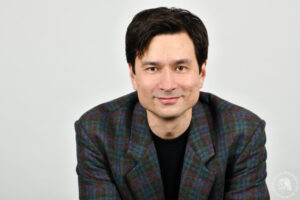
Prof. Dr. Martin Grothaus is a Professor at the Technische Universität Kaiserslautern in the Department of Mathematics . His research spans Functional Analysis , Stochastic Analysis , White Noise Analysis , and Mathematical Physics , focusing on operator semigroups, Dirichlet forms, ergodicity, and scaling limits of stochastic dynamics. PhD in Mathematics (1998) and Physics (1996) from Universität Bielefeld Juniorprofessor at TU Kaiserslautern (2002–2008) Editorial roles in books on Stochastic and Infinite Dimensional Analysis His research integrates stochastic differential equations with applications in quantum probability , statistical mechanics , and industrial processes (e.g., fiber lay-down models). Key methodologies include Dirichlet forms , hypocoercivity , and Gaussian analysis . Recent work highlights trends in degenerate SDEs , nonlinear SPDEs , and geometric Langevin equations . He received the Lehrpreis Rheinland-Pfalz (2010) for teaching excellence. Collaborations include institutions such as Universität Bonn, Bielefeld, and Cornell University, with applications in technical textiles and biological systems .
Dr. Robert Daugs is a Lecturer and post-doctoral researcher at the Department of English and American Studies, Kiel University. His research bridges cognitive-functional linguistics with empirical methodologies, focusing on construction grammar, usage-based morphology, and corpus-driven analysis of modality. Research Focus: Cognitive linguistics, constructional change, corpus analysis Teaching: Empirical approaches to English language structure Contact: daugs@anglistik.uni-kiel.de Daugs’ work explores how usage patterns shape linguistic systems diachronically, particularly in modal expressions and morphological constructions. His recent projects include compiling a Northern California English corpus and modeling pragmatic associations. Scientific contributions include studies on privative prefixes (near-, pseudo-), hella-intensification dynamics, and modal contraction processing. Notable awards include the 2019 John Sinclair Bursary for outstanding PhD candidate research. Current teaching topics include Usage-Based Morphology, Construction Grammar, and Academic Skills training. His research emphasizes methodological coherence through corpus linguistics across courses.
Max Planck Institute for Empirical AestheticsGermany
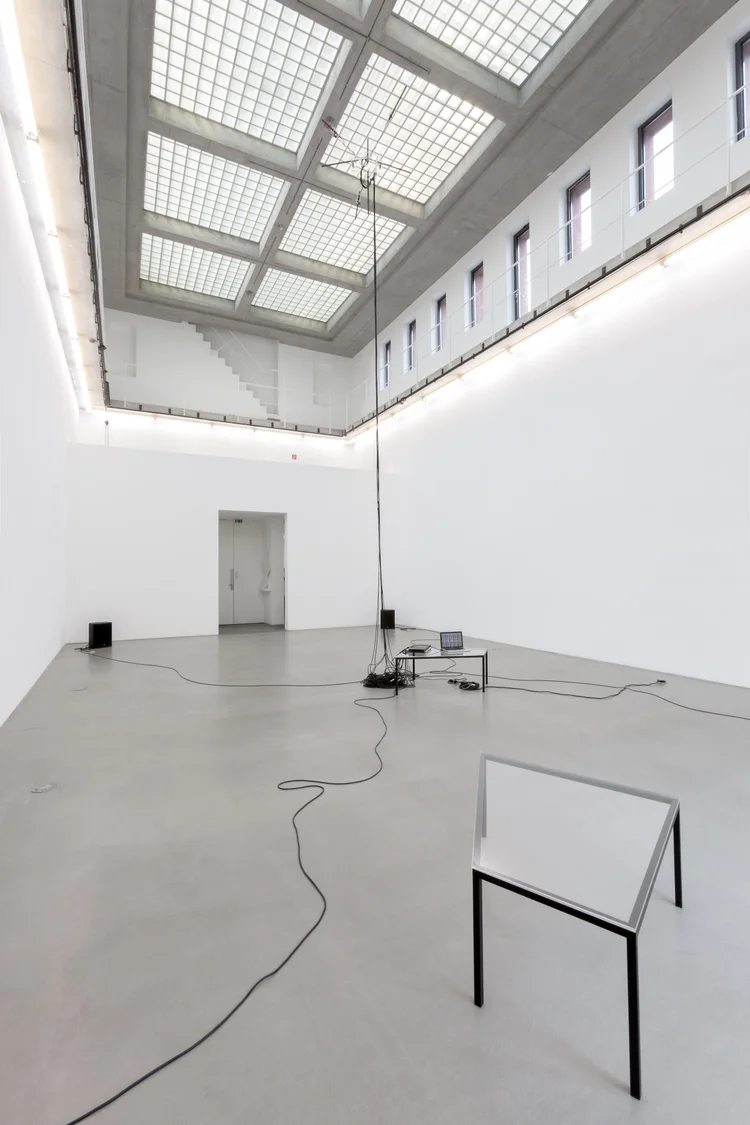
Marina Rosenfeld is an Adjunct Professor of Sonic Arts at the Milton Avery School of the Arts, Bard College, where she has been faculty since 2005 and has co-chaired the Music/Sound department since 2007. Based in New York, she is a composer and artist whose interdisciplinary work spans sound art, performance, and visual art, with presentations at major institutions including the Park Avenue Armory, Museum of Modern Art, Guggenheim Museum, Tate Modern, and Stedelijk Museum. Adjunct Professor, Sonic Arts, Conservatory of Music, School of Visual, Media and Performing Arts Faculty member, Milton Avery School of the Arts at Bard College since 2005 Co-chair, Department of Music/Sound since 2007 2024 Alpert Award in Visual Art recipient Rosenfeld's research interests center on the social and perceptual dimensions of sound, exploring how sonic experiences transform through bodily engagement and spatial contexts. Her work interrogates the shape and sociality of perception, examining how sensual experiences become hearing, sight, and touch. She creates installations that embrace traces, after-sound, distortion, and the body as an amalgam of social, libidinal, and inherited possibilities. Her practice spans performance, installation, electronic media, experimental musical notation, sculpture, photography, and improvisation, with a focus on inventing new forms that challenge existing categories and engage critically with power structures. Her recent publications and critical reception reveal a strong focus on the material conditions of sound, with particular attention to the Deathstar series, Teenage Lontano, and The Sheer Frost Orchestra. Critics examine her work through lenses of object-oriented ontology, neoliberal critique, and the politics of sound in institutional spaces. Her approach to sound as both material and social practice has generated significant scholarly interest in how sonic experiences shape and are shaped by cultural contexts. Alpert Award in Visual Art (2024) Foundation for Contemporary Arts Grants to Artists Award (2011) New York Foundation for the Arts Composer Fellowship (2004) Watermill Foundation Inga Maren Otto Fellowship (2019) Harvestworks Van Lier Fellowship (2002) EMPAC Artist Residency and Commission (2024) Rosenfeld has advised numerous artists through her teaching at Bard College and has received multiple grants supporting her artistic research, including commissions from Ensemble MusikFabrik (2017) and Ensemble Contrechamps (2022). Her collaborative practice spans decades, working with choreographers like Merce Cunningham (2004-08), Ralph Lemon (2014-15), and Maria Hassabi (2016-17), as well as musicians including Christian Marclay and Warrior Queen. She has also been commissioned by major festivals including Donaueschingen Musiktage and documenta 14. Rosenfeld's most enduring project is The Sheer Frost Orchestra, a temporary all-female amateur ensemble she founded in 1993 that continues to be performed today. This project explores power dynamics through unconventional instrumentation, with performers using nail polish bottles to tap electric guitars lying on the ground. Her Deathstar series represents another significant body of work, with installations and performances evolving since 2017, including a 48-hour performance in Switzerland in 2023 where audience members slept, woke, ate, and listened together over an extended period.
LiGuo Huang is an accomplished researcher and academic in the field of software engineering with a publication record spanning over two decades from 2003 to 2025. With 95 publications documented in the dblp database, Huang has established a significant presence in both traditional software engineering domains and emerging areas where machine learning intersects with software development practices. Huang's research has evolved from foundational work in value-based software engineering to cutting-edge applications of artificial intelligence in software analysis and maintenance. Huang's research interests encompass a broad spectrum of software engineering topics, with particular emphasis on value-based software engineering, software quality assurance, defect classification, and software process modeling. More recently, Huang has focused on applying machine learning and deep learning techniques to software engineering problems, including code summarization, vulnerability detection, and software maintenance. This evolution reflects the broader shift in the field toward data-driven approaches for software development and analysis. The publication trends reveal a consistent research trajectory with increasing publication rates in recent years, particularly in the application of machine learning to software engineering problems. Huang's work shows a strategic progression from theoretical foundations in software quality to practical applications of AI in software development. The research spans empirical studies, systematic literature reviews, and novel technical approaches to longstanding software engineering challenges, demonstrating both theoretical depth and practical relevance. Huang has collaborated extensively with researchers across multiple institutions, forming particularly strong partnerships with Jidong Ge, Bin Luo, Chuanyi Li, and Barry W. Boehm. The collaboration with Boehm in early career publications suggests mentorship that evolved into peer collaboration, while more recent work shows Huang mentoring newer researchers who now serve as primary authors on joint publications. Huang's research has practical implications for software development practices, particularly in improving software quality, enhancing developer productivity through AI-assisted tools, and providing empirical evidence for software engineering decision-making. The work bridges theoretical computer science with practical software engineering concerns, making significant contributions to both academic research and industry practice.
Prof. Dr. Frank Maas is a Full Professor at Johannes Gutenberg University Mainz and a Leading Scientist at GSI Helmholtzzentrum für Schwerionenforschung. His research focuses on the electromagnetic structure of hadrons, parity-violating electron scattering, and calorimetry, with significant contributions to understanding nucleon form factors and weak mixing angles. 1990-1993: PhD in Physics, University of Heidelberg 1993-1995: Guest Scientist at Tokyo University 1995-2005: University Lecturer at Mainz University 2005-2007: Leading Senior Researcher at CERN 2007-present: Full Professor and Leading Scientist at Mainz University and GSI 2009-2018: Director of the Helmholtz Institute Mainz His work spans experimental nuclear and particle physics, including leadership roles in the BESIII, Olympus, PANDA, and A4 Collaborations. Key publications include studies on strange-quark contributions to nucleon form factors and parity-violating asymmetry measurements. Recent research involves precision experiments at MESA and MAMI facilities, focusing on time-like form factors, detector development, and systematic error analysis. He has taught courses in Experimental Physics, covering mechanics, thermodynamics, and modern physics topics. Prof. Maas collaborates extensively with institutions like CERN, FAIR, and MAMI. Contact: maas@uni-mainz.de , Institute of Nuclear Physics, Mainz.
Bernadett Ritter serves as a Lecturer and Supervisor at the Institute for Media Research and Media Development, University of Ulm. She teaches foundational and advanced design courses including Basics of Design 1 & 2, Typographical Basics, Interactive Communication Design, and Visual Communication across multiple semesters (2019/20 and 2020/21). Her Master of Fine Arts (MFA) underpins her expertise in visual systems and information architecture. Research interests encompass: Design Information Design Data Visualization Interactive Design Typography Visual Communication Ritter specializes in systematic form-finding methodologies using geometric primitives and transformation processes to develop logos, pictograms, and interactive interfaces. Her teaching emphasizes distinguishing between formal-aesthetic and functional assessment dimensions while preventing information manipulation through ethical visualization practices. Courses involve experimental composition exercises, parameter investigations, and group-based development of interactive prototypes using analog and digital tools. As an active supervisor, Ritter mentors students in project-oriented lessons at the Institute for Media Research and Media Development (founded 1994), which operates at the design-computer science interface to advance digital media applications in knowledge transfer and educational systems.
Volker Gerke is a Professor at the University of Münster, serving as Director of the Center for Molecular Biology of Inflammation (ZMBE) and Co-Spokesperson of the Cluster of Excellence "Cells in Motion." He leads the Gerke Lab within the Institute of Medical Biochemistry and holds key positions including Executive Board member of the Cells in Motion Interfaculty Centre, Member of the Research and Careers Committee, Supervisor in the CiM-IMPRS Graduate Programme, and Member of the Imaging Network – Microscopy. Gerke's research focuses on cellular membrane dynamics, with particular emphasis on membrane lipid dynamics, membrane trafficking, membrane-cytoskeleton interactions, and calcium signaling pathways. His work investigates how cellular membranes are structured and how they regulate diverse cellular processes including cell shape changes, cell movement, and membrane transport. A significant portion of his research examines exocytosis mechanisms in endothelial cells, particularly the function of Weibel-Palade bodies (WPBs) which play crucial roles in wound healing and inflammatory responses. His laboratory studies how WPBs are structured, how they form, and how they function to regulate vascular homeostasis. Analysis of Gerke's recent publications reveals a consistent focus on membrane biology with particular attention to annexin proteins, calcium signaling, and endothelial cell function. His work spans fundamental membrane biophysics to physiological applications in vascular biology and inflammation. Recent publications demonstrate increasing interdisciplinary collaboration, integrating advanced imaging techniques, nanotechnology for intracellular delivery, and sophisticated cell biological approaches to address complex questions in membrane dynamics. As a supervisor in the CiM-IMPRS Graduate Programme, Gerke mentors the next generation of scientists in cell dynamics and imaging. His laboratory maintains strong connections with multiple research networks including the Imaging Network and Cells in Motion consortium, facilitating interdisciplinary research approaches. The Gerke Lab collaborates extensively with researchers studying cell adhesion, membrane trafficking, and inflammation. The Gerke Lab is part of the Center for Molecular Biology of Inflammation at the University of Münster, which provides state-of-the-art facilities for advanced microscopy and cell biological research. The lab maintains strong connections with the broader Cells in Motion research cluster, enabling access to cutting-edge imaging technologies and collaborative opportunities across multiple disciplines focused on cellular dynamics.
Prof. Dr. Selina Kathleen Jorch serves as a Professor in the Department of Anaesthesiology, Intensive Care and Pain Therapy at the University of Münster. She actively contributes to the Multiscale Imaging Centre as a member of its Management & Communication committee, driving collaborative research in advanced imaging technologies and inflammatory disease mechanisms. Her research program centers on immunological processes in sterile and infectious inflammation, with particular expertise in alarmin biology (S100A8/A9, MRP8/14), macrophage trafficking, and neutrophil extracellular traps. She pioneers intravital imaging approaches to visualize real-time immune dynamics in organ-specific contexts, investigating conditions ranging from sepsis and graft-versus-host disease to autoinflammatory disorders like Familial Mediterranean Fever. Her work bridges molecular mechanisms with translational applications, including peptide-based drug delivery systems for brain tumors. Analysis of her 15 most recent publications reveals consistent focus on Gasdermin-D-mediated alarmin secretion pathways (2022-2023), GATA6+ macrophage functions in bacterial dissemination and cardiac repair (2019), and chemokine axis regulation in inflammatory diseases (2024). The research demonstrates strong interdisciplinary integration of molecular immunology, advanced microscopy, and clinical pathophysiology with implications for novel therapeutic interventions. Prof. Jorch operates within the Multiscale Imaging Centre ecosystem, which provides cutting-edge microscopy resources and supports career development through Train Gain fellowships, travel awards, and graduate programs. The center facilitates collaborative projects across participating institutions while advancing women in science initiatives and hosting specialized seminars like the Inflammation & Imaging Lecture series.
Christos Gatsogiannis is a Professor at the Institute of Medical Physics and Biophysics within the Medical Faculty of the University of Münster, where he leads the Gatsogiannis Group: CryoEM of Complex Nanosystems. He is also affiliated with the Center for Soft Nanoscience (SoN) and serves as a supervisor in the CiM-IMPRS Graduate Programme. His research is centered at the intersection of structural biology and cellular machinery analysis. Dr. Gatsogiannis' research interests focus on structural biology , particularly using cryo-electron microscopy to investigate peroxisomal biogenesis , AAA ATPases , pore-forming toxins , and protein translocation mechanisms. His laboratory specializes in visualizing biological nanomachines at near-atomic resolution, with particular emphasis on peroxisome import mechanisms and cellular protein quality control systems. His team combines cryo-EM with biochemical, biophysical, molecular biological, and bioinformatic approaches to achieve comprehensive mechanistic understanding. Analysis of his recent publications reveals a consistent focus on structural characterization of cellular machinery, with increasing emphasis on peroxisome biogenesis mechanisms, membrane protein complexes, and neurotoxin action. His work demonstrates methodological evolution from basic cryo-EM to high-resolution structural analysis of complex cellular systems, reflecting technological advances in the field. Secured 7.5 million euro DFG grant for state-of-the-art cryo-EM infrastructure at Center for Soft Nanoscience Supervises doctoral students in CiM-IMPRS Graduate Programme Collaborates extensively across medicine, biology, and chemistry departments Dr. Gatsogiannis leads the Gatsogiannis Laboratory at the Center for Soft Nanoscience, which houses a high-performance cryo-electron microscope capable of atomic-resolution imaging. The laboratory, built with vibration-free infrastructure beneath an earth-wall, serves as a central resource for numerous research groups across the University of Münster. His team comprises international biologists, biochemists, and physicists working collaboratively to decode cellular nanomachines.
Rhenish Friedrich Wilhelm University of BonnGermany
Dr. Simone Giertz serves as a Researcher and Academic Councilor in the Department of Geography at the University of Bonn since 2009, specializing in tropical hydrological systems and global change impacts. Her work integrates field studies from West Africa with advanced modeling techniques to analyze water cycles, soil erosion, and land-use interactions. Education: PhD in Geography, University of Bonn (2004) Diploma in Geography, University of Bonn (2000) Exchange studies at Université Louis Pasteur Strasbourg (1997-1998) Her research program emphasizes hydrological modeling in sub-humid tropics , with significant focus on Benin's Aguima catchment as a case study for land-use impacts. She develops spatial approaches for agricultural planning while investigating material flows and erosion dynamics under climate variability. Fieldwork in West Africa forms the empirical backbone of her publications. Recent publications demonstrate sustained expertise in tropical hydrology through methodological innovations like global soil-water databases and comparative modeling frameworks. Her 2018 Earth System Science Data paper established foundational infiltration metrics, while 2016 and 2013 works advanced spatial suitability analysis for rice cultivation and land-use/climate impact assessments in African catchments. Scientific Awards: No awards documented in source materials As a core member of Bonn's geography department since 2000, she has contributed to long-term projects like IMPETUS without explicit mention of grant leadership or student supervision. Her institutional role combines research continuity with teaching responsibilities under the Academic Councilor framework. She maintains active collaboration through the IMPETUS project network focused on West African hydrology and global change, utilizing university facilities at Meckenheimer Allee 166 for modeling and data analysis.
Steffen Peter is a Researcher at the Institute of Musicology and Music Education, Justus Liebig University Giessen, Germany. He works under the Professorship for Music Education and has been a research assistant to Dr. Ralf von Appen since October 2018. He is affiliated with the Society for Popular Music Research. Born in 1984, Mühlhausen, Thuringia Bachelor of Arts in Music Education (JLU Gießen) Master of Arts in Applied Musicology (JLU Gießen) His research focuses on music and technology, popular music analysis, hip hop studies, and media library support. He teaches courses on computer notation software, hip hop history, sound processing, and composition with Ableton Live. Recent publications explore intertextuality in popular music and historical analysis of hip hop forms. He contributes to scholarly projects like the Vienna Publications on Musicology series. Contact details: Karl-Glöckner-Str. 21 D, Room D06, 35394 Gießen | Phone: 0641 / (99) 25103
Franz Engel is a Researcher at the Institute for Art and Visual History at Humboldt University of Berlin, affiliated with the Chair of Early Modern Art History. His work bridges Renaissance art, iconography, and theoretical explorations of chaos and cosmos. Research Interests : Engel investigates symbolic forms in Renaissance and Early Modern art, focusing on the interplay between theological symbolism, artistic interpretation, and historical context. His publications explore Dürer’s Melencolia I, Giotto’s reception in China, and the tension between liturgical and museological functions in medieval architecture. He also contributes to exhibition practices through historically informed curation. Recent Publications (2022–2025) : Engel’s articles examine Raphael’s religious iconography, reconstruct Edgar Wind’s theories on Dürer, and analyze primordial chaos imagery in cross-cultural contexts. His 2025 monograph Chaosbilder investigates formlessness in art, while his collaborations include edited volumes on iconic forms and Peirce’s semiotics. Teaching Roles : Engel teaches seminars on Sienese art (SoSe 2025), Renaissance theory (SoSe 2024), and Venetian painting (WiSe 2023/24). His courses often involve object-based learning and exhibition practices, reflecting his focus on historical-critical methodologies.
Nicole Schweikardt is a Professor at the Institute of Computer Science within Humboldt University of Berlin . Her research focuses on Theoretical Computer Science , particularly in Database Theory , Formal Logic , and Algorithmic Meta-Theorems . Academic Rank: Professor Contact: schweikn@informatik.hu-berlin.de Research Interests : Nicole investigates logical characterizations of database query languages, algorithmic meta-theorems for sparse graphs, and efficient enumeration techniques. Her work bridges formal logic, computational complexity, and practical database systems. Scientific Awards : 2018 ACM PODS Alberto O. Mendelzon Test-of-Time Award Recent Article Trends : Nicole's recent publications emphasize schema matching , spanner evaluation , first-order logic extensions , and query enumeration . Her work spans theoretical foundations (e.g., counting quantifiers, Hanf normal forms) and practical applications (e.g., event stream analysis, document compression).
Brandy M Toner is a Professor in the Department of Soil, Water, and Climate at the University of Minnesota. Her research focuses on biogeochemical cycles, deep ocean microbial ecology, and subsurface environmental processes. Key Research Areas: Iron, sulfur, and carbon cycle interactions Hydrothermal vent microbial communities Fractured-rock subsurface biogeochemistry Metagenomic analysis of extremophiles Synchrotron facility applications in environmental science Recent Project Trends: Colloidal shunt mechanisms in ocean cycles (NSF-funded, 2025-2028) Mercy-sulfur-carbon cycle analysis (USDA Forest Service, 2023-2025) Synchrotron facility community management (University of Chicago/NSF, 2023-2025) Terrestrial-aquatic interface carbon fluxes (NSF, 2021-2026)
Anna Pawlak is a Professor at the Institute of Art History, Faculty of Humanities, Eberhard Karls University Tübingen, specializing in Early Modern Art with a focus on Netherlandish visual culture, intermediality, and aesthetics of violence. She co-leads the Collaborative Research Center Andere Ästhetik subprojects C2 and C4, exploring cultural hybridity and media combinations in early modern festival culture. Her work bridges art history with literary and philosophical traditions. Current roles: Professor, Deputy Director, Research Center Coordinator Key projects: Intermediality in Dutch Print Culture (SFB 1391), Visual Paradox of Death in Art Her research examines the interplay of image and text , particularly in 16th-17th century Latin festival programs and prints. She analyzes how ephemeral ceremonies gained lasting cultural impact through intermedial representations , emphasizing their role in negotiating religious, political, and social discourses. Recent work explores Claude Lorrain's engraving techniques and Antwerp festival processions . Anna Pawlak's scientific awards include: 2012: Offermann-Hergarten-Preis der Universität zu Köln She has supervised numerous research associates and contributed to major exhibitions such as Heemskerck & Co. Welt/Bewegend (2022). Her teaching covers topics like Arts of Movement and Animals in Premodern Art , reflecting her interdisciplinary approach.