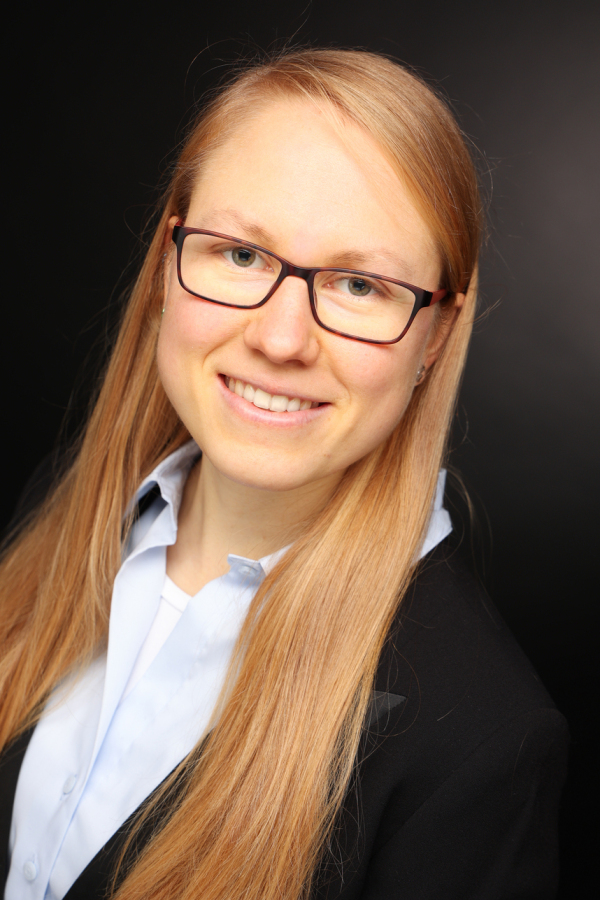
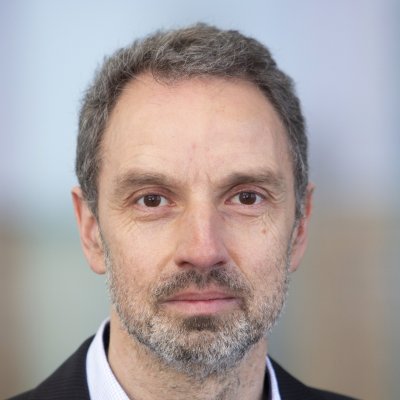
Henrik Beuther is an Associate Professor at the University of Heidelberg and research scientist at the Max Planck Institute for Astronomy, focusing on Planet and Star Formation. He holds a PhD from Max Planck Institute for Radioastronomy and was an Emmy-Noether Fellow at Harvard-Smithsonian CfA. Research Focus: His group studies high-mass star formation using millimeter interferometry (ALMA/NOEMA) and JWST. Projects include CORE (fragmentation/disk formation), THOR (Galactic HI/OH survey), and RIMORPHIS (river morphology informatics). Publication Trends: Recent work explores magnetic fields in star formation, JWST-based protostellar chemistry, Galactic structure mapping, and accretion dynamics. His articles frequently combine multi-wavelength data to address star-formation physics across scales. Awards: ERC Consolidator Grant (2015) He mentors 12+ PhD students on projects ranging from molecular cloud formation to JWST protostellar analysis. Leads collaborative networks including CASCADE and the Puzzles of Star Formation conferences.
Prof. Giovanni Betti is a Visiting Professor at the Department of Architecture and Urban Design at the University of the Arts Berlin. His research focuses on integrating technology with architectural practice, including sustainable building design, indoor environment quality, and digital tools for collaborative design. He leads projects like the CBE Clima Tool, an open-source platform for climate analysis, and explores human-machine interaction in spaces through generative algorithms and augmented reality. His work spans urban regeneration strategies, view quality assessment frameworks, and modular construction systems. Key research themes include the application of digital tools in architecture, occupant-centric design, and the interplay between technology and spatial communication. He has contributed to exhibitions like the MakeCity Festival with mixed-reality installations. His recent publications analyze workplace analytics, thermal comfort metrics, and parametric urbanism. Betti's interdisciplinary approach bridges architectural theory with practical implementation, emphasizing sustainability and user experience.
Dr.-Ing. Ines Kühnert is the Head of the Processing Technology Department at the Leibniz Institute for Polymer Research Dresden e.V. (IPF Dresden). Her research focuses on designing polymer materials and processes across scales, emphasizing structure formation, process boundary conditions, and application-relevant properties. The department integrates synthesis, material preparation, and forming processes with digitalization efforts to develop customized materials and strategies.
Dr.-Ing. Rüdiger Rentsch is a researcher at the Leibniz Institute for Materials-Oriented Technologies (IWT) affiliated with the University of Bremen . His work focuses on advanced manufacturing processes, including additive manufacturing, precision engineering, and resource-efficient production systems. Research Interests : Additive manufacturing (wire arc and titanium alloys) Precision machining (diamond cutting, orbital drilling) Energy and resource optimization in manufacturing Discrete event modeling for industrial processes Geometrically determined manufacturing technologies Tool wear and surface finish analysis Recent Publications highlight his contributions to understanding material behavior during high-speed processes, AI-driven manufacturing sustainability, and simulation techniques for precision drilling. His work bridges theoretical modeling and practical industrial applications.
Prof. Dr. Vladimir Braun leads the Theoretical Physics chair at the University of Regensburg's Faculty of Physics. His research group investigates nonperturbative aspects of quantum chromodynamics and hadronic structure. Key research areas include: QCD factorization for hard exclusive processes Conformal symmetry applications Light-cone distribution amplitudes Lattice QCD computations Recent publications focus on higher-order corrections to deeply virtual Compton scattering, precision determinations of meson/baryon structure, and renormalization challenges in lattice simulations.
Lars Penter is a Senior Engineer Research and Education at the Chair of Machine Tool Development and Adaptive Controls , Dresden University of Technology, and a Research Associate at the Fraunhofer Institute for Machine Tools and Control Technology (Department of IIoT Controls and Technical Cybernetics). His career spans roles since 2018 in machine tool development, adaptive control systems, and industrial IoT applications. Current affiliations: Dresden University of Technology, Fraunhofer Institute Research focus: Digital twin technology, friction modeling, damping analysis, sheet metal forming, process-machine interaction Scientific contributions include 15 recent articles (2025–2022) covering AI-driven deep drawing process prediction, digital twin applications in forming, multifractal surface analysis, and composite material damping. Publications appear in journals like At-Automatisierungstechnik and Robotics and Computer-Integrated Manufacturing . He contributes to industrial simulation and thermo-elastic analysis , addressing challenges in forming press behavior, elastic tool deformations, and chatter detection. His work bridges mechanical engineering with industrial IoT and AI-driven optimization .
Prof. Dr. Gerd Witt is a Professor of Manufacturing Processes and Machine Tools at the Gerhard-Mercator-University of Duisburg. He holds a Ph.D. (1982) and postdoctoral qualification (1990) from the University of Karl-Marx-Stadt. Prior to academia, he worked in industry roles including Technical Director at Niles-Simmons industrial facilities GmbH and senior management positions at ABB Service GmbH. He has served on expert committees for the German Federal Ministry of Research and Technology and is affiliated with organizations like the VDI and Wilhelm Heinrich Steinhaus-Stiftung. His research focuses on additive manufacturing (rapid prototyping), process simulation, work safety, and fuel cell production. He leads the production technology division at the Centre for Fuel Cell Technology GmbH (ZBT) and chairs the VDI Committee on Rapid Prototyping. Collaborations include partnerships with Thyssenkrupp, Airbus, and Siemens. Research interests span rapid technologies, simulation of manufacturing/assembly processes, and feasibility studies for economic manufacturing. Key projects include metal laser-sintering for tooling inserts, pallet turning devices, and optimization of manufacturing processes at VAW Aluminium AG. He has authored numerous papers in journals like Rapid Prototyping Journal and CAD-CAM Engineering Magazin REPORT. Professor Witt emphasizes teaching in production engineering, machine tools, welding technology, and rapid manufacturing. His work bridges academic research and industrial applications, emphasizing sustainable materials and process innovation. He actively contributes to conferences like Rapid. Tech 3D, publishing conference proceedings and advancing additive manufacturing standards.
Prof. Normen Fuchs holds a professorship in Manufacturing Technology (Joining Technology) and Quality Management at Stralsund University of Applied Sciences since 2019, concurrently serving as Dean. He previously worked at Fraunhofer IGP from 2006–2019, leading the Forming and Shaping Working Group and managing an ISO-accredited testing laboratory. His research focuses on lightweight materials joining, corrosion testing, and advanced manufacturing processes. He is an expert assessor for the German Accreditation Body, evaluating testing laboratories' quality systems. Education: Industrial Engineering (Specializing in Manufacturing Engineering and Production Technology) from the University of Rostock. Completed part-time training as an International Welding Engineer at the Welding Institute in Rostock. Research interests include joining technologies, quality management, and material science. Current projects emphasize adhesive bonding, thermal joining, additive manufacturing, and production metrology. He supervises theses at HOST and teaches courses in production technology, materials science, and quality engineering. His technical expertise spans: joining of lightweight materials, corrosion behavior analysis, and advanced manufacturing processes. He collaborates on additive manufacturing and digital product development initiatives.
Prof. Dr. Dieter Arendes is a Professor at Saarland University of Applied Sciences since 2003. His academic focus spans Manufacturing Technology , Materials Engineering , and Forming Technology , with expertise in holistic production systems, lean management, and forming process simulation. He is affiliated with the university's Faculty of Engineering and has contributed to the establishment of the WI-Institute and Modellfabrik, as well as co-founded Promtec GmbH. Education : Dipl.-Ing. in Mechanical Engineering with a focus on Production Technology from TU Dortmund University. Career : Prior to academia, he worked for nearly 4 years at Robert Bosch GmbH as Project Manager, Department Coordinator for Quality Management, and Head of the Experimental Workshop for Process Development. Research : His work emphasizes production system optimization, finite element simulation of forming processes, and digitalization in manufacturing. He holds patents related to extrusion processes and electrical machine production. Activities : Active in academic outreach as a jury member for 'Jugend forscht' and in industrial consulting.
Marco Munderloh is a research fellow at the Leibniz University Hannover under the Institute for Information Processing . His career spans advanced video coding, predictive maintenance, and photonic design, with a focus on low-bitrate aerial video compression and motion detection. Dipl.-Ing. in Computer Engineering (2004), Technical University of Ilmenau PhD (2015), Leibniz University Hannover His research interests include: Wave Field Synthesis (WFS) with patented applications in cinema sound systems Predictive maintenance using deep learning and Bayesian neural networks Inverse design for photonic integrated circuits and 3D nanostructures Region-of-interest (ROI) video coding and motion compensation Optical verification of construction materials Marco's recent publications (2025–2018) cover predictive maintenance, video compression, and photonic design. Key trends involve applying machine learning to industrial reliability, optimizing video codecs for aerial surveillance, and computational inverse design for optical devices. Scientific achievements include: Patent for WFS technology in sound reproduction Collaborations span institutions like IEEE, CIRP, EUSPEN, and journals such as APSIPA Transactions and Bautechnik . Contact: Marco.Munderloh@tnt.uni-hannover.de , Marco.Munderloh@web.de .
Dominik Brands is a researcher at the Institute of Mechanics , University of Duisburg-Essen , specializing in computational mechanics and multiscale modeling of heterogeneous materials. He holds a doctoral degree (Dr.-Ing.) from the same university (2012), with a dissertation titled "Geometrical Modeling and Numerical Simulation of Heterogeneous Materials". Department of Civil Sciences, Faculty of Engineering Board member of the Center for Computational Sciences and Simulation since 2013 Research assistant in the Scientific Computing Support Team since 2015 Research Interests: Dominik's work focuses on Multiscale simulation of dual-phase steels Residual stress analysis in hot bulk forming Numerical modeling of high-performance concrete Phase-field approaches for fracture and fatigue Computational biomechanics of arterial walls Statistically similar representative volume elements (SSRVEs) Publications highlight trends in finite element methods for materials with complex microstructures, particularly steel and concrete systems, with recent work extending to electromechanical coupling in nanocomposites. His scientific contributions span 2012–2025, emphasizing multiscale approaches and advanced numerical techniques. Teaching includes lectures on computational mechanics, coupled problems, and engineering mechanics. He has supervised 8 thesis students (2008–2018) in topics ranging from arterial simulations to phase transformations and concrete mechanics.
Sonja Hellebrand is a Researcher at the Institute of Mechanics , University of Duisburg-Essen, Germany. Her work focuses on computational mechanics, particularly the numerical simulation of thermo-mechanical material behavior and residual stress analysis in hot bulk forming processes. B.Sc. in Technomathematics (Civil Engineering) (2012-2015) M.Sc. in Computational Mechanics (2016-2018) Doctoral Degree (2023) for research on microstructural residual stresses in targeted cooling Her research employs multiscale approaches to model residual stresses during phase transformations (austenite-to-martensite) and thermo-mechanical coupling in metal processing. Recent publications in Finite Elements in Analysis and Design and Archive of Applied Mechanics demonstrate expertise in periodic boundary conditions, two-scale modeling, and transformation-induced stress analysis. Her work bridges experimental validation with numerical simulations (e.g., Metals , 2019), emphasizing cooling rate effects and phase evolution. Collaborative efforts include projects with Prof. Schröder and Dr. Brands, focusing on stress stability and process optimization. Current affiliations: Institute of Mechanics, Faculty of Engineering Sciences, Department of Civil Engineering Teaching: Thermodynamics of Materials, Tensor Calculus, Computational Inelasticity
Prof. Dr. Ulrich Meyer is a full Professor of Computer Science at Goethe University Frankfurt, where he joined as a full professor in 2007 at the age of 35. He is also a Fellow at the Frankfurt Institute for Advanced Studies (FIAS) since 2020 and serves as the spokesperson for the DFG priority program "Algorithms for Big Data" (SPP 1736), which spans over 15 sites across Germany, Austria, and Switzerland. Professor Meyer received his Ph.D. in computer science from Saarland University in 2002. Following his doctorate, he worked as a postdoc and later as a senior researcher (W2) at the Max-Planck Institute for Computer Science in Saarbrücken before joining Goethe University Frankfurt. His research focuses on the design and engineering of algorithms and data structures for very large data sets, with particular emphasis on parallelism (Shared-Memory, clusters, GPUs), memory hierarchies (caches, SSDs, hard disks), and energy efficiency. His work spans the spectrum from theoretical worst-case results and average-case analyses to experimental evaluation of heuristics. A significant portion of his research involves graph algorithms, where his group has achieved more than a thousand-fold speed-up over state-of-the-art methods through algorithms with better access patterns. His recent work has focused on memory-efficient graph exploration in dynamically changing data, approximate solutions, and efficient generation of randomized graph test data. Professor Meyer has received numerous prestigious awards including the 2019 ESA Test of Time Award for the Delta-Stepping Algorithm, Best Paper Awards at ESA 2019 for research on Fragile Computing and Graph Generation, the 2011 Award Germany Land of Ideas for Ecosort, records in the JouleSort Competition in 2009/10, and the 2003 Best Dissertation Award from the University of Saarland. As spokesperson for the DFG priority program SPP 1736 "Algorithms for Big Data," Professor Meyer coordinates research across multiple institutions. His Algorithm Engineering group is also part of the DFG Research Unit FOR 2971 "Algorithms, Dynamics, and Information Flow in Networks" and the LOEWE Priority Programme CMMS. His research has been supported by various grants that have enabled significant contributions to parallel and external-memory graph algorithms, large-scale network generation, and energy-efficient computing. Professor Meyer's research group forms part of the Computer Sciences and AI Systems division at FIAS. They collaborate extensively with researchers across Europe through the DFG priority program and other initiatives. The group is particularly known for their work on memory-efficient graph algorithms, large-scale network generation, and contributions to understanding the algorithmic foundations of big data processing.
Dr.-Ing. Ann-Kathrin Goldbach is a Professor at the Chair of Statics and Dynamics within the School of Engineering and Design at the Technical University of Munich . She has served as Deputy Chair since 2021 and Habilitation candidate since 2022, with a focus on CAD-integrated design cycles for structural membranes and isogeometric analysis. Her roles include Chief Representative for Equality of Women in Science since 2023. Master's Degree in Civil Engineering, Technical University of Munich (2013) Bachelor's Degree in Civil Engineering, Technical University of Munich (2009-2012) PhD in Structural Engineering, Technical University of Munich (2021) Research Focus : Goldbach specializes in parametric design workflows, isogeometric analysis, and lightweight membrane structures. Her work bridges CAD/CAE integration, wind engineering, and multidisciplinary optimization for additive manufacturing. Key projects include the FlexWing and MistralWind initiatives, emphasizing fluid-structure interaction and digital twins for durable construction systems. Article Trends : Recent publications highlight CAD-integrated parametric modeling, nonlinear behavior of membrane structures, fluid-structure interaction under wind loads, and digital twin applications in construction. Collaborations with TUM faculty and international institutions reflect her multidisciplinary approach. Teaching Contributions : She leads courses on Isogeometric Analysis , Computational Design , and Membrane Workshop , while supervising student theses and project-based learning initiatives. 2024: Doce et Delecta Teaching Award for Membrane Workshop 2023: TUM Learning Professional Certification 2019: IASS Hangai Prize for CAD-integrated design research
Professor Qiu Mingxia serves as a Professor at Shenzhen University of Technology's School of New Materials and New Energy since January 2024, previously holding the position of Associate Professor from 2017-2023. A recipient of the Shenzhen High-Level Leading Talent Award (Local Reserve Level), she holds a PhD in Materials Science and Engineering from Zhejiang University and has extensive experience in semiconductor research and academic leadership. Education: PhD in Materials Science and Engineering, Zhejiang University (2005-2008) Master in Materials Science and Engineering, North University of China (2002-2005) Research Focus: Professor Qiu's work centers on next-generation semiconductor technologies, with three interconnected pillars: developing perovskite-based optoelectronic devices for efficient light emission, engineering magnetic storage thin films for advanced spintronics applications, and innovating 3D printed porous materials for biosensing systems. Her research bridges fundamental materials science with practical device engineering, emphasizing solution-processed techniques and novel material interfaces. Publication Trends: Recent publications (2020-2024) reveal a strategic shift toward applied optoelectronics and spintronics, with increasing focus on perovskite LED efficiency optimization, quantum dot energy transfer mechanisms, and magnetic interface engineering. Educational research forms a secondary stream, documenting practical teaching reforms in applied technology universities. Her work shows strong industry alignment through patents in flexible electronics and laser fabrication. Scientific Recognition: Shenzhen High-Level Leading Talent Award (Local Reserve Level, 2012) Advanced Teaching Individual Award (Shenzhen University of Technology, 2019) Shenzhen Advanced Education Unit (2021, team award) Third Prize Shenzhen University Science and Technology Progress Award (2010) Research Leadership: Professor Qiu has secured leadership roles in high-impact national projects including the National 02 Major Project and NSFC Key Projects, while directing multiple Shenzhen-level initiatives in semiconductor manufacturing and educational innovation. Her patent portfolio demonstrates successful technology transfer in flexible conductive films and perovskite crystal engineering, reflecting strong industry-academia collaboration. Research Infrastructure: She directs laboratory facilities focused on thin-film deposition, nanomaterial synthesis, and optoelectronic characterization, maintaining active partnerships with semiconductor manufacturers through school-enterprise cooperation projects that integrate student training with industrial R&D needs.