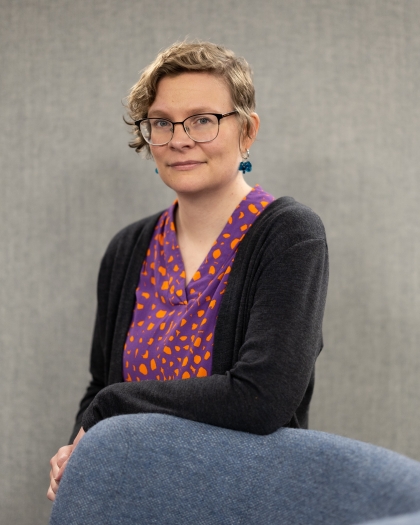
Simen Grung is a Doctoral Research Fellow at the Department of Teacher Education and School Research, Faculty of Educational Sciences, University of Oslo. His work focuses on assessment practices and English language pedagogy. Current projects: EDUCATE (Subject Renewal Evaluation), LANGUAGES (Language Instruction Contexts), NAVIKO-LU (Video-based Teacher Training), VIST (Video Excellence in Teaching) Research Groups: SISCO (Studies of Instruction across Subjects and Competences) His research explores feedback mechanisms in international classroom contexts, formative assessment challenges, and the use of video representations to enhance teacher training programs across Norway, England, and France. Recent publications demonstrate expertise in comparative education studies, language proficiency analysis, and assessment research methodologies. Key themes include cross-cultural pedagogical practices, assessment literacy, and video-based professional development. Active in academic collaborations, he works with researchers like Lisbeth M. Brevik, Eva Thue Vold, and Kirsti Klette on projects examining instructional quality and student experiences in teacher education.
Norwegian University of Science and TechnologyNorway
Marta Molinas is a Professor at the Department of Engineering Cybernetics within the Faculty of Information Technology and Electrical Engineering at the Norwegian University of Science and Technology (NTNU). Her research spans multiple interdisciplinary domains with a focus on EEG technology and brain-computer interfaces. She actively supervises numerous Master's projects and maintains extensive international collaborations with institutions including Kavli Institute for Systems Neuroscience, RIKEN Center for Brain Science, University of Tsukuba, Juntendo University, and several European universities. Professor Molinas' research interests center on developing innovative EEG technologies, particularly her FlexEEG concept for reduced-channel EEG systems with brain imaging capabilities. Her work integrates signal processing, artificial intelligence, and neuroscience to create practical applications in mental health, sleep research, neurorehabilitation, and human-computer interaction. She specializes in EEG source imaging, machine learning for brain signal analysis, and the development of brain-computer interfaces for various applications including locked-in syndrome communication, ADHD treatment, and driver monitoring systems. Her publication portfolio demonstrates strong trends in interdisciplinary research combining neuroscience with electrical engineering and artificial intelligence. The work shows particular emphasis on developing practical EEG-based systems that minimize invasiveness while maintaining analytical power, with applications spanning healthcare, rehabilitation, and human augmentation. Her research bridges theoretical signal processing with real-world implementations through numerous student projects and international collaborations. Professor Molinas actively supervises a large team of Master's and PhD students across multiple projects, with each project typically requiring two students working collaboratively. Her research is supported through numerous international collaborations with institutions in Japan, India, and Europe, indicating substantial research funding and project leadership. She has developed a pipeline of student projects that build upon previous work, creating a cumulative knowledge base within her research group. She leads the EEG ITK research team at NTNU, which focuses on developing the FlexEEG headset prototype featuring flexible, wireless, dry electrodes designed to move across the scalp. This team works at the intersection of neuroscience, electrical engineering, and computer science, developing applications for sleep research, mental health monitoring, neurorehabilitation, and brain-computer interfaces. The team collaborates extensively with international partners including the Kavli Institute for Systems Neuroscience, the International Institute of Integrative Sleep Medicine at University of Tsukuba, and several engineering departments across Europe and Asia.
Norwegian University of Science And TechnologyNorway
Georgios Neokleous is a Professor of English in the Department of Teacher Education at the Norwegian University of Science and Technology (NTNU), within the Faculty of Social and Educational Sciences. He holds a PhD in Education from Saint Louis University (2014), focusing on home language use in EAL classrooms. His career began as an EFL/ESL teacher, with extensive experience across Europe and the U.S., and he has developed specialized courses for diverse learner groups. Neokleous’ research emphasizes multilingualism, translanguaging pedagogy, and inclusive literacy practices in linguistically diverse classrooms. Education: PhD in Education, Saint Louis University, 2014 Masters and Bachelor’s degrees (implied, not explicitly stated) Research Interests: Neokleous explores the integration of students’ home languages in EAL settings, translanguaging as a pedagogical tool, and assessment strategies in multilingual environments. His work bridges theory and practice, addressing challenges in teacher education and classroom diversity. Recent trends in his publications highlight cross-national comparisons (e.g., Norway-Cyprus studies), innovative teaching methodologies, and the role of technology in modern classrooms. Advising & Grants: Supervises students at BA, MA, and PhD levels. Collaborates with international researchers like Anna Krulatz and Sviatlana Karpava. Active in organizing academic events, including TESOL International and ECER conferences. Labs/Teams: Engaged in collaborative research groups focused on multilingual education, such as the ‘Learning and Teaching English in the Multilingual Classroom’ initiative. His work often intersects with institutions like the University of Cyprus and Multilingual Matters publishing.
Norwegian University of Science and TechnologyNorway
Edgar Hertwich is a Professor of Industrial Ecology at the Department of Energy and Process Engineering, Faculty of Engineering, Norwegian University of Science and Technology (NTNU). He is on partial leave from NTNU, serving as a Senior Researcher at the International Institute for Applied Systems Analysis (IIASA) in Austria and as a partner in the environmental data company XIO Sustainability Analytics. His work bridges academic research and practical applications for climate mitigation. Current affiliations: NTNU (Professor), IIASA (Senior Researcher), XIO Sustainability Analytics (Partner) Previous roles: Professor at Yale University (2015-2019), Fellow at Yale (2019-2022), Professor at NTNU (2003-2015) Hertwich's research focuses on industrial ecology, examining material flows in economic systems to advance climate protection and sustainable development. His work spans machinery, buildings, urban form, and food supply systems, employing life cycle analysis, cross-flow analysis, and economic modeling. He contributes to global policy frameworks like the UN's Circular Economy Action Plan and EU Climate Council reports. Recent projects include CIRCOMOD (Circular Economy Modeling for Climate Mitigation) and RAINFOREST (knowledge co-production for biodiversity). He has been recognized with NTNU's Prize for Research and Artistic Activity (2023) for his contributions. Scientific Awards NTNU's Prize for Research and Artistic Activity (2023) Editorial Roles Environmental Science & Technology Journal of Industrial Ecology Journal of Economic Structures As a thought leader in industrial ecology, Hertwich connects technical insights to policy, emphasizing material efficiency and resource allocation. His work influences EU climate strategies and global environmental assessments.
Professor Ann Elisabeth Gunnulfsen works at the Department of Teacher Education and School Research (ILS) , University of Oslo. She focuses on educational leadership , school governance , and curriculum reform through projects like ChangeLead and RE-FORMED . Education: PhD in school governance (2018), University of Oslo Master of Philosophy in Educational Leadership (2010), UiO Research Focus: Policy enactment in schools National testing and accountability Curriculum implementation International comparative studies (e.g., ISSPP ) Her publications (15 recent) analyze leadership responses to reforms like Fagfornyelsen , emphasizing tensions between internal accountability and external policy demands. She co-edited books on reading strategies and school leaders as legal interpreters . Collaborations: Part of the CLEG research group , she leads projects like VIST (video assessment) and contributes to DIVA (digital integration). Guest researcher at UC Berkeley (2015-2016).
Sigrid Røyseng is a Professor of Cultural Sociology at the Norwegian Academy of Music (Department of Music Education) and holds an additional role as Professor II at BI Business School. She leads the government's newly formed Music Committee tasked with conducting a comprehensive public inquiry (NOU) into Norway's music sector, emphasizing institutional structures, cultural policy, and societal roles of music. Her research spans cultural policy analysis, arts management, and the intersection of artistic quality with administrative frameworks. Her work addresses topics like institutional change in higher music education, moral economies in cultural practices, and sustainability challenges in live music. She has published extensively on cultural policy decision-making processes, leadership in high-performance cultural environments, and the political dimensions of cultural institutions. The committee’s findings (due 2025) aim to inform future cultural policies by examining both professional and voluntary music sectors. Røyseng’s academic contributions include analyses of artistic quality assessment in audit societies, the paradoxes of Norwegian cultural policy frameworks, and the ethical dimensions of cultural work. She collaborates with interdisciplinary teams and maintains active engagement in music education reforms.
Norwegian University of Science And TechnologyNorway
Torgeir Welo is a Professor at the Department of Mechanical and Industrial Engineering , Norwegian University of Science and Technology (NTNU) . He specializes in metal forming , particularly aluminum alloy structures , with a focus on plastic bending behavior , dimensional stability , and 3D forming technologies . His research also encompasses Lean Product Development , emphasizing knowledge reuse and maximizing customer value in automotive and aerospace applications. Key Research Areas : Metal Forming, Aluminum Processing, Springback Control, Lean Development, Additive Manufacturing, Material Substitution Teaching : Courses on Aluminum Technology , Metal Forming Analysis , and Machine Element Design Publications (15 most recent): Focus on springback monitoring , charge weld evolution , flexible forming , machine learning applications , and circular economy frameworks in metal manufacturing.
Norwegian University of Science and TechnologyNorway
Festo Kayima is an Associate Professor in Chemistry Didactics at the Department of Teacher Education, Faculty of Social and Educational Sciences, Norwegian University of Science and Technology (NTNU). His research focuses on science teacher education, classroom knowledge, and pedagogical strategies in chemistry. Doctorate in Chemistry Education (2018, University of Bergen) Master’s in Science Education (2020, NTNU) Kayima’s research projects include developing science teacher trainees’ professional knowledge through reflective practice, enhancing scientific literacy, and integrating sustainability into chemistry education. He leads the Erasmus+ project STEMkey (2020–2023), emphasizing graduate attributes and key skills for educators. His recent publications (2025) with Springer explore pedagogical themes like chemical knowledge, outdoor teaching, and technology integration. These works align with broad keywords such as Science Education, Curriculum Development, and Experiential Learning, with subfields spanning digital tools, sustainability, and misconceptions in chemistry. Co-supervised Kristine Fjelldal Sunde’s thesis on teacher questioning in labs He contributes to research groups Naturfaglig Literacy i Skole og Lærerutdanning and ScienceHumanities , bridging interdisciplinary approaches in education. His teaching includes courses like Science as a School Subject (MGLU4211) and Teacher Education: Teaching Chemistry (PPU4626).
Norwegian University of Science And TechnologyNorway
Professor Yngve Karl Frøyen works at the Department of Architecture and Planning, Faculty of Architecture and Design, Norwegian University of Science and Technology (NTNU). With expertise in sustainable transport solutions, urban spatial modeling, and GIS applications for planning, he has taught and supervised urban and regional planning topics since 2010. His work spans multiple master programs and involves improving transport modeling tools for walking, transit, and bicycling modes. Research Focus: Sustainable urban transport (walking, bicycling, public transit), urban density, GIS methods, land use-transport interactions, and urban logistics. Teaching: Courses in GIS methods, land use-transport integration, regional planning, and master thesis supervision. Publications: 15+ works on transport modeling, urban density impacts, bicycle infrastructure, and planning methodology. Outreach: Regularly presents at conferences and seminars on topics like urban logistics, walking modeling, and transport policy. His academic career spans from 1981 civil engineer graduation to current professorship, with prior roles at Norwegian Institute of Urban and Regional Research (NIBR) and SINTEF. He combines technical GIS proficiency with policy-oriented planning expertise.
Robert Morris Gray Jr. is an Associate Professor in the Department of Pedagogy at the University of Bergen, Norway. He is affiliated with the UiB Learning Lab and the Research Group for Teaching and Learning in Higher Education (TeLEd). His work spans the Scholarship of Teaching and Learning (SoTL), digital and blended learning, and the philosophical dimensions of teaching as a 'writerly' act. His educational background and professional development are rooted in pedagogy and higher education, with a focus on how digital tools can transform teaching and assessment. His research interests include: Online and blended learning Digital assessment and feedback Formative assessment strategies Philosophy of teaching and learning Critical discourse in digital competence Race, privilege, and social justice in education Gray's recent publications reflect a strong thematic focus on the 'writerly' framework in teaching, drawing from Roland Barthes to reconceptualize learning as interpretation and rewriting. His work explores how digital tools, especially Canvas, have reshaped assessment and interaction in higher education, particularly during and after the pandemic. He investigates how transparency in teaching design fosters deeper engagement and critical thinking among students. His scientific contributions include numerous peer-reviewed articles and presentations at international conferences such as ISSOTL and EuroSoTL. While no formal awards are listed, his leadership in educational development projects underscores his impact. Gray advises several graduate students and has led key projects such as HyComm (Erasmus+) and CABUTE (NORHED II), focusing on AI-enriched hyflex communities and capacity building in Uganda. He has also contributed to textbook development and teacher training resources, including Tools for the Development of Teaching at University (2016). He is actively involved in labs and research groups centered on SoTL, digital pedagogy, and educational innovation at UiB, fostering both local and international scholarly communities.
Norwegian University of Science and TechnologyNorway
Stig Arve Sæther is a Professor of Sports Science at the Department of Sociology and Political Science, Norwegian University of Science and Technology (NTNU), Faculty of Social and Educational Sciences. His research focuses on talent development, elite sports, and sports psychology, with specific emphasis on transitions from junior to senior elite, stress, perfectionism, and coach-athlete relationships. He leads the research group Skill and Performance Development in Sports and School (SPDSS) and the NTNU Sports Network. Primary research areas: Talent development environments, dual careers, relative age effects, and athlete stress Ongoing projects: Female athlete development, Norwegian football club mergers, international youth football environments, senior transitions in school sports, and destructive leadership in sports Collaborations: Rosenborg Ball Club, Kristiansund Ball Club (NEAS Academy), Norwegian Handball Association, Norwegian Ice Hockey Association Editor-in-Chief: Scandinavian Journal of Sport and Exercise Psychology His recent research explores gender differences in talent environments (handball/ice hockey), parental impacts on biathlon transitions, and communication barriers around menstrual cycles in female football. With 60+ international journal articles and multiple books, his work bridges academic rigor and practical sports insights. Media presence spans 200+ TV/radio/podcast appearances (TV2 Sporten, NRK, GameChanger) and newspapers (Wall Street Journal, Aftenposten). Key students include Max Bergström (PhD) and 46+ master’s graduates. Awards not explicitly mentioned, but his editorial and research group leadership highlight institutional recognition.
Charu Sharma is an Associate Professor in the Department of Electrical Engineering at UiT The Arctic University of Norway, specializing in power systems and smart grid technologies. Her work focuses on reactive power control, voltage stability, and optimization of renewable energy-integrated networks. Research on cyber-physical co-simulation frameworks for real-time grid management Development of hybrid renewable energy microgrids for rural and industrial applications Expertise in optimization algorithms (e.g., BFOA-PSO, ANFIS) for energy systems Recent publications highlight her contributions to DER-enriched distribution networks, low-inertia system stability, and intelligent load frequency control. She actively collaborates with researchers on projects like Cooperative Isolated Renewable Energy Systems and arcICE , addressing reliability and sustainability challenges.
Arild Michel Bakken is an Associate Professor at the National Centre for Reading Education and Research, Faculty of Arts and Education, University of Stavanger, Norway, a position he has held since 2018. Previously, he taught French and Norwegian in Belgium (2016–2018) and was a Research Fellow in French Literature at the University of Oslo (2015–2016). Education: PhD in French Literature (co-tutelle), University of Paris-Sorbonne and University of Oslo (2015) MA in French Literature, University of Paris-Sorbonne (2010) BA in Modern Literature, Paul Valéry University (2006) His research spans literacy education, AI applications in learning, and reading assessment technologies. He leads major projects including the Erasmus+-funded AILIT (developing AI platforms for literacy) and the NRC-supported Adaptvurder (adaptive reading tests). His work integrates recommender systems, machine translation, and psychometric modeling to enhance educational outcomes. Bakken’s publications transition from early expertise in Mallarmé’s poetry (using hermeneutic/rhetorical frameworks) to contemporary focus on literacy technology. Recent articles emphasize adaptive assessments, AI-driven pedagogy, and equitable educational tools. He contributes to national education initiatives as a developer of reading screening tests for Norway’s Directorate of Education and is active in Stavanger AI Lab . He also edits the Nordic Journal of Literacy Research and conducts professional workshops for teachers.
Hanna-Riikka Roine is an Associate Professor in Digital Culture at the University of Bergen, affiliated with the Department of Linguistic, Literary and Aesthetic Studies and the Center for Digital Narrative. Her research bridges digital media, narrative theory, and speculative fiction, with a focus on games, imagination, and democratic discourse. Her research interests include: Digital culture and computational media Narrative theory and worldbuilding Game studies, particularly narrative agency in video games Speculative fiction as a tool for imagining futures Transmediality and digital storytelling The role of fiction in democratic imagination Her recent publications explore narrative forms in social media, romance mechanics in games like Dragon Age , and the limits of narrativizing environmental systems. She investigates how digital technologies entangle with human imagination, especially in speculative contexts. Notable research projects include: CO-SPEC (Academy of Finland, 2020–2023): On human-computer entanglement in speculation Imagine, Democracy! (Kone Foundation, 2023–2026): On narrative fiction as a democratic imagination tool in Finland She has co-edited special issues and books on digital environments, games, and speculative fiction, demonstrating leadership in interdisciplinary scholarship. While no formal scientific awards are listed, her funded projects and editorial roles signify academic recognition. She has collaborated with researchers such as Laura Piippo, Esko Suoranta, and Susanna Lindberg, contributing to a vibrant research network. She has also developed innovative pedagogical methods, such as using Twine game jams for assessment in higher education. Her work is situated within a strong digital humanities framework, connecting literary theory with contemporary media and societal challenges.
Norwegian University of Science And TechnologyNorway
Bunji Izumi is an Assistant Professor at the Department of Architecture and Technology, Faculty of Architecture and Design, NTNU, supported by the Scandinavia-Japan Sasakawa Lectureship. He holds a Dipl.-Ing., M.Sc., and B.Eng., and is a registered architect in Japan. His career includes roles at Nikken Sekkei Ltd. (Tokyo) as Senior Computational Designer and Associate in Structural Design, and at Driendl Architects in Vienna, Austria. His research focuses on structural engineering, timber-steel composite systems, fire safety, digital design, and sustainable architecture. Key areas include optimization methods in architectural design, circular timber structures, and interdisciplinary collaboration between architects and engineers. Publications highlight work on foldable canopies, fire-resistant composites, BIM integration, and structural education reforms. He contributes to exhibitions like IASS 2019 and collaborates on projects such as the Shogakukan Building and Vienna Indoor Swimming Pool. His educational background includes postgraduate studies at TU Vienna and the University of Tokyo, emphasizing structural design and timber engineering. Current research trends emphasize sustainability, circular design, and computational workflows.


-2.jpg)