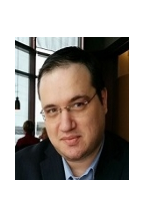
John Hughes is a Professor at Chalmers University of Technology. His research focuses on functional programming, software testing, and formal methods. He is a co-author of the Haskell programming language and a pioneer of QuickCheck, a property-based testing tool. His work bridges foundational theory with practical applications in software engineering. Research Interests: Development of functional programming paradigms and their applications Property-based testing and automated software validation Type systems and compiler optimization techniques Concurrency and parallelism in functional languages His publications span influential works like Why Functional Programming Matters (1989) and A History of Haskell (2007). He has contributed to open-source tools and frameworks widely used in academia and industry.
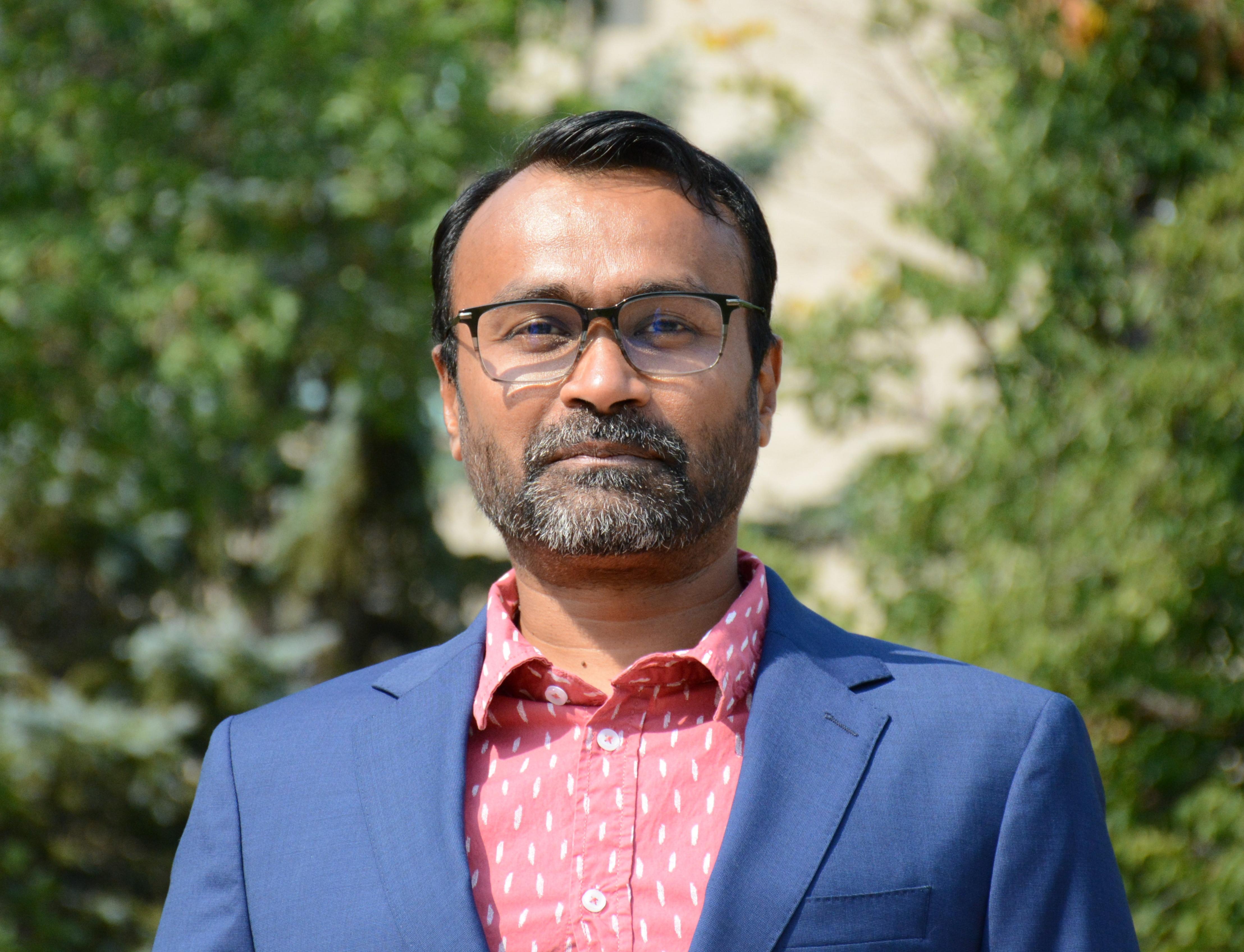
William Hallahan is an Assistant Professor in the School of Computing at Binghamton University. He joined the faculty in August 2022 following his PhD in Computer Science from Yale University (May 2022), where he was advised by Ruzica Piskac. His research focuses on formal methods, functional languages, and network systems, with an emphasis on techniques that simplify code verification and automated reasoning. Education: PhD in Computer Science, Yale University, 2022 BA in Mathematics and Computer Science, College of the Holy Cross Research interests include: Program verification for functional languages Automated debugging and repair systems Network system verification (firewalls, P4 programs) Control plane synthesis for programmable networks Publications highlight contributions to symbolic execution, firewall repair, and P4 verification frameworks. Current research emphasizes developing practical formal techniques to reduce programmer error and improve code reliability. He maintains an active research group with multiple funded PhD positions available starting Spring 2023.
Dr. Michael Foster is a Researcher and Research Software Engineer at the School of Computer Science, University of Sheffield. He specializes in software testing methodologies, causal inference, and formal methods for system modeling. His work focuses on developing tools for automated model inference, particularly Extended Finite State Machines (EFSMs), and applying causal reasoning to improve software testing. Education: PhD in Computer Science (2017-2020) from the University of Sheffield, supervised by Prof. John Derrick and Dr. Achim Brucker. His doctoral research addressed EFSM inference from black-box software execution traces, integrating genetic programming and formal verification techniques. Research Projects: Principal contributor to the CITCoM project, applying causal inference to computational model testing. Developed the causal testing framework and EFSM inference tool, which formalizes model merging and data dependency analysis. Explored metamorphic testing, automated verification of trace properties, and active learning techniques for EFSMs. Key Contributions: Published extensively on causal testing, EFSM inference, and algorithmic testing strategies. His work bridges formal methods with practical software engineering challenges, emphasizing automated tools and rigorous validation frameworks.
Edward W. Wolfe is currently a Principal Research Scientist in the Research and Innovations Network at Pearson, where he focuses on research related to human raters and automated scoring. He also holds an Honorary Research Fellow position. Previously, he held academic appointments at the University of Florida, Michigan State University, and Virginia Polytechnic Institute and State University. His work involves operational support for Australia’s National Assessment Program – Literacy and Numeracy (NAPLAN) and the National Board for Professional Teaching Standards (NBPTS). Dr. Wolfe’s research interests are centered on educational measurement , psychometrics , and automated scoring evaluation . He explores applications of latent trait models to detect and correct rater effects, model rater cognition, and develop multidimensional and multifaceted assessment instruments. His work also extends to cross-cultural testing equivalency, meta-analysis of reliability coefficients, and the effectiveness of training methods for writing assessment raters. Key areas include: Latent trait models for rater analysis Instrument development in educational and psychological assessments Statistical methodologies in test equating and meta-analysis Psychometric approaches in non-traditional fields like cognitive radio testing Evaluation of workplace support structures for breastfeeding Longitudinal monitoring of rater performance His research has been published in prominent journals such as Educational and Psychological Measurement , International Journal of Testing , and Journal of Educational Measurement . Recent publications emphasize the application of the Rasch model in diverse contexts, including software development (e.g., RaschFit.sas), bootstrap methods for model validation, and equating strategies. He also investigates item non-response and the comparability of data matrices, reflecting a focus on improving the reliability and validity of assessments across different populations and methodologies. In his advisory and collaborative roles, Dr. Wolfe serves on the editorial boards of Journal of Applied Measurement and Journal of Writing Assessment . He represents Pearson in committees sponsored by the National Assessment of Educational Progress (NAEP) and the Council of Chief State School Officers (CCSSO). While no formal student advising is listed, his contributions include training programs for writing assessment raters and collaborative research with institutions on professional development and evaluation frameworks.
Dr Antonios Gouglidis is a Senior Lecturer in the Department of Computing and Communications at Lancaster University, specializing in theoretical and applied security. His research focuses on designing secure systems through the integration of theoretical informatics and practical industry experience. His research interests span several critical areas in cybersecurity including access control models and policies , Cloud security , Critical Infrastructure Protection (CIP) , and formal verification through model checking. His work bridges theoretical security concepts with practical implementation challenges. Analysis of his recent publications (2022-2025) reveals a strong focus on emerging security challenges in cloud environments, 5G networks, and operational technology. His research demonstrates particular expertise in multi-layer threat analysis, security-vs-QoS optimization, and formal verification techniques. He frequently applies game theory approaches to security problems and has increasingly incorporated AI/ML techniques into his security frameworks. Dr Gouglidis has supervised PhD students including Ovini Gunasekera and Igor Ivkic. His research has been supported by significant projects such as: SL:H2020 SANCUS (2020-2023) BEIS: Nuclear Research and Development Programme (2019-2022) Enable Ancillary Services bY Renewable Energy Sources (2018-2021) Towards Ultimate Convergence of All Networks (2017-present) Resilient communication services protecting end-user applications (2016-2020) His work has practical applications in critical infrastructure protection, particularly in energy sector systems and industrial control environments. Dr Gouglidis maintains an active research profile with consistent publication output across top security venues.
Thomas Lemberger is a researcher in the Department of Computer Science at Ludwig-Maximilians-Universität München (LMU Munich), contributing to the Software and Computational Systems Lab. He specializes in software verification, formal methods, and automated testing, with a focus on improving tool efficiency and scalability. His work includes extensions to CPAchecker, such as distributed summary synthesis and cooperative verification approaches, as well as developing user-friendly tools like CoVeriTeam GUI. His research interests involve integrating verification into build systems and IDEs, optimizing verification workflows, and exploring hybrid techniques that combine testing and formal methods. He has actively participated in competitions like SV-COMP and Test-Comp, contributing tools like PRTest and Nacpa. His projects aim to reduce tool restarts, enhance fault localization, and streamline verification processes through parallel portfolio analyses. Thomas mentors students on topics related to verification tool development, test-case generation, and open-source software. His contributions are supported by grants from the DFG (CONVEY, COOP, IDEFIX), emphasizing cooperative verification and scalable analysis. Recent work focuses on enabling developers to use verification tools seamlessly within their existing workflows.
Igor Ivkovic was a Professor in the Department of Systems Design Engineering at the University of Waterloo, Canada. His work focused on integrating theory and practice in complex information systems, emphasizing system modeling, process modeling, and data modeling to bridge technical and business stakeholder needs. He taught courses such as Data Structures and Algorithms, Algorithms and Data Structures, and Digital Systems in recent years. Education: Holds a Doctorate in Electrical and Computer Engineering (2011), along with advanced certificates in university teaching (Certificate in University Teaching, 2011) and instructional skills (ISW, 2015). Earlier degrees include a Master of Mathematics in Computer Science (2003) and a Bachelor of Mathematics in Operations Research (2001), both from the University of Waterloo. Research Interests: Specialized in Information Systems, Software Engineering, and Knowledge Engineering. His work addressed challenges in model synchronization, software evolution, and architecture recovery, leveraging formal methods and model-driven approaches to enhance system consistency and interoperability. Notable Contributions: Authored influential papers on model synchronization for software evolution (2011) and improving the Gnutella protocol (2001), the latter earning a prize-winning award. He also pioneered educational innovations like Design Days Boot Camps (2017–2021), integrating remote learning and augmented reality into engineering education. Awards: Recognized for his 2001 research on the Gnutella protocol, which won a prestigious award through the LimeWire contest.
Pieter-Tjerk de Boer is an Associate Professor at the University of Twente , affiliated with the Electrical Engineering, Mathematics and Computer Science (EEMCS) faculty. He holds dual roles in the Design and Analysis of Communication Systems (Computer Science) and the Digital Society Institute . His research focuses on rare-event simulation, communication systems, and mathematical performance analysis. He earned his PhD in 2000 from the University of Twente with a thesis on queueing models for telecommunication systems. Key research areas include stochastic performance analysis (e.g., importance sampling techniques for queueing networks), computer networking (DNS analysis, IPv6 security), and radio technology (MIMO receivers, harmonic rejection mixers). His work bridges theory and application, addressing challenges in reliability, security, and efficiency of digital systems. Notable contributions include advancements in statistical model checking, automated rare-event simulation for stochastic Petri nets, and open-source intelligence analysis using radio receivers. His findings are published in journals like Simulation , IEEE Transactions , and Performance Evaluation , with over 98 research outputs since 1996. Collaborations span academia and industry, including work on cybersecurity, network management, and hardware-software co-design. Media engagements include discussions on radio receiver usage patterns during the Ukraine war and IPv6-related network vulnerabilities.
Maximilian R. Odenbrett was a PhD student at Eindhoven University of Technology (2010–2011), collaborating with RWTH Aachen University's MOVES group. His research focused on Efficient Multi-Core Model Checking , leveraging NVIDIA's CUDA for parallel processing on GPGPUs. He specialized in formal methods, stochastic model checking, and parallel programming for multi-core systems. Education : Diplom-Informatiker (Computer Science) from RWTH Aachen University (2004–2010), with a minor in Psychology. Research Interests : Development of parallel algorithms for formal verification, application of GPUs in bioinformatics (e.g., biological network analysis), and model-based analysis of software systems. His work bridges theoretical formal methods with practical parallel computing solutions. Publications : Focused on applying GPGPUs to model checking and bioinformatics problems, as seen in his BMC Bioinformatics paper (2012) and conference contributions on AADL specification analysis (2010). His research emphasizes scalability and efficiency in computational systems. Affiliations : Collaborated with Prof. Joost-Pieter Katoen's MOVES group at RWTH and Prof. P.A.J. Hilbers' BMI group at TU Eindhoven. His work contributed to the EMCMC project on multi-core model checking.
Dr. Alexandre Joannou is a Senior Research Software Engineer at the Department of Computer Science and Technology, University of Cambridge. His research focuses on secure hardware-software co-design, particularly in the CHERI (Capability Hardware Enhanced RISC Instructions) project. He specializes in computer architecture, memory safety, and RISC-V processors, with a focus on integrating security into low-level system components. His work spans theoretical contributions to capability-based systems and practical implementations in accelerators, GPUs, and embedded devices. Key areas include secure speculation, memory protection, and formal verification of hardware designs. Joannou's research has advanced temporal safety in heaps, compressed capabilities for efficiency, and architectural contracts to prevent vulnerabilities. His publications emphasize hardware security innovations, including CHERI-RISC-V integration, GPGPU memory protection, and randomized testing methodologies. Collaborations involve both academic and industry partners in secure computing ecosystems.
Dobrik Georgiev is a Lecturer in the Department of Computer Science and Technology within the School of Technology at the University of Cambridge. His research centers on bridging algorithmic reasoning with neural architectures, focusing on how neural networks can execute and generalize algorithmic processes. His primary research interests include: Neural algorithmic reasoning and its applications to combinatorial problems Graph neural networks and hypergraph learning systems Explainable AI through concept-based interpretability Deep equilibrium models for algorithmic execution Biological data analysis using neural architectures Georgiev's publication record demonstrates consistent innovation in neural execution models, with recent work exploring bottlenecks in algorithmic reasoning (2025), multi-solution reasoning frameworks (2024), and generalization beyond synthetic graph models (2023). His research shows strong interdisciplinary connections between theoretical computer science, machine learning, and computational biology. While no formal awards are documented in available sources, his work has established significant contributions to neural algorithmic reasoning frameworks. Georgiev maintains active research collaborations through the Department of Computer Science and Technology's initiatives, particularly in the areas of machine learning and neural architectures. His technical leadership is evident in software contributions like the LENs library for logic-explained networks.
Michaela Bačíková is an Assistant Professor at the Faculty of Electrical Engineering and Informatics (FEI) of the Technical University of Košice (TUKE). Her research focuses on Human-Computer Interaction (HCI), domain usability, and domain analysis, with an emphasis on graphical user interfaces (GUIs), domain-specific languages (DSLs), and gesture-driven interaction. She leads the development of the DEAL tool, a domain analysis framework for extracting domain models from software systems. Her teaching includes courses on component-based programming, web technologies, and user interface design. Research Projects: DEAL (Domain Extraction ALgorithm) : A tool for analyzing GUIs to generate DSLs, ontologies, and usability metrics. EU Project: 'Evolving Architectural Knowledge in the Edge-to-Cloud Continuum' (participant). Educational initiatives: Integrating gesture-driven IDEs and social networks for mentoring in programming courses. Research Interests : Automated domain usability evaluation using DEAL. DSL-driven GUI generation and feature modeling. Innovations in teaching software development and user experience design. Grants & Labs : Recipient of FEI TUKE Grant no. FEI-2015-16 for domain usability metrics research. Active in the FEI lab developing DEAL and related tools.
Dr. Shakil M. Khan is the SaskPower Assistant Professor in Artificial Intelligence at the University of Regina's Department of Computer Science. His primary research develops formal models for causal reasoning in artificial intelligence, focusing on knowledge representation and rational agent systems. He holds a Ph.D. from York University and leads the PRACToR lab. Education: Ph.D. Computer Science, York University (2018) B.Sc. Computer Science, University of Windsor Dr. Khan's research program develops logical frameworks for actual causation in nondeterministic domains, with applications to explainable AI and multi-agent systems. His work combines situation calculus with game-theoretic approaches to model causal relationships and responsibility attribution. Current projects investigate abstraction techniques for concurrent game structures and root cause analysis in hybrid dynamic systems. His publications demonstrate strong theoretical foundations in logic-based AI, with recent articles exploring the semantics of causality, knowledge representation, and agent modeling. Research keywords frequently include situation calculus, formal verification, and multi-agent systems. Dr. Khan supervises graduate students working on causal reasoning projects and has received NSERC Discovery funding (2022-2027). He serves on program committees for leading AI conferences including AAAI, IJCAI, and KR. Dr. Khan teaches courses in discrete structures, artificial intelligence, and knowledge representation.
Vincenzo Deufemia is a Full Professor at the Department of Computer Science of the University of Salerno . His work focuses on cybersecurity, IoT security, data analytics, machine learning, and end-user development in smart environments. He has been actively involved in interdisciplinary research spanning database systems, human-computer interaction, and ethical AI applications. Key research interests include: Automation rule security and coherence Unsupervised learning for IoT interference detection End-user customization of smart systems Functional dependency discovery in data streams Social media analysis for geopolitical perception studies Recent work has explored leveraging generative AI for ethical phishing defense mechanisms and developing tools like EFESTO-5W for non-expert security rule specification. His contributions also include visualization frameworks for dependency analysis and spatial integrity constraints verification. No formal awards are explicitly listed in the provided material, though his extensive publication record indicates significant contributions. His research has practical applications in both academic and industrial contexts, particularly in improving end-user security awareness and system usability in smart environments.
Dr. Apurva Narayan is an Affiliate Professor in Computer Science and Data Science, and an Associate Member in Mechanical Engineering at the University of British Columbia's Irving K. Barber Faculty of Science. His research focuses on artificial intelligence, machine learning (particularly explainable AI and quantum ML), data mining, cybersecurity of cyber-physical systems, and decision-making under uncertainty. He holds a PhD from the University of Waterloo (Systems Design Engineering) and a Bachelor's in Electrical Engineering from Dayalbagh Educational Institute. Education: PhD in Systems Design Engineering, University of Waterloo (2015) Bachelor of Engineering in Electrical Engineering, Dayalbagh Educational Institute (2008) Research Interests: Explainable AI/ML and quantum machine learning Data analytics and mining Safety/security of cyber-physical systems Graph-theoretic analysis of complex systems Decision-making under uncertainty Reverse engineering complex software systems Awards: Systems Society of India Young Scientist Award (under 40) MITACS Accelerate Award (2013) Dr. T.E. Unny Memorial Award (2011) Multiple teaching nominations at University of Waterloo Advising & Grants: Supervises graduate students in AI/ML and cybersecurity. Secured grants including MITACS Accelerate and Waterloo scholarships. Active in patent filings related to timed regular expressions. Labs/Teams: Engaged in collaborations within the UBC Department of Computer Science and cross-disciplinary projects with Mechanical Engineering on system reliability and quantum computing applications.