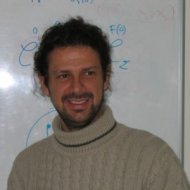
Ali Shokri is a tenure-track Assistant Professor in the Department of Computer Science at the University of Houston. His research focuses on program synthesis, software security, and formal methods, with applications in code translation, bug detection, and interprocedural analysis. Education: Ph.D. in Computing and Information Sciences, Rochester Institute of Technology (2023) M.Sc. in Information Technology, Tarbiat Modares University (2014) B.Sc. in Software Engineering, University of Tehran (2007) Research interests include automated software productivity tools, code reliability frameworks, and formally verified binary analysis. He has published in top venues like OOPSLA'24, ICSE'25, and ASE'21, where his program synthesis paper won first place. His work bridges academia and industry through collaborations with Google and PARC. Scientific contributions include patents on mathematical model extraction from binaries using SMT solvers and genetic algorithms. He serves on program committees for ICSE, LangSec, USENIX, and ASE conferences, emphasizing software engineering and security research.
Emilio Tuosto is a Full Professor at the Gran Sasso Science Institute (GSSI) in L'Aquila, Italy, where he leads the Computer Science Department. Previously, he held an Associate Professor position at the University of Leicester's School of Informatics (UK). His research focuses on formal methods, distributed systems, and behavioral specifications. He earned his PhD in Computer Science from the University of Pisa in 2003 and holds a degree from the same institution (1998). His research explores theoretical and applied aspects of complex distributed systems, including automata-based models of distributed choreographies and contract-based interaction frameworks. Key projects include BehAPI (Marie Skłodowska-Curie Actions RISE project) and DeLiCE (Decentralised Ledgers in Circular Economy). He actively contributes to conferences like COORDINATION and ECOOP, and organizes GSSI's seminar series. Recent work includes tools like TRAC for data-aware coordination, MoCheQoS for QoS analysis, and CIRC (reversible computing). His publications span formal choreographic languages, static analysis for C programs, and behavioral types for local-first software. Collaborations involve institutions like IMT Lucca, University of Pisa, and international teams. Tuosto's contributions bridge theoretical foundations with practical implementations in distributed systems and formal methods.
Mario Bravetti is a Full Professor at the Department of Computer Science and Engineering, University of Bologna. His academic discipline is Informatics (INFO-01/A). He specializes in formal methods, process calculi, and distributed systems, with a focus on session types, microservices architecture, and formal verification of software systems. His research bridges theoretical foundations with practical applications in cloud computing, edge computing, and industry 4.0. Research interests include: Session types and behavioral contracts Formal semantics of concurrent systems Microservices deployment and orchestration Low-latency anomaly detection in industrial IoT Formal verification tools for programming languages His recent work emphasizes proactive-reactive scaling strategies for microservices and the integration of formal methods into cloud-native architectures. He has contributed to projects like SEAWALL and the BETTY COST Action, advancing software reliability in large-scale systems. His articles highlight advancements in session subtyping algorithms, typestate systems for Java, and edge-cloud continuum optimizations. He has served as a guest editor for journals on service-oriented architectures and formal methods.
Davide Bresolin serves as an Associate Professor in the Department of Mathematics at the University of Padua, where he leads research in critical software reliability domains. His academic profile centers on advancing verification methodologies for complex system architectures. His research spans foundational and applied computer science, with emphasis on: Cyber-Physical Systems engineering Embedded systems development and validation Formal verification techniques Software reliability assurance System correctness proofs Safety-critical system design Contact is available via email bresolin@math.unipd.it or phone 049 827 1330 from office 3DA7. Current work focuses on bridging theoretical formal methods with industrial-strength system verification practices.
Carlos Esteban Budde is a Professor in both the Department of Economics and Management and the Department of Information Engineering and Computer Science at the University of Trento, Italy. His research focuses on rare event simulation, formal methods, and cybersecurity, with particular emphasis on developing automated algorithms for importance splitting techniques applicable to high-reliability systems and fault trees. Education: PhD in Computer Science (2012-2017) from National University of Córdoba, Argentina. Thesis: "Automation of Importance Splitting Techniques for Rare Event Simulation." MSc in Computer Science (2010-2012) from National University of Córdoba, Argentina. Final project: "Fully measurable non-determinism in continuous probabilistic processes." BSc in Computer Analyst (2007-2010) from National University of Córdoba, Argentina. Professor Budde's research centers on rare event simulation and formal methods for analyzing stochastic systems. His work develops theoretical frameworks for automated importance splitting algorithms that can handle general stochastic models beyond Markovian assumptions. He implements these techniques in practical tools like FIG (Finite Improbability Generator) for reliability analysis of high-criticality systems, with applications spanning cybersecurity, infrastructure maintenance, and safety-critical systems. His interdisciplinary approach bridges theoretical computer science with practical engineering challenges in system reliability. His recent publications demonstrate a strong focus on quantitative security analysis using attack and fault trees, with increasing integration of machine learning techniques for predictive maintenance. Budde has made significant contributions to rare event simulation methods applicable to non-Markovian systems, extending formal verification techniques to hybrid systems where traditional model checking approaches fail. His work consistently emphasizes practical implementation and empirical validation through diverse case studies. Scientific Awards: MSCA Postdoctoral Fellowship (2022) for "Projection of Security Vulnerabilities caused by Exploits in Dependencies" Best short-paper award at QEST 2020 for "The Dynamic Fault Tree Rare Event Simulator" Best MSc grade point average award from National University of Córdoba (2012) Flag bearer of the Faculty of Mathematics, Astronomy, Physics, and Computer Science (2011) Professor Budde has supervised numerous MSc and BSc theses at University of Twente and National University of Córdoba, with students working on topics including Bayesian network applications, predictive maintenance, fault tree analysis, and statistical model checking. His research is supported by multiple international projects including CS4E (Cyber Security for Europe, H2020), SEQUOIA (Smart maintenance optimization), and SUCCESS (SecUre aCCESSibility for IoT). As an active member of the research community, Budde serves on program committees for major conferences including TACAS, QEST, and CSF, and has organized workshops such as PM 2021. His work bridges theoretical computer science with practical applications in system reliability and cybersecurity.
Paolo Baldan is a Professor of Computer Science at the Department of Mathematics of the University of Padova, where he maintains office 6DA6. Previously, he served as an assistant professor at the University of Venice's Computer Science Department and as a PostDoc Researcher at the University of Pisa's Department of Computer Science. His research focuses on Formal Methods for Software Reliability and Programming Languages , with particular expertise in Concurrency Theory, Petri Nets, and Graph Transformation Systems. Professor Baldan has led multiple research projects including the current MUR Project RAP (2023-2025) and previous initiatives like ASPRA (2019-2022) and ANCORE (2015-2016). His publication record spans journal articles, conference papers, and technical reports in theoretical computer science. His recent work examines resource awareness in programming, program analysis techniques, and verification of concurrent systems. The publications demonstrate consistent contributions to formal methods with applications to software reliability. Professor Baldan actively participates in the academic community through conference organization and committee work, including involvement with CALCO, Petri nets conferences, and ICGT. His upcoming commitments include CSL 2026. He teaches courses including Computability , Languages for Concurrency and Distribution , and Algorithms and Data Structures at the University of Padova. Office hours are held Wednesdays 11:00-13:00, requiring advance contact for meetings.
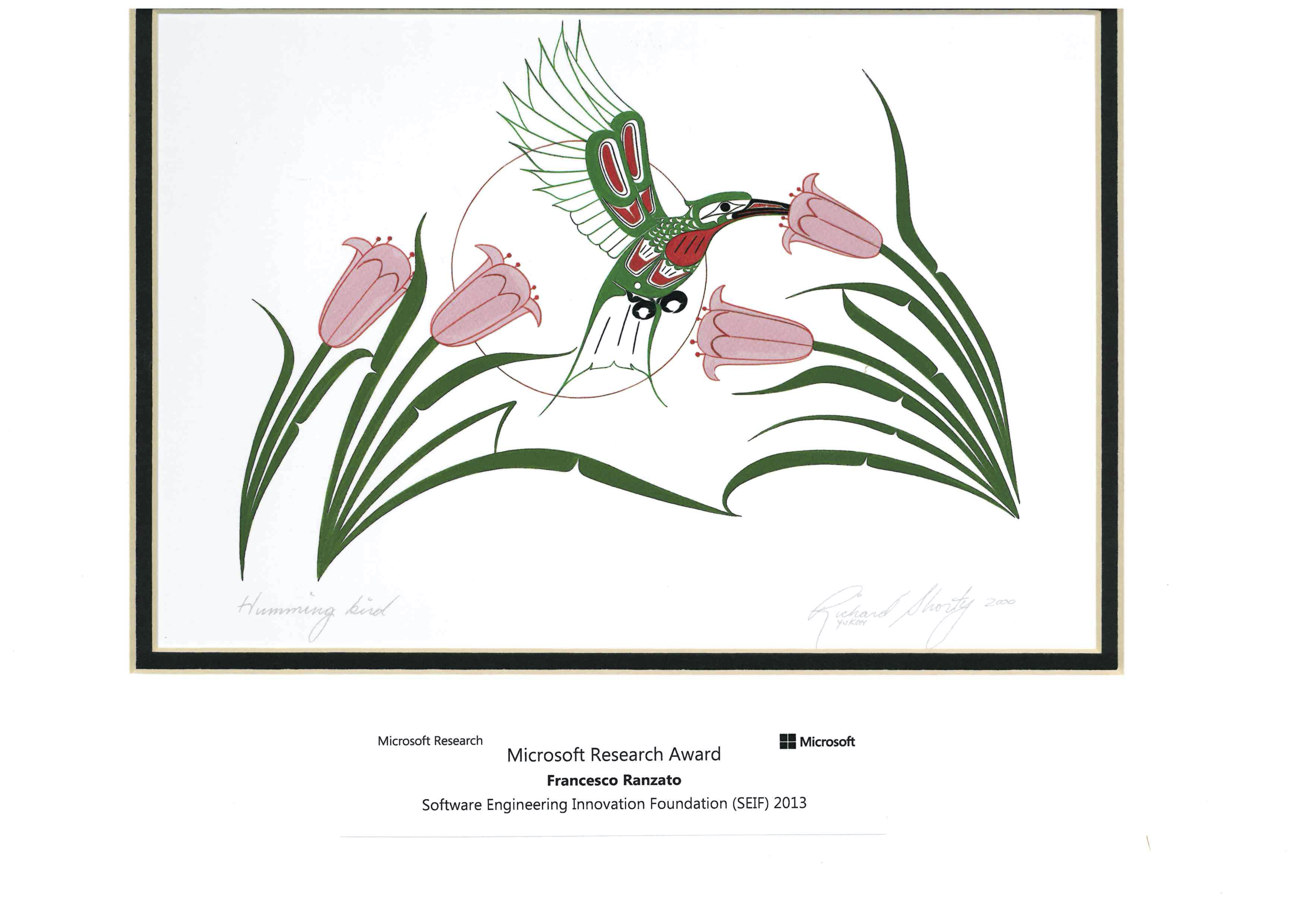
Francesco Ranzato is a Full Professor in the Department of Mathematics at the University of Padova, Italy, where he conducts research in theoretical computer science with a focus on abstract interpretation, programming languages, and formal methods. His academic career spans over three decades with continuous contributions to the field, as evidenced by his extensive publication record from 1994 through 2025. Professor Ranzato's research interests center on abstract interpretation theory and its applications to program analysis and verification. In recent years, he has expanded his work to include machine learning verification, particularly focusing on robustness certification of classifiers using abstract interpretation techniques. His work bridges theoretical foundations with practical applications, as demonstrated by multiple open-source software artifacts available on GitHub. His publication record shows a clear evolution from foundational work in abstract domains and completeness properties to practical algorithms for simulation and model checking, and most recently to applications in machine learning security. The 15 most recent publications reveal a strong focus on verifying properties of machine learning models, with particular attention to decision trees, support vector machines, and k-Nearest Neighbors classifiers. Among his notable recognitions are the POPL Distinguished Paper Award, LICS 2021 Best Paper Award, Microsoft Research SEIF award, Amazon Research Award, and the WhatsApp Privacy Aware Program Analysis Award. These awards highlight the significance and impact of his contributions to programming languages and formal methods research. Professor Ranzato maintains active research collaborations, as evidenced by his co-authored publications, and has successfully secured research funding from both academic and industry sources. His work with students and junior researchers is reflected in the numerous joint publications and the development of practical tools for abstract interpretation and machine learning verification. His research group operates through the Department of Mathematics at the University of Padova, with a strong presence in international research communities as shown by his editorial roles (e.g., editing SAS 2017 proceedings) and regular participation in top-tier conferences in programming languages and formal methods.
Gilberto File serves as a Professor of Computer Science within the Department of Mathematics at the University of Padova. His academic appointment integrates computer science research and teaching into the mathematical sciences framework of the university. His research expertise spans Static Program Analysis , Verification of Communication Protocols , Formal Methods , and Software Reliability . These interconnected fields employ mathematical logic to verify software correctness, with particular emphasis on abstract interpretation techniques for analyzing program behavior and security properties. Professor File's publication record from 1998-2009 reveals a cohesive research trajectory centered on theoretical foundations of program analysis. The work demonstrates consistent application of abstract interpretation to logic programming systems and security protocols, evolving from fundamental operator theory (1998-1999) toward practical verification applications (2004-2009). This progression highlights his contribution to bridging theoretical computer science with software reliability engineering. No scientific awards were documented in the available sources. Information regarding student supervision, current research grants, or laboratory resources was not provided in the source materials. His teaching activities as of 2011-2012 included foundational programming courses for both undergraduate and graduate computer science students.
Didier Galmiche is a Professor of Computer Science at Université de Lorraine, where he serves as Scientific Leader of the TYPES Group (Logic, Proof Theory and Programming) and Director of the Master Programme in Computer Science. He directs the DEPEND Erasmus Mundus Joint MSc in Advanced Systems Dependability. His research centers on computational logic, automated deduction, and formal verification, with specific interests in proof-search methods, substructural logics, and logical modeling of concurrent systems. The TYPES group develops software tools for theorem proving including IBiS, SigBi, STRIP, and BILL. Recent publications focus on separation logic, epistemic logics, and tableaux methods, demonstrating applications in program verification and automated reasoning. His work shows consistent innovation in proof-theoretic approaches across intuitionistic, linear, and non-commutative logics. He leads multiple research initiatives including the OPERATION CONTRA project studying logical methods for system reliability. No scientific awards are mentioned in the provided materials. Galmiche heads the TYPES group at LORIA UMR 7503, collaborating with researchers including Nicolas Biri and Daniel Mery.
Patrizia Scandurra is a Professor at the University of Bergamo, Italy. She has held significant roles including Co-chair of the Doctoral Symposium-track at ECSA 2020, Program Co-Chair for multiple conferences, and is a member of steering and organizing committees for various international software engineering events. Her research focuses on Software Architecture, Formal Methods, Self-adaptive Systems, and Cyber-Physical Systems. She has contributed to frameworks like ASMETA and RAMSES, emphasizing rigorous system design and safety assurance. Her work spans formal specification, model-based testing under uncertainty, and adaptive systems for diverse applications such as automotive systems, medical devices, and smart cities. She has published extensively on topics like self-adaptation under model uncertainty, microservices resilience, and anomaly detection in urban infrastructure. Patrizia’s contributions include conference organization across ECSA, ASE, ICSE, and SEAMS, reflecting her leadership in advancing software architecture theory and practice. Her research bridges formal methods with real-world applications, addressing challenges in autonomous systems and digital twin integration.
Giacomo CABRI is a Full Professor at the University of Modena and Reggio Emilia, affiliated with the Department of Physical, Computer and Mathematical Sciences. His roles include teaching advanced courses such as Distributed Algorithms, Object-Oriented Programming, and Software Development Methodologies across multiple disciplines including Computer Science, Mathematics, and Medicine. His research focuses on distributed systems, autonomous vehicles, smart cities, and digital twins, with a strong emphasis on applying AI and machine learning to real-world challenges. He actively contributes to academic communities through editorial roles and conference organization. Research interests span distributed algorithms, multi-agent systems, smart infrastructure, and socio-technical systems. His work bridges theoretical foundations with practical applications in transportation, manufacturing, and environmental monitoring. Recent publications highlight innovations in autonomous vehicle coordination, digital twin implementations, and context-aware systems. Teaching responsibilities include courses for Computer Science, Mathematics, and interdisciplinary programs such as Medicine and Dentistry. He integrates hands-on labs and project-based learning, emphasizing practical software development and algorithm design. His courses cover topics like object-oriented programming in Java, distributed systems, and big data architectures. Professional activities include organizing workshops on adaptive computing and collective intelligence, and leading projects like the FIRST initiative for virtual factories. His work addresses challenges in interoperability, scalability, and self-adaptation in complex systems. He maintains a personal website and is active in international collaborations through platforms like ORCID (0000-0002-4942-2453).
Josie Esteban Rodriguez Condia is a Fixed-term Assistant Professor in the Department of Control and Computer Engineering (DAUIN) at Politecnico di Torino. She is a member of the CARS@PoliTO Interdepartmental Center - Center for Automotive Research and Sustainable Mobility and serves as an invited member of both the College of Electronic, Telecommunications, and Physics Engineering and the College of Computer, Film, and Mechatronics Engineering. Her research focuses on computer architecture reliability, particularly in GPU and AI accelerator systems. Key areas include functional testing, general purpose graphics processing units (GPGPUs), hardware accelerators, hardware architecture, and parallel processing. Her work addresses critical challenges in reliability assessment of AI-based automotive systems, self-test libraries for tensor cores, and hardening techniques for neural networks on GPUs. Her recent publications demonstrate a strong trend toward reliability engineering for AI hardware, with particular emphasis on automotive applications and GPU-based neural network implementations. The research spans fault injection methodologies, error modeling, and architectural solutions to enhance system resilience against soft errors and permanent faults. Dr. Rodriguez Condia actively supervises PhD students including Gustavo Vilar De Farias, Giuseppe Esposito, and Robert Alexander Limas Sierra, all working on reliability evaluation and enhancement of neural networks. She is a member of the PNRR Research Group for the National Center for HPC, Big Data and Quantum Computing (2022-2025). She teaches multiple courses including GPU Programming and High Performance Computing for both Computer Engineering and Quantum Engineering programs. Her editorial work includes serving as Guest Editor for APPLIED SCIENCES in 2024.
Federico Bergenti is an Associate Professor in Computer Science at the University of Parma, affiliated with the Department of Industrial Systems and Technologies Engineering (DISTI) and the Department of Mathematics, Physics, and Computer Science. He serves as Chair of the AI Lab since 2015 and is actively involved in teaching Artificial Intelligence, Software Engineering, and related courses across multiple degree programs. His educational background includes a Laurea degree (M.Sc.) in Electronic Engineering from the University of Parma (1998) and a Ph.D. in Information Technologies from the same institution (2002). Prior to his academic career, he worked at CSELT S.p.A. (1998-1999) and CNIT (2000-2006). Bergenti's research primarily focuses on Artificial Intelligence and Software Engineering, with special emphasis on multi-agent systems. His work spans agent communication languages, architectures for agent-based middleware, reusability in agent systems, and more recently, agent programming languages based on constraint logic programming. He is among the founders of the JADE initiative and remains active in the Agent-Oriented Software Engineering research community. Analysis of his recent publications reveals a consistent research trajectory centered on agent-oriented programming (particularly JADEScript), indoor positioning systems, neural-symbolic integration, and mathematical modeling of multi-agent dynamics using kinetic theory approaches. His work demonstrates strong interdisciplinary connections between computer science, mathematics, and engineering applications. Professionally, Bergenti has coordinated various scientific initiatives, served on the Senior Program Committee of the AAMAS international conference since 2006, hosted the IEEE WETICE conference in Parma in 2014, and served as Program Chair for WETICE 2016. He has participated in numerous European Commission-funded research projects under the 5th and 6th Framework Programmes. He leads the AI Lab at the University of Parma, where his team develops practical applications of agent-based systems, including indoor localization technologies, health assistance systems, and social network modeling. His research combines theoretical foundations with real-world implementations, particularly through the JADE multi-agent framework.