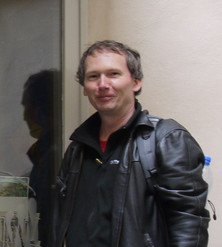
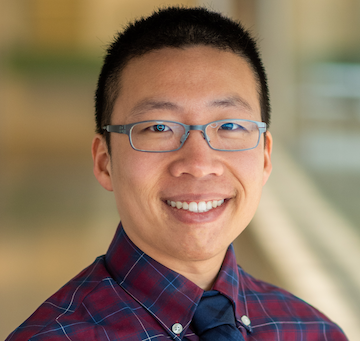
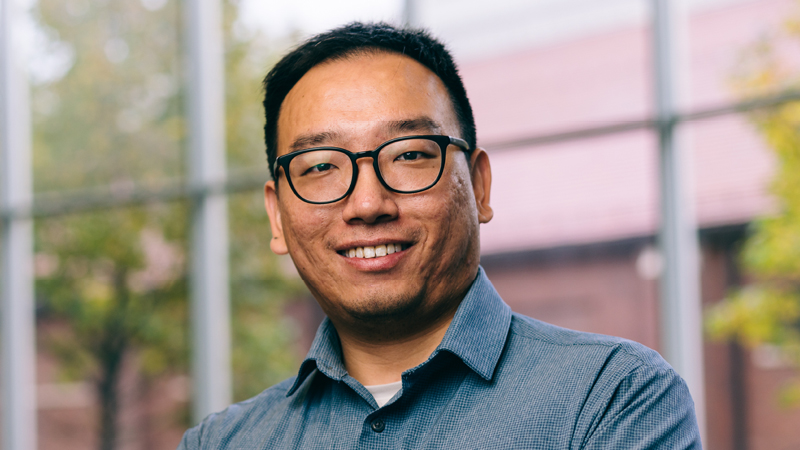
Sean Welleck is an Assistant Professor at Carnegie Mellon University's School of Computer Science, Language Technologies Institute, leading the L3 Lab. His research focuses on bridging informal and formal reasoning with AI, spanning machine learning for mathematics and code, inference algorithms, and AI agents. PhD in Computer Science from New York University (advised by Kyunghyun Cho) Postdoctoral work at University of Washington (advised by Yejin Choi) His work explores AI-driven formal methods for mathematics and code generation, test-time compute scaling, and algorithms enabling AI improvement over time. Recent publications analyze reasoning evaluation, premise selection, and automated proof optimization in systems like Lean. Key article trends include neural theorem proving, code generation, and inference-time compute optimization. Awards: NVIDIA AI Labs Pioneering Research Awards (2017, 2018), NAACL 2025 Best Paper. Current advisees include PhD students Pranjal Aggarwal, Weihua Du (co-advised with Yiming Yang), Andre He (co-advised with Daniel Fried), and Seungone Kim (co-advised with Graham Neubig). He co-organizes workshops like Autoformalization for the Working Mathematician (ICERM 2025) and VerifAI: AI Verification in the Wild (ICLR 2025), and teaches Advanced NLP at CMU.
Josef Urban is a leading researcher at the Czech Institute of Informatics, Robotics and Cybernetics (CIIRC) , Czech Technical University in Prague, heading the ERC Consolidator project AI4REASON . Previously, he held positions as a postdoc at Radboud University Nijmegen and assistant professor at Charles University in Prague, where he co-founded the Prague Automated Reasoning Group. Education Ph.D. in Computer Science (2004), Charles University, Prague M.S. in Mathematics (1998), Charles University, Prague B.S. in Economics (1995), Charles University, Prague Research Interests Urban specializes in automated reasoning over large formalized knowledge bases, combining deductive theorem proving and inductive machine learning . His work aims to realize "strong AI" through formalized mathematics, particularly using systems like Mizar and the AI/TP Challenges . He advocates for computer-verifiable mathematics as a foundation for AI progress. Article Trends Urban's publications focus on integrating machine learning with automated theorem proving in systems like ENIGMA and BliStr . Key trends include semantic guidance for ATPs, premise selection in formal libraries, and automated proof compression via concept invention. Scientific Contributions Head of ERC Consolidator project AI4REASON Marie-Curie Fellow at University of Miami Co-founder of Prague Automated Reasoning Group Editor for Formalized Mathematics Advising and Grants Urban has advised numerous PhD and MSc students including Daniel Kuehlwein, Krystof Hoder, and Yutaka Nagashima. He has secured grants like the ERC Consolidator Grant and Marie-Curie Fellowship . Labs and Collaborations Urban leads the AI4REASON team at CIIRC and collaborates with the Foundations Group at Radboud University. He contributes to projects like Mizar TWiki and XML-based API for Mizar , aiming to create a semantic AI ecosystem for formal knowledge.
John MacLaren Walsh is a Professor in the Department of Electrical and Computer Engineering at Drexel University, where he leads the Adaptive Signal Processing and Information Theory Research Group. He holds BS, MS, and PhD degrees from Cornell University, all completed under Dr. C. Richard Johnson, Jr. His research spans information theory, network coding, distributed computing, and machine learning applications in patent analysis. His work focuses on: Bounding entropic vectors and their impact on communication networks Rate region computation for network coding and distributed storage Information theory for distributed function computation Machine learning-enhanced patent processing systems Publications emphasize entropy geometry, network coding complexity, distributed algorithms, and patent analysis, with consistent themes of optimization and combinatorial methods. Recent work (2016-2019) shows increased focus on probabilistic supports and computational efficiency in network coding. Awards: 2011 NSF CAREER Award for 'Entropy Geometry in Variational Inference Signal Processing' He has advised PhD students on topics like entropy region mapping, network coding, and distributed control. Key grants include NSF CAREER and AFOSR funding for wireless network overhead control. He directs the Adaptive Signal Processing and Information Theory Research Group, which develops algorithms for network coding, distributed storage, and patent analysis systems.
Daniel Grier is an Assistant Professor jointly appointed in the Computer Science and Engineering and Mathematics departments at the University of California, San Diego (UCSD). His research focuses on quantum complexity theory , particularly exploring near-term quantum computing paradigms and proving quantum advantage over classical systems. He holds a Ph.D. from MIT and was previously a postdoctoral fellow at the University of Waterloo’s Institute for Quantum Computing. Education: Ph.D. in Computer Science, MIT B.S. in Computer Science and Mathematics, University of South Carolina Research Interests: Grier’s work bridges theoretical computer science and quantum computing, emphasizing algorithm design, complexity class separations, and foundational questions about quantum supremacy. He studies how low-depth quantum circuits, boson sampling, and other near-term technologies can achieve computational tasks classically deemed intractable. Recent Article Trends: His publications explore efficient quantum state learning (e.g., classical shadows), hardness results for quantum sampling problems (e.g., bipartite Gaussian boson sampling), and circuit lower bounds (e.g., depth-2 QAC circuits). These contributions highlight his focus on rigorously defining quantum computational advantages. Awards: None explicitly listed in the text. Advising & Grants: Advises at least one student, Jackson Morris. His research is supported by grants exploring quantum complexity and algorithm design. Teaches advanced courses on quantum complexity theory, computability, discrete mathematics, and quantum computing fundamentals. Labs/Teams: Maintains an active lab focused on quantum complexity theory, collaborating with colleagues on topics like interactive protocols and shallow quantum circuits.
Stefania Dumbrava is an Associate Professor of Computer Science at ENSIIE (École Nationale Supérieure d'Informatique pour l'Industrie et l'Entreprise) and a permanent member of the ACMES team in the SAMOVAR laboratory at Télécom SudParis, Institut Polytechnique de Paris. She is also actively involved in the Property Graph Schema Working Group and the European Research Network on Formal Proofs (EuroProofNet). Education PhD in Computer Science, Université Paris-Sud (2016) MSc in Computer Science, Jacobs University Bremen (2012) BSc in Mathematics, Jacobs University Bremen (2010) Research Interests Dumbrava's research lies at the intersection of formal methods and data management . She designs and verifies algorithms and systems for graph databases , with emphasis on property graphs , schema discovery , query optimization , and distributed graph processing . Recently, her work focuses on certifying large-scale distributed graph systems under the ANR JCJC VERDI project (2025–2029). Awards & Honors SIGMOD Best Paper Award 2023 – “PG-Schema: Schemas for Property Graphs” SIGMOD Research Highlight Award 2023 – “Threshold Queries” VLDB 2022 Best Regular Research Paper Runner-Up – “Threshold Queries in Theory and in the Wild” SIGMOD 2025 Distinguished Reviewer Award ICDE 2025 Best Program Committee Member Award EASST Best Software Science Paper Award, ICGT 2025 Students & Grants Dumbrava has supervised numerous research interns and is actively recruiting PhD students for her ANR VERDI project on verified foundations of large-scale distributed graph systems. She has also served on six PhD thesis committees as examiner since 2021. Labs & Teams She leads the ACMES research group within the SAMOVAR laboratory (Télécom SudParis, Institut Polytechnique de Paris), where her team develops formally verified graph-database engines and tools such as GRASP, VerDILog, and DatalogCert.
Glen Chou is an Assistant Professor at Georgia Institute of Technology, holding appointments in the College of Computing (School of Cybersecurity & Privacy), College of Engineering (School of Aerospace Engineering), and a secondary appointment in the School of Electrical and Computer Engineering. He is also affiliated with the Institute for Robotics and Intelligent Machines (IRIM) and Machine Learning Center. His research focuses on developing trustworthy algorithms for robotic and autonomous systems, integrating control theory, machine learning, optimization, perception, formal methods, planning, human-robot interaction, and statistics. Applications include robotic manipulation, aerospace autonomy, and cyber-physical systems. He earned dual B.S. degrees in EECS and ME from UC Berkeley (2017), followed by M.S. (2019) and Ph.D. (2022) in ECE from the University of Michigan. Prior to joining Georgia Tech in 2024, he was a postdoc at MIT CSAIL. Scientific Awards: National Defense Science and Engineering Graduate (NDSEG) fellowship NSF Graduate Research Fellowship Robotics: Science and Systems (R:SS) Pioneer (2022) The Trustworthy Robotics Lab, founded by Chou, seeks to validate theoretical guarantees of algorithms in real-world hardware deployments. The lab is currently recruiting PhD students (Fall 2025, deadlines December 2-16, 2024) and welcomes UG/MS student collaborations.
Christina L. Garman is an Assistant Professor in the Department of Computer Science at Purdue University, where she joined in Spring 2018. Her research focuses on practical cryptography and cryptographic automation to make secure system development accessible to non-experts through error-resistant design methodologies. Her educational background includes: Bachelor of Science in Computer Science and Engineering from Bucknell University (2011) Bachelor of Arts in Mathematics from Bucknell University (2011) Master of Science in Engineering in Computer Science from Johns Hopkins University (2013) Doctor of Philosophy in Computer Science from Johns Hopkins University (2017) Professor Garman's work centers on real-world cryptographic system security, spanning protocol analysis (e.g., RC4 in TLS, Apple iMessage flaws), decentralized anonymous systems (Zerocash/ZCash), and cryptographic automation. She pioneered techniques for removing human error in cryptographic deployments through automated tools and frameworks. Her research bridges theoretical cryptography with practical implementation challenges in privacy-preserving technologies and secure infrastructure. Analysis of her 2021-2025 publications reveals expanding research horizons: hardware security vulnerabilities (Rowhammer, SGX), privacy network enhancements (Tor onion services), software supply chain security (SBOM tools), and advanced cryptographic protocols (zkSNARKs, MPC). This evolution demonstrates consistent focus on real-world security impact while diversifying into hardware-software cross-layer threats and formal verification methods for cryptographic implementations. Her major scientific recognitions include: NSF CAREER Award (2021) for cryptographic automation research ACM CCS Best Paper Award (2016) for iMessage security analysis IEEE Test of Time Award (2024) for foundational Zerocash work Professor Garman co-founded ZCash, a privacy-focused cryptocurrency based on her Zerocash protocol, and her NSF CAREER grant supports cryptographic automation development. Her research has received significant media coverage in The Washington Post, Wired, and The New York Times, highlighting real-world relevance. While specific student advising details aren't public, her active publication record indicates ongoing mentorship of graduate researchers in security and cryptography. Her work maintains strong industry connections through ZCash development and Tor network contributions, with recent projects like keyless CDNs demonstrating practical applications of cryptographic automation. She remains a leading voice in cryptographic research communities through conference participation and collaborative projects addressing evolving security challenges.
Dr. KN Sasidhar is a Researcher in the Department of Microstructure Physics and Alloy Design at Heinrich Heine University Düsseldorf. His work focuses on advanced materials science, particularly corrosion mechanisms, alloy design, and nanoscale structural analysis. He employs cutting-edge techniques like in situ synchrotron investigations and deep learning frameworks to study material behavior under extreme conditions. Current research emphasizes corrosion resistance in stainless steels, phase transformations during nitriding, and radiation effects on coatings. Key achievements include pioneering studies on nanoscale amorphization in metallic systems, data-centric approaches for materials discovery, and the development of predictive models for alloy performance. His work bridges experimental materials characterization with computational methods, addressing challenges in energy and aerospace applications. Publications span corrosion analysis, microstructural evolution under irradiation, and phase separation phenomena. Collaborative projects involve synchrotron facilities and interdisciplinary teams focusing on materials informatics. No formal awards or grants are explicitly listed in the provided texts, though his prolific publication record indicates active academic engagement.
Matthew Lakin is an Associate Professor with tenure in the Department of Computer Science at the University of New Mexico, with a courtesy appointment in the Department of Chemical & Biological Engineering. He is affiliated with the UNM Center for Biomedical Engineering and the School of Engineering, and collaborates extensively with the UNM Health Sciences Center and external institutions. Education: Ph.D., Computer Science, University of Cambridge, 2010 M.A. (Cantab), University of Cambridge, 2009 B.A. (Hons), Computer Science, University of Cambridge, 2005 Dr. Lakin's research focuses on molecular computing, DNA nanotechnology, synthetic biology, and formal verification of biomolecular circuits. He develops computational models and experimental systems for programmable biological devices, especially using heterochiral DNA to enhance stability in living cells. His work spans software tools for biodesign and experimental validation in mammalian systems, with applications in nanomedicine and biosensing. The recent publications highlight a strong trend in engineering robust, intelligent biomolecular systems. His work integrates machine learning concepts into chemical reaction networks, advances geometric modeling of DNA systems, and pioneers L-DNA-based circuits for intracellular applications. The research spans theoretical foundations, software tools, and wet-lab experimentation, emphasizing interdisciplinary innovation. Scientific Awards: Presidential Early Career Award for Scientists and Engineers (PECASE), 2025 NSF CAREER Award, 2021 UNM School of Engineering Junior Faculty Research Excellence Award, 2021 Multiple student awards under his mentorship, including the Outstanding Graduate Student Award and DNA28 Best Student Presentation recognition Dr. Lakin has advised numerous graduate and undergraduate students, including Ph.D. graduates in Biomedical Engineering and Computer Science. He leads major funded projects such as the NSF CAREER grant on heterochiral molecular computing, an EPSCoR Research Fellowship, and a $3M NSF grant on heavy metal biosensing in collaboration with Native American communities. He is also PI on multiple NSF grants related to synthetic cells and nucleic acid technologies. He directs the Lakin Lab for Programmable Biology, which operates within the Department of Computer Science and collaborates with Chemical & Biological Engineering and the Center for Biomedical Engineering. The lab emphasizes both computational modeling and experimental molecular biology, and runs an NSF-funded biotechnology summer camp in partnership with ¡Explora! science museum to strengthen STEM education in New Mexico.
Prof. Dr. Pia Knoeferle is a leading academic at Humboldt-Universität zu Berlin , where she serves as a Professor in the Department of German Language and Linguistics . She is a principal investigator in the Collaborative Research Center (CRC 1412) focused on register phenomena and leads the Reaction Time, Eye-tracking, and EEG Laboratories . Her research spans psycholinguistics , cognitive neuroscience , and computational modeling of language , with a central interest in how real-time language comprehension interacts with social context , formality-register congruence , and morphosyntactic processing . Appointments: Professor at Humboldt-Universität (2024), CRC 1412 member Methodologies: Eye-tracking, EEG, Visual World Paradigm, ERP Her work investigates lifespan language processing (children, adults, older adults) through contextual cue integration , including emotional , spatial , and social context such as gender cues , eye gaze , and facial expressions . Key questions include: How do pragmatic and contextual factors modulate lexical and grammatical processing ? What representations underlie register sensitivity in spoken and written comprehension ? Recent articles (2022-2024) focus on register congruence effects in German sentence processing, age-related differences in formality-register anticipation , and interactions between register and morphosyntactic knowledge . Using eye-tracking and visual world paradigms , her team examines incremental integration of socially-situated context with verb-argument relations and grammatical constraints . Findings suggest subtle late-stage register effects and interference between pragmatic and syntactic processing . Her lab collaborates with researchers like Katja Maquate , Valentina Nicole Pescuma , and Camilo Ronderos , contributing to the Frame text of the Second Phase Proposal for CRC 1412 (2020) and subsequent reviews in Frontiers in Psychology (2023). The work emphasizes complementary methods to model register variability across languages , modalities , and cultural contexts .
Michael Goldsmith is a Senior Research Fellow at the Department of Computer Science and Worcester College, University of Oxford. He holds multiple leadership positions including Director of the Oxford Martin Programme on AI Threat Detection, Associate Director of the Cyber Security Centre, and Co-Director of the Centre for Doctoral Training in Cybersecurity. His research bridges formal methods, concurrency theory, and practical cybersecurity applications. Goldsmith's research focuses on cybersecurity analytics including threat detection, risk management, and trust frameworks. He pioneered automated cryptoprotocol analysis and investigates multidisciplinary projects spanning mathematical models to socio-technical systems. His core interests include formal verification, AI threat landscapes, privacy architectures, and security protocol design. Analysis of his recent publications reveals strong emphasis on practical cybersecurity challenges: 63% focus on threat detection (especially insider threats), 22% on trust/risk frameworks, and 15% on formal methods applications. His work consistently integrates technical security mechanisms with human factors and organizational contexts. He currently advises Ahmed Salman and has supervised 10+ students including Mary Bispham, Rodrigo Carvalho, and Elizabeth Phillips. His research teams collaborate on projects funded by Technology Strategy Board, government agencies, and industry partners. Goldsmith leads the Oxford Martin Programme on AI Threat Detection and co-directs the Centre for Doctoral Training in Cybersecurity. His research group develops tools for security visualization (CyberVis), trust metrics, and identity management frameworks.
Tianyi Zhang is a Tenure-Track Assistant Professor in the Department of Computer Science at Purdue University, part of the College of Science. He leads the Human-Centered Software Systems Lab, focusing on AI-driven systems that synergize human expertise with machine intelligence to enhance programming productivity and software reliability. Prior to Purdue, he was a Postdoctoral Fellow at Harvard University under Dr. Elena Glassman and earned his Ph.D. from UCLA (2019) and B.Sc. from Huazhong University of Science and Technology (2013). Education: Ph.D. in Computer Science, University of California, Los Angeles (2019) Bachelor's in Computer Science, Huazhong University of Science and Technology (2013) Research Interests: His work spans Software Engineering, Human-Computer Interaction, and AI. Key areas include program synthesis, interactive debugging tools, autonomous driving system testing, and mitigating biases in AI models. He develops systems like Interpretable Program Synthesis and SQLucid to bridge human and machine intelligence. Recent Trends in Publications: Recent work emphasizes human-in-the-loop AI, including mixed-initiative systems for data wrangling (Dango), interactive program repair, and bias analysis in text representations (STILE). He also explores challenges in autonomous driving testing and LLM-based code generation errors. Awards & Grants: NSF Career Award (2024) Amazon Research Award Showalter Trust Research Award for pre-diabetes research $1.5M NSF grant for software supply chain security Best Paper Honorable Mentions at CHI and VAHC Advising & Teams: Supervises 12+ PhD/Master's students and 30+ research interns. Notable advisees include Bonan Kou (API misuse studies) and Yuan Tian (text-to-SQL systems). Collaborates with Harvard Medical School on healthcare data analysis. Labs & Initiatives: Directs Purdue's Human-Centered Software Systems Lab. Co-founded the Societal Impact Fellows program. Active in open-source projects like Examplore for API usage visualization and JShrink for Java debloating.
Professor Marta Zofia Kwiatkowska is Professor of Computing Systems and Fellow of Trinity College at the University of Oxford, where she has held a faculty position since 2007. She previously served as Professor of Computer Science at the University of Birmingham (2001–2007), Reader and Lecturer at the University of Birmingham (1994–2001), and Lecturer at the University of Leicester (1986–1994). Her academic career began as Assistant Professor at the Jagiellonian University in Kraków, Poland (1980–1988). Education: BSc/MSc in Computer Science, Jagiellonian University, Kraków MA, University of Oxford PhD, University of Leicester Research Interests: Professor Kwiatkowska spearheaded the development of probabilistic and quantitative verification methods on the international stage. Her work bridges theory and practice through the PRISM model checker—the leading software tool in probabilistic model checking—used worldwide for research and teaching. Application domains include communication and security protocols , nanotechnology designs , power management , ubiquitous computing and systems biology . She investigates automated verification , temporal logics , semantic models for concurrency , real-time systems , and biological process modelling . Current grant funding exceeds £3.7 million from EPSRC, EU and ERC, including the prestigious ERC Advanced Grant VERIWARE. Scientific Awards & Honours: Fellow of the Royal Society Fellow of the ACM Fellow of the European Association for Theoretical Computer Science (EATCS) Fellow of the British Computer Society (BCS) Fellow of the Polish Society of Arts & Sciences Abroad ERC Advanced Grant VERIWARE (€2.046 M, 2010–2015) Top Cited Article Award, Theoretical Computer Science (2005–2010) Best Paper Award, QEST 2006 Doctoral Supervision & Grants: Professor Kwiatkowska actively supervises doctoral students (D.Phil. at Oxford) and post-doctoral researchers. She welcomes applications in areas aligned with her research interests, detailed here . Current students include Charlie Griffin, Daqian Shao, Matthew Yuan and Minghao Liu; past students and researchers number over twenty, many now in faculty or industry leadership roles. Laboratory & Teams: She leads the Oxford Quantitative Verification group within the Department of Computer Science. Ongoing projects include FUN2MODEL, ELSA, FAIR and the flagship PRISM probabilistic model checker. The group maintains strong collaborations with biological, robotics and engineering teams worldwide.
Gioele Zardini is the Rudge (1948) and Nancy Allen Assistant Professor at MIT's Department of Civil and Environmental Engineering (CEE), with affiliations to the Laboratory for Information and Decision Systems (LIDS) and the Institute for Data, Systems, and Society (IDSS). He holds a PhD from ETH Zurich and previously worked as a postdoctoral scholar at Stanford University. His research focuses on co-design of complex systems, autonomous systems, and game-theoretic modeling of transportation networks. Education: BSc and MSc in Mechanical Engineering and Robotics from ETH Zurich (2017–2019), PhD in 2023. He has held visiting roles at nuTonomy Singapore, Stanford, and MIT. Research interests include co-design methodologies, autonomous vehicle systems, compositionality in engineering, and strategic interactions in mobility networks. Recent work emphasizes scalable fleet coordination, safety-critical robotics, and user-centric transportation solutions. Notable awards include the 2024 ETH Doctoral Dissertation Award (Silver Medal), Best Paper at ITSC 2021, and federal grants for enhancing urban transit equity. He leads the Zardini Lab, fostering interdisciplinary collaboration in systems engineering and autonomy. Grants and advising: Received federal grants for transit accessibility projects. His work on Autonomy Talks has produced over 180 recorded lectures, promoting knowledge exchange in autonomous systems. Labs/Teams: Principal Investigator at LIDS, affiliate at IDSS, and founder of the Zardini Lab, focusing on systems co-design, mobility innovation, and game-theoretic frameworks.
Cezary Kaliszyk is a Professor in Theoretical Computer Science at the University of Melbourne, previously affiliated with the University of Innsbruck. He is actively involved in research and leadership in formal methods, automated reasoning, and machine learning for theorem proving. Research Interests: Automated Reasoning and Interactive Theorem Proving Formalized Mathematics and Proof Automation Machine Learning for Logic and Theorem Proving Integration of AI with Proof Assistants (Coq, Isabelle) Dependent Type Theory and Higher-Order Logic His recent publications (2023–2025) span topics in dependently-typed logic, learning for proof guidance, formalization of surreal numbers, and blockchain-based formal methods. The works consistently bridge formal logic with machine learning, emphasizing automation, explainability, and cross-system integration. Scientific Leadership and Projects: Principal Investigator, ERC project FormalWeb3 Lead Developer, CoqHammer , Tactician , ProofWeb WG5 Leader, COST Action EuroProofNet (until 2024) Contributor to HOL(y)Hammer , Isabelle Enigma He supervises multiple PhD students and has mentored several graduates in formal methods and AI. He teaches courses in theoretical computer science, logic, and machine learning. There are no listed awards in the provided data, but his extensive publication record and project leadership indicate significant recognition in the field. Labs and Research Groups: He leads a research group focused on formal methods and learning-based reasoning, collaborating internationally on projects involving proof automation, formal libraries, and semantic technologies.