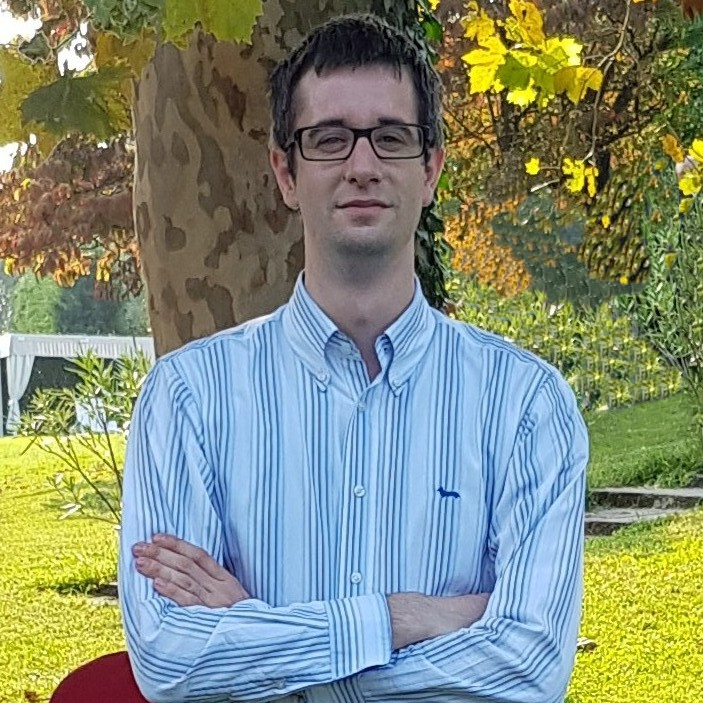
Federico Reghenzani is an Assistant Professor at Politecnico di Milano in the Department of Electronics, Information and Bioengineering. His research focuses on computer science, embedded systems, fault tolerance, high-performance computing, real-time systems, and compiler technology. He leads the HEAP Lab where his team investigates reliability engineering and hardware-software co-design for safety-critical applications. Reghenzani's research examines software-based approaches to hardware fault tolerance, compiler technologies for reliability enhancement, and resource management in high-performance computing environments. His work has significant applications in aerospace systems, real-time embedded platforms, and next-generation computing architectures. His publications demonstrate a consistent focus on improving system reliability through compiler techniques, fault injection methodologies, and hardware-software co-design. The research spans theoretical frameworks, practical implementations, and experimental validation across diverse computing environments.
Marco Russo is a PhD Student in Computer and Systems Engineering (38th cycle, 2022-2025) at the Department of Automatic Control and Computer Science (DAUIN) of the Polytechnic University of Turin. He serves as an external teacher/teaching assistant in DAUIN and holds a Contract Professor position at the Center for Autonomous Management of the Interfaculty University School of Strategic Sciences (SUISS) from November 2023 to October 2024. His research focuses on Quantum Computing, Quantum Machine Learning, and Quantum Simulations, with ERC sectors emphasizing machine learning and quantum computing formal methods. He teaches Computer Architecture courses for Computer Engineering Master's students. Russo's recent publications explore cutting-edge applications in quantum control, embedded systems integration with quantum algorithms, quantum security protocols, and neural-symbolic AI for puzzles. His work bridges theoretical advancements in quantum computing with practical implementations across gaming, communications, and aerospace domains. His academic roles include collaboration with PhD guardians Bartholomew Montrucchio and Olivier the Third. While no formal awards are listed, his contributions span interdisciplinary research areas at the intersection of quantum technologies and classical engineering systems.
Patrizia Scandurra is an Associate Professor at the Department of Management, Information and Production Engineering, University of Bergamo, Italy. Her academic appointment in Computer Science (01/B1) spans from 2022 to 2033. She previously held roles as a researcher at the University of Bergamo (2009-2017) and postdoctoral fellow at the University of Milan (2006-2008). She earned her PhD in Computer Science (2006) and Bachelor's degree (2002) from the University of Catania. Research Focus : Software architectures and formal methods for modeling, validation, and verification of software-intensive systems. Specializations : Runtime analysis of self-adaptive, autonomous, and uncertain systems including IoT-Edge-Cloud applications, embedded systems, and system-on-chip. Collaborations : STMicroelectronics, Atego, Bialetti, and ENEA. Conference Involvement : Program/organizing committees for ICSE, ASE, ISSRE, ICSA, ECSA, SEAMS@ICSE, ABZ, SA-TTA@SAC, FAACS@ECSA. Research Projects : Model-driven development for robotics, adaptive architectures for pervasive systems, big data in smart cities, and digital twins for medical systems. Notable Contributions : Development of the ASMETA formal method community tools and frameworks for rigorous system design. She has published over 100 peer-reviewed works in international journals and conferences.
Iacopo Colonnelli is an Assistant Professor (RTDA) at the University of Turin's Computer Science Department and a member of the Alpha Research Group (Parallel Computing) and CINI HPC Key Technologies and Tools lab. He has established himself as a leading researcher in scientific workflow systems, bridging cloud computing and high-performance computing environments. His research focuses on workflow modeling and management in heterogeneous distributed architectures, with significant contributions through open-source tools including StreamFlow (a container-native workflow management system), Jupyter Workflow, and CAPIO (middleware for I/O streaming). These tools enable hybrid workflows execution on cloud-HPC infrastructures and have gained recognition through multiple European projects and initiatives. Colonnelli's publication record shows consistent output in top venues related to parallel and distributed computing, with recent work focusing on federated learning, confidential computing, and workflow standardization. His most recent publications (2024-2026) demonstrate strong engagement with cutting-edge challenges in cross-facility federated learning, workflow representation languages, and performance evaluation of confidential computing for bioinformatics applications. Scientific Awards: ITADATA 2023 Best PhD Thesis Award for 'Workflow models for heterogeneous distributed systems' StreamFlow selected as one of the three exploitable results of the EUPEX European project (2023) StreamFlow selected as an exploring technology by the EC Innovation Radar initiative (2023) 'Distributed Workflows With Jupyter' selected as Fall 2022 Editor's Choice by Future Generation Computer Systems journal HPC-Europa3 grant recipient for Barcelona Supercomputing Center visit (2019) HiPEAC grant recipient for ACACES 2019 Summer School (2019) As an active contributor to research infrastructure, Colonnelli serves as a member of the CWL Technical Team and founder of the CWL4HPC Working Group. He has organized multiple international conferences including PDP 2025 as program chair and CWLCon 2024. His service extends to numerous program committees for major HPC conferences and journals, demonstrating his standing in the international research community. Colonnelli leads significant contributions to multiple European research projects including Space Center of Excellence, European Pilot, EUPEX, TEXTAROSSA, ACROSS, DeepHealth, and HPC4AI, focusing on advancing HPC and AI technologies for scientific applications.
Vittorio Zaccaria is Associate Professor at Politecnico di Milano's Department of Electronics, Information and Bioengineering. His research focuses on secure embedded systems with emphasis on hardware security and cryptographic implementations. Research interests include: Side-channel attack mitigation Formal verification methods Secure processor architecture Probabilistic security models Hardware countermeasures His publications demonstrate expertise in developing mathematical frameworks for analyzing information leakage and implementing robust security measures for embedded devices. Recent work focuses on spectral analysis of probing security and formal verification of cryptographic implementations.
Alessandro Dal Palu' is an Associate Professor at the Department of Mathematical, Physical, and Computer Sciences at University of Parma. He holds a PhD in Computer Science from University of Udine and has been with University of Parma since 2005, transitioning from Researcher to Associate Professor in 2014. His teaching portfolio includes courses on Computer Architecture, Constraint Programming, and Algorithms & Data Structures. His research spans computational logic, bioinformatics, and GPU computing. Notable achievements include the 2007 GULP award for his Ph.D. thesis and the ICLP 2010 best paper award. He has led Italian INdAM-GNCS research projects on GPU applications (2011) and Logic Programming in cancer genomics (2016). Recent publications focus on explainable AI frameworks, bioinformatics applications, and sustainable logistics solutions. His work integrates Answer Set Programming with biomedical challenges like protein structure analysis and cancer genome evolution. He chairs the International Conference on Logic Programming (ICLP 2018) and has organized multiple international workshops on constraint programming. 2007 GULP Award ICLP 2010 Best Paper PI for INdAM-GNCS projects (2011, 2016) Program Committee member for international conferences
Vincenzo Deufemia is a Full Professor at the Department of Computer Science of the University of Salerno . His work focuses on cybersecurity, IoT security, data analytics, machine learning, and end-user development in smart environments. He has been actively involved in interdisciplinary research spanning database systems, human-computer interaction, and ethical AI applications. Key research interests include: Automation rule security and coherence Unsupervised learning for IoT interference detection End-user customization of smart systems Functional dependency discovery in data streams Social media analysis for geopolitical perception studies Recent work has explored leveraging generative AI for ethical phishing defense mechanisms and developing tools like EFESTO-5W for non-expert security rule specification. His contributions also include visualization frameworks for dependency analysis and spatial integrity constraints verification. No formal awards are explicitly listed in the provided material, though his extensive publication record indicates significant contributions. His research has practical applications in both academic and industrial contexts, particularly in improving end-user security awareness and system usability in smart environments.
Pietro Colombo is an Assistant Professor of Computer Science at the University of Insubria specializing in database security and access control systems. His research develops security frameworks for NoSQL databases and IoT ecosystems. Research Focus: Colombo designs fine-grained access control mechanisms for distributed systems, with recent work on policy enforcement in industrial IoT environments. His approaches integrate formal methods with practical implementations. Publications demonstrate innovations in attribute-based access control for non-relational databases.
Cristiano Pegoraro Chenet is a researcher affiliated with the Department of Control and Computer Engineering (DAUIN) at Politecnico di Torino. He holds the academic rank of Researcher and contributes to teaching as an external collaborator for the Algorithms and Programming course in the Electronic and Communications Engineering Bachelor’s program. Research Interests : Focused on resilient computer architectures, hardware-based malware detection, and design diversity techniques for fault tolerance. His work intersects machine learning, security, and embedded systems, particularly in cloud computing and RISC-V architectures. Publications : Active in IEEE conferences and journals, with a recent survey in IEEE ACCESS analyzing hardware malware detection methods. His research includes contributions to the Horizon Europe Vitamin-V project and experiments on radiation-hardened mixed-signal systems. Collaborations : Works with the SMILIES research group at DAUIN, engaging in international projects with institutions across Europe.
Antonio Brogi is a Full Professor at the Department of Computer Science, University of Pisa. He leads the Service-Oriented, Cloud and Fog Computing (SOCC) research group and is actively involved in multiple editorial roles, including for Electronics , Heliyon Computer Science , and Journal of Computer Languages . His research focuses on cloud-edge computing, quantum software engineering, and formal methods for distributed systems. He chairs program committees for major conferences like ESOCC, ADAPTIVE, and IEEE ICWS. Research Interests: Service computing, fog computing, quantum software engineering, system coordination, resilience, and sustainability. He has pioneered declarative approaches for managing distributed systems and has contributed to frameworks like ECLYPSE and FREEDA. Teaching: Teaches Cloud Computing (BSc) and Advanced Software Engineering (MSc) at the University of Pisa. Supervises master's and bachelor's theses in related areas. Grants & Projects: Participated in EU-funded initiatives like SeaClouds and national projects DECLware and Through the Fog. Active in industry collaborations for cloud-edge infrastructure optimization.
Professor Andrea Arcuri is a leading academic in software engineering at Kristiania University College (formerly Westerdals), Oslo, where he has been a full-time Professor since October 2016 and leads the AISE (Automated Intelligent Software Engineering) lab. Additionally, he holds a part-time Adjunct Professor position at Oslo Metropolitan University (OsloMet) since 2020. His research interests revolve around Automated Software Testing and Search-based Software Engineering , with a focus on tools like EvoMaster (for system-level testing) and EvoSuite (for Java unit testing). His work integrates testing, security, and development practices for enterprise systems, particularly using SpringBoot , Kotlin , and Docker technologies. He has contributed to open-source educational materials on enterprise development, testing, and security, including courses PG5100 and PG6100 at Kristiania University College. His publications emphasize practical applications, such as cloud deployment, microservice architectures, and secure coding practices. Notable awards include: ACM SIGSOFT Impact Paper Award (2023) ICST 10-Year Most Influential Paper (2022) ICSE 10-Year Most Influential Paper (2021) Best Paper Awards at SSBSE (2017, 2015) IEEE Software Award (2017) ACM Distinguished Paper Awards (ASE 2015, ISSTA 2010) Best PhD Paper at SBST (2008) Professor Arcuri supervises PhD candidates and postdocs in automated testing and software quality, while actively serving on program committees for top journals and conferences. He advocates for hands-on learning through his open-source educational repository, which emphasizes Docker integration and practical examples for enterprise systems.
Yehia Moustafa Abd Alrahman is a PostDoc researcher at the SysMA research unit of IMT School for Advanced Studies Lucca, where he also participates in the FILIERASICURA project with Cisco. He is preparing to relocate to the University of Leicester to collaborate with Prof. Nir Piterman on the ERC Consolidator Project DSynMA (Distributed Synthesis from Single to Multiple Agents). His academic journey began with a scholarship-funded computer engineering degree at IMT Lucca, followed by a master's scholarship in computer science where he served as a teaching assistant. Abd Alrahman's research focuses on formal methods for developing correct-by-construction software systems with emphasis on predictability, adaptivity, efficiency, reusability, maintainability and modularity. His work particularly addresses challenges in contemporary information systems including embedded systems and service-oriented architectures. Currently, he is investigating formal analysis approaches for securing supply chains in cyber-physical systems. His research spans attribute-based communication, collective adaptive systems, multi-agent systems verification, and reconfigurable distributed systems. His publication record shows a consistent trajectory from foundational work on attribute-based communication (2014-2018) toward increasingly sophisticated verification frameworks for reconfigurable systems (2019-2025). Recent publications demonstrate a clear evolution toward distributed synthesis techniques, model checking for reconfigurable multi-agent systems, and formal frameworks for runtime reconfiguration. His work bridges theoretical computer science with practical applications in secure system design. Abd Alrahman completed his PhD with first honors rating 'excellent' in the Computer, Decisions, and Systems Science track at IMT School for Advanced Studies Lucca. While no formal awards are documented in the provided materials, his consistent publication record in top venues like FORTE, ISoLA, and AAMAS demonstrates recognition within the formal methods community. His collaborations with established researchers like Nir Piterman, Rocco De Nicola, and Michele Loreti indicate strong research networks. As a PostDoc researcher, Abd Alrahman works within the SysMA research unit at IMT Lucca, contributing to the Italian Project FILIERASICURA with Cisco. His upcoming move to Leicester represents a significant career advancement through the ERC Consolidator Project DSynMA, which will expand his research scope into distributed synthesis for multi-agent systems.
Alessandro Biondi serves as Associate Professor of Computer Engineering at the Scuola Superiore Sant'Anna in Pisa, Italy, where he conducts research at the Real-Time Systems (ReTiS) Laboratory. His expertise centers on real-time, safe, and secure cyber-physical systems with critical applications in automotive and railway domains. His academic credentials include: Computer Engineering degree, cum laude , University of Pisa (within excellence program) PhD in Emerging Digital Technologies (Embedded Systems curriculum), cum laude , Scuola Superiore Sant'Anna (2017) Biondi's research spans real-time systems design, operating systems, hypervisors, synchronization protocols, embedded optimization, and formal scheduling analysis. His work bridges theoretical foundations with industrial implementation, emphasizing safety and security for mission-critical infrastructure through rigorous mathematical modeling and practical system development. Recent publications (2023-2025) demonstrate concentrated advancements in real-time scheduling optimization, memory management for safety-critical systems, and adversarial defense mechanisms in vision applications. Key trends include deterministic communication protocols for AUTOSAR, end-to-end latency minimization in distributed systems, and hardware-aware security solutions for heterogeneous SoCs, reflecting strong industry-academia collaboration. His scientific contributions have earned significant recognition: ACM SIGBED Early Career Award (2019) IEEE TCCPS Early Career Award (2023) Six Best Paper Awards Best Journal Paper Award (IEEE Transactions on Industrial Informatics) EDAA Outstanding Dissertation Award (2017) Additional honors: Outstanding Paper Award, Best Presentation Award, Best Paper Nomination Biondi leads industrial research projects for automotive and railway safety-critical systems while participating in European Commission-funded initiatives. He co-founded spin-offs Accelerat (specializing in predictable cyber-physical systems) and Wriggle Solutions (acquired IP for real-time tire monitoring), demonstrating his commitment to translating research into commercial solutions. His editorial service includes Associate Editor roles for IEEE TETC, Journal of Real-Time Systems, and LITES. As a core member of the ReTiS Laboratory, Biondi collaborates within a high-impact research ecosystem focused on advancing real-time computing theory and practice. The lab maintains deep industry partnerships and drives innovation in scheduling algorithms, security protocols, and optimization techniques for next-generation embedded platforms.
Laura Carnevali is an Associate Professor of Computer Science at the Department of Information Engineering, University of Florence, where she leads research in formal methods and performance evaluation as a member of the Software Technologies Lab. She teaches Software Engineering for Embedded Systems, Quantitative Evaluation of Stochastic Models, and Foundations of Computer Programming at the School of Engineering. Her research focuses on formal methods for real-time software development and performance evaluation of non-Markovian models, with significant contributions to the ORIS Tool for quantitative system analysis. Key areas include: Stochastic modeling of critical infrastructure Formal verification of real-time systems Reliability engineering methodologies Performance evaluation of cyber-physical systems Her publications show strong emphasis on applied formal methods, with recent work focusing on workflow analysis, infrastructure reliability, and transportation systems modeling. Research consistently integrates theoretical frameworks with practical applications in engineering domains. Awards include: Best Paper Award at ICPE 2021 She actively contributes to academic service as program committee member for leading conferences including FORMATS, QEST, and EPEW, and serves as reviewer for IEEE Transactions on Software Engineering, Reliability, and other prestigious journals.
Roberto Zunino is an Associate Professor in the Department of Mathematics at the University of Trento, specializing in blockchain technologies, formal methods, and distributed systems. His research bridges theoretical computer science with practical cryptographic applications, particularly in Bitcoin and smart contract ecosystems. His research interests focus on blockchain security , smart contract formalization , and probabilistic verification . Key areas include MEV (Maximal Extractable Value) theory, UTXO-based smart contracts, and computationally sound tokenization. His work combines rigorous mathematical modeling with real-world protocol analysis, emphasizing security guarantees through formal methods. Recent publications demonstrate a strong trend toward theoretical foundations of blockchain economics and security. His 15 most recent papers (2020-2025) analyze MEV formalization, Bitcoin contract liquidity, UTXO scalability, and smart contract language design, revealing deep integration of type theory, game theory, and cryptographic primitives. Zunino actively teaches courses including Informatics , Interactive Theorem Proving (using Lean 4), and Computer Tools for Mathematics . His educational focus emphasizes formal verification, imperative programming foundations, and mathematical logic applications in computer science.