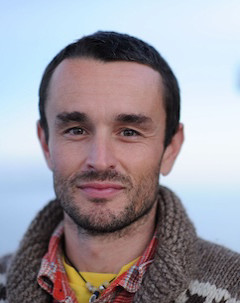
J. Anthony Movshon is a Professor at New York University (NYU) in the Department of Psychology and a key member of NYU's Center for Neural Science (CNS). His research focuses on the primate visual system, particularly the encoding and decoding of visual information in cortical areas like V1 and MT, and its role in behavior and perception. Education: Doctorate in Visual Neurophysiology and Psychophysics from Cambridge University Research Interests: Movshon investigates the functional architecture of the visual cortex, emphasizing motion, form, and color processing. His work explores how neural activity relates to perceptual decisions and motor behavior, using electrophysiological recordings, neuroimaging, and computational models. He also studies developmental disorders like amblyopia and their impact on visual system organization. Publications: His recent work spans visual texture selectivity in V2, contextual modulation in neural responses, motion processing in MT, and decoding mechanisms in visual cortex. These studies employ interdisciplinary approaches blending neurophysiology, computational neuroscience, and cognitive modeling. Labs & Collaborations: Movshon leads the Visual Neuroscience Laboratory at NYU, collaborating with researchers such as Michael Hawken, Lynne Kiorpes, and Eero Simoncelli.
Lisa Walcott is an Associate Professor of Art at Hope College, where she has been a faculty member since 2018. She teaches sculpture courses, the capstone course for art majors, and a First-Year Seminar on artistic processes. Her studio practice focuses on kinetic sculptures and installations that explore themes of home, the everyday, and the feminine experience. MFA in Sculpture from Cranbrook Academy of Art (2010) B.A. from Trinity Christian College (2005) Walcott’s research intersects sculpture, installation art, and kinetic design, often recontextualizing domestic objects to investigate themes of interdependence, repair, and the unseen forces in everyday life. Her work frequently involves mechanical components and materials like wax, motors, and household items to create immersive, motion-driven installations. Her recent artworks, such as Making a Mountain (2024) and A Soft Punch to the Gut (2024), exemplify her focus on transforming utilitarian structures into emotive, kinetic pieces. These works, alongside digital collages like The Way I Figure It (2023), reveal a trajectory toward blending physical materials with conceptual frameworks to explore domestic ingenuity and tension. Walcott actively mentors students through faculty research collaborations and founded the Hope College Art Club. She exhibits nationally at institutions like the Eli and Edythe Broad Art Museum and The Sculpture Center, with solo exhibitions at venues including Manifest Gallery (Cincinnati) and the Urban Institute for Contemporary Art. Her studio practice integrates material investigations and workshops to refine techniques, which she translates into both pedagogy and art. Notable solo exhibitions include Swarm (2013) at the Broad Art Museum and Tight Spots (2021) at Saugatuck Center for the Arts.
Prof. Dr. Ina Christin Meier serves as Head of Department and Head of Research Unit for Functional Forest Ecology at the University of Hamburg, within the Faculty of Mathematics, Computer Science and Natural Sciences. She is affiliated with the Institute of Wood Sciences (Institut für Holzwissenschaften) in the Department of Biology, where she leads research on forest ecosystem responses to global environmental changes at Ohnhorststrasse 18, 22609 Hamburg. Dr. Meier's research focuses on the impacts of global change factors —including increasing atmospheric CO 2 concentration, summer drought, nitrogen deposition, and intensified management—on the biogeochemistry and biodiversity of temperate, boreal, Mediterranean, and global forest biomes. Her work spans functional ecology of forest trees and grasslands , interactions between roots, mycorrhizal fungi and soil , ecophysiology , and long-term changes in forest ecosystems . She has made significant contributions to understanding root carbon allocation, tropical forest responses to climate change, and the role of mycorrhizal relationships in forest ecosystems. Analysis of Dr. Meier's publication record reveals a strong emphasis on belowground ecology and global change biology , with particular attention to root systems across diverse biomes. Her research bridges plant physiology, ecosystem ecology, and climate science, often synthesizing data from multiple studies to identify broader patterns. She frequently investigates how carbon allocation to root exudates affects soil sequestration and drought response, and has developed important frameworks for understanding root trait responses to multiple global change drivers. Dr. Meier actively collaborates with international research teams across continents. Her work on Nature's Contributions to People has demonstrated that securing essential ecosystem services requires maintaining at least 20-25% semi-natural habitat in human-modified landscapes. She also investigates the chemical complexity of root exudates and their ecological significance, contributing methodological advances to this challenging area of research.
Matthew Emerton is a Professor in the Department of Mathematics at the University of Chicago, part of the Physical Sciences Division. He specializes in number theory, arithmetic geometry, and the Langlands program. His research focuses on automorphic forms, Galois representations, and p-adic methods in arithmetic geometry. Education: BSc (Hons) from the University of Melbourne (1993), PhD in Mathematics from Harvard University (1998), advised by Barry Mazur. Research Highlights: Pioneered work on the p-adic Langlands program, moduli stacks of Galois representations, and prismatic cohomology. Authored over 50 publications, including foundational works on p-adic Hodge theory and local-global compatibility. Awards: Alfred P. Sloan Doctoral Dissertation Fellowship (1997-98), Rackham Summer Faculty Fellowship (1999). Grants: Multiple NSF awards (e.g., DMS-2201242 for 'Arithmetic Aspects of the Langlands Program', DMS-1952705 for geometric aspects of the p-adic Langlands program). Students: Mentored 25+ PhD students and postdocs, many contributing to number theory and representation theory.
Ben Fisch is an Assistant Professor of Computer Science at Yale University's School of Engineering & Applied Science. He is also the co-founder of Espresso Systems, a company focused on blockchain infrastructure. His research focuses on privacy and verifiability in decentralized systems like Bitcoin and Ethereum, with applications in digital finance and healthcare. Dr. Fisch received his B.A. from the University of Pennsylvania and completed his Ph.D. at Stanford University, where he worked with Dan Boneh in the applied cryptography research group. His educational background provided the foundation for his work at the intersection of cryptography, distributed systems, and economics. His research centers on leveraging cryptographic tools such as succinct non-interactive zero-knowledge proofs (zk-SNARKs), private information retrieval, and homomorphic encryption to address challenges in verifiable computation, verifiable storage, and verifiable fairness. He has made significant contributions to verifiable delay functions (VDFs) and proofs of replication, which have been adopted by major blockchain projects including Ethereum 2.0, Chia, and Filecoin. His work on Filecoin's Proofs of Replication has helped the network reach over 1.5 exabytes of storage capacity. His publication record shows a clear trend toward increasingly sophisticated cryptographic protocols for blockchain applications, with recent work focusing on data availability for Bitcoin rollups, efficient folding schemes for pairing-based arguments, and privacy pools with proof-carrying disclosures. His research bridges theoretical cryptography with practical implementations that have real-world impact in decentralized systems. His notable recognition includes: Best Paper Finalist at ACM CCS 2017 for 'Iron: Functional Encryption using Intel SGX' Dr. Fisch's research has led to significant technology transfer, most notably with his work on Verifiable Delay Functions (VDFs) sparking a multimillion dollar industry initiative through the VDF Alliance. His research on Proofs of Replication forms the basis of Filecoin's incentive layer and consensus protocol. His newer SNARK system Basefold is being used by several commercial products. He maintains active collaborations across academia and industry, with publications spanning top conferences in cryptography and security. As co-founder of Espresso Systems, Dr. Fisch leads a team developing next-generation blockchain infrastructure, particularly focusing on sequencing layers for rollups. His work bridges academic research with practical implementation, ensuring that theoretical advances in cryptography find real-world applications in decentralized systems.
David S. Eisenberg is a Professor of Chemistry and Biochemistry and Biological Chemistry at the University of California, Los Angeles, where he also serves as Director of the UCLA-DOE Institute for Genomics and Proteomics and as an HHMI Investigator. His research focuses on protein interactions, particularly the structural basis for conversion of normal proteins to the amyloid state and conversion of prions to the infectious state. Dr. Eisenberg earned his undergraduate degree in biochemical sciences from Harvard College and his D.Phil. degree in theoretical chemistry from Oxford University on a Rhodes Scholarship. His postdoctoral research was on ice and water with Walter Kauzmann at Princeton and in protein crystallography with Richard Dickerson. He joined the UCLA faculty after his postdoctoral studies. Dr. Eisenberg and his research group focus on protein interactions in amyloid and prion diseases. These diseases involve protein aggregation where normal functional proteins convert to abnormal aggregated forms. Systemic amyloid diseases like dialysis-related amyloidosis result from fiber accumulation until organ failure, while neurodegenerative diseases like Alzheimer's, Parkinson's, ALS, and prion conditions appear to be caused by smaller oligomers. In 2005, his team determined the atomic-level structure for the amyloid fiber spine, revealing a 'steric zipper' of two parallel beta sheets packed across a dry interface. Since then, they've determined approximately 90 amyloid spines from 15 disease-related proteins. In 2010, they identified the structure of a toxic amyloid-related oligomer consisting of six anti-parallel beta strands forming a cylindrical barrel. His recent publications demonstrate continued innovation in amyloid research, with focus areas including structural prediction of amyloid formation, mechanisms of tau fibril disassembly in Alzheimer's disease, cryo-EM analysis of amyloid polymorphism, and structure-based design of inhibitors for amyloid toxicity. His work integrates computational, structural, and biochemical approaches to understand protein aggregation across multiple disease contexts. Dr. Eisenberg has received numerous prestigious awards and honors: National Academy of Sciences Member American Philosophical Society Member Institute of Medicine Member Howard Hughes Medical Institute Investigator Biophysical Society Emily M. Gray Award Harvard Westheimer Medal UCLA Seaborg Medal Technion - Israel Institute of Technology Harvey Prize in Human Health As Director of the UCLA-DOE Institute for Genomics and Proteomics and an HHMI Investigator, Dr. Eisenberg leads significant research initiatives in protein structure and aggregation. His laboratory combines X-ray crystallography, bioinformatics, and biochemical techniques to investigate protein interactions, with particular emphasis on amyloid-forming proteins and their role in disease. The Eisenberg Lab, located in Boyer Hall at UCLA, maintains an active research program investigating the structural basis of protein aggregation. The lab continues to build on its landmark discoveries of amyloid structures while exploring new frontiers in understanding protein misfolding diseases and developing potential therapeutic interventions.
Elaine J. Francis is a Professor of English and Linguistics at Purdue University, where she also serves as the Associate Head of the Department of English. She holds affiliate appointments in the Department of Linguistics and the Department of Speech, Language, and Hearing Sciences. At Purdue, she directs the Experimental Linguistics Lab and teaches linguistics courses at both graduate and undergraduate levels. Francis completed her B.A. in Linguistics at the College of William and Mary in 1993, followed by her M.A. (1995) and Ph.D. (1999) in Linguistics at the University of Chicago under the direction of Salikoko Mufwene. Her dissertation examined variation among members of the same lexical category in English using Sadock's Autolexical Grammar framework. Prior to joining Purdue in 2003, she served as an Assistant Professor at the University of Hong Kong from 1999 to 2002, where she collaborated with Stephen Matthews on research concerning syntactic categories and relative clauses in Cantonese. Her research focuses on syntax and its interfaces with semantics, discourse information structure, and language processing in production and comprehension. Francis employs experimental methods to investigate syntactic, semantic, discourse-pragmatic, and cognitive factors underlying the grammar and usage of complex sentence structures. Her specific interests include word order alternations, filler-gap dependencies, resumptive pronouns, relative clauses, grammatical categories, and syntactic alternations. She has published extensively in top linguistics journals including Language and Cognition, Glossa Psycholinguistics, Linguistics, Lingua, Cognitive Linguistics, and the Journal of Psycholinguistic Research. Analyzing her recent publications reveals a consistent focus on experimental approaches to syntactic phenomena. Her work demonstrates a strong interest in gradient acceptability, syntactic priming, cross-linguistic comparison (particularly involving English and Cantonese), and the relationship between grammatical theory and language processing. Her 2022 book Gradient Acceptability and Linguistic Theory represents a major contribution that synthesizes experimental findings with theoretical linguistics frameworks. Francis plays an active role in the broader linguistics community. She regularly teaches short courses at the Linguistic Society of America Linguistic Institutes, serves on the LSA Ethics Committee, and is on the editorial board of Glossa Psycholinguistics. She has also edited several books and special journal issues, including Mismatch: Form-Function Incongruity and the Architecture of Grammar (2003) and Polymorphous Linguistics: Jim McCawley's Legacy (2005). As an educator and administrator, Francis has supervised numerous graduate students and currently serves as Associate Head of the Department of English at Purdue. Her Experimental Linguistics Lab provides research opportunities for students interested in the intersection of theoretical syntax and experimental methodology. While she recently announced she will not be accepting new graduate students for the 2025-2026 cycle, her established mentorship record demonstrates her commitment to training the next generation of linguists. The Experimental Linguistics Lab, which she directs, serves as a hub for research combining theoretical linguistics with experimental methods. Her collaborative work extends across disciplines, including collaborations with researchers in speech-language pathology, cognitive science, and computational linguistics, reflecting the interdisciplinary nature of modern linguistic research.
Prof. Dr. Guido Kings is a Professor of Pure Mathematics at the Faculty of Mathematics, University of Regensburg. His research focuses on Special Values of L-functions , Tamagawa Number Conjecture , and Polylogarithms , with significant contributions to Iwasawa Theory and Arithmetic Geometry . He has held leadership roles in research projects such as the CRC Higher Invariants. Prof. Kings has authored influential papers on topics like Eisenstein-Kronecker classes , p-adic interpolation , and regulators in arithmetic geometry . He received the Frontier of Science Award in recognition of his work. His team includes doctoral students and postdoctoral researchers, such as Bernadette Melichar and Julio de Mello Bezerra. Current Affiliations: Faculty of Mathematics, University of Regensburg Recent Courses Taught: Analysis II, Advanced Seminar in Arithmetic Geometry, and Modular Forms Research Group: Comprises scientific staff (e.g., Han-Ung Kufner) and doctoral students working on number theory and algebraic geometry. His publications are widely cited in Annals of Mathematics , Duke Mathematical Journal , and Inventiones Mathematicae , reflecting his expertise in connecting motivic cohomology with p-adic analysis.
Ralph H. Colby serves as Professor of Materials Science and Engineering and Chemical Engineering at Pennsylvania State University's College of Earth and Mineral Sciences, holding the Corning Faculty Fellowship. His research focuses on molecular-level dynamics in complex fluids, particularly polymers, ionomers, and liquid crystalline systems. With over 130 publications and authorship of the textbook Polymer Physics (2003), he directs an active research program examining structure-property relationships in soft matter. B.S. in Materials Science and Engineering, Cornell University (1979) M.S. in Chemical Engineering, Northwestern University (1983) Ph.D. in Chemical Engineering, Northwestern University (1985) Professor Colby's research spans polymer physics, rheology, and materials for energy applications. His group employs mechanical rheology, dielectric spectroscopy, and scattering techniques to investigate ion transport in single-ion conductors for batteries, dynamics of glass-forming liquids, and self-assembly in polyelectrolyte systems. Current work emphasizes structure-property relationships in ionomers, liquid crystalline polymers, and branched architectures. Analysis of recent publications reveals consistent focus on ionomer membranes for energy applications, processing-structure relationships in advanced polymers, and fundamental dynamics of complex fluids. Key trends include increasing integration of computational modeling with experimental characterization, expansion into sustainable materials processing, and growing emphasis on applications in battery technology and biomedical materials. Penn State Faculty Scholar Medal for Outstanding Achievement (2022) Bingham Medal, Society of Rheology (2012) American Chemical Society Fellowship Corning Faculty Fellowship in Materials Science and Engineering Professor Colby leads multiple federally funded projects including NSF's 'Fundamental Studies of Flow-Induced Polymer Crystallization' and DOE's 'Conduction mechanisms and structure of ionomeric single-ion conductors'. His group maintains strong industry partnerships with Corning Incorporated and participates in interdisciplinary initiatives like the Penn State Intercollege Graduate Degree Program in Materials Science and Engineering. Current research includes collaborations on breast cancer adherence interventions in Rwanda and conjugated polymer development for flexible electronics. The Colby Research Group operates specialized facilities for rheological characterization, dielectric spectroscopy, and X-ray scattering at Penn State's Materials Research Institute. The team maintains active collaborations with national laboratories and international research groups, focusing on translating fundamental polymer physics discoveries into practical applications for energy storage and advanced manufacturing.
Vinzenz Hediger is a Full Professor of Film Studies at Goethe University Frankfurt, Germany. He has held previous positions as Full Professor of Film Studies and History/Theory of Documentary Forms at Ruhr-University Bochum (2004–2011) and as a substitute Full Professor at the same institution (2002/3). Hediger has served as Senior Fellow at IKKM, Bauhaus Universität Weimar (2016), and as Speaker/Director for research programs including the DFG-funded Graduate College GRK 2279 Configurations of Film (2017–2021) and the Hans Böckler Foundation's The Productivity of Culture (2009–2014). Current Role: Full Professor, Film Studies, Goethe University Frankfurt Previous Roles: Professorships in Film Studies, Guest Professorships in Belgium, France, Italy, Czech Republic Leadership: Co-founder of NECS (2006–2011), President of German Association for Media Studies (2007–2011) Research Interests span Film Studies, Film Philosophy, Media Culture, Post-cinema, and Digital Media Culture. His work explores the philosophical foundations of film, industrial cinema, and the digital transformation of media practices. Hediger's recent publications focus on the ecology of post-cinematic media, the productivity of industrial films, and the historiography of film studies. Scientific Awards & Roles include membership in the Mainzer Akademie der Wissenschaften und der Literatur (2017), Senior Fellowship at IKKM (2016), and Franqui Chair at the University of Antwerp (2014). He has directed large-scale research programs and contributed to international academic networks like NECS.
Oliver Chandler is a Senior Lecturer in Music at the University of Oxford and holds multiple lecturing roles at Hertford College, Keble College, St Hugh's College, and Queen's College. He also serves as an academic professor at the Royal College of Music. His research focuses on music analysis, particularly in British music, chromaticism, and tonal theory, with notable works on Edward Elgar, Reginald Smith Brindle, and guitar repertoire. Chandler has been awarded the 2024 Adele Katz Early Career Researcher Award for his contributions to music theory. His research interests span music theory, including (neo-)Riemannian theory, Schenkerian analysis, and guitar studies. He co-authored Return to Riemann: Tonal Function and Chromatic Music (2024) and edited Born by the Thames: Stephen Dodgson, a Centenary Celebration (2024). His work often bridges historical and analytical approaches, exploring topics like Elgar’s chamber music and the interplay of tonality and serialism. Awards: Adele Katz Early Career Researcher Award (2024) Editorial Roles: Member of Soundboard Scholar editorial board and Cambridge Cohort for Guitar Research Grants & Collaboration: Collaborations on projects including analyses of Elgar’s works and studies on British modernist composers. Chandler’s publications span journals such as Music & Letters and Music Analysis , with a focus on analytical methodologies and British musical heritage. His research underscores the enduring relevance of tonal frameworks in understanding 20th-century music.
Emil J. Straube is a Professor of Mathematics at Texas A&M University, where he has held the rank of Professor since 1996 and served as Department Head from 2011 to 2019. He earned his Ph.D. in Mathematics from the Swiss Federal Institute of Technology (ETH Zurich) in 1983 under Prof. K. Osterwalder. His research focuses on Several Complex Variables, with emphasis on the ∂-Neumann problem, Bergman kernel, and boundary regularity of solutions to Cauchy-Riemann equations. Education: Ph.D. in Mathematics, ETH Zurich, 1983 Diploma in Mathematics (dipl. math. ETH), ETH Zurich, 1977 Research Interests: His work bridges complex analysis, partial differential equations, and operator theory. Key topics include global regularity of the ∂-Neumann operator, compactness estimates, D’Angelo forms, and the Diederich-Fornaess index. He has contributed foundational results on Sobolev regularity and geometric conditions for subellipticity. Publications & Awards: With over 50 peer-reviewed articles, Straube has authored influential monographs such as Lectures on the L2-Sobolev Theory of the ∂-Neumann Problem . Notable accolades include the Stefan Bergman Prize (1995, jointly with H.P. Boas), AMS Fellow (2013), and Texas A&M’s Distinguished Achievement Award (1998). His work has been supported by NSF grants totaling over $3 million and international collaborations at institutions like the Erwin Schrödinger Institute (Vienna). Service & Leadership: Organized major conferences, including the 2015 Qatar Complex Analysis Conference Edited journals such as Journal of Mathematical Analysis and Applications and Complex Analysis and Its Synergies Guided 7 Ph.D. students and co-mentored numerous postdocs Current Activities: Active in teaching advanced graduate courses (e.g., Complex Variables I/II) and continues research in global regularity theory and CR geometry.
Jaclyn Lang is the Selma Lee Bloch Brown Assistant Professor of Mathematics at Temple University. Her research centers on algebraic number theory, focusing on modular forms, Galois representations, elliptic curves, motives, and p-adic methods. Education: Ph.D. in Mathematics, UCLA (2016), advised by Haruzo Hida Part III of the Mathematical Tripos, University of Cambridge (2010), supervised by Tom Fisher MA in Mathematics, Bryn Mawr College (2009), supervised by Helen Grundman Research Interests: She works on advanced problems in number theory, including the Eisenstein ideal, pseudorepresentations, and arithmetic geometry of elliptic curves. Her work often bridges algebraic geometry and automorphic forms using p-adic techniques. Scientific Awards: Churchill Scholarship (2009–2010) Clare Booth Luce Scholarship (2007–2009) NSF Graduate Research Fellowship (2010–2015) Charles E. and Sue K. Young Graduate Student Award (2015) NSF Mathematical Sciences Postdoctoral Research Fellowship (2016–2020) AWM Travel Grant (2023) Fulbright U.S. Student Program Grant (2016) Simons Travel Support for Mathematicians (2023–2028) Grants: She has received NSF Standard Grant DMS-331117 (2023–2026) and participated in programs like the Park City Math Institute and Women in Numbers Europe (WINE3).
Prof. Dr. Philipp Habegger is a faculty member at the University of Basel's Department of Mathematics and Computer Science . His research focuses on Number Theory , specifically Diophantine Geometry, heights on abelian varieties, unlikely intersections, and algebraic number theory. He leads the Research Group in Number Theory and participates in collaborative seminars like the Number Theory Web Seminar with Mike Bennett and Alina Ostafe. Contact : philipp.habegger@unibas.ch | +41 61 207 26 98 Office : Spiegelgasse 1, 4051 Basel, Switzerland Academic Role : Research and teaching in number theory and Diophantine problems Research Overview Habegger's work addresses fundamental questions about the distribution of special points on algebraic varieties and the arithmetic properties of polynomial dynamics. His recent publications analyze degeneracy loci in abelian families, canonical heights, and the geometric Bogomolov conjecture. The 15 most recent articles reflect a focus on number theory, algebraic geometry, and effective bounds in Diophantine problems. Scientific Collaborations Collaborated with Ziyang Gao, Harry Schmidt, Umberto Zannier, and others Contributed to journals: Annals of Mathematics , Forum of Mathematics, Sigma , Compositio Mathematica Key themes: Abelian varieties , Heights , Unlikely intersections , CM jacobians
Chris Darimont is a Professor and Raincoast Research Chair in Applied Conservation Science within the Department of Geography at the University of Victoria's Faculty of Social Sciences. His work bridges natural and social sciences to address urgent conservation challenges, with a geographic focus on British Columbia's Central Coast (Great Bear Rainforest) but designed for global relevance. His research spans three primary domains: landscape ecology at the marine-terrestrial interface, conservation biology of harvest management, and conservation ethics. Darimont maintains deep collaborations with First Nations communities and conservation organizations like the Raincoast Conservation Foundation (where he previously served as Science Director) and Hakai Institute. His work frequently integrates Indigenous Knowledge with scientific methods, exemplified by projects like the Nuxalk Sputc (Eulachon) initiative and Heiltsuk bear monitoring. Darimont's publication record shows consistent focus on human-wildlife interactions, particularly bear-salmon ecosystems, trophy hunting ethics, and Indigenous-led conservation. His highly cited 2009 PNAS paper "Human predators outpace other agents of trait change in the wild" and 2015 Science paper "The unique ecology of human predators" established foundational frameworks in conservation science. Recent work increasingly emphasizes decolonial approaches and Two-Eyed Seeing methodologies. As an educator, he teaches GEOG 391 (Contemporary Topics in Coastal Conservation) and GEOG 353 (Coastal and Marine Resources), prioritizing student mentorship as his "favourite form of outreach." His research is regularly featured in high-profile media including National Geographic and The New York Times, reflecting his commitment to science communication and public engagement.