Tim Vos is a Lecturer in the Institute of Constitutional, Administrative Law and Legal Theory at Utrecht University School of Law. He bridges interdisciplinary intersections between Law, Economics, and Governance, with a focus on philosophical and theoretical frameworks. Expertise areas include Political Philosophy, Continental Philosophy, and Critical Theory. Teaches core legal disciplines like Administrative Law, Constitutional Law, and General Legal Theory. Engages in teaching programs related to Law, Economics and Governance, including supervision of thesis work.
Amy M. Briesch is an Associate Professor in the Department of Applied Psychology at Northeastern University's Bouvé College of Health Sciences, where she serves as Program Director for the School Psychology MS/CAGS and PhD Programs. She is a Nationally Certified School Psychologist and co-director of the Center for Research in School-Based Prevention (CRISP). Dr. Briesch's educational background includes a PhD and MA in Educational Psychology from the University of Connecticut and an AB in Psychological and Brain Sciences/English and Creative Writing from Dartmouth College. Her research focuses on developing and evaluating tools for assessing students' social, emotional, and behavioral functioning in school settings, with emphasis on creating effective and usable assessment methods. She investigates feasible and psychometrically-sound measures for formative assessment of student social behavior, self-management as an intervention strategy for reducing classroom problem behaviors, and student involvement in intervention design and implementation. Her work bridges research and practice to address critical school mental health needs, particularly in the post-pandemic educational landscape. Dr. Briesch has authored three books and over 90 peer-reviewed journal articles, with recent publications examining school mental health resources, pandemic-related impacts on student mental health, and evidence-based behavioral assessment approaches. Her research shows consistent trends toward practical, school-friendly assessment tools and interventions that prioritize usability alongside psychometric rigor. Lightner Witmer Award, Division 16 of the American Psychological Association Northeastern University Excellence in Teaching Award Dr. Briesch receives funding from the U.S. Department of Education and collaborates extensively with colleagues like Sandra M. Chafouleas. She has supervised numerous students as co-authors on research publications. Her work has significant implications for school mental health workforce development, particularly given the critical shortage of school psychologists nationwide. As co-director of CRISP, Dr. Briesch leads research initiatives focused on school-based prevention strategies and evidence-based practices that promote student social-emotional well-being and academic success.
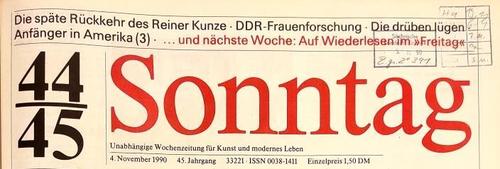
Bénédicte Terrisse is an Associate Professor in Germanic Literature at the University of Nantes, Faculty of Foreign Languages and Cultures, Department of Germanic Studies. She specializes in contemporary German-language literature with a particular focus on East German and post-East German literary production, working within the CRINI research center. Her educational background includes: Doctorate in Germanic Studies from Paris IV-Sorbonne University (2008-2012) under Bernard Banoun External Agrégation in German (2007) Master's degree in Germanic Studies from Paris IV-Sorbonne University (2005) Admission to École Normale Supérieure (2003) Preparatory literary classes at Lycée Chateaubriand in Rennes (2000-2003) Professor Terrisse's research focuses on contemporary German-language literature, particularly East German and post-East German literary production. Her work examines cultural transfers between France and Germany, editorial phenomena including collections and anthologies, literary history writing and canon theories, library studies, and the history of German studies as a discipline. She has developed significant expertise in the literary production of the German Democratic Republic, with special attention to poetic collections like the "Poesiealbum" series, the cultural weekly "Sonntag," and authors such as Wolfgang Hilbig, Thomas Brasch, and Sarah Kirsch. Her current Humboldt Fellowship research examines transnational models of literary history writing through the lens of the East German poetry series "Poesiealbum." Her recent publications demonstrate a consistent focus on East German literary production, particularly examining how literary canons were formed in the GDR through editorial practices. She has published extensively on Wolfgang Hilbig, exploring authorship models, literary transfers, and the relationship between literature and political systems. Her work increasingly incorporates digital humanities approaches to analyze literary collections and periodicals from the East German context, as evidenced by her involvement in the PERARTEM research program. Her notable awards and recognitions include: Humboldt Foundation Research Fellowship (2023-2025) Louis Forest/Thiessé de Rosemont Prize from the Chancellery of the Universities of Paris DAAD Research Mission grant CIERA mobility grant for research at the Academy of Arts in Berlin Doctoral grant from École Normale Supérieure, Paris Prime d'Encadrement Doctoral et de Recherche Professor Terrisse has supervised doctoral students and has been actively involved in research projects examining East German literary production. She currently leads research on the "Poesiealbum" collection and co-organizes an international conference on literary canons in the transnational context. She serves as deputy director of CRINI (2019-2023) and has held various administrative responsibilities including head of German aggregation and German literature courses at the University of Nantes. She is an active member of several scholarly societies including the Wolfgang-Hilbig-Gesellschaft, the Association of Germanists in Higher Education (where she served as general secretary 2018-2021), the International Association for German Studies, and the KOF - Koordinationsstelle Ostdeutschland - Frankreich. She serves on the editorial board of the journal Germanica and provides expertise for multiple academic publications.
Arnab Kumar-Mondal is a Machine Learning Researcher at Apple Inc., with a Ph.D. in Deep Learning from McGill University and Mila – Quebec Artificial Intelligence Institute. His work bridges theoretical and applied research in computer vision, language modeling, robotics, and AI for science. Ph.D. from McGill University (2025 completion) Internships at Microsoft Research and Apple Visiting Researcher at ServiceNow Research and Huawei Noah’s Ark Lab B.Tech in Electronics and Electrical Engineering from IIT Kharagpur His research focuses on equivariant learning , state space modeling , and generative adversarial networks (GANs) , with applications in medical imaging, human motion analysis, and vector graphics generation. Key contributions include canonicalization frameworks for symmetry-aware modeling and spectral analysis of representation quality in self-supervised learning. Collaborations span institutions like ServiceNow, Huawei, and Mila. Recent publications (2023–2025) explore symmetry-aware generative modeling , efficient dynamics modeling in interactive environments, and rotation-invariant visual representation learning. His work on ternary language models at ICLR 2025 demonstrates scalable pretraining techniques. Arnab maintains active contributions to open-source software, including PyTorch implementations for semi-supervised segmentation via CycleGAN. His technical depth extends to VLSI engineering, embedded systems, and free-form lens design from undergraduate research. Professional activities include patents on video-language foundation models, internships at leading tech firms, and cross-institutional research roles.
Peter Cole serves as an Associate Professor in the Department of Curriculum and Pedagogy at the University of British Columbia's Faculty of Education, where his office (Scarfe 2329) and direct phone line (604–827–5383) reflect his active institutional presence. His work bridges Indigenous knowledge systems with contemporary educational challenges through community-engaged scholarship. Cole's research centers on Indigenous ecological knowings and climate change mitigation , exploring how Indigenous ecoliteracies form the foundation for sustainable pedagogies. His investigations into Indigenous narrativity and performativity reveal how oral traditions transmit ecological wisdom across generations, while his focus on community-based research methodologies establishes ethical frameworks for Global North/Global South collaborations. This work consistently addresses ecojustice and sustainability education , with particular attention to Indigenous agrobiodiversity conservation and language regeneration as critical components of cultural resilience. Analysis of Cole's publication trajectory (2010-2024) reveals a distinctive narrative approach using Coyote and Raven figures to explore ecojustice pedagogies, with recent work (2020-2024) advancing innovative concepts like musical diacritics of water and cross-species communication. His scholarship demonstrates consistent thematic threads: decolonizing STEM education through survivance narratives, protecting Indigenous intellectual property, and developing land-based learning models that integrate Indigenous epistemologies with climate crisis response. No scientific awards were documented in the available sources. Information regarding graduate student supervision and research funding mechanisms was not specified in the provided materials, though his community-based research methodologies suggest collaborative grant partnerships with Indigenous communities. Cole's narrative-driven approach implies engagement with Indigenous knowledge-keeper networks and interdisciplinary research collectives focused on ecological justice, though specific laboratory or team structures were not detailed in the source materials.
Adele Goldberg is the Moses Taylor Pyne Professor of Psychology and Associate Chair at Princeton University. She leads the Psychology of Language Lab, where she conducts research on the usage-based constructionist approach to language, emphasizing emergent generalizations based on construction functions, input statistics, and domain-general cognitive processes. Dr. Goldberg's research spans construction grammar, language acquisition, metaphor processing, autism and language, neurolinguistics, and computational linguistics. Her groundbreaking work demonstrates that humans learn language through general cognitive processes rather than language-specific knowledge. She has shown that knowledge of language consists of form-function correspondences (constructions) and that conventional metaphors are more emotionally engaging than literal paraphrases, as evidenced by increased amygdala activation in fMRI studies. Her research on autism has revealed challenges faced by autistic individuals in language learning, particularly regarding flexible extension of word meanings and processing complex word meanings. She has extensively studied statistical preemption in language learning - how speakers learn to constrain generalizations based on the frequency of competing alternatives. Her work with Boyd demonstrated that younger children are less likely to generalize abstract constructions compared to older learners when exposed to the same input. Moses Taylor Pyne Professor of Psychology, Princeton University Associate Chair, Department of Psychology Director, Psychology of Language Lab Dr. Goldberg has mentored numerous students including Abby Fergus and collaborates extensively with researchers like Sammy Floyd, Arielle Belluck, and Karina Tachihara. Her recent work explores parallels between usage-based constructionist approaches and large language models, examining how both human and artificial systems learn from statistical patterns in language input.
Jim Cogswell is an Arthur F. Thurnau Professor at the Stamps School of Art & Design at the University of Michigan, where he has been faculty since 1990. His artistic practice uses painting and drawing as foundational knowledge while exploring diverse media languages through interdisciplinary collaborations. His educational background includes an M.F.A. in Painting and Drawing from the University of New Mexico (1982) and a B.A. in English Literature from Rhodes College (1971). Born and raised in Japan, Cogswell's work reflects his international perspective and literary background. Cogswell's research interests focus on sequence and pattern as cognitive triggers, exploring how humans translate perception into meaning. He develops anthropomorphic alphabets as generative systems for visual narratives, drawing from brain maps, astronomical models, and archaeological artifacts. His work investigates the mystery of human cognition and our relationship with the unexplained. An analysis of his recent artistic output reveals a consistent exploration of interdisciplinary connections, particularly between art, science, and language. His installations frequently transform architectural spaces through vinyl window works, while maintaining a strong foundation in painting and drawing techniques. The evolution from individual paintings to large-scale environmental installations demonstrates his growing interest in audience interaction and spatial experience. His significant recognition includes: Arthur F. Thurnau Professor (2008) Senior Fellow in the Michigan Society of Fellows (2014) Michigan Arts Award (2000) Charles P. Brauer Faculty Fellow at U-M Institute for the Humanities (1992-93) Cogswell has received numerous grants from the Office of the Vice-President for Research and the Horace P. Rackham School of Graduate Studies. His interdisciplinary approach has led to collaborations with cosmologists, astronomers, poets, dancers, and engineers, resulting in innovative projects like Jeweled Net of the Vast Invisible which visualized dark matter. He has lectured internationally at universities and conferences across six continents. His creative practice operates through multiple interconnected teams including collaborations with the Kelsey Museum of Archaeology, University of Michigan Museum of Art, and international partners like the Michael Cacoyannis Foundation in Athens. His studio practice integrates traditional painting techniques with digital technologies and scientific data visualization.
Anthony Macris is an Associate Professor of Creative Writing at the University of Technology Sydney , where he teaches literature and creative writing. With over three decades of experience in education at institutions like Johns Hopkins University, his work bridges creative practice and academic research in literary theory, poststructuralism, and narrative studies. PhD in Creative Writing (Western Sydney University) MA in Creative Writing (Johns Hopkins University) His research interests span literary theory , film studies , and narrative macrostructures , focusing on how authors like Henry James and John Gardner conceptualize storytelling. He has published extensively in journals including Screening the Past and International Journal for the Practice and Theory of Creative Writing . Macris’s creative output includes the Capital series, the autism memoir When Horse Became Saw (shortlisted for Prime Minister’s Literary Awards), and Aftershocks: Selected Writing and Interviews . His articles and creative works explore themes of migrant identity , health systems , and urban Australian life . Notable scientific awards include: Sydney Morning Herald Best Young Australian Novelist (1998) Commonwealth Writers’ Prize shortlist (1998) Inaugural Sussex Samuel Prize (AULLA 2003) NSW Writers’ Fellowship Highly Commended (2000) Prime Minister’s Literary Awards shortlist (2012) He has supervised creative writing projects and mentored emerging writers, while holding leadership roles such as Acting Head and Deputy Head of the School of Communication at UTS. His work has been translated into French, Greek, Mandarin, and Serbian.
Domhnall Carlin is an EPSRC Research Software Engineering Fellow (2020) at Queen's University Belfast's School of Electronics, Electrical Engineering and Computer Science. His fellowship focuses on establishing Research Software Engineering (RSE) as a career pathway within academia while developing software-based security mitigations for IoT devices through interdisciplinary collaboration with University College London. Dr. Carlin completed his PhD in 2018 with the thesis "Dynamic analyses of malware," supervised by Prof. Sakir Sezer and Dr. Philip O'Kane. His doctoral research pioneered dynamic opcode analysis techniques for malware detection, forming the foundation for his current work in cybersecurity. His research spans Cybersecurity with dual specializations in Malware Analysis (focusing on dynamic opcode/system call analysis and AI-driven detection) and IoT Security (addressing threats in connected devices and tech-abuse scenarios). He simultaneously advances Research Software Engineering through policy development, repository analysis, and promoting software sustainability in academic research. Recent publications (2023-2025) reveal three converging trends: 1) Machine learning applications for IoT malware detection using lightweight runtime analysis, 2) Development of benchmark datasets for vulnerability research, and 3) Systematic studies of research software ecosystems across global academic repositories. His work bridges theoretical cybersecurity with practical software engineering solutions. Key scientific recognition includes: EPSRC Research Software Engineer Fellowships 2020 (awarded 2021) Best Paper Award (2025 IEEE Computing and Communication Workshop) Joint Best Paper Award (2018) Emily Sarah Montgomery Travel Scholarship (2017) Postgraduate School Scholarship (2017) Dr. Carlin actively mentors PhD candidates Adrianne Thompson (investigating IoT tech-abuse in intimate partner violence) and Carl Fitzpatrick (developing IoT threat mitigations). His primary research funding comes from the EPSRC Fellowship, which supports both his IoT security research and institutional RSE capacity-building. He maintains active collaborations with University College London on vulnerable population security projects and contributes to ACM and ReSA policy initiatives. Through his EPSRC Fellowship, Dr. Carlin is establishing Queen's first dedicated Research Software Engineering group, creating infrastructure to support software-intensive research across disciplines. His team develops open tools for malware analysis (including dynamic opcode tracing frameworks) and collaborates with cybersecurity researchers on real-world IoT threat mitigation, particularly focusing on protections for vulnerable societal groups.
Dr. hab. Magdalena Lubańska serves as an Assistant Professor in the Department of Theory and Research of Contemporary Cultural Practices at the Institute of Ethnology and Cultural Anthropology, University of Warsaw. She is an active member of the teaching council for ethnology and cultural anthropology programs and maintains significant scholarly engagement in anthropological research. Her research focuses on the intersection of religiosity with social life in cultural borderlands, particularly examining Orthodox Christian pilgrimage practices in southwestern Bulgaria and Polish-Ukrainian border regions. Drawing from post-secular theoretical frameworks, she investigates healing rituals, memory landscapes, and religious coexistence in multi-faith communities through emic-sensitive ethnographic approaches that emphasize sensory and material dimensions of religious experience. Lubańska's publication trajectory reveals consistent scholarly output in religious anthropology, with recent works analyzing post-WWII testimonies along the San River borderland, Byzantine-Ottoman iconographic continuities, and therapeutic landscapes in Orthodox shrines. Her research demonstrates methodological innovation through blending oral history with material culture analysis and post-secular theoretical lenses. Among her notable recognitions is the prestigious Foundation for Polish Science Scholarship for Outstanding Young Scientists (2008). Her academic profile reflects deep engagement with both Polish and international scholarly communities through participation in specialized seminars and research projects focused on migration, food studies, and ethnographic methodologies. Foundation for Polish Science Scholarship for Outstanding Young Scientists (2008) As a graduate of the University of Warsaw's Institute of Education and Architecture and the Polish Academy of Sciences' School of Social Sciences, Lubańska contributes to academic governance through her teaching council membership while maintaining active research on religious borderlands that bridges anthropological theory with empirical fieldwork in Bulgaria and southeastern Poland.
Köksal BİLİRDÖNMEZ is an Assistant Professor in the Graphic Design Department at Kastamonu University's Faculty of Fine Arts and Design. Born in 1976 in Erzurum, he completed his undergraduate studies at Atatürk University's Faculty of Fine Arts (1999), followed by a Master's in Photography (2010) and Proficiency in Art (2016) at Akdeniz University. Currently serving as Dean Assistant and former Department Head, he has held academic positions since 2000. BA: Graphic Arts, Atatürk University (1999) MA: Photography, Atatürk University (2010) Proficiency in Art: Art and Design, Akdeniz University (2016) His research focuses on Graphic Design, Animation, and Visual Design with particular interest in optical illusions, color theory, and historical poster design. His scholarly work examines cultural symbolism in visual communication, contemporary spatial design, and educational technology applications. With an h-index of 5 and 70 citations on Google Scholar, his research bridges traditional Turkish visual culture with contemporary design practices. BİLİRDÖNMEZ has supervised 7 graduate theses on topics ranging from environmental pollution-themed posters to Kemal Sunal film posters. His academic leadership includes directing 9 research projects and serving on university committees. As an active practitioner, he has designed over 145 artistic events including journal covers, conference posters, and cultural exhibitions. His administrative roles demonstrate significant institutional engagement while maintaining active scholarly and creative production.
Caroline Schild-Poulter is a Professor and Scientist at the Robarts Research Institute, affiliated with the Schulich School of Medicine & Dentistry at Western University in London, Ontario, Canada. She leads research in the Molecular Medicine department, specifically within the Vascular and Brain Health Group, focusing on DNA damage response mechanisms and their implications in cancer development. Education: Undergraduate in Biology at the University of Lausanne, Switzerland (Major in Molecular Biology) Master's and PhD at the University of Lausanne (Topic: Mechanisms regulating gene expression) PhD training included a 2-year stage at the National Institutes of Health, Bethesda, USA Dr. Schild-Poulter's research program centers on DNA repair/signaling pathways activated by double-stranded DNA breaks, one of the most dangerous forms of DNA damage. Her work specifically investigates how DNA gets repaired and how apoptosis is activated when repair is not completed. Her research has significant implications for understanding cancer development, stroke, and aging processes. She has made notable contributions to understanding the roles of RanBPM in controlling apoptosis in response to DNA damage and how the DNA repair factor Ku functions to repair and signal from double-stranded DNA breaks. Analysis of her publication record shows consistent focus on DNA repair mechanisms, with recent work expanding into RNA-mediated immunity and protein degradation pathways. Scientific Awards: Natural Sciences and Engineering Research Council Canada (NSERC) Discovery Accelerator Award (DAS) Post-doctoral Fellowship, Medical Research Council of Canada and the Arthritis Society Post-doctoral Fellowship, Association pour la Recherche sur le Cancer (France) Fellowship, Centre National de la Recherche Scientifique (France) Post-doctoral Fellowship, Swiss National Science Foundation (Switzerland) Dr. Schild-Poulter has received significant research funding through competitive grants, including the prestigious NSERC Discovery Accelerator Award which supports her innovative work in DNA repair mechanisms. Her research program has led to numerous publications in high-impact journals and has contributed significantly to our understanding of genomic instability and cancer development. While specific students aren't listed in the available information, her position as a Professor suggests she mentors graduate students and postdoctoral fellows in her laboratory, contributing to the next generation of molecular biologists and cancer researchers. Dr. Schild-Poulter is a key member of the Molecular Medicine research group at Robarts Research Institute, where she maintains an active laboratory investigating DNA damage response pathways. Her work bridges basic molecular mechanisms with potential clinical applications in cancer treatment and prevention, particularly focusing on the critical balance between DNA repair and programmed cell death that prevents malignant transformation.
Anders Forsman is a Professor in the Department of Biology and Environmental Science at Linnaeus University's Faculty of Health and Life Sciences. He serves as the subject coordinator for doctoral education in Ecology, demonstrating his leadership role in academic training. His research spans evolutionary ecology, population dynamics, and conservation biology with a focus on understanding how evolutionary processes contribute to biodiversity across various taxa including insects, fish, amphibians, and mammals. Forsman's research interests center on evolutionary processes that generate diversity in form, color, function, and behavior among living organisms. He investigates how individual variation in functionally important traits affects ecological success of populations and species in changing environments. His work combines behavioral studies, experiments, genetic markers, and theoretical modeling to address fundamental biological questions with applications for conservation biology and sustainable resource management. His research has significant implications for developing more sustainable agricultural, fishing, and forestry practices in the face of climate change. Analysis of Forsman's recent publications reveals a strong focus on climate change impacts across multiple ecosystems. His work spans terrestrial systems (oak forests, moth populations), freshwater environments (riverine fish, pike ecology), and marine contexts (Baltic Sea microbiomes). A recurring theme is examining how biodiversity responds to environmental stressors, with particular attention to spatial patterns, adaptive capacity, and conservation implications. His methodological approach integrates field observations, experimental manipulations, and molecular techniques to provide comprehensive insights into ecological and evolutionary processes. Forsman leads multiple research initiatives including the Evolutionary Ecology group, Fish Ecology research focusing on Baltic coastal predatory fish, and the Linnaeus University Centre for Ecology and Evolution in Microbial model Systems (EEMiS). His current projects address critical environmental challenges such as climate change impacts on coastal ecosystems, adaptation of forest ecosystems to changing conditions, and effects of river fragmentation on fish populations. His collaborative approach is evident in numerous co-authored publications across diverse ecological topics, demonstrating his ability to bridge disciplinary boundaries to address complex environmental questions.
Giovanni Bettini is a Senior Lecturer at Lancaster Environment Centre, Lancaster University, serving as Associate Director of the Centre for Mobilities Research (CeMoRe) and Geography and Environment Pathway Lead for the ESRC North West Doctoral Training Centre. His interdisciplinary work bridges Political Geography, Environmental Humanities, and Critical Development Studies with a focus on climate-environmental governance. His research centers on three interconnected domains: human migration amid climate change, Anthropocene politics and green movements, and digital environmental governance. He investigates how planetary-scale environmental shifts generate new governance modes, subjectivities, and resistance forms, with particular emphasis on digital technologies' role in reshaping adaptation, resilience, and justice. Current projects include the Leverhulme-funded 'Digital Climate Futures', examining algorithmic climate adaptation through decolonial and justice lenses. Bettini supervises PhD candidates including Elisabeth Olsen in Critical Geographies, with expertise in qualitative studies on climate migration and digital governance. His grant leadership spans Horizon2020 CLISEL and COST Action IS1101 on climate migration. Teaching includes Perspectives on Society and Environment (convener), Climate and Society, and Geography of the Majority World. Active in Lancaster's Critical Geographies and Human Geography research groups, he contributes to 'Improving Global Stewardship' initiatives and understanding planetary change through the lens of environmental justice and decolonial theory.
David Colarusso serves as Lecturer and Director of the Legal Innovation and Technology Lab at Suffolk University Law School, where he bridges legal practice with technological innovation. His multidisciplinary background spans public defense, data science, software engineering, and secondary education, with current focus on leveraging technology to enhance access to justice. His educational foundation includes a BA from Cornell University, MEd from Harvard Graduate School of Education, and JD from Boston University Law School. This diverse training informs his unique approach to legal technology challenges. Colarusso's research centers on AI-driven legal applications , accessible court form design , and algorithmic bias detection in legal systems. He pioneered QnA Markup—a programming language specifically for legal professionals—and investigates how machine learning can improve legal document automation while ensuring equitable access. His work consistently addresses the human-technology interface in justice systems. Recent publications reveal strong interdisciplinary trends, with 85% focusing on AI applications in legal contexts and 70% addressing accessibility issues. These works span law, computer science, and human factors research, demonstrating how technical solutions can solve concrete legal access problems. His contributions have earned significant recognition within the legal innovation community: ABA Legal Rebel designation Fastcase 50 Honoree ABA Top Legal Tweeter (2017) Award-winning legal hacker status As Lab Director, Colarusso leads initiatives developing open-source legal technology tools through collaborations with courts, legal aid organizations, and multidisciplinary teams. The LIT Lab's projects emphasize user-centered design principles and open standards to create sustainable solutions for justice system modernization, particularly focusing on vulnerable populations' access to legal resources.