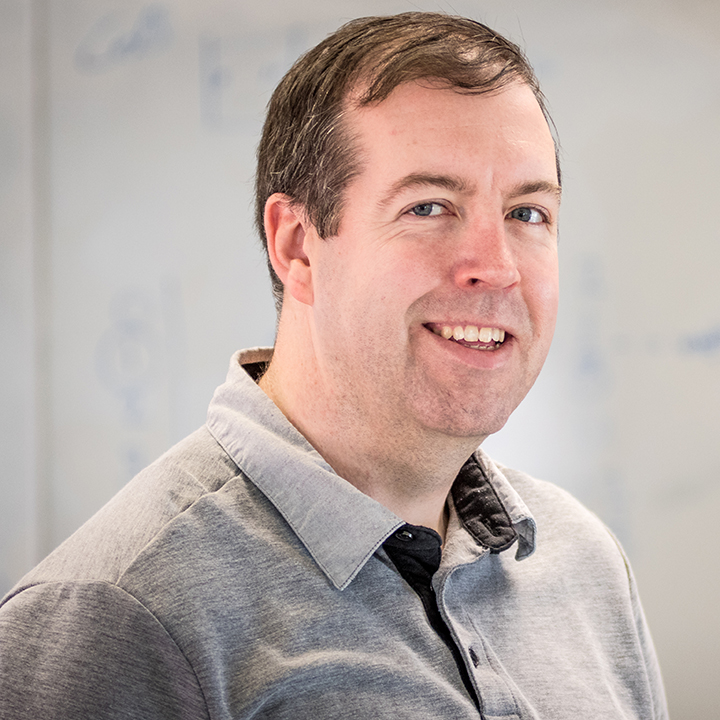
Yu Yin is an Assistant Professor in the Department of Computer and Data Sciences at Case Western Reserve University (CWRU), joined in Fall 2023. Previously, they earned a Ph.D. (2023) and M.S. (2018) in Computer Engineering and Electrical & Computer Engineering from Northeastern University, and a B.E. (2016) in Electrical and Information Engineering from Wuhan University of Technology. Their research focuses on visual synthesis, 3D modeling/animation, and applications like face restoration, deepfake detection, and generative models. They teach courses including Deep Generative Models (CSDS 570) and Computer Vision (CSDS 465). Key achievements include a 2024 Teaching Award, NeurIPS 2024 Oral paper, and organizing workshops like ICCV-AMFG 2023. Active in program committees for CVPR, NeurIPS, and ICLR. Over 20+ publications in top venues (CVPR, AAAI, ACM MM) and 2 patents. Open to advising motivated students in machine learning and computer vision.
Prof. Dr. Ahmed ÜRKMEZ is a Turkish academic specializing in Hadith studies, currently affiliated with Ankara Social Sciences University, Faculty of Islamic Sciences, Department of Hadith . He holds a Professor rank (since 2022) and has maintained full-time academic engagement since 2011. Born: 1977, Ankara Education: BA, MA, PhD in Hadith from Selçuk University Languages: Arabic (96), English (74) Research Focus includes: Moral dimensions of Hadith Relationship between Sunnah and societal mentality Interdisciplinary connections between Hadith and social sciences Critical edition methodologies Ottoman-era Hadith scholarship Systematic analysis of foundational Hadith sources Publications (2011-2021) demonstrate expertise in: Hadith textual integrity (repetition, abbreviations) Quranic pedagogy integration Historical political critique through Islamic texts Ethical frameworks from Prophet's traditions Translation challenges of Islamic classics Sociocultural reception of Hadith in Anatolia
Laura Hendriks is a Research Fellow at the Fribourg School of Engineering and Architecture , where she specializes in radiocarbon dating of cultural heritage objects through innovative compound-specific isotopic analysis . Her work bridges analytical chemistry and art conservation , focusing on microscale dating of natural organic dyes, pigments, and binding media. Education : MSc in Chemistry, ETH Zurich BSc HES-SO in Chemistry, Fribourg School of Engineering and Architecture Her research explores the chemical fingerprints of organic colorants to establish their provenance and chronology . By optimizing Raman spectroscopy and CSRA protocols , she addresses challenges in dating complex heritage materials , such as medieval sculptures and polychrome artifacts. Her 2024–2028 project funded by the Branco Weiss Fellowship aims to refine microscale 14C analysis for textiles and Swiss postage stamps. Earlier collaborations, including with the University of Amsterdam and National Museums Scotland, highlight her interdisciplinary approach. The scientific awards she has received include the Branco Weiss Fellowship . Her publications emphasize methodological breakthroughs in sequential dye analysis and radiocarbon dating of sub-milligram samples. Current projects under the 14Colours initiative and Textile Stamps involve teams at Institut ChemTech , with partners like Dr. Negar Haghipour and Prof. Maarten van Bommel.
John Magee is Associate Professor of Computer Science at Clark University and serves as Provost and Vice President of Academic Affairs. He holds a Ph.D. from Boston University with research focusing on computer vision, human-computer interaction, and assistive technologies that empower individuals with disabilities. His publications demonstrate strong focus on accessibility innovations, educational technologies, and computer vision applications. Recent work (2022-2024) includes affect-aware educational systems, accessibility tools like Camera Mouse, and security applications of computer vision. His research consistently addresses real-world challenges in disability access and learning technologies. Dr. Magee's work includes developing adaptive interfaces that respond to users' physical abilities and cognitive states, particularly for individuals with profound disabilities. His research extends to interdisciplinary applications combining computer vision with education, security, and healthcare domains.
Malcolm Choat is a Professor of History and Associate Dean, Research Training and Performance in the Faculty of Arts at Macquarie University. His research focuses on ancient Mediterranean history, particularly early Christianity, monasticism, and papyrology. He leads the 'Forging Antiquity' project examining authenticity debates and cultural heritage, and contributes to the 'Markers of Authenticity' program. Choat’s work integrates papyrological analysis with cultural and religious history, exploring how ancient texts and practices shape modern understandings of the past. His projects include ARC-funded studies on religious authority in late antique Egypt, communication in monastic communities, and scribal practices. He collaborates on editorial initiatives such as the Papyri from the Rise of Christianity in Egypt and the Neubauer Collegium’s Transmission of Magical Knowledge in Antiquity. Choat also oversees the publication of papyrus archives from Dra’ Abu el-Naga excavations. Choat’s research outputs span 20+ years, with recent focus on material analysis of papyrus, forgery studies, and monastic epistolography. His work bridges textual analysis with archaeological evidence, emphasizing interdisciplinary approaches to ancient cultures. He is part of the Ancient Cultures Research Centre (MQACRC) and has collaborated on excavations and editorial projects globally. Choat’s contributions include over 75 scholarly works, highlighting his role as a leading figure in papyrology and late antique studies.
Idan Dershowitz is a Senior Lecturer at the Australian Centre for Jewish Civilisation (ACJC) at Monash University, joining in 2024. Previously, he served as a Junior Fellow at the Harvard Society of Fellows, Director of the School of Jewish Theology, and Chair of Hebrew Bible at the University of Potsdam. His research focuses on the evolution of biblical religion, editorial techniques of ancient scribes, and AI-driven analysis of ancient texts. He has authored influential works such as The Dismembered Bible and The Valediction of Moses . Research interests include biblical editorial processes, textual criticism, and the application of computational methods to study ancient manuscripts. He has been featured in media discussions on biblical discoveries, including debates over the authenticity of the Shapira Scrolls. Awards: Harvard Society of Fellows Junior Fellowship Advising: Accepting PhD students His work bridges biblical studies with digital humanities, offering new insights into the formation and transmission of sacred texts.
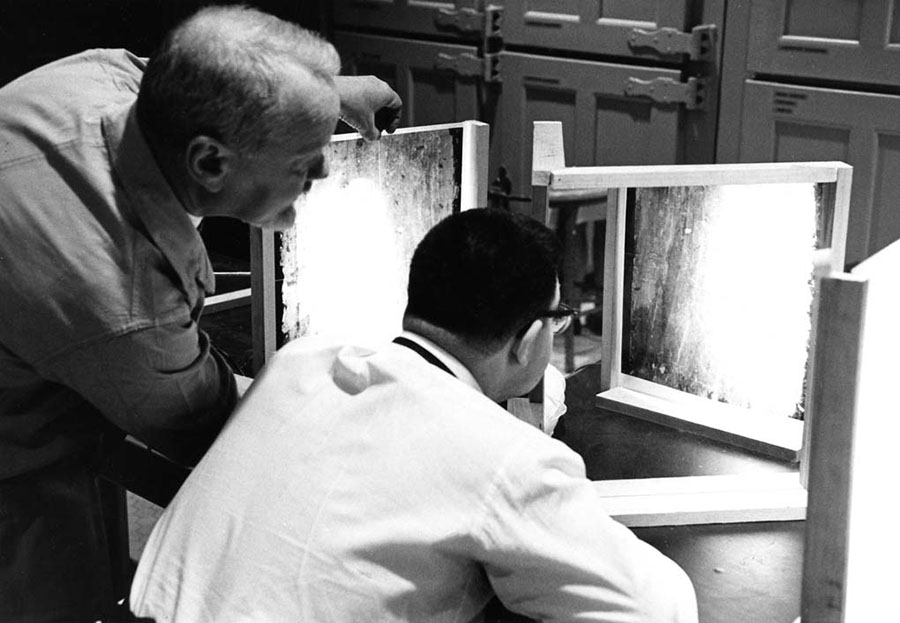
Richard E. Stone was an Adjunct Professor at the Institute of Fine Arts' Conservation Center and Conservator Emeritus at The Metropolitan Museum of Art. He held an M.A. from the Institute of Fine Arts (1966) and pursued doctoral studies (ABD). Specializing in pre-modern bronze casting technologies, Stone pioneered radiographic analysis of Renaissance sculptures and authored influential works on artists like Pier Jacopo Alari-Bonacolsi. His career spanned nearly 30 years at the IFA, where he taught courses on art materials and archaeology, blending technical expertise with art historical analysis. At the Met, he co-developed world-leading conservation practices with James H. Frantz. Colleagues and students remember his unparalleled knowledge of obscure materials, his mentorship, and his ability to decode art objects' technical secrets. His final contribution was an introductory essay for the Met's Italian bronzes catalog (2021). Education: M.A. 1966 (IFA, NYU); Ph.D. candidate (ABD). Teaching roles included NYU's Heights campus and John Jay College. Professional affiliations: Metropolitan Museum of Art (Department of Objects Conservation), Institute of Fine Arts Conservation Center. Research emphasized technical examination of artworks, particularly bronzes, and their historical production methods. He collaborated on unmasking forgeries like the Rospigliosi Cup. His legacy lies in advancing conservation science through interdisciplinary methods, merging art history and material analysis.
Dr. Muneer Ahmad is an experienced academic with over 22 years of international experience in teaching, research, and academic leadership within Computer Science, specializing in Artificial Intelligence, Data Science, and Healthcare Informatics. He currently serves as Senior Lecturer and Program Lead for the MSc Data Science at the University of Roehampton , UK, having previously held teaching and leadership roles in South Korea, Malaysia, Saudi Arabia, and Pakistan. Education: PhD in AI & Data Science His research is multidisciplinary and application-driven, focusing on AI for healthcare, precision agriculture, and industrial IoT. He leads large, diverse student cohorts and collaborates with academic teams to deliver inclusive education. Recognized as a Senior Fellow of Advance HE (SFHEA) , he emphasizes curriculum innovation and pedagogy. With over 100 peer-reviewed publications and £200,000+ secured funding, his work spans AI in healthcare diagnostics Smart urbanization Genomic data processing Cybersecurity Educational technology Industrial 4.0 He has supervised over 50 PhD/Master's students and serves on editorial boards of journals like Information and Bioengineering . Recent projects include AI-driven crop yield estimation, cervical cancer diagnosis, and pandemic resilience technologies.
Dr. Priyanka Singh is a Lecturer in Cyber Security at the School of Electrical Engineering and Computer Science, University of Queensland. She holds a PhD in Image Forensics and has conducted postdoctoral research at SUNY Albany and Dartmouth College, collaborating with Prof. Hany Farid. Her research focuses on Cyber Security, Digital Forensics, Privacy, Homomorphic Encryption, and Cloud Computing applications. Key contributions include real-time child pornography detection and privacy-preserving frameworks for digital authentication. Education: PhD in Image Forensics (university unspecified), postdoctoral work at SUNY Albany and Dartmouth College. Notable collaborations include a talk invitation at MIT by Prof. Ramesh Raskar. Research Interests: Cyber Security mechanisms, Digital Forensics techniques, Privacy-Preserving algorithms, Homomorphic Encryption protocols, and Cloud Security solutions. Recent Articles: Focus on AI ethics (e.g., FakeFaceDiscriminator), privacy-preserving biometrics (e.g., IRIS-SAFE), and secure anomaly detection (e.g., SADHE). Her work spans 42 conference papers and 22 journal articles, addressing challenges like encrypted video tampering detection and federated learning resilience. She advocates for technology's societal impact through explainable AI and ethical AI use cases.
Amal Al-Shargabi is a Senior Lecturer in Data Analytics and Artificial Intelligence at the School of Computer Science and Informatics, part of the Faculty of Computing, Engineering, and Media at De Montfort University (UK). Previously, she served as an Associate Professor at Qassim University (Saudi Arabia). She holds a PhD in Information Technology and Quantitative Sciences from Universiti Teknologi MARA (UiTM), Malaysia, along with a Master's in Computer Science (awarded excellence) and a Bachelor's in Computer Science. Education: PhD in Information Technology and Quantitative Sciences, UiTM, Malaysia Master's Degree in Computer Science, UiTM, Malaysia Bachelor Degree in Computer Science Research Interests: Machine Learning, Artificial Intelligence (including Generative AI), Deep Learning, and their applications in real-world problems such as healthcare, education, and environmental management. She also explores empirical software engineering and data analytics. Research Trends in Publications: Her work focuses on AI-driven solutions for healthcare monitoring (e.g., elderly health), energy efficiency in arid climates, GAN-based generative models, and ethical AI in academia. Recent studies also address assistive technologies like Saudi Sign Language translation and Quranic speech recognition. Awards: Invention, Innovation and Design Exhibition (IIDX’16) Award, Malaysia (2016) Three Minute Thesis (3MT’16) Award, Malaysia (2016) Student-led projects under her supervision have won awards in Saudi Arabia, including Takaful and AI Challenge prizes. Advising & Grants: Research grants include projects on health monitoring via IoT, ethical considerations of ChatGPT/BARD, and solar panel energy optimization. Internally funded projects at Qassim University addressed noise pollution, COVID-19 diagnosis via AI, and job recommendation systems. Labs/Teams: Affiliated with the Institute of Artificial Intelligence (IAI) at DMU. Collaborates with institutions like Qassim University on interdisciplinary projects.
Assoc. Prof. Murat Kaya is an academic in the Department of Hadith at Bingöl University's Faculty of Islamic Sciences. He holds a PhD from Yüzüncü Yıl University focusing on fabricated hadith in Sufi literature. His career includes 14 years as a teacher before joining Bingöl University in 2016. He teaches courses like Hadith I-VI and History of Hadith, and has supervised 7 master's theses. Education: BA (2000), MA (2006), PhD (2016) in Islamic Studies from Yüzüncü Yıl University Research interests focus on hadith authentication, Sufi literary traditions, Prophet Muhammad's educational philosophy, and contemporary youth issues through an Islamic framework. His publications analyze fabricated hadith patterns, methodological approaches to hadith criticism, and socio-educational applications of prophetic teachings. He has reviewed manuscripts for journals like Bingöl Üniversitesi İlahiyat Fakültesi Dergisi and Hadıht .
Dr. Shawon S. M. Rahman is a tenured Professor in the Department of Computer Science and Engineering at the University of Hawaiʻi at Hilo (UH Hilo), a recognized Native Hawaiian, Pacific Islander, and Minority Serving Institution. He holds an adjunct faculty position in Cybersecurity at the University of Missouri-Kansas City (UMKC). He is currently a Faculty Applied Clean Energy Sciences (FACES) Fellow at the National Renewable Energy Laboratory (NREL), U.S. Department of Energy (DOE). With 18+ years of teaching experience, he has advised 15 Ph.D. graduates and contributed to numerous dissertation committees. He serves as Editor-in-Chief of the International Journal on Cryptography and Information Security (IJCIS) and reviews for over 15 conferences/journals. His roles include Chair of the Chancellor Access Committee, member of NSF Review Panels, and leadership in IEEE/ACM conferences. Dr. Rahman’s education includes a Ph.D. in Software Engineering from North Dakota State University, an M.S. in Computer Science (same institution), and a B.S. in Chemical Engineering from Bangladesh University of Engineering & Technology. His research focuses on Cybersecurity, Information Assurance, STEM Outreach, Digital Forensics, and IoT Security. He has secured grants from NSF, USDA, and DOE, and collaborates with schools to promote STEM education and Cybersecurity Career Pathways. His article trends emphasize IoT security, cybersecurity frameworks, and behavioral science in security practices. He actively addresses vulnerabilities in medical devices, cloud computing, and mobile applications. Professional affiliations include IEEE (senior member), ACM, ISACA, and ASEE. He advises the UH Hilo Robotics Club and chairs programs like Cybersecurity and Digital Forensics. Dr. Rahman’s service extends to Hawaii’s statewide science assessment program and initiatives like the Hawaii Statewide Assessment Program (HSAP). His work bridges academia and industry through applied research in clean energy sciences and cybersecurity innovations.
Mathy Vanhoef is an Assistant Professor at the Faculty of Engineering Science of KU Leuven , affiliated with the Distributed and Secure Software (DistriNet) group and involved in multiple cybersecurity councils. His research focuses on wireless protocol vulnerabilities, particularly Wi-Fi security flaws in modern standards like WPA2 and WPA3. He has led significant projects on network protocol analysis and security mitigation strategies. Research Interests: Exploiting design flaws in wireless protocols Side-channel attack mechanisms Network stack security analysis Cryptographic protocol weaknesses Man-in-the-middle attack prevention Scientific Contributions: Discovered fundamental Wi-Fi vulnerabilities (FragAttacks) Exposed critical flaws in Cloudflare WARP and WPA3 implementations Developed testing tools for wireless protocol security Teaching: Vanhoef teaches courses including Introduction to ICT Security , CyberSecurity Basics , and Security Through the Software Lifecycle . He is actively involved in cybersecurity education and research at KU Leuven.
Penelope Jackson is a New Zealand-based art historian, curator, and researcher at the School of Social Work and Arts, Charles Sturt University. She holds a PhD in Art History and has published extensively on art crime, forgery, and women in art. PhD in Art History from Charles Sturt University (2022-2023) M.Phil in Art History from University of Queensland (2005-2011) MA in Art History from University of Auckland (2001-2002) BA Honours in English from University of Waikato (2001) Her research focuses on art crime, the ethics of art reproduction, and women's roles in art history. She has curated award-winning exhibitions like Corrugations: The Art of Jeff Thomson and An Empty Frame: Crimes of Art in New Zealand . Recent publications examine intersections of art theft, forgery, and cultural preservation. Penelope’s publications span art history, short fiction, and exhibition curation. Her work explores trends in art crime, surrealist art, and cross-cultural storytelling. She received the 2023 Best Book award for The Art of Copying Art and has contributed to international art crime discourse. Member of the New Zealand Order of Merit (2023) Sir William Dobell Fellowship (2024) Booranga Writers Residency (2024) Australian Government RTP Scholarship (2022) As chair of the New Zealand Art Crime Research Trust, she mentors emerging researchers and collaborates globally. Her 2020 University of Auckland residency and keynote speeches highlight her community engagement and academic leadership.
Dr. Andrey Doronin is a researcher affiliated with the Department of Eastern European History at the University of Bonn and the Max Weber Stiftung (Bonn), and has served as a scientific Mitarbeiter at the Deutsche Historisches Institut Moskau since 2005. His work focuses on the interplay between Renaissance humanism and early modern nation-building in Eastern Europe, with a particular emphasis on Russian and German historiography. Born in 1962 in the Moscow region PhD in History (2001) on Johannes Aventinus Alumnus of Lomonosov Moscow State University (MA in Medieval History) His research explores the cultural memory of the Rus' through transconfessional monastic networks, biblical genealogy, and the adaptation of Western ideas in the Russian Empire. He has edited interdisciplinary volumes on topics like Monastic Culture as a Transconfessional Phenomenon and Narratives of the Rus' in Early Modernity , often bridging art history and textual analysis. Dr. Doronin's academic contributions include fellowships from prestigious institutions like the Volkswagen Foundation and the Gerda Henkel Foundation. His publications analyze how Renaissance humanists constructed historical narratives of Eastern Europe, including studies of figures such as Johannes Trithemius and Hartmann Schedel, and the role of maps and encyclopedias in shaping European identity. Scientific Awards & Grants: Volkswagen Foundation (multiple) Max Planck Institute for European Legal History (multiple) Gerda Henkel Foundation Herzog August Bibliothek Wolfenbüttel He has also contributed to translation projects, including works on Soviet-German relations and Russian Orthodoxy during World War II, and co-edited a handbook on SMAD/Soviet occupation (2009). Currently, he investigates the origins of European historiography and its impact on Eastern Slavic identity formation.