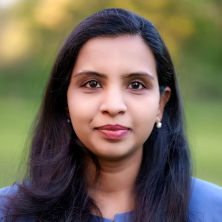
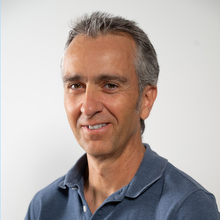
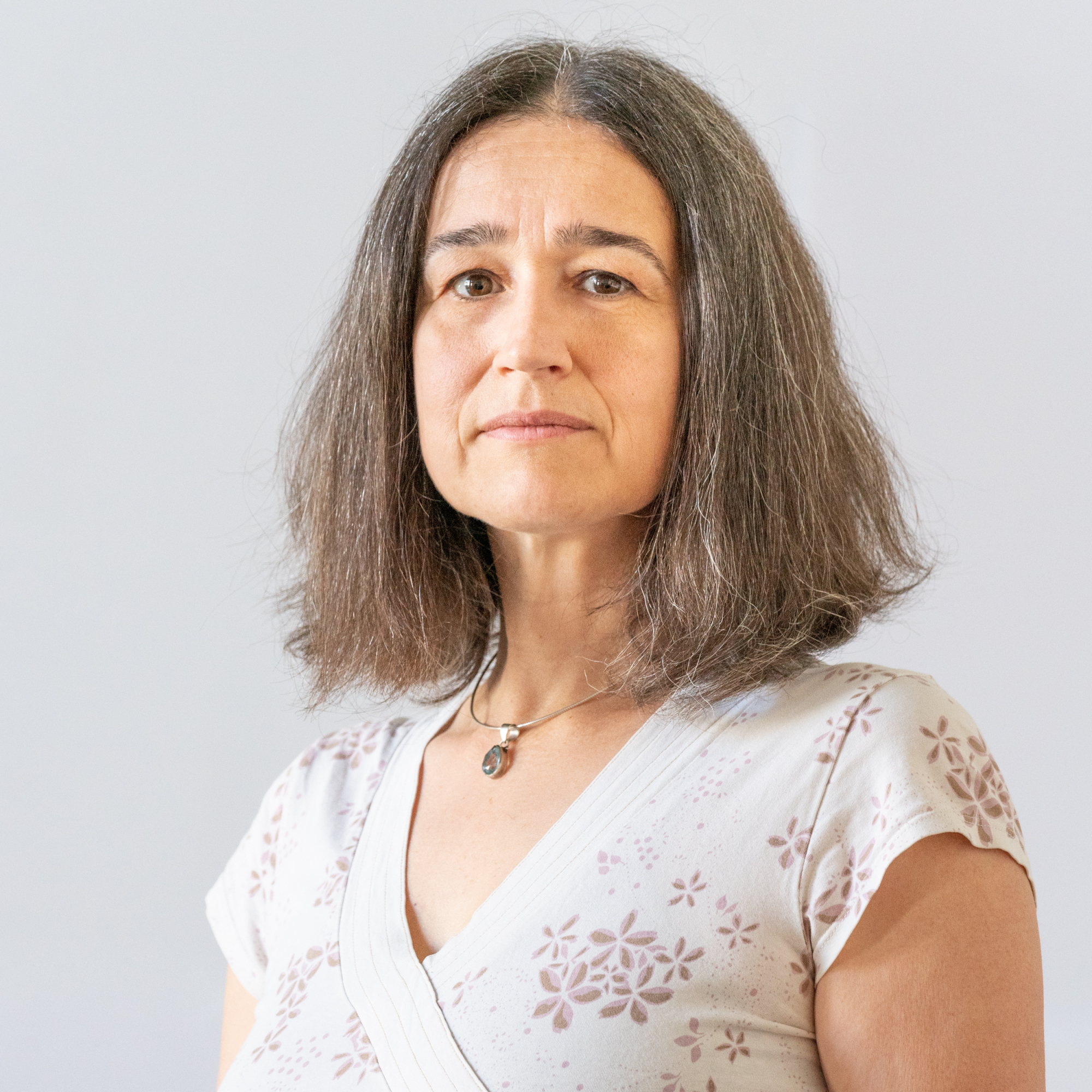
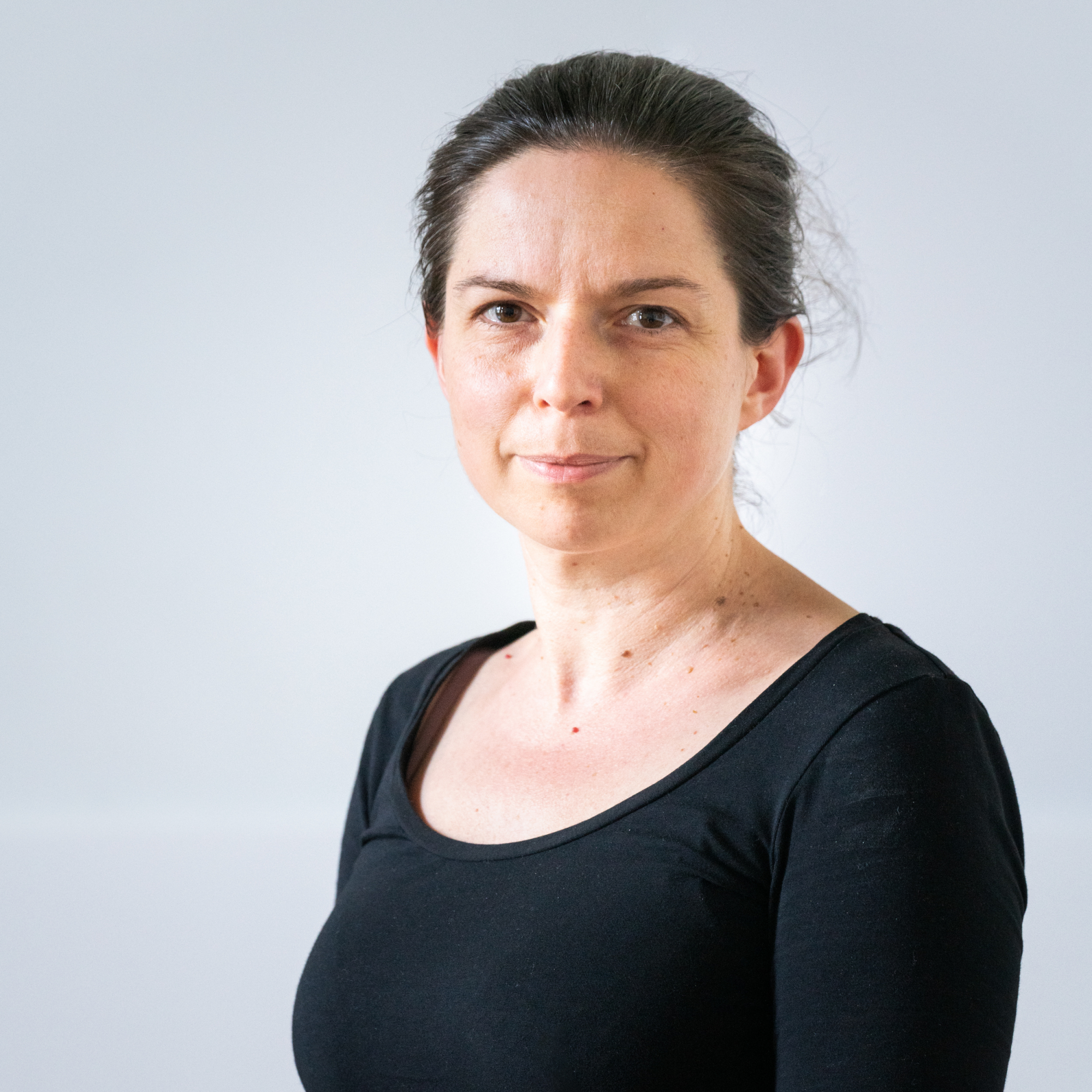
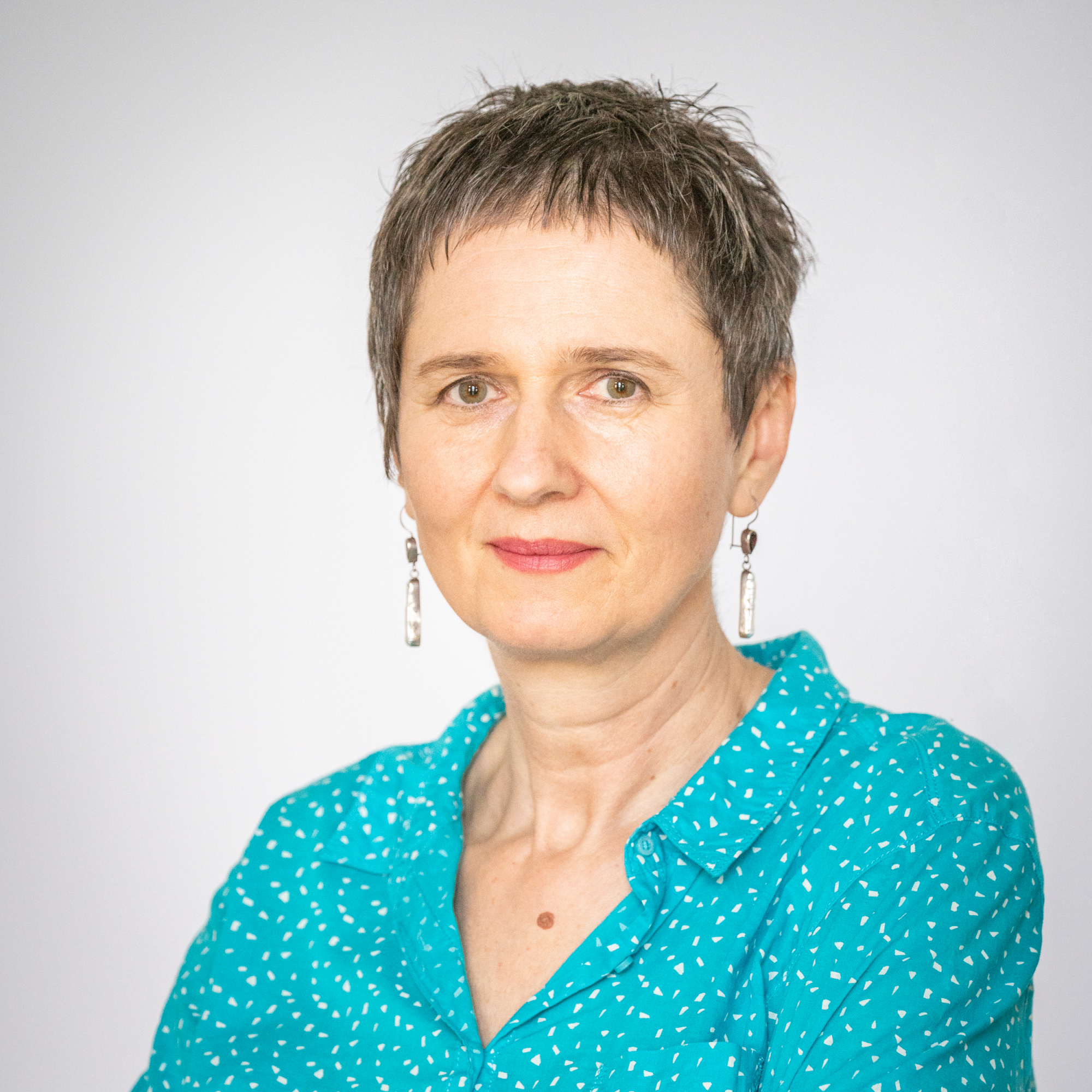
Shajina Anand is an Assistant Professor in the Department of Mathematics and Computer Science at Seton Hall University . She established the university's advanced Cybersecurity Lab, focusing on research areas such as cyberbullying prevention in academic institutions, green initiatives in agriculture, microgrid security, and sentiment analysis of women in tech. Her work bridges academia and industry through collaborations with entities like the US Secret Service and PSEG, and international partnerships in India. Her professional interests include leading cybersecurity research, mentoring students on real-world projects, and curricula development aligned with industry needs. She actively organizes events like the NJ Cybersecurity Conference and Microsoft Hackathon. She is a recipient of the OMIC Grant and contributes to interdisciplinary efforts via the Academy of Applied Analytics and Technology (A3T). Research trends in her publications span cybersecurity for autonomous systems, 5G networks, microgrids, and social engineering. Her work emphasizes AI-driven solutions for critical infrastructure protection and ethical hacking practices. Awards: OMIC Grant Industry & Academic Collaboration: US Secret Service PSEG, Lenovo, Capgemini International Internship Programs in India Labs & Teams: Directs Seton Hall's Cybersecurity Lab, fostering international student participation in cutting-edge research.
Dr. Paweł Ignaczak is a researcher affiliated with the Academy of Fine Arts in Warsaw. His work focuses on Polish art history, graphic arts, and museum studies, with particular emphasis on 18th-century Polish artists like Jan Piotr Norblin and the cultural heritage preserved in institutions like the Polish Library in Paris. His research interests span historical art techniques, multicultural aspects of the Polish-Lithuanian Commonwealth, and contemporary art criticism. Notable projects include studies on Rembrandt's influence on Polish printmaking and analysis of royal art collections from the Stanisław August Poniatowski era. Articles collectively explore themes of cultural preservation, artistic workshop practices, and cross-cultural exchanges in Central Europe. No scientific awards or grants are explicitly mentioned in the provided texts.
Dr. Mariusz Nawrocki is a Professor and Vice-Dean for Science and Development at the Faculty of Law and Administration, University of Szczecin. His academic career includes roles as an Assistant Professor (2010–2021) and Professor (since 2021). He holds a Doctor of Laws (2013) and Habilitation (2020) in legal sciences. His research focuses on criminal law, criminal procedure, and disciplinary liability, with notable contributions to mediation in juvenile justice and cybercrime jurisdiction. Education: LL.B., Faculty of Law and Administration, University of Szczecin (2010) Ph.D. in Legal Sciences, University of Szczecin (2013) – Thesis: "Time of Committing a Prohibited Act in Polish Criminal Law" Habilitation (2020) – Monograph: "Error as a Feature of a Type of Prohibited Act in Polish Criminal Law" Research Interests: Mariusz Nawrocki’s work explores criminal law fundamentals, including procedural aspects like mediation, cybercrime jurisdiction expansion, and juvenile justice. His analysis of statutory interpretation and legal formalism has influenced Polish judicial practices. He emphasizes interdisciplinary approaches to criminal liability, particularly in cases involving continuous offenses and collective responsibility. Articles Overview: His recent publications (2022–2025) address cutting-edge issues such as whistleblower protection, cybercrime enforcement, and mediation in juvenile cases. These works highlight evolving legal frameworks and their societal implications, contributing to both academic discourse and practical legal reforms. Awards/Grants: None explicitly mentioned. Advising/Teams: Leads research at the University of Szczecin’s Legal Analysis Center and chairs the University Electoral Commission. Active in organizing international legal conferences and guest lectures on cyber law and procedural justice. Labs/Teams: Directs the Department of Criminal Law’s research initiatives and collaborates with the Institute of Legal Sciences on policy analysis.
Christian Lackner is a Professor of Medieval History and Auxiliary Sciences at the University of Vienna's Faculty of History and Cultural Studies, where he previously served as Director of the Institute for Austrian Historical Research. He holds a doctorate from the University of Innsbruck (1985) and completed specialized training at the Institute for Austrian Historical Research (1983-1986). His academic career at the University of Vienna spans over three decades, including lectureship since 1989 and professorship since 2001. Research Focus: Lackner's work centers on late medieval administrative systems, Habsburg dynasty studies, and historical auxiliary sciences. Key areas include: Diplomatics and analysis of administrative documents Habsburg court history (14th-15th centuries) Medieval epistolography and manuscript studies University and educational history in medieval Austria Territorial integration of Habsburg domains Manuscript collections and library history He leads the ongoing Regesta Habsburgica project (since 2005), producing critical editions of Habsburg ducal documents, and has directed research on medieval account books and administrative records. His publications demonstrate consistent focus on Habsburg administrative evolution, diplomatics, and medieval institutional development, with recent works examining chancery operations, territorial governance, and document authenticity. Academic Service: Maintains weekly consultation hours and teaches courses listed in the university system. No awards or student advising relationships are documented in the source material.
Riccardo Focardi is a Full Professor at Ca' Foscari University of Venice in the Department of Environmental Sciences, Computer Science and Statistics. He has held this position since September 2017, following roles as Associate Professor (2013–2017) and Researcher (1996–2002). He is also co-founder and Chief Scientist of Cryptosense and 10Sec, startups focused on cybersecurity and IoT security solutions. Education: PhD in Computer Science from the University of Bologna (1999), Laurea cum laude in Computer Science (1993). Research focuses on cybersecurity, cryptography, formal methods for security protocol analysis, and secure hardware/software systems. Notable projects include the Cryptosense Analyzer tool for cryptographic device analysis and contributions to IoT security via 10Sec's fingerprinting technologies. His work on PKCS#11 vulnerabilities and padding oracle attacks has significantly impacted practical cryptographic security. Publications emphasize applied cryptography, API security, and IoT systems. Recent work explores GAN-based authentication (EUAS-GAN) and zero-shot malware detection (Z-MDZS). Over 110 publications span top venues like CRYPTO, CCS, and IEEE S&P. Leadership roles include coordinating national cybersecurity projects (e.g., POR FESR 2017–2020), chairing conferences (ITASEC 2017, CSF 2007), and directing Ca' Foscari's Computer Science PhD program (2012–2019). Active in public engagement, including media appearances on cybersecurity trends. Labs/Teams: Cryptosense (founded 2013), 10Sec (2020), and the DAIS department's security research group. Supervised over 10 PhD students, contributing to academic-industry collaborations in secure systems.
Glenn Van Wallendael is an Associate Professor at Ghent University's Faculty of Engineering and Architecture , affiliated with the Department of Electronics and Information Systems . He leads research in video coding, digital watermarking, and immersive media technologies. Academic Focus: Video compression standards (HEVC, H.266), AI for multimedia, virtual reality Key Collaborations: iMinds, imec, European research consortia Research Interests include: Video compression algorithms (HEVC, SVC, MV-HEVC) Digital watermarking for copyright protection Machine learning applications in image/video analysis Quality of Experience (QoE) in immersive environments Recent Publications (2024-2025) show expertise in: Deepfake detection using vision transformers Medical image landmarking tools Lightweight geometric approximation methods AI-driven video quality assessment Doctoral Mentorship includes supervising: 2021: Hannes Mareen (video forensics) 2020: Vasileios Avramelos (light field coding) 2017: Johan De Praeter (adaptive video encoding)
Antonio PISTELLATO is a Lecturer at the Department of Humanities of Ca' Foscari University of Venice , specializing in classical studies and Roman history. Holding a PhD in "Ancient History and Archaeology, History of Art" (2007), his academic journey includes fellowships at University College London, Paris X-Nanterre, and Pavia's Cedant Centre. Since 2009, he has alternated research and teaching roles at Ca' Foscari, currently offering Latin language courses and classical studies for the School for International Education (SIE). Education: MA in Classics (Ca' Foscari, 2002), PhD in Ancient History & Archaeology (Ca' Foscari, 2007) His research focuses on Roman epigraphic memory , historiography circulation, and digital humanities , particularly forged epigraphs. His publications analyze Cassius Dio's political narratives, Latin poetic metrics, and textual authenticity issues. Recent scholarship examines: Digital preservation of forged inscriptions Comparative historiography (Historia Augusta vs Cassius Dio) Latin epigraphic models in provincial contexts Biblical Latin influences in Roman documentation Scientific Honors: Marie Curie Fellowship recipient Paris X-Nanterre postgraduate scholar Pavia Cedant Centre awardee As an educator, he coordinates the Latin 1 Laboratory and teaches Latin language/literature at both undergraduate and foundation levels. His office hours are held at Palazzina Briati, home of the School for International Education, with remote appointments available via email.
Alessia Prontera is a Lecturer at the Department of Humanities, Ca' Foscari University of Venice. She holds a PhD in Latin Language and Literature from Ca' Foscari University, with a dissertation on Claudius Claudianus' epigrams. Her research focuses on Late Latin poetry, Classical Philology, Digital Humanities, and Ecocriticism. She has contributed to critical editions of late antique texts and co-edited digital archives like 'Musisque Deoque' and 'Carmina Latina Epigraphica'. Prontera's work spans textual criticism, intertextuality, and the reception of classical motifs in the Middle Ages. Her recent publications include studies on Claudian's epigrams, Ausonius' style, and Ennodius' Carmina . She is currently engaged in the PRIN-PNRR project 'Men in Nature' at the University of L'Aquila, applying ecocritical approaches to Late Antique Latin texts. Prontera has participated in conferences at Rome Tor Vergata, Siena, and Pavia, and taught seminars at Ca' Foscari University and the University of Naples Federico II.
Prof. Dr. Klaus Lennartz is an Adjunct Professor at the University of Hamburg's Faculty of Humanities, affiliated with the Department of Language, Literature, Media II. His academic trajectory includes a doctorate (1993) and habilitation (2007) in Classical and Medieval Latin Philology. Since 2016, he has been a member of the international research consortium Falsa et Vera Historia at Universidad de Oviedo, focusing on literary forgeries and pseudoepigraphy. Lennartz's research explores three primary domains: Roman Literature : Emphasis on Republican-era texts, linguistic evolution, and tragic fragments. Greco-Roman Iambic : Genre development from Archilochus to Horace, including metrical and intertextual studies. Medieval Latin : Analysis of texts like Theodul’s Eclogue and scholastic commentaries. His work frequently intersects with authorship authentication, theatrical performance, and reception studies. His publications (2014–2024) demonstrate a focus on classical philology, literary forgery, and textual criticism. Trends include interdisciplinary analyses of Greek/Latin poetry, Plato’s authenticity, and Roman comedic theater. No scientific awards or student advisement are documented.
Orell Witthuhn is a Lecturer for special tasks and Study Coordinator for the Ancient Cultures program at the Department of Egyptology and Coptic Studies , Georg-August-University Göttingen. Previously, they studied Egyptology at Philipps University of Marburg, earning a Master of Arts in 1997, with minors in Classical Archaeology and Philosophy. Research Interests : Ancient Egyptian religion, death and the afterlife, cultural and historical narratives, funerary practices, and cross-cultural exchange in the Mediterranean. Editorial Roles : Editor-in-Chief of the Scientific Literature Index (WLA) (2006–present) and co-editor of volumes like Architecture, Inscriptions, and Monuments of Ancient Egypt and Concepts of Death and the Afterlife . Witthuhn’s recent publications focus on Egyptian death rituals , mythological texts , and imperial structures of the New Kingdom, with sub-fields spanning funerary symbolism, spatial concepts, and historical networks. They actively organize exhibitions (e.g., Bilder des Orients , 2007) and lead academic excursions to Egypt and the Mediterranean. Voluntary roles include Secretary of the Herzberg Local History Association (since 2020) and former Treasurer of the Marburg Association for the Promotion of Egyptology (2001–2010).
Éva Galambos DLA is an Associate Professor and Laboratory Manager at the Hungarian University of Fine Arts' Department of Restoration since 2014, promoted to Associate Professor in 2023. She serves as head of the microscopy laboratory and teaches materials science and polarization microscopic examination of inorganic pigments. Her research focuses on art conservation science , specializing in polarization microscopy of inorganic pigments , material analysis of cultural heritage objects , and diagnostic techniques for restoration . She developed Hungary's first digital pigment database ( pigmentum.hu ) and established advanced analytical laboratories through significant research grants. Galambos has led material investigations for major museum projects including the Museum of Fine Arts' Gamhudi coffin collection, Buda Castle Gothic sculptures, and medieval wall paintings across Hungary and Transylvania. Her work bridges conservation practice with scientific analysis through collaborations with ELTE, MTA research institutes, and international partners. Kerényi-pályázat nívódíj (1994) Köztársasági ösztöndíj (1998-1999) Erasmus ösztöndíj (1999) MAOE alkotói ösztöndíj (2001, 2008) As a doctoral supervisor, she has guided 11 completed DLA dissertations focusing on pigment analysis, forgery detection, and historical techniques. Her laboratory serves as a national hub for conservation science, training specialists in microscopic analysis and material diagnostics for cultural heritage preservation.
Anna Vihart serves as Lecturer and researcher at the Department of Restoration, Hungarian University of Fine Arts since 2016, following her role as Assistant Professor (2013-2016). Her academic foundation includes a DLA doctorate specializing in pigment analysis, establishing her expertise at the intersection of art conservation and material science. Her educational background encompasses: 2012: Doctor of Liberal Arts (DLA) from Hungarian University of Fine Arts Doctoral School; Dissertation: Light microscopic examination and detection possibilities of organic and inorganic black and grey pigments 2005: Painter-restorer artist degree from Hungarian University of Fine Arts Restorer Training Institute 1997: Vocational High School of Fine and Applied Arts, Decorative Painting Department Vihart's research centers on microscopic pigment identification and paint layer analysis, with significant contributions to developing Hungary's first standardized protocol for pigment examination. Her methodological innovations bridge historical art techniques with modern conservation science, particularly in distinguishing organic/inorganic pigments through light microscopy. This work directly informs practical restoration approaches for diverse cultural artifacts. Her publication portfolio demonstrates consistent focus on pigment science applications, from conference presentations on conservation methodologies to historical studies of ecclesiastical art. Key themes include database development for pigment identification, material degradation analysis, and technical examination of historical paintings across Hungarian cultural institutions. Professional recognition includes: Diploma Award of the National Association of Hungarian Artists (2005) TÁMOP-4.2.2.B-10/1 grant for creating Hungary's pigment database and examination protocol (2011-2013) While no formal student advisement is documented, her TÁMOP project leadership involved training workshops for emerging conservators. This initiative significantly advanced pigment analysis capabilities within Hungary's conservation community through standardized methodologies and shared digital resources. As core faculty in the Department of Restoration, Vihart collaborates extensively with national cultural institutions including the Museum of Fine Arts, Hungarian National Museum, and numerous churches/castles. Her project portfolio spans over 30 major conservation efforts since 2005, ranging from medieval altarpieces to contemporary installations, often involving multidisciplinary teams of conservators and art historians.
Mária Chilf is an Associate Professor at the Hungarian University of Fine Arts with a DLA doctoral degree. Born in Târgu-Mureş, Romania on May 10, 1966, she has established herself as a significant figure in contemporary Hungarian art through her painting and intermedia works. Her educational background includes: 2003-2007: Doctoral studies at the Hungarian University of Fine Arts 1997-1998: Hochschule der Künste, Berlin (studied under Katharina Sieverding) 1990-1995: Hungarian University of Fine Arts, painting and intermedia department (studied under Károly Klimó and Dóra Maurer) Chilf's artistic practice explores psychological landscapes, bodily themes, and conceptual frameworks through series-based works. Her notable projects include 'Private Jungle' (2005), 'Loaded Places' (2003), and 'The Inner Secrets of Our Body' (2003), which demonstrate her interest in the intersection of physical and psychological spaces. Her work consistently examines identity, memory, and subconscious processes through mixed media approaches. Analysis of her exhibition history reveals a progression from formal explorations to increasingly complex psychological investigations, with recurring motifs of water, body imagery, and conceptual frameworks that challenge conventional artistic boundaries. Her international presence includes exhibitions across Europe and Mongolia, demonstrating the broad relevance of her conceptual approach. Her most significant honors include: Mihály Munkácsy Award (2005) STRABAG Painting Award (2004) Hungarian Artists' National Association Award (2006) Hungarian Academy of Rome Scholarship (1998) DAAD Stipendium (1997-98) As an educator, Chilf emphasizes creating environments where students develop independent artistic practices through dialogue and experimentation. Her philosophy centers on helping students understand their creative motivations and expand their awareness of visual culture. Her approach combines technical guidance with critical thinking development, encouraging students to explore both theoretical questions and practical implementation in their work. Chilf's works are held in prominent collections including the Ludwig Museum - Museum of Contemporary Art and Hungarian National Gallery in Budapest, as well as international institutions like the Frauenmuseum in Bonn and Akademie Schloss Solitude in Stuttgart.
Dr. Susan Valladares is an Associate Professor in the Department of English Studies at Durham University, where she specializes in theatre and performance history from the late eighteenth to mid-nineteenth century. She is also a member of the Institute of Medieval and Early Modern Studies. Currently on research leave for the 2025/26 academic year as a Leverhulme Research Fellow, she continues to maintain academic correspondence while focusing on her research projects. Her academic journey began with studies at the Universities of Oxford (MA; DPhil) and York (MA), followed by teaching positions at various Oxford colleges. She served as a Junior Research Fellow at Worcester College (2012-2016) and as a Departmental and College Lecturer at St Hugh's College (2016-2018) before joining Durham University in 2018. Dr. Valladares' research centers on English literature from 1660 to 1840, with particular expertise in theatre and performance, political histories, representations of race, early Caribbean studies, slavery and abolition, gender autobiographies, and Romantic-period print cultures. Her work demonstrates how theatre functioned as both a cultural institution and political platform during periods of social transformation. She has made significant contributions to understanding how theatrical practices engaged with broader social, political, and cultural issues of their time, particularly regarding citizenship, patriotism, and national identity formation. Her publications reveal a consistent focus on the intersection of performance, politics, and identity. The articles demonstrate expertise across multiple domains including postcolonial theatre, Romantic-era performance economies, women's war writing, and the representation of race in historical contexts. Her work frequently examines the connections between theatrical practices and larger historical movements, particularly the Napoleonic Wars and abolitionist efforts. 2025: Leverhulme Research Fellowship 2024-2025: Short-Term Fellowships at Folger Shakespeare Library and John Carter Brown Library 2024: Board Member and Book Review Editor for Studies in Romanticism 2023: Durham University's Exceptional Contribution Award 2022: Durham University's Discretionary Award Scheme Dr. Valladares actively supervises PhD students working on English literature from 1660 to 1840, with recent completions including dissertations on Wordsworth's poetry, Romantic dramatic poetics, and Promethean forms of grief in Byron and Shelley. She has successfully secured multiple research grants and fellowships that have supported her archival work at prestigious institutions including Harvard's Houghton Library and the Folger Shakespeare Library. Her engagement with public scholarship includes curating the Bodleian Library's 'Staging History 1780-1840' exhibition, which generated significant public outreach through gallery tours, media interviews, and a podcast series. Her work bridges academic research and public engagement through collaborations with theatre professionals, arts organizations, and educational outreach programs in the North East of England focused on widening participation in higher education.
Dr Shahana Bano is a Lecturer in the School of Computing, Engineering & Technology at Robert Gordon University, specializing in interdisciplinary applications of Artificial Intelligence. Her research spans biomedical imaging, environmental monitoring, infrastructure analytics, and socio-technical systems through the Machine Vision Research Group and Cybersecurity Research Group. Her educational background includes a PhD in Computer Science and Engineering, M.Tech in Computer Science and Engineering, MSc in Information Systems, and BCA - all completed full-time. Her research philosophy centers on convergence, bringing together diverse data types, technologies, and disciplines to create impactful, adaptive systems that bridge academic innovation with societal relevance. Dr Bano's research interests focus on Computer Vision, Image Analysis, Machine Learning, Data Analytics, Internet of Things, Text to Speech Systems, and Social Media Threat Intelligence. Her recent work demonstrates strong application of these interests to medical diagnostics (CAR-T cell classification), environmental monitoring (geothermal reservoir modeling), infrastructure analytics (pipeline defect detection), and social systems (hate detection in football communities). Her publication record shows consistent output with 32 research outputs from 2015-2025, demonstrating increasing focus on medical and environmental applications of AI in recent years. The work spans theoretical computer vision advancements to practical implementations addressing UN Sustainable Development Goals. Associate Fellow (AFHEA) 2023 from Advance HE Dr Bano actively supervises PhD students and mentors interns on diverse projects. Current PhD supervision includes research on morphological classification of CAR-T cell images for leukemia diagnosis and acoustic emission-based pipeline defect detection. She also guides students on projects involving AR-based navigation, NDVI vegetation mapping, hate detection in football communities, multimodal sensor fusion, and airport runway object detection. Her lab resources are supported through university research groups and collaborations focused on machine vision and cybersecurity applications.