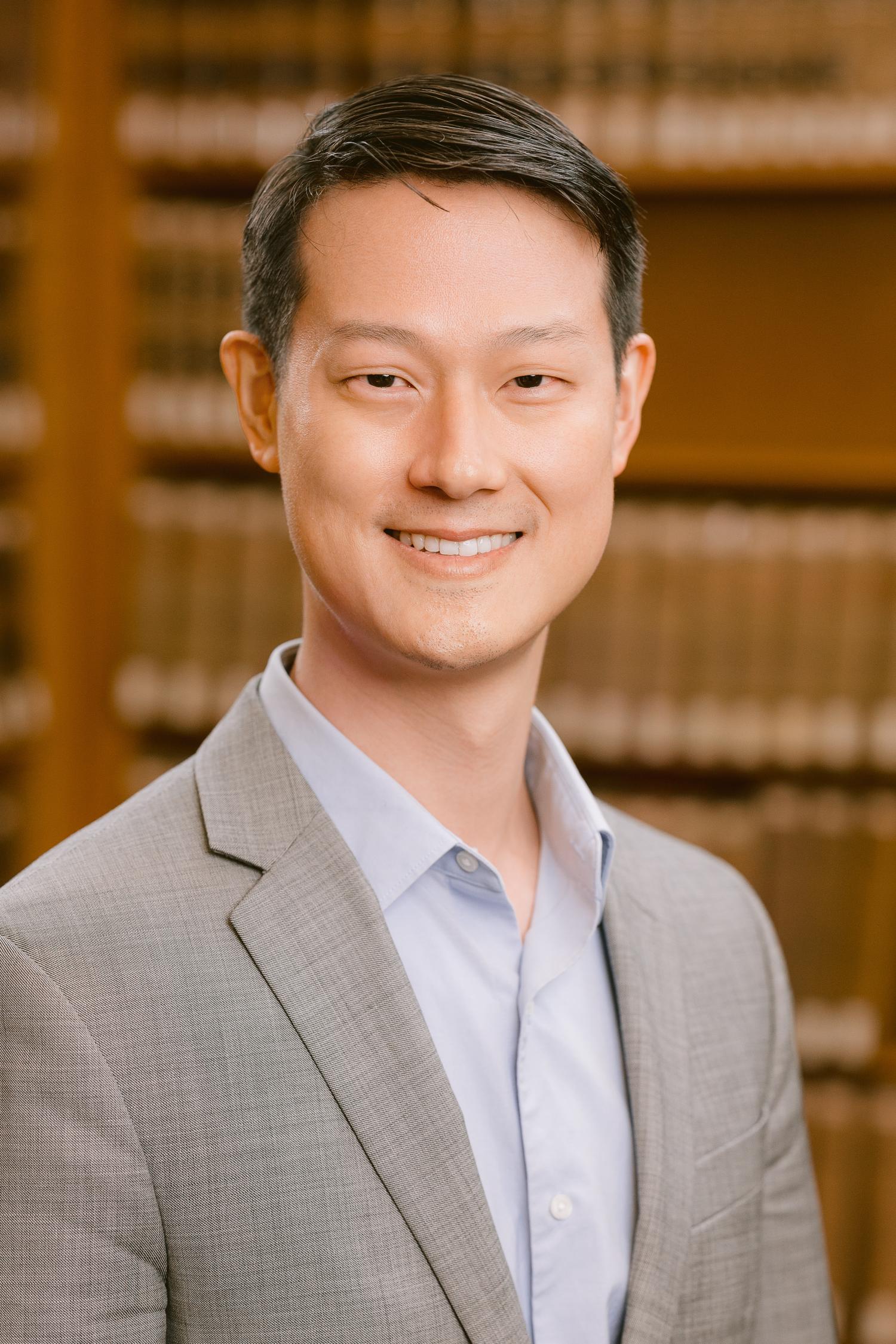
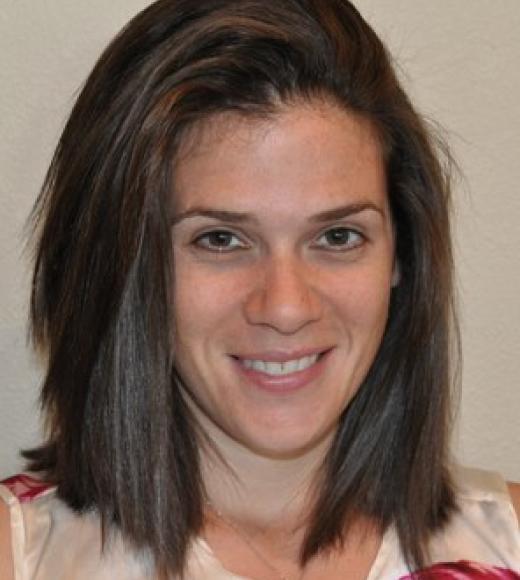
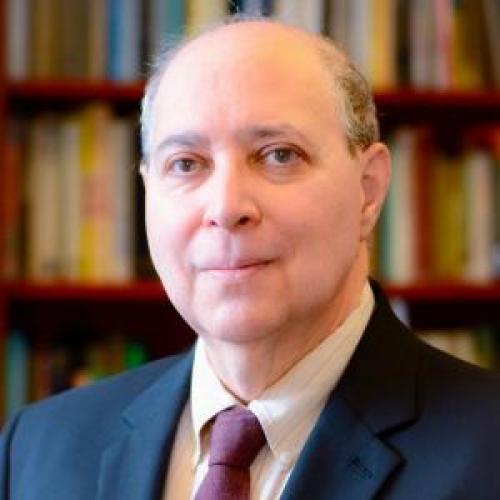
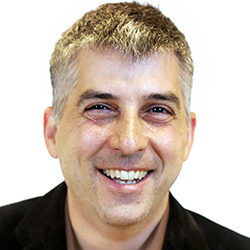
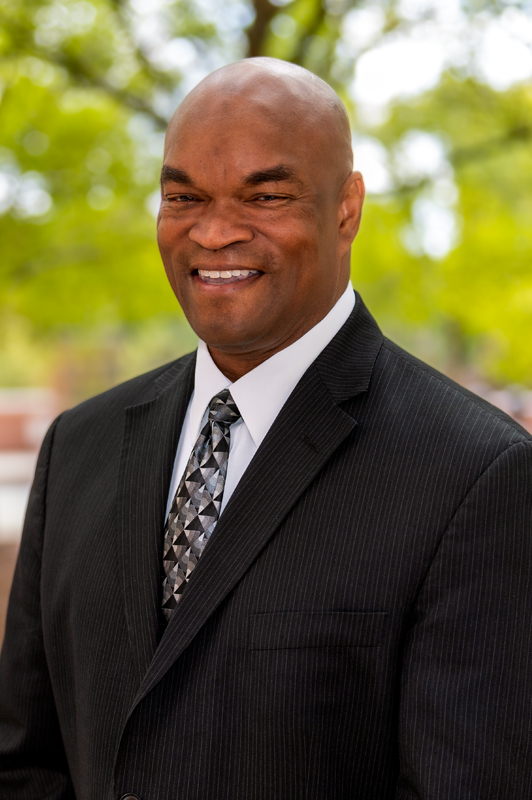
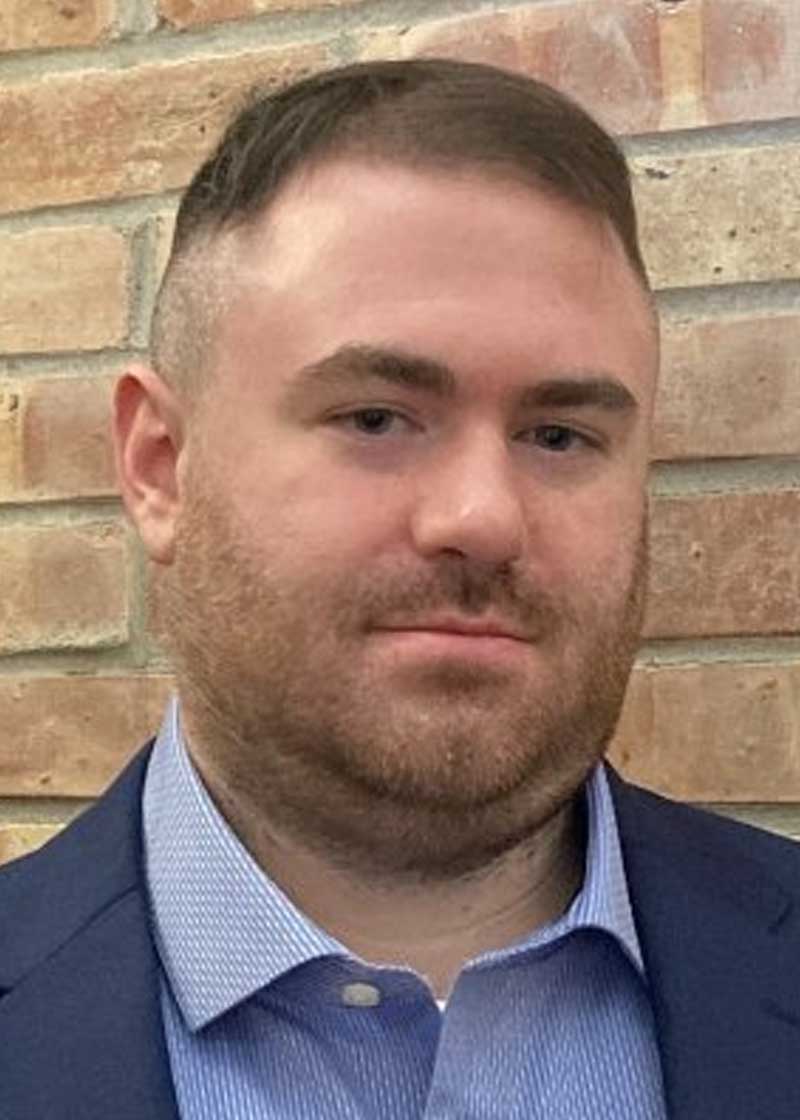
Sharese King is the Neubauer Family Assistant Professor of Linguistics at the University of Chicago, where she has taught since 2018. She earned her Ph.D. and Master's in Linguistics from Stanford University, focusing on language variation across African American communities. Her research bridges sociolinguistics, critical race theory, and phonetics to examine how African American speech is constructed, racialized, and socially evaluated. Education: Ph.D., Linguistics, Stanford University (2018) M.A., Linguistics, Stanford University Research Interests: Sociolinguistics Language Variation & Change African American Language Critical Race Theory Phonetic and experimental analysis Dialect and judicial systems Notable Contributions: Interdisciplinary studies on raciolinguistics and courtroom bias Analysis of /s/ articulation in intersectional contexts Reconceptualization of AAVE as AAL to emphasize linguistic diversity Fieldwork in Bakersfield, Rochester, and Chicago Publications in American Speech , Journal of Sociolinguistics , Language , and Nature Scientific Awards: Provost's Postdoctoral Fellowship Neubauer Family Assistant Professorship Labs & Projects: Co-founder of the Chicagoland Language Project
Shrikanth (Shri) Narayanan is a University Professor and holder of the Niki and Max Nikias Chair in Engineering at the University of Southern California (USC), serving as the inaugural Vice President for Presidential Initiatives. He leads the Signal Analysis and Interpretation Lab (SAIL) and holds joint appointments in Computer Science, Linguistics, Psychology, Neuroscience, Pediatrics, and Otolaryngology-Head and Neck Surgery. His research focuses on speech and audio processing, behavioral signal processing, and real-time MRI of speech production, with applications in healthcare, education, and technology. Education: B.E. in Electrical Engineering from College of Engineering, Guindy (Chennai, India, 1988); M.S., Engineer, and Ph.D. in Electrical Engineering from UCLA (1990, 1992, 1995). Research interests span computational linguistics, machine learning, and multimodal human behavior analysis. He pioneered technologies for speech biomarkers in mental health, real-time MRI of speech production, and wearable sensor systems for longitudinal health studies. His work in speech emotion recognition, forensic interviews, and clinical applications has been recognized through over 40 awards, including the IEEE Flanagan Award and ISCA Medal. He has published extensively in journals like Proceedings of the IEEE , Journal of the Acoustical Society of America , and PLOS One . Key Grants: NSF CAREER, Okawa Research, IBM Faculty, Google/Amazon awards. Labs/Teams: Signal Analysis & Interpretation Lab (SAIL), USC Information Sciences Institute (ISI), Google Visiting Faculty Researcher.
Nirupam Roy is an Assistant Professor at the Department of Computer Science, University of Maryland, College Park, and Director of the iCoSMoS research lab. His work bridges wireless networking, mobile computing, and acoustic sensing with applications in IoT, localization, healthcare, security, and wearables. Research Focus: Wireless Networking & Mobile Sensing Awards: Best paper award, MobiSys 2022 Best demo award, MobiSys 2021 CSL Ph.D. Thesis Award, UIUC 2019 Students: Nakul Garg, Yang Bai, Irtaza Shahid, Harshvardhan Takawale, Aritrik Ghosh, Ayushi Mishra, Sumbul Zehra, Justin Goodman Grants: NSF CAREER award (2023), Meta Research Award (2023)
Bryan H. Choi is an Associate Professor of Law at the University of Colorado Law School , where he bridges law and computer science to address software and AI safety. His work on software liability has influenced national cybersecurity strategy discussions. As an Adviser for the ALI Principles Project on Civil Liability for Artificial Intelligence , he shapes legal frameworks for emerging technologies. Education : JD and AB in Computer Science from Harvard University; clerkships with U.S. Court of Appeals judges Leonard I. Garth and William C. Bryson. Roles : Former joint appointment at Ohio State University Law School and Computer Science Department; Faculty Fellow at UPenn's CTIC; Director of Law and Media at Yale's ISP. Research Focus : Choi's scholarship examines software liability , AI accountability , and privacy law through interdisciplinary lenses. He critiques institutional approaches to software safety and advocates for empirical legal frameworks over participation-based models. Recent Articles address AI malpractice , NIST software standards , and forensic tool validation , reflecting trends in AI regulation and cyber-physical system liability . His 2021 NSF grant funded technical-legal methods for safety-critical systems. Awards & Grants : National Science Foundation (NSF) Grant (2021) Adviser, ALI Principles Project on Civil Liability for Artificial Intelligence Community Engagement : Active in Law and Computer Science communities , serving on committees for the ACM Symposium , Cybersecurity Law and Policy Scholars Conference , and co-organizing the AAAI Bridge Program on AI and Law .
Georgia Zellou is an Associate Professor in the Department of Linguistics at the University of California, Davis, where she co-directs the Phonetics Lab and conducts award-winning research at the intersection of phonetics, speech perception, and human-AI interaction. Her work investigates how phonetic detail is cognitively represented through variations in speech production, with significant contributions to understanding speech alignment with voice assistants, face-masked speech intelligibility, and cross-linguistic perception of synthetic voices. Her academic credentials include a Ph.D. in Linguistics from the University of Colorado at Boulder (2012), an M.A. in Linguistics from Stony Brook University (2007), and a B.A. in Linguistics & Anthropology from the University of Florida (2005, Cum Laude, Phi Beta Kappa). Ph.D., Linguistics, University of Colorado at Boulder (2012) M.A., Linguistics, Stony Brook University (2007) B.A., Linguistics & Anthropology, University of Florida (2005) Professor Zellou's research program centers on laboratory phonology approaches to real-world communication challenges, examining how acoustic-phonetic details influence speech perception across contexts. Her studies span speech alignment with voice-AI systems (e.g., Amazon Alexa), sociophonetic variation in bilingual speech, and the cognitive mechanisms underlying perceptual compensation for coarticulation. She employs experimental methods including eye-tracking, acoustic analysis, and perceptual testing to uncover how phonetic variation functions pragmatically in human communication and human-machine interaction. Analysis of her 15 most recent publications (2023-2025) reveals three dominant research trajectories: (1) human-AI voice interaction dynamics, including prosodic alignment and social evaluation of TTS voices; (2) intelligibility optimization in challenging contexts (face masks, clear speech for diverse listeners); and (3) cross-linguistic phonetic variation in vowelless words and consonant clusters. These works consistently bridge theoretical phonology with applied speech technology, demonstrating how fine-grained phonetic detail influences communication effectiveness in both human-human and human-machine contexts. Her scientific recognition includes: Fulbright Scholar (2022) for research in France Chancellor’s Award for Excellence in Undergraduate Mentoring (2019) Fellow of the Linguistic Society of America (2020) Amazon Faculty Research Award (2019) for Alexa-related speech studies Dean’s Fellow designation at UC Davis (2020-2023) Professor Zellou maintains an active mentoring practice recognized with the Chancellor’s Award, supervising undergraduate researchers in the Phonetics Lab while teaching core linguistics courses from introductory to advanced graduate levels. Her research program is supported by competitive grants including NSF funding, Amazon Research Awards, and UC Davis internal grants (Hellman Foundation, ISS Junior Faculty Grant), reflecting the translational value of her work for speech technology development. She has co-directed major initiatives including the 2019 LSA Linguistic Institute. The Phonetics Lab she co-leads serves as a hub for experimental phonetics research, focusing on speech production-perception relationships through projects investigating vocal accommodation to voice assistants, nasal coarticulation dynamics, and cross-linguistic prosody. Current collaborations with industry partners aim to implement human speech adaptation principles into voice assistant design to enhance naturalness and engagement.
Berrak Sisman is an Assistant Professor in the Department of Electrical and Computer Engineering at Johns Hopkins University, affiliated with the Data Science and AI Institute and the Center for Language and Speech Processing (CLSP). She leads the Speech & Machine Learning Lab (SmILe Lab), focusing on AI-driven speech technologies. She received her PhD from the National University of Singapore in 2020 and was previously a tenure-track faculty member at the University of Texas at Dallas (2022–2024). Research Interests: Her work spans artificial intelligence, speech synthesis, voice conversion, emotion analysis in speech, medical speech applications, and secure speech technology. She develops neural models for expressive and adaptive speech processing. Publications: Her recent articles (2024–2025) emphasize speech emotion recognition, zero-shot prosody control, accent conversion, and disentangled representations in TTS, reflecting a focus on cross-modal learning, robustness, and real-world applications. Awards & Grants: NSF CAREER Award (2024) Amazon Faculty Research Award (2022) Singapore Ministry of Education Award (2021) A*STAR Singapore International Graduate Award (2016–2020) Leadership: She directs the SmILe Lab, recruiting PhD/Master’s students for projects in neural speech modeling. Her grants include NSF and Amazon funding for voice conversion and emotion synthesis research.
Alexander Tulin is an Associate Professor in the Department of English at Howard University, within the College of Arts & Sciences. He has been a faculty member at Howard since 1990, originally in the Department of Classics, which he chaired from 2017 to 2021 before its closure led to his transition to the English Department. Institution: Howard University School: College of Arts & Sciences Department: Department of English Academic Rank: Associate Professor Email: atulin@Howard.edu Education: PhD in Classics, Columbia University, 1990 Dr. Tulin's research and teaching span classical antiquity and modern literature. His primary scholarly interests include Ancient Greek Philosophy, Plato, Ancient Law, and Rhetoric, with a current focus on the interstices between Antiquity and Modernity. In the English Department, his teaching centers on Modernism, modern art from 1870–1950, and the 20th-century novel in Europe and America. His publications reflect a deep engagement with classical philosophy and textual analysis. The most recent works show a sustained interest in Platonic dialogues, Socratic method, philosophical rhetoric, and the interpretation of ancient legal and literary texts. He has also contributed numerous scholarly reviews, demonstrating active participation in the academic discourse of classical studies. Scientific Awards: No specific awards or honors are mentioned in the provided text. Advising and Grants: There is no information available regarding students advised, research grants, or funding received. Labs and Research Teams: No information is provided about laboratories, research groups, or collaborative teams associated with Dr. Tulin.
Sarah Ita Levitan is an Assistant Professor in the Department of Computer Science at Hunter College, CUNY, and a member of the doctoral faculty in both Computer Science and Linguistics PhD programs at the CUNY Graduate Center. She previously served as a Postdoctoral Research Scientist at Columbia University, where she completed her PhD in Computer Science in 2019 under Dr. Julia Hirschberg. Research Focus: Spoken Language Processing Natural Language Processing Paralinguistic Analysis Trustworthiness and Deception Detection Acoustic-Procedic and Lexical Feature Extraction Online Radicalization and Misinformation Recent Publications demonstrate expertise in analyzing speech and text for trust cues, deception detection, and mental health prediction. Her awards include grants from NSF, Google, and Columbia University fellowships. She leads the Hunter Speech Lab , mentoring PhD, MS, and undergraduate students in computational linguistics research. Scientific Awards and Grants: NSF EAGER Grant (2023) Google Cyber NYC Grant (2023) NSF AI Institute Grant (2023) Air Force Office of Scientific Research Grant (2020) Brown Institute Seed Grant (2020) Knight News Innovation Fellowship (2018) Teaching: Courses include Natural Language Processing (undergraduate/graduate), Computational Linguistics, Computer Theory, and advanced topics in spoken language processing at both Hunter College and Columbia University.
Bryan Pardo is a Professor of Computer Science at Northwestern University and head of the Interactive Audio Lab. He co-directs the Northwestern Center for Human Computer Interaction + Design and chairs the Computer Science Diversity Committee. He teaches courses in Deep Learning, Machine Learning, Generative Modeling, and Digital Music Instrument Design. PhD in Computer Science and Engineering, University of Michigan MMus in Jazz and Improvisation, University of Michigan MS in Computer Science, Ohio State University BMus in Jazz Composition, Ohio State University His research focuses on machine understanding and manipulation of sound, particularly in music and speech domains. Key areas include Machine Learning (e.g., automated gradient clipping), Signal Processing (e.g., Multi-scale Common-fate Transform), and Human Computer Interaction. Applications involve inclusive audio interfaces, audio search engines, source separation, natural language-controlled audio effects, privacy-preserving adversarial attacks on voice recognition, and music co-creation tools. Recent publications highlight advancements in neural watermarking (MaskMark), masked acoustic modeling (VampNet), and real-time adversarial privacy systems for speech. His lab's work has been applied in Adobe's AI-powered audio editor and Lexie B2 hearing aids. Scientific Awards: $1.8 million NSF Future of Work award $440K NSF grant for accessible music programming $200K Toyota grant $100K Sony grant TorchCrepe pitch tracker: 20 million+ downloads Bryan Pardo advises PhD student Max Morrison and collaborates with researchers like Patrick O'Reilly, Zeyu Jin, and Prem Seetharaman. His lab develops technologies for blind and visually impaired audio creators, including HaptEQ and Eyes-free tools.
William O'Donohue, Ph.D., is a Professor in the Department of Psychology at the University of Nevada, Reno (UNR), within the College of Science. He holds advanced degrees in both clinical psychology (Ph.D., SUNY Stony Brook) and philosophy (M.A., Indiana University). His research focuses on forensic psychology, sexual assault, evidence-based practice, and the philosophy of psychology. He has directed a NIJ-funded clinic for 27 years, providing free services to victims of sexual abuse, and secured over $3 million in grants. He has authored 90 books and 300+ publications, serving on key committees like the APA's DSM revision panel. Education: Ph.D. in Psychology, SUNY Stony Brook (1986) M.S. in Psychology, SUNY Stony Brook (1982) B.S. in Psychology, University of Illinois (1979) M.A. in Philosophy, Indiana University (1988) Research Themes: His work critically examines forensic interviewing protocols, ideological bias in psychology, and the scientific validity of therapeutic practices. He advocates for procedural justice in psychological practice and challenges social justice movements' methodological rigor. Grants & Clinical Work: His clinic's NIJ grant supports free services for sexual abuse victims. He has consulted for the U.S. military and legal professionals on evidence-based practices. Labs/Teams: Operates a long-term clinical research program focused on forensic assessment and victim support through his UNR clinic infrastructure.
State University of New York at BuffaloUnited States
Dr. Siwei Lyu is a SUNY Distinguished Professor and SUNY Empire Innovation Professor in the Department of Computer Science and Engineering at the University at Buffalo. He serves as Co-Director of the Center for Information Integrity (CII) and Director of the UB Media Forensic Lab (UB MDFL). His research focuses on digital media forensics, computer vision, and machine learning, with significant contributions to counter-deepfake technologies. Education includes a PhD in Computer Science from Dartmouth College (2005), MS from Peking University (2000), and BS in Information Science from Peking University (1997). He has held academic positions at the University at Albany and New York University. His work spans media forensics, adversarial machine learning, and AI security. Notable achievements include developing the Celeb-DF dataset, leading NSF-funded projects, and testifying before U.S. and NYS legislative bodies on disinformation threats. Over $11.3M in grants have supported his research on AI-generated media detection, including a $5M NSF Convergence Accelerator grant. Key awards include IEEE and IAPR Fellowships, Google Faculty Award, and SUNY Chancellor's Research Award. He has authored 230+ papers, 4 patents, and serves on editorial boards of top journals and conferences (e.g., CVPR, ICCV).
Gerry Dozier is the Charles D. McCrary Eminent Chair Professor in the Department of Computer Science and Software Engineering at Auburn University's College of Engineering. His research focuses on artificial intelligence, computational intelligence, cybersecurity, identity science, and cyber identity protection. He leads initiatives like the Center for Artificial Intelligence and Cybersecurity Engineering and contributes to Alabama's AI policy through the state commission. Dr. Dozier holds a Ph.D. from North Carolina State University and has pioneered work in adversarial machine learning, biometric security, and low-resource language NLP. Education: Ph.D. Computer Science, North Carolina State University (Raleigh) M.S. Computer Science, North Carolina State University (Raleigh) B.S. Computer Science, Northeastern Illinois University Research Themes: Combines AI with cybersecurity to address modern digital challenges. Specializes in adversarial attacks/defenses, biometric authentication systems, and ethical NLP applications in multilingual contexts. Active in developing tools for sentiment analysis in underrepresented languages and mitigating biases in automated systems. Impact: Spearheaded Auburn's AI@AU initiative with lecture series and forums. Collaborates internationally on facial recognition, malware detection, and medical AI applications like bacterial vaginosis diagnosis. His work bridges theoretical CS advancements with real-world security and ethical considerations. Labs/Teams: Directs Auburn's AI & Cybersecurity Engineering Center and contributes to interdisciplinary groups like the McCrary Institute for Cyber and Critical Infrastructure Security.
Felix Xiaozhu Lin serves as Associate Professor and William Wulf Faculty Fellow in the Department of Computer Science at the University of Virginia's School of Engineering and Applied Science, where he directs the Computer Science Ph.D. Program and MCS/MS Program. Previously a tenured Associate Professor at Purdue University's School of Electrical and Computer Engineering, Lin joined UVA Engineering in August 2020 after completing his doctoral research at Rice University. His educational credentials include: Ph.D. in Computer Science, Rice University (2014) M.S. in Computer Science, Tsinghua University (2008) B.S. in Automation, Tsinghua University (2006) Lin's research centers on systems software at the intersection of operating systems, compilers, and computer architecture, with emphasis on accelerating and safeguarding software systems. His current projects target on-device large language models and speech processing for low-cost hardware ( Analysis of his recent publications reveals a strong trajectory in edge computing and efficient AI systems. His research demonstrates increasing focus on hardware-software co-design for autonomous devices, with significant contributions in video analytics for energy-constrained cameras, kernel virtualization for heterogeneous architectures, and stream processing frameworks leveraging emerging memory technologies. The work consistently addresses real-world constraints like power limitations and network intermittency while maintaining rigorous academic standards. His scientific recognition includes: National Science Foundation CAREER Award (2019) Google Faculty Research Award (2016) NSF CISE Research Initiation Initiative Award (2015) ACM ASPLOS Best Paper Award (2014) Lin leads the XSEL research group mentoring graduate and undergraduate students in systems software development. His educational initiatives include CS4414/CS6456, a modern operating systems course featuring Arm64 baremetal kernel development, multicore systems, trusted execution environments, and filesystem forensics. The course's experiential approach has received strong student feedback for its modern content and practical relevance. His group actively recruits for projects spanning on-device AI, hardware-accelerated speech processing, and next-generation OS development. Based in Charlottesville, Virginia, Lin's research benefits from UVA's proximity to Shenandoah National Park and collaborative opportunities within the university's vibrant computing ecosystem, including the 2024 LLM Workshop he co-organized with Professor Yangfeng Ji.
Ian Hawkins is an Assistant Professor at the University of Alabama at Birmingham , focusing on Media Psychology , Intergroup Conflict , and Collective Action . He holds a Ph.D. in Communication and Media from the University of Michigan, with prior M.S. and B.S. in Psychology from Central Michigan University. His research employs social scientific methods to analyze how media representations of marginalized groups shape societal attitudes and policy preferences. Current work explores cross-device news consumption dynamics using eye-tracking to assess attention patterns in headline processing. He publishes in New Media and Society , Journal of Communication , and Psychology of Popular Media . Teaching responsibilities include Mass Communication History and Effects and Social Media Use courses. Contact: ihawkins@uab.edu
California Institute of Technology (Caltech)United States
R. Michael Alvarez , Flintridge Foundation Professor of Political and Computational Social Science at Caltech, is a leading scholar in election technology, political methodology, and machine learning applications in social science. Affiliated with the Caltech/MIT Voting Technology Project , the Social and Decision Neuroscience Program , and the Resnick Sustainability Institute , his work bridges technology and democracy. Education: B.A. from Carleton College, Ph.D. from Duke University Academic Career: Caltech faculty since 1992 His research spans: Election Integrity : Monitoring election security, fraud detection, and ballot systems Computational Social Science : Applying machine learning to voter behavior and policy analysis Climate Policy : Examining public attitudes and behavioral interventions for sustainability Online Behavior : Analyzing toxicity in gaming and social media dynamics Key article trends show focus on election forensics (2025 Nature Climate Change study), game toxicity analysis (2025 CHI Play paper), and LLM applications in social science. His students include Jacob Morrier, Mitchell Linegar, and teams of postdocs and undergraduates in Caltech's SURF program. Scientific recognition includes: Google Cloud Research Innovators Class of 2022 Co-editor of multiple academic series including Cambridge Elements in Quantitative Methods