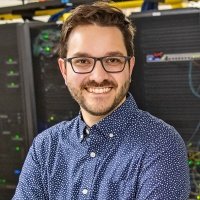
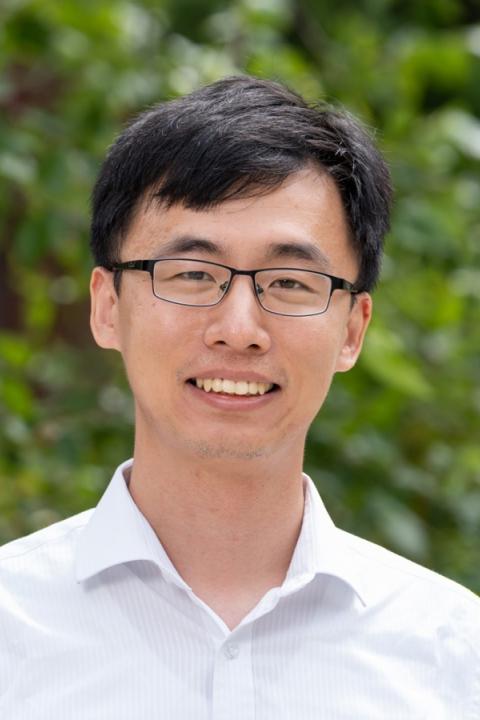
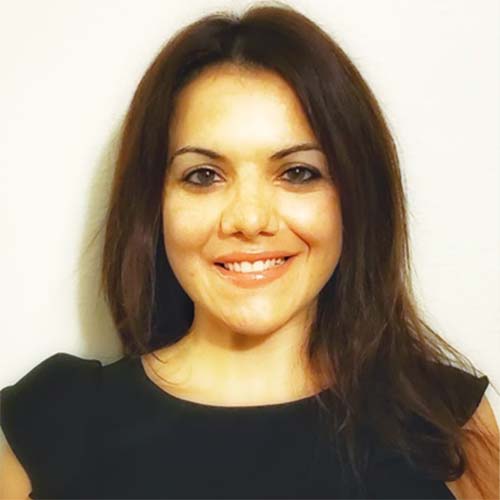
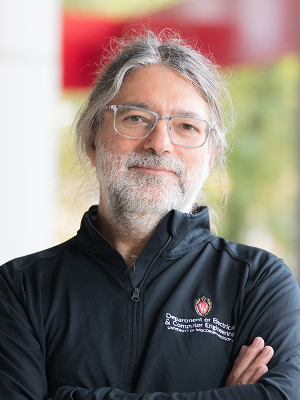
Jeffrey Paone is a Teaching Professor and Undergraduate Director in the Department of Computer Science at the Colorado School of Mines. He holds a Ph.D. and B.S. in Computer Science from the University of Notre Dame, an M.Eng. from the University of Colorado, and has experience in industry software development for state municipalities. His post-doctoral work at Oak Ridge National Laboratory focused on computer vision and biometrics. His research interests include computer vision, biometrics (face/iris recognition), camera calibration, computer graphics, augmented reality, and Android development. His work bridges theoretical research with practical applications in areas like naturalistic driving studies and forensic science. Paone’s publications span topics from camera calibration in automotive environments to differentiating identical twins via facial recognition. While no scientific awards are listed, his contributions to biometric systems and computer vision have been consistently applied in real-world scenarios. He advises no listed students but has contributed to undergraduate education through his director role. No grants or labs are explicitly mentioned, though his research collaborations likely involve interdisciplinary teams.
Dr. Charith Abhayaratne is a Senior Lecturer and EEE Foundation Year Tutor at the School of Electrical and Electronic Engineering, University of Sheffield. He leads the Communications Research Group and serves as the accreditation team lead for the school. With qualifications including a PhD from the University of Bath and a B.E. from the University of Adelaide, his research focuses on signal processing, machine learning, multimedia security, and video coding. His work explores blockchain for content protection, visual salience in robotics, human activity recognition, and advanced video coding techniques (HDR, UHD, 360° video). His research has been funded by Innovate UK, EPSRC, and industry partners. Education: B.E. (Electrical and Electronic Engineering), The University of Adelaide, Australia (1998) PhD (Electronic and Electrical Engineering), University of Bath, UK (2002) PGCertHE (Higher Education), University of Sheffield (2008) Fellow of the Higher Education Academy (FHEA), Member of the Institution of Engineering and Technology (MIET), Member of IEEE (MIEEE) Research Interests: His work spans multimedia security (data hiding, blockchain), computer vision (visual salience, object recognition), and video coding (HDR/UHD). Current projects include robotic vision applications, assisted living through activity recognition, and international standards development (JPEG/MPEG). He has contributed to scalable video standards and serves on technical committees for IEEE, EURASIP, and APSIPA. Awards & Service: Recipient of the Alain Bensoussan Fellowship (ERCIM, 2002) Associate Editor for IEEE Transactions on Image Processing, IEEE Access, and Elsevier JISA Member of EPSRC Peer Review College and British Standards Institution (BSI) Grants & Labs: Active grants from Innovate UK and EPSRC support projects in multimedia security and video coding. His lab leads interdisciplinary work in AI-driven visual analytics and secure media distribution frameworks.
Xiao Hui Tai is an Assistant Professor in the Department of Statistics at the University of California, Davis, within the College of Letters and Science. Her research sits at the intersection of statistics, data science, and social science, with a focus on global public health, conflict dynamics, and socioeconomic development. She leverages large-scale, granular data sources such as mobile phone records, satellite imagery, and geospatial datasets to study the impacts of violence, displacement, and environmental hazards. Her research interests include statistical and machine learning methods for causal inference, spatiotemporal modeling, and interdisciplinary applications in public policy and development economics. She is particularly interested in how data science can inform decision-making in humanitarian and low-resource settings. Her work bridges technical rigor with real-world impact, often involving collaboration across disciplines such as political science, economics, public health, and environmental science. The recent publications reflect a strong trend in using novel data sources to address pressing global challenges. Themes include conflict and education, air pollution and mortality, displacement due to violence, and illicit crop monitoring. Her methodological expertise spans record linkage, hierarchical clustering, natural language processing, and satellite-based environmental monitoring. These works demonstrate a consistent focus on both methodological innovation and policy-relevant applications. Hellman Fellow (2024–25) Tai advises students through her research and teaching, having developed and taught courses such as STA 35A (Introductory Statistical Data Science), STA 160 (Capstone in Data Science), and STA 250 (Data Science for International Development). She has mentored student-led research, including a project on air pollution in Chile that led to a publication in Communications Earth & Environment . Her current projects involve interdisciplinary collaborations funded by the L&S Unites Initiative, including automated text analysis of lobbying influence on global health policy. She is actively engaged in the academic community, presenting her work at major conferences such as the Households in Conflict Network, WNAR/IMS, and the Australasian Development Economics Workshop. Tai leads research that integrates data-intensive methods with social science questions, often in collaboration with labs and centers such as the UC Davis DataLab. She previously worked with the Global Policy Lab at UC Berkeley and CyLab at Carnegie Mellon University, maintaining connections to interdisciplinary research teams focused on data for development and security.
Róbert Tornai serves as an Associate Professor in the Department of Data Science and Visualization at the Faculty of Informatics, University of Debrecen, Hungary. His institutional affiliation encompasses active participation in the department's core mission of advancing data processing, visualization, and computational methodologies within Hungary's academic landscape. His primary research focuses on high-performance data transfer in supercomputing environments, parallel data processing using memory-safe Rust programming, and virtual collaboration system development. These interconnected domains emphasize optimizing data-intensive workflows while ensuring system security and user accessibility, reflecting contemporary challenges in distributed computing infrastructure. Analysis of his 15 most recent publications reveals dominant trends in high-speed connectionless networking protocols (2020-2025), where he investigates performance optimization, error detection, and encryption for file transfer systems. Significant secondary themes include biometric security applications (iris/voice recognition) and GPU-accelerated image processing techniques leveraging WebAssembly and Vulkan API, demonstrating technical versatility across networking, security, and visualization domains. His scholarly output consistently addresses practical implementation challenges in data transfer and secure systems, with recent work extending into educational technology applications of 3D printing. This trajectory indicates sustained engagement with evolving computational paradigms while maintaining focus on real-world system performance and security requirements.
Kevin A. Angstadt is an Assistant Professor in the Department of Mathematics, Computer Science, and Statistics at St. Lawrence University. His research bridges computer architecture, programming languages, and software engineering, focusing on programming support for emerging hardware technologies like FPGAs and custom accelerators. He teaches systems-oriented courses such as Computer Organization and Programming Languages. Ph.D., Computer Science and Engineering, University of Michigan (2020) MCS, Computer Science, University of Virginia (2016) B.S., Computer Science, Mathematics, and German Studies, St. Lawrence University (2014) His research explores automata processing for hardware acceleration, deterministic/non-deterministic finite automata for accelerators, and resiliency in autonomous vehicles. He develops tools like MNRL Network Representation Language, AutomataSynth, and RAPID Compiler for pattern-matching applications. Recent publications focus on hardware fault tolerance, autonomous system repair, and automata-based programming. Key conferences include ASPLOS, IEEE MICRO, and ICCPS. Awards include a $1.2M NSF grant (2022), TECHCON 2016 Best in Session, and Mac Krell Fellowship (2014–2017). He co-advises research projects and maintains the CS Grad Job and Interview Guide , a collaborative resource for academic career preparation. His lab works on open-source state machine ecosystems and hardware-software co-design frameworks.
Dongpeng Xu is an Associate Professor in the Department of Computer Science at the University of New Hampshire. His research focuses on cybersecurity, software security, and program analysis, with particular emphasis on binary code analysis, malware detection, and obfuscation techniques. He holds a Ph.D. in Information Sciences and Technology from Pennsylvania State University, an M.Eng. in Software Engineering from the University of Science and Technology, and a B.E. in Fashion Design and Engineering from Jilin University. Research Interests: Cybersecurity and software security Malware analysis and detection Program obfuscation and deobfuscation Formal methods in program analysis Approximate computing security Binary code simplification His publications highlight advancements in malware lineage inference, SMT solver optimization for obfuscated expressions, and hardware-software co-design for secure systems. Notable contributions include VAHunt for detecting repackaged Android malware and VMHunt for verifying obfuscated binary code. He has also explored security threats in approximate computing and developed tools like GraphMR for mathematical reasoning in cybersecurity contexts. Teaching includes courses such as CS 527 (Fundamentals of Cybersecurity) and multiple iterations of CS 727/827 (Software Security). His research has been supported by grants like the SaTC: CORE grant for deobfuscation techniques. Xu’s work bridges theoretical foundations with practical applications, addressing challenges in both software protection and malicious code analysis.
Dr. Nagender Aneja is a Collegiate Associate Professor in the Bradley Department of Electrical and Computer Engineering at Virginia Tech. Previously, he held roles as a Research Scholar at Purdue University, Assistant Professor at Universiti Brunei Darussalam, and Associate IP Lead at CPA Global. He earned his Ph.D. in Computer Engineering from J.C. Bose University of Science and Technology (2019) and M.E. from Delhi College of Engineering (2004). His research focuses on deep learning, medical imaging, system resiliency, and language models. He has published over 42 papers and holds three US patents in cybersecurity and NLP. Awards include QS Reimagine Education judging roles and the Brunei ICT Award (2016). Current research collaborations include Purdue University and Sandia National Laboratories on space computing resiliency. He is an editorial board member for Symmetry and ASEAN Journal on Science and Technology for Development . Notable contributions include the NL-Augmenter framework and AI-enabled IoT security systems.
Dr. Muneer Ahmad is an experienced academic with over 22 years of international experience in teaching, research, and academic leadership within Computer Science, specializing in Artificial Intelligence, Data Science, and Healthcare Informatics. He currently serves as Senior Lecturer and Program Lead for the MSc Data Science at the University of Roehampton , UK, having previously held teaching and leadership roles in South Korea, Malaysia, Saudi Arabia, and Pakistan. Education: PhD in AI & Data Science His research is multidisciplinary and application-driven, focusing on AI for healthcare, precision agriculture, and industrial IoT. He leads large, diverse student cohorts and collaborates with academic teams to deliver inclusive education. Recognized as a Senior Fellow of Advance HE (SFHEA) , he emphasizes curriculum innovation and pedagogy. With over 100 peer-reviewed publications and £200,000+ secured funding, his work spans AI in healthcare diagnostics Smart urbanization Genomic data processing Cybersecurity Educational technology Industrial 4.0 He has supervised over 50 PhD/Master's students and serves on editorial boards of journals like Information and Bioengineering . Recent projects include AI-driven crop yield estimation, cervical cancer diagnosis, and pandemic resilience technologies.
Emanuela Marasco is an Assistant Professor at George Mason University within the College of Engineering and Computing , affiliated with the Information Sciences and Technology (IST) Department , Center for Secure Information Systems (CSIS) , and Institute for Digital Innovation (IDIA) . She leads the CySBeR Lab and holds a tenure-track position. PhD: Computer and Automation Engineering, University of Naples Federico II (Italy), 2010 BSc/MSc: Computer Engineering, University of Naples Federico II (Italy), 2006 Her research focuses on Artificial Intelligence (AI) with applications in Computer Vision , Hyperspectral Imaging , Biometrics , and Cybersecurity . Key themes include: Designing AI algorithms for identity verification using pattern recognition and deep learning . Developing multi-factor authentication systems, including a patented biometric-based MFA technology . Advancing hyperspectral imaging for biochemical analysis in security contexts. Her recent publications explore fingerprint anti-spoofing , demographic bias mitigation , and AI integration in virtual reality and military decision-making . She has received the Mason Innovation Award (2023, 2025) and IDIA P3 Faculty Fellowship (2023) . NSF-funded projects: "Sweaty Digits" ($200,000, 2023-2025) and "Hyperspectral Sweat Metabolite Detection" (2020). She has previously held postdoctoral positions at the University of North Carolina at Charlotte and West Virginia University , contributing to pattern recognition and biometric interoperability research.
James Mantell is an Associate Professor of Psychology and Department Chair at St. Mary's College of Maryland. He leads the Perception Action Lab (PAL), focusing on research in data science pedagogy, music cognition, climate change behaviors, and perception. His NSF-funded project with Dr. Aileen Bailey explores modernized data science instruction in psychology curricula. He holds an Aldom-Plansoen Honors College Professorship (2024) and has mentored numerous student researchers. Education: Ph.D. in Cognitive Psychology (2013) and M.A. in General Psychology (2011) from University at Buffalo, SUNY; B.A. in Psychology & Philosophy (2005) from Millersville University. His courses emphasize research methods, statistics, and scientific writing. Research highlights include studies on music memory, vocal imitation, and climate change actions. Recent work includes a Psychonomic Society conference presentation on ruffled music paradigms (2024) and a published study on climate change behavior interventions. He actively promotes diversity in education and has been recognized for his radical educator values. Labs/Teams: PAL investigates music perception, data science pedagogy, and climate psychology. Collaborators include students like Elizabeth Poissant (forensic psychology) and Raven Davis (behavioral therapy). Past lab members have presented at national conferences and published in journals like Musicae Scientiae .
Professor Graham Brooks is a faculty member at the Institute for Policing Studies at the University of West London. He specializes in corruption , anti-corruption , and fraud in international contexts , particularly focusing on healthcare, insurance, and sports sectors. His roles include Head of Research and Ethics and Knowledge Exchange and Course Leader for MSc Policing . Research Interests Primary: Healthcare Fraud (corruption, error, waste) Secondary: Insurance Fraud (e.g., 'cash-for-crash' schemes) Additional: Internet Fraud , Money Laundering , and Sports Corruption Recent Publications 2024 : Healthcare Corruption (book on causes, costs, and criminal justice responses) 2023 : Forensic Interviews with Autistic Adults (cross-cultural research) 2022 : Private Healthcare Insurance Fraud (systematic analysis) Professional Engagement Plenary speaker at Cabinet Counter Fraud Conference 2012 Keynote speaker at EHFCN 2015 (The Hague) and Athens 2018 Contributor to RUSI Workshops on AML and online fraud
Christian Zwiener is a Professor (W3) for Environmental Analytical Chemistry at the Center for Applied Geoscience, University of Tübingen since 2009. He holds a Habilitation and Venia Legendi in Water Chemistry (KIT, 2004) and a Ph.D. in Water Chemistry (Technical University of Munich, 1995). His research focuses on PFAS analysis , non-target screening , and environmental fate of contaminants using high-resolution mass spectrometry . Education: Habilitation in Water Chemistry, KIT (2004) Ph.D. in Water Chemistry, Technical University of Munich (1995) Diploma in Analytical and Environmental Chemistry, University of Ulm (1989) Research Trends: PFAS contamination in soils , human hair , and textiles Non-target screening workflows for novel contaminants and transformation products Environmental fate of pharmaceuticals and biocides Development of HRMS data mining tools (e.g., FindPFΔS, PFΔScreen) Scientific Awards: Level II Scientific and Technological Achievement Award (STAA) , EPA (2008) Research Award , Water Chemical Society, GDCh (2001) Professional Service: Chairman, Journal Vom Wasser (2016–present) Delegate, EUChemS Division of Chemistry & Environment (2020–present) Member of Water Research Perspectives Commission (2018–present) Advisory Board, VEGAS, University of Stuttgart (2014–present) His work bridges analytical chemistry , environmental toxicology , and public health , with key contributions to PFAS contamination and CKDu groundwater links . He has developed standardized methods for PFAS analysis and electrochemical oxidation protocols for contaminant degradation.
Patrick Lubinski is an Associate Professor and Department Chair at Central Washington University (CWU), where he has taught since 2000. His research focuses on zooarchaeology, taphonomy, and cultural resource management, with extensive fieldwork in North America and internationally. He has authored over 80 archaeological reports and numerous peer-reviewed articles, emphasizing faunal analysis and prehistoric subsistence strategies. His teaching highlights include courses in general anthropology, zooarchaeology, and cultural resource management. Awards include the Distinguished Teaching Award (2017), Faculty Mentor Award (2007), and Excellence in Teaching Award (2005). Lubinski leads the CWU Zooarchaeology Laboratory and oversees projects like the Wenas Creek Mammoth Site investigation, which explores Pleistocene ecology and faunal remains. His research spans topics such as bone taphonomy, paleohydrology, and morphological analyses of vertebrate remains. He collaborates on interdisciplinary projects, including studies of fish remains in Paisley Caves (Oregon) and craniometric comparisons in Andean populations. Current initiatives include quantifying fish size estimates and artiodactyl mortality profiles. Lubinski advises students on zooarchaeological methods and fieldwork. His contributions to archaeology include advancing faunal identification protocols and promoting rigorous methodologies in cultural resource management.
William Sethares is a Professor in the Department of Electrical and Computer Engineering at the University of Wisconsin-Madison College of Engineering. His research combines system identification, adaptive algorithms, and signal processing with unique applications in musical acoustics and perception-based audio systems. Primary Affiliation: Electrical and Computer Engineering Research Interests: Adaptive learning systems, acoustical signal processing, musical scale modeling, rhythmic structure analysis, and computational music composition His recent publications focus on multimodal data analysis, medical imaging applications, and cultural music studies. Scientific contributions include innovative approaches to speech emotion recognition, historical paper analysis, and inharmonic musical instrument modeling. Teaching responsibilities include courses like ECE401: Electroacoustic Engineering and ECE415: System Modeling and Identification. As a musician, he explores algorithmic composition and alternative tuning systems, authoring books like "Tuning Timbre Spectrum Scale" and "Rhythm and Transforms". Additional creative endeavors encompass inventing the Fibonacci Checkers board game, developing interactive Fourier Transform educational materials, and pioneering computational tools for art authentication through watermark analysis in Leonardo da Vinci's manuscripts.
Arashdeep Kaur is a Senior Lecturer in the Department of Computer Science at New Jersey Institute of Technology (NJIT). She holds a Ph.D. in Computer Science and Engineering from Amity University (2017), an M.Tech. from Punjab Technical University (2008), and a B.Tech. (2006) in the same field. Her research focuses on artificial intelligence, audio watermarking, deep learning applications, environmental science, and IoT-based healthcare solutions. She has contributed to crop freshness assessment using deep learning, ethanol production optimization from food waste, and heavy metal adsorption using nanotechnology. Dr. Kaur’s work spans over 20 years, with notable contributions in audio watermarking algorithms for security and robustness, including methods leveraging multi-resolution decomposition and neural networks. Her environmental projects address waste valorization and sustainable energy solutions. She actively teaches courses in AI and computer science fundamentals at NJIT. Her publications highlight interdisciplinary applications of CS in agriculture, cybersecurity, and environmental engineering. While no scientific awards are explicitly mentioned, her prolific research output indicates impactful contributions to multiple fields. She has advised no listed students, but her courses mentor future computer science professionals. Labs or collaborative teams are not detailed in the provided information, but her work intersects with NJIT’s strategic research areas in technology and sustainability.