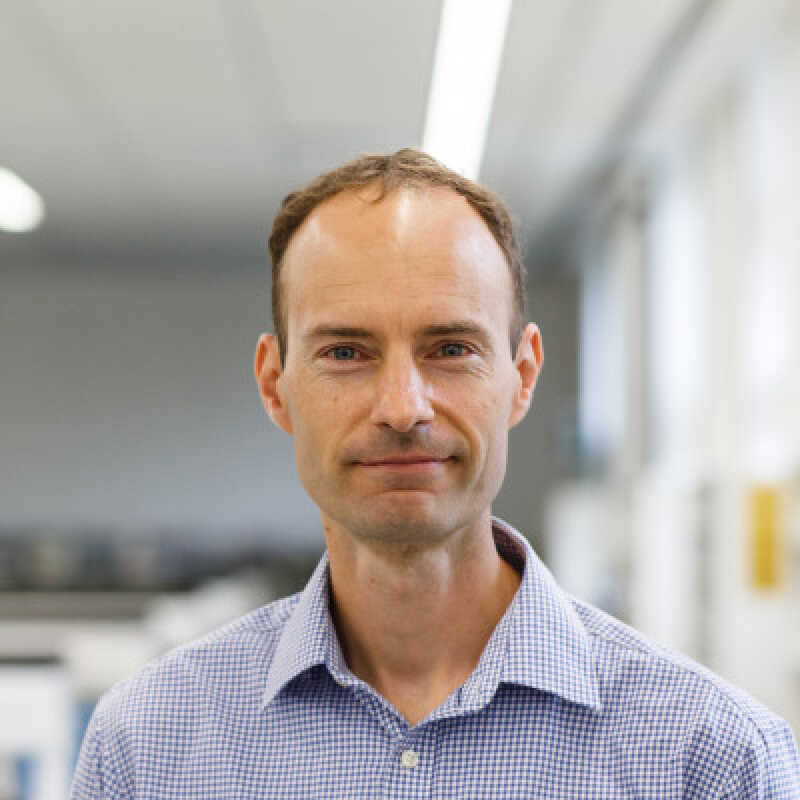
Charless C. Fowlkes is a Professor in the Department of Computer Science at the University of California, Irvine (UCI), and a member of the UCI Vision Group. His research focuses on computational vision, integrating visual recognition with 3D scene understanding and developing tools for biological image analysis. UCI Chancellor's Fellow (2019-2022) NSF CAREER Award recipient (2013) Helmholtz Prize winner (2015) Research Interests His work spans computational vision, image understanding, 3D scene reconstruction, and machine learning applications in biological and forensic domains. He develops methods for automated pollen classification, cardiac tissue analysis, and forensic shoeprint matching. Recent Publications His recent work includes 3D scene reconstruction with epipolar transformers, forensic shoeprint analysis, and image inpainting techniques. These show trends in integrating geometric understanding with deep learning. Scientific Awards Awarded the Marr Prize (2009), Helmholtz Prize (2015), and NSF CAREER Award (2013), he has received recognition for both theoretical and applied contributions to computer vision. Teaching & Advising He has taught graduate and undergraduate courses in computer vision since 2008 and advised numerous PhD, MS, and BS students who now work at institutions like Google, Apple, and CMU. Collaborations He collaborates with labs at UIUC (Punyasena Lab), Harvard (DePace Lab), and UCI (Cinquin Lab, Khine Lab) for biological applications of computer vision.
Prof. Dr. Antje Wilton is a W2 Professor for English Linguistics with a Focus on Sociolinguistics at the Institute of English Philology (WE6) within the Department of Philosophy and Humanities at Freie Universität Berlin. She is a leading scholar in sociolinguistics, English as a Lingua Franca (ELF), and discourse analysis, with a focus on media, sports, and forensic linguistics. Education: Magistra Artium in English, German, and Sociology (1990-1997) PhD: English and Applied Linguistics, University of Erfurt (2006) Her research spans sociolinguistics , multimodal interaction , discourse analysis , and cross-cultural communication . Recent work examines language use in sports interviews, media discourse, and forensic settings. She has co-edited volumes on organizational language and European linguistic dynamics. Key article trends include analyzing interactional strategies in sports interviews, ELF usage in media, and discourse patterns in public security debates. She teaches courses on sociolinguistics, language and space, and global English.
Assoc. Prof. Dr. Yıltan Bitirim is a faculty member at the Computer Engineering Department of Eastern Mediterranean University in North Cyprus. With over two decades of academic experience, he has served in various roles including Vice Chair (2014-2022), Academic Affairs Coordinator (2025-), and committee member for ABET assessment, curriculum development, and faculty recruitment. Current academic rank: Associate Professor Active administrative roles: Senate Member (2023-), Information Technology Commission Member (2023-) Professional memberships: ACM, IEEE Senior Member, Cyprus Turkish Chamber of Computer Engineers Research Interests focus on four primary areas: Information Retrieval Systems – evaluating search engine effectiveness and reverse image search performance Machine Learning – applied to emotion classification, gender recognition, and medical diagnosis Data Mining – used in Turkish word-stemming analysis and user behavior studies Biometrics – specializing in hand/wrist/palm vein recognition systems and voice-based identification Publications demonstrate consistent contributions across disciplines, with recent works (2023-2025) emphasizing: Deep learning applications in biometric authentication Advanced emotion recognition systems Medical AI for diabetes management and retinopathy diagnosis Biometric spoof detection mechanisms Turkish language processing challenges Recommendation system innovations Awards & Recognition : Research Incentive Awards (2020, 2021) Best Paper Award at ICIW 2007 IEEE Senior Member status As an educator, he has supervised numerous thesis committees and taught foundational courses in computer engineering, including CMPE 112 and CMPE 342. His certifications (MCTS, MCITP) reflect technical expertise in Microsoft technologies.
Dr. Stuart Gibson is a Senior Lecturer in Physics and Astronomy at the School of Physics and Astronomy, University of Kent. He is the co-inventor of the EFIT-V facial composite system, widely adopted by UK police constabularies and international agencies. His academic contributions span interdisciplinary research bridging forensic science, computational methods, and machine learning. Research Interests: Forensic applications of digital image processing Machine learning in natural sciences Facial composites for criminal investigations Medical image analysis Computer vision with security applications Teaching: Stuart teaches numerical and computational methods, mathematical techniques for physical sciences, and digital forensics. His pedagogical focus integrates theoretical frameworks with practical forensic and computational tools. Publications & Collaborations: Over his career, Dr. Gibson has published extensively in journals such as Pattern Recognition Letters , ACS Nano , and Utilities Policy . His work includes innovations in evolutionary algorithms, facial composite systems, and applications of machine learning to muon spectroscopy and Raman spectroscopy.
Fabrizio Falchi is a researcher at the Artificial Intelligence for Media and Humanities (AIMH) Lab of the Institute of Information Science and Technologies (ISTI) within Italy's National Research Council (CNR). He also maintains an associate position at the Biorobotics Institute of Scuola Superiore Sant'Anna. His work focuses on developing advanced multimedia retrieval systems, with the VISIONE platform being his most notable contribution, which has won international competitions including the Video Browser Showdown in 2024 and placed second in 2023. Falchi's educational background includes: Ph.D. in Information Engineering from University of Pisa (Italy) Ph.D. in Informatics from Faculty of Informatics of Masaryk University of Brno (Czech Republic) M.B.A. from Scuola Superiore Sant'Anna in Pisa His research spans deep learning, convolutional neural networks, deep features extraction, similarity search algorithms, distributed indexing systems, multimedia information retrieval, computer vision applications, and peer-to-peer systems. Falchi has made significant contributions to fine-grained visual understanding, cross-modal retrieval (particularly image-text matching), and robustness of deep learning systems against adversarial attacks. His work demonstrates a strong focus on practical applications of these technologies, particularly in video retrieval systems and safety monitoring solutions. Analysis of Falchi's recent publications reveals a strong focus on video and image retrieval systems, with the VISIONE platform being central to his work. His research shows increasing emphasis on fine-grained understanding in computer vision, cross-modal retrieval, and addressing practical challenges like cross-resolution face recognition. Recent work demonstrates innovation in making these systems more efficient through techniques like knowledge distillation (ALADIN) and leveraging virtual worlds for training data. His publications consistently bridge theoretical advances with practical applications in surveillance, safety monitoring, and multimedia search. Falchi's work has received significant recognition: Best paper award at CBMI 2024 for 'Is ClLIP the main roadblock for fine-grained open-world perception?' VISIONE 2024 won the Video Browser Showdown competition in Amsterdam VISIONE obtained second place at Video Browser Showdown 2023 in Bergen Best Paper Award for 'Learning Safety Equipment Detection using Virtual Worlds' at CBMI 2019 Falchi collaborates extensively with researchers at ISTI-CNR, particularly within the AIMH Lab. His work on VISIONE involves collaboration with Giuseppe Amato, Paolo Bolettieri, Fabio Carrara, Claudio Gennaro, Nicola Messina, Lucia Vadicamo, and Claudio Vairo. As co-chair of Ital-IA 2023, the 3rd National Conference on Artificial Intelligence, he plays an active role in the academic community. He is a member of ACM (since 2012), the Computer Vision Foundation, the Italian Association for Computer Vision Pattern Recognition and Machine Learning (CVPL), and the CINI Lab on Artificial Intelligence and Intelligent Systems. Falchi is a key member of the Artificial Intelligence for Media and Humanities (AIMH) Lab at ISTI-CNR, where he leads research on video retrieval systems. The lab has developed the award-winning VISIONE platform, which combines multiple scientific results in content-based video retrieval. His team focuses on developing systems that enable users to search for target videos using textual prompts, drawing objects and colors, or images as query examples. The lab's work demonstrates strong interdisciplinary collaboration, bridging computer science with practical applications in media, safety monitoring, and urban environments.
Willem Jonker is a Full Professor at the Digital Society Institute, specializing in Semantics, Cybersecurity & Services. His research focuses on encryption schemes, access control, and privacy-preserving technologies. He has contributed to over 120 publications, with recent work addressing CVE-to-CWE mapping, anomaly detection in network traffic, and functional encryption systems. His expertise aligns with UN Sustainable Development Goals related to secure digital systems and privacy. Jonker has supervised 10 students and actively participates in academic conferences, presenting on topics like secure data management and cryptographic protocols. Research interests include cryptographic protocols, secure data management, and cybersecurity solutions. Notable projects involve developing methods for detecting covert channels, enhancing data privacy in healthcare, and improving secure search over encrypted data. He has also contributed to standards in digital rights management and forensic image recognition.
Adrian Raine is a Professor at the University of Pennsylvania, holding joint appointments in the Departments of Criminology, Psychiatry, and Psychology. He is renowned for pioneering Neurocriminology, a discipline integrating neuroscience with criminological inquiry. His research focuses on biological underpinnings of antisocial behavior, including psychopathy, aggression, and violence. Raine directs the Mauritius Child Health Project, a 50+ year longitudinal study examining child development and health impacts on antisocial outcomes. He earned his B.A., M.A., and D.Phil. in Experimental Psychology from Oxford University and York University. His work employs advanced techniques like structural/functional brain imaging, neuroendocrinology, and transcranial stimulation. Key areas include nutritional interventions (e.g., omega-3 and vitamin D supplementation), autonomic nervous system functioning, and the biopsychosocial model of criminality. Raine's research highlights biological risk factors like low resting heart rate, diminished empathy, and brain abnormalities. He advocates for neuroscience-informed penal policies, emphasizing prevention over punishment. Recent studies explore bidirectional relationships between sleep quality and child behavior, as well as cross-cultural psychopathology patterns. Lab Focus: Biological interventions, antisocial behavior, and neurocriminology Key Projects: Mauritius Child Health Project, ABCD Study collaborations Techniques: fMRI, EEG, nutritional trials, behavioral assessments He develops validated clinical tools like the Schizotypal Personality Questionnaire (SPQ), Reactive-Proactive Aggression Questionnaire (RPQ), and Selfishness Scale (SQ). His work bridges basic science and practical applications in criminal justice and mental health systems.
Niamh Nic Daeid is Professor of Forensic Science and Director of the Leverhulme Research Centre for Forensic Science (LRCFS) at the University of Dundee, leading the £15m Just Tech Institute for Innovation. She holds fellowships with the Royal Society of Edinburgh, Royal Society of Chemistry, and multiple forensic science bodies while serving on committees for INTERPOL, the International Criminal Court, and the United Nations. Her research focuses on forensic chemistry applications in prison drug analysis, explosives detection, and fire investigation. Recent work emphasizes science communication, particularly using comics to improve juror comprehension of forensic testimony. She leads major projects including Clarus (bias prevention in digital forensics) and the Smart Digital Forensic Advisor initiative. Nic Daeid's publications span forensic methodology development, from quantum dots for fingerprint detection to machine learning for footwear impression analysis. Her team's 2025 research includes prison drug studies using seized Scottish evidence and advanced cartridge case imaging techniques. European Network of Forensic Science Institutes Distinguished Forensic Scientist award (2018) Royal Society of Edinburgh Senior Medal for Public Engagement Peter Ganci Award for fire investigation services Gold Engage Watermark for Public Engagement (2019) Best Short Paper Award, International Conference on eXtended Reality (2022) She supervises 13 research students and early-career academics across forensic chemistry, digital forensics, and science communication projects. Current grants include the Leverhulme Trust's £10m LRCFS (2016-2026), UK government's Tay Cities Regional Deal funding, and Dundee City Council's VR/5G initiative. Her team maintains active collaborations with Scottish prisons, international forensic networks, and law enforcement agencies.
Giulia Boato is an Associate Professor at the University of Trento’s Department of Information Engineering and Computer Science (DISI). She teaches courses in Probability and Multimedia Data Security. Her expertise spans Cyber Security, Digital Forensics, and Multimedia Analysis, focusing on image and signal processing for data protection, forensics, and anti-forensics. She collaborates internationally with institutions like Tampere University of Technology and Dartmouth College, co-advising PhD students and contributing to European projects like LIVINGKNOWLEDGE and GLOCAL. Education: PhD in Information and Communication Technology (2005), M.Sc. in Mathematics (2002), Scientific Lyceum (1998) with bilingual Italian-German certification. Past roles include Assistant Professor at DISI (2006–2018) and visiting researcher at the University of Vigo (2006) and University of Innsbruck (2018). Research interests include multimedia data protection, image forensics (tampering detection, computer vs. natural data discrimination), and intelligent data management. She leads projects on social media forensics, event-based retrieval, and synthetic media detection. Awards include Best Paper at IEEE WIFS 2012 and Top 10% Paper at MMSP 2012. Professional contributions include roles as co-chair of workshops, Technical Program Committee member for ICIP and ICC, and reviewer for journals like IEEE Transactions on Information Forensics and Security. She has advised PhD theses and contributed to datasets like TrueFace and WILD for synthetic media analysis.
Suhad Al-Khafaji is a Research Fellow in Hyperspectral Spectroscopy at Griffith University's School of Environment and Science (Chemistry and Forensic Science). Their research focuses on hyperspectral imaging, machine learning, and computer vision applications in agriculture, environmental monitoring, and material analysis. Al-Khafaji is affiliated with the Australian Rivers Institute and previously the Institute for Integrated and Intelligent Systems (2015-2020). They hold an ORCID identifier (0000-0002-7986-4308) and are located at N44 1.26, Nathan Campus. Research Interests: Hyperspectral imaging for agricultural quality assessment (e.g., macadamia moisture analysis) Spectral-spatial boundary detection algorithms in multispectral datasets Machine learning integration with computer vision techniques Nanotechnology applications in imaging systems Cognitive psychology aspects of pattern recognition Recent Work Trends: Recent articles emphasize hyperspectral image processing innovations, particularly boundary detection and feature extraction for agricultural and environmental applications. Their 2024 work applies machine vision to macadamia quality prediction, while earlier contributions (e.g., 2022) refine spectral-spatial analysis methodologies. Labs/Teams: Active member of Griffith's Australian Rivers Institute and former affiliate of the Institute for Integrated and Intelligent Systems.
Fouad Khelifi is an Associate Professor in the Department of Computer and Information Sciences at Northumbria University. His research focuses on computer vision, machine learning, image/video processing, biometrics, multimedia forensics, and medical image analysis. He obtained his PhD in Computing Science from Queen's University Belfast (2007) and held prior research roles at the University of Bradford (2007–2009) before joining Northumbria in 2010. He supervises PhD students in cybersecurity applications and palm-vein recognition systems. Education: PhD in Computing Science, Queen's University Belfast (2004–2007) Fellow of the Higher Education Academy (FHEA, 2014) Research Interests: Khelifi’s work spans advanced deep learning techniques for medical imaging (e.g., cancer detection, retinal disease analysis), source camera identification in digital forensics, and biometric authentication systems. He develops novel algorithms for feature extraction, fusion networks, and transformer-based models in healthcare and multimedia security. Advising: Supervising Egallekanda Perera (PhD, 2019–2025): Efficient Keypoint-based Palm-vein Recognition Co-supervising Ikechukwu Ikpeama (PhD, 2024–): Cybersecurity for Industrial Control Systems Labs/Teams: Active in Northumbria’s Digital Media and Systems Research groups, contributing to interdisciplinary projects in AI-driven medical imaging and multimedia forensics.
Arjun Mukherjee is a Lecturer at the Department of Computer Science , University of Houston , where he teaches courses in Machine Learning , Data Mining , Natural Language Processing , and Data Structures . His research focuses on Bayesian Inference , Data Mining , Natural Language Processing , Sentiment Analysis , Opinion Spam , and Web Mining , with a strong emphasis on deception detection and social media analysis. His recent publications explore advanced techniques in LLM-generated content detection synthetic data applications cross-domain deception modeling temporal user behavior analysis , reflecting his commitment to addressing modern challenges in digital content authenticity and machine learning robustness. Dr. Mukherjee has developed educational materials for graduate-level courses, including a well-structured Machine Learning course (COSC 6342) covering probabilistic inference, supervised/unsupervised learning, and neural networks. He earned his Ph.D. from the University of Illinois at Chicago in 2014, with a thesis titled Probabilistic Models for Fine-Grained Opinion Mining: Algorithms and Applications .
Dr. Aliyu Abubakar is a Lecturer in Computer Science at Teesside University's Department of Computing & Games. He holds a PhD in Computer Science from the University of Bradford (2023), an M.Sc. in Cyber Security (2015), and a B.Sc. in Computer Science from Gombe State University (2012). Prior to his current role, he was a Postdoctoral Research Associate at the University of Liverpool (2022–2024). His research focuses on deep learning applications in medical imaging, cybersecurity, and pattern recognition. He is a member of the Nigeria Computer Society (NCS) and the Cyber Security Experts Association of Nigeria (CSEAN). Education: B.Sc. Computer Science, Gombe State University (2008–2012) M.Sc. Cyber Security, University of Bradford (2014–2015) Ph.D. Computer Science, University of Bradford (2018–2022) Research Interests: Abubakar’s work spans medical image analysis (e.g., burns assessment, kidney transplantation viability, malaria detection), cybersecurity (deepfake detection, P2P network security), and electrical engineering (partial discharge analysis). His deep learning models address challenges in healthcare diagnostics and industrial safety. Recent studies include human deception detection via facial image comparison and automated liver viability assessment using pre-trained neural networks. Key Trends in Publications: His 2020–2024 articles emphasize cross-disciplinary applications of deep learning, particularly in healthcare and electrical systems. Collaborations span institutions like the University of Liverpool and NHS clinical partners, reflecting his commitment to translational research. Awards & Grants: While no specific awards are listed, his high citation counts (e.g., 32 citations for malaria detection work) highlight impactful contributions. Grants and funding details are not disclosed in the provided texts. Labs & Teams: Active collaborations with multidisciplinary teams in medical imaging and cybersecurity, as evidenced by co-authored papers with clinicians and electrical engineers.
Robin Mejia is an Assistant Teaching Professor in the Department of Biostatistics at the University of Washington School of Public Health . She transitioned from a decade-long career as a science journalist, covering health and forensic science for outlets like Science , Washington Post , and CNN , to academic work. Her research focuses on health disparities, forensic statistics, and criminal justice reform. She co-directs the NIST Center of Excellence on forensic evidence and led the COVID-19 Trends & Impact Survey , collecting ~15,000 daily responses during the pandemic. She holds a PhD in Biostatistics from UC Berkeley (2016) and an MPH from UC Berkeley (2012). Education: PhD in Biostatistics, UC Berkeley, 2016 MPH in Epidemiology & Biostatistics, UC Berkeley, 2012 BA in Biology, UC Santa Cruz, 1997 Research Focus: Her work bridges statistical rigor and societal impact, including: Quantifying biases in forensic evidence interpretation Addressing health inequities through data-driven interventions Evaluating criminal justice policies using statistical frameworks Projects: Co-director, Center for Statistics and Applications in Forensic Evidence Principal investigator, COVID-19 Trends & Impact Survey (2020–2022) Teaching & Advocacy: Known for integrating communication skills into technical education, she previously taught at Carnegie Mellon University. Her 2005 CNN documentary on forensic science errors won awards, highlighting the intersection of data and justice.
Danica M Ommen is an Associate Professor at Iowa State University, specializing in forensic statistics and computational methodologies. Her research bridges machine learning, handwriting analysis, and source identification frameworks. Education: Ph.D. in Computational Science and Statistics (2017), M.S. in Mathematics (2014), B.S. in Mathematics (2012), all from South Dakota State University. Affiliations: Chair of the OSAC Statistics Task Group; Vice-Chair of the ASA Advisory Committee on Forensic Science. Her work focuses on statistical modeling for forensic evidence , particularly in handwriting identification, aluminum powder analysis, and digital device forensics. Recent publications explore interpretable deep learning, synthetic data anchoring, and ensemble methods for likelihood ratios. The 15 most recent articles (2023–2025) span forensic machine learning, handwriting kinematics, multi-camera smartphone identification, and Bayesian frameworks. Keywords include Forensic Science , Machine Learning , and Computational Statistics , with subfields like Score-Based Likelihood Ratios and Smartphone Forensics .