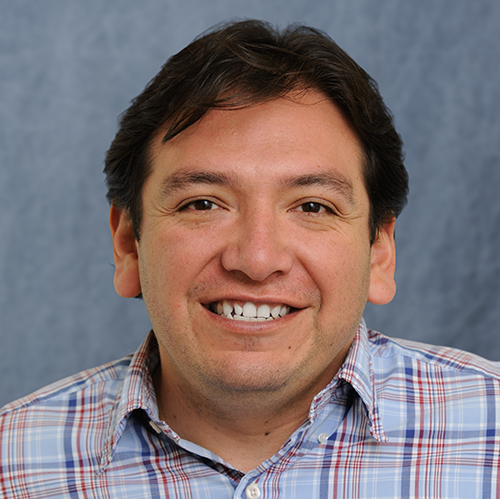
Kimberley Clow is Professor of Forensic Psychology at Ontario Tech University, holding a PhD in Social Psychology from the University of Western Ontario. She maintains affiliations with the American Psychological-Law Society, American Society of Criminology, and Society for the Psychological Study of Social Issues. Her research examines wrongful convictions, stigma formation, and social perceptions within criminal justice systems. Core investigations include: Racial disparities in exoneree treatment Housing discrimination against wrongfully convicted Intervention strategies for attitude change Dr. Clow has supervised over 20 graduate students and authored numerous peer-reviewed articles exploring the societal reintegration challenges facing exonerees. Her work employs mixed-methods approaches including experimental designs, qualitative interviews, and content analysis.
Professor Andrea Crisanti is a leading academic in Molecular Parasitology at Imperial College London's Department of Life Sciences (Faculty of Natural Sciences). His research focuses on developing gene drive technologies to combat malaria by genetically modifying mosquitoes. His lab demonstrated CRISPR/Cas9-driven population suppression via targeting the doublesex gene, which disrupts female development and could eliminate malaria vectors. Recently, he coordinated the groundbreaking Vo' Euganeo study on early SARS-CoV-2 outbreak management, informing national and international pandemic strategies. Affiliations: Imperial College Network of Excellence in Malaria, Infection and Immunity, Vaccine Research Network Led the development of synthetic biology tools for vector control and agricultural pest management Co-developed Y chromosome-linked gene drives and anti-CRISPR safeguards Contributed to WHO-endorsed guidelines for mosquito containment facilities Research interests span molecular mechanisms of mosquito reproduction, gene drive evolution, and translational applications of synthetic biology in public health. His lab also engages in community outreach through exhibitions and school programs. Notable collaborations include: Target Malaria Consortium Italian Veneto Regional Health Task Force European Infravec2 initiative Laboratory infrastructure includes advanced molecular biology facilities and large-scale mosquito testing environments. Funded by major grants from Wellcome Trust, EU Horizon programs, and philanthropic organizations.
Karen Sokal-Gutierrez is a Clinical Professor at the University of California, Berkeley School of Public Health and Co-Director of the Interdisciplinary MPH program. She holds faculty roles in the UC Berkeley-UCSF Joint Medical Program and is affiliated with the Health Research for Action Center. Her expertise spans pediatrics, preventive medicine, and public health, with a focus on reducing health disparities in early childhood health and development globally. Education: BS from Yale University, MD from UCSF, and MPH from UC Berkeley. She is a Fellow of the American Academy of Pediatrics. Research & Advocacy Her work prioritizes interventions to improve early childhood nutrition, oral health, and safety. She has led mixed-methods studies in El Salvador, Ecuador, Vietnam, Nepal, and India over 40 years of global health work. Key research interests include maternal-child health, parenting education, and health education for low-literacy populations. Key Contributions Directed long-term studies on early childhood nutrition and oral health in low-resource settings Developed oral health literacy toolkits and community-based interventions Explored socio-economic factors affecting healthcare access during the pandemic Awards Fellow of the American Academy of Pediatrics Teaching & Mentorship Teaches courses including the Interdisciplinary MPH Program Seminar and Undergraduate Research Apprenticeship Program. Her mentorship focuses on training future public health leaders through applied research experiences. Notable Projects El Salvador Oral Health & Nutrition Project India Smiles Initiative Oral Health Literacy Toolkit Implementation in California
Martin Corley is a Professor of Speech, Language, and Cognition and Head of Psychology at the University of Edinburgh's School of Philosophy, Psychology and Language Sciences. He holds a full-time academic position and has been affiliated with the University of Edinburgh since 1995, after completing his PhD at the University of Exeter. His research focuses on speech production and comprehension, particularly the role of disfluencies (e.g., 'um,' 'er,' silent pauses) in communication, employing methods like eye-tracking, EEG, and ultrasound imaging. Corley teaches courses such as the MSc in Univariate Statistics and Methodology using R. He currently supervises PhD students Wei Li (Lead), Esperanza Badaya (Lead), and Nora Wolf (Secondary). His work has led to over 50 publications, including studies on scalar quantifier interpretation, deception detection, and the cognitive processing of non-literal language. He is actively involved in academic recruitment, recently advertising a teaching-focused Lecturer position in Psychology. Corley’s research interests span psycholinguistics, cognitive science, and neurolinguistics, with a focus on real-time language processing and social reasoning. He collaborates internationally and maintains a Google Scholar profile and personal website (martincorley.org). His Erdős number is 4, indicating academic collaboration proximity to Paul Erdős.
Tom Brown is a Professor of Nucleic Acid Chemistry at the University of Oxford's Department of Chemistry. His research focuses on designing and synthesizing chemically modified DNA and RNA for diagnostic and therapeutic applications, including CRISPR systems for genome editing. He has developed Scorpion primers and HyBeacons, used in personalized medicine and rapid forensic analysis. His work has led to the creation of biotech companies like ATDBio and Primer Design, contributing significantly to COVID-19 diagnostics. Research Interests: Brown's group explores nucleic acid modifications, DNA structure-function relationships, and the application of click chemistry for gene assembly. They use techniques like X-ray crystallography and NMR to study DNA interactions with repair enzymes and mutagenic lesions. Key Contributions: Contributions include rapid mutation identification methods, oligonucleotide delivery platforms, and spherical nucleic acids for stem cell isolation. His work bridges chemistry and medicine, with applications in diagnostics, therapeutics, and biotechnology. Awards: While no specific awards are listed, his impactful research has driven industry collaboration and innovation in nucleic acid-based technologies. Labs/Teams: Leads the Nucleic Acids Research Group and the Brown Group, focusing on interdisciplinary projects in chemistry, biology, and medicine.
Prof Kathryn M. Rudy FBA FRSE is the Bishop Wardlaw Professor at the School of Art History, University of St Andrews. She is a Fellow of both the Royal Society of Edinburgh and the British Academy, and has received prestigious awards such as the Sir Walter Scott Medal (2019) and the APEX award (2023). Education: She earned her Ph.D. in Art History from Columbia University and a Licentiate in Mediaeval Studies from the University of Toronto. Previous roles included research, teaching, and curatorial positions across the US, UK, Canada, The Netherlands, and Belgium. Research Interests: Her work focuses on the reception and original functions of medieval manuscripts, particularly from the Low Countries. She pioneered densitometer analysis to study reader interaction with manuscripts and currently explores tracking user responses using technological methods. Key topics include pilgrimage studies, forensic approaches to material culture, early printing, craft traditions, and intangible cultural heritage. She collaborates with scientists like Prof Sue Healy and Dr Emily Doolittle to investigate creativity in humans and animals. Grants & Awards: She has secured significant grants from the British Academy, Leverhulme Trust, Getty Research Institute, and others. Notable awards include the Sir Walter Scott Medal (Scotland’s top arts/humanities prize) and fellowships at the Netherlands Institute for Advanced Study and Paul Mellon Senior Fellowships. Teaching: In 2024-25, she teaches courses AH1001, AH1003, AH1901, AH5164, AH6165, and the SAIMS MLitt module. She occasionally supervises postgraduate researchers. Labs & Collaborations: Her research integrates interdisciplinary methods through affiliations like the Institute of Medieval Studies. She actively collaborates internationally, contributing to exhibitions such as 'Bewogen middeleeuwen' at the Rijksmuseum Twenthe and co-organizing workshops on manuscript erasures and technologies.
Professor Crispin Halsall is a leading environmental chemist at Lancaster University, serving as Director of Natural Sciences in the Faculty of Science & Technology and Theme Leader for the Atmosphere, Climate & Pollution group at the Lancaster Environment Centre. His research focuses on synthetic organic chemicals' environmental behavior, particularly in Arctic regions, aiming to mitigate risks to ecosystems and human health. Key areas include pollutant fate, microplastics, pharmaceuticals, pesticides, and chemical risk assessment. He has published over 100 peer-reviewed papers and leads major projects funded by NERC, EU, and industry partners. Roles: Director of LEC, NERC Peer Review College member, Arctic Monitoring and Assessment Programme expert, and editorial board member of Toxics . Teaching: Courses on Biogeochemical Processes, Chemical Risk Assessment, and Environmental Toxicology at undergraduate and postgraduate levels. Research Interests: Arctic pollution dynamics, cold-region contaminant transport, microplastic analysis, pesticide photodegradation, and evidence-based chemical risk frameworks. His current projects explore emerging contaminants in snowpacks, antibiotic degradation in aquatic systems, and plastic polymer fate in soils. Recent work includes studies on PFAS in sea ice and collaborative efforts to improve chemical risk assessment methods for policymakers. Professional activities include international advisory roles (e.g., Research Council of Norway Review Panel) and contributions to UN-affiliated environmental science initiatives. Outside academia, he is an avid fell runner, participating in challenging races like the Yorkshire Three Peaks and the Bob Graham Round.
Robert J Losey is a Professor and Director of Undergraduate Studies in the Anthropology Department at the University of Alberta’s Faculty of Arts. His research focuses on zooarchaeology, human-animal relationships, and Arctic prehistory, particularly regarding canine and reindeer domestication. He has conducted fieldwork in Siberia, the North American Arctic, and the Great Plains, examining topics like domestication genetics, seal hunting practices, and the evolution of dog diets. Losey holds a BA from Kansas State University, an MSc from the University of Oregon, and a PhD in Archaeology. He teaches courses such as Zooarchaeology, Northwest Coast Archaeology, and Advanced Zooarchaeology. His work integrates archaeological, genetic, and isotopic methods to explore long-term human-animal entanglements. Research highlights include studies on dog domestication in Siberia, the domestication processes of reindeer, and the role of animal imagery in Arctic cultures. His 2022 work on Arctic canines’ dietary adaptations and 2023 analysis of Holocene seal hunting at Lake Baikal exemplify his interdisciplinary approach. Losey’s publications span journals like Science Advances , Journal of Archaeological Method and Theory , and Archaeological and Anthropological Sciences .
Barbara Fischer is an Elise Richter Fellow and Lecturer at the University of Vienna, Department of Evolutionary Biology. Her research investigates the evolutionary biomechanics of human childbirth, combining geometric morphometrics, comparative anatomy, and evolutionary modeling to resolve the 'obstetric dilemma'. Key contributions include the cliff-edge model of obstetric selection explaining rising Caesarean rates, analyses of sexual dimorphism in hominin pelves, and methods for skeletal age estimation using pubic symphysis morphology. Comparative work extends to Darwin's finches' self-medication behaviors and stickleback adaptation plasticity. She develops statistical approaches for morphological integration studies and teaches biostatistics, mathematical biology, and evolutionary medicine. Recognized with an Elise Richter Fellowship and science communication awards.
Gregory Markowsky serves as a Senior Lecturer in the School of Mathematics at Monash University, maintaining an active research profile with continuous publication output through 2025. His academic appointment shows no indication of part-time status, emeritus designation, or former staff classification. His research centers on three interconnected domains: Stochastic processes, particularly planar Brownian motion and random walk theory Complex analysis with applications to probabilistic models Graph theory focusing on algebraic and combinatorial structures These areas converge in his investigation of probabilistic phenomena with geometric interpretations. Recent publication trends reveal sustained productivity with 61 research outputs cataloged, including 4 articles in 2025 alone. His work demonstrates consistent methodological focus on stochastic analysis and combinatorial structures, with increasing cross-disciplinary applications in forensic science and econometrics as evidenced by 2024-2025 publications. Markowsky has secured three significant research projects funded by the Australian Research Council, including: "Planar Brownian motion and complex analysis" (2014-2017) as Primary Chief Investigator "Finite Markov chains in statistical mechanics and combinatorics" (2014-2017) "AMSI Industry Internship: Melbourne Storm" (2013) His ORCID profile (0000-0003-1656-337X) documents extensive scholarly activity with international collaborations. Professional engagement includes contributions toward UN Sustainable Development Goals through mathematical applications, though specific goal alignments aren't detailed in available materials. His email contact Greg.Markowsky@monash.edu remains active with current research dissemination.
Associate Professor Wong Kok Sheik is the Deputy Head (Research) at the School of Information Technology, Monash University Malaysia. He holds a Doctor of Engineering from Shinshu University (Japan) and advanced degrees in Computer Science and Mathematics from Utah State University (USA). His research focuses on multimedia signal processing, cybersecurity, and digital health, with contributions to data hiding, encryption, and smart grid security. He leads a EU-funded WAge project on post-pandemic workplace health interventions. Education: PhD in Engineering, Shinshu University, Japan (2009) Masters in Computer Science & Mathematics, Utah State University, USA (2005-2004) Bachelor of Science, Utah State University, USA (2002) Professional Roles: Associate Editor, IEEE Signal Processing Letters Member, IEEE Signal Processing Society’s IFS Technical Committee Board Member, APSIPA Multimedia Security and Forensics (MSF) Committee His research interests span multimedia forensics, encrypted domain processing, and cybersecurity frameworks. Notable projects include recovery of missing coefficients in compression standards and HDR imaging enhancement. Recent work integrates digital health, addressing workplace mental/physical health in post-pandemic environments. Publications reflect expertise in watermarking, encryption, and biometric security. Key contributions include encryption-resistant data embedding and secure smart grid analytics. Awards include IEEE CES Service Awards (2015, 2016) and Best Paper recognitions. He supervises over 20 PhD/MSc students, focusing on topics like biometric recognition, data hiding, and anomaly detection. Grants include a €2M EU Horizon 2020 project (IDENTITY) and a RM146k smart grid initiative. His teaching emphasizes foundational IT research methods and theoretical computer science.
Dr Joshua Shaw is a Lecturer in Law at Kent Law School, University of Kent (since 2023). He holds a PhD from York University (Canada), specializing in the lawful use of human corpses and tissues. His research explores intersections of law, medicine, and the human body through historical and doctrinal legal methods. He previously taught at Dalhousie University and York University, and practiced law in Ontario before becoming non-practicing. Shaw is a member of the Centre for Critical Thought and holds a Postgraduate Certificate in Higher Education. His research focuses on medical law, historical legal practices (18th–19th century UK/commonwealth), and bioethical issues like organ donation and mortuary practices. He received SSHRC and SLSA grants. Teaching includes modules on healthcare law, medical ethics, contract law, and tort law. He co-authored works on forensic mental health systems and 3D bioprinting's legal implications.
Kelly Knudson is the Associate Dean of Faculty in the College of Liberal Arts and Sciences at Arizona State University (ASU) and a Professor in the School of Human Evolution and Social Change. She directs the Center for Bioarchaeological Research and specializes in biogeochemistry, focusing on human responses to climate change and mobility patterns in prehistoric societies. Her research is funded by the National Science Foundation (NSF) and the National Institute of Justice (NIJ), yielding over 110 peer-reviewed publications and two textbooks. Educations: Ph.D. in Anthropology from the University of Wisconsin-Madison. Grants: Includes NSF-funded projects on migration, community interaction, and bioarchaeological studies. Courses: Teaches courses like 'Understanding Archaeology' and 'Death & Dying Cross-Cultural Perspectives.' Labs: Leads the Archaeological Chemistry Laboratory and the Center for Bioarchaeological Research. Her work integrates stable isotope and strontium analyses to trace human and animal mobility, with a focus on Andean and pre-Columbian contexts. Key projects include studies on Tiwanaku collapse, Wari Empire social dynamics, and Neandertal ranging behaviors in France. Future research emphasizes climate change impacts on ancient societies, leveraging interdisciplinary methods to explore resilience and adaptation.
Nelson Vinueza Benitez is a Professor at the Department of Textile Engineering, Chemistry, and Science within the Wilson College of Textiles at North Carolina State University. He holds dual appointments in the Associate Faculty of Chemistry and the Department of Textile Engineering, Chemistry, and Science. His research focuses on analytical chemistry, environmental toxicology, and material science, particularly in textile dye characterization, mass spectrometry methodologies, and environmental impact assessments. His work spans synthetic dye analysis, forensic applications of microfluidics, and eco-friendly flame retardant development. He leads the Vinueza Labs , which emphasizes interdisciplinary research in textile chemistry and environmental sustainability. Key areas include the mutagenicity of azo dyes, mitochondrial effects of textile dyes, and high-throughput fluoroprobe discovery for protein studies. The labs also utilize advanced techniques like DART mass spectrometry and microdialysis for dermal absorption studies. His research output demonstrates expertise in analytical methods (e.g., LC-QTOF-MS, ion-molecule reactions) and applications to real-world problems like biodegradation studies of dyes in fabrics and soil. Social media engagement via Twitter, Instagram, and ResearchGate highlights collaborative and applied research priorities.
David Robertson is a Senior Lecturer in Psychology at the University of Strathclyde, School of Psychological Sciences and Health. He joined in 2017 and established the Strathclyde Applied Cognitive Psychology Lab (www.strathacpl.com). His research focuses on face recognition, individual differences, attention, and distractibility. He supervises undergraduate and MSc dissertations and teaches across multiple programs including the MSc in Research Methods. Education: BSc Psychology (University of Glasgow, 2009); PhD in Cognitive Neuroscience (UCL Institute of Cognitive Neuroscience, 2014, supervised by Prof. Nilli Lavie). Postdoctoral work included roles at the University of Aberdeen and University of York under Prof. Mike Burton's FaceVar Lab. Research Interests: Face recognition mechanisms, attentional processes, and applications to forensic psychology. Awards: Associate Fellow (2022), Chartered Member (2017) of the British Psychological Society. Grants/Projects: Principal Investigator for EPSRC-funded citizen science projects (2023–2025) and co-investigator on studies exploring brand activism and peace (2024–2025). Over 19 active/completed projects.