Krister Larsson is a Professor of Practice and Docent at the Department of Technical Acoustics, Chalmers University of Technology. He also serves as a senior consultant at Efterklang (AFRY) and has held previous roles at SP and RISE, where he managed acoustics labs and conducted senior research. His expertise spans building acoustics , community noise , and machine noise , with significant contributions to noise reduction in urban environments and lightweight structures. Research Interests : Larsson focuses on acoustic modeling , vibroacoustic systems , thermoacoustic devices , and noise control in transportation infrastructure . His work bridges theoretical acoustics and practical applications, including sound classification standards, noise barriers, and sustainable urban planning. Scientific Awards : While no awards are explicitly listed, his extensive publication record and leadership roles in acoustics research groups underscore his professional impact. Teaching & Affiliations : He teaches foundational and advanced courses in the ACE program and Master's program in Sound and Vibration . His career includes collaborations with research institutions (SP, RISE) and industry (AFRY).
Abhishta Abhishta is an Assistant Professor at the University of Twente's Industrial Engineering & Business Information Systems group. His research focuses on cybersecurity economics, particularly measuring financial impacts of cyberattacks and improving organizational security investments through data-driven methods. Key research areas: Cybersecurity Economics, Digital Sovereignty, Behavioral Data Science Active in security analytics, ransomware studies, and trust mechanisms in predictive systems Contributions to EU policy analysis, DDoS defense, and cloud security risk frameworks Recent publications explore ransomware economics, dark web communication patterns, and digital sovereignty through EU legal documents. He combines technical cybersecurity analysis with behavioral science and economic modeling. Media expert on botnet business models and cybercrime economics Collaborates with industry on security decision-making Contributor to neuroscience-enhanced marketing research
Patrizia Scandurra is an Associate Professor at the Department of Management, Information and Production Engineering, University of Bergamo, Italy. Her academic appointment in Computer Science (01/B1) spans from 2022 to 2033. She previously held roles as a researcher at the University of Bergamo (2009-2017) and postdoctoral fellow at the University of Milan (2006-2008). She earned her PhD in Computer Science (2006) and Bachelor's degree (2002) from the University of Catania. Research Focus : Software architectures and formal methods for modeling, validation, and verification of software-intensive systems. Specializations : Runtime analysis of self-adaptive, autonomous, and uncertain systems including IoT-Edge-Cloud applications, embedded systems, and system-on-chip. Collaborations : STMicroelectronics, Atego, Bialetti, and ENEA. Conference Involvement : Program/organizing committees for ICSE, ASE, ISSRE, ICSA, ECSA, SEAMS@ICSE, ABZ, SA-TTA@SAC, FAACS@ECSA. Research Projects : Model-driven development for robotics, adaptive architectures for pervasive systems, big data in smart cities, and digital twins for medical systems. Notable Contributions : Development of the ASMETA formal method community tools and frameworks for rigorous system design. She has published over 100 peer-reviewed works in international journals and conferences.
Assoc. Prof. Dr. Songül KESEN is a leading academic in Food Chemistry and Plant Oil Technology at Gaziantep University 's Naci Topçuoğlu Vocational School. With a doctorate in Food Engineering from Çukurova University (2014), she has published extensively on olive oil composition, aroma profiling, and food adulteration detection. PhD in Food Engineering (2014), Çukurova University MSc in Food Engineering (2001), Gaziantep University Her research focuses on food authenticity , chromatographic analysis , and bioactive compounds in plant oils . She pioneered studies on aroma-active molecules in Turkish olive oils and microencapsulation of olive oil . Key articles (2025–2014) explore fatty acid variation , GC-MS olfactometry , and nutritional impacts of processing . She has received 8 TÜBİTAK Publication Incentive Awards (2013–2018) for her contributions. Scientific Awards TÜBİTAK UBYT Award 2018 (x2) TÜBİTAK UBYT Award 2017 (x2) TÜBİTAK UBYT Award 2014 (x3) TÜBİTAK UBYT Award 2013 Advising PhD Student: Saad Ibrahim Yousif (2018) Master's Student: Keveser Batmanlı (2022)
Erin Baker is an Associate Professor at the University of North Carolina at Chapel Hill's School of Medicine and Department of Chemistry. Her research focuses on environmental health, molecular biomarkers, and advanced analytical techniques including Ion Mobility Spectrometry (IMS) and Mass Spectrometry (MS). Education: B.S. in Chemistry (Montana State University), Ph.D. in Chemistry (University of California – Santa Barbara) Postdoctoral: Pacific Northwest National Laboratory Research Interests : Erin's group develops multidimensional separation methods (solid-phase extraction, liquid chromatography, IMS-MS) for high-throughput analysis of chemical exposures and their biological impacts. They integrate genomic, proteomic, and metabolomic data to study environmental perturbations in human health. Scientific Awards : 2024 Emerging Investigator 2023 Emerging Investigator Publications & Outreach : Erin's recent work includes PFAS environmental monitoring, lipidomics scoring systems, and IMS-MS method development. Her lab emphasizes community engagement, presenting internationally and collaborating on K-12 STEM initiatives.
Dr. Robbie Hanson serves as Research Faculty in the Department of Applied Behavior Analysis at The Chicago School's Online campus and holds a dual appointment as Senior Associate Researcher at the Verbal Behavior Research Laboratory, California State University, Sacramento. A doctoral-level Board Certified Behavior Analyst (BCBA-D) with 15 years of clinical practice and 10 years of graduate teaching experience, she specializes in evidence-based interventions for neurodiverse populations and experimental analysis of verbal behavior. Her academic credentials include: Ph.D. in Applied Behavior Analysis from Endicott College (2020) M.A. in Applied Behavior Analysis from Western Michigan University (2008) B.S. in Psychology from Central Michigan University (2006) Dr. Hanson's research program centers on quantitative analysis of behavior, with particular emphasis on stimulus equivalence, bidirectional naming, and verbal behavior mechanisms. Her applied work addresses complex cases involving co-morbid diagnoses, functional behavior assessment for severe maladaptive behavior, and development of tailored interventions for individuals with autism, Down syndrome, and intellectual disabilities. This dual focus bridges experimental methodology with real-world clinical applications. Analysis of her 11 publications (2021-2025) reveals consistent methodological innovation using go/no-go successive matching-to-sample procedures across auditory, visual, and cross-modal stimuli. Her work predominantly appears in specialized behavior analysis journals like The Analysis of Verbal Behavior and Journal of the Experimental Analysis of Behavior , with significant contributions to equivalence class formation and verbal behavior applications for populations with communication challenges. With a decade of graduate course instruction, Dr. Hanson has mentored numerous behavior analysts though specific advisee names aren't documented in available materials. Her ongoing collaboration with CSU Sacramento's Verbal Behavior Research Laboratory drives current investigations into stimulus control and equivalence relations, maintaining strong connections between academic training and laboratory research.
Andrea Zampini serves as a Research Fellow at the Department of Law (DiGiur) at the University of Urbino Carlo Bo. His academic profile centers on criminal law and procedure with specialized expertise in wiretapping regulations, electronic surveillance, and constitutional aspects of criminal investigations within the Italian legal framework. Dr. Zampini's primary research interests encompass Criminal Law, Criminal Procedure, Constitutional Law, European Human Rights Law, Evidence Law, and Road Traffic Law. His scholarly work consistently examines the tension between effective law enforcement techniques and fundamental constitutional protections, particularly regarding investigative methods and evidence collection. He demonstrates particular expertise in analyzing how Italian criminal procedure aligns with European human rights standards, especially concerning privacy rights and judicial oversight mechanisms. Analysis of Dr. Zampini's publication record reveals a strong focus on procedural aspects of criminal investigations, with increasing attention to digital communications and cybercrime methodologies. His work frequently addresses the constitutional implications of wiretapping regulations, home search procedures, and blood alcohol testing protocols. Much of his scholarship engages directly with judicial practice, offering practical interpretations of complex legal provisions while maintaining rigorous academic analysis. Dr. Zampini has published extensively in prominent Italian legal journals including Criminal Cassation (6 publications), Italian Journal of Law and Process (4 publications), and others such as Legal Culture and Living Law and Journal of Procedural Law. His publications, predominantly in Italian (23 out of 31), demonstrate consistent scholarly output with 24 publications appearing between 2020-2026, indicating active and current academic engagement in the field.
Bruno Georges Pollet is a Full Professor of Chemistry, Co-Director of the Hydrogen Research Institute, and Director of the Green Hydrogen Lab at the University of Quebec at Trois-Rivières. He holds an NSERC Tier 1 Canada Research Chair in Green Hydrogen Production and an Innergex Research Chair on Green Hydrogen Production. Dr. Pollet is also a Fellow of the Royal Society of Chemistry and the International Association for Hydrogen Energy with extensive experience in hydrogen energy research across the UK, Japan, South Africa, Norway, and Canada. Postgraduate Certificate of Education (module 1), University of Birmingham, UK (2010) Doctorate in Sonoelectrochemistry, Coventry University, UK (1994-1998) Master's in Analytical Chemistry, University of Aberdeen, UK (1992-1993) Bachelor's Honors in Applied Chemistry, Coventry University, UK (1991-1992) Bachelor's Equivalent in Chemistry and Material Sciences, University of Grenoble I, France (1989-1991) Professor Pollet's research focuses on green hydrogen production, renewable energy systems, and electrochemical engineering, with particular expertise in sonoelectrochemistry, fuel cell technology, and water electrolysis. His work bridges fundamental electrochemistry with practical applications in sustainable energy systems, emphasizing the development of efficient technologies for hydrogen production and utilization. His research portfolio demonstrates a strong interdisciplinary approach connecting chemistry, engineering, and environmental science. His recent publications reveal a strong focus on advancing hydrogen production technologies, particularly through innovative approaches like seawater electrolysis, sonochemical methods, and improved catalyst development. The research spans fundamental electrochemistry to practical engineering solutions for renewable energy systems, with particular emphasis on improving efficiency, reducing costs, and addressing technical challenges in green hydrogen production. President of the Green Hydrogen Division of the International Association for Hydrogen Energy (2020-2025) Fellow of the Royal Society of Chemistry (FRSC) Fellow of the International Association for Hydrogen Energy (FIAHE) Editorial Board Member for multiple high-impact journals including Materials Advances and Ultrasonics Sonochemistry As Executive Vice President of the International Association for Hydrogen Energy and leader of the UN Secretary-General's Council's Hydrogen Task Force, Professor Pollet plays a significant role in shaping global hydrogen strategies. His extensive collaborations across 10+ countries demonstrate his international leadership in the field. His research has secured substantial funding through his Canada Research Chair position and numerous international partnerships with institutions in Canada, China, South Africa, France, and the United States. Professor Pollet leads the Green Hydrogen Lab and co-directs the Hydrogen Research Institute at UQTR, which serve as hubs for interdisciplinary research on hydrogen production, storage, and utilization. His teams focus on developing innovative solutions for green hydrogen production through water electrolysis, with particular expertise in sonoelectrochemical processes. The research groups maintain strong industry connections and contribute significantly to Canada's hydrogen strategy and international hydrogen research networks.
Rico Del Sesto is a Professor of Chemistry at Utah Tech University, where he has been a faculty member since 2012. He previously served as Department Chair of Physical Sciences (2017-2021) and Director of the Research Office (2014-2022). Currently, he directs the Center for Climate Resilience and Sustainability. His career includes significant research positions at Los Alamos National Laboratory (2004-2012) and a National Research Council Postdoctoral Fellowship at the US Air Force Academy (2002-2004). Dr. Del Sesto received his education from prestigious institutions: Ph.D. in Organic Chemistry, University of Utah, 2002 B.A. in Chemistry, Colby College, Waterville, ME, 1997 His research interests span multiple interdisciplinary fields with a focus on materials chemistry. Dr. Del Sesto leads the Functional Materials Laboratory, which develops new materials with functional properties including optical, magnetic, electronic, and mechanical characteristics through strategic molecular design. His work bridges organic chemistry with applications in materials science, biology, inorganic chemistry, and physics. Current research projects address critical challenges in materials science, energy, national security, and climate resilience through collaborations with the Departments of Energy, Defense, Homeland Security, and the Intelligence Community. Analysis of his recent publications reveals a consistent research trajectory focused on ionic liquids and their diverse applications. His work spans from fundamental chemical properties to practical implementations in biomedical, security, and energy contexts. A notable trend is the evolution from basic ionic liquid chemistry toward increasingly sophisticated applications in drug delivery, antimicrobial technologies, and advanced materials for energy storage. Dr. Del Sesto has received significant recognition for his work, including: National Academies of Science Postdoctoral Fellowship Multiple patents with practical applications Front cover features for several publications Highlighting in Nature and Scientific American for groundbreaking research 'top 25' most cited in Journal of Organometallic Chemistry As an educator and mentor, Dr. Del Sesto has secured over $8 million in research funding as Principal Investigator for more than 15 programs from DOE, DOD, and DHS. He teaches a comprehensive range of courses from introductory organic chemistry to advanced materials chemistry. Drawing from his own experience as a first-generation, underrepresented undergraduate student, he actively encourages diversity in STEM research participation. His educational philosophy emphasizes connecting chemistry to real-world applications and the broader context of students' lives. Dr. Del Sesto contributes to scientific community engagement through regional Science Café events and his leadership in the Center for Climate Resilience and Sustainability, demonstrating commitment to both fundamental research and practical societal impact.
Emran Ali is a Graduate Researcher (Ph.D. candidate) and Part-Time Lecturer at Deakin University's School of Information Technology within the Faculty of Science, Engineering and Built Environment. He holds concurrent faculty appointments at Hajee Mohammad Danesh Science & Technology University (HSTU) in Bangladesh where he teaches computer science courses while on study leave. His academic journey includes a Master of Science (Research) in Information Technology from Deakin University (2022) and a Bachelor of Science in Computer Science and Engineering from HSTU. Doctor of Philosophy (Ph.D.) in Information Technology, Deakin University (2023–present) Doctor of Philosophy (Ph.D.) in Machine Learning, Coventry University (Cotutelle program, 2023–present) Master of Science (Research) in Information Technology, Deakin University (2020–2022) Bachelor of Science in Computer Science and Engineering, HSTU Bangladesh (2007–2012) Ali's research focuses on algorithm development and applied machine learning in health informatics, specializing in biosignal processing for neurological and sleep disorder detection. His work integrates time-series data analysis with explainable AI techniques to develop clinical decision support systems. Current projects include ML/DL modeling of sleep-stage transitions in aging populations and causal relationship analysis in sleep disorders using EEG data. Analysis of his 10 recent publications reveals strong concentration in biomedical ML applications (60%), particularly EEG-based neurological disorder detection and mental health diagnostics. Secondary focus areas include environmental monitoring systems (20%) and foundational computer science (20%). His work consistently employs ensemble methods and feature optimization techniques across diverse datasets, with increasing emphasis on real-world clinical applicability in recent publications. Deakin University Post-graduate Research Scholarship (DUPRS) through Cotutelle program with Coventry University National Fellowship from Bangladesh Ministry of Science and Technology (2020) Best Presentation Award at Deakin School of IT Conference (2021) AWS AI/ML Scholarships (2023, 2024) Next Generation Tech Booster Scholarship (2024) Ali provides research supervision at HSTU while serving as a Graduate Research Teaching Fellow at Deakin University for Machine Learning and Data Analytics units. His industry collaborations include projects with Monash University, Alfred Health, and AETMOS Australia focused on health informatics applications. Current funding includes AWS-sponsored nanodegrees and Deakin University research scholarships supporting his sleep disorder research. His technical work integrates cloud-based AI/ML platforms (AWS, Azure) with biosignal processing pipelines, utilizing collaborations across Australian healthcare institutions to validate clinical applications. Recent projects emphasize explainability in deep learning models for medical diagnostics, particularly in resource-constrained environments relevant to Bangladesh healthcare contexts.
Marie-Louise Kampmann serves as a Researcher and Special Consultant in the Section of Forensic Genetics at the Faculty of Health and Medical Sciences, University of Copenhagen. Her research focuses on advanced DNA sequencing methodologies and their forensic applications, with expertise in next-generation sequencing and epigenetic analysis. Her educational background includes: PhD in Molecular techniques for characterisation of pathogens from Centre for GeoGenetics, University of Copenhagen (2013) Master of Science in Engineering in Biotechnology with medical microbiology specialization from Technical University of Denmark (2010) Master of Science in Life Sciences from Technical University of Delft, Netherlands (2009) Bachelor of Science in Engineering in Biotechnology from Technical University of Denmark (2008) Dr. Kampmann specializes in sequencing methods including NGS, SGS, MPS, and HTS, with particular expertise in epigenetics and molecular capture techniques for analyzing minute DNA/RNA quantities. Her work bridges forensic science, genetics, and molecular biology, developing methods to isolate target DNA from complex mixtures. Analysis of her publication record reveals a strong trend toward methodological development for forensic DNA analysis, with recent work focusing on validation protocols, epigenetic biomarkers, and applications of NGS in challenging sample types. Her research spans forensic identification, relationship testing, wildlife disease monitoring, and epigenetic age estimation. Dr. Kampmann remains actively engaged in academic discourse, presenting on shotgun sequencing analyses and CpG methylation panels for age estimation in 2024. Her research has garnered attention across multiple platforms, with work referenced in patents and covered by news outlets.
Anne Kohnke is an Associate Professor of Cybersecurity at the University of Detroit Mercy, where she also serves as Director of the Detroit Mercy Center for Cybersecurity & Intelligence Studies and Principal Investigator for the NSA/DHS Center of Academic Excellence in Cyber Defense (CAE-CD) Program. She transitioned from a 25-year IT career as a Vice President/Chief Information Security Officer to academia in 2019, previously holding a tenured position at Lawrence Technological University. Her academic background includes a Ph.D. in Cybersecurity from Benedictine University and an MBA from Lawrence Technological University. Research focuses on cybersecurity education, cyber resilience, supply chain risk management, and the intersection of cybersecurity with law enforcement and critical infrastructure protection. Key roles include: Co-Chair of the national CAE-CD Community of Practice Member of Evidencing Competency Working Groups Peer-reviewer and mentor for CAE-CD programs Board Member of the Metro-Detroit Vehicle Cybersecurity Institute Recent projects include a grant-funded policing reform initiative with Detroit-area jurisdictions and collaborative work on cybersecurity curriculum standards with ACM/IEEE/AIS/IFIP. She has authored six books and numerous articles on cybersecurity education, risk management frameworks, and ethical cybersecurity practices. Her academic contributions emphasize bridging industry-academia gaps through practical curriculum development and promoting cyber resilience as a national imperative. She actively participates in national cybersecurity initiatives, including NIST framework implementation and critical infrastructure protection strategies.
Haskel Greenfield is a Distinguished Professor at the University of Manitoba, Department of Anthropology, with a career spanning over 30 years. He is also Co-Director of the Near Eastern and Biblical Archaeology Lab and Coordinator of the Judaic Studies Program. Education: M.Phil. and Ph.D. from the City University of New York (CUNY) Greenfield specializes in zooarchaeology and the study of Old World ancient societies. His research focuses on the evolution of food-producing societies, metallurgical technology, transhumant pastoralism, and early urban systems in Europe, the Near East, and Africa. Key contributions include isotopic analysis of Bronze Age provisioning systems and domestic livestock secondary products. Recent publications explore butchering technologies in Old Kingdom Egypt, Early Bronze Age domestic gaming practices, and diachronic trends in faunal exploitation. Awards include the Magis Prize for Ingenuity and Innovation and multiple Arts Celebrating Arts Awards recognizing his research excellence. Scientific Awards: Sir Asher Joel Fellowship (2021-present) Magis Prize for Ingenuity and Innovation (2019) University of Manitoba Faculty of Arts Award in Internationalization Teaching (2018) Distinguished Professor appointment (2015) National Endowment for the Humanities Fellowship (2007) Grants and Fellowships: Beaufort Overseas Visiting Scholar at University of Cambridge (2015) Annual Professor Fellowship at Albright Institute of Archaeological Research (2007-2008) Rh Institute Award for Exceptional Research (1991) Over 43 years, Greenfield has supervised dozens of postgraduate students and led international research teams. He co-directs the Near Eastern and Biblical Archaeology Lab, advancing isotopic analysis methods for studying human and animal mobility in antiquity.
Dr Jasmine Connell is a Research Fellow in Molecular Genomics at Queensland University of Technology (QUT), affiliated with the Genomics Research Centre within the School of Biomedical Sciences. Her research focuses on forensic genetics and the application of genomics to address questions in forensic science and human health. She holds a PhD and Bachelor of Forensic Science (Honours) from QUT and Griffith University, respectively. Dr Connell’s work centers on mitochondrial genome analysis using Next Generation Sequencing (NGS), including establishing mutation rates and developing databases for identifying historical military remains. Notably, she created the first WWI/WWII-era Australian mitochondrial DNA control region haplotype frequency database. Her current research extends this work to improve DNA technologies for identifying fallen Australian soldiers. Her publications span mitochondrial DNA analysis in population isolates, mutation rate studies, and forensic applications of genetic data. Key themes in her work include forensic genetics, historical DNA preservation, and military casualty identification. Dr Connell collaborates with institutions on advancing forensic methodologies and molecular genomics. No scientific awards are explicitly listed in her profile, though her contributions to forensic genetics and historical identification efforts are significant. She participates in military-related research on DNA sample preservation and tissue stability, as highlighted in her studies on extreme environmental conditions.
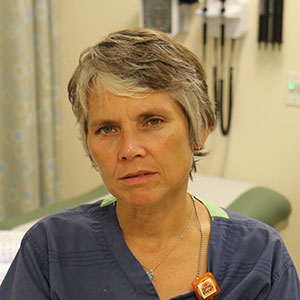
Kathryn Laughon, PhD, RN, FAAN is an Associate Professor at the University of Virginia School of Nursing. She holds dual advanced degrees from UVA (BSN and MSN) and a PhD from Johns Hopkins University. Her primary roles include forensic nursing examination, research on intimate partner violence (IPV), and teaching research methods/evidence-based practice. Affiliations: Director of UVA Health's Emergency Forensic Center, Board Member of the Nursing Network on Violence Against Women International Research focuses on IPV's impact on women/children, disability-related health disparities, and perinatal health inequities. Key areas include forensic nursing innovations, trauma-informed care, and policy advocacy around gun violence prevention. Publications emphasize IPV screening improvements, disability/perinatal intersections, and intervention technologies like the myPlan app for college survivors. Recent work addresses asylum seeker health in migrant camps and brain injury mechanisms in IPV cases. Awards: Shannon Award (clinical/academic excellence), Historical Nursing Research Award, multiple grant recognitions Grants supported by NIH/NINR, CDC, and nursing foundations. Active in policy initiatives through professional organizations and academic leadership. Led development of strangulation assessment tools and trauma-informed clinical pathways. Current projects explore HPV self-testing for immigrant women and racial disparities in postpartum depression.