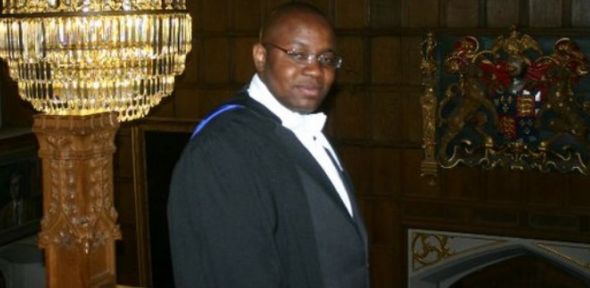
Dr Isobelle Clarke is a Lecturer in Security and Protection Science at the School of Social Sciences, Lancaster University. Her work bridges corpus linguistics, forensic linguistics, and sociolinguistics with a focus on media and social media discourses. Research Overview Current projects: Leverhulme-funded investigation of anti-science discourses (anti-vaccination, climate denialism, anti-GMO) Core Methodologies: Corpus analysis, discourse analysis, authorship attribution Her recent publications explore: Climate change denialism across conspiracy platforms Vaccine conspiracy theories on social media Representation of religion in press Spoken language patterns in American English She supervises PhD student Xinran Wang and contributes to academic activities like the FACTOR Summer School and Lancashire Cyber Education Week. Her work integrates computational methods with critical discourse analysis.
Gavin Oxburgh is a Professor of Police Science at Northumbria University and an HCPC-registered Consultant Forensic Psychologist. He holds Chartered Psychologist and Chartered Scientist statuses, and serves as Assistant Director of The Northern Hub for Veteran and Military Families Research. With 22 years in the Royal Air Force Police as a senior detective specializing in child protection and sexual offenses, he now advises globally on legal psychology and human rights. His work includes collaboration with the International Criminal Court (ICC) and contributions to the UN-led Mendez Principles on Effective Interviewing. Research focuses on legal/criminological psychology, including international human rights, non-coercive interviewing, false memories, and veterans' issues. He has secured over £5M in grants from ESRC, EPSRC, and defense-related funds. Key roles include editorial positions for Journal of Investigative Psychology and Torture Journal , and Associate Investigator status with EPSRC/GCHQ's Academic Centre of Excellence in Cyber Security Research (ACE-CSR). Professional activities include founding ETICA (Global) for ethical investigative practices and co-founding the International Investigative Interviewing Research Group (iIIRG). He trains investigators worldwide, including UN agencies, European institutions, and South African law enforcement. His qualifications include a PhD in Psychology (2011), PGCLTHE (2008), and Fellow of the British Psychological Society (FBPsS). Notable projects include studies on remote forensic interviewing during the pandemic, veteran suicide prevention, and capacity-building in counter-wildlife crime. His work emphasizes ethical interviewing techniques, cross-cultural challenges, and technology's role in modern investigations.
Emily Chiang is a researcher at Aston University’s Aston Institute for Forensic Linguistics , part of the Communication and Culture faculty. She holds a PhD (2019) and MA (2016) from Aston University, focusing on rhetorical move analysis in forensic contexts, and a BA from Oxford Brookes University (2009). Her work examines linguistic expressions of identity in online criminal spaces, including dark web communities and self-styled ‘paedophile-hunting’ groups. She employs tools like speech act theory to inform law enforcement strategies, with a focus on language variation over time. Education: PhD: Rhetorical Moves and Identity Performance in Online Child Sexual Abuse Interactions (Aston University, 2019) MA: Chatroom Groomers as Discourse Communities (Aston University, 2016) BA: Oxford Brookes University (2009) Research Interests: Chiang’s research bridges forensic linguistics and criminology. She analyzes how offenders and vigilante groups construct identity digitally, including dark web criminal communities, paedophile-hunting groups, and linguistic shifts in offender interactions. Her work aims to enhance undercover police practices through linguistic insights. Recent Trends in Publications: Her recent work emphasizes dark web offender identity dynamics, linguistic strategies in membership requests, and forensic applications of language stability analysis. She also critiques discourses in the seduction industry and vigilante group rhetoric. Awards and Grants: None explicitly listed. Labs/Teams: Active within the Aston Institute for Forensic Linguistics. Collaborations include researchers on child sexual abuse discourse and digital forensic analysis.
Professor Coral Dando is a Professor of Psychology at the University of Westminster, leading research in forensic cognition and investigative interviewing. With a background as a London Police Officer, she completed a BSc (Hons) Psychology and PhD in Applied Forensic Cognition. She is a Chartered Psychologist, National Teaching Fellow, and Registered Forensic Psychologist. Her research focuses on eyewitness memory, deception detection, and cross-cultural interviewing, with a particular emphasis on improving investigative methods in security and forensic contexts. Her academic roles include teaching forensic psychology modules (e.g., detecting deception, investigative interviewing) and supervising PhD students researching topics like virtual environments in interviews and neurodivergent credibility. She has secured significant research funding from entities like the Home Office, FBI, and CPNI, totaling over £2M across projects addressing insider threats, county lines exploitation, and aviation security. Key Research Themes: Eyewitness reliability, cognitive interviewing techniques, cross-cultural persuasion, and insider threat detection. Grants: Includes a 2024 €97,000 COST grant for implementing the Mendez Principles and a 2016 $469,000 FBI-funded study on intelligence interviewing. Professor Dando’s work bridges academia and practice, training professionals from police forces, security agencies, and NGOs. She contributes to policy development and has authored over 100 peer-reviewed publications, including seminal works on the cognitive interview and WAFA (Witness-Aimed First Account) for neurodivergent individuals. Her research emphasizes ethical, context-aware methodologies to enhance justice outcomes.
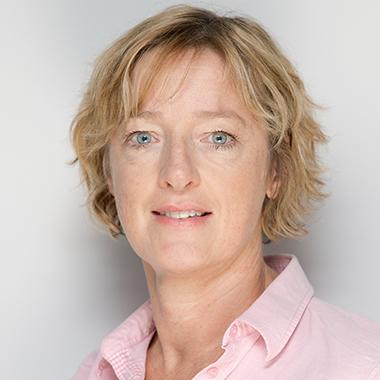
Stephen Colman is an Associate Professor of Law and Course Leader for the LLM Law at the University of Suffolk within the School of Business, Arts, Social Sciences and Technology. A non-practising solicitor with over 12 years as a Senior Crown Prosecutor at the Crown Prosecution Service, he also serves as a link tutor for Rushmore Business School in Mauritius and represents the university on the Suffolk and North Essex Law Society Executive Committee. His research centers on prosecutorial discretion, victims' rights to challenge prosecution decisions, and intersections with administrative law and victimology. He is currently authoring 'Challenging Prosecutorial Decision-Making' for Bristol University Press, examining systemic issues in criminal justice decision-making processes and victims' legal pathways. His publications reveal consistent focus on criminal procedure reforms, victims' rights mechanisms, and evidentiary standards across UK jurisdictions. Key recurring themes include the Single Justice Procedure's implications, comparative analysis of victims' review schemes, and vulnerabilities within prosecution systems affecting both defendants and victims. Professional recognitions include: Fellowship of Advance HE Colman leads undergraduate modules in Criminal Law, Criminal Procedure, Criminal Evidence and Administrative Law, plus postgraduate modules in Contemporary Criminal Law and Criminal Evidence & Psychology. He has developed legal placements with local firms, delivered external training on criminal evidence, and was nominated for the University of Suffolk Staff Award 2022 for Outstanding Contribution to Learning.
Professor Claire Hardaker is a leading scholar in Forensic Linguistics at Lancaster University's School of Social Sciences. Her research focuses on aggression, deception, and manipulation in computer-mediated communication (CMC) for evidential and intelligence purposes. Research interests include: Corpus linguistics methodologies Online trolling and impoliteness Vaccine discourse analysis Forensic applications of linguistic analysis Current projects include: "Forensic linguistics, Cybersecurity and Technology Research: Operations Suite" (2023-2026) "Questioning Vaccination Discourse (Quo VaDis)" (2021-2024) Contact: c.hardaker@lancaster.ac.uk
Dr Robin Crockett is the University Academic Integrity Lead at the University of Northampton, based in the Academic Registry. He is a mathematician-ethicist actively engaged in research and professional development in academic integrity, document forensics, and the detection of contract cheating and AI-generated text. He is a member of the European Network for Academic Integrity (ENAI), co-founder of the Midlands Integrity Group (UK), and has advised UK policymakers on legislation to ban essay mills. He holds Chartered Scientist and Chartered Mathematician status. MPhil, The Management of Electricity Supplies via Storage as Hydrogen, Cranfield University Master, Energy Conservation and the Environment, Cranfield University PhD, Electrostatic Damage to Semiconductor Devices, University of Southampton Master, Natural & Electrical Sciences, University of Cambridge Bachelor, Natural & Electrical Sciences, University of Cambridge Dr Crockett's research centers on document forensics and academic integrity, with core interests in Fourier theory, time-series analysis, and stylometry for identifying contract cheating. His work increasingly addresses the challenges posed by generative artificial intelligence in education. He applies mathematical and statistical methods to analyze linguistic cues, writing styles, and embedded information in student submissions. His recent publications highlight a strong trend toward understanding and mitigating academic misconduct in the AI era. Topics include AI-text detection uncertainties, forensic stylometry, and policy development for generative AI misuse. Earlier work includes environmental research on radon remediation and signal processing applications in telecommunications. Chartered Scientist Chartered Mathematician Dr Crockett has supervised PhD students, including Believe Nwamae in Computing. He has secured internal research funding, such as the Small Grants Scheme for Early Career Researchers at the University of Northampton for a project on AI-synthesized text detection. He has been an Academic Visitor at Loughborough University and served on the Turnitin Advisory Board, indicating active collaboration and external engagement. He frequently presents at academic events and contributes to policy discussions. He is affiliated with research networks including the European Network for Academic Integrity (ENAI) and the European Geosciences Union (as a former Scientific Officer). His work is supported by institutional and collaborative projects focused on advancing machine discernment of academic misconduct.
Roziana Ramli is an academic affiliated with Northumbria University, holding a PhD in Computer Science. Her research focuses on medical imaging techniques, cybersecurity in healthcare systems, and bio-inspired optimization algorithms. She has contributed to advancements in retinal fundus image registration and IoT security protocols. Her work integrates computer vision with biomedical applications, addressing challenges in healthcare monitoring and assistive technologies. Key research areas include federated learning in healthcare networks, prosodic feature analysis for language recognition, and secure communication for drone networks. Her systematic literature reviews and algorithmic innovations highlight her interdisciplinary approach to solving technical and clinical problems. Though no formal awards are listed, her active publication record from 1999 to 2024 demonstrates sustained academic engagement.
Andrew D. Ker is Professor and Associate Professor of Computer Science at the University of Oxford's Department of Computer Science, and Tutorial Fellow in Computer Science at University College, Oxford since 2009. He received his BA in Mathematics & Computer Science (1994-1997) and DPhil in Computer Science (1997-2000) from Oxford, followed by academic appointments including Junior Research Fellow (2000-2003), Special Supernumerary Fellow (2003-2009), and Royal Society University Research Fellow (2003-2011). His research focuses on information hiding, particularly steganography (covert communication in digital media) and steganalysis (detection of hidden data), with additional interests in digital media forensics and programming language semantics. His foundational work includes the mathematical formalization of the 'square root law of steganographic capacity'. Recent publications explore practical implementations in social media platforms, GPU-accelerated steganalysis, and linguistic steganography techniques. He has received multiple scientific awards including Best Paper Awards at ACM Workshops on Information Hiding & Multimedia Security, SPIE conferences, and the International Workshop on Digital Watermarking. As Associate Editor for IEEE Transactions on Information Forensics and Security, he maintains active involvement in the academic community. Professor Ker has supervised numerous graduate students in computer security and steganography research, including doctoral candidates and master's students. He leads research within Cyber Security Oxford and has developed four major lecture series: Lambda Calculus and Types, Discrete Mathematics, Computer Security, and Advanced Security: Information Hiding. He remains active in teaching despite administrative responsibilities as Tutorial Fellow.
Dr. Sarah Atkins is a Lecturer in the Department of Communication and Culture at Aston University and a Research Fellow at the Aston Institute for Forensic Linguistics. She holds a PhD in Applied Linguistics from the University of Nottingham and a PGCHE from Aston University. Her affiliations include membership in the British Association for Applied Linguistics (BAAL), International Pragmatics Association (IPrA), and International Association for Forensic and Legal Linguistics (IAFLL). Atkins' research explores: Forensic and legal linguistics, focusing on emergency calls, police interviews, and anonymization ethics Healthcare communication in clinical settings and Schwartz Rounds Applied linguistic ethics and professional practice Multimodal analysis of institutional interactions Her publications demonstrate strong methodological diversity, spanning conversation analysis, corpus linguistics, and multimodal approaches. Dominant themes include ethical frameworks in linguistic research, crisis communication dynamics, and healthcare team interactions. Recent work increasingly addresses technological applications like AI system co-design and forensic databank development. Scientific Awards: Poster Prize, Royal College of General Practitioners (2018) Knowledge Exchange and Impact Award (2016) Atkins mentors PhD students researching police-suspect interactions and supervises collaborative projects including the ID2 data anonymization initiative and Crimes in Action 999 call analysis. She secured £120k in research funding for projects with Birmingham Community Healthcare NHS Foundation Trust. She directs fieldwork at the Aston Institute for Forensic Linguistics and collaborates on the Forensic Linguistic Databank (FoLD) and EXCROW extortion corpus projects. Her lab develops training interventions for healthcare professionals and police services.
Dr. Matt Bowen is the Head of School for Allied and Public Health at the University of Chester, leading strategic initiatives aligned with the Citizen Student Strategy. He holds a PhD in the representation of personality disorder in the popular press (University of Chester, 2018) and an MA in Group & Intercultural Therapy (Goldsmiths University of London, 2003). His research focuses on clinical practices for personality disorder and media representation of mental health, particularly addressing stigma. Teaching areas include mental health nursing, public mental health, and health research methodologies. He has delivered training in the UK, India, Uganda, and Colombia. Professional roles include membership in the Royal Society for Public Health and peer review for the Journal of Psychiatric and Mental Health Nursing . Education: PhD, University of Chester, 2012–2018 MA, Goldsmiths University of London, 2001–2003 BSc in Mental Health Nursing, London South Bank University, 1995–1998 Research Interests: Clinical practices for personality disorder Media framing of mental health stigma Public mental health literacy initiatives Teaching: Masters/PhD supervision in health research Mental health nursing evidence-based practice Global Mental Health Assessment Tool project Dr. Bowen has contributed to funded projects such as The Resilient Nurse (Health Education England, 2023) and mental health training packages. His work emphasizes recovery-oriented care and reducing stigma through media literacy and public health interventions.
Professor Jessica Jacobson is a leading criminologist at Birkbeck, University of London's Institute for Crime & Justice Policy Research (ICPR), where she served as Director from 2013-2024. Holding a PhD from the London School of Economics, her career spans criminal justice research from Home Office positions to independent consultancy before joining ICPR in 2011. BA (Hons) Sociology, Trinity College Dublin (1991) PhD Sociology, London School of Economics (1996) Her research focuses on prisons, sentencing, coroners' investigations, and lay participation in judicial proceedings . Employing primarily qualitative methodologies including interviews and observations, her work bridges academic rigor with practical policy impact. Recent projects examine bereaved families' experiences in coronial inquests (Voicing Loss study), problem-solving practices in youth courts, and digital evidence in fraud investigations. Her research consistently emphasizes procedural justice and victim-centered legal processes. Analysis of her recent publications reveals a sustained focus on access to justice for vulnerable populations , with increasing attention to digital-era challenges like online fraud. Her work demonstrates strong interdisciplinary connections between criminology, legal studies, and sociology, often employing comparative frameworks across jurisdictions. As Principal Investigator for major ESRC and Nuffield Foundation projects including the £780,756 Voicing Loss study, she has secured over £1.5 million in research funding. Her supervision includes doctoral researchers like Gillian Hunter (current) and Shailesh Kumar (awarded 2023). Based at ICPR, she collaborates with organizations including the Centre for Death & Society (University of Bath), Victim Support, and the Centre for Justice Innovation. Her research directly informs policy through briefings for the Ministry of Justice and UK Justice Committee.
Dr Calbert Graham is a Leverhulme Early Career Research Fellow at the Phonetics Laboratory within the Faculty of Modern and Medieval Languages and Linguistics at the University of Cambridge . He is affiliated with the Theoretical and Applied Linguistics department and holds the position of Senior Research Associate . Education MPhil in Applied Linguistics and Language Technology from the former Research Centre for English and Applied Linguistics (RCEAL) (2010) PhD from the Department of Theoretical and Applied Linguistics (DTAL) (2014) MA in Applied Linguistics and Language Technology at Kyoto University as a Monbusho Scholar (2009) Research Interests Second language acquisition theory Quantitative methods in applied linguistics (statistical modelling, machine learning, NLP tools) Language technologies (CALL/CAPT systems, automated assessment) Second/foreign language teacher training and development Research Projects Current: Computational modelling and automatic synthesis of speech in forensic speech sciences Past: Learner speech corpus research in the ALTA project Affiliations Phonetics & Phonology Research Cluster Computational Linguistics Research Cluster Cambridge Language Sciences Strategic Initiative Scientific Awards Leverhulme Early Career Research Fellow Monbusho Scholar
Dr Helen West is a Senior Lecturer in English Language within the Division of Communication, Screen and Performance at the University of Chester's School for the Creative Industries. She serves as a research and knowledge exchange representative for her division and has held significant leadership roles including Single Honours English Language Programme leader (2017-18) and Student Engagement Officer for English (2018-2024). Helen's educational background includes a PhD from the University of York (2009-2013), an MSc and MA (Hons) from the University of Edinburgh (2008-2009 and 2004-2008 respectively), and a PGCert in Learning and Teaching in Higher Education from the University of Chester. She became a Fellow of the Higher Education Academy in 2016. Her research focuses on sociolinguistics, particularly sociophonetics, investigating how social factors like age, gender, and social status influence language and accent. Two major research strands dominate her recent work: the Talking Chester/Cestrian English Project examining Chester's unique linguistic position between Liverpool, Manchester and Welsh English varieties; and The Swift Accent Shift Project analyzing Taylor Swift's accent changes between musical genres to explore connections between accent, stylistic categories, and social-psychological processes. Her methodological approach combines computational, quantitative, and qualitative techniques to study language variation and change. Helen's publication record demonstrates consistent scholarly output with a notable recent focus on contemporary sociophonetic investigations. Her work spans traditional academic formats like book chapters and conference presentations while also engaging with public-facing formats including exhibitions and internet publications. The Taylor Swift research represents an innovative approach to studying real-time accent variation through popular culture, while the Chester dialect project contributes to our understanding of regional identity formation through language. As an educator, Helen teaches across undergraduate and postgraduate programs on topics including sociolinguistics, sociophonetics, phonetics and phonology, child language acquisition, forensic linguistics, language and identity, and language and popular culture. She has developed numerous courses including Forensic Linguistics, Language and Identity, and Topics in Sociophonetics. Her leadership roles have focused on enhancing student engagement through immersive teaching experiences and promoting student-as-partner approaches to learning. Helen actively collaborates through projects like the Talking Chester initiative with Dr Jo Close and has organized significant academic events including the 10th Northern Englishes Workshop and Current and New Methods in Sociolinguistics (CANMIS) conference. She also serves as an External Examiner for Blackpool and The Fylde College and holds membership in professional organizations including the International Phonetic Association and Linguistics Association of Great Britain.
Willem Hollmann is a Professor of Linguistics and currently serves as Head of the School of Philosophy, Psychology and Language Sciences at the University of Edinburgh. He holds academic roles such as Associate Dean of Undergraduate Studies and has previously been Interim Executive Dean at Lancaster University. His expertise spans cognitive linguistics, cognitive sociolinguistics, and verbal deception detection, with a strong commitment to language education and policy. Willem Hollmann holds academic qualifications including an MA from the University of Amsterdam, another MA from the University of Manchester, and a PhD from the University of Manchester. Willem Hollmann’s research focuses on cognitive-typological linguistic theory, particularly construction grammar and usage-based models, cognitive sociolinguistics, dialect grammar, language change, and the history of English. His recent work extends into verbal deception detection and forensic linguistics. He emphasizes the intersection of language structure and social factors, contributing to both theoretical and applied linguistic studies. His recent publications explore syntactic constraints in English, cognitive sociolinguistic applications, and the use of epistemic modals in academic writing by Japanese EFL students. He also engages with generative vs. usage-based linguistic theories, phonological evidence in adjective analysis, and the evolution of comparative modals in English. His work bridges theoretical linguistics with applied areas like education and forensic analysis. Willem Hollmann has been recognized through various professional roles and contributions, though no specific scientific awards are listed in the provided information. Willem Hollmann has supervised numerous PhD students, including those who have secured academic positions globally. He is open to supervising research in cognitive-typological theory, sociolinguistics, dialect grammar, and deception detection. While specific grants are not detailed, his consultancy work with UK government departments and educational bodies underscores his engagement with applied linguistic initiatives. He is actively involved in language education policy, chairs the LAGB’s Education Committee, and contributes to the Committee for Linguistics in Education. His collaborations extend to institutions like the Department for Education and OCR, reflecting his commitment to educational linguistics.



/prod01/channel_2/media/uniofsuffolk/website/content-assets/images/staff-profile-photos/ssh/Stephen-Coleman-1.jpg)