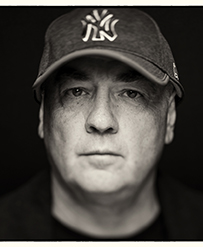
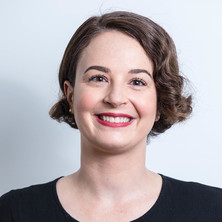
Marcus Smith is an Associate Professor in Law at the Charles Sturt University , where he teaches LAW222 Technology Law and directs the Bachelor of Laws program. He holds advanced degrees from the Australian National University (PhD, LLM) and the University of Cambridge (MPhil). His research spans technology law and regulation , focusing on genomic data governance biometric identification AI ethics blockchain policy cybersecurity surveillance law He leads the Contemporary Threats to Australian Security research group and serves as Chief Investigator on an NHMRC-funded project (MRF2015531) addressing genomic dataset governance. His recent work analyzes algorithmic bias in facial recognition AI in healthcare blockchain's regulatory challenges post-pandemic cybercrime surveillance ethics data security frameworks He actively supervises PhD and honours students in technology law and contributes to law reform through submissions to international bodies like the UN Human Rights Council .
Adrian Linacre is a Professor and Chair in Forensic DNA Technology at Flinders University, within the College of Science and Engineering, Department of Biological Sciences. He is a leading figure in forensic science, with a focus on DNA analysis, wildlife forensics, and crime scene investigation. BSc in Biological Sciences (Hons), University of Edinburgh, 1984 DPhil in Molecular Genetics, University of Sussex, 1988 His research centers on getting more from less at crime scenes , particularly through developing highly sensitive DNA typing methods and studying the transfer and persistence of biological materials. He also pioneers the use of non-human DNA in forensic investigations, notably in wildlife forensic science , aiding in species identification and combating illegal wildlife trade. His recent publications reflect a strong trend in trace DNA analysis , body fluid identification , and DNA transfer dynamics , with applications in drug cases, sexual assault investigations, and environmental DNA degradation. His work increasingly integrates molecular techniques with real-world forensic challenges. Notable scientific awards include: Medal of the Order of Australia (OAM), 2020 Inspirational Scientist of the Year, Royal Society of Edinburgh, 2005 Fellow of the Royal Society for the Encouragement of Arts and Commerce (FRSA) Finalist, South Australian Science Excellence and Innovation Awards (2023, 2024) He has successfully supervised several students, including Piyamas Kanokwongnuwut and Alicia Haines, many of whom have won international recognition. He has secured significant research funding and contributed to national and international forensic policy, including a key review for the UK Home Office on low-template DNA. His professional leadership includes presidencies of the ANZFSS and ISFG, and vice presidency of the IAFS. Linacre is actively involved in editorial roles, serving as Associate Editor for Forensic Science International: Genetics and on the boards of Forensic Science, Medicine and Pathology and the Australian Journal of Forensic Science . He is a sought-after expert witness and media commentator in forensic science.
Georgina Meakin is an Associate Professor in Forensic Science at the University of Technology Sydney's Centre for Forensic Science within the School of Mathematical and Physical Sciences. She joined UTS in October 2019 after six years at University College London's Centre for Forensic Sciences. With expertise in forensic DNA analysis, particularly in DNA transfer, persistence, prevalence, and recovery (TPPR), Dr. Meakin is recognized for her contributions to forensic science research and casework. Her academic credentials include: MSc in Forensic and Analytical Science, University of Huddersfield (2007-2008) PhD in Molecular Microbiology and Biochemistry, University of East Anglia (2003-2007) BSc in Molecular Biology and Genetics, University of East Anglia (1999-2003) Dr. Meakin's research focuses on the transfer, persistence, prevalence, and recovery (TPPR) of DNA and other trace evidence in forensic contexts. She is particularly interested in indirect DNA transfer and its implications for forensic interpretation. Her work spans crime scene evidence collection, DNA recovery methods, packaging considerations, and the evaluation of trace DNA in casework. Dr. Meakin has co-authored major review articles on DNA transfer in forensic science and contributes to the development of best practices in forensic DNA analysis. Dr. Meakin's recent publications demonstrate a consistent focus on practical forensic challenges related to DNA evidence. Her work examines DNA recovery methods across various substrates, environmental effects on DNA persistence, and packaging considerations to minimize DNA transfer. She has developed innovative approaches to DNA collection, including an applicator prototype for tapelifts. Her research increasingly addresses operational forensic science questions with direct implications for crime scene investigation protocols and evidentiary interpretation. Dr. Meakin actively supervises students in Biological Criminalistics and Crime Scene Investigation courses at UTS. She has secured research funding including a grant for "Development and validation of an applicator for use with adhesive tape for DNA recovery" from the Defence Science and Technology Group (2022-2024). She provides forensic DNA consulting services for legal cases through various solicitors. As part of the Centre for Forensic Science at UTS, Dr. Meakin collaborates with forensic practitioners and researchers globally. She has participated in high-profile cases, notably serving as a forensic scientist on the team that re-examined evidence for the BBC2 documentary 'The Chillenden Murders'. Her editorial roles with Science and Justice and previous work with Annals of Human Genetics demonstrate her commitment to advancing forensic science scholarship.
Professor Denis O'Carroll is Deputy Head of the School of Civil and Environmental Engineering at the University of New South Wales (UNSW) and Managing Director of the Water Research Laboratory (WRL). His research focuses on environmental engineering challenges, particularly in water resource management and contaminant remediation. His primary research interests include: Development of nanoscale materials for environmental restoration PFAS contamination assessment and treatment technologies Groundwater remediation and contaminant transport modeling Green infrastructure performance evaluation Fate and transport of emerging contaminants in aquatic systems Electrochemical degradation of persistent pollutants Bioremediation and microbial transformation processes Professor O'Carroll's recent publications demonstrate a strong focus on PFAS research, with multiple studies examining global contamination patterns, degradation mechanisms, and innovative treatment technologies. His work also shows consistent attention to nanomaterial applications for environmental remediation, particularly sulfidated zerovalent iron systems for chlorinated solvent treatment. The research spans laboratory studies to field-scale validations. As Managing Director of the Water Research Laboratory, Professor O'Carroll leads significant research initiatives addressing water quality challenges. His laboratory conducts both fundamental research and applied studies with direct relevance to environmental policy and remediation practice.
Associate Professor Jeremy Austin is a leading evolutionary biologist at the University of Adelaide , affiliated with the School of Biological Sciences and serving as Deputy Director of the Australian Centre for Ancient DNA (ACAD) . His work bridges ancient DNA analysis, molecular ecology, and forensic biology to address critical questions in conservation genetics and human identification. PhD in Evolutionary Biology from University of Tasmania (1995) Jeremy's research focuses on ancient DNA techniques to study evolutionary histories of extinct and extant vertebrates, assess environmental change impacts, and develop genomic tools for forensic identification of degraded human remains. His work supports agencies like the Australian Defence Force and humanitarian organizations. Recent publications highlight applications of LAMP assays for invasive species detection, genome-wide hybridization capture in forensic profiling, and phylogeographic analysis of endangered species. His team's innovations in trace DNA recovery and environmental DNA (eDNA) have advanced biosecurity monitoring. Australian Research Council Future Fellowship (2011) As a Senior Lecturer , Jeremy supervises research students and collaborates across conservation, forensics, and evolutionary biology . He leads ACAD's efforts to integrate historical museum samples into modern genomic studies, with applications for wildlife management and human remains identification.
Eduardo Eyras is a Professor at the Australian National University (ANU) and EMBL Australia Group Leader, leading research in computational RNA biology and cancer genomics. He directs the Centre for Computational Biomedical Sciences and is part of the Shine-Dalgarno Centre for RNA Innovation. His work focuses on transcriptome and epitranscriptome analysis using long-read sequencing, machine learning, and computational methods to study cancer mechanisms. Eyras holds a PhD in Mathematics from the University of Groningen (1999) and previously led research at the Sanger Institute and Pompeu Fabra University. Affiliations: Director, Centre for Computational Biomedical Sciences Researcher, Shine-Dalgarno Centre for RNA Innovation Member, Division of Genome Sciences and Cancer Leader, The Eyras Group - Computational RNA Biology Research Interests: Development of algorithms for long-read sequencing Machine learning applications in RNA biology Epitranscriptomic modifications and cancer Therapeutic mRNA platform steering Key Projects: Novel algorithms for transcriptome variation analysis Predictive models of RNA modifications in disease Ribosomal DNA variation analysis Advisees & Grants: Supervises PhD students (e.g., Favour Oyelami, Stefan Prodic) and leads ARC-funded projects on mRNA diagnostics and epitranscriptomic therapies. Collaborates with global teams on forensic genomics, cancer drug resistance, and AI-driven translational research. Labs/Teams: Leads the Eyras Group, collaborating with the Hannan Group (Cancer Therapeutics) and Shirokikh Group (Protein Biosynthesis).
Glenn Porter is an Associate Professor at the University of New England’s School of Humanities, Arts, and Social Sciences, specializing in interdisciplinary work across forensic science, criminology, and art photography. An award-winning photographer, he holds qualifications including Ph.D. (Communication Arts), M.App.Sc.(Photog.), and ASIS FRPS credentials. His research examines humanity, environment, and being through visual narratives, aiming to effect social change. Projects include forensic applications in facial recognition, cultural heritage protection, and bloodstain analysis at crime scenes. Publications demonstrate consistent focus on forensic innovation and artistic expression, with recent works exploring facial biometrics, heritage conservation, and colonial historiography. Notable articles address forensic biosecurity and art crime. Awards include FRPS fellowship and finalist positions in international photography competitions. Extensive supervision includes 25+ higher-degree students across forensic imaging, criminology, and art practice.
Vipul Gupta is an Adjunct Senior Lecturer in Chemistry at the University of Tasmania's School of Natural Sciences, where he conducts research at the intersection of 3D printing, analytical chemistry, and materials engineering. His academic positions include Lecturer (2021-present), ARC DECRA Fellow (2020-2023), and ACES Research Fellow (2018-2020). He holds a PhD from the University of Tasmania, an M.S. from Brigham Young University, and a B.Pharm from the University of Delhi. His research interests span 3D printing , chromatography , microfluidics , material science , and separation technologies . Gupta's work focuses on developing commercially viable analytical platforms through interdisciplinary approaches combining chemistry, engineering, and biology. Current projects include 3D printing of glass, multi-material high-resolution 3D printing, and point-of-care analysis systems. Analysis of his 15 most recent publications (2020-2023) reveals a strong emphasis on miniaturized analytical devices , 3D printed microfluidics , and advanced separation technologies . His work bridges fundamental materials science with practical applications in environmental monitoring, healthcare diagnostics, and sustainable manufacturing, particularly through innovations in polymer-derived ceramics and diamond-based separation media. His scientific achievements have been recognized with numerous awards: Tasmanian STEM Early Career Researcher of the Year Award ARC DECRA Fellowship (2020) Australian Academy of Science SIEF Fellowship (2015) Brigham Young University Roland K. Robins Fellowship (2012) The Royal Society of Tasmania Peter Smith Medal Selection as one of Australia's top 13 young researchers Gupta actively supervises doctoral students working on field-deployable analytical platforms, 3D printed microfluidic systems, and novel materials for separation science. His research is supported by multiple ARC grants totaling over $7 million, including the ARC Training Centre for Hyphenated Analytical Separation Technologies ($6.3 million) and the Portable and field-deployable analytical platforms for water monitoring project ($563,855). He also co-founded 3DMADe (3dmade.com.au) and authored the book '3D Printing in Chemical Sciences,' demonstrating his commitment to translating research into practical applications and industry partnerships.
Dr. Shahrooz Rahmati is a Senior Research Assistant in the School of Biology & Environmental Science at Queensland University of Technology (QUT) . His research focuses on nanomaterials synthesis, biosensor development, biomass conversion, and environmental sustainability. He holds a PhD in Chemistry from QUT and has contributed to over 20 publications, earning an H-index of 13. Education: BSc in Agricultural Engineering - Food Science and Technology MSc in Food Science PhD in Chemistry (QUT) Research Interests: Development of nanomaterial-based biosensors for disease diagnosis and environmental monitoring Conversion of agricultural waste into valuable products like xylooligosaccharides and biofuels Advanced analytical techniques including XRD, SEM, TEM, and spectroscopic methods Articles Trends: His work emphasizes sustainable solutions, with recent studies on catalytic biomass conversion, CO₂ capture materials, and SARS-CoV-2 detection biosensors. Key contributions include cover articles in Green Chemistry and impactful reviews in Biomass and Bioenergy . Lab/Teams: Affiliated with QUT's Centre for Materials Science and Centre for Agriculture and the Bioeconomy .
Matthew Campbell is a Research Fellow at Curtin University's School of Molecular and Life Sciences (MLS), part of the Faculty of Science and Engineering. He is affiliated with the Curtin Medical Research Institute (Curtin MRI) and holds office in Room 201 at Curtin Perth campus. His research focuses on environmental DNA (eDNA), ancient DNA (aDNA), microbial ecology, and hypersaline/extreme environment studies. Key projects include investigating coastal-marine ecosystems through sedimentary aDNA, groundwater keystone ecosystems, and microbial community responses to environmental stressors like salinity and cyclones. Research emphasizes integrative approaches combining eDNA metabarcoding with traditional ecological methods, particularly in hypersaline lakes (e.g., Rottnest Island), arid zone calcretes, and anchialine sinkholes. His work bridges microbiology, geochemistry, and conservation biology, addressing topics like threatened species detection (e.g., Pilbara olive python), climate change impacts on microbial communities, and ecosystem function in extreme environments. Campbell collaborates extensively with international teams on projects ranging from Australian coastal systems to Indonesian Lake Towuti. Publications reflect a strong focus on method development for eDNA sampling (e.g., spider webs as novel matrices) and interdisciplinary applications of DNA-based techniques to understand ecosystem dynamics. His work contributes to both fundamental ecological understanding and applied conservation strategies. No major scientific awards are explicitly mentioned in the provided texts.
Jeremy Brownlie is an Associate Professor of Genetics and Evolution at Griffith University's School of Environment and Science, specializing in symbiotic bacteria like Wolbachia and their impact on insect biology. He leads research initiatives addressing insect-borne disease control, agricultural pest management, and human evolution through genomic studies of ancient Australasian populations. His roles include Director of the Griffith Sciences Partnerships Office and Deputy Head of his school, emphasizing external collaborations and policy advocacy. Brownlie holds a PhD from ANU and has secured significant grants, including ARC Discovery Projects, focusing on Wolbachia's antiviral mechanisms and biosecurity applications. His work bridges molecular biology, applied entomology, and human evolutionary studies, with active involvement in science policy through the National Science and Technology Council. Educations: PhD in Genetics, Australian National University (2003) BSc (Hons) in Biological Sciences, Australian National University (1996) Research Interests: Symbiont biology, pest control strategies, Wolbachia-mediated antiviral protection, and genomic analysis of human migration in Southeast Asia/Australia. Key Collaborations: Australian Research Centre for Human Evolution, Environmental Futures Research Institute, and international agricultural agencies. Grants: Over $1.5M in funding from ARC, Griffith University, and industry partners for projects on Wolbachia, biofilm diagnostics, and pest control technologies. Professional Roles: President of Science & Technology Australia (2019–2021), Board Member of the National Science Council, and leader in STEM policy advocacy. Advisory Work: Supervised over 20 PhD/MSc students on topics ranging from Wolbachia genetics to antimicrobial resistance and bioinformatics. His laboratories focus on innovative solutions for global challenges in food security, disease control, and sustainable biotechnology, with interdisciplinary approaches combining genomics, entomology, and clinical microbiology.
Giana Gomes is a researcher at James Cook University, specializing in aquaculture health and parasitology. Her work focuses on ciliate parasites (e.g., Chilodonella spp.), environmental DNA (eDNA) applications for disease detection, and microbial interactions in fish farming systems. She holds a PhD from James Cook University (2017), with research emphasizing the ecology and detection of harmful freshwater ciliates in aquaculture. Her research spans over 15 years, with key contributions to understanding protozoan-bacterial interactions in tropical fish farms, heat stress impacts on fish immunity, and the use of eDNA for predicting parasite outbreaks. Collaborations include studies on cobia genome analysis, shrimp larval morphology, and necrotizing hepatopancreatitis in Pacific white shrimp. Gomes has published extensively in high-impact journals such as Frontiers in Genetics , Aquaculture , and Reviews in Aquaculture . Her work bridges fundamental parasitology with applied aquaculture solutions, addressing critical challenges in disease management and environmental monitoring.
Ronika K. Power is a Professor of Bioarchaeology at Macquarie University, Director of the Centre for Ancient Cultural Heritage and Environment (CACHE) , and Co-Chair of the Faculty of Arts Diversity, Inclusion, and Belonging Committee. She holds prestigious fellowships with Academia Europaea , the Society of Antiquaries London , and the Royal Society of New South Wales . Her work focuses on biocultural approaches , integrating osteological and archaeological data to explore ancient demography, health, and cultural practices. Power has led groundbreaking projects such as the FRAGSUS Project (analysing Neolithic Malta remains) and contributed to high-profile exhibitions like the Ramses and the Gold of the Pharaohs at the Australian Museum. Education: BA Ancient History (Hons I) with University Medal, Macquarie University MSc Human Osteology and Palaeopathology, University of Bradford, UK PhD in Egyptology, Archaeology, Biological Anthropology, and Philosophy, Macquarie University Research Interests: Power’s interdisciplinary work spans Human Osteology , Paleopathology , Stable Isotope Analysis , and Archaeological Theory . She specialises in mummification studies , Neolithic Malta , and the ethical display of ancient remains. Her research explores connections between biological data and cultural practices, such as burial rituals and dietary adaptations. Awards: Max Crawford Medal (2019) Kwang-su Lim Early Career Award (2019) Tall Poppy of Science (2019) Australian Awards for University Teaching (2010) Teaching & Mentoring: Power teaches courses in Bioarchaeology, Mortuary Practices, and Archaeological Theory at Macquarie. She has pioneered student-centered learning initiatives and mentors through programs like Superstars of STEM . She supervises PhD/Postdoctoral research in areas including human osteology, stable isotopes, and archaeological ethics. Projects: Current initiatives include the Girls to Graduates STEM empowerment program and the Gateway to Egypt education partnership. Past projects include the Trans-Sahara and In-Africa ERC-funded studies, examining human mobility and health across ancient populations.
Professor Michelle Harvey is an academic at Deakin University's Faculty of Science Engineering and Built Environment, with a focus on blowfly biology and its applications in forensic, medical, and veterinary contexts. She serves as Associate Dean, Teaching and Learning, and is affiliated with the Centre for Sustainable Bio-Products. PhD, University of Western Australia Master of Forensic Science, University of Western Australia Graduate Certificate in Higher Education, Deakin University Bachelor of Arts (Chinese), University of Queensland Bachelor of Science (Entomology), University of Queensland Bachelor of Science in Zoology, University of Western Australia Her research priorities include: Blowfly biology and behavior Maggot/microbe interactions Forensic entomology Medical and veterinary entomology Flystrike management Wound therapy applications Recent publications focus on decomposition dynamics in aquatic environments, forensic DNA transfer, and entomological contributions to postmortem interval estimation. Key articles examine biomass loss as PMI indicators, DNA quality degradation from insect activity, and maggot/microbe interactions in forensic contexts. Scientific Recognition: 2013 Winston Churchill Fellow 2005 Western Australia Woman of the Year (Science) 2003-2004 Sir Keith Murdoch Fellow 2002 Young Australian of the Year Finalist 2001-2002 Rotary Ambassadorial Fellow As supervisor, she has guided: Dr Bianca Szkuta (2017) Dr Natalie Gasz (2020) Dr Sarah Bray (2024) Current PhD candidates including Michaela Storen and Madison Bone
Gianni Ribeiro is a Lecturer in Criminology at the University of Southern Queensland's School of Law and Justice, based at the Ipswich campus. She joined the university in 2023 and also holds an Honorary Research Fellow position at the University of Queensland's School of Psychology. Her academic journey includes a PhD in applied cognitive and social psychology from The University of Queensland completed in 2020 with no corrections required. Her educational background includes: PhD (Psychology) from The University of Queensland (2020) Graduate Certificate in Tertiary and Adult Education from Central Queensland University (2019) Bachelor of Psychological Science (Hons Class I) from The University of Queensland (2014) Dr. Ribeiro's research primarily focuses on forensic psychology, specifically examining how jurors and other legal decision-makers understand forensic evidence. She investigates methods to improve juror comprehension of complex forensic evidence and explores optimal ways for forensic experts to testify about their decisions. Her work also addresses the role of contextual relationship evidence in helping jurors understand gendered violence cases and overcome common stereotypes. A significant portion of her research examines how evidence is processed in legal decision-making contexts. Analysis of her publication record reveals a strong focus on forensic psychology and legal decision-making, with particular emphasis on juror cognition, forensic evidence interpretation, and the communication of scientific uncertainty in legal contexts. Her work spans both theoretical and applied aspects of forensic science, often collaborating with law enforcement agencies like the Queensland Police Service. Recent publications show increasing attention to contemporary issues such as transgender victims in sexual assault cases and the impact of misinformation during jury deliberations. Dr. Ribeiro is available for supervision of research students and has received funding from the Australian Institute of Criminology for her work. She is actively engaged in public discourse on legal issues, having contributed to discussions about affirmative consent laws in Australia. Her research demonstrates a consistent commitment to bridging the gap between psychological science and legal practice, with the goal of improving the justice system's handling of forensic evidence and victim testimony.