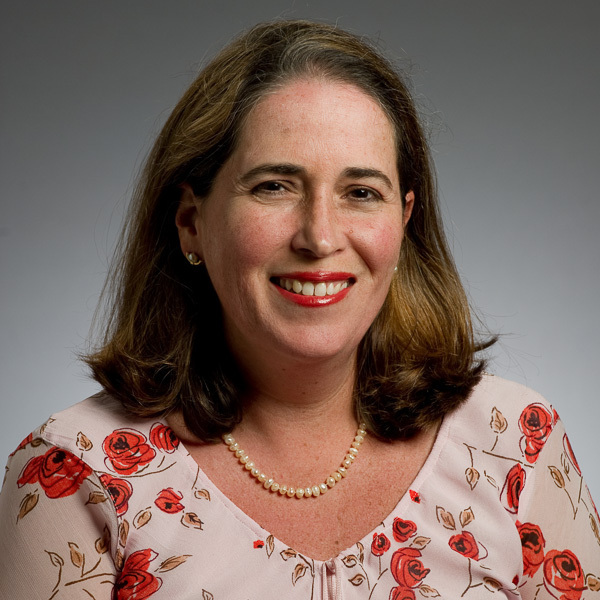
Olvido Andújar Molina is an Assistant Professor at the Complutense University of Madrid (UCM) , affiliated with the Faculty of Education and the Language and Literature Didactics, Spanish Unit . She is a member of the Investigación en Educación Literaria y Literatura Infantil (ELLI-UCM) research group and serves as Secretary of the journal Didáctica. Lengua y Literatura , which holds the FECyT quality seal. Her work bridges academic research and creative practice, with poetry collections like Érase que se es (2023) and a column in Pikara Magazine .
Ana Isabel Otto Cantón is a Professor at the Faculty of Education – Center for Teacher Training, specializing in language teaching. She holds a PhD in Modern Languages and Education, a Master's in Teaching English as a Foreign Language, and a degree in English Philology. Her teaching focuses on English language courses within teacher training programs. Her research interests include Bilingual Education, CLIL (Content and Language Integrated Learning), Educational Assessment, and Second Language Acquisition. She is a member of the research group 'Research on English Language Teaching: Skills, Content, Computers & Assessment.' Key projects include: 2020-2021: Principal Investigator for the 'Better Teachers' Innovation Project to enhance teaching skills in Early Childhood and Primary Education. 2019-2020: Member of the Spanish National Stakeholders Committee for the Erasmus Project 'CLIL for Young European Citizens.' 2017-2018: Collaborator on an interdisciplinary project at Nebrija University addressing pedagogical models in primary and secondary education. Publications focus on CLIL assessment methodologies, bilingual education, and language evaluation frameworks. She has contributed to peer-reviewed journals such as Tempos e Espaços em Educação and the Nebrija Journal of Applied Linguistics. Thesis proposals emphasize evaluation in bilingual programs and CLIL implementation in early childhood education.
Ahmed Hanafy is a Senior Lecturer in the Arabic Studies Department at the University of Maryland, serving as the Undergraduate Academic Advisor and Faculty Language Partner Program Coordinator. He is also a member of the Maryland Language Science Center. His roles include co-authoring the 'Flagship Culture Initiative' modules for critical language learners and coordinating the Arabic Summer Language Institute. Previously, he taught Arabic as a foreign language at Alexandria University and participated in the Arabic Flagship Capstone programs in Egypt and Morocco. He holds a Bachelor's degree in Arts and Education from Alexandria University, a Master’s in English-Arabic Translation, and a Master’s in Second Language Acquisition from the University of Maryland. His research expertise focuses on Arabic language education and second language acquisition. He has contributed to intercultural learning initiatives and program development, including his tenure as Assistant Director of the Arabic Flagship Program at the University of Maryland.
Kyle Scholz is an Educational Developer and Interim Managing Director of the Teaching Innovation Incubator at the University of Waterloo. His role focuses on advancing teaching innovation through experimentation, collaboration, and strategic communications. He holds a PhD in German Applied Linguistics (2015) and an MA in German (2010), with research expertise in digital game-based language learning, ePortfolios, and second language development. He chairs the annual University of Waterloo Teaching and Learning Conference and administers the LITE grant program. His work includes facilitating workshops on pedagogical research design and leading initiatives like the Integrity Matters academic integrity program. Scholz also teaches German language courses and serves as Co-Editor of the Canadian Journal for the Scholarship of Teaching and Learning (CJSoTL). His research interests span game-based learning frameworks, ePortfolio implementation in competency development, and the role of technology in enhancing equity in education. He actively contributes to academic communities through conference presentations and editorial roles, emphasizing practical innovations in higher education pedagogy.
Lise Vikan Sandvik is a Professor in Education at the Department of Teacher Education, NTNU. She specializes in educational assessment, professional development, foreign language didactics, and partnerships in education. She coordinates and teaches PhD and master’s courses, including 'Assessment and Evaluation in Education' and 'Assessment in Language Learning.' She has held roles such as Deputy Head of the Department of Teacher Education (2013–2016) and served on national committees like the Official Norwegian Report Committee on the national quality system in education (2022–2023). Her research focuses on assessment practices, teacher education, and school reforms. Notable projects include the Going Gradeless initiative (funded by the Norwegian Research Council), exploring the impact of reduced grading, and Final Assessment , investigating curriculum-based assessment in schools. She is also involved in the Long-Term Assignment project, evaluating alternative assessments in Norwegian schools. Her work emphasizes collaborative research-practice partnerships, such as the PLAC research group, and she chairs the editorial board of Acta Didactica Norden . Her publications span academic journals, books, and policy reports, addressing topics like assessment cultures, teacher mentorship, and pandemic-era educational challenges.
Elke Schneider is a Professor at Winthrop University in the College of Education, Sport, and Human Sciences. She specializes in Literacy, Special Education, and Second/Foreign Language Acquisition. Her work integrates Multisensory Structured Metacognitive Language (MSML) instruction into teacher education programs. Dr. Schneider has led two major federal grants: one to enhance faculty and teacher support for non-native English speakers, and another preparing educators to work with English Language learners through MSML methods. Education: - Ph.D. in Applied Linguistics, Universität Eichstätt, Germany - M.A. in Secondary Teaching for English as a Foreign Language and German, Universität München, Germany - M.A. in German as a Second Language, Universität München, Germany Research Interests: Dr. Schneider’s research emphasizes MSML techniques for diverse learners, including those with learning disabilities and non-native speakers. She explores acculturation processes and pedagogical strategies in second/foreign language education. Her work bridges classroom practice with teacher training, focusing on evidence-based methods for inclusive education. Grants & Advising: She co-directed a four-year federal grant to improve support for English Language learners and currently leads a second large grant in the same domain. Her training initiatives, such as those through the South Carolina Title III Office, have equipped numerous ESOL teachers with MSML-based skills. She collaborates with state agencies to develop ESOL endorsement programs. Labs/Teams: Affiliated with the Rex Institute for Educational Renewal and Partnerships, the Macfeat Early Childhood Laboratory School, and the Teaching and Learning Center (TLC) at Winthrop University. These partnerships underpin her commitment to educational innovation and community engagement.
Dr. Maria Perifanou is an academic and researcher specializing in Technology Enhanced Learning (TEL) and Intelligent Computer Assisted Language Learning (iCALL). She holds roles as an adjunct academic staff member at Aristotle University of Thessaloniki (School of English), Hellenic Open University (TESOL Master's Programme), and International Hellenic University (School of Science & Technology), alongside being a Visiting Professor in the Master's Programme in Information Systems at the University of Macedonia. She is also a senior researcher at the Smart and Mobile Learning Environments (SMILE) Lab at the University of Macedonia. Education: Ph.D. in Applied Linguistics, University of Athens (GR) Master's in ICT and Foreign Language Education, Ca’ Foscari University of Venice (IT) Research Interests: Focuses on CALL, iCALL, TEL, AI, MOOCs, OERs, Telepresence Robots in Education, Blended Learning, and Teacher Training. Her work integrates technology into language education and explores innovative educational methodologies. Professional Roles: Vice-President of the European Association of Technology Enhanced Learning (EATEL) 2022-2025 Board Member of the International Alliance to Advance Learning in the Digital Era (IAALDE) Chair of EATEL's SIG EduRobotX (Educational Robots & Robotics) Awards & Grants: Received scholarships/fellowships from STELLAR, UNESCO, EATEL, and GRnet. Actively involved in over 35 EU-funded projects (e.g., TRinE, PASTILLE, DETEL) and national initiatives like CARAT and AITRinLL-21skills as project initiator, scientific manager, and researcher. Lab & Collaborations: Leads research at the SMILE Lab, focusing on CALL and TEL innovations. Collaborates with European institutions through projects emphasizing AI, MOOCs, and teacher training.
Dr. Elena Revyakina , PhD, MA, is a researcher at the Department for Media Education, Information Technology Education and Digitality within the Competence Center STEM and Digitality (K:MID) at the Vienna University of Education. She actively contributes to international Erasmus+ projects such as the Teacher Academy Project – Teaching Sustainability (TAP-TS) , focusing on digital and intercultural education, Education for Sustainable Development (ESD), and innovative teacher training frameworks like DigiKompEdu. Education: MA (2014) and PhD (2018) from University College Dublin, specializing in reflective practice and teacher development in online communities. Research Focus: Digital learning environments, policy vernacularization in education, sustainable pedagogies, and qualitative methods. She explores intersections between technology, teacher training, and global-local educational reforms. Projects: Leads online course design in initiatives like EKT (Education Knowledge Transfer) and Design FILS (Future Innovative Learning Spaces), emphasizing action research and technology-supported teaching. Labs & Teams: Core member of the Future Learning Lab Vienna and collaborates with the Digital-Paideia Project consortium.
Michael Cosgrave is a Lecturer in the Department of Digital Arts and Humanities at University College Cork (UCC), where he has been employed since 1993. He holds a BA, MA, and PhD in History from UCC, with his doctoral research focusing on Irish participation in the UN mission in the Congo. His work bridges digital humanities, education technology, and historical studies. Key areas of expertise include personal learning environments, game-based pedagogy, and interdisciplinary research methods. He has authored a major book on Ireland’s early UN peacekeeping missions and contributed to numerous conferences on teaching innovation, digital scholarship, and historical methodologies. Education: Cosgrave earned his BA (1985), MA (1986), and PhD (2003) in History at UCC. He also completed UCC’s Cert and Diploma in Teaching and Learning in Higher Education. His professional development emphasizes integrating digital tools into humanities education. Research interests span the scholarship of teaching and learning (SoTL), digital humanities workflows, and the use of simulations/games in complex problem-solving. Recent work addresses asynchronous online discussion tools, cultural differences in history pedagogy, and semantic markup for educational platforms. His book Ireland and UN Peacekeeping (2020) examines early Irish contributions to global peace missions. Advising and grants: While no specific students are listed, Cosgrave has led pedagogical initiatives such as inter-institutional PhD modules and XML-based historical research projects. His work on ‘Personal Learning Artefacts’ explores digital ownership and privacy in lifelong learning. Labs/teams: He contributes to UCC’s Digital Arts and Humanities initiatives and collaborates internationally on projects like semantic discussion fora and game-based assessment design.
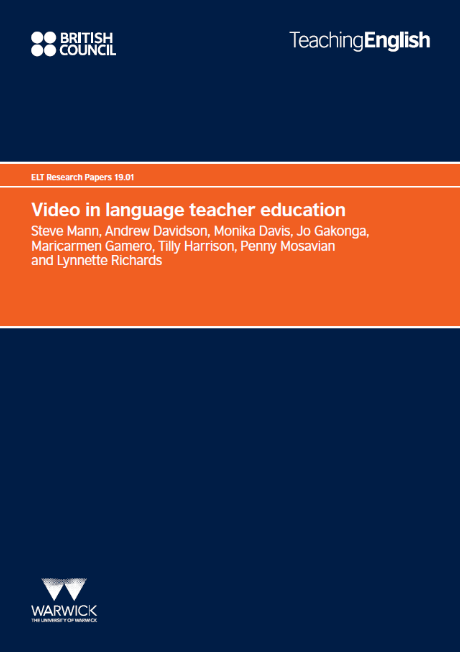
Andrew Davidson is an Assistant Professor (Teaching Focussed) in the Department of Applied Linguistics at the University of Warwick. He serves as MA TESOL Admissions Tutor and Course Leader, leading modules such as 'Foundations of TESOL Methodology' and 'Culture, Identity and Adaptation.' His teaching spans MA, MSc, and insessional programs, emphasizing TESOL pedagogy, intercultural communication, and materials development. Education: BA and MA in English Literature (university unspecified), MA in Applied Linguistics/TESOL. Research focuses on video in language teacher education (ViLTE project with British Council funding, 2016–2018), and intercultural learning through literature/drama in TESOL. Prior experience includes teaching in the USA, Japan, and England, with contributions to online materials development and e-learning initiatives. He contributed to the ViLTE community website showcasing video-based language education resources.
Dr. Niamh Kelly is an Assistant Professor in the School of Applied Language & Intercultural Studies at Dublin City University, with over 20 years of experience in teaching Japanese language, translation, and Japan-related studies. Her research focuses on second language acquisition, linguistic diversity, and lexical innovation processes in Japanese secret languages. She has received funding from the Japan Foundation and contributed to the Oshu Nihongo Kyozai Bank Project. Key achievements include the European Label for Innovation and Teaching (2006) awarded to her Transferable Skills Project. Education: B.A., M.Phil., D.Ed. (degrees unspecified). Research interests span morphological word-formation in Japanese secret languages, foreign language pedagogy, and multilingual education. She has authored/co-authored Japanese language courses with Hodder Education and published widely in peer-reviewed journals. Awards: Recipient of the European Label for Innovation and Teaching (2006). Grants: Japan Foundation funding (twice) supporting research and professional development in Saitama, Japan. Teaching & Grants: Extensive experience in Japanese language instruction, including innovative digital pedagogy (e.g., Facebook integration). Active in curriculum development projects promoting linguistic diversity and inclusive education.
Beatrice C Dupuy is a Professor of French & Italian and holds a leadership role as Director of the Center for Educational Resources in Culture, Language & Literacy (CERCLL) at the University of Arizona. She is also affiliated with the Graduate Interdisciplinary Program in Second Language Acquisition & Teaching (SLAT). Her work bridges language pedagogy, literacy practices, and educational technology. Research interests include teacher professional development, multimodal literacy approaches, and experiential learning frameworks in language education. Dr. Dupuy has published extensively on multiliteracies frameworks, critical discourses in foreign language education, and the intersection of language learning with professionalization. She co-edited a special issue of Intercultural Communication Education exploring mobility dimensions in intercultural competence development. Her scholarly contributions emphasize innovative pedagogical strategies for 21st-century language education challenges. Her academic leadership includes directing interdisciplinary educational initiatives focused on cultural, linguistic, and literacy resources. While no specific grants or awards are listed, her publications reflect sustained engagement with transformative educational practices.
Tatiana Botero is a Teaching Professor of Spanish at the University of Notre Dame's Department of Romance Languages and Literatures. She holds M.A. degrees in Latin American Literature and Education, as well as a B.A. in Business and Marketing from West Virginia University. Her work focuses on integrating community engagement, social justice, and cultural immersion into language instruction. Botero is affiliated with the Institute Latino Studies and the Initiative on Race & Resilience, and has been recognized with major teaching awards including the 2020 Edmund P. Joyce Award. Education: M.A. Latin American Literature (WVU), M.A. Education (WVU), B.A. Business/Marketing (WVU) Research emphasizes teaching Spanish through cultural lenses, particularly leveraging local Latino community partnerships and artistic mediums. She developed a grant-funded course on Immigration and Memory, and pioneered language instruction through social justice frameworks. Her publications explore art integration in education and community-based pedagogy. Awards: 2018 AATSP Teacher of the Year, 2018 IFLTA World Language Teacher of the Year Teaching responsibilities include intermediate Spanish courses and specialized modules on literature/film analysis. Her office hours are held Monday/Wednesday mornings in Decio Faculty Hall 315.
Tomoko Takami is a Senior Lecturer in Foreign Languages and Director of the Modern Japanese Language Program at the University of Pennsylvania’s School of Arts & Sciences. She specializes in Japanese language education with a focus on business Japanese and content-based instruction. Her roles include teaching courses from beginning to advanced levels of Japanese, including professional applications. She holds an EdM from Columbia University and an MS from the University of Pennsylvania. Her research emphasizes critical pedagogy, intercultural communication, and global talent development through language education. She has published extensively on business Japanese curriculum design, proficiency-based instruction, and post-pandemic language education strategies. Notable works include Chukyu kara nobasu Bijinesu keesu de manabu nihongo (2014) and co-editing Mirai wo tsukuru kotobano kyooiku wo mezashite (2015). Dr. Takami has presented at major conferences including the International Symposium on Japanese Language Education and the National Council of Less Commonly Taught Languages. She has held leadership roles such as Immediate Past President of the American Association of Teachers of Japanese and chairs multiple curriculum committees for AP Japanese Language and Culture. Awards include the AATJ Teacher Award (2019) and grants from the Eurasia Foundation and Penn Language Center. Awards: AATJ Teacher Award (2019), Best Project Award (2008) Grants: Eurasia Foundation Grant (2020–2025), Penn Lauder CIBER Grants (2008–2010) Leadership: Co-chair of AP Japanese Language Committee, Founding Chair of Japanese for Specific Purposes SIG Her teaching spans foundational to advanced levels, integrating real-world business scenarios and global case studies. She advocates for hybrid learning models and cross-cultural competency development, reflecting her commitment to preparing students for international professional environments.
Dr. Kathryn Northcut is a Professor of English and Technical Communication and Assistant Department Chair, specializing in pedagogical innovation, visual communication, and scientific writing. Her work bridges theory and practice, emphasizing ethical considerations in communication across disciplines. Education: Ph.D. in Technical Communication and Rhetoric, Texas Tech University (2004) M.A. in Teaching English as a Foreign Language, Colorado State University (1995) B.A. in English, Minor in Geology, Western State College (1982) Research Interests: Dr. Northcut explores visual theory, qualitative research methodologies, and the integration of technology in communication education. She advocates for inclusive pedagogical practices and addresses ethical challenges in transnational science communication. Publications Trends: Her recent articles focus on improving science communication ethics, student-parent support in academia, and leveraging mobile technologies in technical writing. She consistently engages with visual rhetoric barriers and community-based learning strategies. Grants & Collaboration: She references NSF ADVANCE grants impacting technical communication faculty and programs. As an advisor, she mentors undergraduate ETC majors, fostering their academic and professional growth.