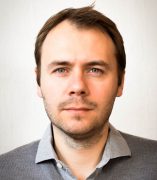
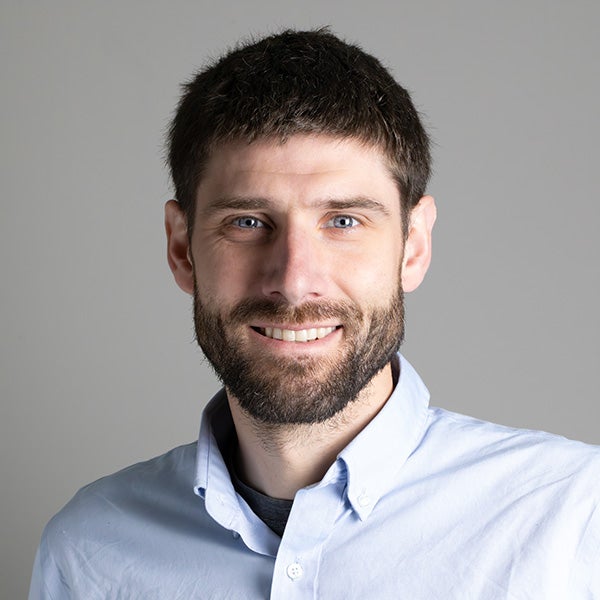
James Unwin is an Associate Professor in the Department of Physics at the University of Illinois Chicago (UIC), affiliated with the College of Liberal Arts and Sciences. He holds a DPhil in Physics from the University of Oxford (2013) and has held postdoctoral positions at the University of Notre Dame. His research focuses on theoretical particle physics, astrophysics, and cosmology, particularly exploring physics beyond the Standard Model, dark matter models, and interdisciplinary applied mathematics. Current interests include dark matter interactions, primordial black holes, and novel experimental approaches like Coulomb explosion imaging. Research Interests: Dark Matter Models: Including freeze-in mechanisms, annihilation signatures, and cosmological constraints Particle Astrophysics: Supersymmetry, LHC searches, and Grand Unified Theories Interdisciplinary Work: Applications of mathematics to epidemiology (e.g., COVID-19 forecasts via stock market indicators) and social dynamics Recent publications emphasize ultrafast molecular dynamics, XUV spectroscopy, and cosmological impacts of primordial black holes. He has advised PhD students Prolay Chanda and Qingyun Wang, both advanced to candidacy in 2021. Professional activities include visiting roles at UC Berkeley (2022–2023) and a Distinguished Academic Visitor appointment at Queen’s College, Oxford (2023). Affiliations: UIC Department of Physics Adjunct roles at UC Berkeley and University of Oxford Collaborations with institutions like Fermilab and CERN
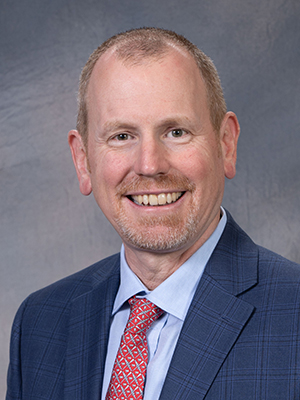
Daniel A. McAdams is the Robert H. Fletcher Professor in Mechanical Engineering at Texas A&M University and serves as the NSF Program Director of Convergent Activities. His research develops design theory and methodology with focus on functional modeling, bio-inspired design, and technology evolution. Educational Background: PhD in Mechanical Engineering from University of Texas at Austin MS in Mechanical Engineering from California Institute of Technology BS in Mechanical Engineering from University of Texas at Austin His research investigates innovation in concept synthesis through computational methods, bio-inspired design approaches, and technology evolution applied to product development. Current projects include function-sharing principles in biological systems, digital twin architectures, and patent mining for technology forecasting. Recent publications explore applications of speculative fiction in design ideation, graph-theoretic approaches for digital twins, and automated assessment in engineering education, demonstrating cross-disciplinary innovation across design science. Awards and Honors: ASME Design Theory and Methodology Award Distinguished Achievement Award for Student Relations Multiple Faculty Fellow awards Design Studies Best Paper Award Outstanding Faculty Mentor Award He leads the Product Synthesis Engineering Lab, advancing design methodologies for complex engineered systems through computational approaches and biological analogies.
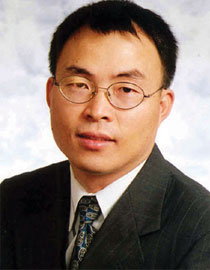
Zixiang Xiong is a Professor and Associate Department Head in the Department of Electrical and Computer Engineering at Texas A&M University, holding the Robert M. Kennedy '26 Endowed Professorship II. He earned his Ph.D. in Electrical Engineering from the University of Illinois at Urbana-Champaign in 1996. His career includes roles at Princeton University, University of Hawaii, and Texas A&M since 1999. Education: Ph.D., Electrical Engineering, University of Illinois at Urbana-Champaign, 1996 Visiting Research Associate, Princeton University, 1995–1997 University of Hawaii, 1997–1999 Research Interests: Focuses on machine learning, image/video processing, federated learning, network information theory, biomedical engineering, and communications. His work spans distributed source coding, genomic signal processing, and energy-efficient systems. Publications & Awards: Over 200 publications, including seminal works on distributed video coding and network information theory. Notable awards include the NSF Career Award (1999), ONR Young Investigator Award (2001), IEEE Fellow (2006), and the ECE Outstanding Faculty Award (2024). His research has led to patents in video compression and multimedia systems. Grants & Advising: Active in NSF-funded projects on coding theory and energy-delay tradeoffs. Advises numerous PhD and MS students, with over 50 alumni in academia and industry. Collaborates on biomedical imaging, remote sensing, and federated learning initiatives. Labs & Teams: Leads a dynamic research group at Texas A&M, focusing on cutting-edge projects in signal processing and machine learning applications. Collaborates with industry and governmental agencies on applied research.
Alain PIROTTE is a Professor of Economic Sciences at University Paris-Panthéon-Assas, affiliated with the Center for Research in Economics and Law (CRED). His research and teaching focus on econometrics, particularly panel data and spatial econometrics, with applications in labor, transportation, and urban economics. His research interests include: Panel data econometrics and forecasting Spatial econometrics and spatial dependence modeling Transportation and urban economics Labor market dynamics Environmental and agricultural econometrics The recent articles highlight a strong focus on spatial panel data models, prediction techniques, and applications to real-world economic issues such as housing prices, traffic demand, and urban sprawl. His work frequently employs advanced econometric methods, including hierarchical Bayesian models and instrumental variable approaches, often in collaboration with leading scholars like B.H. Baltagi. He has held significant academic responsibilities, including: Head of Master 1 in Managerial and Industrial Economics Member of the Scientific Council at Panthéon-Assas University Member of Doctoral Schools at both Panthéon-Assas and University of Paris-Est Member of AERES expert evaluation committee He is actively involved in research leadership and academic governance, contributing to the development of econometric theory and its application across economic domains.
Sandy Dall'Erba is a Professor in the Department of Agricultural and Consumer Economics at the University of Illinois at Urbana-Champaign. He holds additional affiliations with the European Union Center, Center for Latin American and Caribbean Studies, Lemann Center for Brazilian Studies, and the Center for Digital Agriculture at NCSA. His research spans regional economic analysis, spatial econometrics, and climate change impacts on agriculture. PhD in Economics, University of Pau (2004) MSc in Economics, University of Pau (2000) Postdoctoral, Spatial Economics at Free University of Amsterdam (2005-2006) Postdoctoral, REAL at UIUC (2004-2005) Dall'Erba specializes in spatial econometric modeling to analyze regional growth, innovation systems, and climate change effects. His work integrates interregional input-output frameworks and structural gravity models to quantify economic spillovers. Recent studies address agricultural vulnerability to climate shocks, plastic waste embedded in trade, and tax revenue disruptions from natural disasters. His publications focus on regional economics, environmental accounts, and climate resilience, with applications in the U.S., Latin America, and China. Key trends include spatial heterogeneity in climate impacts, supply chain vulnerabilities, and policy design for disaster mitigation. RSPP Best Paper Award Regional Studies Association Best Paper Award Tiebout Prize Epainos Prize Dall'Erba has co-authored works with graduate students and secured grants from NSF, NASA, and USDA. He directs the Regional Economics Applications Laboratory (REAL) and co-founded the Center for Climate, Regional, Environmental and Trade Economics (CREATE) , advancing system-wide approaches to climate and trade challenges.
Professor Katrin Vorkamp holds a position at the Department of Environmental Science, specializing in Environmental Chemistry and Toxicology at Aarhus University. Her research focuses on understanding the transport, exposure pathways, and impacts of persistent pollutants such as PFAS, POPs, and mercury in Arctic and Antarctic ecosystems, with a particular emphasis on wildlife and human health implications. She has contributed to projects addressing climate change effects on contaminant dynamics, policy-oriented monitoring frameworks (e.g., Water Framework Directive), and innovative methods like passive sampling and non-target screening. Her work spans interdisciplinary collaborations, including the AMAP Core 2025-2027 project tracking pollution in Greenland biota and the ArcSolution initiative exploring a One Health perspective in Arctic pollution. She also leads the NAMMINE project on non-target analysis in Nordic marine mammals. Key themes in her research include understanding local vs. long-range pollutant sources, climate-contaminant interactions, and developing early warning systems for emerging chemicals. Publications highlight her expertise in biochar applications for waste valorization, contaminant trends in Adélie penguin eggs, and computational tools for risk assessment. Her projects often bridge environmental science with policy, aiming to inform sustainable solutions for pollution challenges in sensitive ecosystems.
Prof. Dr. Gudrun P. Kiesmüller is a full professor of Operations Management at TUM Campus Heilbronn since 2019. Previously, she held full professorships at Kiel University (Supply Chain Management) and Otto von Guericke University Magdeburg (Operations Management). She studied mathematics at Julius-Maximilians-University of Würzburg and later worked as a postdoc and assistant professor at Eindhoven University of Technology. Her research focuses on supply chain management, inventory management (particularly spare parts), maintenance process planning, and manufacturing system design. She develops optimization approaches for decision support, with publications in journals like IISE Transactions and Production and Operations Management . Key awards include an Honorary Doctorate (2023), ISIR Service Award (2022), and multiple teaching and reviewer awards. She has contributed to advancing stochastic inventory models and operational efficiency in complex systems. Her work integrates theoretical rigor with practical applications, addressing challenges in inventory routing, buffer allocation, and component reliability optimization. Current research emphasizes dynamic maintenance planning and capital goods design.
Dr. Asieh Hosseini Tabaghdehi is a Senior Lecturer in Strategy & Business Economy at Brunel Business School, Brunel University of London. She serves as Programme Lead for the BSc International Business Programme and Trade2Grow Executive Education Programme. Additionally, she is Impact Lead at the Brunel Centre for AI: Social and Digital Innovation, where she leads the capability area in the Future of Work. Dr. Tabaghdehi is also an economist and social impact advisor for the independent NGO, Social Innovation Movement. Dr. Tabaghdehi earned her PhD in Economics and Finance (2008) and MSc in International Money, Finance, and Investment (2015), both from Brunel University London. She also holds a BA in Theoretical Economics from University of Mazandaran. She completed the Postgraduate Certificate in Academic Practice and is a Fellow of the Higher Education Academy. Dr. Tabaghdehi is internationally recognized for her research on digital transformation, with particular expertise in the ethical integration of artificial intelligence and digital technologies. Her work focuses on how emerging technologies shape industries, labor markets, and society, with emphasis on enhancing SME growth through technological innovation. She explores applications across critical sectors including social care, supply chain management, and environmental sustainability. A central theme in her research is smart data governance, ensuring ethical, transparent, and responsible use of data in decision-making processes. Her research portfolio demonstrates a consistent focus on the intersection of technology, ethics, and business strategy. She has developed frameworks like the Digital Business Auditing Framework, which has been adopted internationally for smart city initiatives. Her work connects academic research with practical policy applications, as evidenced by her presentations as oral and written evidence to the House of Commons Select Committee. Her publications span AI ethics, digital footprint implications, fertility economics, and healthcare cost analysis, showing interdisciplinary breadth while maintaining thematic coherence around digital transformation's societal impact. Scientific Awards and Recognition Semi-finalist: Research Impact Award at Brunel University London, 2023 Staff Award: Exceptional in Collegiality and Supportive to Colleagues at Brunel University London, 2022 Exceptional Performance at Regents University London, 2018-19 Staff Award in Teaching, Learning and Assessment at Regents University London, 2016 Best Lecturer Award at London Brunel International College, 2014 Best Lecturer Award at London Brunel International College, 2013 Dr. Tabaghdehi actively supervises PhD students researching areas including Smart Data Governance, Ethical AI Governance, Digital Innovation Impact, Responsible AI Adoption Strategies, Sustainability, and Future of Labour Market. She has secured research funding from multiple sources including the Economic & Social Research Council (ESRC), Brunel University London, and Brunel Business School. Her current projects include research on AI Adoption and Governance, Youth digital addiction, Algorithm Reliability Framework, and SMEs digital footprints. She has also co-designed the "Digital Adoption" module for the UK Government's Help to Grow Management program, demonstrating the practical application of her research. As a member of multiple professional organizations, Dr. Tabaghdehi serves as an associate practitioner at Social Value International, associate member of the Big Innovation Centre, and member of the All-Party Parliamentary Group on AI. She is also a member of the ESRC Review College, British Academy of Management Review College, and Energy Institute UK, contributing to the broader academic and policy communities through these roles.
Professor Shaun Bond is the Frank Finn Professor of Finance at the UQ Business School, University of Queensland. He has held prior positions as the West Shell Professor of Real Estate at the University of Cincinnati (Director of the UC Real Estate Center) and as a lecturer at the University of Cambridge’s Department of Land Economy. He has also served as a visiting professor at Pennsylvania State University and George Washington University. Education: PhD and MPhil in Economics from the University of Cambridge; Bachelor of Economics (First Class Honours) from the University of Queensland. Research Interests: Real estate finance, financial economics, investment and risk management, and financial econometrics. Publications: Over 33 works including 28 journal articles, 2 book chapters, and 2 conference publications, focusing on real estate markets, financial forecasting, and ESG integration. Funding: Current Macoun Research Scholar Program (2021–2025); recent grants from Queensland Government and QIC Limited for short-term rental regulation and investment management research. Supervision: Available for PhD supervision in real estate asset pricing and financial market sentiment.
Sarah Xiao is a Professor of Marketing and Head of Department at Durham University Business School, with a dual role as Programme Director for the Doctorate in Business Administration (DBA) at Fudan University, China. As a consumer psychologist, her work bridges technology, marketing, and behavioral analysis in retail, tourism, and digital economies. Her research spans: Behavioral Change in consumer decision-making Consumer Analytics (AI, Big Data, Machine Learning) Illicit Consumption and consumer misbehavior Neuroscience in marketing and consumer choice Mobile Commerce and Digital Marketing strategies Recent publications focus on AI-driven consumer behavior, social media revenge typologies, and predictive modeling in tourism demand forecasting. She supervises PhD students including Bai Dan, Matthew He, Coco Li, and Shujun Xiao, while collaborating with global institutions and private-sector partners. Her work has attracted significant research funding and appears in leading journals like Journal of the Academy of Marketing Science and Annals of Tourism Research .
Dr. Raimon Tolosana Delgado is a Research Fellow at the Helmholtz-Zentrum Dresden-Rossendorf (HZDR), affiliated with the Helmholtz Institute Freiberg for Resource Technology. He leads research in predictive geometallurgy and statistical analysis of mineral resources, focusing on translating geological data into processing insights. His research integrates geostatistics , compositional data analysis (CoDa) , and machine learning to model ore behavior and resource potential. Key areas include: Predictive geometallurgy for forecasting ore/waste behavior Bayesian statistics for parameter estimation and uncertainty analysis Development of R-based tools (e.g., compositions and gmGeostats packages) for mineral data analysis Particle-based process modelling for mineral separation optimization Recent publications emphasize machine learning integration (e.g., neural networks for geophysical tensor fields), tailings reprocessing (3D geostatistical assessment of resource potential), and advanced statistical methods for compositional data. A consistent trend involves enhancing predictive accuracy in mineral processing through multi-source data fusion. Dr. Tolosana Delgado coordinates the development of technology platforms for geometallurgical data analysis, including databases and interfaces for industrial applications. His work bridges ore geology, mineral processing, and metallurgy to optimize resource efficiency.
Milica Luković is an Associate Professor at the Faculty of Hotel Management and Tourism (University of Kragujevac). Her career spans roles in Natural Resource Management , Ecotourism , and Food and Beverage Management , with a focus on sustainable practices. Education: BSc in Biology, University of Belgrade (2008) MSc in Agriculture, University of Belgrade (2011) PhD in Agriculture, University of Belgrade (2019) Research interests center on sustainable tourism , nature conservation , ethnobotany , and ethnogastronomy , particularly in the context of rural development and biocultural heritage. Her work integrates ecological studies with tourism frameworks for environmental stewardship. Recent publications (2022–2025) explore topics like halophytic vegetation , regenerative tourism in biosphere reserves, and traditional food products in pandemic-era tourism. These span disciplines including Food Science , Ecosystem Services , and Environmental Management . Projects include collaborations with The Rufford Foundation on coastal and saline ecosystem conservation and UNESCO-MaB initiatives related to climate change and biosphere reserves.
Keunhyun (Keun) Park is an Assistant Professor of Urban Forestry at the University of British Columbia (UBC), affiliated with the Department of Forest Resources Management . He also holds an Adjunct Professor position at Utah State University in the Department of Landscape Architecture and Environmental Planning. Education: BSc and MSc in Landscape Architecture from Seoul National University; PhD in Urban Planning and Design from the University of Utah Research Lab: Faculty lead of the Urban Nature Design Research Lab ( under_lab ) His research focuses on designing healthy, just, and resilient cities through urban nature , with particular emphasis on: Environmental justice and equitable access to urban green spaces Human behavior in public spaces using drone/sensor/VR technology Smart growth urban design impacts on public health and ecological systems Recent publications demonstrate expertise in GIS applications , pedestrian behavior analysis , and urban planning across 20+ studies from 2013-2025. Collaborations include the Vancouver Park Board , Metro Vancouver , and Wasatch Front Regional Council .
John E. Taylor is the Frederick Law Olmsted Professor and Associate Chair for Faculty Development and Research Innovation at the Georgia Institute of Technology's School of Civil and Environmental Engineering within the College of Engineering. His research focuses on the intersection of human and engineered networks, with particular emphasis on creating resilient infrastructure systems that serve society's needs while creating more livable communities. Taylor's research interests span multiple domains including Smart City Digital Twins , Urban Infrastructure Resilience , Network Dynamics , and Building-Occupant Interaction . His work examines how human behavior, infrastructure systems, and environmental factors interact during normal operations and extreme events. He has developed innovative approaches to understanding urban systems through the lens of network theory and computational modeling. His publication record demonstrates consistent contributions to the fields of urban analytics and infrastructure resilience, with a recent focus on digital twin technologies for urban systems. Taylor's work shows a clear trajectory toward increasingly sophisticated integration of AI, network science, and civil infrastructure engineering to address complex urban challenges. His research has particular relevance for cities facing climate change impacts and seeking to build more equitable and resilient communities. Taylor leads the Network Dynamics Lab at Georgia Tech, where he mentors PhD students and postdoctoral researchers. His lab has produced significant work on human-infrastructure interaction, particularly during disasters and extreme events. The lab's research combines computational modeling, data analytics, and field studies to understand and improve urban systems. His work has been applied to real-world challenges including river emergency response systems, urban heat exposure forecasting, and disaster response optimization. Taylor has collaborated with city officials and agencies to implement systems that have demonstrable community benefits, such as the AI-enabled camera system for drowning prevention on the Chattahoochee River and crime reduction systems using mobile cameras guided by AI algorithms.
Brandon Schmandt is a Professor in the Department of Earth, Environmental and Planetary Sciences at Rice University, where he leads research using seismology to investigate Earth systems. His work integrates interdisciplinary approaches, data science, and numerical modeling to study tectonic processes, magmatic systems, and environmental interactions. His educational background includes a PhD in Geological Sciences from the University of Oregon (2011) and a BA in Environmental Studies from Warren Wilson College (2006). Dr. Schmandt's research focuses on seismology, tectonics, volcanology, and surface processes , with emphasis on seismic imaging of subsurface structures. His group employs innovative time-series analysis and field projects to resolve geologic history and contemporary Earth dynamics, particularly examining fault zones, magmatic reservoirs, and deep convective processes. Key methodologies include dense seismic arrays and machine learning applications. Analysis of his recent publications (2023-2025) reveals dominant trends in seismic event discrimination (earthquakes vs. explosions), magmatic system imaging (Yellowstone, Cascades), and global mantle structure studies. There is strong emphasis on induced seismicity, machine learning applications, and high-resolution imaging of Earth's discontinuities using dense arrays. His distinguished honors include: Aki Award of the AGU Seismology Section GSA Donath Medal AGU Macelwane Medal Body Dr. Schmandt directs an active research group conducting field projects across diverse settings including the Raton Basin, Yellowstone, Antarctica, and the Caribbean. While specific student advisees and grant details aren't provided in available materials, his group's work involves collaborative data collection, advanced computational modeling, and development of novel seismic analysis techniques applicable to both natural and anthropogenic seismic sources. The research program maintains focus on magmatic systems beneath volcanic regions, induced seismicity mechanisms, and global mantle structure using dense node arrays and interdisciplinary approaches to address fundamental questions in Earth dynamics.